This article contains advertising. Our booking links are routed through a partner that adds commission tracking automatically, so if you book through one we earn a commission from the provider, at no extra cost to you. It never affects what we recommend. Affiliate disclosure
Most Cairo trips go wrong in the same way. Someone reads that the pyramids, the Grand Egyptian Museum, Khan el-Khalili, the Citadel, Coptic Cairo and a Nile dinner cruise are the six things to do, decides that six things fit into two days, and then spends both days in traffic feeling faintly cheated. Cairo is a city of more than twenty million people spread across both banks of the Nile and out into the desert on either side, and the single most useful thing any cairo itinerary can do is tell you honestly what to cut. This page is the hub for every day-length plan on the site, from a brutal 24-hour layover to a fortnight that takes in Luxor, Aswan and the Red Sea.
Below you will find what each trip length can realistically hold, a comparison of the day counts, the geography that governs everything, and links to the full day-by-day plan for each duration. Prices and journey times were checked in September 2026 and should be treated as the right order of magnitude rather than a quotation — the Egyptian pound has repriced repeatedly and entry fees have moved with it. If you have not yet decided how long to stay at all, read how many days you need in Cairo first; that page is the decision, this one is the plan.
How many days for what: the quick comparison
This is the table to read before anything else. It is the honest version, not the brochure version.
| Length | What genuinely fits | What you will miss | Verdict |
|---|---|---|---|
| 1 day | Either Giza and the GEM, or Islamic and Coptic Cairo. Not both. | Half the city, all day trips | Workable, but you are triaging |
| 2 days | Giza plus the GEM on day one; Islamic Cairo and the Citadel on day two | Coptic Cairo, Saqqara, the Nile at leisure | The efficient minimum |
| 3 days | The above plus Coptic Cairo, Khan el-Khalili properly and a Nile evening | Saqqara, Dahshur, Memphis | The sweet spot for most people |
| 4 days | Adds a full Saqqara, Dahshur and Memphis day | Alexandria, Fayoum, the desert | Where Cairo stops feeling rushed |
| 5 days | Adds Alexandria or Fayoum, plus one deliberately slow day | Upper Egypt entirely | Best value per day of the short trips |
| 7 days | Cairo in three or four days, then Luxor and Aswan | Red Sea, Siwa, Abu Simbel unless you fly | The classic first Egypt trip |
| 10 days | Cairo, a Nile cruise, Luxor and Aswan without hurrying | Siwa, the Western Desert, most beach time | The best-balanced Egypt trip |
| 14 days | All of the above plus Abu Simbel, the Red Sea or Siwa | Very little | Comprehensive, and you will still want to return |
The geography that decides everything
Before any plan makes sense you need to understand the shape of the city, because Cairo’s sights are not distributed evenly and the distances between them are the single largest input into every itinerary on this site.
The four clusters
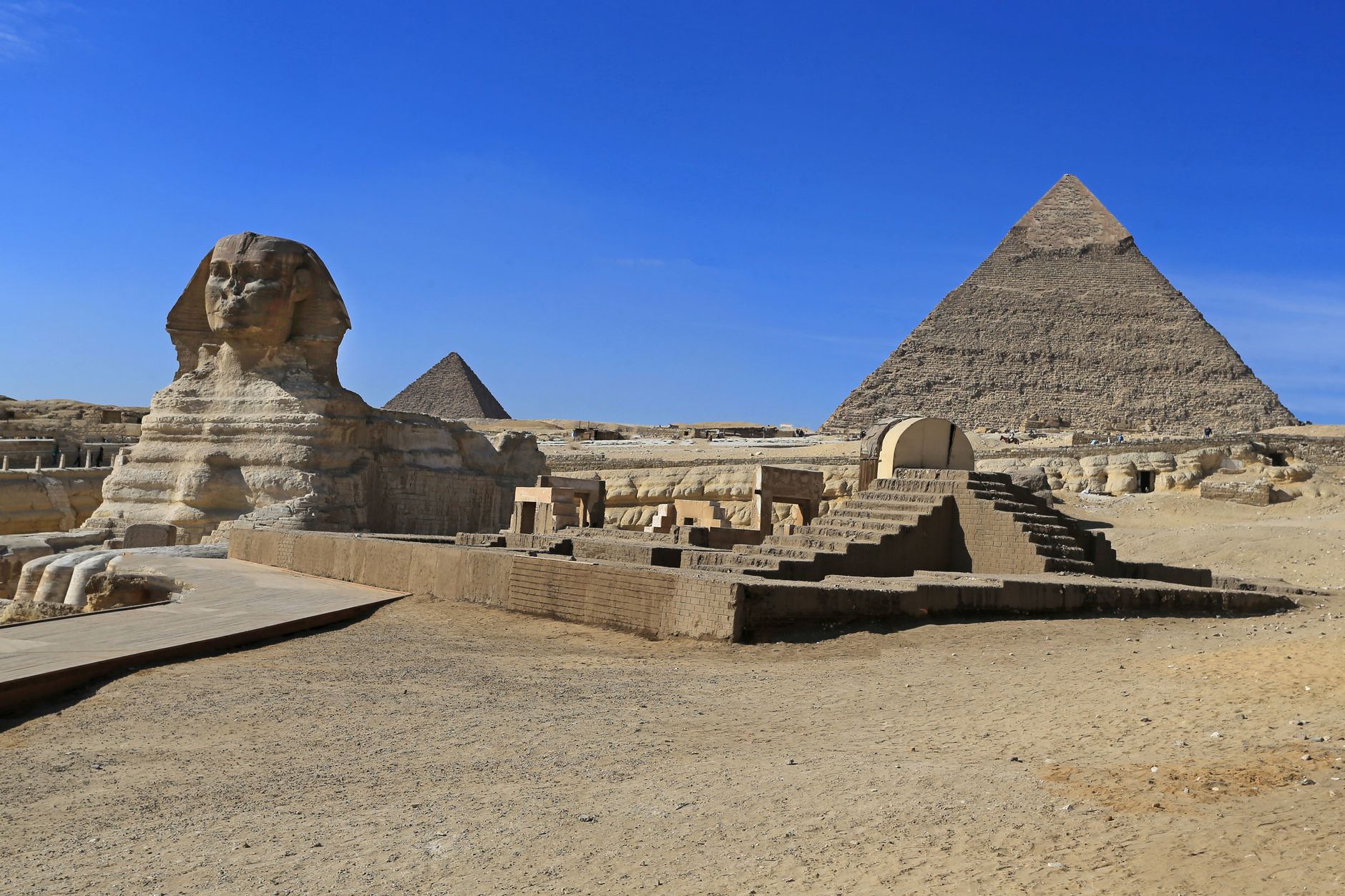
- Giza, west. The pyramid plateau, the Sphinx and the Grand Egyptian Museum, which sits minutes from the pyramids on the desert edge. From central Cairo this is forty-five minutes to well over an hour depending on traffic. Everything here is one cluster and should be done as one block of time.
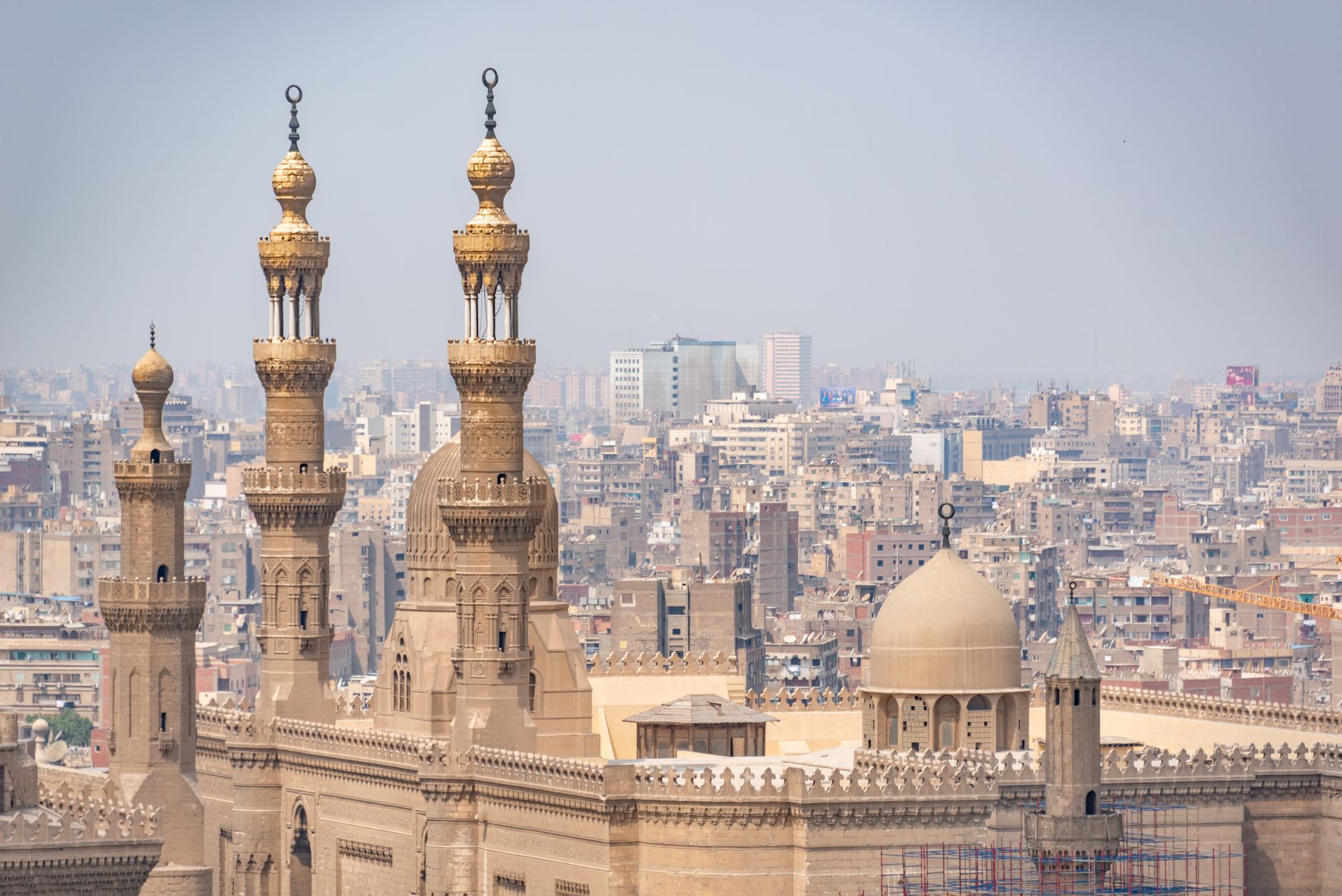
- Islamic Cairo, east. Al-Muizz Street, Khan el-Khalili, Al-Azhar Mosque, Bab Zuweila, the Citadel of Saladin and Ibn Tulun. Walkable within itself, dense, and the part of the city that most repays going slowly.
- Coptic Cairo and Fustat, south. The Hanging Church, Ben Ezra Synagogue, the Coptic Museum and, ten minutes away, the National Museum of Egyptian Civilization with the royal mummies. Compact and easy — El Malek El Saleh on Metro Line 1 puts you at the door.
- Downtown, Zamalek and the Nile, centre. The Egyptian Museum at Tahrir, the Corniche, Cairo Tower, the feluccas, the restaurants. This is where most people sleep and eat rather than sightsee.
The traffic rule
Crossing between clusters costs you between thirty and ninety minutes each way, and it is genuinely unpredictable. Every plan on this site is built to keep you inside one cluster per half-day. Ignore that principle and you will lose two hours a day to the ring road, which over a three-day trip is most of a day.
The corollary is that where you sleep matters more in Cairo than in most cities. A hotel in Giza turns the pyramids into a ten-minute trip and Islamic Cairo into an expedition; a hotel downtown or in Zamalek does the reverse. Our guide to where to stay in Cairo lays out the trade-off by neighbourhood, and it is worth reading before you book, not after.
How to get between them
Ride-hailing through Uber or Careem is the default for visitors: metered, cheap by international standards, and it removes the negotiation that makes street taxis tiring. The metro is excellent for the north–south spine — three lines, flat fares, and far faster than the roads at rush hour — but it does not serve Giza’s plateau or the GEM directly. The full picture, including the monorail and when a taxi genuinely beats the train, is in getting around Cairo.
One day in Cairo
A single day forces a choice, and pretending otherwise is the commonest mistake in Cairo planning. You can do Giza and the Grand Egyptian Museum, or you can do Islamic and Coptic Cairo. You cannot do both without spending the day in a car and seeing everything through a window.
For a first visit the pyramids-and-museum day is almost always the right call — they are why most people come, they sit together geographically, and the GEM is air-conditioned when the plateau is not. Start at Giza at 08:00 while it is cool and the light is good, break for lunch, then give the museum two to three hours in the afternoon. For a layover, work backwards from your boarding time and allow three hours at the airport, which usually means Giza only.
The layover version
If your day is a connection rather than a stay, the arithmetic is unforgiving. Cairo International sits north-east of the city and Giza is on the far south-western edge, which in bad traffic is ninety minutes apart. Good operators build the day backwards from your boarding time and get you back to the terminal around three hours before departure. That means a layover of under eight hours realistically buys you the pyramids and nothing else, and a layover of under six hours buys you a coffee in the AirMall. Anyone selling you a “layover tour” that includes the pyramids, the GEM, Khan el-Khalili and the Citadel on a seven-hour connection is selling you a missed flight.
The one-day timings that work
- 08:00 — At the Giza gate. This is the coolest hour, the light is low and long, and the coach parties have not arrived.
- 08:00–11:00 — The plateau: the Great Pyramid, the panorama point, the Sphinx. Interior access to a pyramid is a separate ticket and worth it once if you are not claustrophobic, though there is nothing to see inside beyond the passage itself.
- 11:30–12:30 — Lunch off the plateau, away from the gate restaurants.
- 13:00–16:00 — The Grand Egyptian Museum, on a pre-booked timed slot.
- Evening — Nile-side dinner if you still have energy, or an early night if you are flying on.
Two days in Cairo
Two days is the efficient minimum and the most common length for a stopover on the way to Luxor or the Red Sea. The split is obvious and it works: Giza and the GEM on day one, Islamic Cairo and the Citadel on day two, with an evening on the Nile if you have the energy.
The temptation on a two-day trip is to bolt on Saqqara. Resist it. Saqqara is a genuinely good half-day and a poor ninety minutes, and squeezing it into a two-day trip means doing Giza badly to make room.
Three days in Cairo
Three days is where the city starts to make sense rather than merely being ticked off. You get the pyramids, the two great museums, a proper walk through Islamic Cairo, Coptic Cairo, and enough slack to sit in a café for an hour without feeling you are stealing time from something.
It is also the most-searched trip length in the whole niche, which tells you something true: three days is what people instinctively feel Cairo is worth, and they are broadly right for a first visit. Our three-day plan is built around one cluster per day with a deliberately unstructured evening in each.
What the three days look like
- Day one — Giza and the GEM. The plateau early, lunch, then the Grand Egyptian Museum on an afternoon slot. Finish with the terrace view back towards the pyramids you stood under in the morning, which is a better piece of theatre than any sound-and-light show.
- Day two — Islamic Cairo. Start at Bab al-Futuh and walk south along Al-Muizz to Bab Zuweila, whose minarets you can climb for a rooftop view over the whole medieval quarter. Khan el-Khalili is thirty seconds off the street through an alley, not on it, which surprises most first-timers. Afternoon at the Citadel of Saladin, or at Ibn Tulun and the Gayer-Anderson Museum next door if you would rather have the quieter, older option. Ibn Tulun dates to AD 876–879, is the oldest mosque in Egypt surviving largely in its original form, and entry is free.
- Day three — Coptic Cairo and Tahrir. Metro Line 1 to Mar Girgis for the Hanging Church, Ben Ezra Synagogue and the Coptic Museum, then either the National Museum of Egyptian Civilization at Fustat for the royal mummies, or back into town for the Egyptian Museum at Tahrir. Evening on the Nile.
That structure — one cluster a day, mornings outdoors, afternoons indoors, evenings unplanned — is the skeleton of every longer plan on this site. The extra days do not change the shape; they add days on the same pattern.
Four days in Cairo and Giza
The fourth day is the one that changes the character of the trip, because it is the day you can give to Saqqara, Dahshur and Memphis. The Step Pyramid at Saqqara is older than anything at Giza, the Bent and Red Pyramids at Dahshur show the engineering being worked out in real time, and Dahshur in particular is often almost empty — you can walk into the Red Pyramid with no queue at all, which is not an experience Giza offers.
This is also the day where a hired car and driver earns its money. The three sites are strung out along the desert edge south of Giza and public transport between them is genuinely awkward. Our day trips from Cairo guide covers the practicalities and costs.
Five days in Cairo
Five days lets you add a bigger excursion — Alexandria on the coast, or Fayoum with its lake and the whale fossils of Wadi al-Hitan — plus one day deliberately left loose. That loose day is not filler. It is where people end up having the experiences they actually remember: an afternoon in Al-Azhar Park watching the Citadel change colour, a long lunch in Zamalek, a felucca at sunset with nothing scheduled after it.
Alexandria is a long day — roughly three hours each way by road, less by train — and works better as an overnight if you can spare it. Fayoum is closer and stranger, and it is the better choice if you have already seen a lot of monuments.
Seven days: Cairo, Luxor and Aswan
At a week the trip stops being a Cairo trip and becomes an Egypt trip. The standard shape is three or four days in Cairo, then south to Luxor and Aswan by sleeper train or domestic flight.
The transport decision matters more than people expect. Luxor is roughly seventy-five minutes by air and ten to fourteen hours by sleeper train. Flights are frequently cheaper than a sleeper berth, but the sleeper saves you a hotel night and moves while you sleep. Set against that: the train is noisy, it stops roughly hourly through the night, and it can run hours late, while domestic flight delays of more than a couple of hours are rare. The advice that has held up best is to take the train one way and fly the other, so you get the experience without gambling the whole trip on it.
Ten days with a Nile cruise
Ten days is, in our view, the best-balanced Egypt itinerary available. Cairo gets three or four days, a Nile cruise between Luxor and Aswan gets three or four nights, and the pace stops being a forced march. A cruise also solves the Upper Egypt logistics problem entirely: your hotel moves with you, the temples appear on the bank in the right order, and you are not repacking every morning.
Cairo’s own Nile is a different thing altogether — dinner cruises, feluccas and the Corniche rather than temple-hopping — and it deserves an evening of its own. That side of the river is covered in Cairo’s Nile experiences.

Two weeks in Egypt
A fortnight is where the optional Egypt appears: Abu Simbel, the Red Sea at Hurghada or Sharm el-Sheikh, the Western Desert oases, or Siwa out near the Libyan border. It is also the length at which you can build in genuine rest, which matters — Egypt in a hurry is exhausting in a way that the itineraries rarely admit.
Two practical notes. There is no train to Hurghada or Sharm el-Sheikh; both are flights or long bus journeys. And the Western Desert oases are a different kind of trip altogether — camping under the white chalk formations of the White Desert is a highlight of many people’s Egypt, but it is not something to slot in between museums.
Seasons: when your itinerary works and when it fights you
The same plan is a different trip in January and in July, and the difference is large enough to change what you should attempt in a day.
- December to February. Daytime highs of 18–24 °C (65–75 °F), cool evenings around 10–15 °C, rain rare. The best walking weather of the year and the reason the three-day Islamic Cairo plan is comfortable in winter and brutal in summer. Prices and crowds spike hard over Christmas and New Year.
- March to May. Warm, pleasant, and the shoulder season sweet spot, with the khamsin winds an occasional dusty nuisance in spring.
- June to August. Very hot. Any plan involving the Giza plateau needs to start at opening and be finished by midday, and afternoons should be spent indoors — which, conveniently, is what the GEM, the Egyptian Museum and the Museum of Islamic Art are for.
- September to November. Cooling steadily, still bright, and arguably the best all-round time to visit.
Ramadan shifts roughly eleven days earlier each year and changes opening hours, restaurant rhythms and the whole atmosphere of the evening. It is a wonderful time to be in Cairo and a slightly awkward one to run a tight schedule through. There is a full breakdown in the best time to visit Cairo guide.
What every Cairo itinerary should include
Across every length, a handful of things earn their place. If your plan has none of these in it, it is a checklist rather than a trip.
- One unstructured evening. A café on a side street, a walk along the Corniche, an hour in Al-Azhar Park. Cairo at night is a different and friendlier city.
- One meal that is not at a hotel. Koshari from a proper koshari house costs a couple of dollars and is the national dish. Start with the Cairo food guide.
- One thing on foot. Al-Muizz from Bab al-Futuh south to Bab Zuweila is about a kilometre and holds the greatest concentration of medieval Islamic architecture anywhere in the world.
- One sit-down with a view. The Citadel walls, Cairo Tower or the GEM’s terrace, where the pyramids appear through the window at the top of the staircase.
- Buffer. At least ninety minutes a day that is not allocated to anything. You will need it.
What to cut, and what people cut wrongly
Being honest about what is not worth your limited time is more useful than another list of highlights.
Cut the hop-on hop-off bus. It exists in Cairo and it does not work. The city is too spread out, the traffic too unpredictable and the stops too far from the actual sights for the format to make sense. A day of ride-hailing costs less and is faster.
Cut the papyrus “institute”. Almost every organised tour includes a stop at a papyrus or perfume showroom. These are commission stops. The genuine article exists, but what most visitors are sold is banana leaf. If you want papyrus, read our papyrus buying guide first and go alone.
Cut the second full-day desert trip on a short stay. The Western Desert is extraordinary and it needs two days minimum to be anything other than a long drive.
Do not cut the Egyptian Museum at Tahrir. This is the commonest wrong cut since the GEM opened. Tahrir lost Tutankhamun and the royal mummies, but it kept around 120,000 objects and the building itself is part of the appeal. It is also downtown, so it costs you far less travel time than anything in Giza.
Do not cut Coptic Cairo to save an hour. It is small, compact, metro-accessible and covers a strand of Egyptian history that the pharaonic sites do not touch at all.
Building your own plan: five rules
- One cluster per half-day. Giza, Islamic Cairo, Coptic Cairo, downtown. Never two in a morning.
- Outdoor sites early. Giza, Saqqara, Dahshur and any walking should happen before midday for eight months of the year.
- Museums in the afternoon. They are air-conditioned, they do not care about the light, and the GEM’s late openings on Wednesday and Saturday are underused.
- Book the timed things first. The Grand Egyptian Museum sells timed slots online and on-site sales are suspended. Fix that slot, then build the day around it. See the full GEM visitor guide.
- Leave one thing out on purpose. Whatever you drop, you will have a better trip than the person who kept it and rushed everything else.
Practical things to sort before you arrive
A handful of small decisions made in advance remove most of the friction from any of these plans.
Tickets and bookings
The Grand Egyptian Museum is the only genuinely time-critical booking: it sells timed slots online through its official portal, on-site sales are suspended, and slots for good times fill. Everything else in Cairo — Giza, the Citadel, Tahrir, the NMEC — you can buy at the gate on the day. Book the GEM slot first and let the rest of the day arrange itself around it.
Money
Egypt still runs substantially on cash despite cards being accepted in hotels and larger restaurants. Carry small notes: entry fees, taxis, tips and street food all want them, and nobody at a koshari counter can break a large bill at nine in the morning. Baksheesh — small tipping for small services — is woven through daily life and is not a scam, though it is sometimes used as one.
What to wear
Modest, loose and covered is both the respectful choice and the comfortable one. Shoulders and knees covered for everyone; women should carry a scarf for mosque visits, where hair must be covered and shoes come off at the door. Sturdy shoes matter more than people expect — the plateau is sand and broken limestone, and Al-Muizz is uneven stone.
Water, heat and air
Tap water is not recommended for drinking; buy sealed bottles and drink more than feels necessary. Cairo also has regularly high levels of dust and air pollution, and official advice to anyone with a lung condition or breathing difficulties is to seek medical advice before travelling. It is worth knowing rather than worrying about.
Scams and hassle
Cairo’s hassle is concentrated at the Giza gate, around Khan el-Khalili and outside major hotels, and it is persistent rather than dangerous. The camel and horse touts at the pyramids are the classic case: the quoted price is for the ride up, and the price to get down again is negotiated separately at the top. Agree everything in advance, in writing on a phone screen if necessary, or decline entirely. Our safety and scam awareness guide goes through the standard approaches.
Frequently asked questions
How many days do you need in Cairo?
Three is the sweet spot for a first visit: pyramids and the Grand Egyptian Museum, Islamic Cairo and the Citadel, then Coptic Cairo and the Egyptian Museum at Tahrir, with evenings free. Two days works if you are disciplined about it. Four or five lets you add Saqqara, Dahshur and either Alexandria or Fayoum without ever feeling hurried.
Can you see the pyramids and the Grand Egyptian Museum in one day?
Yes, and it is the standard shape of a one-day Cairo itinerary. They sit minutes apart on the same side of the city. Start at the plateau at 08:00, break for lunch, and give the museum two to three hours in the afternoon. With small children, split it across two days instead.
Is a guided tour worth it, or should you plan it yourself?
A guide transforms Giza, Saqqara and the Citadel, where the stones do not explain themselves. A guide is much less necessary at the GEM, which is well labelled and easy to navigate. The middle path most people settle on is a guided pyramids day and self-guided everything else. A private full-day Cairo tour of around ten hours runs to roughly USD 110 per person, with group equivalents nearer USD 80.
What is the best order to do things in?
Front-load Giza. Do the pyramids on your first full morning, while you are freshest and before Cairo’s pace has worn you down, and while there is still slack in the trip to go back if the weather turns. Leave the flexible, indoor and downtown things for later days.
Should you base yourself in Giza or central Cairo?
Central Cairo or Zamalek for a trip of three days or more — you will be moving around the city, the restaurants are better and the river is on your doorstep. Giza only for a one- or two-day trip focused on the pyramids and the GEM, or if a pyramid view from the window matters more to you than everything else.
Is a Nile cruise worth adding?
On a trip of ten days or more, yes — it solves the Upper Egypt logistics and paces the temples properly. On a seven-day trip it is possible but tight, and you may prefer land-based Luxor and Aswan with flights between them. On anything shorter, no.
How much should a week in Egypt cost?
Enormously variable, but as an anchor: budget travellers manage on around USD 50 a day in Cairo, mid-range sits around USD 100–150 a day including a decent hotel, and a private guide with a car adds roughly USD 80–110 a day. Domestic flights and cruises are the items that move the total most. The Cairo travel budget guide breaks the numbers down properly.
When is the worst time to visit?
July and August, when afternoon heat on the Giza plateau is genuinely punishing, and the fortnight around Christmas and New Year, when prices and crowds both spike. Neither is a reason not to come — both are reasons to adjust the plan.
The full hour-by-hour version of the single-day plan, including the alternative Islamic and Coptic route and the layover arithmetic, is in one day in Cairo: the perfect 24-hour itinerary.
The full hour-by-hour version of the 48-hour plan, including the Friday-Saturday and summer variations and what a weekend actually costs, is in two days in Cairo: the weekend itinerary.
Three days is the length most first-time visitors instinctively land on, and they are broadly right. The full day-by-day version, with hour-by-hour timings, a costs table and the deliberate slack built in, is in three days in Cairo: the complete itinerary.
The fourth day is the one that changes the character of the trip, because it is the day Saqqara and Dahshur become possible. The full version, including the Red Pyramid interior and three alternatives if the desert is not for you, is in four days in Cairo and Giza.
The fifth day is a choice rather than an addition: the Mediterranean at Alexandria, forty-million-year-old whale fossils at Wadi al-Hitan, or a day in Cairo with nothing scheduled at all. We compare all three in five days in Cairo: beyond the highlights.
At a week the trip stops being a Cairo trip and becomes an Egypt trip. Our seven-day Egypt itinerary runs one way south — three days in Cairo, two in Luxor, two in Aswan, flying home from Aswan rather than backtracking — and settles the sleeper-train-versus-flight question with the actual arithmetic.
Ten days is, in our view, the best-balanced Egypt trip available: four days in Cairo, a four-night cruise between Luxor and Aswan, and Abu Simbel at the end. The full plan, with an honest account of what a Nile cruise is actually like and how to choose a boat, is in our ten-day Egypt itinerary with a Nile cruise.
A fortnight is the first length that can hold the other Egypt — the Red Sea, the Western Desert oases, Siwa — and the first with room for genuine rest. Our complete 14-day Egypt itinerary gives Cairo five days, the Nile six, and a final block that is deliberately not archaeology.
Travelling with children changes the arithmetic more than anything else on this page: the rule becomes one big sight a day, in the morning, with the afternoons given over to a pool or a park. We have built a separate Cairo itinerary with kids around that rule, with swaps for toddlers and teenagers.
For a five-day trip that trades a third day of Cairo sights for the Mediterranean, our two-city Cairo and Alexandria route spends three nights in Cairo and two in Alexandria, taking the morning train from Ramses on day three.
Related Cairo Guides
- How many days do you need in Cairo?
- Things to do in Cairo
- Visiting the Pyramids of Giza
- Cairo museums guide
- Day trips and excursions from the city
- Transport: metro, taxis and ride-hailing
- Choosing a neighbourhood to stay in
- Eating in Cairo
- Weather and the best time to travel
- First time in Cairo: essential planning
Photo Credits
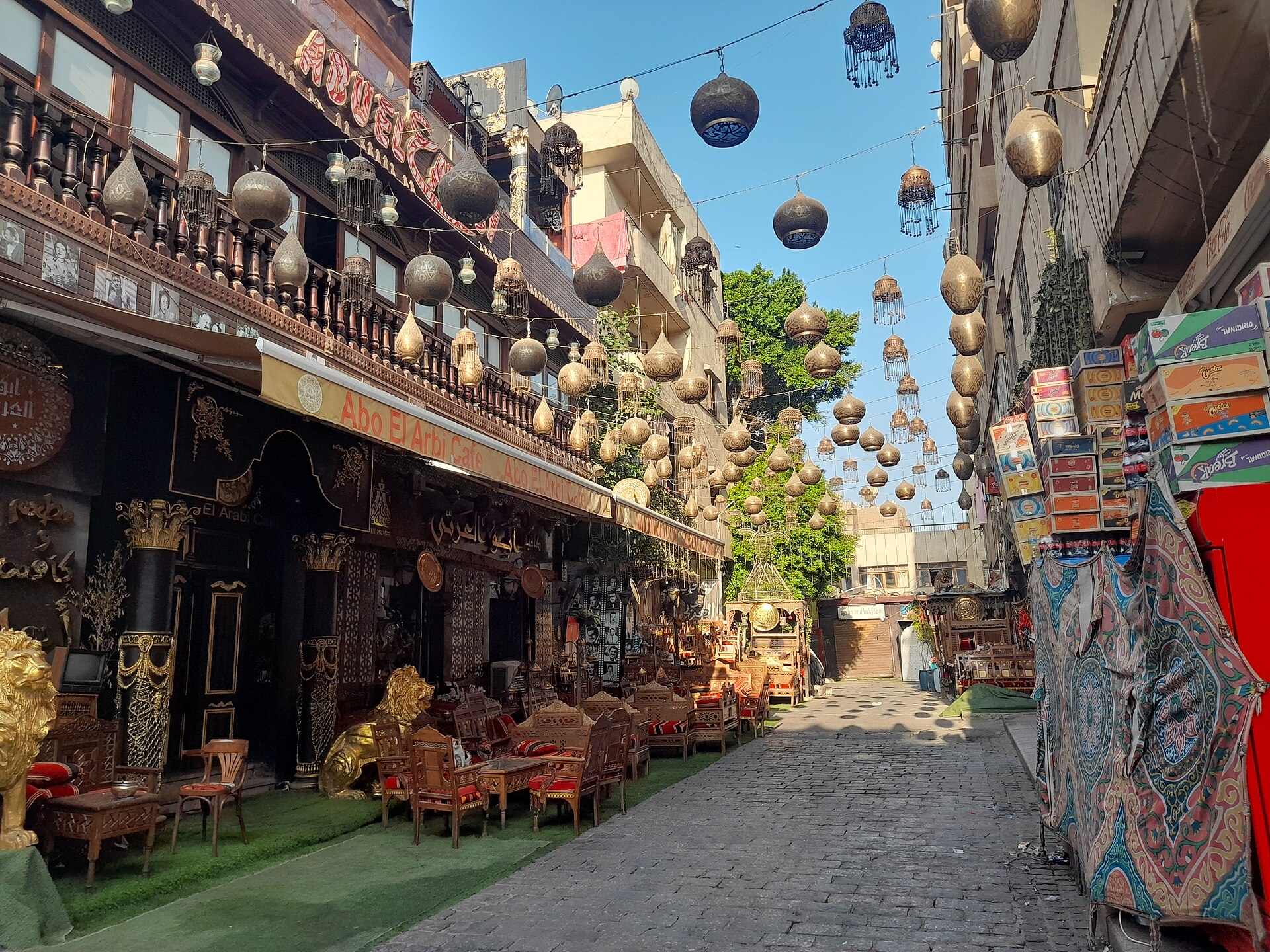
Lantern-hung alley off Al-Muizz Street: photo by Marsupium, via Wikimedia Commons (CC BY 4.0).
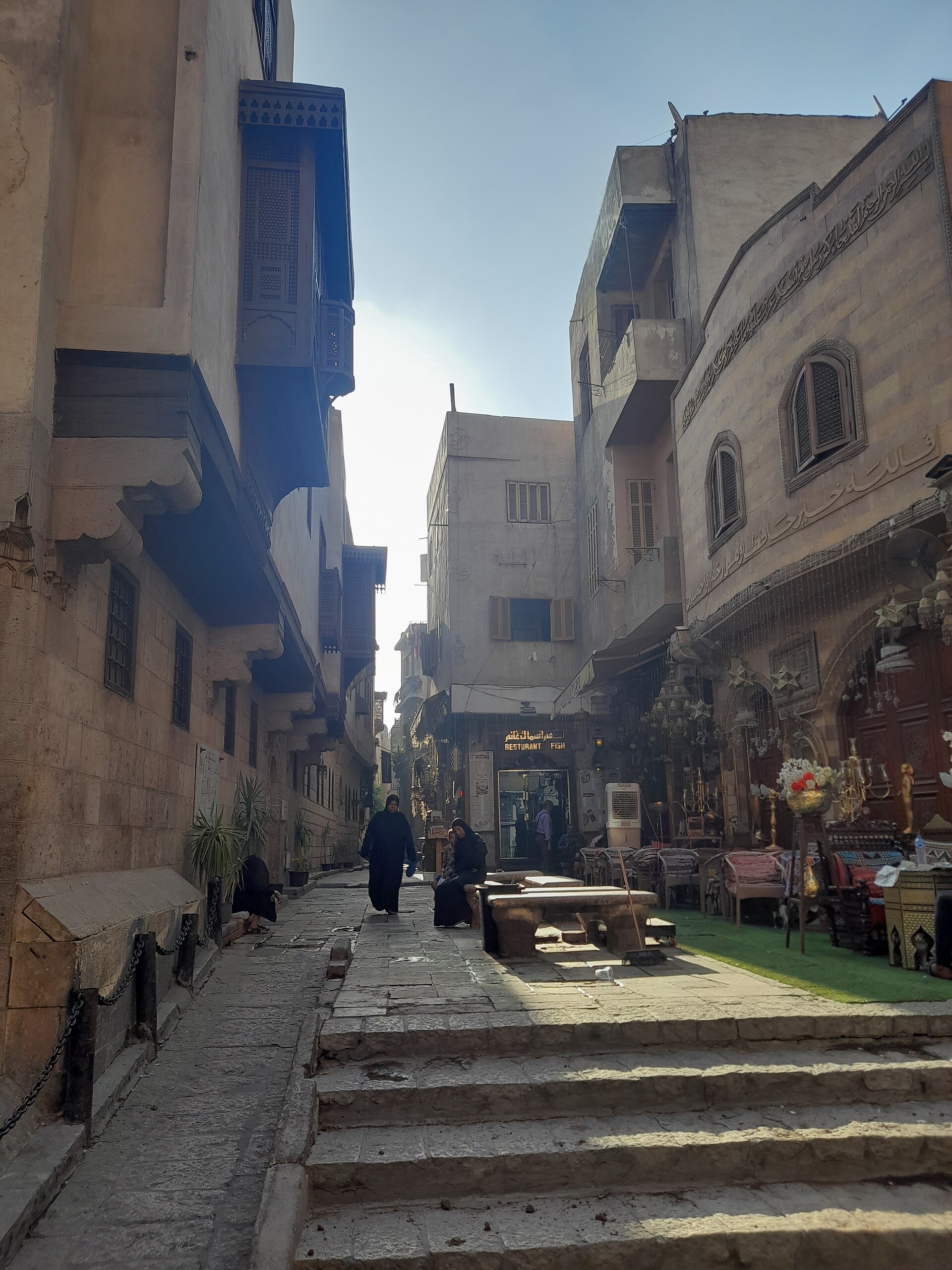
Al Darb Al Asfar alley seen from Al-Muizz Street: photo by Marsupium, via Wikimedia Commons (CC BY 4.0).