This article contains advertising. Our booking links are routed through a partner that adds commission tracking automatically, so if you book through one we earn a commission from the provider, at no extra cost to you. It never affects what we recommend. Affiliate disclosure
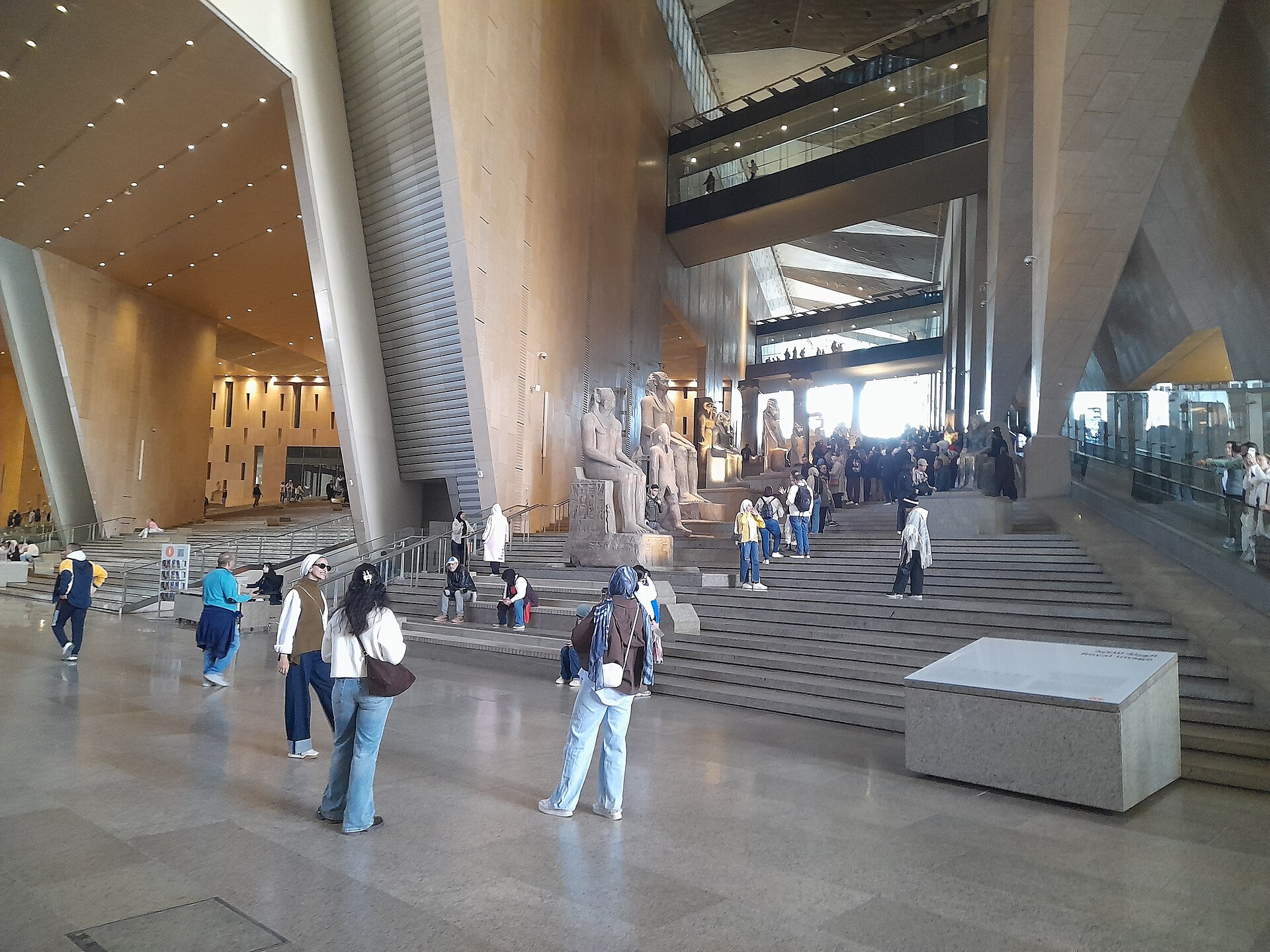
Walk into the Grand Hall and the first thing that happens is a recalibration of scale. A red granite colossus of Ramses II stands eleven metres up at the far end, and it takes a second or two to understand that the people at its feet are not children. Behind it a staircase climbs six storeys, lined with statues, and at the top there is a window. The window frames the pyramids. That single architectural gesture — spend twenty minutes walking uphill past four thousand years of stone kings, then turn and look out at the thing they built — is the reason the Grand Egyptian Museum is worth the trip out to Giza even if you thought you were done with museums.
This guide covers what the museum actually contains, what a ticket costs and how to buy one, how long to allow, how to get there from central Cairo, what the food and facilities are really like, and how the GEM fits alongside the two other big Cairo collections that visitors constantly confuse it with. Prices and hours were checked in September 2026; the pound moves, so treat the numbers as the right order of magnitude and confirm the current figure on the official portal before you book.
The Grand Egyptian Museum at a glance
The short version, before the detail: it is enormous, it is genuinely well done, it requires a pre-booked timed slot, and it is two kilometres from the pyramids rather than in central Cairo. Almost every visitor mistake follows from getting one of those four things wrong.
| What | Detail |
|---|---|
| Location | Giza, on the desert road approach, roughly 2 km from the pyramid plateau |
| Opened | Fully opened November 2025, after a long and much-delayed construction |
| Foreign adult ticket | EGP 1,450–1,590 (~USD 30–33) |
| Foreign student / child 6–25 | ~EGP 730 (~USD 15) with valid ID |
| Egyptian nationals | ~EGP 200 (~USD 4) |
| Under 6 | Free |
| Galleries open | 09:00–18:00 Sun, Mon, Tue, Thu, Fri; 09:00–21:00 Wed and Sat |
| Complex open | 08:30–19:00 most days; 08:30–22:00 Wed and Sat |
| Last entry | One hour before the galleries close |
| Booking | Online only, timed entry. On-site sales are suspended |
| Realistic visit | 3–4 hours for most people; 5–6 for a thorough pass |
Prices checked September 2026. The ticket is all-inclusive: one price covers the main galleries, the Tutankhamun galleries, the Grand Hall and Staircase, the Khufu boat building, the commercial area and the outdoor gardens. There is no separate charge to see the golden mask, which is a welcome change from the old arrangement at Tahrir where the mummy room was a paid add-on.
What the GEM actually is
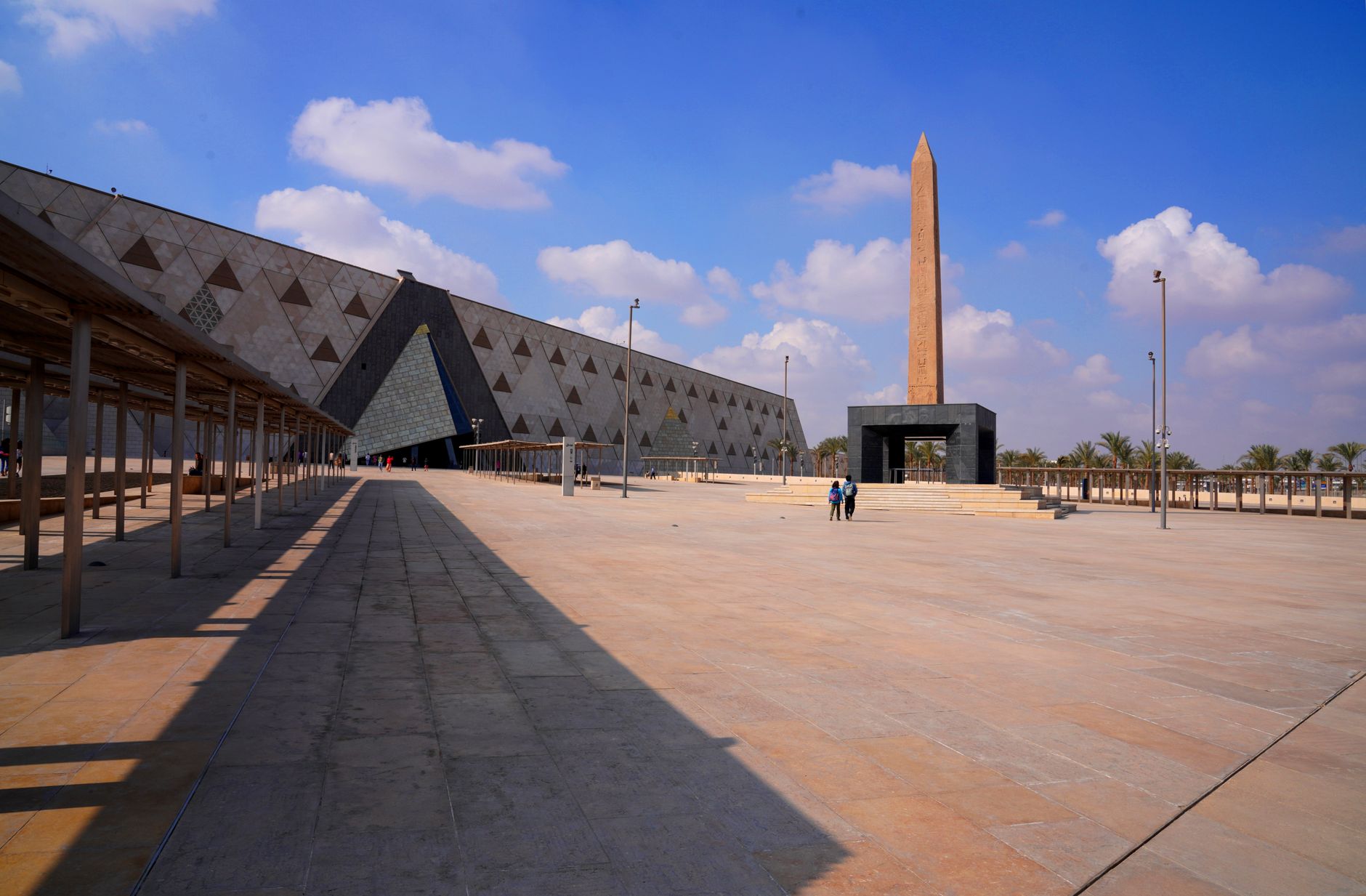
It is easy to read “new Egyptian museum” and picture a bigger version of the old one. It is not that. The building was designed by the Dublin practice Heneghan Peng, won through an international competition, and it is a piece of architecture in its own right — a long triangular wedge cut into the desert escarpment, its front face a translucent alabaster screen that glows at dusk, its geometry set on sightlines that run to the three pyramids. The site slopes about fifty metres from the entrance plaza to the back of the galleries, and the architects used the slope rather than flattening it. You climb through the museum. That is not a metaphor.
The collection is the other half of the story. The museum’s own figure is around 100,000 artefacts, drawn from the Tahrir museum’s overflowing basements, from storerooms across the country, and from excavations that had never been publicly shown. Crucially, the entire Tutankhamun assemblage is here — more than five thousand objects, displayed together for the first time since Howard Carter cleared the tomb in the 1920s. At Tahrir you saw perhaps a third of it, crammed into two rooms.
The building, space by space
- The entrance plaza and hanging obelisk. Outside, before you scan your ticket, a granite obelisk of Ramses II is mounted so that you can walk beneath it and look up through a cut in the base at the cartouche carved on the underside. It is the first sign that this museum has thought about how people actually look at things.
- The Grand Hall. The Ramses II colossus, about eighty-three tonnes of red granite, moved here in 2018 in a convoy that stopped the city. It stood in Ramses Square in downtown Cairo for half a century, breathing traffic fumes. It looks considerably better now.
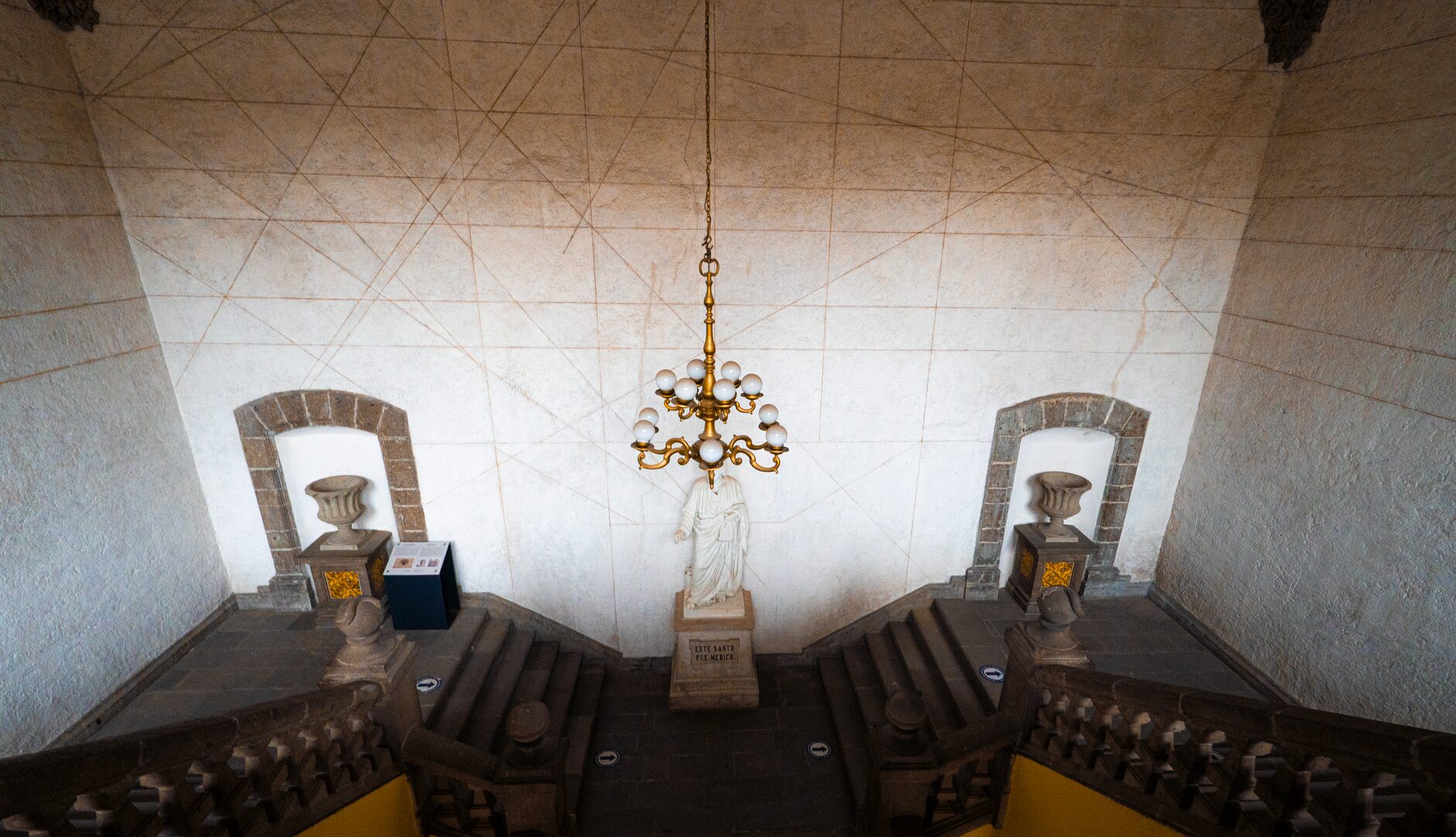
- The Grand Staircase. Six flights, dozens of major sculptures arranged so that the further you climb, the later the dynasty. Kings, gods and the occasional astonishingly human private individual. Take it slowly; most people rush it on the way up because they think the museum starts at the top, and it does not.
- The main galleries. Twelve halls on the upper level, organised on a grid: four chronological blocks — Predynastic and Old Kingdom, Middle Kingdom, New Kingdom, Late Period through Greco-Roman — crossed by three thematic strands covering society, kingship and belief. In practice you can walk it chronologically or thematically and it works either way.
- The Tutankhamun galleries. A separate, darker, deliberately theatrical suite of rooms.
- The Khufu boat building. A dedicated structure for the 4,600-year-old cedar solar barque, moved from its old shed beside the Great Pyramid in 2021.
- The Children’s Museum, cinema and conference centre. Genuinely useful if you have brought children who have reached their statue limit.
The part of the museum you cannot see
Underneath and behind the public galleries sits the Grand Egyptian Museum Conservation Centre, a set of specialist laboratories — wood, textiles, human remains, stone, metals, organic materials — that has been working on the collection since long before the doors opened. Tutankhamun’s ceremonial chariots and much of the tomb’s textile and leather material were treated here over years, some of it not touched since Carter’s team packed it in the 1920s.
It is not open to general visitors and there is no tour to book, so do not go looking for it. It is worth knowing about anyway, for two reasons. It explains why so many objects in the Tutankhamun galleries look startlingly unlike the brownish photographs you may remember from books — a great deal of what you are seeing has been cleaned and stabilised in the past decade. And it is the reason the museum can display fragile organic material at all, rather than keeping it in a drawer. When a label says an object is on public display for the first time, the Conservation Centre is usually why.
Tickets, booking and the things that go wrong
Buy online. This is not advice, it is the only option — walk-up sales at the gate were discontinued, and the desks on site now handle collection and problems rather than sales. The official portal is visit-gem.com, which redirects to tickets.gem.eg. Book there and nowhere else.
That warning matters more than it sounds. A large number of sites sell “GEM tickets” at two or three times face value, bundled with transport you did not ask for, and a smaller number of them are not selling anything at all. The official site offers two ticket types — a plain Admission Ticket and a Guided Tour Ticket — plus optional add-ons at checkout. If the page you are on has a dozen tiers and a countdown timer, you are not on the official site.
How the timed slots work
You choose a date and an entry window. Windows run through the day from mid-morning, and once you are inside there is no deadline pushing you out — the slot governs when you come in, not how long you stay. Arriving fifteen or twenty minutes into your window is fine. Arriving an hour late is a negotiation you may lose on a busy weekend.
The practical consequence is that you cannot decide over breakfast to visit the museum that morning, at least not in high season. Book at least a few days out for December and January, and further ahead for the fortnight around Christmas and New Year, when Cairo prices and crowds both spike.
Discounts worth claiming
- Student rate for anyone under 25 with a valid international student card — roughly half the adult price. Bring the physical card; a photo of it has been refused.
- Children 6–12 at the reduced rate, under 6 free. Nobody scrutinises a toddler’s paperwork particularly hard, but bring a passport copy if the child is borderline.
- Egyptian and Arab nationals at a fraction of the foreign rate, which is standard practice across Egyptian sites and worth knowing if you are travelling with an Egyptian friend or partner.
There is no combined GEM-and-pyramids ticket, despite what a number of tour listings imply. You pay the museum and you pay the plateau separately, and our guide to pyramid entry fees covers that second bill.
Opening hours and the best time to walk in
The complex opens at 08:30 and the galleries at 09:00. On Wednesdays and Saturdays everything stays open late — galleries until 21:00, the complex until 22:00. Last entry is one hour before the galleries close, so a 20:00 arrival on a Wednesday is technically legal and practically pointless.
Three honest observations about timing. First, the earliest slot is the quietest by a wide margin, and the light through the alabaster screen at that hour is the best it gets. Second, Fridays and Saturdays are the Egyptian weekend, and the museum fills with domestic visitors, school groups and families — a good thing culturally, a slow thing if you want to stand in front of the mask. Third, the Wednesday and Saturday evening openings are the most underused asset the museum has. At 19:00 on a Wednesday the galleries are calm, the building is lit from within, and the pyramids through the staircase window are silhouettes.
Avoid, if you can, the two-hour window after a cruise ship docks at Alexandria and buses its passengers down. There is no published schedule for this and no way to plan around it beyond a general rule: mid-morning, between roughly 10:30 and 12:30, is when group traffic peaks.
Getting there from Cairo
The GEM sits on the desert edge west of Giza, near the 6th of October approach. From Zamalek or downtown it is somewhere between forty minutes and an hour and a half depending entirely on the Ring Road, which is unpredictable in a way no journey planner captures.
| From | Method | Rough cost | Time |
|---|---|---|---|
| Downtown or Zamalek | Uber or Careem | EGP 250–400 (~USD 5–8) | 45–90 min |
| Downtown | Metro to Giza, then ride-hail | EGP 10 metro + EGP 150–250 car | 60–90 min |
| Giza pyramid entrance | Ride-hail or a short taxi hop | EGP 80–150 (~USD 2–3) | 10–15 min |
| Cairo airport | Ride-hail or pre-booked transfer | EGP 500–800 (~USD 10–17) | 60–100 min |
| Maadi or Heliopolis | Ride-hail | EGP 350–500 (~USD 7–10) | 60–100 min |
Fares checked September 2026 and subject to surge pricing. Use Uber and Careem rather than flagging a street taxi for this trip — the destination is new enough that drivers occasionally head for the pyramids gate instead, and having the pin on a screen settles that argument before it starts. There is a large, cheap car park if you are driving yourself.
There is no metro station at the museum and no rail link, whatever an outdated blog post tells you. The nearest metro is Giza on Line 2, which leaves you a fifteen-to-twenty-minute drive short. For the full picture on the run out to the plateau, see our guide to getting from central Cairo out to Giza.
Should you stay out near the museum?
If the pyramids and the GEM are the main event of your trip, sleeping in Giza rather than downtown saves you two long crosstown journeys and buys you the first slot of the day without a 07:00 alarm. The trade-off is that Giza’s dining and evening life do not compare with Zamalek or downtown. Our rundown of hotels within sight of the plateau sets out which side of that bargain suits which kind of traveller.
The Tutankhamun galleries
This is what most people come for and it deserves its own treatment. More than five thousand objects from a single tomb, presented as an assemblage rather than a greatest-hits selection: the shrines that nested inside one another, the chariots, the beds, the walking sticks, the folded linen, the board games, the child-sized furniture that had come with him from the palace nursery, and yes, the mask.
The design is deliberately low-lit and slow. You move through in roughly the order Carter emptied the tomb, which is a genuinely good idea, because the cumulative effect of object after object after object is the thing that two crowded rooms at Tahrir could never deliver. By the time you reach the burial equipment you have some feel for how much was buried with a minor king who died at nineteen — and, unavoidably, for how much must have been in the tombs that were robbed.
The mask itself sits alone. There is usually a slow-moving queue and a guard keeping it moving. Photography rules have been inconsistent since opening; assume no flash anywhere and no tripods, and check the signage in that specific room rather than assuming the rule you saw two galleries back still applies.
Khufu’s solar boat
Housed in its own building on the site, this is a 4,600-year-old cedar vessel found dismantled in a sealed pit beside the Great Pyramid in 1954 and reassembled over more than a decade. It was moved here in 2021 on a purpose-built remote-controlled transporter at walking pace, an operation that took most of a night.
Two things about it. It is much larger than photographs suggest — a little over forty metres. And it is the single most impressive object on the site for anyone interested in how things were made rather than what they were made of: sewn together with rope threaded through the planks, no metal fastenings, and structurally sound enough that the reconstruction team believed it would float.
How long to allow, and a route that works
Three to four hours is the honest average, including a sit-down and a coffee. Five to six if you read labels. Two hours is possible and will feel like a forced march. Anyone with a real interest in the material could spend two days here and not be bored.
The three-hour route
- Grand Hall and the Ramses colossus — 10 minutes.
- Grand Staircase, walked up slowly, stopping at the New Kingdom sculpture — 30 minutes.
- The window at the top and the pyramid view — 10 minutes, longer if the haze lifts.
- Tutankhamun galleries — 60 minutes minimum, and do these before you are tired.
- Two or three of the main galleries chosen by period, not all twelve — 40 minutes.
- Khufu boat building — 20 minutes.
- Coffee, shop, gardens — 20 minutes.
The mistake almost everyone makes
Doing the twelve main galleries first, in order, thoroughly, and arriving at the Tutankhamun rooms with ninety minutes of museum fatigue already in their legs. The main galleries are excellent and they are also, in the way of all large chronological displays, somewhat relentless. Go to Tutankhamun early. The rest will still be there.
Food, shops and facilities
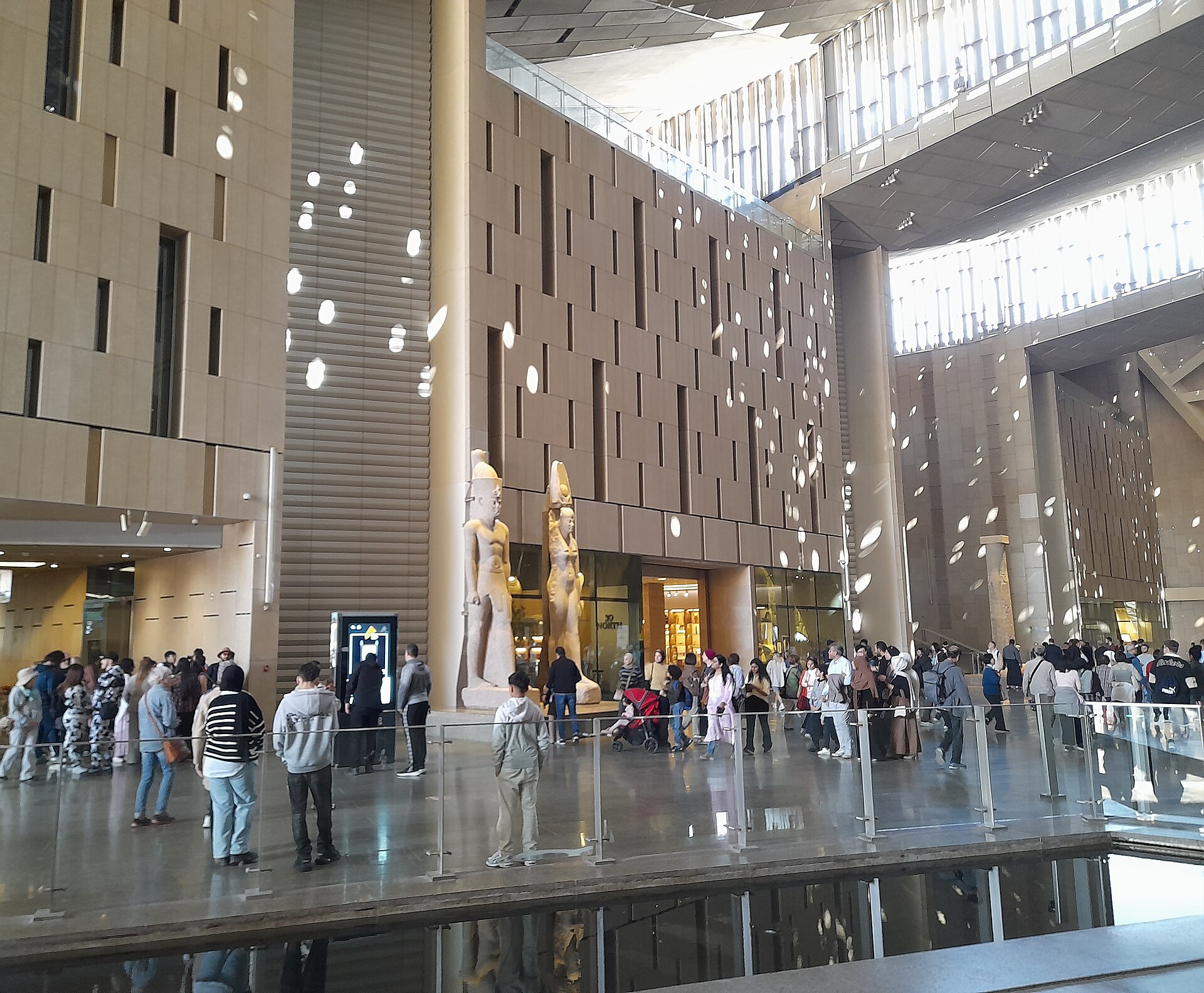
The commercial area sits off the Grand Hall and is included in your ticket, which matters because you can leave the galleries, eat, and go back in. There is a spread of options from a quick counter to a proper sit-down restaurant with a terrace, plus cafés on the upper levels. Expect museum pricing — a coffee and a pastry runs around EGP 150–250 (~USD 3–5), a main course EGP 350–600 (~USD 7–12). That is two to three times what the same thing costs in Dokki, and roughly what you would pay at any comparable museum anywhere in the world.
The honest verdict: the food is fine and the setting is good, but if you are watching a budget, eat before you come. Nothing here is worth the premium in its own right, and the area immediately outside the complex is not set up for casual walk-in eating.
- Lockers and bag drop near the entrance. Large bags and backpacks go in, and there is a security scan on the way in as at every Egyptian site.
- Prayer rooms on site.
- Toilets throughout, clean, and — unusually for Egypt — generally without an attendant expecting a coin. If someone does hand you paper, small notes are the courteous response; our explainer on how baksheesh works in Egypt covers the wider etiquette.
- Wi-Fi in the public areas, variable in the galleries themselves.
- The shop is genuinely good — museum-licensed reproductions, decent books, and prices that are high but not insulting. It is a far better souvenir prospect than the papyrus “institutes” you will be offered on the road to the plateau.
Accessibility
This is the most accessible major heritage site in Egypt by a distance, and it is not close. Step-free routes throughout, lifts to every level, wide ramps, wheelchairs available at the entrance, and level surfaces rather than the sand and broken stone that make so much of Egyptian sightseeing hard work. If mobility is a consideration for anyone in your party, the GEM is the one Cairo attraction you can plan around with confidence.
The GEM, Tahrir and NMEC: which is which
This is the most confused subject in Cairo travel, so here it is plainly. Three museums, three different propositions.
| Museum | Where | Headline holdings |
|---|---|---|
| Grand Egyptian Museum | Giza | The complete Tutankhamun collection, Khufu’s solar boat, around 100,000 artefacts |
| Egyptian Museum, Tahrir | Downtown Cairo | Some 120,000 items, Old and Middle Kingdom depth, and the historic building itself |
| National Museum of Egyptian Civilization | Fustat | The Royal Mummies Hall — 22 mummies including Ramses II — and the full sweep of Egyptian civilisation to the modern day |
And the fact that trips up more visitors than any other: Tutankhamun’s treasures are at the GEM, the royal mummies are at NMEC, and Tutankhamun’s own mummy is at neither — it remains in tomb KV62 in the Valley of the Kings near Luxor, in a climate-controlled case. If seeing the boy king’s actual body is on your list, that is a different trip entirely.
Is Tahrir still worth going to now that the headline pieces have left? Yes, and we make that case at length in our guide to the Egyptian Museum at Tahrir Square. It is a nineteenth-century museum of a kind that barely exists any more — crowded, idiosyncratic, catalogued by hand — and the Old Kingdom material is stronger there than at the GEM. But if you have one museum day in Cairo, spend it here. If you have two, add Tahrir. Our overview of Cairo’s wider museum scene covers the smaller collections worth a detour.
Combining the GEM with the pyramids
Everyone wants to do both in a day, and it is entirely achievable provided you do them in the right order and accept that it will be a long day.
Go to the plateau first, at opening, when the light is good and the heat and the touts are both at their lowest. Give it three hours. Then drive the ten minutes to the museum, eat, and start the GEM from around one o’clock on a booked afternoon slot. The reverse order — museum first — sounds sensible and fails, because you emerge from four hours of air-conditioned galleries into the worst of the afternoon heat and glare at an open desert site, and by then the camel touts have had all day to get bored.
What does not work: adding Saqqara or Memphis to the same day. Operators sell that combination and it produces forty-five minutes at each stop and a bad temper. Our piece on how many days Cairo really needs makes the case for spreading these out, and how the Giza plateau is laid out will help you use those three morning hours properly.

What is not worth your money here
A guide who has not read the room. The GEM’s own labelling is unusually good — bilingual, well written, properly contextualised — and the museum’s Guided Tour Ticket is competent. Independent guides picked up outside the complex vary enormously, and a mediocre one will walk you past the things you wanted to see in order to deliver a fixed script. If you want a guide, book the museum’s own, or a named Egyptologist through a reputable operator, and agree the route before you start.
The skip-the-line upsell. There is no line to skip. Entry is timed and capacity-controlled by design, and the resellers charging a premium for priority access are selling you something the standard ticket already gives you.
The full-day coach tour that promises the GEM, the pyramids, the Sphinx, Saqqara, Memphis, a papyrus workshop and a perfume shop. The two commercial stops exist to pay commission, the itinerary cannot physically fit, and the museum portion collapses to an hour. If a tour includes a papyrus “institute”, read it as a warning label — our guide to telling real papyrus from painted banana leaf explains what is actually being sold in those rooms.
An evening slot on a tight travel day. The Wednesday and Saturday late openings are wonderful, and they are also the last thing you want standing between you and an early flight, given how the Ring Road behaves after dark.
Practical notes worth having
- Bring the booking on your phone and as a screenshot. Egyptian mobile data is generally reliable, but the complex is large and coverage inside is patchy.
- Cash for the extras. Cards work in the restaurants and the shop; small purchases and any tipping are easier in notes.
- Dress for a museum, not a mosque. There is no dress code inside beyond ordinary decency, but if you are pairing the day with the pyramids you will want covered shoulders against the sun anyway.
- Water. Sealed bottles only, in Egypt generally — the tap is not for drinking. The museum sells them; they are cheaper from any shop on the way.
- Allow for the walking. The plaza-to-galleries distance is substantial and mostly uphill by design. Comfortable shoes matter more here than the polished floors suggest.
- Photography. Personal photography is permitted in most areas without flash. Rules differ inside the Tutankhamun suite and can change; follow the signs and the guards rather than another visitor’s example.
Frequently asked questions
Can I buy tickets at the door?
No. On-site sales were discontinued and all entry is by pre-booked timed slot through the official portal at visit-gem.com. Turning up without a booking on a quiet weekday may still work if staff can allocate you a later window, but it is not something to plan around, and in high season it will not happen.
How much is a ticket for a foreign adult?
Around EGP 1,450–1,590, roughly USD 30–33 at September 2026 rates, all-inclusive. Students up to 25 and children aged 6 to 12 pay about half with ID; under-sixes go free.
Is the golden mask of Tutankhamun here?
Yes. The mask and the complete tomb assemblage of more than five thousand objects moved from Tahrir and are displayed together in the dedicated Tutankhamun galleries. His mummy, however, is still in the Valley of the Kings at Luxor, and the other royal mummies are at NMEC in Fustat.
How long does a visit take?
Three to four hours suits most visitors. Allow five or six if you read labels properly, and two days if Egyptology is the reason you came to Egypt at all. Two hours is the practical floor and will feel rushed.
Can you see the pyramids from the museum?
Yes — the top of the Grand Staircase is glazed to frame them, and the terraces and gardens have clear views. Haze is common in the middle of the day; mornings and late afternoons are much better.
Is it suitable for children?
Better than most Egyptian sites. There is a dedicated Children’s Museum, the building is buggy-friendly and step-free, and the Tutankhamun material — chariots, board games, a boy king’s own furniture — holds attention in a way that rows of statuary do not. Plan around a food break rather than pushing through.
Do I need a guide?
Not for comprehension; the labelling is strong enough to carry you. A good guide adds context and pacing, and the museum’s own Guided Tour Ticket is the lowest-risk way to get one. Avoid unvetted guides picked up at the entrance.
Which is better, this or the Egyptian Museum at Tahrir?
The newer museum, if you are choosing only one. It has the Tutankhamun collection, the solar boat, the building and the comfort. Tahrir rewards a second museum day with density, atmosphere and Old Kingdom depth that the newer displays do not attempt.
Is there parking?
Yes, a large car park on site, and it is rarely a problem outside the peak of a public holiday.
Can I do the museum and the pyramids on the same day?
Comfortably, if you take the plateau at opening and the galleries in the afternoon on a booked slot. Doing it the other way round leaves you at an exposed desert site in the afternoon heat, which is a worse day for the same money.
Booking is the part of a GEM visit that most often goes wrong, and it goes wrong before you leave home rather than at the gate. If you want the full detail — every price tier, how the timed slots behave, what identification a student or child rate actually requires, and where the museum stands on refunds and date changes — our dedicated guide to Grand Egyptian Museum tickets and how to book them online covers it properly, including how to spot the reseller sites that outrank the official portal.
The question that follows almost immediately is whether the older museum downtown is still worth a morning as well. It is — but for different reasons and a different kind of visitor, and the answer changes depending on how many days you have and where you are sleeping. We set the two against each other properly in our comparison of the Grand Egyptian Museum and the Egyptian Museum at Tahrir, including the sequence to visit them in if you are doing both.
If you only read one thing before your slot, make it a briefing on the Tutankhamun rooms — they are where the visit succeeds or falls apart, and most people arrive at them already tired. Our walk-through of the Tutankhamun galleries and what is actually in them covers the assemblage chamber by chamber, from the guardian statues to the canopic coffinettes, and flags the ten objects worth finding that nobody ever photographs.
The question that follows a booking is almost always how much of the day to give it, and the answer catches people out — three to four hours is the honest average, and two is the practical floor. If you are fitting the museum around a flight, a cruise stop or the pyramids, our breakdown of how long to spend at the Grand Egyptian Museum gives section-by-section timings and three plans, from a two-hour triage route to a full day.
Worth knowing before you book a slot: the journey out is the part of this day most likely to go wrong, and not because of traffic. Drivers who hear the word pyramids frequently head for the plateau gate, which is a different destination two kilometres short of the museum. Our route guide to getting to the Grand Egyptian Museum from anywhere in Cairo has fares and journey times from every district, the metro workaround, and how to handle the trip back.
One detail is worth pulling out because so few visitors act on it: the galleries stay open until 21:00 on Wednesdays and Saturdays, and those evening hours are the quietest the museum has. Almost every tour and cruise excursion routes through the middle of the day instead. Our guide to opening hours and the best time to visit has the full timetable, last-entry times and an hour-by-hour read on when the building is actually busy.
Two practical questions come up more than any others once people are inside: where to eat, and whether the shop is worth the money. The short answers are that food is available within the ticketed zone so you can break and return, that it costs two to three times city prices, and that the shop is genuinely well run. Our guide to the museum’s restaurants, shops and facilities covers the lot, including lockers, prayer rooms, Wi-Fi and the accessibility detail.
If it is the mummies you actually came for, this is not the building. The twenty-two royal mummies moved to the National Museum of Egyptian Civilization in Fustat during the 2021 parade, and that is their permanent home — a quieter museum, a third of the ticket price, and fifteen minutes from Tahrir on Line 1. Our guide to NMEC and the Royal Mummies Hall covers what it holds, what it costs and how it fits alongside a Giza day.
Most visitors pair the museum with the plateau up the road, and the order decides how the day goes. Plateau at opening, museum in the afternoon on a booked slot — do it the other way round and you finish four hours of air-conditioned galleries by walking out into the worst of the afternoon at an exposed desert site. Our hour-by-hour plan for doing the Grand Egyptian Museum and the pyramids in one day covers the timings, both tickets and the combinations that do not work.
Related Cairo Guides
- The story of the museum’s long-delayed opening
- Egyptian Museum at Tahrir Square: complete guide
- Cairo’s wider museum scene
- Giza pyramid complex: map and layout
- Cairo to Giza: every transport option
- Where to stay near the pyramids
- How many days to spend in Cairo
Photo Credits
Grand Hall and Grand Staircase: photo by Amr F.Nagy, via Wikimedia Commons (Public domain).
Museum atrium and commercial area: photo by Amr F.Nagy, via Wikimedia Commons (Public domain).