This article contains advertising. Our booking links are routed through a partner that adds commission tracking automatically, so if you book through one we earn a commission from the provider, at no extra cost to you. It never affects what we recommend. Affiliate disclosure
At a week the trip stops being a Cairo trip and becomes an Egypt trip, and the change is bigger than the extra two days suggest. Cairo is pyramids and a medieval city; Upper Egypt is temples on a river bank, and the two look, feel and photograph like different countries. A well-built 7 day egypt itinerary gives Cairo three days, Luxor two, Aswan two, and spends almost none of its time in transit — which sounds obvious until you look at how many packaged versions of this week put you on a coach for six hours.
Below: the day-by-day plan, the sleeper-train-versus-flight decision explained properly, what each site actually costs, and the honest list of what a week cannot hold. Prices were checked in September 2026 and should be read as the right order of magnitude rather than a quotation — Egyptian entry fees track the pound and the pound has repriced repeatedly. Other trip lengths are compared on the Cairo itineraries hub.
The week at a glance
| Day | Where | What |
|---|---|---|
| 1 | Cairo | Giza and the Grand Egyptian Museum |
| 2 | Cairo | Islamic Cairo: Al-Muizz, Khan el-Khalili, Ibn Tulun, the Citadel |
| 3 | Cairo | Coptic Cairo and the royal mummies, then the night train or evening flight |
| 4 | Luxor | West Bank: Valley of the Kings, Hatshepsut, the Colossi |
| 5 | Luxor | East Bank: Karnak and Luxor Temple, then south to Aswan |
| 6 | Aswan | Philae, the unfinished obelisk, a felucca round Elephantine |
| 7 | Aswan | Abu Simbel, or a slow Nubian day, then fly home from Aswan |
The single most important structural decision is to fly home from Aswan rather than backtracking to Cairo. Aswan has an airport with connections to Cairo, and building the week as a one-way run south saves you the better part of a day.
Days one to three: Cairo
Three days is the right allocation and the shape is the standard one. Day one is Giza and the Grand Egyptian Museum on the western edge; day two is Islamic Cairo in the east; day three is Coptic Cairo and the royal mummies in the south. One cluster per day, outdoor sites in the morning, museums in the afternoon. The hour-by-hour version is in the three-day Cairo itinerary.
Two adjustments for a week-long trip.
Book the GEM slot for day one, not day three. It is the only timed booking in Egypt that matters, and you want it out of the way before travel days start affecting your schedule.
Compress day three. If you are taking the night train you want to be at Ramses Station by about nine in the evening, which means finishing at Fustat by five and getting your bags. Do Coptic Cairo in the morning and the National Museum of Egyptian Civilization in the early afternoon rather than lingering.
Day one — Giza and the Grand Egyptian Museum
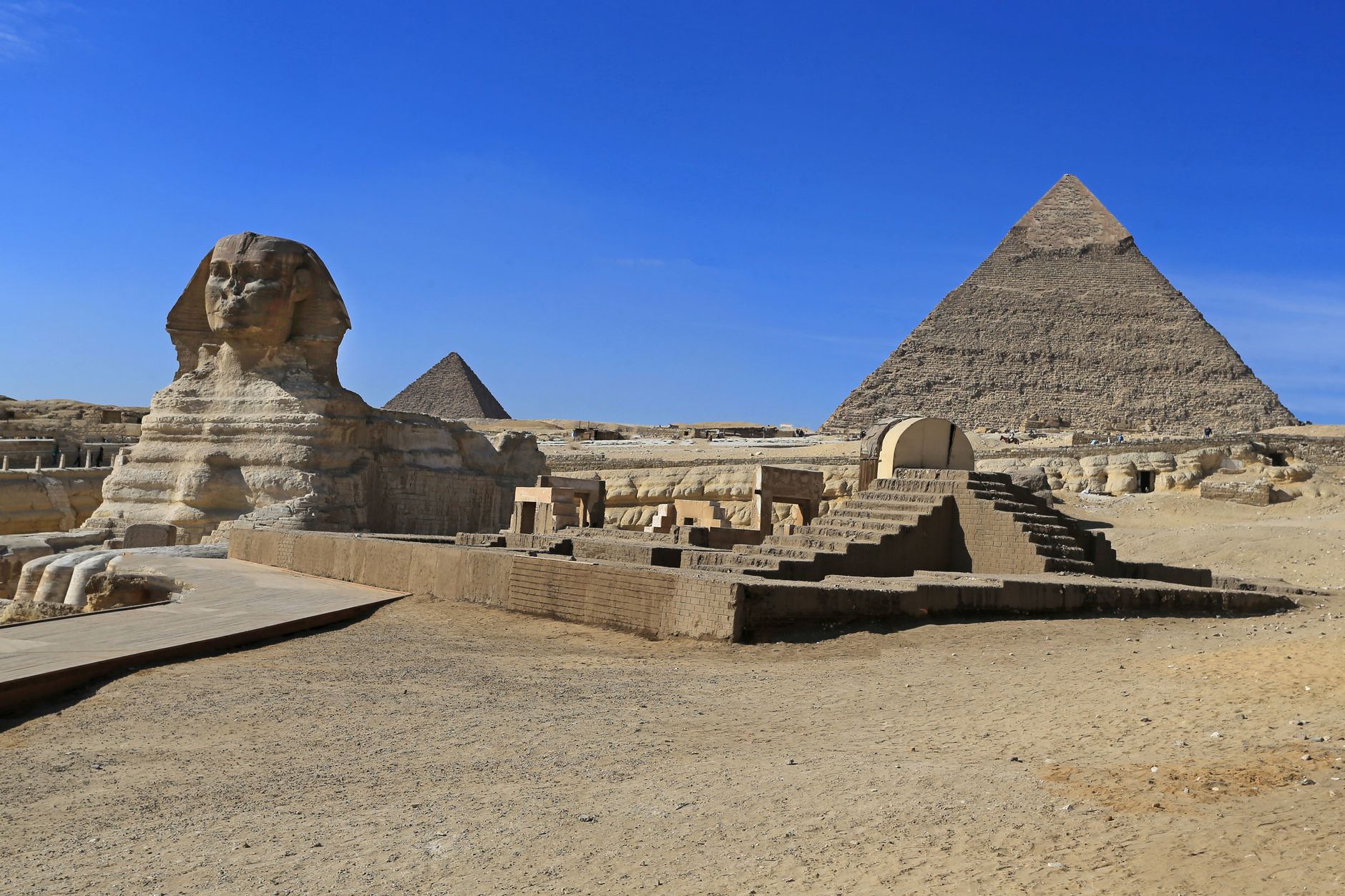
Be at the Giza gate at 08:00. There is almost no shade on the plateau, the coaches arrive from about half past nine, and the low morning light is far kinder to the stone than the flat glare of noon. Walk the base of the Great Pyramid, take the panorama viewpoint where all three line up, then down to the Sphinx and the valley temple beside it — the granite-cased blocks there are some of the most impressive stonework on the site and most visitors walk straight past.
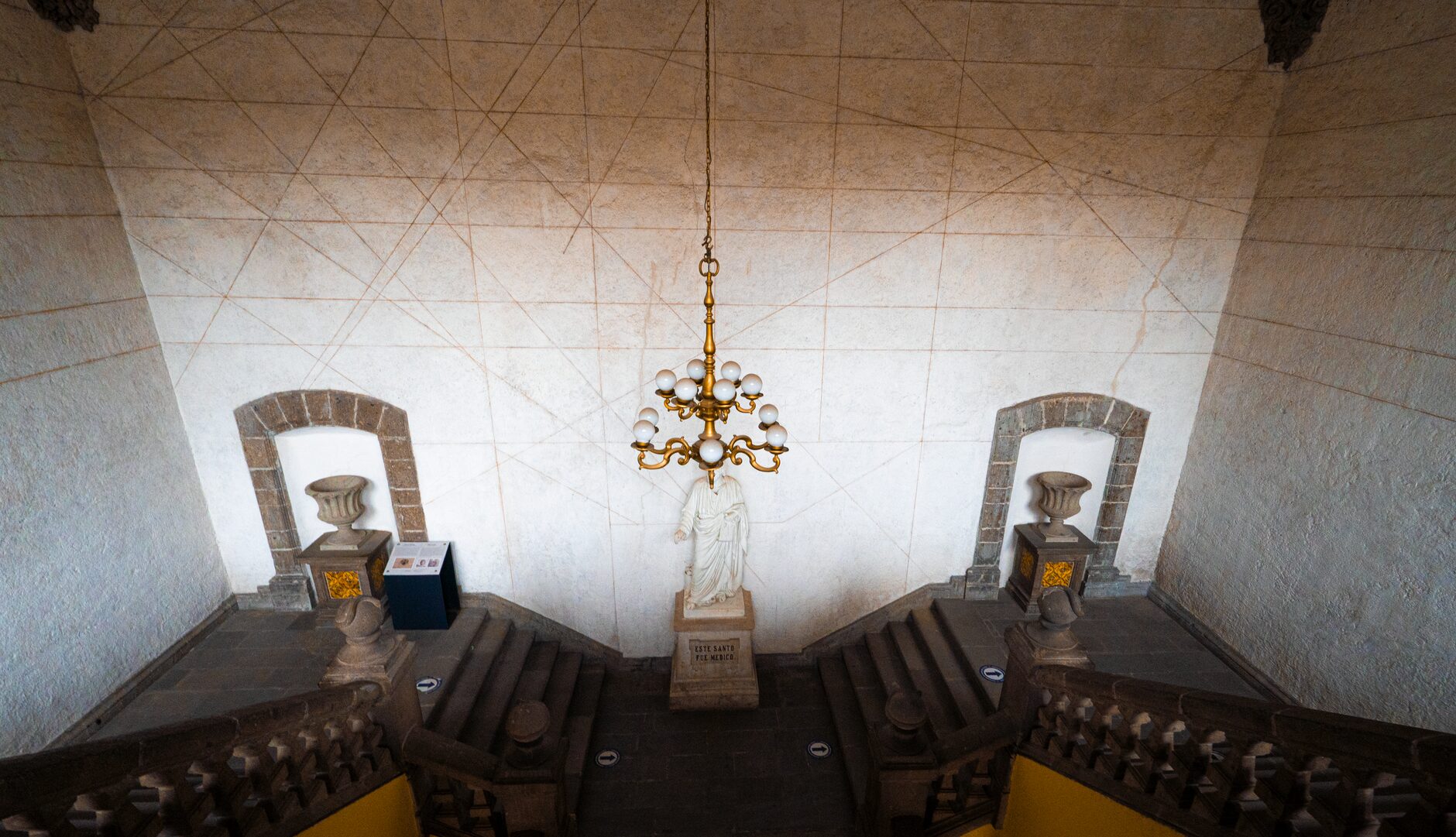
Lunch off the plateau, where the food is better and a third of the price, then the Grand Egyptian Museum on an afternoon slot. Three to four hours covers the highlights: the Tutankhamun galleries first, with the complete collection now here, then the Grand Staircase and its window framing the pyramids you stood under that morning, then Khufu’s solar boat.
Day two — Islamic Cairo
Bab al-Futuh at 08:30, then Al-Muizz south to Bab Zuweila: a kilometre holding the greatest concentration of medieval Islamic architecture anywhere in the world, and a street that belongs to itself before about eleven and to the tour groups afterwards. Climb the Bab Zuweila minarets at the southern end — the rooftop view over the minarets is the best in the medieval city and hardly anyone bothers.
Khan el-Khalili is thirty seconds off Al-Muizz down an alley, not on it, which surprises nearly every first-timer. In the afternoon, the Mosque of Ibn Tulun — built AD 876–879, the oldest in Egypt surviving largely in its original form, free to enter, with a spiral minaret worth climbing — and the Gayer-Anderson Museum next door. Finish at the Citadel of Saladin in the last two hours of daylight.
Day three — Coptic Cairo, then south
Metro Line 1 to Mar Girgis. The Hanging Church is suspended over the gatehouse of the Roman fortress of Babylon and holds around 110 icons and more than 1,500 years of continuous worship; morning light is best inside. Ben Ezra Synagogue and the Coptic Museum are minutes away.
Then Fustat for the National Museum of Egyptian Civilization, where the Royal Mummies Hall holds twenty-two royal mummies — Ramses II, Seti I and Hatshepsut among them — included in the standard ticket with no supplement. Finish by five, collect your bags, and be at Ramses Station by about nine if you are taking the sleeper.
Getting south: the train-or-fly decision
This choice shapes the whole week and people agonise over it more than it deserves, so here is the arithmetic.
| Sleeper train | Domestic flight | |
|---|---|---|
| Cairo to Luxor | 10–14 hours | ~75 minutes |
| Cost | Often more than a flight | Often the cheaper option |
| Saves a hotel night | Yes | No |
| Reliability | Can run hours late | Delays over two hours rare |
| Sleep quality | Poor — stops roughly hourly | Not applicable |
| The experience | Genuinely memorable | A flight |
The sleeper is noisy. It stops roughly every hour through the night, with twenty or thirty whistle events between Cairo and Luxor, and if you are a light sleeper you will arrive tired. Against that, it saves a hotel night, it moves while you would have been asleep anyway, and it is an experience in its own right — the berths, the dining, the dawn over the Nile through the window.
The advice that has held up best over many trips is: take the train one way and fly the other. On a seven-day plan that usually means the night train down on day three and a flight home from Aswan on day seven. You get the experience without gambling the whole week on Egyptian National Railways keeping to time. Fares and schedules for Egyptian rail are best checked at seat61.com/Egypt.htm, which is more reliable than the operator’s own pages.
Days four and five: Luxor
Luxor is the largest open-air museum in the world, which is a cliché and also just true. It divides cleanly: the dead on the West Bank, the living on the East. Two days is the minimum that does it justice and a week can spare no more.
Day four — the West Bank
Start early, and mean it. The West Bank is a desert valley with no shade whatsoever and the difference between seven in the morning and eleven is severe.
- Valley of the Kings. The general ticket covers three tombs of your choosing from those open on the day, at around EGP 450 (~USD 9). Tutankhamun’s tomb is a separate ticket at roughly EGP 700 and — honest verdict — is the least impressive tomb in the valley: small, plain, and famous only because it was found intact. Spend the money on Seti I if it is open, or simply take three of the standard tombs, which are extraordinary. The painted ceilings of Ramses VI in particular are worth crossing continents for.
- Deir el-Bahari, the temple of Hatshepsut. Three colonnaded terraces set into a cliff face, and one of the most striking pieces of architecture in the ancient world.
- The Colossi of Memnon. Two seated statues by the roadside, all that survives above ground of what was once the largest temple in Egypt. Fifteen minutes.
- If you have energy left: the Valley of the Queens, the workers’ village at Deir el-Medina, or the Ramesseum, which is a ruin rather than a monument and all the better for it.
Day five — the East Bank
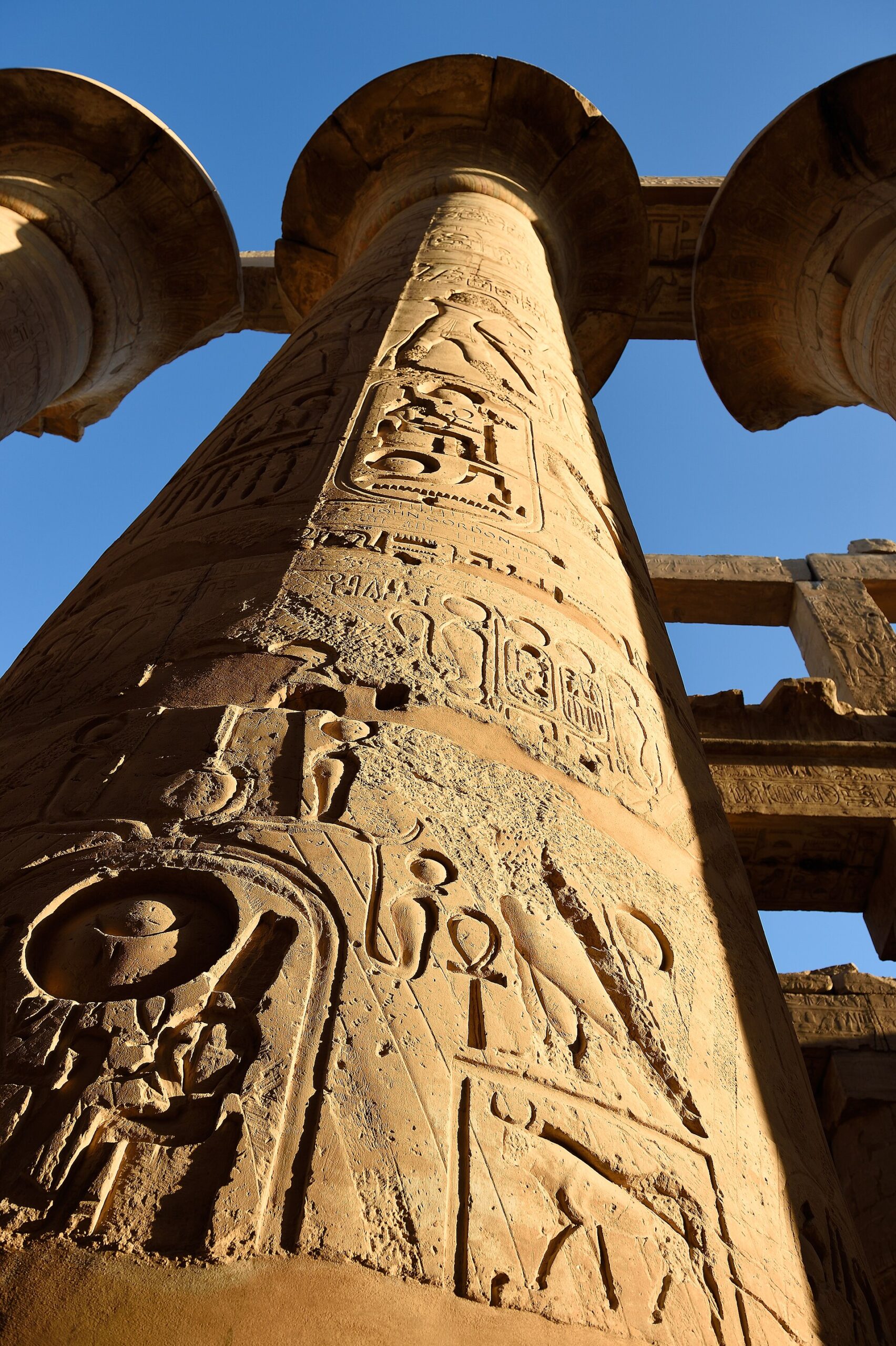
Karnak in the morning. It is the largest religious complex ever built, developed over roughly two thousand years by successive pharaohs each adding to what was there, and the Great Hypostyle Hall — 134 columns, the tallest over twenty metres — is the single most overwhelming interior space in Egypt. Give it three hours. A guide helps here more than almost anywhere.
Luxor Temple in the late afternoon or after dark, when it is floodlit and the crowds have thinned. It is smaller, more comprehensible than Karnak, and the layers are visible in a way they rarely are: a pharaonic temple with a Roman chapel inside it and a working mosque built on top, all still standing together.
Then south to Aswan. The road takes about three to four hours and can be done as a stop-and-go with Edfu and Kom Ombo on the way — both are riverside temples, both are worth an hour, and doing them by road on a transfer day is the efficient way to fit them into a week that has no Nile cruise in it.
Edfu and Kom Ombo on the transfer
The Luxor–Aswan road runs beside the Nile and passes two temples that most cruise passengers see and most land travellers miss. Fold them into the day-five transfer and you get them almost free.
Edfu is the best-preserved temple in Egypt. It is Ptolemaic, so late — construction ran from 237 to 57 BC — and it survived because sand buried it almost completely until the nineteenth century. The pylon is intact, the roof is on, the hypostyle hall is dark and complete, and the falcon statues of Horus in the courtyard are the postcard. Allow an hour and a quarter.
Kom Ombo sits directly on the riverbank about forty-five minutes further south, and it is unusual for being a double temple — two entirely mirrored halves, one dedicated to Sobek the crocodile god and one to Horus the Elder, sharing a central axis. The small Crocodile Museum next door holds mummified crocodiles recovered from the site. Allow an hour, and try to arrive in the late afternoon when the light comes off the water.
Two variations on the week
The cruise-lite version
If a full Nile cruise will not fit but the idea appeals, some operators run two-night Luxor–Aswan legs rather than the standard three or four. It is tight, it costs more per night than the longer versions, and it takes a day of Cairo to make room. Worth it if being on the water matters more to you than the medieval city; otherwise stay on land and take the road with the Edfu and Kom Ombo stops.
The Cairo-heavy version
If Cairo is the reason you came and Upper Egypt is the bonus, run it four-two-one instead: four days in Cairo including the Saqqara and Dahshur excursion, two days in Luxor, and one day in Aswan before flying home. You lose Abu Simbel entirely and the Aswan day becomes a half-day, but you gain the desert-edge pyramids, which a good many people find more interesting than the famous three.
When to take this week
- December to February. The best window. Cairo highs of 18–24 °C (65–75 °F) and Upper Egypt warm rather than punishing. The one caveat is that this is peak season for exactly this itinerary, so book internal flights and Luxor hotels well ahead, and expect the Valley of the Kings to be busy from mid-morning.
- March to April and October to November. Nearly as good, with fewer people. Spring can bring khamsin dust that flattens the light for a day or two.
- May and September. Hot in the south but workable if every outdoor site is a morning.
- June to August. Luxor and Aswan regularly exceed forty degrees with no shade at any major site. This is not the week to take in high summer, and no amount of early starts fully solves it.
Ramadan shifts roughly eleven days earlier each Gregorian year and changes opening hours at sites and museums across the country. The evenings are extraordinary and the daytime rhythm slows; if your week falls inside it, check every opening time individually rather than trusting a published schedule.
Days six and seven: Aswan
Aswan is the reward at the end of the week. It is smaller, slower, hotter and far more beautiful than Luxor: granite islands in the river, feluccas, Nubian villages painted in blues and ochres, and a light in the late afternoon that people remember for years.
Day six — Philae and the river
- Philae Temple. A Ptolemaic temple to Isis, dismantled and moved stone by stone to a higher island when the High Dam flooded its original site. You reach it by boat, which is half the pleasure. Around EGP 600 (~USD 12).
- The unfinished obelisk. Still lying in its granite quarry, cracked and abandoned partway through cutting. It would have been the largest ever raised, and seeing it in the bedrock explains more about how these things were made than any museum display.
- A felucca in the late afternoon. Around Elephantine Island and the Botanical Garden, with the desert on one bank and the town on the other. This is the hour people remember.
- A Nubian village. Worth doing, worth being thoughtful about. Some village visits are genuine and community-run; others are a coach park with a crocodile in a box. Ask what the money goes to.

Day seven — Abu Simbel, or not
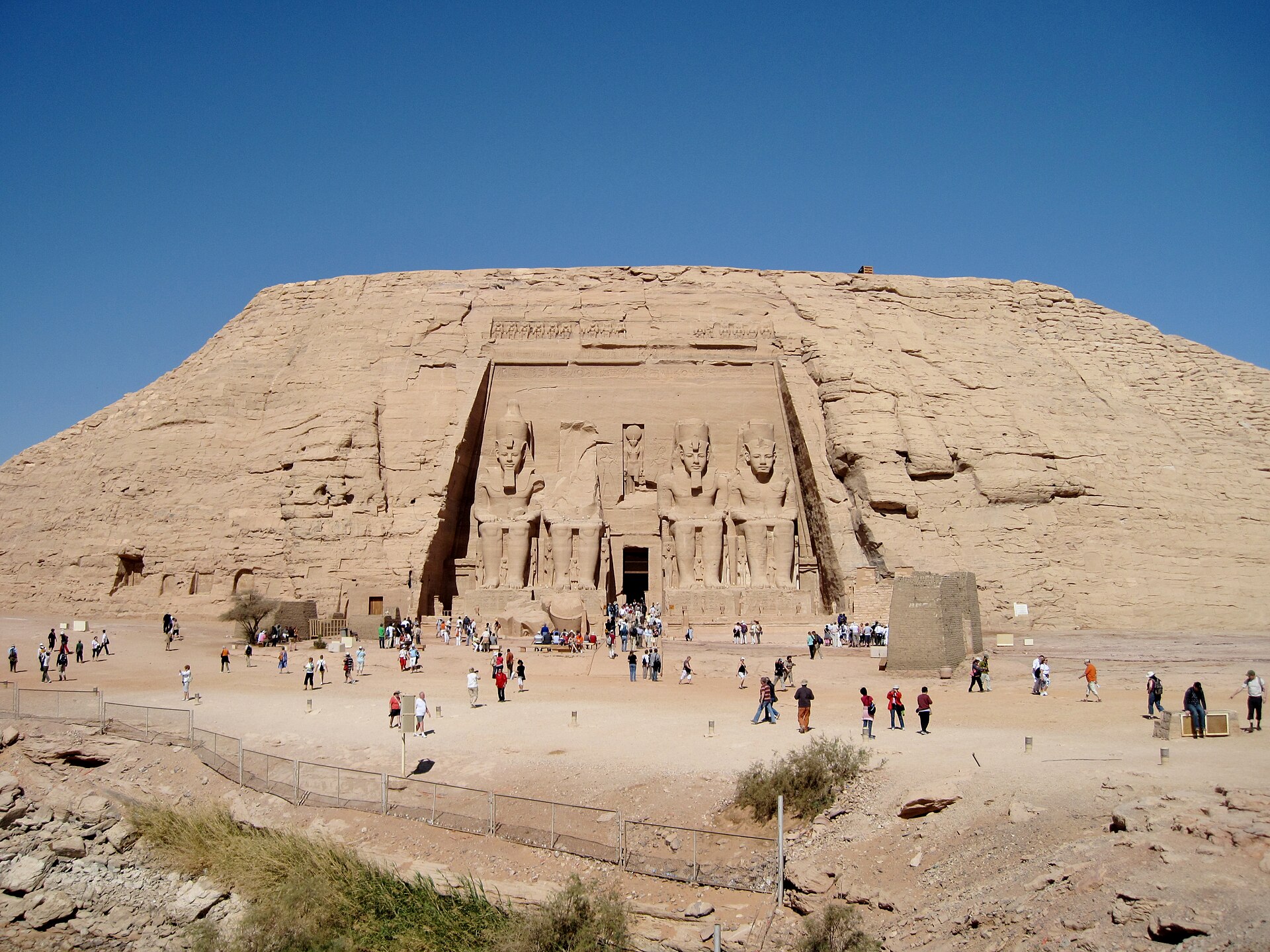
Abu Simbel is two hundred and eighty kilometres south of Aswan, close to the Sudanese border, and the standard trip is a convoy leaving at around three or four in the morning, three hours each way, back by lunchtime. Some people fly, which costs considerably more and saves the dawn start.
Is it worth it? The temples themselves, unarguably yes: four seated colossi of Ramses II, each over twenty metres, carved out of a cliff face, and the whole thing cut into blocks and relocated sixty metres higher in the 1960s when Lake Nasser rose. It is one of the great sights of the ancient world and one of the great feats of modern engineering, simultaneously.
The honest caveat is the day. A three o’clock start on the last morning of a week-long trip, followed by a flight home, is punishing, and a proportion of people arrive at the temples too tired to take them in. Around EGP 822 (~USD 17) for foreign adults.
The alternative seventh day is a slow one: a late breakfast on a terrace over the river, the Nubian Museum, which is excellent and almost empty, and an afternoon on the water before an evening flight. Nobody who chooses this reports regretting it.
What a week costs
| Item | Price (checked Sept 2026) | Notes |
|---|---|---|
| Cairo, three days of entries and transport | ~USD 155–200 | Includes the GEM and Giza |
| Cairo–Luxor sleeper berth | USD 80–140 | Per person, cabin dependent |
| Cairo–Luxor flight | USD 60–120 | Frequently cheaper than the berth |
| Valley of the Kings, three tombs | ~EGP 450 (~USD 9) | Tutankhamun ~EGP 700 extra |
| Karnak Temple | ~EGP 300–350 (~USD 6–7) | Sound and light show is separate |
| Philae Temple, Aswan | ~EGP 600 (~USD 12) | Boat transfer extra |
| Abu Simbel | ~EGP 822 (~USD 17) | Plus convoy transport or a flight |
| Luxor–Aswan by road | USD 50–90 for the car | With Edfu and Kom Ombo stops |
| Aswan–Cairo flight home | USD 70–140 | Book early; the route thins out |
| Seven days, one person, no guide or hotel | ~USD 450–650 | Guides add USD 60–110 per day |
What a week cannot hold
A Nile cruise. A three- or four-night cruise between Luxor and Aswan is the best way to see Upper Egypt, and it does not fit into seven days without gutting Cairo. If a cruise is what you want, you are planning a ten-day trip.
The Red Sea. Hurghada and Sharm el-Sheikh both need flights or long bus journeys — there is no train to either — and adding beach days to a week that already has two travel days in it does not work. Save them for a fortnight.
Siwa or the Western Desert. Siwa is eight to ten hours each way from Cairo. The White Desert needs an overnight under the chalk formations to be anything more than a long drive.
Alexandria. It is a good day and it is on the wrong axis. A week running south has no room to also run north.
Four sites a day in Luxor. The commonest way this week goes wrong is an operator selling the West Bank, Karnak and Luxor Temple all on day four so that day five can be a travel day. Do not accept it: that is nine hours in forty-degree heat and you will remember none of it.
Practical notes
Heat is the main constraint
Upper Egypt is meaningfully hotter than Cairo, and in summer the difference is not marginal — Luxor and Aswan regularly exceed forty degrees while Cairo is in the mid-thirties. Every outdoor site in this week should be a morning. In June, July and August, consider whether this is the trip you want to take at all; October to April is the sensible window and December to February is the best of it.
Guides matter more in the south
Cairo can be done unguided. Karnak and the Valley of the Kings genuinely cannot, or rather they can, but you will look at extraordinary carved surfaces without knowing what any of it says. If your budget stretches to a guide for part of the week, spend it in Luxor.
Book internal flights early
Domestic routes — Cairo to Luxor, Aswan back to Cairo — thin out and rise sharply close to departure, and the Aswan leg in particular has fewer daily services than people expect. Book these before you book hotels.
Carry cash
Cards are accepted in hotels and larger restaurants and very little else. Small notes for entry fees, taxis, tips, felucca captains and the guardian who unlocks a tomb for you. Tap water is not recommended anywhere in Egypt; buy sealed bottles, and in Upper Egypt buy more than you think you need.
Frequently asked questions
Is seven days enough for Egypt?
For Cairo, Luxor and Aswan, yes — comfortably, provided you fly home from Aswan rather than backtracking. What seven days cannot hold is a Nile cruise, the Red Sea, Siwa or the Western Desert. If any of those matter to you, plan for ten days or a fortnight instead.
How should you split a week between Cairo and Upper Egypt?
Three days in Cairo, two in Luxor, two in Aswan, with the transfers folded into evenings and travel days. Giving Cairo four and Luxor one is the commonest mistake — Luxor has more concentrated ancient material than anywhere else on earth and a single day there is a waste of the flight.
Sleeper train or flight to Luxor?
Train one way, fly the other. The flight is seventy-five minutes and frequently cheaper than a sleeper berth; the sleeper saves a hotel night and is a genuine experience, but it is noisy, it stops roughly hourly through the night and it can run hours late. Doing one of each gets you the experience without risking the schedule.
Is Abu Simbel worth the 3am start?
The temples are unarguably worth seeing. Whether they are worth a three o’clock start on the last day of a tiring week is a personal call, and a reasonable number of people say no. If Abu Simbel matters to you, consider flying it from Aswan, or build the week so that it falls on day six rather than day seven.
Do you need a guide for a seven-day Egypt trip?
Not for Cairo. Strongly recommended for Luxor, where the carved surfaces are dense with meaning that is invisible without someone to read them. A private guide runs to roughly USD 60–110 per day per person, and Luxor is where that money does the most work.
When is the best time for this itinerary?
October to April, and December to February at its best — Cairo daytime highs of 18–24 °C (65–75 °F), Upper Egypt warm but manageable. June to August in Luxor and Aswan is genuinely difficult, with temperatures regularly over forty degrees and no shade at any of the major sites.
Should you book the whole thing as a package?
A package handles the internal flights, transfers and guides, which are the fiddly parts, and for a first Egypt trip that is worth something. The trade-off is the shopping stops — papyrus, perfume, alabaster and carpet showrooms are built into most packaged itineraries and each costs you an hour. Specify no commission stops in writing before you book.
If a Nile cruise is what you want, three extra days is what it costs. Our ten-day Egypt itinerary fits four nights on the water between Luxor and Aswan without cutting Cairo down, and adds the Saqqara and Dahshur day that a week has no room for.
Related Cairo Guides
- All Cairo itineraries, one to fourteen days
- The three days in Cairo, hour by hour
- Cairo to Luxor: trains, flights and why not to day-trip it
- If you would rather stay north: five days in Cairo
- The Grand Egyptian Museum in full
- Budgeting for Egypt
- Visas and entry requirements
- When to travel
Photo Credits
Column in the Great Hypostyle Hall at Karnak: photo by Tim Adams, via Wikimedia Commons (CC BY 3.0).
The Great Temple of Ramses II at Abu Simbel: photo by Olaf Tausch, via Wikimedia Commons (CC BY 3.0).