This article contains advertising. Our booking links are routed through a partner that adds commission tracking automatically, so if you book through one we earn a commission from the provider, at no extra cost to you. It never affects what we recommend. Affiliate disclosure
The honest answer to what to do with your time in Cairo is this: pick three or four things you actually care about, group them by neighbourhood so the traffic doesn’t eat your day, and leave room to get pleasantly lost. The best things to do in Cairo run from the 4,500-year-old Pyramids of Giza and the new Grand Egyptian Museum out to the lantern-lit alleys of Khan el-Khalili, a sunset felucca on the Nile, and the whirling-dervish show that locals queue for. This guide sorts them by what they are, not in one long list, so you can build the trip you want.
A few ground rules before the highlights. Cairo’s metro area pushes past 22 million people, and it moves at all hours, so distance on a map means nothing without factoring in traffic. One change since 2025 that catches visitors off guard: nearly every government monument and museum now takes payment by card only at the gate, not cash, so keep a working Visa or Mastercard on you. And the Pyramids, the Citadel, Islamic Cairo, Coptic Cairo and the Nile are spread across the city, so I’d plan one big anchor per day rather than trying to cram two famous sights on opposite sides of the river into the same afternoon.
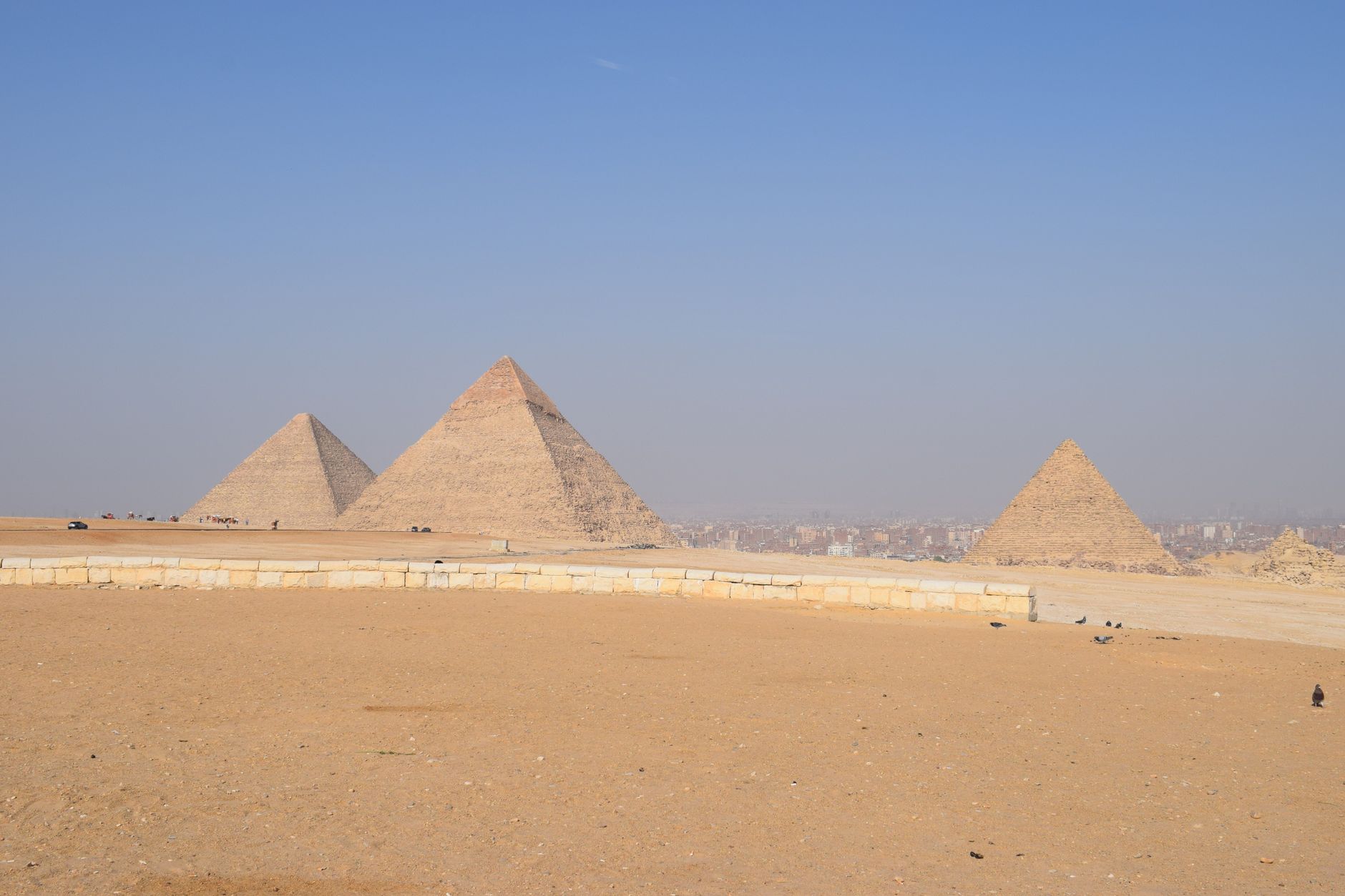
The icons: Pyramids, the Sphinx, and the world’s great museums
Some sights live up to the postcard. In Cairo, the big ones genuinely do, and they’re the reason most people get on the plane in the first place.
The Pyramids of Giza and the Great Sphinx
You can see the Pyramids from the ring road, from a hotel rooftop, from the window of a microbus stuck in traffic. Nothing prepares you for standing at the base of the Great Pyramid of Khufu and realising it was built around 2560 BC, rose 146 metres, and stayed the tallest structure humans had ever made for nearly 3,800 years. Beside it sit Khafre (which looks taller because it stands on higher ground and still wears a cap of its original casing stones) and the smaller Menkaure. The Great Sphinx, carved from a single limestone ridge and roughly 73 metres long, keeps watch over the eastern edge.
The plateau opens at 8:00 AM and getting there for opening is not optional advice — it’s the difference between a calm morning and a hot, crowded slog. General site entry runs around 700 EGP (about $15) for foreign adults, with students at roughly half that, all paid by card at the gate. Going inside a pyramid costs extra and is sold separately: the Khufu interior is the priciest and capped at a few hundred tickets a day, while the smaller pyramids are cheaper. Whether the climb into a hot, low, ventilation-poor passage is worth it depends entirely on how claustrophobic you are; plenty of people skip it and don’t regret it. Budget three to four hours. A licensed guide is one of the few “upsells” I’d actually pay for here, because the context turns a pile of stone into a story. For the full breakdown of ticket tiers, opening hours and the camel-ride scams to dodge, our practical guide to the Giza plateau goes deep.
One warning a local friend would give you on the way in: agree any camel or horse price before you climb on, ideally written down, and confirm whether it covers the ride back. The “free” photo and the “special price, my friend” almost never are.
The Grand Egyptian Museum
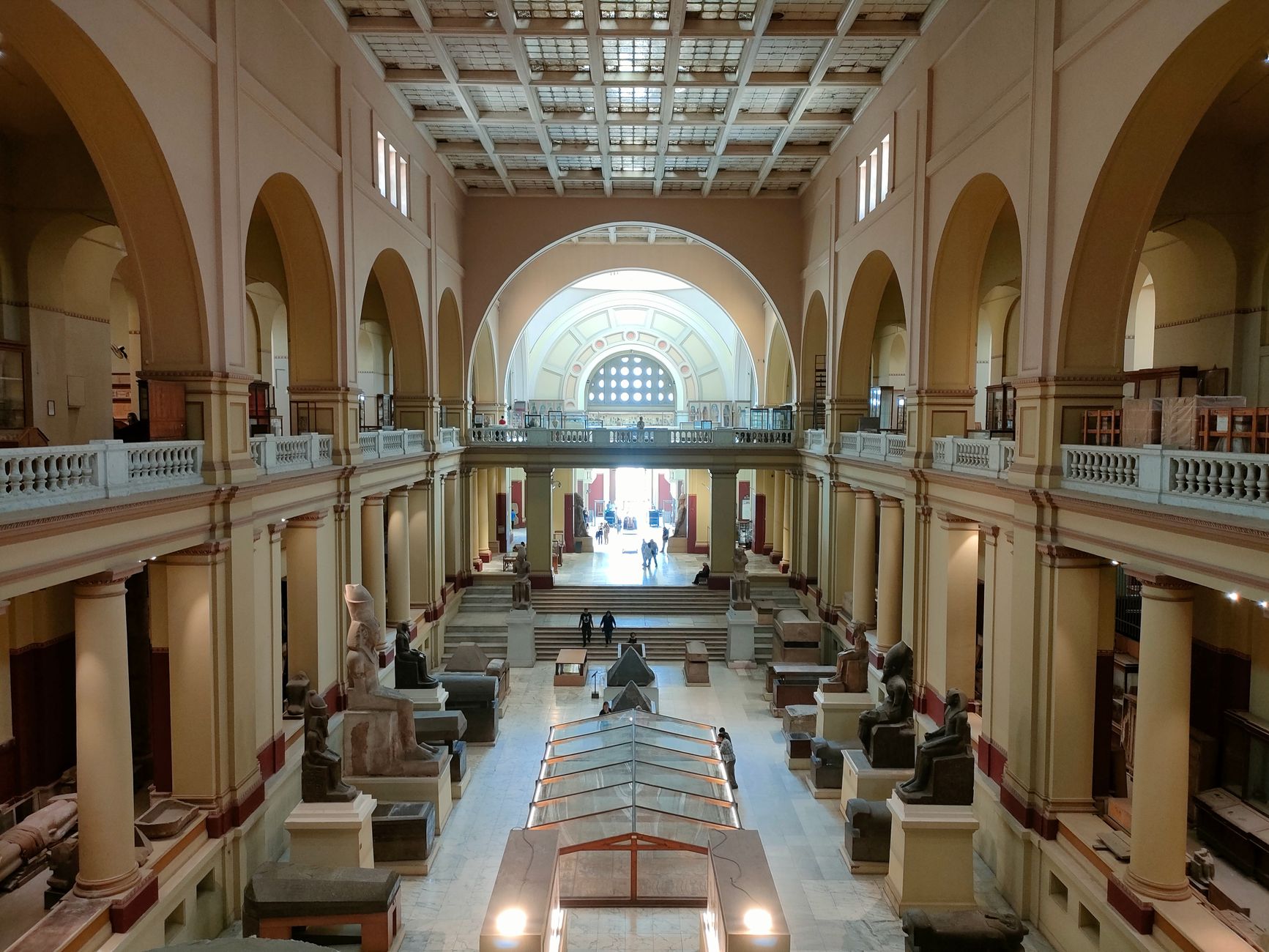
After two decades of delays, the Grand Egyptian Museum (GEM) finally held its full public opening in November 2025, and as of 2026 every gallery is open — including the one everyone comes for. Sitting about two kilometres from the Pyramids, it’s now the largest archaeological museum in the world devoted to a single civilisation, with something like 100,000 artifacts on a site that runs to half a million square metres.
The headline is the Tutankhamun collection: for the first time since Howard Carter opened the tomb in 1922, all 5,398 objects from the burial are displayed together, in sequence, in purpose-built galleries — the golden mask, the nested coffins, the throne, the chariots, the lot. The Grand Staircase lined with colossal statues is a genuine jaw-dropper, and the air-conditioned, well-lit halls show this material in a way the old museum never could. Tickets must be bought online in advance through the official GEM portal; adult entry is around 1,450 EGP, with student rates roughly half. Note that foreign-ticket prices are scheduled to rise from 1 November 2026, so if you’re reading this later, expect a bump. The complex grounds open from the morning, with galleries running roughly 9:00 AM to 6:00 PM and later hours (until around 9:00 PM) on Wednesdays and Saturdays. Give it four to six hours — it is enormous, and rushing it is a waste. The deeper visiting playbook lives in our Cairo museums and cultural attractions guide.
The Egyptian Museum at Tahrir Square
Don’t write off the old museum just because Tutankhamun moved out. The 1902 building on Tahrir Square still holds over 120,000 objects across two creaky floors, and its slightly chaotic, under-labelled charm is exactly what some people love about it — you turn a corner and stumble onto a 4,000-year-old masterpiece with a handwritten card. The Royal Mummies are no longer here (they’re at the National Museum of Egyptian Civilization in Fustat), but the sarcophagi, jewellery, papyri and the haunting Fayum portraits are worth a couple of hours for anyone with a real Egyptology itch. Entry is roughly 300–360 EGP. If museums are your trip’s backbone, the National Museum of Egyptian Civilization and its dignified Royal Mummies Hall (about 400 EGP, plus a supplement for the mummies) deserves a slot too.
Saqqara, Dahshur and Memphis
Thirty kilometres south of the city, Saqqara is where the whole pyramid idea began. The Step Pyramid of Djoser, designed by Imhotep around 2650 BC, is the oldest large stone building on Earth — a stack of six tiers that led, a century later, to the smooth giants at Giza. It’s far quieter than the main plateau, and the painted tombs here still carry colour after thousands of years. Pair it with nearby Dahshur, where you can often wander the Bent Pyramid and Red Pyramid almost alone, and the small open-air museum at Memphis, whose 10-metre fallen statue of Ramesses II is the main draw. Saqqara entry is around 450 EGP. These sit just outside the city, so they’re covered fully in our day trips and excursions from Cairo guide — easy to combine with Giza on one long, rewarding day.
Islamic Cairo: a thousand years on foot
This is the part of Cairo that surprises people most. A UNESCO-listed medieval city you can walk through, with mosques, fountains, merchant houses and gates stacked up over a millennium, and it costs almost nothing to wander. For a lot of visitors, an afternoon here ends up being the favourite memory of the trip.
The Citadel of Saladin and the Mosque of Muhammad Ali
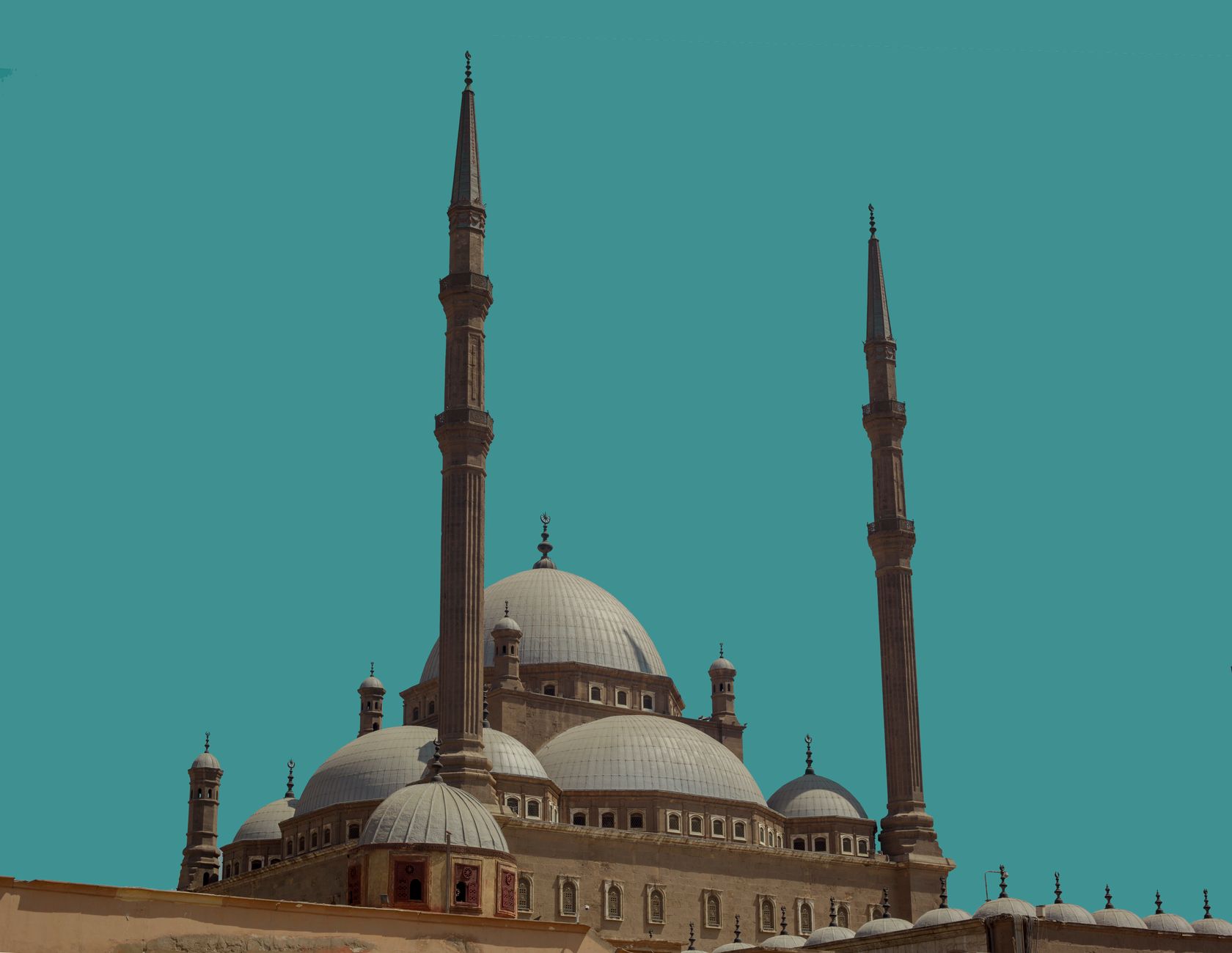
Set on a limestone spur above the city, the Citadel has been Cairo’s military high ground since the 12th century, and the views over the rooftops and minarets are worth the climb on their own. The star inside is the Mosque of Muhammad Ali — the “Alabaster Mosque” — whose Ottoman domes and pencil-thin minarets are the silhouette you’ll recognise on every postcard. The interior, lined with pale alabaster under a huge central dome, is genuinely serene. The combined ticket also covers a clutch of smaller museums (military, police, carriage) and three mosques inside the walls. Entry for foreigners now runs about 550 EGP, up from a few years ago, paid by card. Give it at least two hours and go in the morning before the haze settles over the view.
Al-Muizz Street and the medieval core
Al-Muizz li-Din Allah Street is the spine of historic Cairo, running roughly a kilometre from the Bab Zuweila gate up to Bab al-Futuh, and it might be the most beautiful street in the city. Laid out in 969 AD when the Fatimids founded Cairo, it’s a near-continuous run of mosques, madrasas and old merchant houses, much of it pedestrianised. Come in the early evening, when the buildings are lit up and the street fills with families — it’s one of the best free things you can do here. Walk it slowly; two to three hours disappears easily.
Mosques worth your time
A few stand out. Al-Azhar Mosque (970 AD), attached to what’s often called the oldest continuously running university in the world, is free to enter and still the beating heart of Sunni learning. The Mosque of Ibn Tulun (876–879 AD) is the oldest intact mosque in the city and one of the most peaceful — its huge bare courtyard and unique spiral minaret, copied from Samarra in Iraq, make it my personal favourite, and it’s free. Facing each other across a square below the Citadel, the Sultan Hassan Mosque (a Mamluk masterpiece with a soaring entrance portal) and the Al-Rifa’i Mosque (resting place of King Farouk and the last Shah of Iran) make a striking pair, about 90 minutes for both. Dress modestly everywhere, carry a scarf for your head and shoulders, and you’ll be welcomed. For the etiquette specifics — shoes, photography, prayer times, what to wear — our guide to mosque manners and dress saves you the awkward moments.
Khan el-Khalili
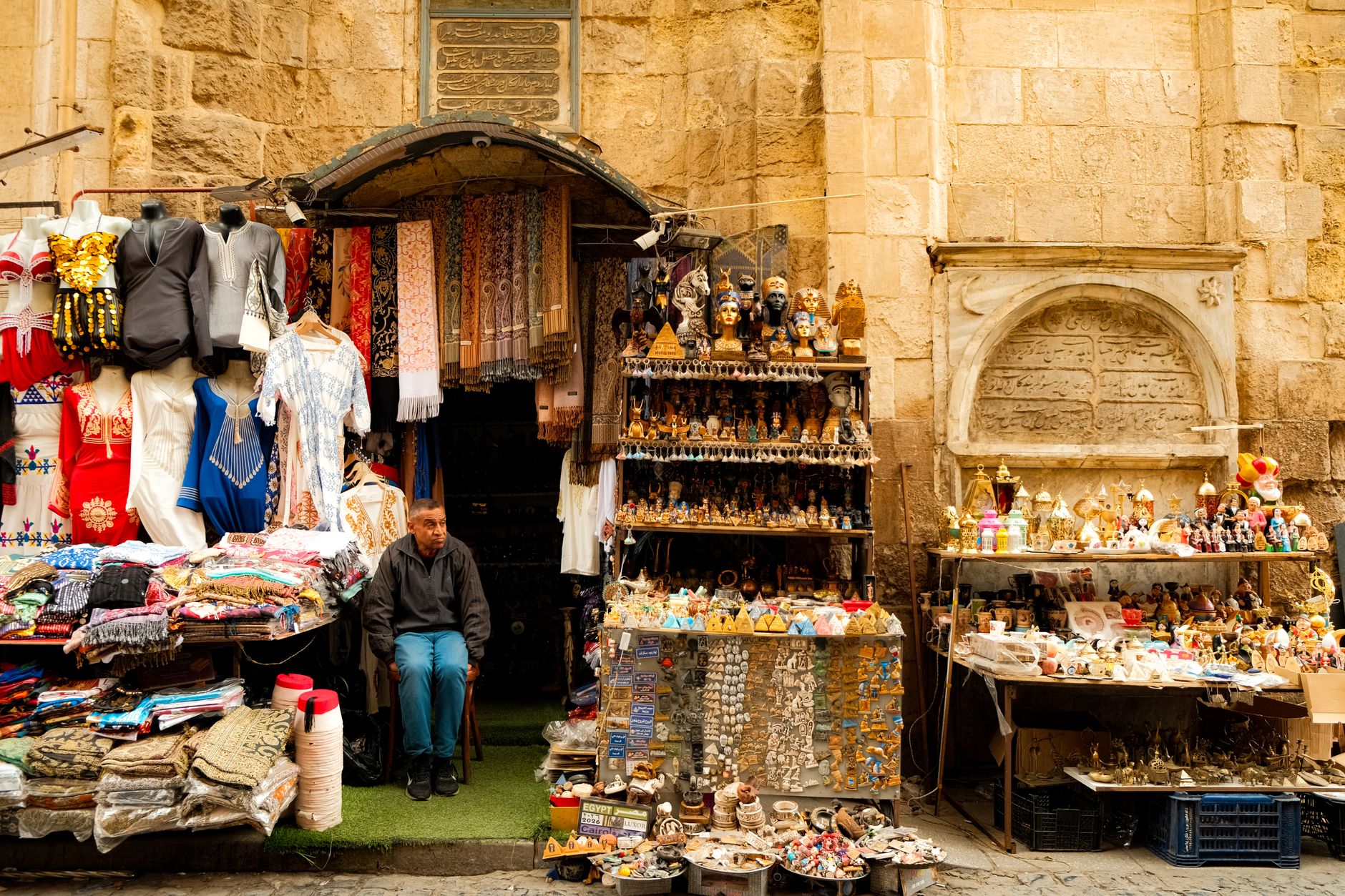
Khan el-Khalili has been trading since 1382, and it is part market, part theatre. The lanes are packed with hand-blown glass lamps, brassware, spices by the scoopful, gold and silver, papyrus, alabaster and leather — and yes, a fair amount of mass-produced tat aimed squarely at tour buses. The trick is knowing the difference, which is where our guide to shopping in Cairo earns its keep: it flags which lanes sell the real workshop pieces and which prices are pure fiction. Come at dusk, when the lanterns switch on and the daytime hustle softens into something more atmospheric.
Bargaining isn’t optional — it’s the entire transaction. Open at roughly 40–50% of the first asking price, keep it good-humoured, and be ready to walk; the walk-away is your strongest card. The mint tea a shopkeeper presses on you is hospitality, not obligation, though it does grease the negotiation. Take a break at El Fishawy, the café threading through the bazaar that has been pouring tea and shisha since 1773. It’s touristy now, but it’s earned the right.
Coptic Cairo: the city’s Christian heart
Tucked into Old Cairo, inside the walls of the Roman fortress of Babylon, Coptic Cairo is a compact, walkable pocket of some of the oldest churches anywhere. The Hanging Church (Al-Muallaqa) gets its name because its nave is literally suspended over a Roman gatehouse; parts of it date to at least the 3rd century, and the wooden ceilings and Coptic iconwork inside are beautiful. A short walk away, the Church of Saints Sergius and Bacchus stands over a crypt where, by tradition, the Holy Family sheltered during their flight into Egypt. The Coptic Museum holds the world’s best collection of Coptic art, and the Ben Ezra Synagogue — one of Egypt’s oldest — sits in the same cluster. You can see the lot properly in two to three hours, and it’s an easy metro ride to Mar Girgis station. It’s also a quiet, low-hassle area, which makes it a good pick if you want a gentle morning between bigger days.
The Nile: feluccas, dinner cruises, and slow evenings on the water

After a day of crowds and car horns, the river is the antidote. Getting out on the Nile is one of the most reliably lovely things to do in Cairo, and it ranges from nearly free to genuinely upscale.
Felucca rides
A felucca is a simple wooden sailboat, and an hour or two on one at sunset is, rupee for rupee, the best-value experience in the city. You hire the whole boat with its captain, not a seat — reckon on roughly 200–400 EGP per boat for an hour or so, which split between a few people is almost nothing. Most launch from the corniche around Zamalek or Maadi. There’s no engine noise, no commentary, just the sail, the breeze and the skyline going gold. Bring your own drinks and snacks; the boats don’t carry them. This is also a brilliant cheap date or family outing.
Nile dinner cruises
For something dressier, the floating restaurants run two-to-three-hour evening cruises with a buffet or set menu and a show — usually live music, a belly dancer and a spinning Tanoura performer. Quality varies wildly, so book a known name rather than whatever a tout on the corniche is pushing. The long-established Nile Maxim and Le Pacha 1901 sit at the reliable end; expect around $60 and up per person for the better operators, with cheaper, more touristy options floating around too. It’s a fun night, if not exactly subtle. For every way to enjoy the river — from sunrise paddles to multi-day cruises that start in Cairo — see our dedicated Cairo Nile river experiences guide.
The corniche after dark
You don’t have to pay for the river at all. The Nile Corniche along the eastern bank is where Cairenes go to walk off dinner, lean on the railing, and watch the feluccas drift. The stretch between the Qasr al-Nil Bridge and the Cairo Opera House end of Zamalek is the nicest after dark, lined with cafés where a shisha and a tea costs a fraction of the cruise.
Cairo after dark
This is a city that genuinely doesn’t sleep — streets at midnight feel like streets at noon — and the evenings hold some of its best surprises.
The Tanoura show at Wekalet El-Ghouri
The free Al-Tannoura (whirling dervish) performance inside Wekalet El-Ghouri, a restored 16th-century caravanserai in Islamic Cairo, is one of my favourite nights in the city — and it costs nothing. Dancers spin for astonishingly long stretches in glowing layered skirts while a live band plays Sufi music. It usually runs a few evenings a week (commonly Saturday, Monday and Wednesday) starting around 7:30 PM, but the schedule shifts, so confirm locally and turn up at least half an hour early because seats go fast.
The Sound and Light Show at the Pyramids
Opinions split on this one. The show floodlights the Pyramids and Sphinx, throws projections across the stone, and narrates ancient history with the Sphinx as your guide for about an hour. The spectacle of the monuments lit up at night is real; the script is dated and a bit cheesy. Standard seats run around 450 EGP, with VIP tiers higher. Showtimes shift with the season — earlier in winter (from around 7:00 PM) and later in summer (closer to 8:30–9:30 PM) — and there are multiple language slots, so check which performance is in English before you book. If you’re short on evenings, I’d rate the Tanoura show above it. The full rundown is in our Pyramids guide.
Rooftops, jazz and the tower
Cairo’s bar and live-music scene clusters in Zamalek and the riverside hotels. The Cairo Jazz Club is the institution — jazz, blues, electronic and Arabic fusion most nights of the week. For a view with your drink, the upper floors of the Nile hotels do the job, and Cairo Tower on Gezira Island puts a revolving restaurant 187 metres up with a 360-degree sweep of the city, best at sunset. For the full after-hours map — which neighbourhoods, which venues, what’s actually open late and what’s a tourist trap — dive into our Cairo at night entertainment and nightlife guide. Couples planning a special evening will get more mileage from our romantic things to do in Cairo guide, which pairs the felucca-and-rooftop classics with a few quieter ideas.
Green space, parks and the outdoors
Cairo isn’t known for greenery, which is exactly why the few good parks feel like a reward.
Al-Azhar Park
A 74-acre garden built on what was, until 2005, a rubbish dump — an Aga Khan Trust project that gave Cairo one of its loveliest spaces. Terraced lawns, fountains and tree-lined paths frame a postcard view of Islamic Cairo’s domes and minarets. There’s a playground, a small lake with paddle boats, and the Citadel View Restaurant, which lays claim to the best vista in the city. Entry is only around 35–40 EGP. Come late afternoon for golden light and a breeze.
Riding at Giza, and getting active
A horse or camel through the desert with the Pyramids behind you is the cinematic Cairo moment, and sunset is the time to do it — roughly 400–800 EGP an hour. Choose a stable that clearly looks after its animals (ask your hotel, read recent reviews) and, again, lock the price down first. Beyond the saddle, the desert around the city opens up for quad biking, sandboarding and more; our outdoor activities in Cairo guide and our Cairo adventure activities guide cover everything from desert excursions to the more heart-in-mouth experiences. If you’d rather see the city under your own steam, the self-guided routes in our Cairo walking tours guide string the best of Islamic and Downtown Cairo together on foot.
The Aquarium Grotto Garden
A genuine oddity in Zamalek: a small 1867 park built around artificial grottoes of coloured rock, with a cave of harmless bats and a faded romantic history. It’s quiet, cheap (a few pounds), and the kind of place you only find if you go looking. Worth twenty minutes if you’re in the neighbourhood.
Eating your way around Cairo
Food might be the most underrated reason to come. From the cart on the corner to the white-tablecloth places, Cairo eats well and cheaply.
Start with the street. Koshari — rice, lentils, pasta and crispy onions under a tangy tomato-and-garlic sauce — is the national dish, and a plate at Abu Tarek in Downtown costs a couple of dollars and is rightly famous. Add ful medames (slow-cooked fava beans), ta’ameya (Egyptian falafel made from favas, not chickpeas), fresh sugar-cane juice and a slab of kunafa, and you’ve eaten like a local for the price of a coffee back home. A guided food tour is one of the best ways to find the good stalls without guesswork — operators like Bellies En-Route take you into neighbourhoods most visitors never reach. For sit-down meals, Abou El Sid in Zamalek does upscale Egyptian in a 1920s-salon setting, and the seafood at Kadoura in Dokki is the real thing. The whole edible city — dishes, restaurants, street stalls, cafés — is mapped out in our guide to eating your way through Cairo.
Cairo with kids
Cairo rewards families far more than people expect — there’s wonder for the children and depth for the adults in the same place.
The Pharaonic Village on Jacob’s Island is the most kid-friendly intro to ancient Egypt: a boat ride drifts past costumed actors farming, potting and performing ceremonies, with small museums, a play area and dress-up photos. Tickets run around 400–500 EGP a head. At Cairo Festival City Mall, KidZania lets kids role-play careers; the Mall of Egypt in 6th of October hides Ski Egypt, an actual indoor snow slope, which is a surreal thing to do an hour from the desert. Short, led camel or pony rides near the Pyramids are a guaranteed hit and make the photos of the trip — keep them to 20–30 minutes for little ones. And Darb 1718, an arts centre near the Citadel, often runs pottery and craft workshops the whole family can join.
Off the beaten path
Once you’ve ticked the icons, Cairo’s stranger corners are where it gets personal. These are the experiences I send return visitors toward — and our full guide to unique, off-the-beaten-path experiences in Cairo has many more.
The City of the Dead (Al-Qarafa) is a vast medieval cemetery on the city’s eastern edge where hundreds of thousands of people live among the tombs — a real neighbourhood with shops and cafés threaded through Mamluk mausoleums. Go with a local guide and a respectful attitude; it’s one of the most genuinely unusual places in any city. The Gayer-Anderson Museum, beside the Mosque of Ibn Tulun, is the restored Ottoman house of an eccentric Irish Egyptologist, stuffed with curiosities and recognisable to Bond fans from The Spy Who Loved Me (around 100 EGP). Manial Palace on Rhoda Island is a gorgeous, near-empty mash-up of Ottoman, Moorish and Persian styles built by a prince (around 100 EGP). And at the Fustat Pottery Village near Coptic Cairo you can watch artisans throw clay the way their families have for generations. If your camera is the point, our Cairo photography spots guide lists exactly where the light lands best.
Free Cairo, and rainy-day Cairo
You can fill days here without spending much. Al-Azhar and Ibn Tulun mosques, the Tanoura show, the length of Al-Muizz Street at night, the corniche, the buzz of Khan el-Khalili just for the walking — none of it costs more than a few pounds, and some of it nothing at all. Our free things to do in Cairo guide rounds up the best of them. And on the rare grey or dusty day when the desert sites lose their shine, retreat indoors — the GEM alone can swallow most of a day, and there are malls, museums, hammams and cafés to wait out the weather; our rainy-day activities in Cairo guide has the full indoor playbook.
Day trips and seasonal events
Cairo makes a great base. Alexandria, about 2.5 hours north by train or car, gives you the Mediterranean, the striking modern Bibliotheca Alexandrina, the eerie Catacombs of Kom El-Shoqafa and Qaitbay Fort on the site of the ancient lighthouse — a long but satisfying day. Southwest, the Fayoum Oasis swaps the city for waterfalls at Wadi El-Rayan, ancient Lake Qarun, and the fossil whales of Wadi Al-Hitan, a UNESCO site that’s a magnet for sandboarding and stargazing campers. Both, plus Saqqara and Dahshur, are laid out in our day trips from Cairo guide.
Timing matters too. Ramadan transforms the city’s nights into one long celebration; the Cairo Opera season runs roughly October to June; and there’s a steady calendar of festivals, religious holidays and cultural events worth building around — or avoiding, if crowds aren’t your thing. Our guide to seasonal events and festivals in Cairo lays out the year.
Quick reference: top things to do and what they cost
| Experience | Rough cost (foreigner) | Time needed | Worth it? |
|---|---|---|---|
| Pyramids of Giza (site entry) | ~700 EGP | 3–4 hrs | Essential |
| Grand Egyptian Museum | ~1,450 EGP (book online) | 4–6 hrs | Essential |
| Citadel + Muhammad Ali Mosque | ~550 EGP | 2 hrs | Yes |
| Egyptian Museum, Tahrir | ~300–360 EGP | 2–3 hrs | For history buffs |
| Khan el-Khalili + Al-Muizz St | Free to wander | 2–3 hrs | Yes |
| Sunset felucca ride | ~200–400 EGP per boat | 1–2 hrs | Yes, great value |
| Nile dinner cruise | ~$60+ per person | 2–3 hrs | If you want a show |
| Sound & Light Show | ~450 EGP | 1 hr | Mixed — spectacle only |
| Tanoura show (Wekalet El-Ghouri) | Free | 1.5 hrs | Yes, don’t miss |
| Al-Azhar Park | ~35–40 EGP | 1–2 hrs | Yes |
Prices are 2026 estimates and shift with Egypt’s currency; most monuments now take card only. Confirm the day-of figure at the gate or the official site.
Practical tips for actually enjoying it
Go early. The Pyramids, Saqqara and the Citadel are all better — cooler, quieter, clearer — first thing. Most open around 8:00 AM.
Cluster by neighbourhood. Cairo’s traffic punishes back-and-forth. Do Islamic Cairo (Citadel, Al-Muizz, Khan el-Khalili, Ibn Tulun) on one day; Coptic Cairo and the river on another; Giza and Saqqara on a third.
Use the apps. Uber, Careem and inDrive are cheaper, clearer and less stressful than flagging a taxi, and they skip the fare argument entirely. The metro is also fast and cheap for north–south hops. The full breakdown is in our getting around Cairo transportation guide.
Carry a card and small notes. Monuments are card-only now, but street food, tips and small museums still want cash in small denominations. Skip the airport ATMs and exchange desks — the rates are poor.
Dress for it. Light, loose, shoulders and knees covered; a scarf for mosques. It’s about comfort, respect and the sun all at once.
Book the big ones ahead. The GEM requires advance online tickets, and winter peak (December to February) fills up popular tours and classes fast.
Lean in. The noise and the friendly chaos are the city, not a flaw in it. The visitors who love Cairo most are the ones who stop fighting its rhythm. If this is your first trip, the orientation in our top-level Cairo planning pillar and a sensible base from our where to stay in Cairo guide will save you a lot of first-day fumbling. To keep the trip from blowing out, our spending plan for a Cairo trip sets realistic daily numbers.
Go deeper: related guides
- Complete Guide to Visiting Cairo — start here for planning, visas and itineraries.
- Pyramids of Giza Visitor Guide — tickets, interiors, camels and crowd timing.
- Cairo Museums and Cultural Attractions — the GEM, Tahrir, Islamic and Coptic museums.
- Cairo Nile River Experiences — feluccas, dinner cruises and the corniche.
- Cairo Food Guide — street food, restaurants and where the locals eat.
- Shopping in Cairo — Khan el-Khalili and beyond, without the rip-offs.
- Cairo at Night — bars, live music and evening shows.
- Free Things to Do in Cairo — a full day on almost no budget.
- Day Trips from Cairo — Alexandria, Fayoum, Saqqara and more.
- Getting Around Cairo — metro, ride apps and taxis decoded.
Frequently asked questions
How many days do you need to see Cairo?
Three full days covers the essentials without rushing: one for Giza and Saqqara, one for Islamic Cairo and Khan el-Khalili, and one for the museums, Coptic Cairo and the Nile. Four or five lets you add a day trip and slow down. Two is tight but doable if you’re disciplined about grouping sights by area.
Is the Grand Egyptian Museum open, and do I need to book ahead?
Yes — the GEM fully opened in November 2025 and all galleries, including the complete Tutankhamun collection, are open in 2026. Foreign tickets (around 1,450 EGP) must be bought online in advance through the official portal; there are no on-the-day sales at the gate, and prices are set to rise from November 2026.
What’s the single best free thing to do in Cairo?
Wandering Al-Muizz Street in the early evening, or catching the free Tanoura whirling-dervish show at Wekalet El-Ghouri a few nights a week. The major historic mosques — Al-Azhar and Ibn Tulun — are also free to enter.
Is it safe to walk around Cairo?
The main tourist areas are generally fine on foot by day and into the evening, and Cairenes are famously welcoming. Use ride apps after dark, keep an eye on your belongings in crowded markets, and expect persistent (but rarely threatening) attention from touts near big sights. Agree all prices up front.
Do I need cash or will a card do?
Both. Since 2025 nearly all government monuments and museums take card only at the gate, so carry a working Visa or Mastercard. But street food, tips, feluccas and small attractions still run on cash, so keep small notes too.
What’s overrated and what’s underrated?
The Sound and Light Show divides people — the lit-up Pyramids are striking but the narration is dated, so I’d put the free Tanoura show ahead of it. Underrated: the Mosque of Ibn Tulun for sheer calm, Al-Azhar Park at golden hour, and an unhurried hour on a felucca, which beats most paid attractions for the price of a coffee.
Knowing what is worth doing is one problem; fitting it into the days you actually have is another. For the sequencing — which cluster on which morning, what to book ahead and what to drop — see our day-by-day Cairo itineraries.