This article contains advertising. Our booking links are routed through a partner that adds commission tracking automatically, so if you book through one we earn a commission from the provider, at no extra cost to you. It never affects what we recommend. Affiliate disclosure
The best day trips from Cairo, ranked honestly: Saqqara plus Memphis and Dahshur (the “other pyramids,” and the single most worthwhile day out), Alexandria for the Mediterranean and the seafood, Fayoum Oasis for desert and fossils, and Ain Sokhna when you just want a beach. The White Desert and Luxor are wonderful but not really day trips — I’ll explain why. Most are reachable in under two hours; here’s how to actually do each one.
I’ve done versions of all of these, some more than once, and the gap between the marketing and the reality can be wide. A few of these excursions are genuinely better than parts of the Cairo sightseeing circuit. A couple get sold as “day trips” when they shouldn’t be. So this guide isn’t a list of everything technically possible within a few hours of the capital — it’s a ranked, opinionated take on what’s worth your limited time, what each one costs in 2026, and the smartest way to get there.
One thing up front that changes the maths for everyone: as of 2026, nearly every Egyptian monument has gone card-only and put up its prices, in some cases steeply. The old “200 EGP at the gate, cash” era is over. I’ve flagged the current ballpark figures throughout, but ticket prices here move faster than almost anywhere, so treat them as a guide and check egymonuments.com before you go.

The day trips from Cairo, ranked by worth-it-ness
If you only read one section, read this table. It’s the honest shortlist — destination, how far, how long you’ll be out, and who each one actually suits. Everything below it is detail.
| Destination | Distance from Cairo | Time needed | Best for |
|---|---|---|---|
| Saqqara + Memphis + Dahshur | ~30–40 km south | Half to full day | Anyone who likes the Giza pyramids and wants more, with fewer crowds |
| Alexandria | ~220 km north | Full day (long) | A change of pace — sea air, Greco-Roman history, seafood |
| Fayoum Oasis & Wadi El Rayan | ~90–130 km southwest | Full day | Desert scenery, lakes, pottery, fossils; an escape from the city |
| Ain Sokhna (Red Sea) | ~120 km east | Full day or overnight | A straightforward beach day, closest coast to Cairo |
| Wadi Natrun monasteries | ~100 km northwest | Half day | Coptic history; easy to bolt onto an Alexandria trip |
| White Desert (Bahariya) | ~350–500+ km southwest | Overnight (2–3 days) | Surreal desert camping — not a day trip, don’t try |
| Luxor | ~500 km / ~1 hr by air | Very long day by plane | Determined travellers with no spare nights and a flexible budget |
1. Saqqara, Memphis and Dahshur — the “other pyramids,” and the one to do
If you do a single day trip from Cairo, make it this one. The combined run to Saqqara, Memphis and Dahshur gives you the whole story of how pyramids were invented — from the first stone one to the first proper smooth-sided one — with a fraction of the hassle and crowds of Giza. I rate it above a second day at Giza for most people. You can squeeze it into a focused half day, but give it a full one if you can.
Saqqara
Saqqara sits about 30 km south of central Cairo and was the burial ground for ancient Memphis for some three thousand years. The headline is the Step Pyramid of Djoser, raised around 2670 BCE by Imhotep — the first large stone building anyone ever attempted, six receding tiers climbing to roughly 62 metres. You’re literally looking at the prototype for everything at Giza. After years of restoration you can again go inside it, which is worth doing.
Don’t stop at the Step Pyramid. The mastaba tombs of Ti and Kagemni hold some of the finest wall reliefs in Egypt — daily life, farming, hunting, all carved with a liveliness that flat photos never capture. The Serapeum, the eerie underground galleries where the sacred Apis bulls were entombed in colossal granite sarcophagi, is one of the strangest spaces in the country. Give Saqqara two hours minimum; an enthusiast could lose a whole day here.
On price, this is where 2026 bites. Saqqara’s entry now runs in the region of 450–500 EGP for foreign visitors (it was a fraction of that a couple of years ago), with going inside the Step Pyramid an extra ~150 EGP, and the Serapeum and certain tombs ticketed separately again. Bring a card — the gate is largely cashless now.
Memphis
Memphis, a few kilometres on, was the first capital of a unified Egypt, founded around 3100 BCE. Almost all of it lies under farmland and Nile silt today, so the open-air museum is a quick stop rather than a destination in itself. The reason to come is the colossal fallen statue of Ramesses II — around ten metres of limestone, laid out under cover, and astonishing in its detail even flat on its back. Out in the garden sits the alabaster Sphinx and a scatter of statuary. Thirty to forty-five minutes does it. Entry is modest, in the region of 100 EGP, and almost everyone folds it into the Saqqara–Dahshur loop.
Dahshur
Dahshur, about 40 km south of Cairo, is my favourite of the three for sheer atmosphere. Two of Sneferu’s pyramids stand here. The Bent Pyramid is the famous oddball — it rises at a steep 54 degrees, then thinks better of it and tilts back to about 43 halfway up, as if the builders lost their nerve mid-project. The Red Pyramid beside it, named for the rosy tint of its stone, was the first true smooth-sided pyramid ever finished, and the direct dress rehearsal for the Great Pyramid.
The Red Pyramid is the one to enter. A long passage drops at a sharp angle into three high corbelled chambers, and standing inside a 4,600-year-old structure with barely anyone else around is the kind of moment Giza rarely gives you. Fair warning: the descent and the climb back up are steep, the air is close, and there’s a faint ammonia smell some days — skip it if confined spaces aren’t your thing. Dahshur’s own entry is modest, around 100 EGP, and on a quiet morning you may have the place almost to yourself.
How to do all three
A private driver is the obvious move — the three sites aren’t walkable between, and there’s no useful public transport linking them. A car and driver for a half-day loop typically runs about 600–1,000 EGP these days depending on your bargaining and the season; your hotel can usually set it up, or start with an Uber/Careem out to the first site. That said, with tickets having jumped, an organised small-group tour with an Egyptologist, transport, fees and lunch (commonly around US$50–90 per person) is no longer the rip-off it once looked next to going independent — and a good guide genuinely earns their keep at Saqqara. Either way, start at Dahshur (farthest south) and work back north.
For context on how this compares with the main event, our guide to Giza itself covers the headline site, tickets and timing — pair the two and you’ve seen the full arc of pyramid-building in two days.
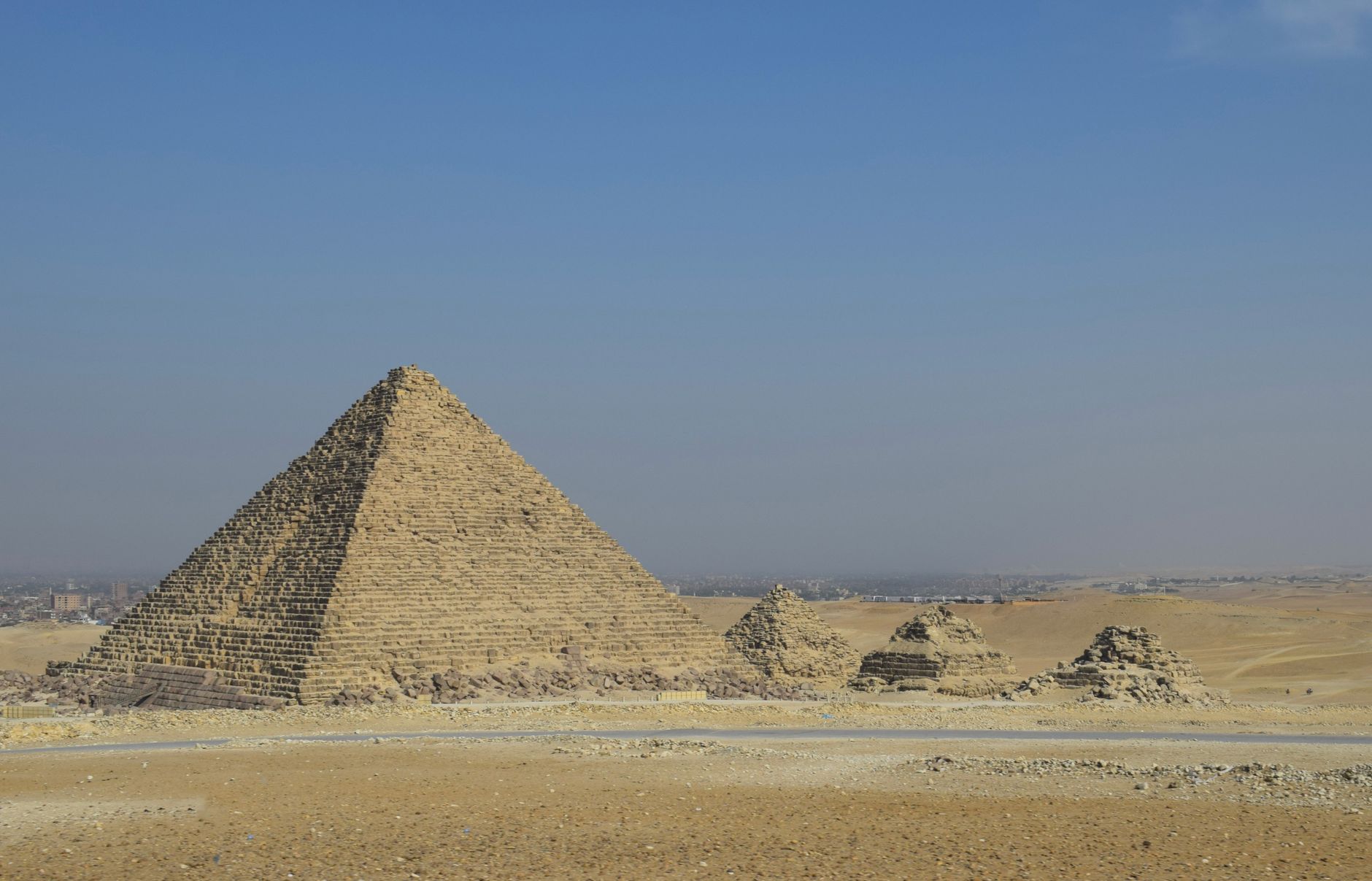
Saqqara deserves a full morning rather than a rushed hour. Our Saqqara day trip guide covers the Step Pyramid interior, the Serapeum, ticket prices and how to time it against the tour-bus surge.
Modest as the site is, it repays a little context. Our guide to Memphis explains what survives of the ancient capital, what to look for and whether it earns a stop on your route.
Dahshur is where you can climb inside a pyramid with barely anyone else there. Our Bent and Red Pyramid guide covers both pyramids, the descent into the Red Pyramid and what the chambers are actually like.
2. Alexandria — the Mediterranean change of scene
Alexandria is the antidote to Cairo. Founded by Alexander in 331 BCE, once home to the legendary Library and the Pharos Lighthouse, it now trades on sea air, faded Belle Époque facades, serious seafood and a slower coastal mood. It’s not a city of must-see blockbusters so much as a place to wander — and after a few intense days in Cairo, that’s exactly the appeal. It makes a long but very doable day trip.
What’s actually worth your time
The modern Bibliotheca Alexandrina, opened in 2002, is the architectural set-piece — a vast tilted disc of a building nodding to the lost library, with museums and exhibition halls inside. The Catacombs of Kom el-Shoqafa, a 2nd-century CE necropolis where Egyptian, Greek and Roman styles collide on the same carved walls, are genuinely unusual. The Citadel of Qaitbay stands on the exact spot of the Pharos Lighthouse and gives you the harbour and the sea breeze. The Roman amphitheatre at Kom el-Dikka is the only one found in Egypt. Then walk the Corniche, eat fish by the water, and if there’s time, the Montazah Palace gardens make a calm finish.
Getting there: train vs driver
Alexandria is roughly 220 km north, about 2.5 to 3 hours each way by road. Two sensible ways to do it:
- By train — the relaxing option. Trains leave Ramses Station through the day, and the fast services (the newer Talgo trains are quickest) take around two and a half hours. Be aware that Egypt now charges higher “foreigner fares,” so a first-class seat is no longer a couple of hundred pounds — budget roughly US$15–35 each way depending on the train and class. Book ahead through a platform that handles foreigner fares and cards rather than gambling on the station counter. The catch: a train drops you in central Alexandria with no transport of your own, so you’ll Uber between the sights.
- By private driver — more efficient if you want to see several spread-out sites in one day, since the car waits and shuttles you around. Reckon on roughly 2,000–3,500 EGP for the round trip in 2026, or join an organised tour (commonly US$60–120 per person with guide, entry and lunch).
Whichever you pick, leave Cairo by 7 a.m. A typical day takes in the Bibliotheca, the catacombs, Qaitbay, a long seafood lunch and the Corniche before heading back by early evening. Honestly, Alexandria rewards an overnight — but as a single big day it works.
Sorting out the Cairo end of the journey first? Our guide to moving around the capital covers Ramses Station, the metro, Uber and white taxis so you reach the train without stress.
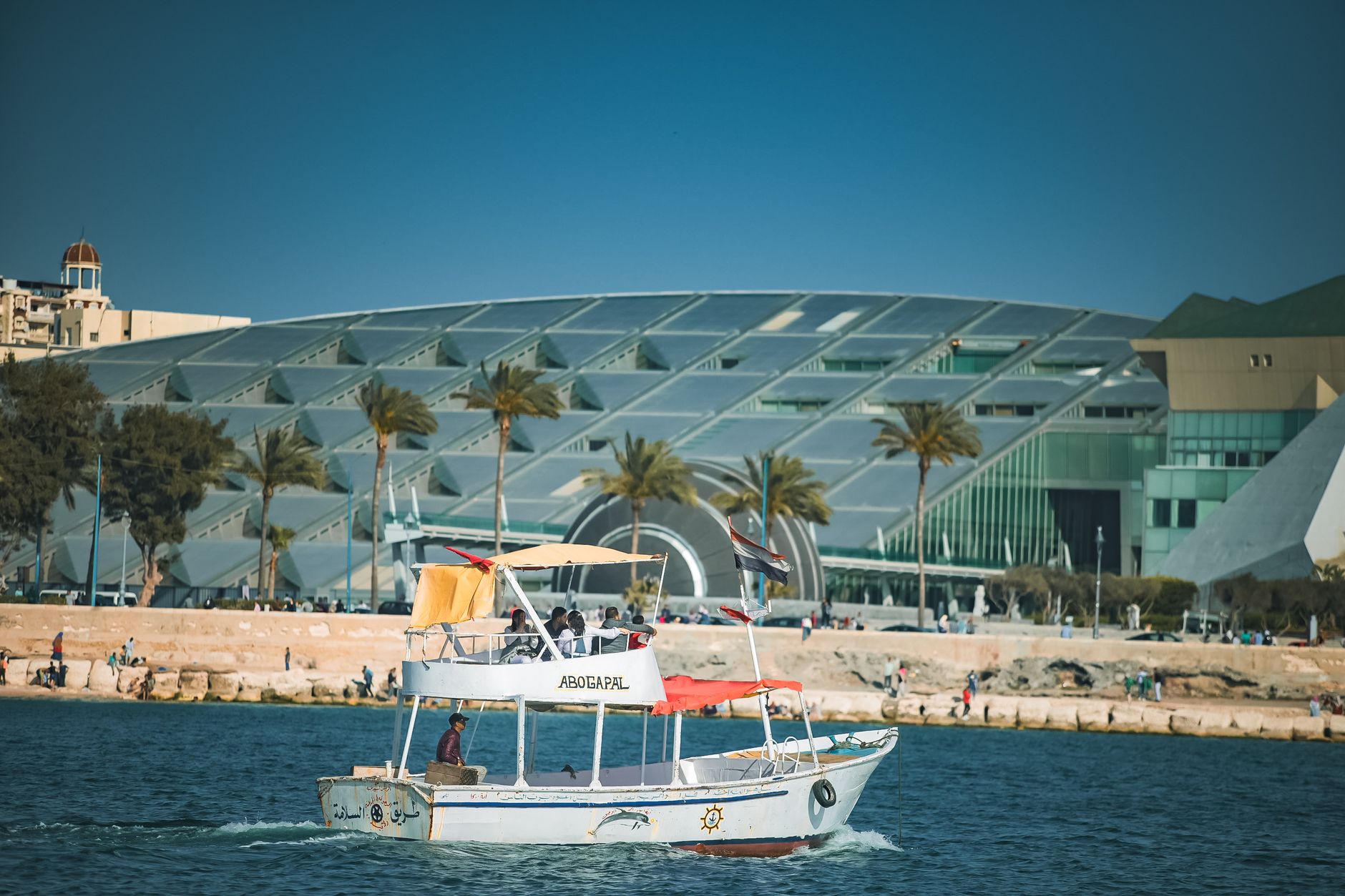
A day is tight but workable if you plan the train times properly. Our Alexandria day trip guide sets out a realistic hour-by-hour route, with the stops worth cutting when you run short.
3. Fayoum Oasis & Wadi El Rayan — desert, lakes and fossil whales
Fayoum is the day trip people forget to take, and the one I’d nudge curious travellers toward after the pyramids. About 90 km southwest of Cairo — and only around 90 minutes’ drive — this huge depression fed by a Nile branch hides lakes, farmland, dunes, waterfalls and prehistoric fossils. It feels genuinely far from the city despite being so close. Give it a full day.
Wadi El Hitan — the Valley of the Whales
Fayoum’s showpiece is Wadi El Hitan, a UNESCO site preserving the fossilised skeletons of whales that swam here some 40 million years ago, when this desert was the Tethys Sea. The open-air display leaves complete skeletons where they lie, alongside sharks, sea turtles and crocodiles, and the little visitor centre sets the geology out well. Walking among forty-million-year-old whales in absolute desert silence is one of the most surreal half-hours you can have near Cairo. It sits deep beyond Fayoum town, though — the final stretch needs a 4×4, so this one really is a guided-tour job, not a wing-it.
Wadi El Rayan, Lake Qarun and Tunis Village
Wadi El Rayan is a protected area built around two man-made lakes joined by Egypt’s only waterfalls — modest by world standards but a genuine novelty in the desert, and a nice spot to stop. Lake Qarun, one of the oldest lakes on earth, draws flamingos and herons in the winter migration. The village of Tunis, perched above the lake, has reinvented itself as a pottery colony where you can watch (or try) the wheel, and a handful of eco-lodges and lakeside kitchens do unhurried local lunches with a view. It’s a lovely, low-key counterpoint to the temples-and-tombs circuit.
Getting there
Fayoum town is about 90 minutes by car; Wadi El Hitan is a fair bit further into the desert and needs that 4×4 for the last leg. A full-day organised tour covering Fayoum, Wadi El Rayan and the whale valley typically runs around US$60–110 per person with transport, guide and fees. If you only want Tunis Village, Lake Qarun and the waterfalls, a private driver for the day is cheaper and perfectly doable on paved roads — it’s specifically Wadi El Hitan that pushes you toward a proper desert vehicle.
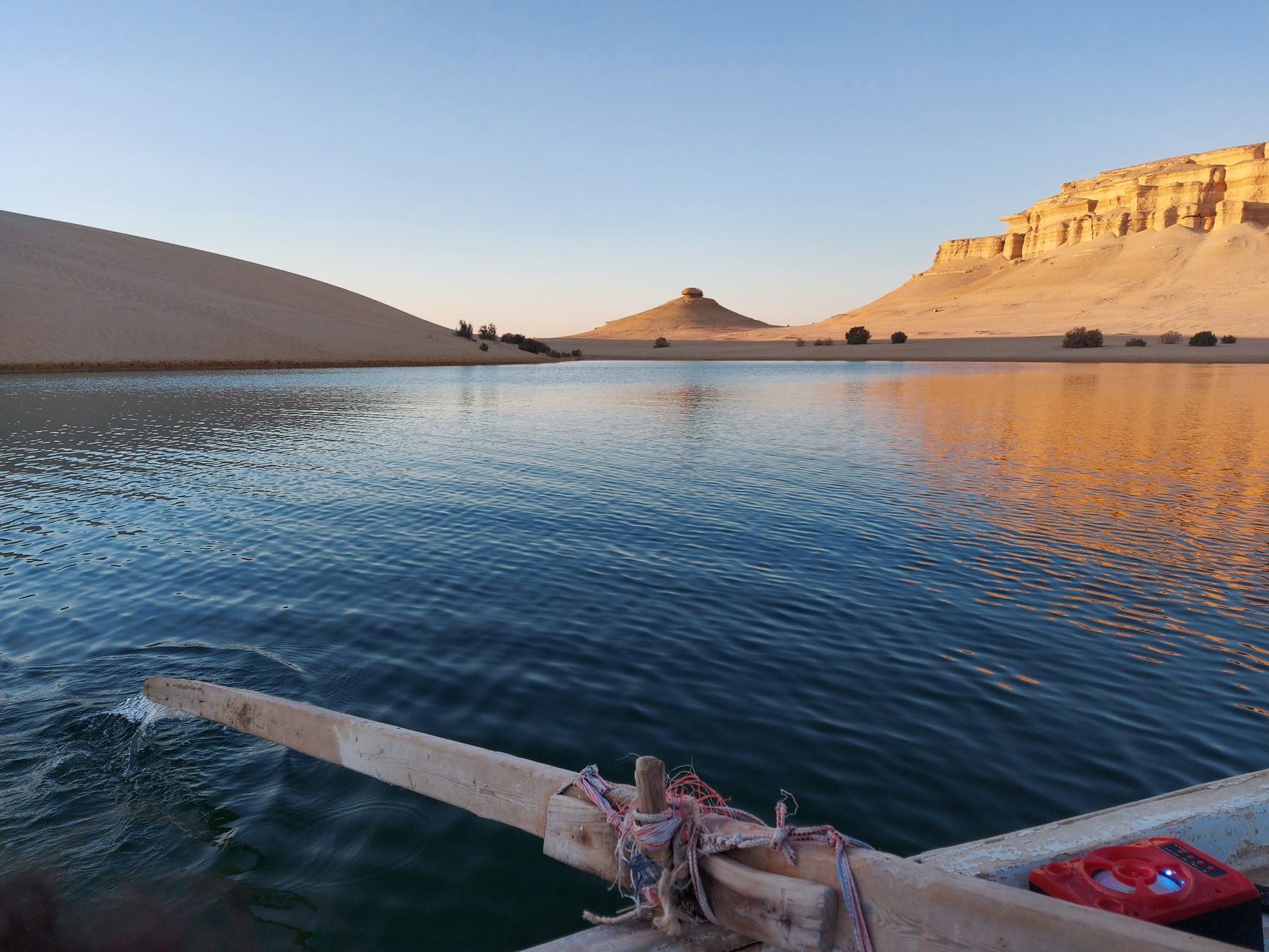
Fayoum packs fossils, lakes, dunes and a pottery village into one long day. Our Fayoum Oasis day trip guide covers the driving times, permits and where to stop for lunch.
4. Ain Sokhna — the closest beach to Cairo
Some days you don’t want another tomb. Ain Sokhna (“hot spring”) is the nearest stretch of Red Sea to Cairo — about 120 km east on the Gulf of Suez, an easy 1.5 to 2 hours on the modern highway. It’s not Hurghada or Sharm; it’s the practical choice when you’ve got one free day and want sun, sea and a pool without flying anywhere.
The water is clear and warm, the sand is decent, and there’s modest snorkelling on the fringing reefs. The simplest way in is a resort “day-use” package — beach and pool access, usually lunch, sometimes water sports — which tends to run from around US$40–50 per person upward depending on the property and the day. Go on a weekday: Cairenes pour down here on Fridays and Saturdays and the better beaches fill fast. The beach season runs roughly April to November, warmest in July and August. A private car or Uber is the only sensible way out, figure around 400–700 EGP each way.
My honest take: as a beach in its own right Ain Sokhna is fine rather than dazzling — the resorts are the draw more than the coastline. But as a quick reset between heavy sightseeing days, it does the job better than anything else within range.
If you simply want salt water and a few quiet hours, our Ain Sokhna day trip guide compares the day-pass resorts, the drive and what a beach day there really costs.
5. Wadi Natrun — desert monasteries, easy to combine
Wadi Natrun sits about 100 km northwest, right on the Desert Road to Alexandria, which is its great practical virtue — you can fold it into an Alexandria day or do it as a half-day on its own. This shallow, salt-rich valley has been a centre of Christian monasticism since the 4th century CE, one of the very places the whole monastic tradition began.
Four working monasteries remain, each ringed by fortress walls that once kept desert raiders out. St Macarius (founded around 360 CE) is the oldest and most significant, with old frescoes and a living community of monks. Deir al-Suryan, the “Syrian Monastery,” holds some of the finest early Christian wall paintings in Egypt. The other two, St Pishoy and Baramus, round out the set. Entry is free, the monks are welcoming and some speak English — but dress modestly (long sleeves, long trousers or skirt, no shorts) and expect photography limits inside. It’s a quiet, contemplative few hours rather than a blockbuster, and all the better for it. Drive time from Cairo is roughly 1.5 to 2 hours.
The monasteries have been in continuous use since the fourth century, and visiting them well takes a little preparation. Our Wadi Natrun monasteries guide covers visiting hours, dress, fasting seasons and which of the four to prioritise.
6. The White Desert — spectacular, but not a day trip
You’ll see “White Desert day trip from Cairo” advertised. Ignore it. The White Desert proper sits beyond Bahariya Oasis — somewhere around 350 km just to reach Bahariya, and another 150-odd km on to the famous chalk formations, so 500+ km each way. Doing that as a single day means most of your waking hours in a vehicle for an hour or two at the rocks. It defeats the entire point.
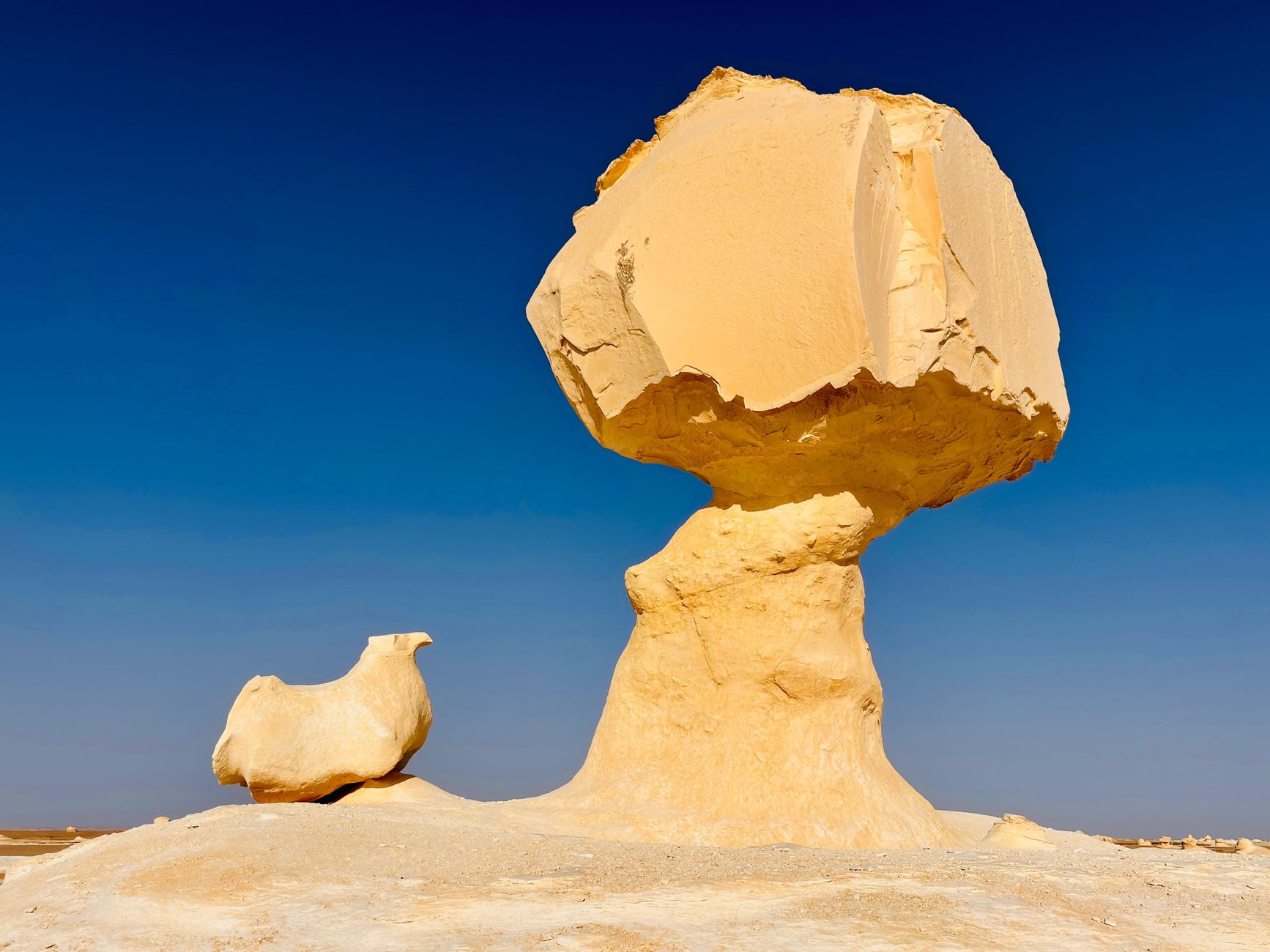
The White Desert is a place to sleep in. Its wind-sculpted white pinnacles — like a field of mushrooms and meringues glowing under the moon — are genuinely one of the most extraordinary landscapes in Egypt, and the reason to come is to camp among them. The realistic options are a 2-day/1-night overnight (camping in the desert) or a more comfortable 3-day/2-night version that adds a hotel night in Bahariya and takes in the Black Desert and Crystal Mountain along the way. The drive out from Cairo to Bahariya alone is about four hours. Build it in as an overnight or leave it for a return trip — just don’t let anyone sell it to you as a day out.
Done properly it is an overnight camp under the chalk formations, and it is one of the best things in Egypt. Our White Desert camping trip guide covers operators, what to pack and how cold the night actually gets.
7. Luxor in a day — how to do it, and whether you should
Luxor is the great “can I, though?” question. Around 500 km south, it’s too far to drive there and back in a day — but it is genuinely doable by plane, and operators sell exactly that. The flight is barely over an hour, and the route is busy: well over two hundred flights a week run Cairo–Luxor in 2026, on EgyptAir, Air Cairo, Nile Air and others, with departures from before dawn. A typical packaged Luxor day tour is a roughly 12-hour operation: very early flight down, guide and driver waiting, the big West Bank and East Bank sights (Karnak, the Valley of the Kings, Hatshepsut’s temple), lunch, and a late flight back.
Can you? Yes. Should you? Only if you have to. Luxor holds the densest concentration of monuments on earth and it deserves at least two or three days; cramming it into one means an exhausting dawn start, a forced march through some of the most important sites in the world, and a tired flight home. If your schedule truly has no spare nights and Luxor is non-negotiable, the fly-in day tour is a legitimate way to get a taste. But if you can find even a single overnight, do that instead — the difference in experience is enormous. Book the flights or the tour package well ahead; the cheap early-bird seats go quickly, and a same-day no-stay leaves zero margin if a flight slips.
If you are set on it, do it with your eyes open. Our Cairo to Luxor day trip guide lays out the flight times, the ground itinerary that fits and an honest verdict on whether one day is enough.
Tours vs private driver vs going it alone
Three ways to run any of these, and the right one depends on the destination and your temperament.
- Organised tour — best for the hard-to-reach or context-heavy trips: Wadi El Hitan (you need the 4×4 and the navigation), Saqqara (a good guide transforms it), Luxor in a day (let someone else handle the flight-and-transfer choreography), and the White Desert overnight. You pay more, but logistics and expertise are handled.
- Private driver — my default for Saqqara–Memphis–Dahshur, Wadi Natrun, the lighter side of Fayoum, and Ain Sokhna. More flexible, usually cheaper than a tour, and you set the pace. The rule that never changes in Egypt: agree the full itinerary and the total price before you pull away, and confirm the driver waits at each stop as long as you need.
- Fully independent — realistic for the train to Alexandria and, at a push, an Uber-based Saqqara/Memphis run. It’s the cheapest route, but you lose the commentary and take on the friction yourself. Major sites are reasonably signed, and audio apps fill some of the gap.
Wherever you book a tour, use a platform with real reviews (Tripadvisor, GetYourGuide, Viator), pin down in writing exactly what’s included — entry fees, lunch, guide, the small tips guards expect — and ask the maximum group size. Under ten people beats a coach every time.
The Western Desert runs almost always start from one place, and our Bahariya Oasis guide covers the town, the hot springs, the black desert nearby and how to arrange the trip once you are there.
What these day trips actually cost in 2026
Rough per-person budgets, so you can plan. These shifted upward in 2026 mainly because monument tickets did.
- Shoestring: Saqqara and Memphis self-driven by Uber, or the train to Alexandria, can still be done for roughly 800–1,500 EGP a head once you add the new entry fees — more than it used to be, but fair for what you see.
- Mid-range: budget about US$60–110 per person for most full-day trips with a private car or small-group tour, fees and a decent lunch. Outstanding value next to comparable sites almost anywhere else.
- Premium: private Egyptologist, top vehicle, the best lunches — US$150–300+ per person, and worth it for a one-shot Luxor day or a special Saqqara visit.
To square these excursions with your overall spend — what things cost, cash vs card, tipping norms — our Cairo budget and money guide is the companion piece. A reminder that’s more relevant than ever now monuments are cashless: carry a working card and a little cash for drivers, guards and lunch.
Practical tips for any day trip from Cairo
Go early. Out the door by 7 or 8 a.m. for the long ones (Alexandria, Fayoum, Luxor). Desert sites are hot and exposed by midday, and the light is better early anyway.
Pick your season. October to April is the sweet spot for everything overland — comfortable for walking ruins and roaming the desert. May to September, push your start time even earlier and lean toward the coast. Ain Sokhna flips this: its best months run roughly April to October. For the wider picture, see our take on the best time to visit and how to plan a Cairo trip.
Pack for the desert even on a “city” day. Two litres of water minimum per person, high-SPF sunscreen, a hat or scarf, closed-toe shoes for rubble and pyramid passages, and a light layer for fierce car aircon and cool desert evenings. A small daypack keeps your hands free for climbing.
Carry a card and small cash. Tickets are card-only at most sites now; drivers, guards and roadside lunches still want cash. Airport ATMs give poor rates — sort money in town. More on this in the budget guide above.
Dress for monasteries. Wadi Natrun and any religious site mean covered shoulders and knees, for everyone. Keep a scarf in the bag.
Day trips from Cairo — FAQ
Which day trip from Cairo is the best?
For most people, Saqqara combined with Memphis and Dahshur. You get the world’s oldest pyramid, the chance to climb inside a 4,600-year-old one at Dahshur, and superb decorated tombs — all with far fewer crowds than Giza, and all within about 40 km of the city. It’s the highest reward for the time and money.
Can you do a day trip to Luxor from Cairo?
Yes, by air. The flight is around an hour each way and the route runs many flights daily, so operators sell roughly 12-hour Luxor day tours — early flight down, guide, the main sites, late flight back. It works, but Luxor really wants two to three days. Do the day trip only if your schedule genuinely has no spare night.
Is the White Desert a day trip from Cairo?
No. It’s 500-plus kilometres each way via Bahariya Oasis, and the whole experience is built around camping overnight among the chalk formations. Plan a 2-day/1-night or 3-day/2-night trip — not a day out.
How do I get from Cairo to Alexandria for the day?
Either the train from Ramses Station (about 2.5 hours; faster Talgo services exist; budget roughly US$15–35 each way at foreigner fares) or a private car/tour (around 2,000–3,500 EGP round trip, or US$60–120 on an organised day tour). The train is more relaxing but leaves you carless in Alexandria; a driver is more efficient for hitting several sites.
Do I need a tour, or can I use a private driver?
A private driver is great for Saqqara–Memphis–Dahshur, Wadi Natrun and Ain Sokhna — flexible and usually cheaper. Lean toward an organised tour for Wadi El Hitan (you need a 4×4 and local knowledge), a Luxor fly-in day, and the White Desert overnight. Always agree the full itinerary and price before setting off.
How much do day trips from Cairo cost in 2026?
Most full-day trips land around US$60–110 per person mid-range, covering a private car or small-group tour, entry fees and lunch. Self-guided trips (the Alexandria train, or an Uber-based Saqqara run) can come in lower, though the 2026 jump in monument ticket prices has narrowed that gap. Premium private tours run US$150–300+.
Are the pyramids at Saqqara and Dahshur better than Giza?
Not better — different, and complementary. Giza has the scale and the Sphinx; Saqqara and Dahshur have the origin story, the atmosphere and the elbow room. The ideal is both: Giza one day, the southern pyramids another. Our Giza pyramids guide covers the headline site in full.
Go deeper: plan the rest of your trip
These excursions slot into a wider Cairo plan. The guides below are the most useful companions:
- Complete Cairo travel guide — the master plan: how many days, when to go, how to structure your trip.
- Pyramids of Giza visitor guide — the headline site, tickets and timing, to pair with the Saqqara–Dahshur day.
- Getting around Cairo — metro, Uber, white taxis and the train stations you’ll use to reach these trips.
- Cairo budget and money guide — costs, cash vs card and tipping, now that monuments are cashless.
- Things to do in Cairo — fill the days between excursions back in the city.
- Where to stay in Cairo — pick a base that makes early departures easy.
- Eating your way around the city — what to eat before and after a long day on the road.
- Cairo Nile River experiences — a gentler half-day in the city when you don’t fancy a long drive.
Build two or three of these into your itinerary and a Cairo city break turns into a proper tour of Egypt’s range — oldest pyramids, Mediterranean coast, fossil desert, Red Sea and living monasteries, all from one base.