
This article contains advertising. Our booking links are routed through a partner that adds commission tracking automatically, so if you book through one we earn a commission from the provider, at no extra cost to you. It never affects what we recommend. Affiliate disclosure
Ten days is the best-balanced Egypt trip available, and the reason is structural rather than sentimental. A seven-day trip spends two of its days moving; a fortnight starts adding places that pull in different directions. Ten days lets you give Cairo four days, put a Nile cruise in the middle, and arrive in Aswan without having packed a suitcase every morning. A well-built 10 day egypt itinerary is really a three-part structure — city, river, city — and the cruise in the middle is what makes the other two parts work.
Below: the day-by-day plan, an honest account of what a Nile cruise is actually like, how to choose a boat, the costs, and the things a ten-day trip still cannot hold. Prices were checked in September 2026 and should be read as the right order of magnitude rather than a quotation — Egyptian fees track the pound and the pound has repriced repeatedly. Other lengths are compared on the Cairo itineraries hub.
The ten days at a glance
| Day | Where | What |
|---|---|---|
| 1 | Cairo | Arrive, settle, an evening on the Nile |
| 2 | Cairo | Giza and the Grand Egyptian Museum |
| 3 | Cairo | Islamic Cairo: Al-Muizz, Khan el-Khalili, Ibn Tulun, the Citadel |
| 4 | Cairo | Saqqara, Dahshur and Memphis |
| 5 | Cairo → Luxor | Coptic Cairo and the royal mummies, then the sleeper or an evening flight |
| 6 | Luxor | West Bank, then board the boat |
| 7 | Luxor → Edfu | Karnak and Luxor Temple, sail south |
| 8 | Edfu → Kom Ombo | Two riverside temples, a full day on the water |
| 9 | Aswan | Philae, the unfinished obelisk, a felucca at sunset |
| 10 | Aswan | Abu Simbel or a slow Nubian day, then fly home |
Two structural decisions do most of the work here. First, fly home from Aswan rather than backtracking to Cairo — it saves the better part of a day. Second, put the cruise between Luxor and Aswan running southbound, which is the shorter, more common direction and gets you to Aswan with the trip’s best day still ahead of you.
Days one to five: Cairo
Four full days plus an arrival evening, which is the right allocation. The shape is the standard one — one geographical cluster per day, outdoor sites in the morning, museums in the afternoon — and it is set out hour by hour in the four-day Cairo and Giza itinerary. The short version:
- Day one. Arrive, do nothing structural. An hour on a felucca at sunset is the right first evening; it costs almost nothing and it introduces the city gently.
- Day two. Giza at 08:00, lunch off the plateau, the Grand Egyptian Museum on a pre-booked afternoon slot. This is the only timed booking in Egypt that genuinely matters.
- Day three. Al-Muizz from Bab al-Futuh south to Bab Zuweila, Khan el-Khalili, Ibn Tulun and the Gayer-Anderson Museum, the Citadel at golden hour, and Al-Muizz again after dark when it is floodlit and empty.
- Day four. The desert day: Saqqara’s Step Pyramid, Dahshur’s Bent and Red Pyramids — where you can usually walk into a pyramid with no queue at all — and Memphis. A driver, eight or nine hours, and the day most people are surprised by.
- Day five. Coptic Cairo in the morning and the royal mummies at Fustat in the early afternoon, then south. Finish by five if you are catching the sleeper.
Day two — Giza and the Grand Egyptian Museum in detail
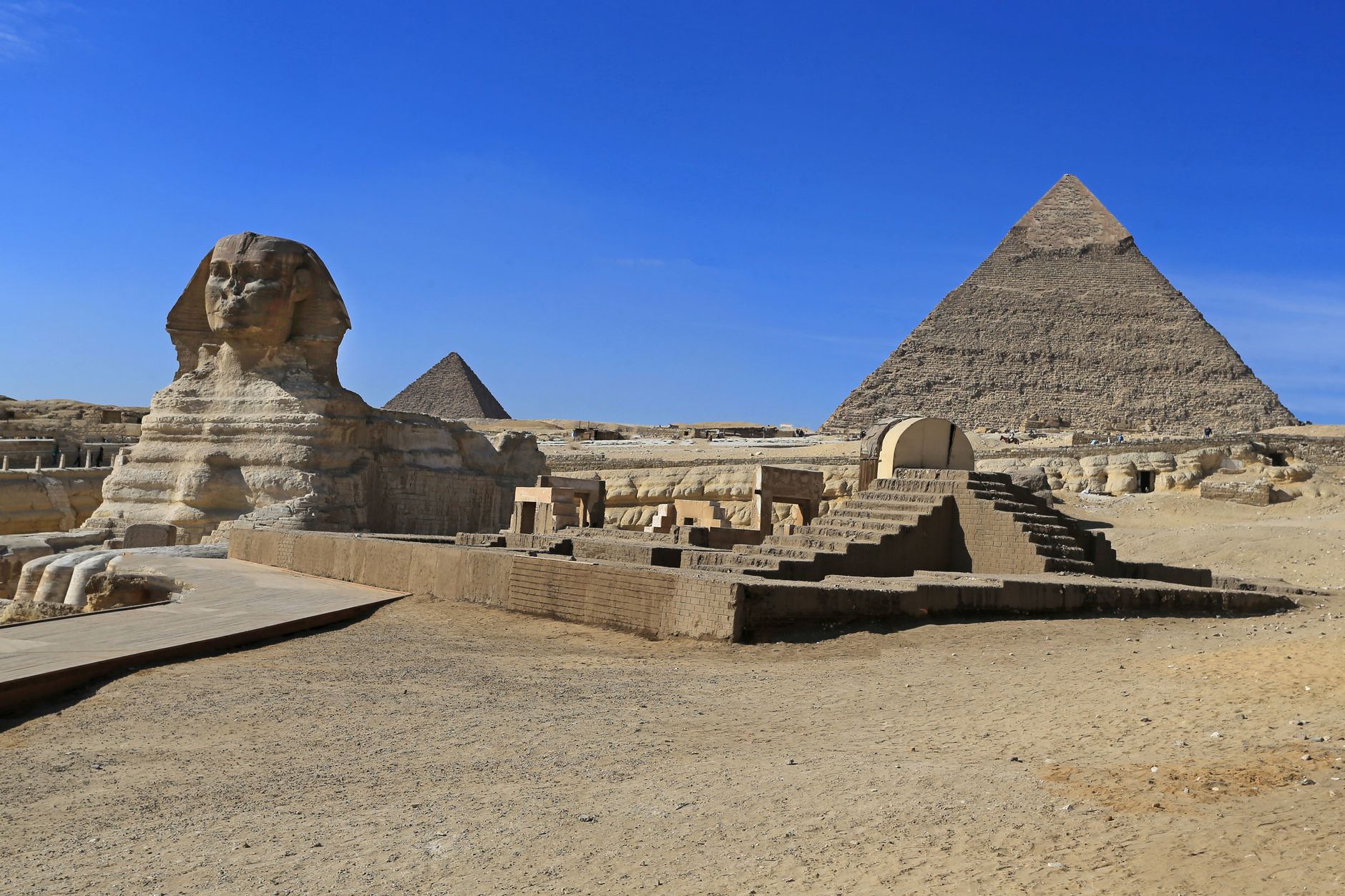
Be at the Giza gate at 08:00, in every season. The plateau has almost no shade, the coaches begin arriving around half past nine, and the low morning light rakes across the stone in a way the flat noon glare does not. Walk the base of the Great Pyramid — it takes longer than anyone expects, which is exactly the point — then the panorama viewpoint where all three pyramids line up, then down to the Sphinx and the valley temple beside it, whose granite-cased limestone blocks most visitors walk straight past.
With ten days you have room to go inside the Great Pyramid. It is a separate ticket and worth doing once: the Grand Gallery is a remarkable piece of engineering, while the King’s Chamber at the end of it is a bare granite room with an empty sarcophagus. Go in for the passage, not the destination.
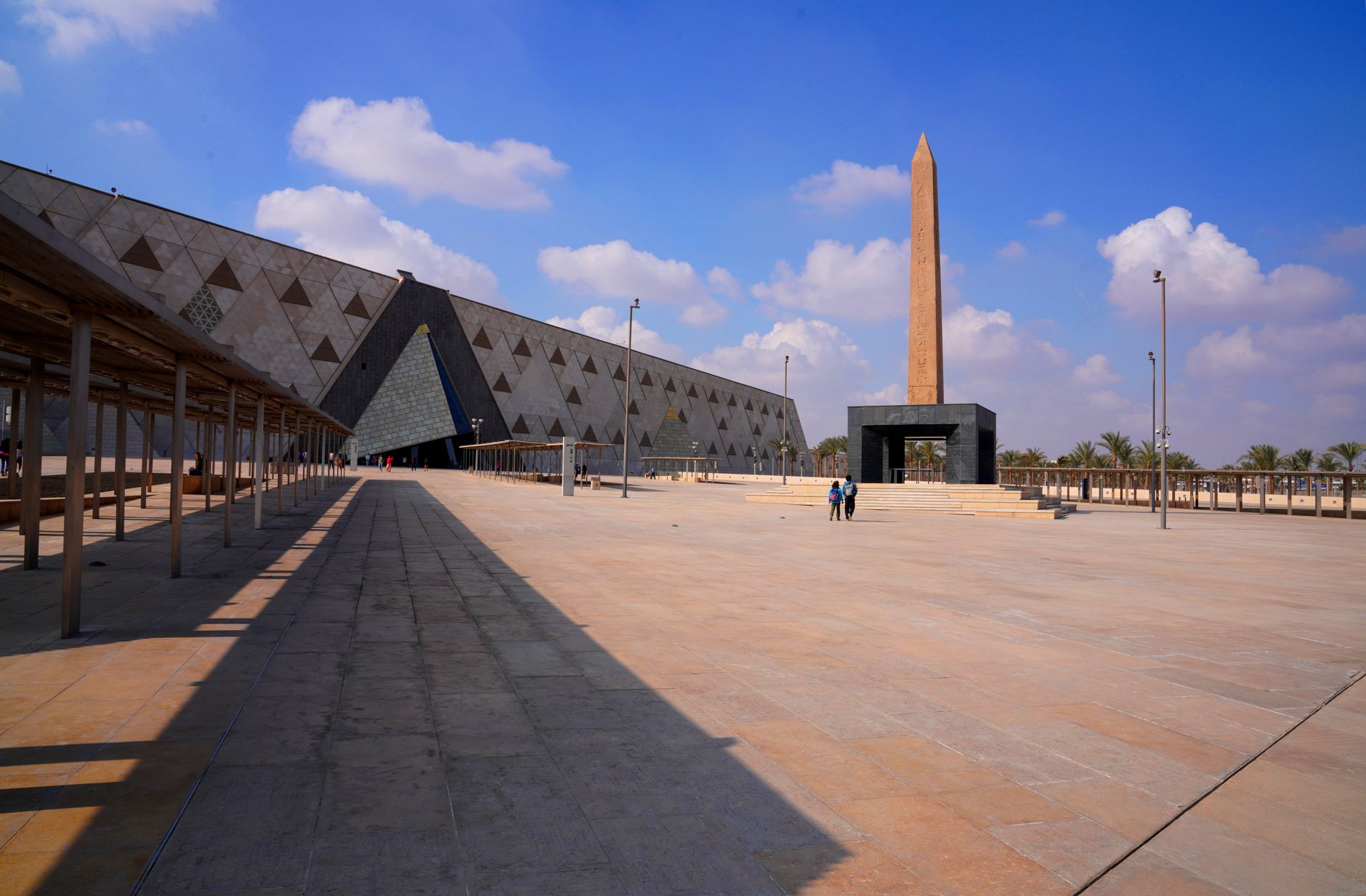
The afternoon belongs to the Grand Egyptian Museum, and on a ten-day trip you can give it four hours rather than three. Tutankhamun’s galleries first, with the complete collection — roughly five thousand objects — now housed here. Then the Grand Staircase, six storeys of colossal statues rising towards a window that frames the pyramids you stood under that morning. Then Khufu’s solar boat, a real cedar ship reassembled from over a thousand pieces.
One thing to settle before you arrive: Tutankhamun’s treasures are here, his mummy is not — it remains in tomb KV62 in the Valley of the Kings, which you will stand outside on day six. The twenty-two royal mummies of other pharaohs are at Fustat, which you visit on day five.
Day four — the desert day in detail
Saqqara, Dahshur and Memphis, strung along about twenty kilometres of desert edge south of Giza. Public transport between them is genuinely awkward, so this is the day for a driver: eight or nine hours door to door, leaving at eight.
Saqqara’s Step Pyramid of Djoser was built in the twenty-seventh century BC and is the world’s first monumental building in dressed stone — six mastabas stacked one on another, the ancestor of everything at Giza, and a century older than any of it. Give the complex two hours: the Djoser enclosure with its dummy chapels, the Pyramid of Unas with the earliest Pyramid Texts on its burial chamber walls, and the mastaba tombs of the nobles, whose painted reliefs are in far better condition than anything on the Giza plateau and much closer to eye level. If your ticket includes the Serapeum, take it — the granite sarcophagi cut for the Apis bulls are among the strangest things in Egypt.
Dahshur is twenty minutes further south and it is what makes the day. Sneferu’s Bent Pyramid changes angle partway up, from a steep fifty-four degrees to a shallower forty-three, an eleven-degree structural correction visible from a kilometre away. The Red Pyramid next door is the successful second attempt and the first true smooth-sided pyramid ever finished — and you can usually walk into it with no queue at all. The descending passage is long, low and steep, and it smells strongly of ammonia; neither is a reason to skip it, and both are reasons to know in advance.
Getting south
Luxor is about seventy-five minutes by air and ten to fourteen hours by sleeper train. The flight is frequently cheaper than a sleeper berth; the sleeper saves a hotel night, moves while you sleep and is a genuine experience, but it is noisy — it stops roughly hourly through the night — and it can run hours late.
On a ten-day trip with a cruise the calculus is slightly different from a shorter one, because a late-arriving train would compress your only Luxor West Bank day. Our recommendation here is to fly south and take the sleeper on some future trip, or fly south and use the train for a Cairo–Alexandria leg if you extend. A missed morning at the Valley of the Kings is an expensive way to have an experience.
Days six to nine: the Nile cruise
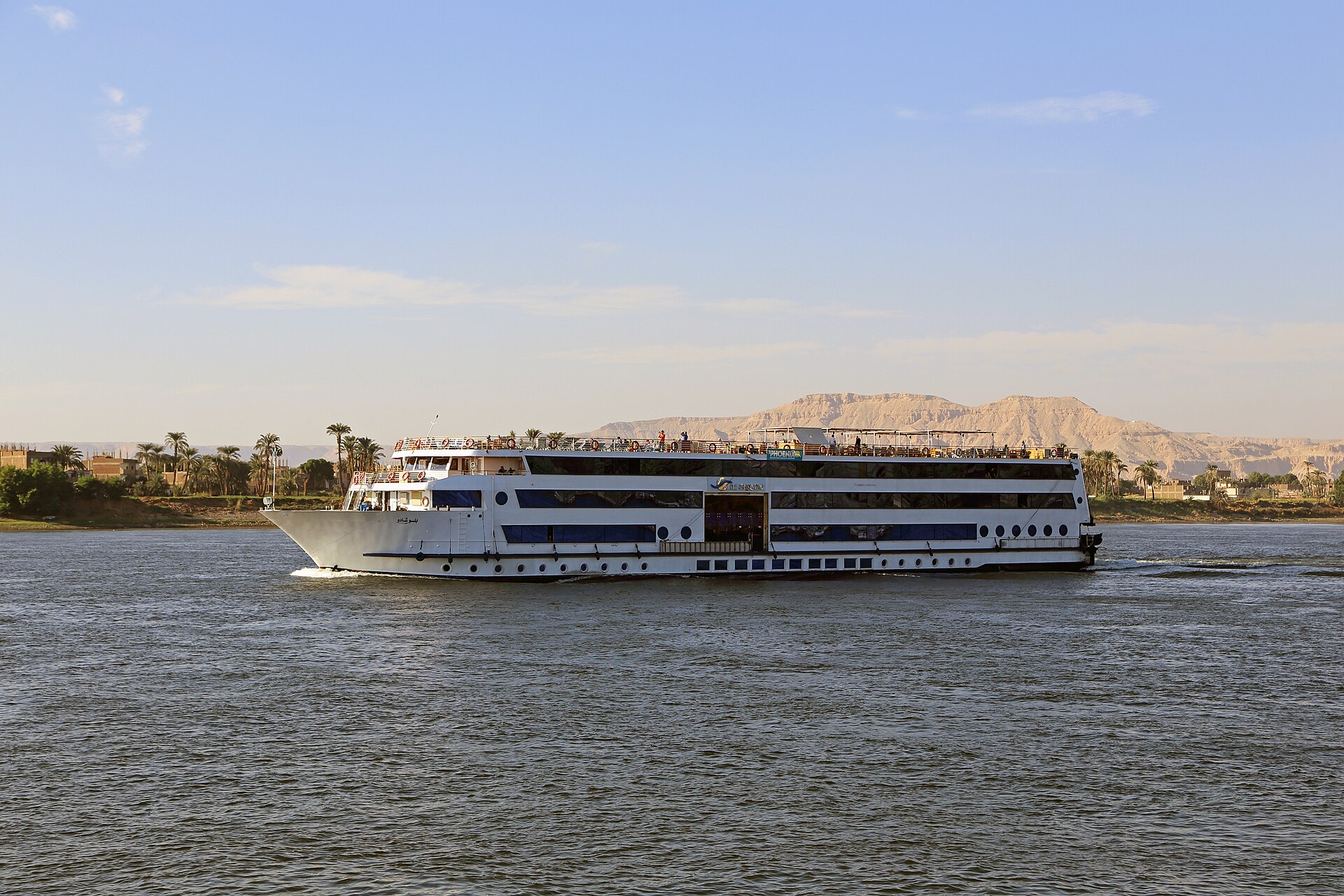
A standard Luxor–Aswan cruise is three or four nights. Boats vary enormously in age, size and standard, but the shape of the itinerary is near-identical across all of them because the temples are where they are.
Day six — Luxor West Bank, then board
Start early. The West Bank is a desert valley with no shade and the difference between seven and eleven in the morning is severe.
The Valley of the Kings general ticket covers three tombs from those open on the day, at around EGP 450 (~USD 9). Tutankhamun’s tomb is a separate ticket at roughly EGP 700 and is, honestly, the least impressive tomb in the valley — small, plain, and famous because it was found intact rather than because of what is in it. Spend the money on Seti I if it is open, or simply take three standard tombs; the painted ceilings of Ramses VI alone justify the trip.
Then Deir el-Bahari, Hatshepsut’s three-terraced temple set into the cliff, and the Colossi of Memnon by the roadside on the way back. Board the boat in the afternoon.
Day seven — Karnak, Luxor Temple, and sail
Karnak in the morning: the largest religious complex ever built, developed over roughly two thousand years, with a Great Hypostyle Hall of 134 columns, the tallest over twenty metres. It is the single most overwhelming interior in Egypt and it needs three hours and, ideally, a guide.
Luxor Temple in the late afternoon or after dark, when it is floodlit. It is smaller and far more legible than Karnak, and the layering is visible in a way it rarely is anywhere: a pharaonic temple with a Roman chapel inside it and a working mosque built on top, all still standing.
The boat sails in the evening, usually mooring at Esna for the lock.
Day eight — Edfu and Kom Ombo
The best day of the cruise, and the clearest argument for taking one.
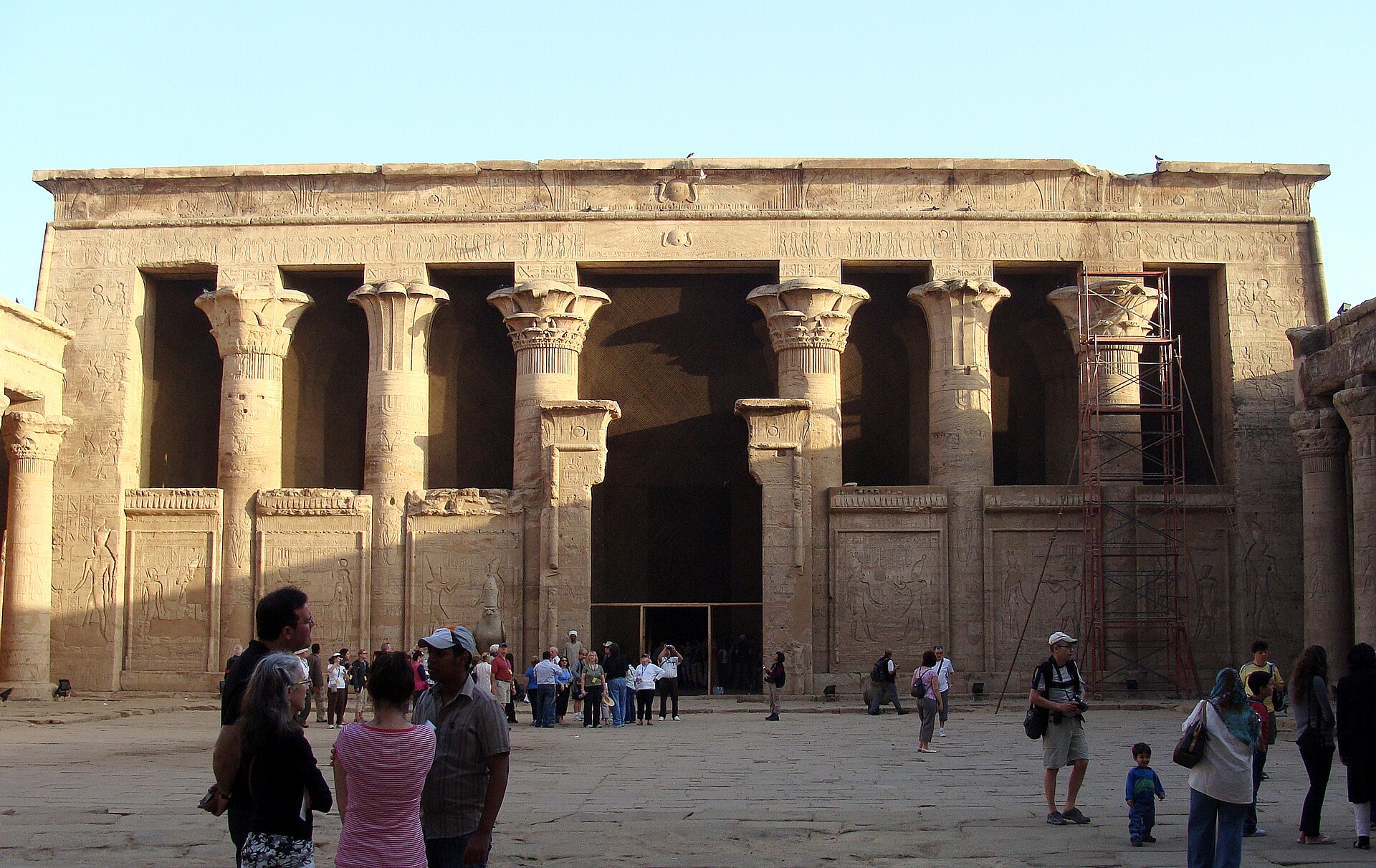
Edfu is the best-preserved temple in Egypt, Ptolemaic, built between 237 and 57 BC and buried in sand until the nineteenth century, which is why the pylon is intact, the roof is on and the hypostyle hall is dark and complete. The falcon statues of Horus in the courtyard are the postcard. Most boats moor within a caleche ride of the gate; the horse carriages are a tourist ritual and the welfare of the animals is variable, so look before you commit.
Kom Ombo stands directly on the riverbank, which means you often arrive at it by simply walking off the boat. It is a double temple — two mirrored halves sharing a central axis, one for Sobek the crocodile god and one for Horus the Elder — and the small Crocodile Museum next door holds mummified crocodiles from the site. Late afternoon light off the water here is the best of the whole cruise.
Day nine — Aswan
The boat arrives in the morning. Aswan is smaller, slower and considerably more beautiful than Luxor: granite islands, feluccas, Nubian villages in blues and ochres, and a late-afternoon light people remember for years.
- Philae Temple. A Ptolemaic temple to Isis, dismantled and rebuilt stone by stone on higher ground when the High Dam flooded its original island. You reach it by boat, which is half the point. Around EGP 600 (~USD 12).
- The unfinished obelisk. Still lying cracked in its granite quarry, abandoned partway through cutting. It would have been the largest ever raised, and seeing it still attached to the bedrock explains more about ancient stoneworking than any museum case.
- A felucca at sunset around Elephantine Island and the Botanical Garden, desert on one bank and town on the other.
Day ten — Abu Simbel, or not
Abu Simbel is two hundred and eighty kilometres south, close to the Sudanese border, and the standard trip is a convoy leaving around three or four in the morning, three hours each way, back by lunch. Flights exist and cost considerably more.
The temples themselves are unarguable: four seated colossi of Ramses II, each over twenty metres, cut from a cliff face, and the entire thing sawn into blocks and relocated sixty metres higher in the 1960s when Lake Nasser rose. Around EGP 822 (~USD 17) for foreign adults.
The honest caveat is the day. A three o’clock start followed by a flight home is punishing, and some people arrive too tired to take it in. The alternative tenth day — a late breakfast over the river, the Nubian Museum, which is excellent and almost empty, and an afternoon on the water — is a genuinely good option and nobody who chooses it seems to regret it.
What a Nile cruise is actually like
Worth being clear about, because expectations vary wildly.
It is a floating hotel, not a boat trip. Most vessels are three or four decks, 40 to 80 cabins, with a sun deck, a small pool, a dining room and a lounge. You unpack once. That single fact is the largest practical advantage over doing Upper Egypt by road.
The schedule is not yours. Excursions run on a fixed timetable with the whole boat, usually in the cooler hours, and if you want to spend an extra hour at Edfu you generally cannot. People who like to set their own pace find this the hardest adjustment.
Sailing time is real time. A good stretch of day eight is spent simply moving, with the bank going past — palms, water buffalo, brickworks, children waving from the mud. It is the closest thing to unstructured time on the whole trip and it is many people’s favourite part.
The food is buffet. Competent, plentiful and international rather than Egyptian. If you want to eat well in Egypt, do it in Cairo.
There will be a shopping evening. Almost every boat runs an onboard galabeya night and at least one bazaar visit. Both are optional and both are fine if you take them in the spirit intended.
Choosing a boat
- Age matters more than star rating. Egyptian cruise boats are self-rated and the ratings are unreliable. A refurbished vessel from the last few years beats a tired five-star from two decades ago.
- Ask about the window, not the deck. Lower-deck cabins have small high windows; upper decks have full-height ones. Since the view is the whole point, this is the upgrade worth paying for.
- Smaller is generally better. A 40-cabin boat moves through temple entrances faster than an 80-cabin one and moors more easily.
- Check what excursions and fees are included. Some fares include all entry tickets and guiding; others charge an excursion package on board that can add USD 150–250 per person.
- Dahabiya alternative. Small traditional sailing boats with a handful of cabins, no engine noise for much of the time, and a slower, more flexible route. Considerably more expensive and considerably nicer.
What ten days costs
| Item | Price (checked Sept 2026) | Notes |
|---|---|---|
| Cairo, four days of entries and transport | ~USD 195–255 | Includes Giza, the GEM and the desert day |
| Cairo–Luxor flight | USD 60–120 | Book early; the route thins out |
| Nile cruise, 4 nights, mid-range | USD 400–800 per person | Full board; check what excursions are included |
| Nile cruise, 4 nights, premium | USD 900–2,000+ per person | Newer boats, better cabins |
| Dahabiya, per person per night | USD 250–500 | Small sailing boats, far more flexible |
| Onboard excursion package, if not included | USD 150–250 | Ask before booking, not on board |
| Valley of the Kings, three tombs | ~EGP 450 (~USD 9) | Tutankhamun ~EGP 700 extra |
| Abu Simbel | ~EGP 822 (~USD 17) | Plus convoy transport or a flight |
| Aswan–Cairo flight home | USD 70–140 | Fewer daily services than you expect |
| Ten days, one person, mid-range | ~USD 1,100–1,800 | Excluding international flights and Cairo hotel |
What ten days still cannot hold
The Red Sea. Hurghada and Sharm el-Sheikh both need a flight or a long bus — there is no train to either — and adding beach days to a trip that already has a cruise in it stretches it past the point of coherence. Fourteen days is where the Red Sea fits.
Siwa. Eight to ten hours each way from Cairo. It is a wonderful place and it is a separate trip.
The White Desert. Needs an overnight under the chalk formations. On ten days you would have to cut the desert-pyramids day to make room, which is a bad trade.
Alexandria. Wrong axis. A trip running south has no room to also run north.
Practical notes
Book the cruise before the flights
Cruise departure days are fixed — most boats run set weekly rotations — so the cruise dates determine everything else. Fix the boat first, then build the Cairo days and the internal flights around it.
Southbound or northbound?
Luxor to Aswan is the shorter, more common direction and is what most three- and four-night itineraries run. Aswan to Luxor exists and takes slightly longer against the current. For a ten-day trip arriving from Cairo, southbound is the natural direction and puts Aswan — the more beautiful of the two — at the end.
Tipping on board
Most boats operate a collective crew tip, usually suggested at a per-person-per-day rate and collected at the end. This is normal and expected. Budget for it separately rather than being surprised by it, and tip your guide separately again.
Heat
Upper Egypt is meaningfully hotter than Cairo, and in summer regularly exceeds forty degrees while Cairo sits in the mid-thirties. October to April is the sensible window for this trip and December to February is the best of it. In June, July and August a cruise is more bearable than a land trip — there is always shade and a pool — but the excursions are still brutal.
Frequently asked questions
Is ten days enough for Egypt?
It is the best-balanced length available. Ten days covers Cairo properly including the desert pyramids, a Nile cruise between Luxor and Aswan, and both ends of Upper Egypt without a forced march. What it does not cover is the Red Sea, Siwa or the Western Desert.
How many nights should the Nile cruise be?
Four is the sweet spot on a ten-day trip: Luxor, Edfu, Kom Ombo and Aswan without hurrying. Three nights works and compresses the Luxor end. Anything longer starts eating the Cairo days, which is the wrong trade for a first visit.
Is a Nile cruise worth it, or should you do Upper Egypt by road?
Worth it, for two reasons: you unpack once, and the temples arrive in the right order without you organising anything. The cost is flexibility — the schedule belongs to the boat. If setting your own pace matters more to you than convenience, do Luxor and Aswan on land with a driver, and take the Edfu and Kom Ombo stops on the transfer.
Luxor to Aswan or Aswan to Luxor?
Luxor to Aswan, southbound. It is the shorter direction, it is what most boats run, and it puts Aswan — quieter, prettier and closer to Abu Simbel — at the end of the trip rather than the start.
Do you need a guide?
Most cruises include one, and at Karnak and the Valley of the Kings that is genuinely valuable — the carved surfaces are dense with meaning that is invisible unless someone reads them for you. In Cairo you can manage without, except at Saqqara, where a guide earns their fee more than anywhere else in the country.
What should a ten-day Egypt trip cost?
Roughly USD 1,100–1,800 per person at a mid-range standard, excluding international flights and Cairo accommodation, with the cruise accounting for most of the variation. Budget versions exist well below that; premium boats and a private guide throughout can double it.
Is Abu Simbel worth a 3am start on the last day?
The temples are unarguably worth seeing; whether they are worth that particular morning is personal. If Abu Simbel matters to you, consider flying it from Aswan, or arrange the cruise so you reach Aswan a day earlier and take it on day nine instead.
Four more days buys the part of Egypt that ten days has to leave out. Our two-week Egypt itinerary keeps the Cairo and Nile structure intact and adds either the Red Sea or a night camping in the White Desert at the end — plus the rest days that a fortnight actually needs.
Related Cairo Guides
- All Cairo itineraries, one to fourteen days
- The seven-day version, without a cruise
- The four Cairo days, in detail
- Nile cruise operators compared
- Premium and dahabiya river cruising
- The Nile in Cairo itself
- Budgeting for a longer Egypt trip
- When to travel
Photo Credits
Nile cruise ship on the river near Luxor: photo by Marc Ryckaert, via Wikimedia Commons (CC BY-SA 4.0).
The Temple of Horus at Edfu: photo by Silar, via Wikimedia Commons (CC BY-SA 4.0).