This article contains advertising. Our booking links are routed through a partner that adds commission tracking automatically, so if you book through one we earn a commission from the provider, at no extra cost to you. It never affects what we recommend. Affiliate disclosure
The fourth day is the one that changes what kind of trip you are having. Up to three days you are seeing Cairo’s headline sights, competently and in a sensible order. On day four you can drive forty minutes south along the desert edge and stand at the foot of a pyramid built a century before anything at Giza, with perhaps a dozen other people on the whole site. A 4 days in cairo itinerary is not simply three days plus one; it is the point at which the trip stops being about the famous three pyramids and starts being about how pyramids came to exist at all.
This page assumes the standard three-day structure and then gives day four in full — Saqqara, Dahshur and Memphis, the best excursion within an hour of the city — along with three alternatives if that day is not for you. Costs were checked in September 2026 and should be read as the right order of magnitude rather than a quotation, because Egyptian entry fees track the pound and the pound has repriced repeatedly. Other lengths are compared on the Cairo itineraries hub.
The four days at a glance
- Day one — Giza and the Grand Egyptian Museum. Pyramids at opening, lunch off the plateau, museum on an afternoon slot, felucca at sunset.
- Day two — Islamic Cairo. Al-Muizz from Bab al-Futuh to Bab Zuweila, Khan el-Khalili, Ibn Tulun, the Citadel at golden hour.
- Day three — Coptic Cairo and the royal mummies. Mar Girgis in the morning, the National Museum of Egyptian Civilization at Fustat, downtown in the evening.
- Day four — Saqqara, Dahshur and Memphis. A full day with a driver, out along the desert edge and back.
Days one to three are set out hour by hour in the three-day Cairo itinerary, and there is no reason to change them — the logic of one cluster per day holds regardless of how long you stay. What follows is what a fourth day should actually contain.
Days one to three, in brief
You do not need to reinvent the first three days, but a fourth day does change how you use them, so here is the short version with the four-day adjustments folded in.
Day one — Giza and the Grand Egyptian Museum
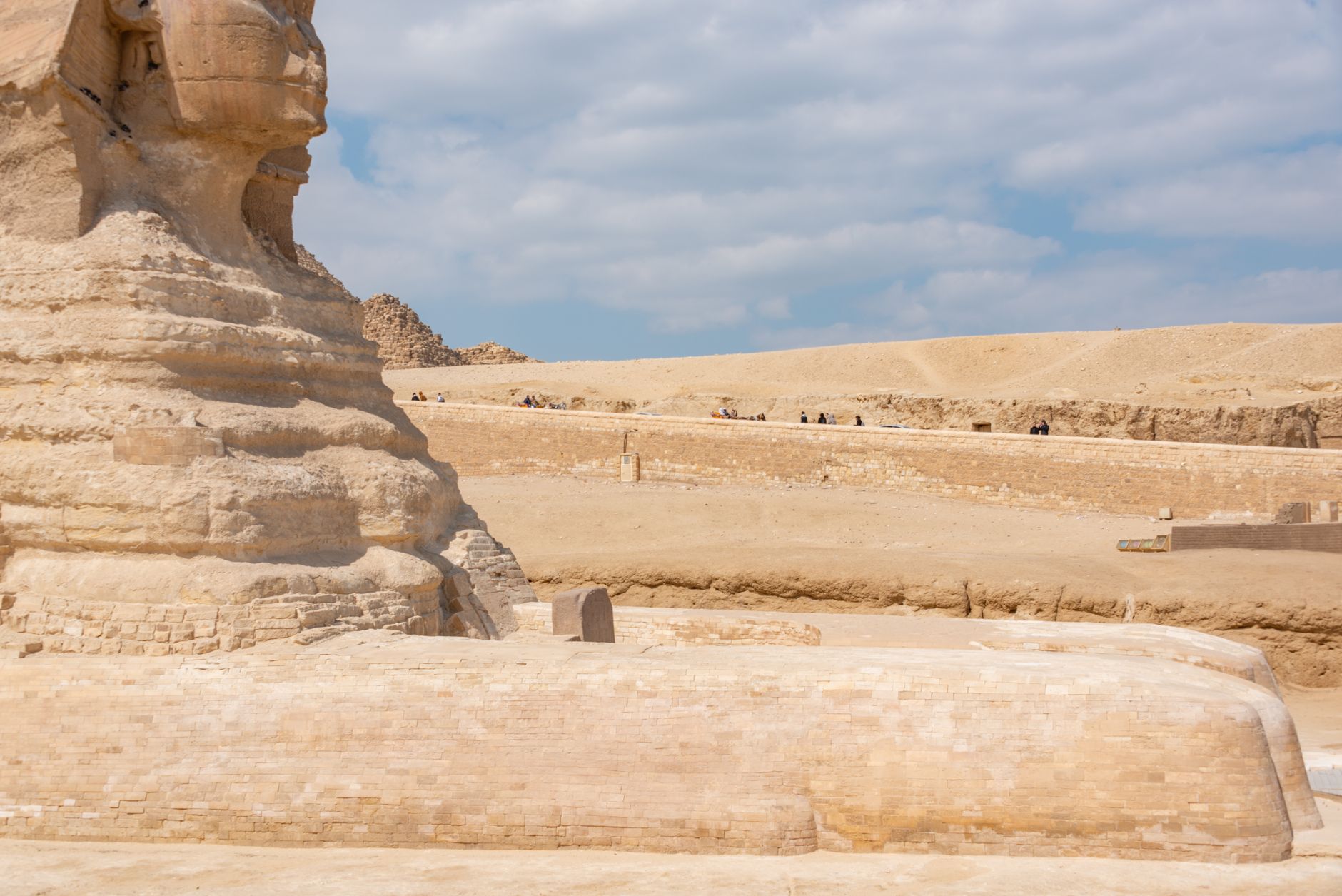
Be at the Giza gate at 08:00. There is almost no shade on the plateau, the coaches start arriving around half past nine, and the low morning light is far better for both the stone and your photographs. Walk the base of the Great Pyramid, take the panorama viewpoint where all three line up, then down to the Sphinx and the valley temple beside it, which is regularly walked past and shouldn’t be.
With four days you should go inside the Great Pyramid, which on a three-day trip is an hour you cannot really spare. Understand what it is first: the Grand Gallery is a remarkable piece of engineering and the King’s Chamber at the top is a bare granite room with an empty sarcophagus.
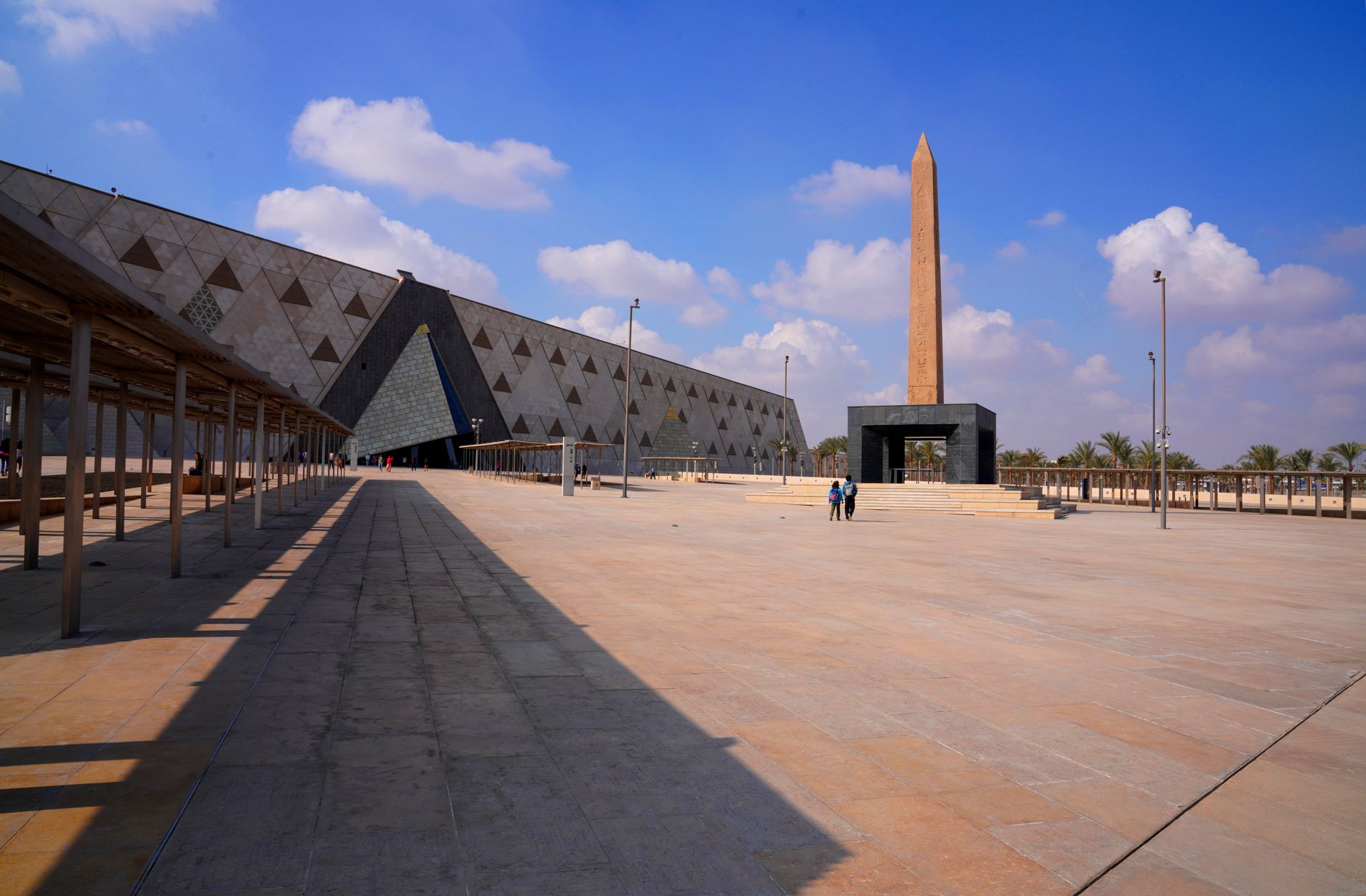
Lunch off the plateau — the restaurants at the gate are priced for a captive audience — then the Grand Egyptian Museum on an afternoon slot. Four days buys you four hours here rather than three, which is the difference between the highlights and a real visit. Tutankhamun’s galleries first, then the Grand Staircase with its window framing the pyramids you stood under at nine, then Khufu’s solar boat. Book the slot before you fly; on-site sales are suspended and entry is entirely timed.
Day two — Islamic Cairo
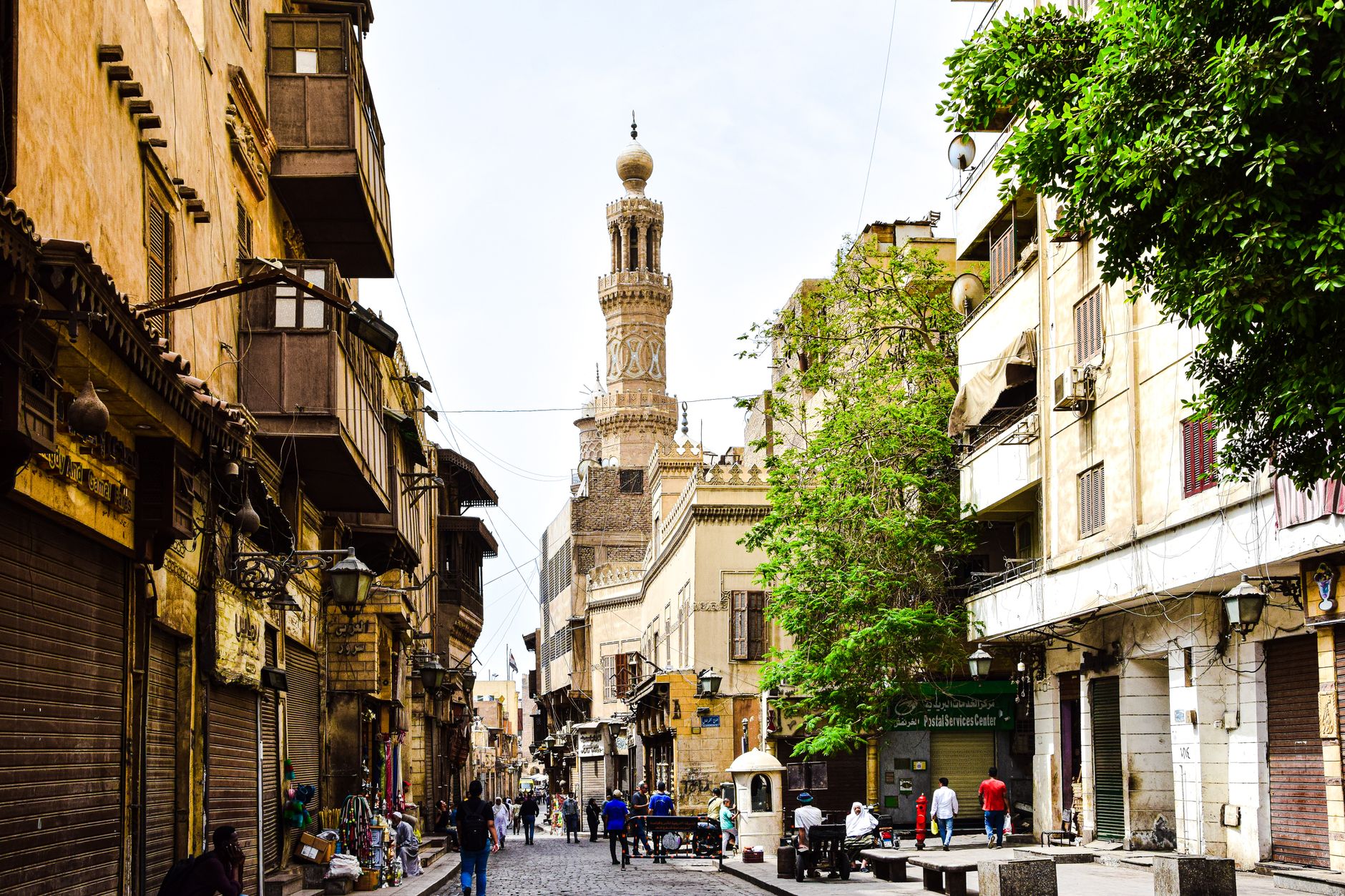
Start at Bab al-Futuh at 08:30 and walk Al-Muizz south to Bab Zuweila — a kilometre holding the greatest concentration of medieval Islamic architecture anywhere in the world, and a street that belongs to itself before about eleven and to the tour groups afterwards. Climb the Bab Zuweila minarets at the southern end for the best rooftop view in the medieval city.
Khan el-Khalili is thirty seconds off Al-Muizz down an alley, not on it. Then south-west to the Mosque of Ibn Tulun, built AD 876–879, the oldest mosque in Egypt surviving largely in its original form, free to enter, with a spiral minaret worth climbing and the Gayer-Anderson Museum sharing a wall. Finish at the Citadel of Saladin in the last two hours of daylight, when the light warms and the haze often lifts enough to show the pyramids from the walls.
Day three — Coptic Cairo and the royal mummies
Metro Line 1 to Mar Girgis, which is the one morning where the train genuinely beats a car. The Hanging Church is suspended over the gatehouse of the Roman fortress of Babylon and holds around 110 icons and more than 1,500 years of continuous worship; morning light is best for the interior. Ben Ezra Synagogue, the Church of St Sergius and Bacchus and the Coptic Museum are all within a few minutes’ walk.
Then ten minutes to Fustat for the National Museum of Egyptian Civilization, where the Royal Mummies Hall holds twenty-two royal mummies including Ramses II, Seti I and Hatshepsut, included in the standard ticket with no supplement. It is open daily 09:00–17:00 with the ticket window closing at 16:00, plus an evening session from 18:00 to 21:00.
Leave the late afternoon empty. On a three-day trip you would be tempted to fill it; with a desert day still ahead of you, the rest is an investment.
What four days cost
| Item | Price (checked Sept 2026) | Notes |
|---|---|---|
| Saqqara entry | EGP 450–600 (~USD 9–12) | Serapeum often a separate ticket |
| Dahshur entry | EGP 200–350 (~USD 4–7) | Includes walking into the Red Pyramid |
| Memphis open-air museum | EGP 150–250 (~USD 3–5) | Small site, thirty minutes |
| Driver and car, full day | USD 40–70 for the car | Split between the group, not per person |
| Private guide, full day | USD 60–110 per person | Worth it more here than at the GEM |
| Days one to three, entries and transport | ~USD 155–200 | Per person, no guide, no hotel |
| Four days, one person, no guide or hotel | ~USD 195–255 | Add USD 80–110/day for a private guide and car |
Day four: Saqqara, Dahshur and Memphis
Three sites, strung out along about twenty kilometres of desert edge south of Giza. Public transport between them is genuinely awkward — this is the one day of a Cairo trip where a car and driver is not a luxury but the sensible option. Reckon on eight to nine hours door to door, and start early for the same reasons you started early at Giza: heat, light and coaches.
08:00 — Leave the hotel
From central Cairo the drive to Saqqara is around forty-five minutes to an hour, longer if you hit the morning rush on the ring road. Bring more water than you think you need, a hat, and cash in small notes — there are ticket kiosks, a few tips and not much else out there, and card facilities are patchy at best.
09:00–11:30 — Saqqara
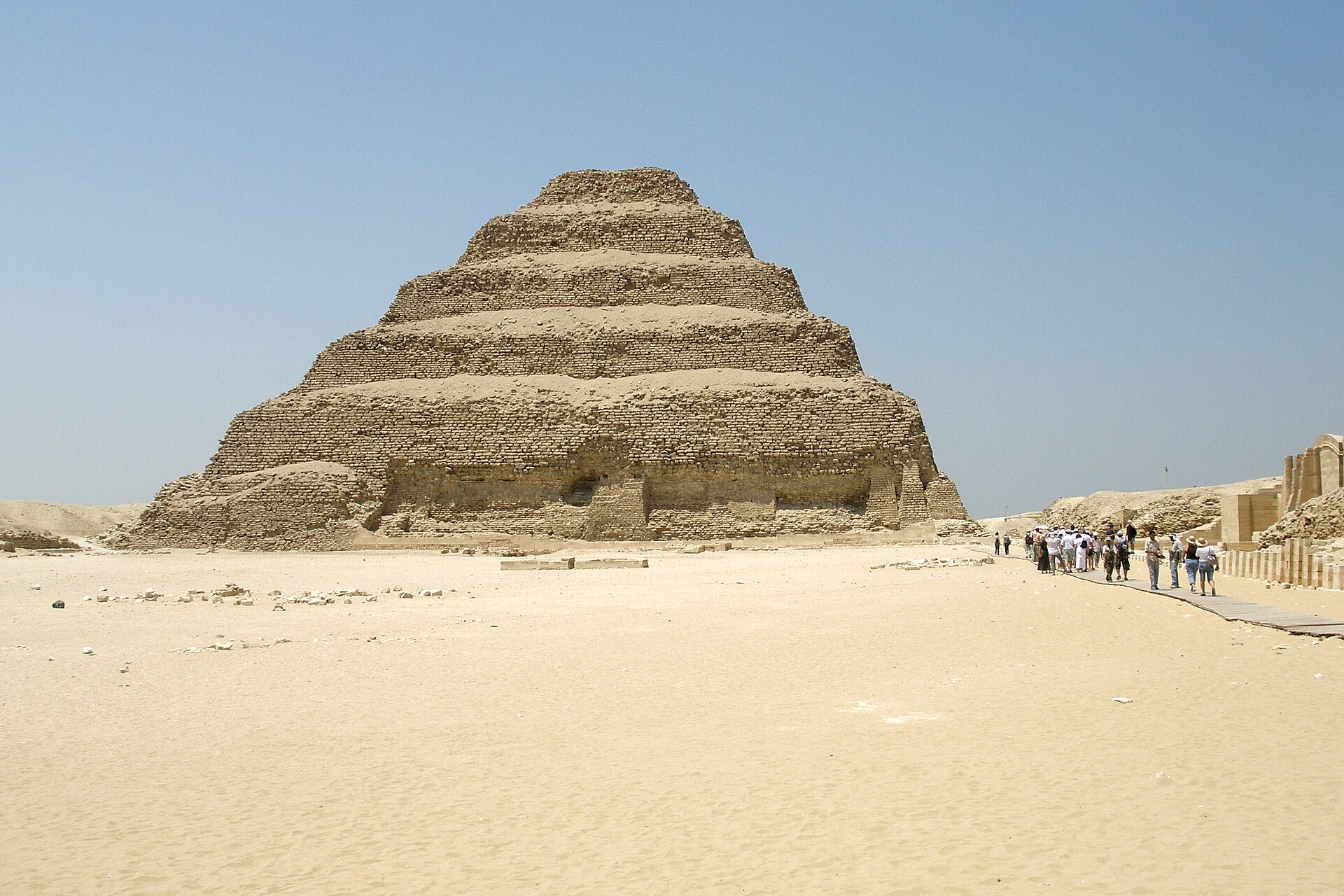
Saqqara is the necropolis of Memphis, in use for more than three thousand years, and the Step Pyramid of Djoser at its centre is the reason the day exists. Built in the twenty-seventh century BC by the architect Imhotep, it is the world’s first monumental building in dressed stone and the ancestor of everything at Giza — six mastabas stacked one on another, an idea being had in public.
The enclosure around it has been extensively restored and you can now go inside the pyramid itself, down into a passage system that took decades of stabilisation work to make safe. Give the whole complex two hours at least: the Djoser enclosure with its dummy chapels and fluted columns, the Pyramid of Unas with the earliest Pyramid Texts carved on its burial chamber walls, and the mastaba tombs of the nobles, whose painted reliefs of hunting, fishing, brewing and butchery are in far better condition than anything at Giza and much closer to eye level.
If your ticket includes the Serapeum, go. The vast granite sarcophagi cut for the Apis bulls, each one weighing dozens of tonnes and dropped into rock-cut niches along a subterranean gallery, are one of the strangest things in Egypt and reliably the thing people remember from the day.
12:00–14:00 — Dahshur
Twenty minutes further south, and this is where the day earns its reputation. Dahshur holds two pyramids built by Sneferu, the father of Khufu, and between them they show the geometry being worked out in real time.
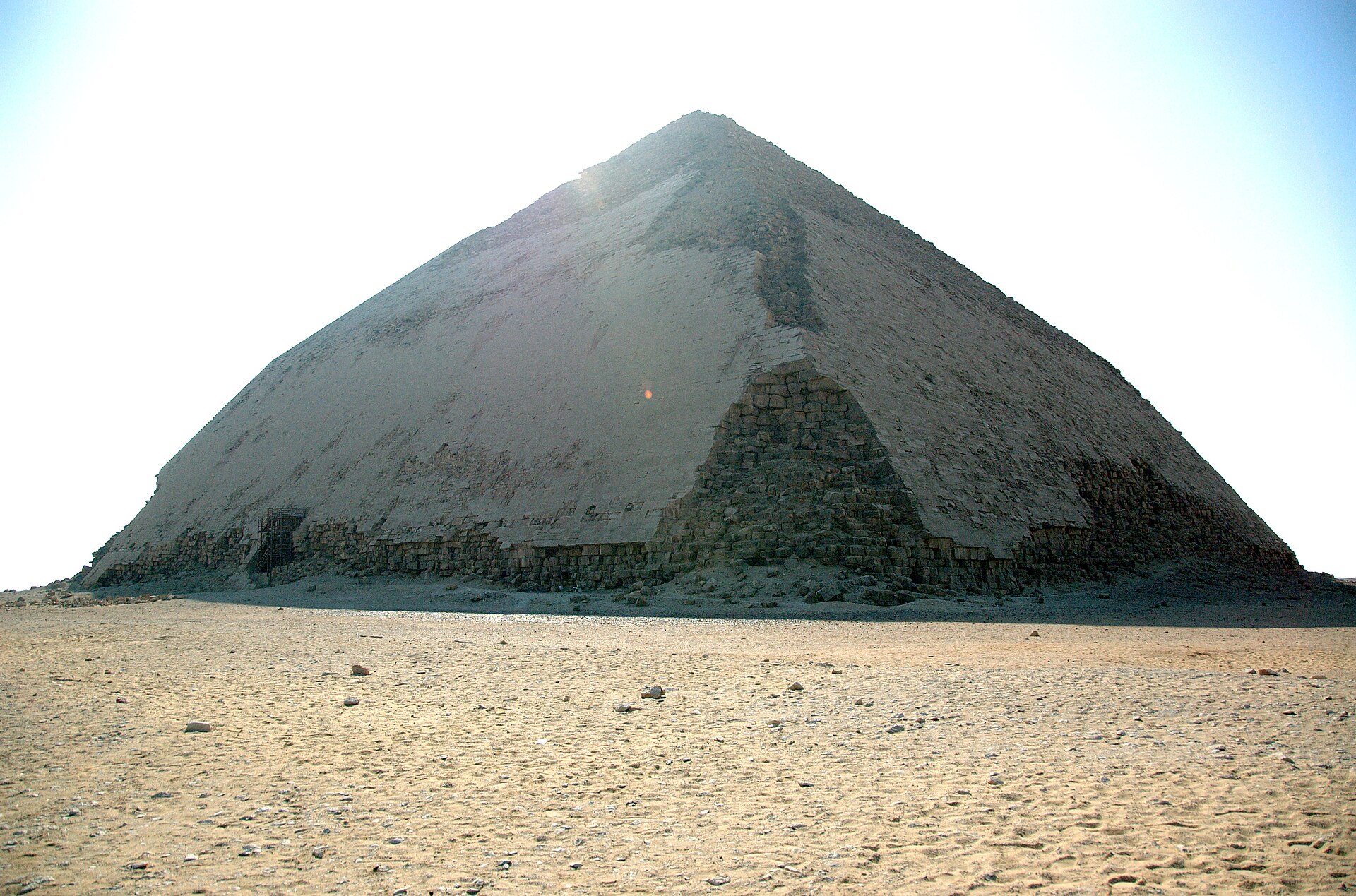
The Bent Pyramid starts at a steep fifty-four degrees and changes partway up to a much shallower forty-three — an eleven-degree correction visible from a kilometre away, apparently made because the original angle was proving structurally unsound. It is also one of the few pyramids that retains a substantial amount of its original polished limestone casing, which is worth seeing simply to understand what these things used to look like.
The Red Pyramid next door is the successful second attempt, built at the shallower angle throughout, and the first true smooth-sided pyramid ever completed. You can walk into it — and here is the thing that makes Dahshur worth a day of your trip — usually with no queue at all. At Giza the interior is a scheduled, crowded, ticketed experience. At Dahshur you climb the external staircase, duck into the descending passage, and it is very often just you and the guardian. The three corbelled chambers inside are extraordinary spaces.
Two honest warnings. The descending passage is long, low and steep, and you go down it bent almost double; it is not the place to discover you are claustrophobic. And the interior smells strongly of ammonia, a legacy of the bat guano that accumulated over centuries. Neither is a reason to skip it, but both are reasons to know in advance.
14:30–15:15 — Memphis
Memphis was the capital of Egypt for most of the Old Kingdom and one of the great cities of the ancient world. What survives is a small open-air museum in a palm grove at Mit Rahina, and the honest verdict is that it is a footnote rather than a destination.
Go for two things. The colossal fallen statue of Ramses II, over ten metres of limestone lying on its back in a purpose-built shelter, viewable from a gallery at head height — which is a very different experience from looking up at a standing colossus. And the alabaster sphinx in the garden outside. Forty-five minutes is enough, and if the day is running long this is the stop to cut rather than shortening Dahshur.
16:00 — Back to Cairo
You will be back at the hotel by five or half past, dusty and tired in the good way. This is a night for a short walk and an early dinner rather than a dinner cruise.
Three alternative fourth days
The Saqqara–Dahshur day is our default recommendation, but it is not the only good use of a fourth day and it does not suit everyone.
Alexandria
Three hours each way by road, less by train, which makes it a long day but a genuinely different one — Mediterranean rather than desert, Greco-Roman rather than pharaonic. The Bibliotheca Alexandrina, the catacombs of Kom el-Shoqafa, the Roman amphitheatre, the fort on the site of the Pharos lighthouse, and seafood on the corniche. It works better as an overnight if you can spare it, and the train is more comfortable than the road. See our Alexandria day trip guide.
Fayoum
Closer than Alexandria and considerably stranger: a lake, a waterfall of sorts, pottery villages, and — if you are prepared for the drive — Wadi al-Hitan, the Valley of the Whales, where fossilised whale skeletons lie in the desert as evidence that the Sahara was once a sea. Fayoum is the better fourth day if you have already had enough of monuments and want landscape instead.
A second, slower day in Cairo itself
The most underrated option. Use day four for the Egyptian Museum at Tahrir, which most three-day plans have to drop; the Museum of Islamic Art, one of the best collections of its kind anywhere and reliably empty; the Cairo Tower; Zamalek on foot; and a long afternoon in Al-Azhar Park. No driver, no early start, no desert. People who do this often say it was their favourite day.
How the fourth day changes days one to three
Adding a day does not just append something; it loosens everything before it. Three specific improvements are worth planning for.
- You can go into the Great Pyramid without regret. On a three-day trip the interior climb eats an hour and a chunk of energy you need later. With four days, take it.
- You can give the Grand Egyptian Museum four hours instead of three. That is the difference between the highlights and a real visit, and it is enough to add the Children’s Museum if you have children with you.
- Day three’s afternoon can stay genuinely empty. On a three-day trip you will be tempted to fill it. With a fourth day in hand you can spend it in a café, and that is not waste.
The other thing four days buys you is weather insurance. Spring khamsin winds can throw enough dust over the plateau to flatten the views entirely for a day; with four days you can simply move Giza to day two and nothing is lost.
Practical notes for the desert day
Book the car, not the tour
For Saqqara and Dahshur, a driver with a car for the day costs a fraction of a packaged tour and gives you control over the timings — which matters, because most packaged versions give Dahshur forty minutes when it deserves ninety, and several skip the Red Pyramid interior entirely. Agree the itinerary in writing before you set off, and specifically that Dahshur is not the short stop.
This is the day to hire a guide
If you are hiring an Egyptologist for one day of your trip, make it this one rather than Giza. Saqqara’s mastaba reliefs and the Pyramid Texts at Unas are dense with meaning that is genuinely invisible without someone to read them, and the Serapeum makes no sense at all without context. A private guide with a car runs to roughly USD 80–110 per person for a full day.
What to bring
- Water, more than you think, sealed. There is very little to buy out there.
- Cash in small notes for tickets, tips and the guardian who unlocks a tomb for you.
- A torch or a phone with charge for the tomb interiors, several of which are barely lit.
- Proper shoes. Sand, loose rubble and steep internal passages.
- A hat and sun cream. There is essentially no shade at Dahshur.
What not to bother with
The carpet school. Almost every Saqqara tour includes a stop at a “carpet school” on the road out. It is a commission stop and the ethics of the operation are, at best, contested. Decline it in advance and in writing.
The papyrus institute. Same category, same answer. Most of what is sold as papyrus is banana leaf, and our papyrus buying guide explains how to tell.
Adding Giza to the Saqqara day. Some operators sell a combined Giza–Saqqara–Dahshur–Memphis day. It is a ten-hour forced march that does none of the four properly, and it exists because it sells, not because it works.
Seasonal notes
- December to February. Highs of 18–24 °C (65–75 °F) and cold-ish mornings in the desert — take a layer for the 08:00 departure. The best conditions of the year for a Dahshur day.
- March to May. Warm and clear, with occasional khamsin dust in spring that can make the drive out unpleasant and the pyramids hazy.
- June to August. The desert day is hard. Start at 07:00 rather than 08:00, do Dahshur before noon rather than after, and consider swapping Memphis for an earlier return.
- September to November. Ideal. Warm, clear, and the sites are quiet from mid-October onwards.
Frequently asked questions
Is four days too long for Cairo?
No. Four days is where Cairo stops feeling rushed. It covers the pyramids, both great museums, the medieval city, Coptic Cairo and a full day at Saqqara and Dahshur, with time left to sit down. If anything, the trip that feels short is three days; four is comfortable.
What should the fourth day be?
Saqqara, Dahshur and Memphis, for most people. It is close, it is the best excursion within an hour of the city, and Dahshur in particular offers something Giza cannot at any price: walking into a pyramid with no queue. If you have had enough of monuments, use the fourth day for Fayoum, Alexandria or a slow second day in the city itself.
Is Saqqara better than Giza?
Different, not better. Giza has the scale and the fame; Saqqara has the origins, the painted tomb reliefs and far fewer people. Most visitors who see both say Giza was the more impressive hour and Saqqara the more interesting day. Doing Giza first makes Saqqara make sense; doing it the other way round works less well.
Can you visit Dahshur independently?
You can, but it is awkward. There is no useful public transport, ride-hailing coverage out there is thin and getting a car back is the real problem. A driver for the day, waiting between sites, is the practical answer and is not expensive when split across a group.
How long does the Saqqara and Dahshur day take?
Eight to nine hours door to door from central Cairo, leaving at eight and back around five. Cutting it shorter usually means cutting Dahshur, which defeats the purpose.
Is the Red Pyramid interior worth going into?
Yes, and it is the single best interior experience available near Cairo, largely because you will often have it to yourself. Be aware that the descending passage is long, low and steep, that you will be bent double for several minutes, and that it smells strongly of ammonia inside. If you are at all claustrophobic, this is not the pyramid to test that on.
Where should you stay for a four-day trip?
Central Cairo or Zamalek. Three of the four days start from the middle of the city and the fourth is a driver picking you up from wherever you are, so the Giza-side advantage largely disappears. See where to stay in Cairo for the full comparison.
A fifth day is mostly insurance — against dust storms, upset stomachs and simply not wanting to get up — and it is the first trip length with room for a day that has nothing planned in it. See what to do with it in our five-day Cairo itinerary.
Related Cairo Guides
- All Cairo itineraries, one to fourteen days
- Days one to three, hour by hour
- Saqqara and the Step Pyramid in detail
- The Bent and Red Pyramids at Dahshur
- Memphis, the Old Kingdom capital
- Fayoum Oasis and the Valley of the Whales
- Every day trip from Cairo, compared
- The Museum of Islamic Art
Photo Credits
The Step Pyramid of Djoser at Saqqara: photo by Vyacheslav Argenberg, via Wikimedia Commons (CC BY 4.0).
The Bent Pyramid at Dahshur: photo by Sigurd Gartmann, via Wikimedia Commons (CC BY-SA 2.0).