This article contains advertising. Our booking links are routed through a partner that adds commission tracking automatically, so if you book through one we earn a commission from the provider, at no extra cost to you. It never affects what we recommend. Affiliate disclosure
The single biggest decision you make when planning a Cairo trip isn’t which tour to book or how many days to spend at the pyramids. It’s where to base yourself. Cairo sprawls across both banks of the Nile and out into the desert, and an hour in traffic separates neighbourhoods that look close on a map. Pick the right area and the city softens; pick the wrong one and you’ll spend half your holiday stuck in a car. So if you’re deciding where to stay in Cairo, this guide walks you through how to choose, then breaks down every neighbourhood worth considering, by budget, and by who you’re travelling with.
Short version, if you want it now: for a first visit of three to five days, Zamalek is the most liveable base. Stay in Giza only if waking up to the Great Pyramid is genuinely your top priority. Downtown wins on price and atmosphere if you don’t mind the noise. Everything else below is detail.
One thing worth saying up front, because it changes the calculus in 2026: the Grand Egyptian Museum finally opened near the Giza Plateau in late 2025, and the smaller Sphinx International Airport now takes a growing number of European flights. Both make the Giza side a more serious option than it was a couple of years ago. More on that shortly.
How to Choose Where to Stay in Cairo
Before you look at a single hotel, answer three questions. They’ll narrow the field faster than any review site.
What are you actually here to see? If your itinerary is pyramids-heavy and light on everything else, Giza makes sense. If you want a mix of ancient sites, Islamic Cairo, museums, food and a bit of nightlife, you want to be central — and “central” in Cairo means the Nile-side neighbourhoods of Zamalek, Downtown and Garden City. Most of the famous attractions cluster on the west bank (Giza) or in the old districts east of the river, and almost nothing important is out near the airport.
How much does traffic stress you? This is the underrated factor. Cairo’s congestion is legendary, and a 12-kilometre hop can take 45 minutes at the wrong time of day. The closer you stay to the things you’ll do repeatedly, the more relaxed your trip. Walkable neighbourhoods (Zamalek, Garden City) and metro-connected ones (Downtown, Maadi, Heliopolis) both reduce the pain, in different ways.
What’s your budget per night, honestly? Cairo is cheap by world-city standards, which means your money stretches. A figure that buys you a basic room in Paris gets you a five-star Nile suite here. Set your nightly ceiling first; it instantly rules areas in or out, since the budget hostel scene lives Downtown and around Giza, while the marquee luxury hotels sit in Garden City and Zamalek.
If you want to go deeper on the trade-offs between districts before committing, our guide to the best neighbourhoods in Cairo for tourists compares them street by street. For everyone else, here’s the quick overview, then the detail.
Neighbourhood comparison at a glance
| Neighbourhood | Best for | Vibe | Typical nightly price |
|---|---|---|---|
| Zamalek | First-timers, couples, all-rounders | Leafy, walkable, expat-friendly, calm but social | $40–300+ |
| Downtown | Budget travellers, culture seekers | Loud, authentic, central, raw energy | $8–150 |
| Giza / Pyramids | Pyramid-focused short stays | Touristy, spread out, dramatic views | $25–400+ |
| Garden City | Luxury, Nile views, business | Quiet, refined, embassy district | $120–500 |
| Heliopolis | Airport access, layovers | Residential, wide boulevards, suburban | $50–200 |
| Maadi | Families, long stays | Green, suburban, international, slow-paced | $60–200 |
| New Cairo | Business, modern comfort | New-build, malls, gated, far from old Cairo | $70–250 |
Zamalek: The Easiest First-Time Base
Zamalek is an island. Literally — it sits on the northern half of Gezira, in the middle of the Nile, joined to both banks by bridges. That geography is the whole appeal. You get the river on both sides, a grid of shaded streets you can actually walk, and a buffer of calm between you and the roar of the mainland.
It’s long been the neighbourhood of choice for expats, diplomats and Cairo’s old money, and it shows. Early-twentieth-century apartment blocks with wrought-iron balconies, art galleries tucked into ground floors, independent bookshops, and a café-and-restaurant scene that’s probably the best in the city. English is widely spoken. Several embassies sit here, which means visible security and streets that feel safe to wander after dark — Zamalek is consistently flagged as comfortable for solo female travellers, which isn’t something you can say about every Cairo district.
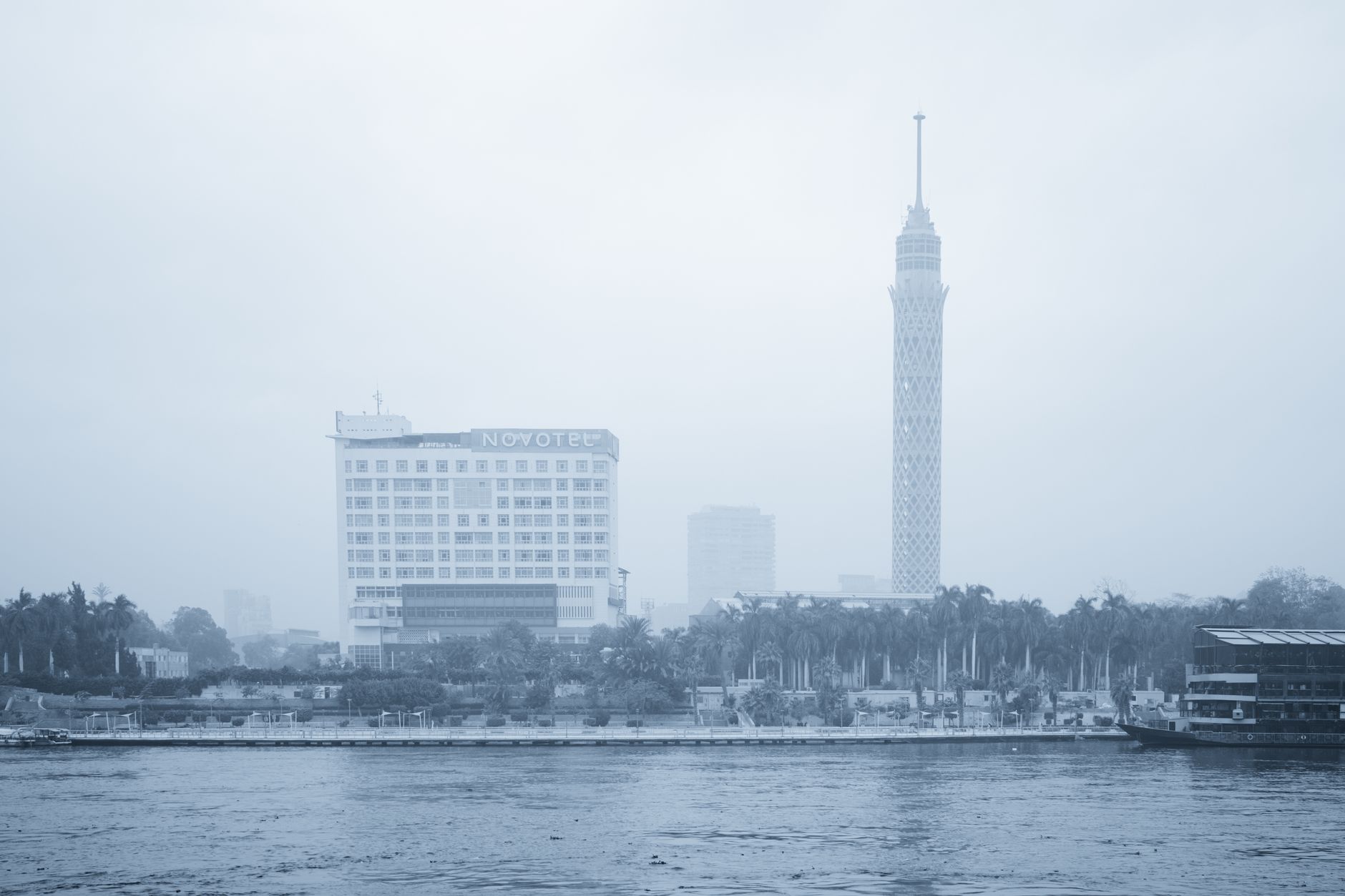
It is not, however, sleepy. Come evening the rooftop bars, shisha cafés and live-music spots fill up, and the island has a proper social pulse. You’re a short bridge crossing from Downtown and the Egyptian Museum, and not far from the Giza side either. The Cairo Opera House occupies the island’s southern tip, and Cairo Tower — 187 metres, 360-degree views — is right here too.
The one real drawback: no metro station on the island. You’ll rely on Uber, Careem or DiDi to reach anything beyond walking distance, which in practice means most major sights. Rides are cheap, so it’s a minor annoyance rather than a dealbreaker, but factor it in if you’d hoped to hop on a train.
Where to stay: at the top end, the Sofitel Cairo Nile El Gezirah commands the island’s southern point with a Nile-side infinity pool and a row of restaurants; the St. Regis Cairo brings butler service and slick design. Mid-range, the long-running Flamenco Hotel and the Novotel offer reliable rooms with river views. Budget guesthouses and serviced flats round it out. Rates run from roughly $40 at the cheaper guesthouses to $300 and up at the luxury names. For the full lineup, see our dedicated Zamalek hotels guide.
My take: if you only read one section of this article, read this one. For a typical first visit, Zamalek gets the balance right better than anywhere else — safe, walkable, well-fed, and central enough to reach everything with a short ride.
Downtown Cairo: Best Base for Budget Travellers
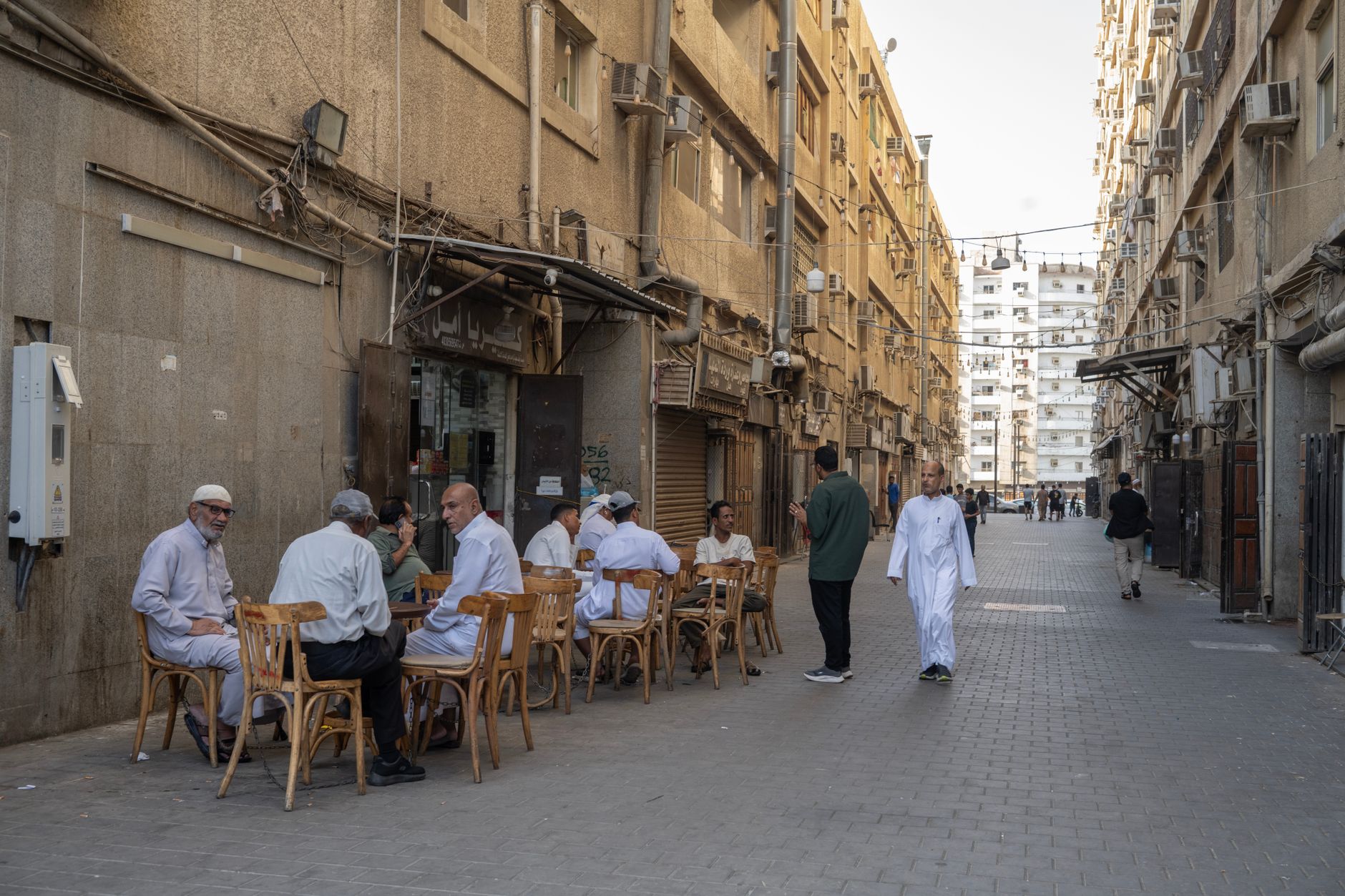
Downtown — Wust El-Balad to locals — is the city at full volume. Belle Époque facades that have seen better decades stand over modern shopfronts; pavement cafés spill into the street every evening; vendors ladle out koshari and ful; horns and chatter never quite stop. It’s chaotic, it’s a little grimy in places, and it’s the most genuinely alive corner of Cairo. For travellers who want to feel the real city rather than observe it from a pool deck, nothing else comes close.
It’s also the budget capital. Downtown has the widest spread of cheap and mid-range beds in Cairo — restored art-deco apartments, well-run hostels, and plain-but-clean hotels, alongside a few surprises like the Steigenberger El Tahrir, a genuinely good mid-range hotel steps from the Egyptian Museum. Tahrir Square anchors the district, the original Egyptian Museum is right there, and crucially you’ve got the metro: Sadat station on Tahrir links Lines 1 and 2, putting Giza, Maadi and beyond within a cheap, fast ride.
The trade-offs are honest ones. It’s loud, day and night. Air quality along the big roads is poor. Some side streets empty out and feel uncomfortable after midnight, and solo female travellers tend to report more unwanted attention here than in Zamalek or Maadi. If you’re the kind of traveller who needs a quiet, polished base to recharge, Downtown will wear on you. If you came for immersion and value, it delivers more per dollar than anywhere in the city.
Where to stay: the Steigenberger Hotel El Tahrir is the standout mid-range pick, and the Conrad Cairo and Kempinski Nile (technically on the Garden City edge) cover the luxury end nearby. For backpackers, Wake Up Cairo and Merit Hostel are the social hubs of the scene, with dorm beds from around $8–15 and private rooms not much more. Our Downtown Cairo hotels guide goes through the options in detail.
Giza and the Pyramids: Worth It Only If the View Is the Point
Let’s be straight about this. People imagine staying near the pyramids and picture stepping out of their hotel into the desert. The reality is that Giza is a dense, busy satellite city, the streets immediately around the plateau are touristy and full of persistent hawkers, and you’re a 30-to-45-minute drive (longer in rush hour) from Islamic Cairo, Khan El-Khalili, Coptic Cairo and the central Nile neighbourhoods. Dining and nightlife are thin compared with Zamalek or Downtown.
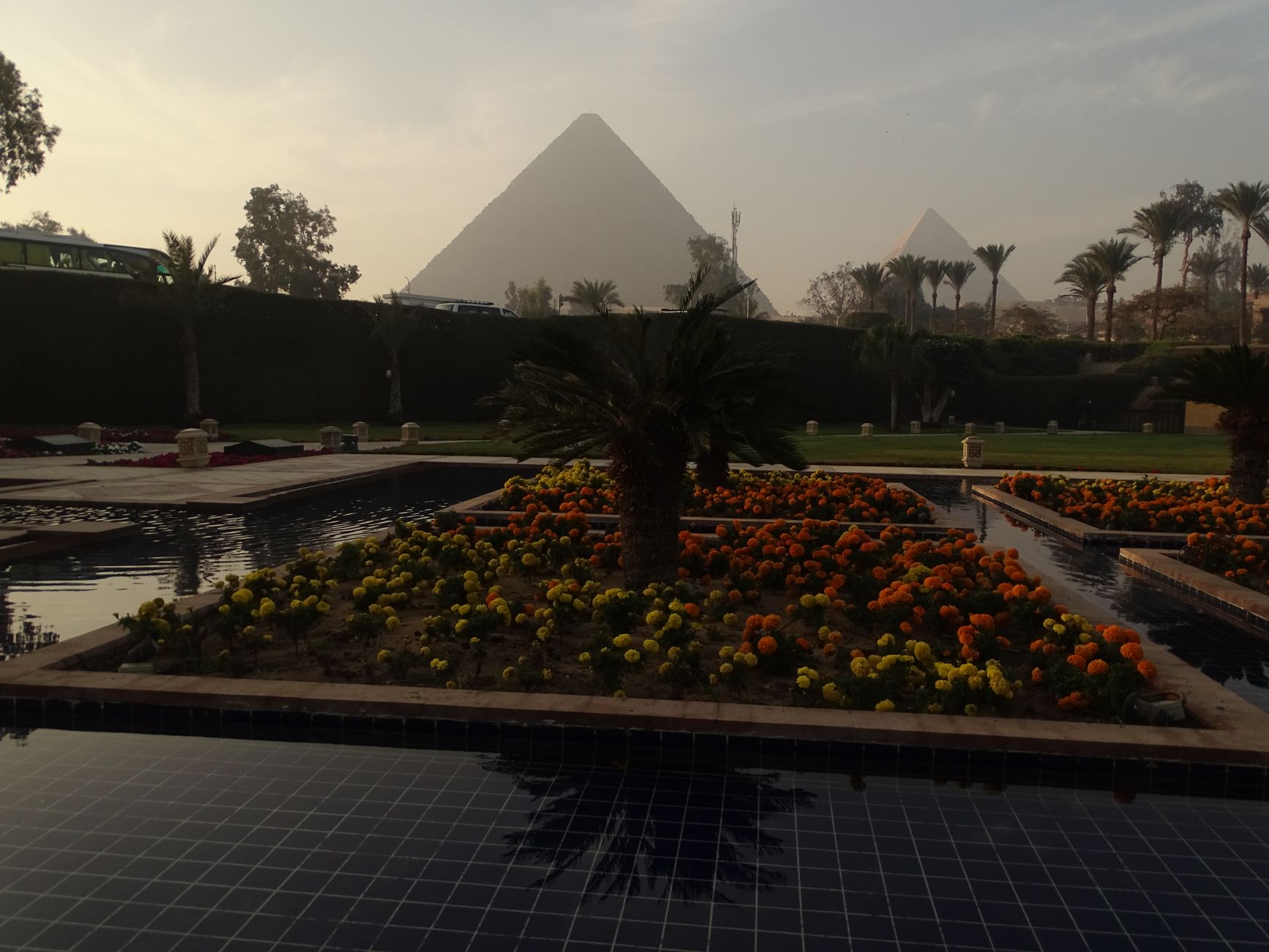
And yet — waking up with the Great Pyramid framed in your window, or eating breakfast on a rooftop with the three pyramids lined up behind your coffee, is something no commute from Downtown can give you. If that image is the whole reason you’re coming to Egypt, then yes, stay in Giza, at least for a night or two.
The case for Giza got stronger recently. The Grand Egyptian Museum opened nearby in late 2025, roughly two kilometres from the plateau, so the city’s biggest cultural draw is now on this side of the river. Sphinx International Airport, just northwest, is taking more international flights, which can simplify arrivals. And the desert necropolises of Saqqara and Dahshur are far easier to reach from a Giza base.
Where to stay: the famous one is the Marriott Mena House, with gardens that face the Great Pyramid directly — the hotel where Churchill and Roosevelt met during the 1943 Cairo Conference. Note one 2026 change: its historic Palace wing is closed for a major renovation and will reopen under Marriott’s higher-end JW Marriott brand as the JW Marriott Cairo Mena House, while the Garden wing keeps operating in the meantime. At the other end of the scale, simple guesthouses like Pyramids Guest House trade on rooftop terraces with knockout pyramid views for backpacker money — arguably the best-value view in Cairo. Pyramid-view rooms span roughly $25 at guesthouses to $400-plus at the Mena House. Our guide to Cairo hotels near the pyramids maps out who’s closest and which views actually deliver.
My take: the smart move most travellers land on is a split base — one or two nights in Giza for the sunrise-and-museum days, then shift to Zamalek or Downtown for everything else. You get the view without marooning yourself for the whole trip. When you’re ready to plan the visit itself, our step-by-step guide to the Pyramids covers tickets, timing and avoiding the touts.
Garden City: Quiet Luxury by the River
Garden City sits on the east bank just south of Downtown, laid out a century ago as a leafy garden suburb with curving streets that still confuse taxi drivers today. It’s the refined cousin of Downtown: the same central location, Tahrir a short walk north, but with the noise dialled right down. The Nile Corniche runs along its western edge, which makes for genuinely pleasant evening walks — a rarity in central Cairo.
Embassies cluster here too, so security is heavy and the streets feel safe. This is where you’ll find some of the city’s most prestigious addresses, headed by the Four Seasons Hotel Cairo at Nile Plaza, widely rated the best hotel in town, with sweeping Nile views, a rooftop pool and service to match. The Kempinski Nile sits nearby, smaller and more intimate, with one of the better river-view dining terraces in Cairo. A scattering of restored-villa boutique properties fills in below them — if character matters more to you than a big-brand lobby, browse our pick of Cairo’s best boutique hotels.
The catch: budget options are scarce, and there are fewer restaurants and bars within stumbling distance than in Zamalek. For couples, honeymooners and anyone who wants luxury with a calm, central location, though, Garden City is hard to beat. Expect to pay $120–500 a night for the headline properties.
Maadi: Best for Families and Longer Stays
Maadi is Cairo’s greenest residential suburb, about 10 kilometres south of Downtown along the river. It’s been the favourite of expat families for generations, and the place is built around that life: wide tree-lined streets, international restaurants, proper supermarkets, parks, international schools and clinics, and an unhurried calm that feels like a different city from central Cairo. The old core — Maadi Sarayat and Degla — is especially pleasant, with a village-ish, walkable character.
For families with young kids, Maadi offers a level of comfort and safety that’s genuinely hard to find elsewhere in Cairo. There’s a Line 1 metro station that gets you Downtown in about 20 minutes, which softens the distance problem. But distance is still the headline drawback: most tourist sites are 30 to 45 minutes away by car, and that doubles in traffic. Maadi suits travellers who value a relaxed home base over being on the doorstep of the sights — a week-plus stay, families, or anyone who’s had enough of central Cairo’s intensity.
Where to stay: the InterContinental Cairo Semiramis and Maadi-area river hotels cover the upscale end with Nile views and pools; charming restored-villa boutiques and a deep bench of serviced apartments suit longer stays. Rates land between $60 and $200 depending on the property. If you’re travelling with children specifically, our family-friendly hotels in Cairo guide flags the ones with pools, connecting rooms and space to actually unwind.
Heliopolis: The Airport Play
Heliopolis is a historic district in the city’s northeast, founded in 1905 by the Belgian baron Édouard Empain — whose extraordinary Hindu-temple-inspired palace is still the neighbourhood’s landmark. Wide boulevards, European-style early-1900s architecture, and a settled residential feel set it apart from central Cairo.
Its single biggest selling point is the airport, 10 to 15 minutes away. If you’ve got a punishingly early flight out, a late landing, or a short layover you want to spend horizontal, Heliopolis earns its keep. Metro Line 3 connects it to Downtown, and there are decent restaurants and malls. The downside is obvious: it’s a long haul from the west-bank attractions and the pyramids, and even Islamic Cairo is a trek. If your days are full of sightseeing, basing here just buys you extra time in the car.
Where to stay: Le Méridien Cairo Airport is wired straight into the terminal, the JW Marriott is a big resort-style property with full facilities, and the Triumph Hotel is a dependable mid-range option. Reckon on $50–200.
One catch with the Le Méridien: the bridge from Terminal 3 starts landside, so you can only walk across if you can clear immigration. If you’re connecting without a visa, you’re down to a lounge, the benches or one of the airport’s sixteen sleep pods, which can only be booked on arrival. Our guide to spending the night at Cairo airport weighs every option, including the shuttle hotels five minutes from the terminals.
New Cairo: Modern, Convenient, Far From the Old City
New Cairo is the sprawl of gated compounds, glassy office towers and giant malls out on the eastern desert edge. It’s where a lot of Cairo’s business now happens, and where the newest, most uniformly modern hotels are going up. If you’re here for work near the eastern business districts, or you simply want a brand-new room and a mall on your doorstep, it’s comfortable and easy.
For a sightseeing holiday, though, it’s the wrong end of town entirely — you’re a long drive from the pyramids, the Nile and historic Cairo, with little reason to make that trade. Expect $70–250 a night at the international-brand properties. Treat New Cairo as a business or convenience choice, not a tourist base.
Where to Stay in Cairo by Budget
Cairo punches well above its price tag at every tier. Here’s roughly what each band buys you in mid-2026, with the caveat that rates swing hard by season (more on that below).
Budget: hostels and cheap hotels (around $8–50)
This is where Cairo shines for shoestring travellers. Hostel dorm beds start as low as $8–15, and clean private rooms with air conditioning and a bathroom can be found for $20–40. The budget scene concentrates Downtown — Wake Up Cairo and Merit Hostel are the social anchors — and around Giza, where guesthouses like Pyramids Guest House throw in rooftop pyramid views for next to nothing. Quality at this level is genuinely good for the money; just read recent reviews, since standards shift with management. Our budget hotels and hostels guide rounds up the dependable names.
Mid-range: comfortable hotels (around $50–150)
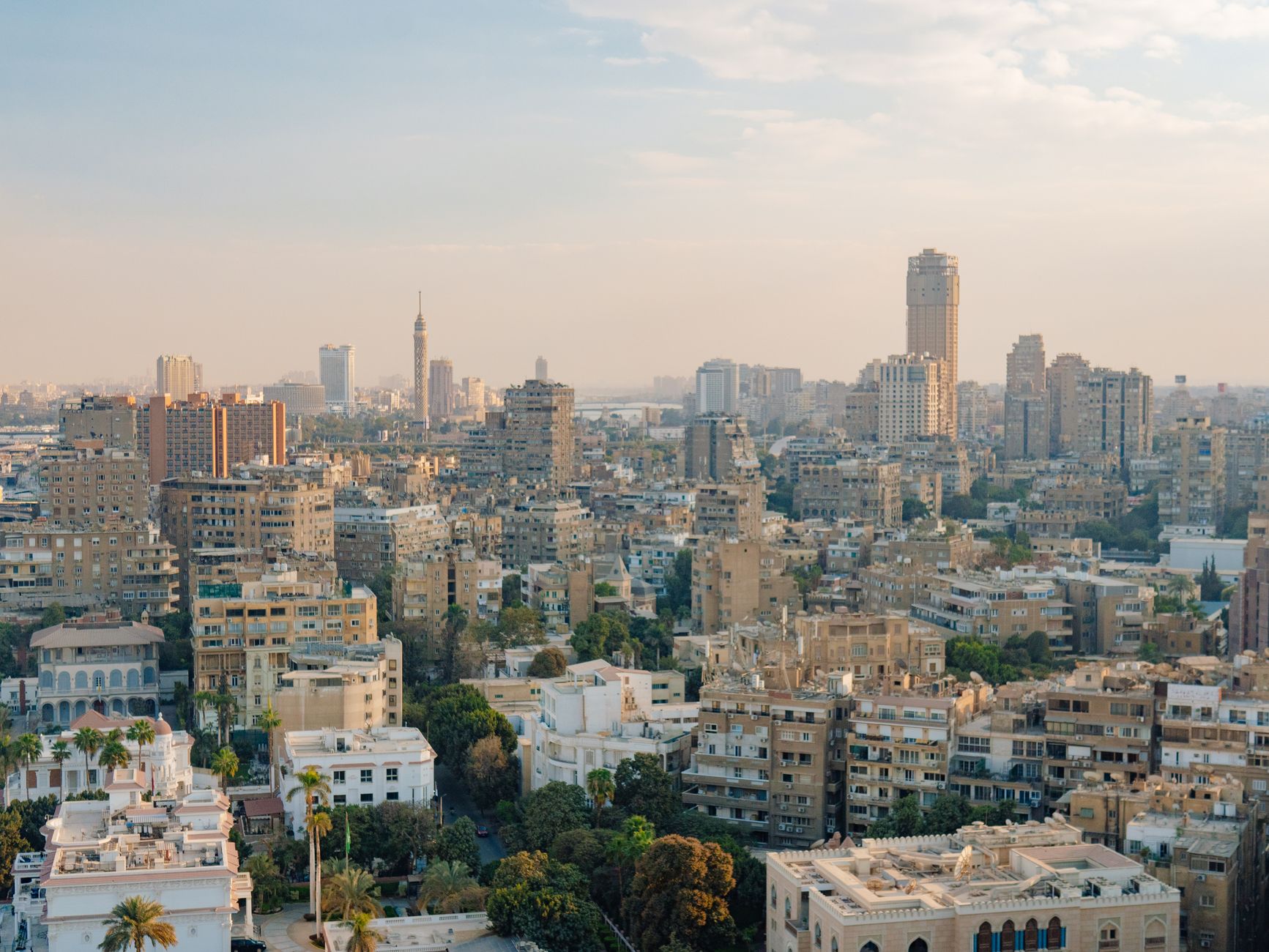
The sweet spot for most travellers. At this level you get breakfast buffets, pools, reliable air conditioning and good locations — typically averaging around $65–70 a night outside peak weeks, climbing toward $120-plus in the busy winter months. The Steigenberger El Tahrir (Downtown), the Novotel and Flamenco (Zamalek) and the Cairo Pyramids Hotel (Giza) are solid, well-located picks. You rarely need to spend more than this to be genuinely comfortable in Cairo.
Luxury: five-star (around $150–500+)
Cairo’s top hotels match the best global brands while costing a fraction of what their equivalents charge in London or New York — five-star rooms here average around $160 a night, spiking toward $300 in high season. The Four Seasons at Nile Plaza (Garden City) sets the bar; the Sofitel El Gezirah and St. Regis (Zamalek), the Kempinski Nile (Garden City) and the Marriott Mena House (Giza, the place to be for pyramid drama) round out the tier. For the full comparison, see our guide to luxury five-star hotels in Cairo.
Where to Stay by Traveller Type
Different travellers thrive in different parts of the city. Match yourself to the right one.
- First-time visitors: Zamalek. The gentlest introduction to Cairo — walkable, safe, well-fed, central. Find your feet here before tackling the louder districts.
- Budget backpackers: Downtown. Hostels, street food, metro access and raw energy, all cheap. Wake Up Cairo and Merit are where you’ll meet other travellers.
- Families with children: Maadi for longer stays, Zamalek for shorter ones. Both deliver safety, green space and a calmer pace; Maadi adds suburban comfort, Zamalek adds central convenience.
- Couples and honeymooners: Garden City or Zamalek. The Four Seasons Nile Plaza is the ultimate romantic splurge; Zamalek’s Sofitel and St. Regis pair luxury with a neighbourhood you can actually stroll.
- Pyramid-focused travellers: Giza, ideally as a one-or-two-night leg of a split-base trip. Mena House for luxury, a rooftop guesthouse for budget.
- Business travellers: Heliopolis or New Cairo — airport access, modern facilities, reliable brands close to where the work is.
Nile View vs Pyramid View: Which to Pay For
Cairo sells two signature views, and both carry a premium worth thinking about before you book.
A Nile view is the more versatile choice and, frankly, the one most people will get more out of. You get it on both banks — Garden City, Zamalek, Maadi — and it’s lovely at any hour, especially at sunset with the feluccas out. If a river view matters to you, our guide to Cairo hotels with a Nile view lists the properties where the upgrade is genuinely worth it, and where “partial Nile view” really means a sliver between two buildings. And once you’re settled by the water, a felucca sail or dinner cruise on the Nile is one of the easiest good evenings in the city.
A pyramid view is rarer, more dramatic, and only available out in Giza. It’s the one that stops you in your tracks the first morning. The wrinkle: some budget guesthouse rooftops offer better, more unobstructed pyramid views than luxury hotels charge a hefty surcharge for, so don’t assume more money buys a better view here. Whichever you’re paying extra for, confirm exactly what the window faces — ask the property directly and check recent guest photos, because “view” is a flexible word in Cairo hotel listings.
Practical Booking Tips
A few things that’ll save you money and hassle.
Book ahead for winter. December through February is peak season — perfect weather, heavy demand. The popular places in Zamalek and Giza fill weeks out, especially around Christmas, New Year and Chinese New Year. Two to three months’ notice is sensible for those dates.
Summer is when the deals appear. Rates drop sharply from June to August, when 35–40°C heat thins the crowds. If you can handle the temperatures and do your outdoor sightseeing early in the day, luxury can slide into mid-range money and mid-range into budget territory.
Mind the transport when you pick a hotel. Distances that look trivial on a map can eat an hour in rush hour. A spot near a metro station (Downtown, Maadi, Heliopolis) or in a walkable area (Zamalek, Garden City) saves real time. Our Cairo transportation guide breaks down the metro, ride-hailing apps and taxis so you can judge how connected an address really is.
Consider a serviced apartment for longer trips. Staying a week or more? Serviced flats — common in Zamalek, Maadi and New Cairo — often beat hotels on value, with a kitchen, laundry and proper living space, sometimes from $30–50 a night for a whole apartment. Our Cairo Airbnb and vacation rentals guide covers how to book these well and what to watch for.
Keep cancellation flexible and read recent reviews. Most Cairo hotels offer free cancellation through the big platforms, so you can lock a rate without committing. Lean on reviews from the last six months in particular — Cairo properties can change character fast when ownership or management turns over.
Is It Safe? Choosing a Base With Confidence
Cairo is broadly safe for tourists, but the feel varies by area, and that’s worth weighing when you book. The most comfortable neighbourhoods are Zamalek, Garden City and Maadi — all benefit from embassy-and-upscale security, well-lit streets and an easy atmosphere after dark. Giza’s tourist core around the plateau is heavily policed too, though it gets less tourist-friendly the further you drift from the pyramids.
Downtown is fine by day and on the main streets at night, but quieter side streets can feel deserted after midnight, and solo female travellers report more hassle here than in Zamalek or Maadi. A handful of dense, low-income districts — Shubra, Imbaba, parts of the City of the Dead — see more petty crime and aren’t places to base yourself; visit with a guide if at all. Wherever you land, the usual big-city habits apply: keep valuables out of sight, and use a ride-hailing app rather than flagging a street taxi late at night.
Frequently Asked Questions
What is the best area to stay in Cairo for first-time visitors?
Zamalek. It’s central, walkable, safe and well-supplied with restaurants, which makes the steep learning curve of a first Cairo trip far gentler. You can reach the pyramids, Islamic Cairo and the museums with short, cheap rides while coming home each night to a calm base.
Should I stay near the Pyramids of Giza?
Only if the view is your priority, and ideally just for a night or two. Giza is a 30–45 minute drive from central Cairo with limited dining and nightlife, so most travellers do a short Giza stay for the sunrise and the Grand Egyptian Museum, then move to Zamalek or Downtown for the rest of the trip.
Is Downtown Cairo safe to stay in?
Yes, with normal city sense. The main streets are busy and fine day and night, but some side streets empty out after midnight, and there’s more street hassle than in Zamalek or Maadi. It’s the best-value, most atmospheric base in the city if that trade-off suits you.
How much does a hotel in Cairo cost per night?
As of mid-2026, hostel dorms start around $8–15, decent mid-range hotels average roughly $65–70 (more in winter), and five-star properties average around $160, climbing toward $300 in high season. Cairo is significantly cheaper than comparable world cities at every tier.
Which Cairo neighbourhood is best for families?
Maadi for stays of a week or more, thanks to its green streets, international restaurants, supermarkets and suburban calm. For shorter trips, Zamalek works better because it’s more central while still safe and walkable. Both have family-friendly hotels with pools and space to spread out.
Do I need to stay near a metro station?
It helps but isn’t essential. Metro-connected areas (Downtown, Maadi, Heliopolis) give you fast, cheap cross-city travel. Walkable Zamalek and Garden City have no metro but are central enough that short ride-hailing trips fill the gap — and Uber, Careem and DiDi are cheap and reliable throughout Cairo.
The Bottom Line
For most first-timers on a three-to-five-day trip, Zamalek is the base I’d book without much hesitation — it balances comfort, safety, food and central access better than anywhere else, and you cover the pyramids and old Cairo on day trips by ride-hailing app. Budget travellers should head Downtown for the hostels, the street food and the metro. And if the pyramids are the dream, do a split base: a night or two in Giza for the view, then shift somewhere more liveable. Download Uber and Careem before you land, book early if you’re coming in winter, and the rest tends to sort itself out.
Plan the Rest of Your Cairo Trip
- Complete Guide to Visiting Cairo — the master plan for your whole trip.
- The experiences that make the trip — what to actually fill your days with.
- Pyramids of Giza Visitor Guide — tickets, timing and avoiding the touts.
- Cairo Food Guide — the dishes, restaurants and street food worth seeking out.
- Cairo Museums and Cultural Attractions — from the Grand Egyptian Museum to Islamic Cairo.
- Getting Around Cairo — metro, taxis and ride-hailing, decoded.
- Cairo Nile River Experiences — feluccas, dinner cruises and the best of the riverfront.