
This article contains advertising. Our booking links are routed through a partner that adds commission tracking automatically, so if you book through one we earn a commission from the provider, at no extra cost to you. It never affects what we recommend. Affiliate disclosure
Two weeks is the length at which Egypt stops being a monument tour. Everything up to ten days is essentially the same trip with more or less of it: Cairo, the Nile, the temples. A fortnight is the first length that can hold the other Egypt — the Red Sea, the Western Desert oases, Siwa out near the Libyan border — and the first that can build in genuine rest, which matters more than the itineraries usually admit. A well-built 2 weeks in egypt itinerary is not the ten-day trip with four days bolted on; it is a trip with a change of gear in the middle of it.
Below: the fourteen-day plan, three variants depending on what you want the second week to be, an honest account of what to leave out even at this length, and the costs. Prices were checked in October 2026 and should be read as the right order of magnitude rather than a quotation — Egyptian fees track the pound and the pound has repriced repeatedly. Other lengths are compared on the Cairo itineraries hub.
The fourteen days at a glance
| Days | Where | What |
|---|---|---|
| 1 | Cairo | Arrive, an evening on the Nile |
| 2 | Cairo | Giza and the Grand Egyptian Museum |
| 3 | Cairo | Islamic Cairo and the Citadel |
| 4 | Cairo | Saqqara, Dahshur and Memphis |
| 5 | Cairo | Coptic Cairo, the royal mummies, the Egyptian Museum at Tahrir |
| 6 | Cairo → Luxor | Fly or take the sleeper south |
| 7 | Luxor | West Bank: Valley of the Kings, Hatshepsut |
| 8 | Luxor | Karnak and Luxor Temple, board the boat |
| 9–11 | Nile cruise | Edfu, Kom Ombo, sailing days, arrive Aswan |
| 12 | Aswan | Abu Simbel, then Philae and a felucca |
| 13–14 | Red Sea, or the Western Desert | Two days of something completely different |
The structure that makes this work is: five days in Cairo, six on the Nile, and a final block that is deliberately not archaeology. Front-load the culture while you are fresh; finish with water or desert.
Days one to five: Cairo, properly
Five days is the most Cairo can absorb before you start repeating yourself, and it is enough to include everything a shorter trip has to cut.
- Day one. Arrive and do nothing structural. An hour on a felucca at sunset introduces the city gently and costs almost nothing.
- Day two. Giza at 08:00 — no shade, better light — then lunch off the plateau and the Grand Egyptian Museum on a pre-booked afternoon slot. Go inside the Great Pyramid; on a fortnight you have the hour. Tutankhamun’s galleries first, then the Grand Staircase, then Khufu’s solar boat.
- Day three. Al-Muizz from Bab al-Futuh south to Bab Zuweila, whose minarets you should climb; Khan el-Khalili, which is thirty seconds off the street rather than on it; Ibn Tulun, built AD 876–879 and free to enter; the Gayer-Anderson Museum next door; the Citadel at golden hour; and Al-Muizz again after dark when it is floodlit and empty.
- Day four. Saqqara, Dahshur and Memphis with a driver. The Step Pyramid predates Giza by a century, and at Dahshur you can usually walk into the Red Pyramid with no queue at all.
- Day five. Coptic Cairo in the morning — Metro Line 1 to Mar Girgis, and the Hanging Church while the light is still coming through the east windows — then the royal mummies at Fustat, and the Egyptian Museum at Tahrir in the late afternoon, which almost every shorter itinerary has to drop.
The hour-by-hour version of days two to five is in the four-day Cairo and Giza itinerary.
What five days in Cairo adds that four does not
The fifth Cairo day is not padding, and it is worth being specific about what it buys.
The Egyptian Museum at Tahrir. Since the Grand Egyptian Museum opened, almost every short itinerary drops Tahrir, and that is the commonest wrong cut in Egyptian trip planning. It lost the Tutankhamun headline pieces to the GEM and the royal mummies to Fustat, but it still holds more than 170,000 objects across its galleries and storage, and the neoclassical building — crowded, idiosyncratic, arranged partly by nineteenth-century logic — is half the pleasure. It is also downtown, so it costs almost nothing in travel time.
The Museum of Islamic Art. One of the best collections of Islamic art anywhere in the world, air-conditioned, and reliably almost empty. Two hours, twenty minutes from downtown, and almost nobody on a shorter trip goes.
Time that is not scheduled. An afternoon in Al-Azhar Park, which costs about a dollar and gives you the Citadel and the medieval skyline laid out in front of you. An hour walking Zamalek, which is genuinely walkable in a way almost nowhere else in Cairo is. A long lunch. The point of a fortnight is that these stop feeling like time stolen from something else.
Days six to twelve: the Nile
The Upper Egypt block is the ten-day trip’s middle section with an extra day of slack, and it is set out in detail in our ten-day Egypt itinerary with a Nile cruise. The fortnight version differs in two ways.
Give Luxor two full days on land before boarding. Most cruise itineraries compress the West Bank into a half-day. With two weeks you can do the Valley of the Kings and Deir el-Bahari on one day and Karnak and Luxor Temple on the next, unhurried, and then board. Karnak deserves three hours and a guide; the Great Hypostyle Hall’s 134 columns are the most overwhelming interior in Egypt and the carving is dense with meaning that is invisible unguided.
Put Abu Simbel on day twelve rather than the last morning. The convoy leaves Aswan around three or four in the morning for the two-hundred-and-eighty-kilometre run south, and on a shorter trip that lands on the day you fly home, which is punishing. Here you have a spare day, so take it properly: four seated colossi of Ramses II, each over twenty metres, cut from a cliff face and relocated sixty metres higher in the 1960s when Lake Nasser rose. Around EGP 822 (~USD 17) for foreign adults.
Along the way: Edfu, one of the best-preserved temples in Egypt, buried under sand and silt until the nineteenth century; Kom Ombo, a double temple on the riverbank with mirrored halves for Sobek and Horus the Elder; Philae, moved stone by stone to a higher island when the High Dam flooded its own; and the unfinished obelisk, abandoned when cracks appeared and still lying in its granite quarry.
Cruise or land for the Upper Egypt block?
On a fortnight you genuinely have the choice, which shorter trips do not.
A cruise means you unpack once, the temples arrive on the bank in the right order, and the sailing days give you the only genuinely unstructured hours of the trip — bank going past, palms, water buffalo, brickworks, children waving from the mud. The cost is flexibility: excursions run on a fixed timetable with the whole boat, and if you want an extra hour at Edfu you generally cannot have it. Age matters more than the self-assigned star rating, and a full-height window matters more than the deck number.
Land travel with a driver costs less, lets you set your own pace, and still takes in Edfu and Kom Ombo on the Luxor–Aswan transfer. You repack twice and you lose the sailing days, which for some people is the whole point of Upper Egypt and for others is three days of sitting on a boat.
On fourteen days we would still take the cruise, but with two land nights in Luxor beforehand so the West Bank is not compressed into a morning.

Days thirteen and fourteen: three ways to finish
This is where a fortnight earns its length, and there is no wrong answer — only different ones.
Option A: the Red Sea
The straightforward choice, and the right one if what you want after twelve days of temples is to stop moving.
Hurghada is roughly three hours forty gate-to-gate from Cairo by air, with flights every three hours or so on Nesma, Air Cairo and EgyptAir, typically USD 75–220. There is no train; the bus from Ramses takes about six and a half hours for USD 7–11. From Aswan or Luxor, a road transfer to Hurghada is around four hours and is the natural move at this point in the trip.
Sharm el-Sheikh is about an hour by air from Cairo, with no train and a seven-to-eight-hour bus. Its diving — Ras Mohammed, the Tiran Strait, the wrecks — is the best in the country.
Two days here is a genuine rest, and the snorkelling on the Red Sea reefs is world-class even for people who have never done it. The honest caveat is that both towns are resort developments rather than places, and if you have spent twelve days in real Egyptian cities the transition can feel abrupt. Take that as a feature rather than a flaw: it is meant to be a different kind of day.
Option B: the Western Desert and the White Desert
The more interesting choice, and the one people talk about years later.
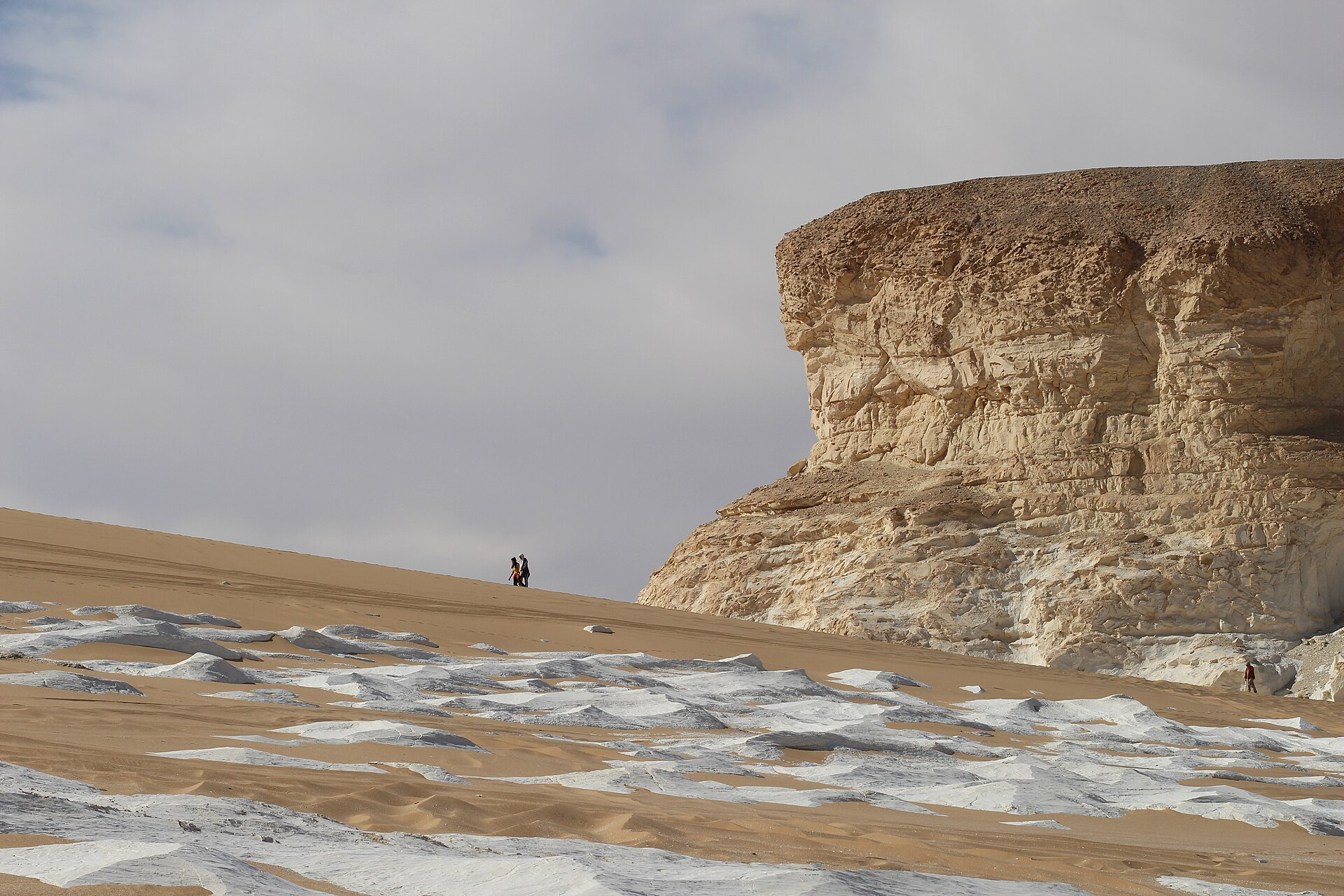
Bahariya Oasis is roughly four hours west of Cairo by road, and from there a 4×4 runs out into the Black Desert and then the White Desert National Park, where wind-carved chalk formations stand up out of the sand like something from another planet. The standard trip is a night camping among them — dinner cooked over a fire, no light pollution at all, and the formations turning from white to gold to blue as the light goes. It is one of the best nights available in Egypt.
This requires flying back to Cairo from Aswan on day twelve and heading west on thirteen, which is a lot of movement. It is worth it, and it is the reason to do a fortnight rather than ten days.
Option C: Siwa
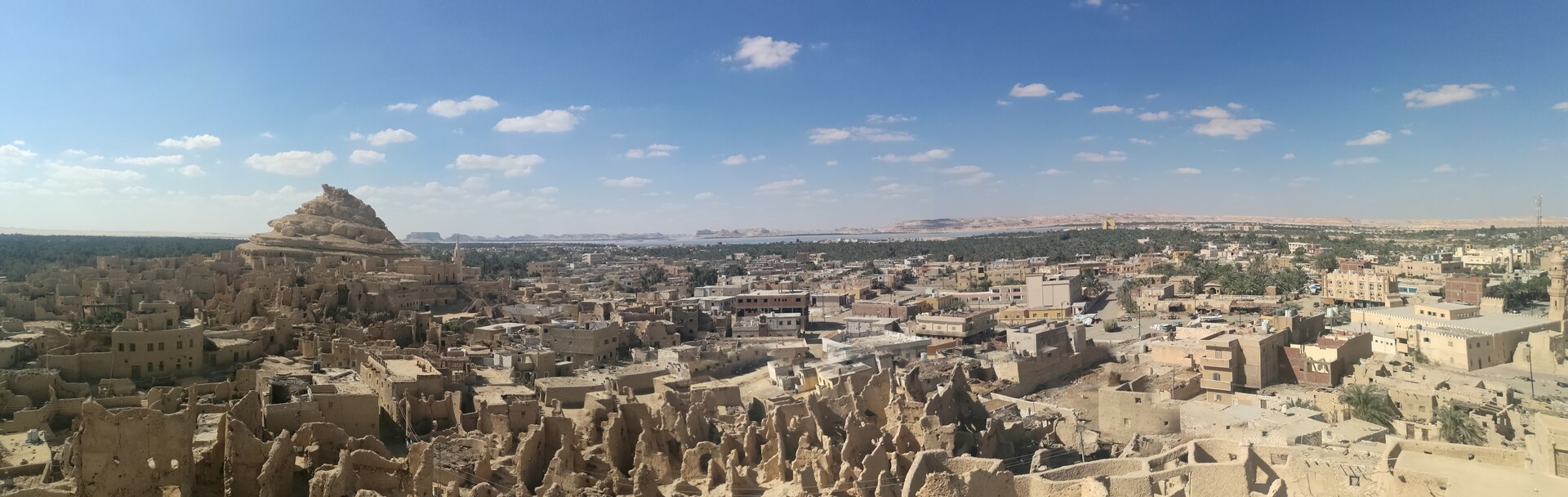
The most committed option and the least practical. Siwa sits near the Libyan border, eight to ten hours from Cairo by road, and it is a genuinely different place: Berber rather than Arab in culture and language, with its own dialect, mud-brick architecture, salt lakes you float in, palm groves, and the ruins of the Shali fortress rising out of the middle of town.
Two days is not enough for Siwa. If you want it, restructure the fortnight to give it four — take a day out of Cairo and a day out of the cruise — or accept that it is a separate trip. We would say the second, and go anyway on some future visit.
Building in the rest days
The single biggest difference between a fortnight that works and a fortnight that exhausts people is where the empty days sit. Two weeks in Egypt involves heat, dust, early starts and a great deal of walking on uneven stone, and the fatigue is cumulative in a way that catches out even seasoned travellers.
Three places to put slack, in order of how much they help.
- The arrival day. Do not schedule it. Jet lag plus a first encounter with Cairo traffic is enough for one day, and starting the trip tired sets the tone for a fortnight.
- The day after Luxor’s West Bank. The Valley of the Kings in the sun is the most physically demanding day of a standard Egypt trip. Follow it with Karnak in the morning and nothing in the afternoon, or with a sailing day.
- The day after Abu Simbel. A three o’clock start and six hours in a convoy leaves most people useless by mid-afternoon. Give the following morning to a hotel terrace.
The corollary is that the last two days should not be a third destination with its own sightseeing list. Whether you pick the Red Sea or the White Desert, the purpose of that block is a change of activity, not another set of monuments.
Where to stay across a fortnight
Two weeks means four or five different beds, and the choices are not the same as on a short trip.
Cairo
Central Cairo or Zamalek. On a five-day stay you will be crossing the city in every direction, so being on the river with restaurants around you matters more than being close to any single sight. A Giza base makes one day easier and four days harder — worth it only if a pyramid view from the room is the point. Our where to stay in Cairo guide compares the neighbourhoods properly.
Luxor
East Bank for convenience and restaurants; West Bank for quiet, better views back across the river and a much more rural feel. Two nights on the East Bank before boarding the boat is the simplest arrangement.
Aswan
Anywhere with a river view, and pay for it — this is the one place in Egypt where the hotel’s outlook is a genuine part of the experience. Rooms over the cataract at sunset are what people remember about Aswan.
The final block
Red Sea resorts are almost all all-inclusive and the standard varies enormously for similar money; read recent reviews rather than star ratings. Desert camps are basic by design — mattresses, blankets, a fire, no plumbing — and that is the point rather than a shortcoming.
What two weeks costs
| Item | Price (checked Oct 2026) | Notes |
|---|---|---|
| Cairo, five days of entries and transport | ~USD 230–290 | Includes Giza, the GEM, the desert day and Tahrir |
| Cairo–Luxor flight | USD 60–120 | Often cheaper than a sleeper berth |
| Cairo–Luxor sleeper berth | USD 80–140 | Saves a hotel night; noisy, and can run late |
| Nile cruise, 3–4 nights, mid-range | USD 400–800 per person | Check what excursions are included |
| Abu Simbel | ~EGP 822 (~USD 17) | Plus convoy transport or a flight from Aswan |
| Hurghada flight from Cairo | USD 75–220 | Roughly every three hours; no train |
| White Desert overnight trip | USD 120–250 per person | Including 4×4, camp, guide and meals |
| Red Sea hotel, two nights, mid-range | USD 80–250 | Enormous range; all-inclusive is common |
| Domestic flights, total | USD 200–400 | Three or four legs across the fortnight |
| Fourteen days, one person, mid-range | ~USD 1,600–2,600 | Excluding international flights and Cairo hotel |
What even a fortnight cannot hold
Siwa and the Red Sea in the same trip. They are at opposite ends of the country with Cairo in the middle. Pick one.
The Sinai interior. St Catherine’s Monastery and Mount Sinai are a worthwhile two-day excursion from Sharm and a poor add-on to anything else. If Sinai matters, build the second week around it.
The Mediterranean coast. Alexandria and Marsa Matrouh are on the wrong axis for a trip running south. Save the coast for a shorter, north-focused visit.
A day of rest in every location. The commonest failure of a two-week Egypt trip is treating the extra days as extra sites rather than extra time. If your fourteen days have fourteen scheduled activities in them, you have built a ten-day trip badly rather than a fortnight well.
Practical notes for a longer trip
Build the domestic flights first
Three or four internal legs — Cairo to Luxor, Aswan back to Cairo, Cairo to Hurghada or the equivalent — determine the whole shape and they thin out and rise sharply close to departure. Book them before hotels.
Two weeks is long enough for a stomach upset
Realistically, a proportion of visitors lose a day to their digestion somewhere in a fortnight. Tap water is not recommended anywhere in Egypt; buy sealed bottles, be sensible about raw salad and ice in the smallest places, and carry rehydration salts. Build one genuinely unscheduled day in and you will not lose anything when it happens.
Repack light for the middle
Most Cairo hotels will store a bag while you are on the Nile. There is no reason to carry two weeks of luggage onto a cruise boat and then into a desert camp.
Seasons
- December to February. Best overall. Cairo averages 19–20 °C (about 66–68 °F) by day, cool at night, Upper Egypt warm rather than punishing. The Red Sea is swimmable but cool by resort standards, and the White Desert at night is genuinely cold — take a proper layer.
- March to April, October to November. Nearly as good with fewer crowds. Watch for khamsin dust in spring.
- June to August. Luxor and Aswan regularly exceed forty degrees with no shade at the major sites, and the Western Desert is not a sensible proposition. The Red Sea is the only part of this itinerary that improves in summer.
Ramadan shifts roughly eleven days earlier each Gregorian year and changes opening hours nationwide. The evenings are extraordinary, the daytime rhythm slows, and on a fortnight you have the flexibility to enjoy it rather than fight it — but check every opening time individually rather than trusting a published schedule.
Frequently asked questions
Is two weeks too long in Egypt?
Not if the second week changes gear. Fourteen days of temples and museums would be too much for almost anyone; fourteen days that include a Nile cruise, a Red Sea rest or a night in the White Desert are well-paced. The mistake is treating the extra days as extra sites.
How should you split two weeks?
Five days in Cairo, six on the Nile from Luxor to Aswan including Abu Simbel, and two or three at the end doing something that is not archaeology. Cairo can absorb five days; Upper Egypt needs six to be unhurried; and the final block is what stops the trip becoming a forced march.
Red Sea or Western Desert for the last days?
Red Sea if you want to stop moving and the snorkelling appeals. Western Desert if you would rather have the memory than the rest — a night camping among the White Desert’s chalk formations is one of the best things available in Egypt and it is not restful in the slightest.
Can you fit Siwa into two weeks?
Only by taking days from Cairo and the cruise, and we would not. Siwa is eight to ten hours each way from Cairo and needs four days to be worth the journey. It is a separate trip and a good reason to come back.
What does two weeks in Egypt cost?
Roughly USD 1,600–2,600 per person at a mid-range standard, excluding international flights and Cairo accommodation. Domestic flights and the cruise account for most of the variation; budget versions using buses and simpler boats come in well under, and private guiding throughout can double it.
Should you book the whole fortnight as a package?
A package handles the internal flights, transfers, cruise and guides, which are the fiddly parts, and for a first Egypt trip that has real value. The trade-off is the commission stops — papyrus, perfume, alabaster and carpet showrooms are built into most packaged itineraries, and over fourteen days those hours add up to a day. Specify no shopping stops in writing before you book. Our papyrus buying guide explains what is actually being sold at them.
Is there any point staying longer than two weeks?
Yes, but the marginal day is worth less. Three weeks lets you add Siwa or the Sinai interior properly, and it lets you slow down in a way even a fortnight cannot. Beyond that you are into a different kind of trip — living somewhere rather than travelling through it, which Cairo does support well.
Related Cairo Guides
- All Cairo itineraries, one to fourteen days
- The ten-day version with a cruise
- The seven-day version
- Camping in the White Desert
- Bahariya Oasis and the Western Desert
- The nearest Red Sea coast to Cairo
- Visas and entry requirements
- Insurance for a longer trip
Photo Credits
Chalk rock formations in the White Desert National Park: photo by AmiraAdel93, via Wikimedia Commons (CC BY-SA 4.0).
Siwa Oasis from the Shali fortress: photo by Sara Nabih, via Wikimedia Commons (CC BY-SA 4.0).