This article contains advertising. Our booking links are routed through a partner that adds commission tracking automatically, so if you book through one we earn a commission from the provider, at no extra cost to you. It never affects what we recommend. Affiliate disclosure
Cairo holds more ancient Egyptian treasure than anywhere else on earth, and as of late 2025 the headline changed completely: the Grand Egyptian Museum out by the pyramids is finally, fully open, with King Tut’s entire burial hoard under one roof for the first time in history. If you only have a day or two for Cairo museums, that’s where you start. This guide tells you exactly which collections are worth your time, what they cost in 2026, how long each one takes, and how to string them together without burning out.
A quick reality check before we get into it. Cairo has dozens of museums and you cannot do them all, nor should you try. Three or four well-chosen visits will give you a far better trip than ten rushed ones. Below I’ve sorted them roughly by priority, told you what’s genuinely unmissable in each, and flagged the ones I’d skip if you’re short on time.
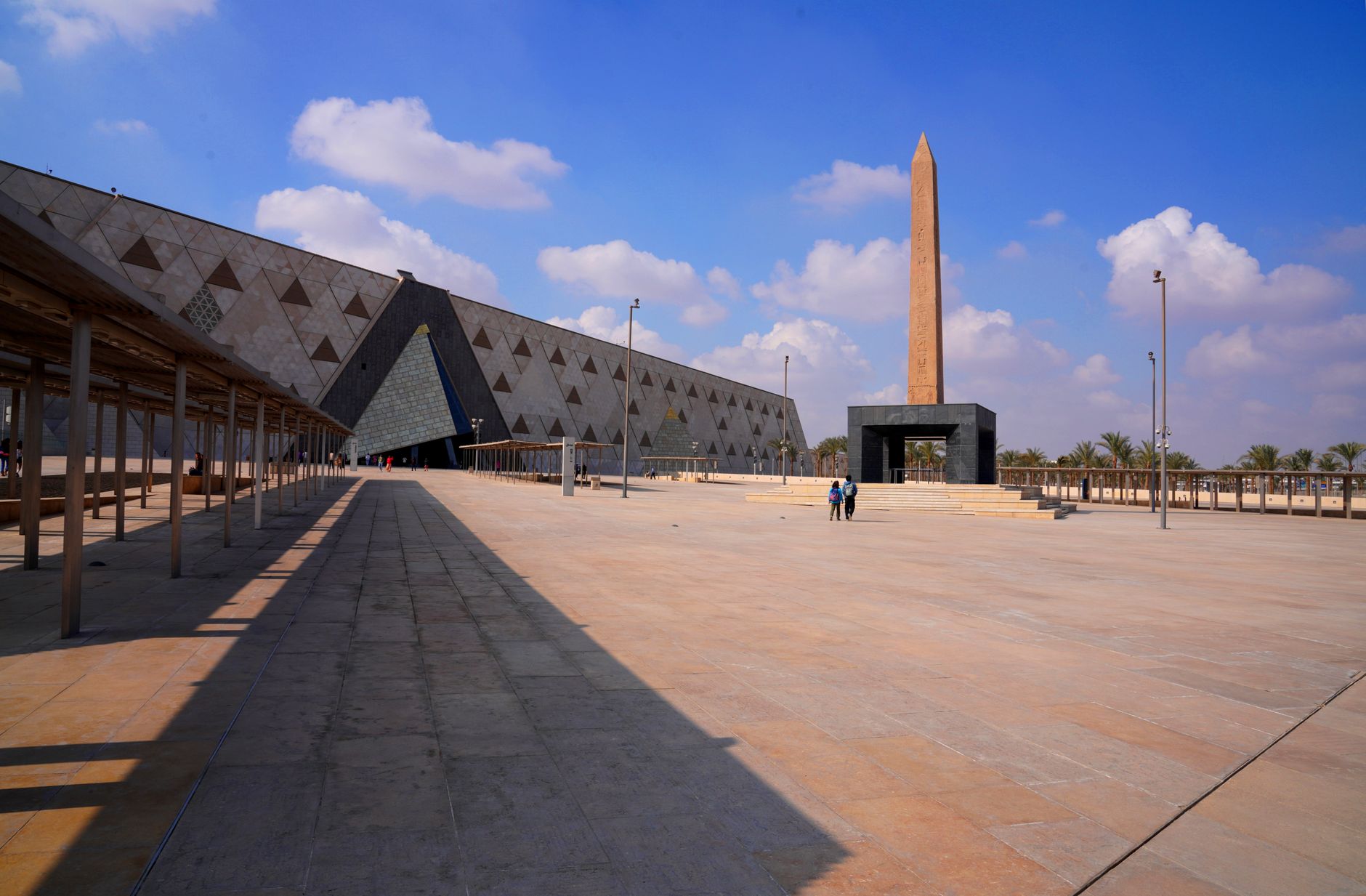
The Grand Egyptian Museum: start here
The GEM is the reason people are rebooking trips to Egypt. After roughly two decades of delays it opened to the public on 1 November 2025, and the official grand opening ceremony followed soon after with the usual fanfare. The site sits about two kilometres from the Giza Plateau, so you can pair it with the pyramids in a single day if you pace yourself.
The scale is genuinely hard to take in. The campus runs to around 300,000 square metres and the collection numbers well over 100,000 objects. The moment you walk in, a colossal statue of Ramesses II — moved here from a traffic island in central Cairo where it stood for years — towers over the entrance hall. From there a grand staircase climbs past dozens of monumental statues toward the galleries, with the pyramids framed in the glass at the top. It’s one of those rare museum spaces that lives up to the marketing.
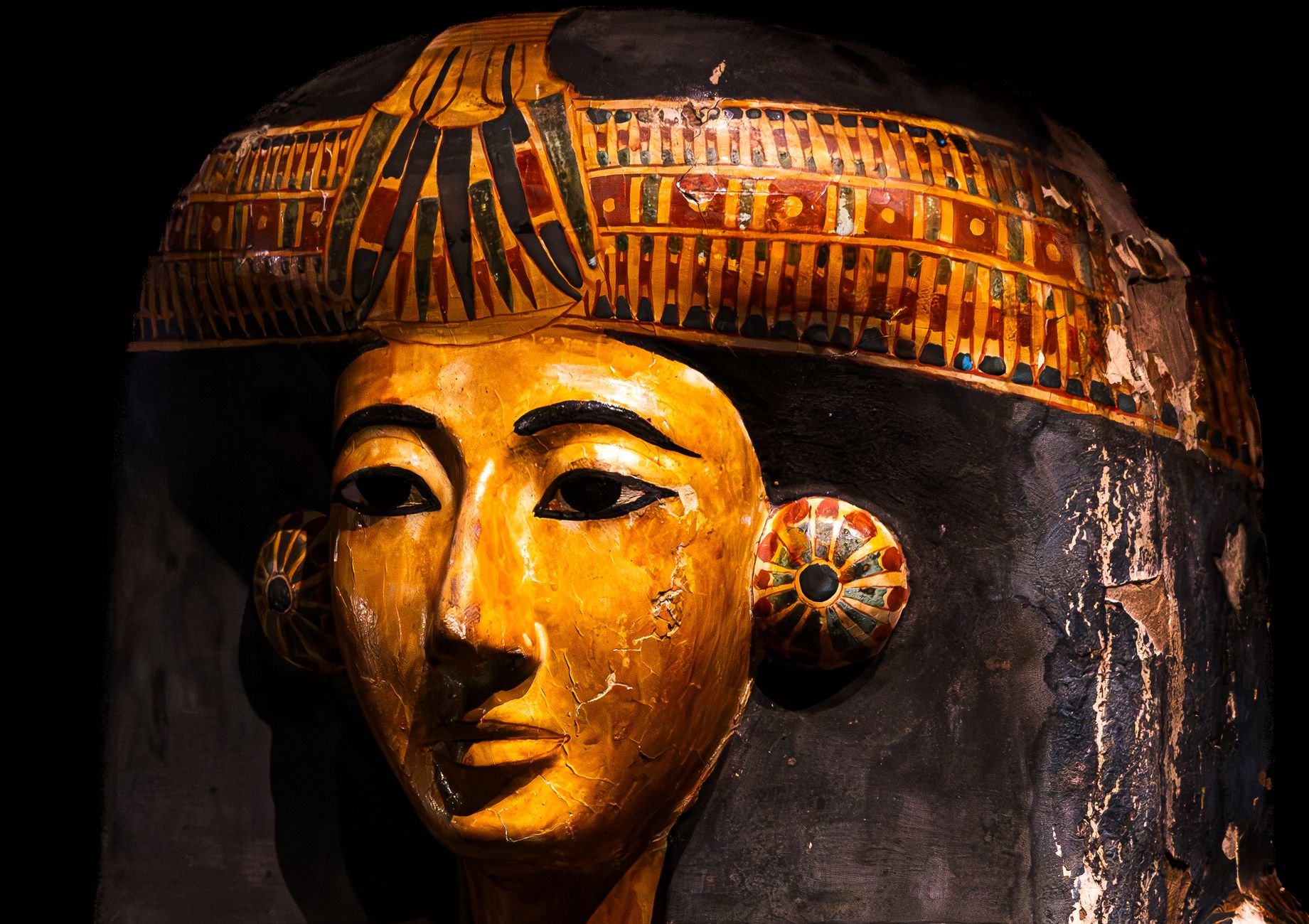
But the real draw is upstairs and to the side: the full Tutankhamun collection. For decades only a fraction of the boy king’s tomb was on display in the old Tahrir museum while the rest sat in storage. Now all of it — somewhere north of 5,000 objects, from the famous solid-gold death mask to the nested coffins, the chariots, the jewellery and the gilded furniture — is shown together as it was found. Seeing the whole assemblage in sequence, rather than a few greatest hits, is a different experience entirely. Set aside a good chunk of your visit just for these rooms.
Don’t miss the Khufu Solar Boat, either. This 4,500-year-old cedar vessel, buried beside the Great Pyramid to ferry the pharaoh through the afterlife, was painstakingly reconstructed from more than a thousand pieces and now has its own dedicated hall on the campus. It’s one of the oldest and largest surviving boats from antiquity, and standing under it gives you a real sense of scale that photos never do.
The rest of the museum is organised across twelve main galleries that run broadly chronologically, from the prehistoric and Old Kingdom material through the Middle and New Kingdoms to the Greco-Roman period. It’s a lot, and the design quietly assumes you won’t see everything in one go — which is the right way to approach it. Lean into the rooms that grab you and walk briskly through the rest. There’s a children’s museum on site too, plus a handful of cafes and restaurants if you need to refuel mid-visit, a conservation centre, and a large gift shop that’s actually worth a browse for better-quality souvenirs than you’ll find in the bazaars. Wear comfortable shoes; you’ll cover serious ground on those polished floors.
Getting there is the one wrinkle. The GEM sits on the Cairo–Alexandria desert road near Giza, roughly 45 minutes to an hour from central Cairo depending on traffic, and there’s no metro stop at the door. An Uber or careem is the simplest option, and if you’re already heading to the pyramids you can do both from the same base. Give yourself a buffer so you make your booked entry slot — Cairo traffic is unpredictable, and a missed time slot can mean a wait.
The practical bit. As of 2026 a foreign adult ticket is 1,450 EGP (roughly 30 USD), with a reduced rate around 730 EGP for foreign students and children aged six to twelve. Note that prices are scheduled to rise from 1 November 2026, so budget for a little more if you’re travelling late in the year. Booking is online and mandatory — the ministry closed the on-site ticket windows for foreigners in December 2025 to control crowds, and there’s a daily visitor cap, so reserve your slot through the official GEM site before you go. Opening hours run from roughly 8:30 AM to 7 PM, with later closing (around 9 PM) on Wednesdays and Saturdays. Plan on three to four hours minimum; serious Egyptophiles can easily spend a whole day. Our full Grand Egyptian Museum guide walks through the gallery layout, the best time slots to book, and how to combine it with Giza.
The Egyptian Museum at Tahrir Square: still worth it
With so much shipped out to the GEM, a lot of people now ask whether the old Egyptian Museum on Tahrir Square is still worth visiting. Short answer: yes, if you have the time. The building itself is a piece of history — that dusky pink neoclassical hall has stood on the square for over 120 years, and wandering its crowded, slightly faded galleries feels like stepping into the early days of Egyptology. It’s the opposite of the GEM’s gleaming, climate-controlled order, and there’s real charm in that.

The collection still runs to well over 170,000 pieces. The single most important object here is the Narmer Palette, one of the oldest decorated artefacts in the world, marking the unification of Upper and Lower Egypt more than 5,000 years ago — most casual visitors walk straight past it without realising what it is. You’ll also find rooms of statuary, papyri, jewellery and everyday objects spanning the whole sweep of pharaonic history, including the haunting Fayum mummy portraits, the statues of Khafre and the seated scribe, and treasures recovered from the royal tombs at Tanis that often get overlooked now that Tutankhamun has moved west. One thing to know: the royal mummies are no longer here. They were moved to the National Museum of Egyptian Civilization in a televised procession in 2021, so don’t come expecting to see Ramesses II’s face on Tahrir.
A word on the experience itself. This is an old-school museum — labels can be sparse or hand-typed, the lighting is uneven, and there’s little of the slick interpretation you get at the GEM. For some that’s a downside; for others it’s exactly the appeal, a glimpse of how the world’s great Egyptian collection was presented for a century. A guide pays for itself here more than anywhere, because so much goes unexplained. The museum sits right on Tahrir Square in the thick of downtown, easily reached on foot from Sadat metro station, which makes it simple to pair with the Museum of Islamic Art or a downtown stroll.
Foreign admission sits around 550 EGP in 2026, and the museum is open daily — generally from 9 AM, though last entry can be earlier than you’d expect, so go in the morning rather than rolling up at four. Two to three hours is plenty. For the full picture, including which galleries to prioritise now that the headline pieces have moved, see our dedicated Egyptian Museum at Tahrir Square guide.
National Museum of Egyptian Civilization: the royal mummies
Out in the Fustat district of Old Cairo, the National Museum of Egyptian Civilization — everyone just says NMEC — tells Egypt’s story chronologically, from prehistory right through to the modern era, across some 50,000 objects. It’s a thoughtful, well-lit museum, but most people come for one room.
The Royal Mummies Hall is the reason to make the trip. Opened in 2021, this deliberately dim, hushed, climate-controlled gallery displays 22 actual mummies of pharaohs and queens — Ramesses II, Hatshepsut, Seti I, Thutmose III and others. Each rests in its own case with a quiet explanation of who they were and how they ruled. It is genuinely moving in a way the gilded artefacts elsewhere aren’t: you are looking at the preserved face of someone who governed Egypt three thousand years ago. Photography is not allowed in the hall, and honestly it’s better that way — the silence is part of it. Foreign admission is around 550 EGP, the Royal Mummies Hall included in the main ticket. Budget two to three hours.
The rest of NMEC is worth more than a glance on the way to the mummies. Its main gallery presents Egyptian civilization thematically — writing, beliefs, the Nile, society — rather than as a relentless march of dynasties, which makes for a refreshingly digestible overview, especially if you’ve already had the firehose at the GEM. The building also overlooks Ain el-Sira, one of Cairo’s old lakes, and the area around it in Fustat is the oldest part of Islamic Cairo, so it pairs naturally with a wander through the potters’ quarter. It’s a calmer, more modern museum than the Tahrir institution, and families with older kids tend to find it easier going.
Museum of Islamic Art: Cairo’s underrated masterpiece
If you want to understand why Cairo earned its old nickname “the city of a thousand minarets,” skip the obvious for an afternoon and head to the Museum of Islamic Art at Bab al-Khalq, on the edge of downtown. It holds one of the finest collections of Islamic art anywhere — tens of thousands of objects spanning fourteen centuries: intricate woodwork, enamelled mosque lamps, ceramics, metalwork, carpets, and some of the most beautiful Quran manuscripts and calligraphy you’ll ever see.

What makes it work is the craftsmanship up close. Geometric ceiling panels, mashrabiya screens carved so finely they look like lace, fountains and tilework salvaged from buildings long demolished — it rewards slowing down. The museum was badly damaged by a 2014 car bomb across the street and has since been fully restored, so the galleries you see today are in excellent shape. It’s rarely crowded, which after the GEM scrum is a relief in itself. Foreign tickets run roughly 340 EGP, and it’s open daily from about 9 AM to 5 PM (with a midday break on Fridays for prayers). Give it ninety minutes to two hours. Our Museum of Islamic Art guide covers the standout pieces room by room.
The Coptic Museum and Christian Cairo
Tucked inside the walls of the Roman-era Babylon Fortress in Old Cairo, the Coptic Museum is the world’s most important collection of Coptic Christian art — over 16,000 objects documenting the centuries when Christianity flourished in Egypt and blended Egyptian, Greek and Byzantine traditions into something all its own. Carved wooden screens, textiles, icons, frescoes and illuminated manuscripts fill galleries set around a quiet courtyard. Among its holdings are texts connected to the Nag Hammadi library, the famous cache of early Christian writings unearthed in Upper Egypt.
The setting is half the appeal. The museum sits steps from the Hanging Church and a cluster of ancient churches and the Ben Ezra Synagogue, all within the old fortress — a compact, atmospheric quarter you can wander on foot. Entry to the surrounding fortress area and the churches is free; the museum itself charges foreign visitors around 280 EGP and is open daily from roughly 9 AM to 5 PM. Note that photography is not permitted inside the museum. Plan an hour or so for the collection, then leave time for the churches outside. The full story is in our Coptic Museum guide.
If you have the legs for it, this whole corner of Old Cairo rewards an unhurried morning. The Hanging Church, suspended over a Roman gatehouse, is the most famous, but the smaller churches of St Sergius and St Barbara are just as old and far quieter, and the lanes between them are blessedly free of traffic. The Coptic quarter is one of the few places in central Cairo where you can actually hear yourself think — a genuine change of pace from the GEM crowds or the bazaar. It’s an easy stop on Line 1 of the metro (Mar Girgis station puts you right at the gate), which is reason in itself to pair it with the NMEC, a short hop away in the same part of town.
Coptic Cairo is not the only place to meet that community. Out at the base of the Mokattam cliffs, the Zabbaleen quarter and its vast cave church make one of the most extraordinary visits in the city; our guide to Mokattam and Garbage City explains how to go respectfully.
The Citadel of Saladin and its museums
Up on a limestone spur with the best panorama in the city, the Citadel of Saladin is a medieval fortress that doubled as the seat of Egyptian power for nearly 700 years. The skyline-defining Mosque of Muhammad Ali — the “Alabaster Mosque,” with its Ottoman domes and twin pencil minarets — crowns the complex, and the views over Cairo’s rooftops toward the pyramids on a clear day are reason enough to come.

A single ticket gets you into the whole site, and that includes several museums. The National Military Museum, housed in the old Harem Palace, runs through Egypt’s military history with weapons, uniforms, models and dioramas — worth a look if that’s your thing, easy to skip if it isn’t. There’s also the Police Museum and the carriage and jewellery collections, plus a couple of other historic mosques within the walls. The combined foreign ticket is around 450 EGP, and the Citadel is open daily, roughly 9 AM to 5 PM in summer (a little earlier in winter), with last entry usually an hour or so before closing. Dress modestly — you’ll be entering working mosques and will need to remove your shoes. Two to three hours covers the highlights. See our Citadel of Saladin guide for the layout and which buildings are worth your time.
Al-Azhar and the rest of Islamic Cairo
The Citadel sits at one end of Islamic Cairo, the dense medieval quarter that’s a UNESCO World Heritage Site and, to my mind, the most rewarding place to simply walk in the whole city. The spine of it is Al-Muizz Street, a more-or-less car-free stretch lined with mosques, madrasas and merchants’ houses going back a thousand years. At dusk, when the stone façades are lit, it’s extraordinary.
Anchoring the quarter is the Al-Azhar Mosque, founded in 970 AD and home to one of the oldest continuously operating universities in the world. It remains a living, functioning institution rather than a museum piece, which is exactly what makes a visit so memorable — you’re a guest in a working place of worship and scholarship. Entry is free; you’ll be asked to dress modestly and cover up (robes are usually lent at the door), remove your shoes, and avoid the main prayer times. It’s generally open to visitors from around 9 AM to 5 PM outside of prayers. Just across the way is Khan el-Khalili, the famous bazaar, so this corner of the city easily fills an afternoon and evening. Our Al-Azhar Mosque guide covers the etiquette and history in detail, and if shopping is on your list, our Cairo shopping and markets guide tells you how to navigate the Khan without overpaying.
Palaces and the performing arts
A couple of Cairo’s most distinctive cultural sites aren’t museums in the usual sense. Out in Heliopolis, the Baron Empain Palace is a Hindu-inspired mansion built by a Belgian industrialist in 1911, abandoned for decades and rumoured to be haunted, now beautifully restored and open as a small museum and exhibition space. It’s a striking, slightly eerie building unlike anything else in the city — worth the trip if you’re staying in or passing through Heliopolis. Our Baron Empain Palace guide has the visiting details and the strange backstory.
For something contemporary, the Cairo Opera House on Gezira Island has been the heart of the city’s performing arts scene since 1988. It hosts ballet, classical concerts, opera and theatre, mostly in the evenings, and tickets are a fraction of what you’d pay in Europe. If you’d like to fold a night of culture into your trip, check what’s on; our Cairo Opera House guide explains how to find the schedule and book.
One more for the curious: the Gayer-Anderson Museum, two beautifully preserved 16th- and 17th-century houses joined together beside the Mosque of Ibn Tulun. It’s furnished as a wealthy Cairene home would have been in Ottoman times, with carved screens, secret passages and a rooftop terrace, and it’s small enough to see in under an hour. James Bond fans may recognise it from a chase scene in The Spy Who Loved Me. It pairs naturally with Ibn Tulun next door, the oldest mosque in the city to survive in its original form, whose spiral minaret you can climb for another sweeping view. Neither is on most rushed itineraries, which is precisely why they’re worth knowing about.
For the view that ties all of it together, the 187-metre tower on Gezira Island still has the best panorama in Cairo. Our Cairo Tower guide covers ticket prices, the best hour to go up and whether the revolving restaurant is worth it.
Cairo museums at a glance
Here’s the quick comparison if you’re trying to decide what fits. Prices are 2026 foreign-adult rates and shift with the exchange rate and the odd ministry update, so treat them as a guide rather than gospel.
| Museum / site | Don’t-miss highlight | Foreign adult (approx.) | Time needed |
|---|---|---|---|
| Grand Egyptian Museum | Full Tutankhamun collection; Ramesses II atrium; Khufu boat | ~1,450 EGP | 3–4 hrs (or a full day) |
| Egyptian Museum, Tahrir | Narmer Palette; the historic building itself | ~550 EGP | 2–3 hrs |
| National Museum of Egyptian Civilization | Royal Mummies Hall (22 pharaohs) | ~550 EGP | 2–3 hrs |
| Museum of Islamic Art | Mosque lamps, manuscripts, woodwork | ~340 EGP | 1.5–2 hrs |
| Coptic Museum | Coptic art; the Babylon Fortress setting | ~280 EGP | 1–1.5 hrs |
| Citadel of Saladin (combined ticket) | Muhammad Ali Mosque; city views; Military Museum | ~450 EGP | 2–3 hrs |
| Al-Azhar Mosque | Working 10th-century mosque-university | Free | 30–45 min |
How to plan it on a short trip
Most people are in Cairo for two or three days and splitting their time between the museums, the pyramids and everything else. Here’s how I’d prioritise.
One museum day. Go to the Grand Egyptian Museum first thing on a slot you’ve pre-booked, spend the morning there, then in the afternoon cross town to the NMEC for the Royal Mummies Hall. That pairing — the greatest treasures and the actual pharaohs who owned them — is the strongest single day of culture Cairo offers. If your trip is tight, this is the one to do.
Two days. Keep day one as above (or pair the GEM directly with the Giza pyramids if you’d rather combine monuments and museum). On day two, start at the Egyptian Museum on Tahrir, walk over to the Museum of Islamic Art, then head to Old Cairo in the afternoon for the Coptic Museum and the churches. That covers pharaonic, Islamic and Christian Egypt in one sweep.
Three days. Add the Citadel and Islamic Cairo — the Citadel and Muhammad Ali Mosque in the morning, then down into Al-Muizz Street and Al-Azhar, finishing at Khan el-Khalili for dinner and shopping as the lights come on. With a third day you can also slot in the Baron Empain Palace or an evening at the Opera House without rushing anything.
For help deciding how many days to give the city overall, our guide to things to do in Cairo sets the museums against everything else competing for your time, and the broader Cairo travel guide ties the whole trip together.
Practical tips for visiting Cairo museums
A few things that’ll make your museum days smoother:
- Book the GEM online, in advance. This is non-negotiable now — there are no walk-up tickets for foreigners and a daily cap. Reserve a morning slot through the official site as soon as you’ve fixed your dates.
- Carry a card, but bring some cash too. The GEM is online-and-card oriented, and card payment is increasingly the norm at the bigger sites. Smaller museums and the ticket windows at the Citadel, Coptic Museum and Islamic Art Museum may still take cash in Egyptian pounds, so keep some on hand. Withdraw EGP from a bank ATM in town rather than the airport, where the rates are poor.
- Photography rules vary. Most museums allow phone photos, often with a paid permit for cameras and no flash, but a few — the Coptic Museum and the Royal Mummies Hall among them — ban photography outright. Check the signs at each entrance and respect them.
- Bring a student card if you have one. A valid international student ID (ISIC) gets you roughly half-price at government museums. It’s worth real money across a few visits.
- Dress for the mosques. Covered shoulders and knees for everyone, a scarf for women entering Al-Azhar and the Citadel mosques, and shoes off inside. Robes are usually available to borrow at the door.
- Go early or late. Crowds and heat both peak in the middle of the day. The first hour after opening and the last hour before closing are the calmest, and in summer the air-conditioned galleries are a welcome midday escape — save outdoor sites for morning and evening.
- Sort out transport in advance. The museums are spread across the city, so an Uber or careem ride between them beats flagging taxis. Our practical transport guide for visitors breaks down the apps, the metro and what a fair fare looks like.
Add one more to that list: bring the student card if you have one, because Egyptian museums and monuments honour it and the saving compounds fast across a week. We add up the exact discount on the greatest-hits circuit, including which cards get refused at the gate.
Frequently asked questions
Is the Grand Egyptian Museum fully open in 2026?
Yes. The GEM opened to the public on 1 November 2025 and all galleries, including the complete Tutankhamun collection and the Khufu Solar Boat hall, are now accessible. It’s the single most important museum in Egypt and the one to prioritise.
Do I still need to visit the old Egyptian Museum at Tahrir?
It’s optional now that the headline pieces have moved, but worth it if you have a spare half-day. The 120-year-old building has real character, it still holds over 170,000 objects including the Narmer Palette, and it’s far less crowded than the GEM. Just know the royal mummies are no longer there — they’re at the NMEC.
Where are the royal mummies in Cairo?
At the National Museum of Egyptian Civilization (NMEC) in Fustat, Old Cairo. The Royal Mummies Hall has displayed 22 pharaohs and queens since 2021, when they were moved from the old Egyptian Museum in a televised parade across the city.
How much do Cairo museums cost in 2026?
Foreign-adult prices range widely: roughly 1,450 EGP for the Grand Egyptian Museum, around 550 EGP each for the Egyptian Museum and NMEC, about 340 EGP for the Museum of Islamic Art, around 280 EGP for the Coptic Museum, and roughly 450 EGP for the Citadel’s combined ticket. Al-Azhar Mosque is free. Students with a valid ISIC card pay about half at government museums. Prices shift with the exchange rate, and the GEM is set to rise from November 2026.
Can I see the Grand Egyptian Museum and the pyramids in one day?
Yes, and many people do, since the GEM is only a couple of kilometres from the Giza Plateau. Book an early GEM slot, see the museum first while you’re fresh, then head to the pyramids. It’s a long day but a logical one. Our Pyramids of Giza guide covers tickets, timing and how to combine the two.
Are Cairo museums open every day?
Most of the major ones open daily, typically from around 9 AM (8:30 AM for the GEM) to between 4 and 7 PM, with several extending hours into the evening on certain days and the GEM staying open later on Wednesdays and Saturdays. Hours shrink during Ramadan, and last entry is usually an hour before closing, so don’t leave it late.
How many days do I need for Cairo’s museums?
One focused day covers the essentials (GEM plus the Royal Mummies). Two days lets you add the Egyptian Museum, Islamic Art and Coptic Cairo. Three gives you the Citadel and Islamic Cairo on top, at a relaxed pace. Beyond that you’re into specialist territory.
Go deeper: plan the rest of your Cairo trip
The museums are only one slice of the city. To round out your itinerary, these guides are the most useful next stops:
- Complete Cairo travel guide — the master plan for your whole trip.
- Pyramids of Giza visitor guide — tickets, tips and how to pair them with the GEM.
- Things to do in Cairo — everything beyond the museums.
- The complete Egyptian eating guide — where to eat between gallery visits, from koshary to fine dining.
- Getting around Cairo — Uber, the metro and fair taxi fares.
- Day trips from Cairo — Saqqara, Memphis, Alexandria and more.
- Cairo culture and etiquette — how to dress, tip and behave at mosques and sites.
One last bit of advice: don’t try to out-tour your own stamina. Cairo’s collections are overwhelming by design, and the people who enjoy them most are the ones who pick a few, take their time, and let the rest go. Start at the Grand Egyptian Museum, see the mummies at the NMEC, give Islamic and Coptic Cairo an unhurried afternoon, and you’ll come away understanding this city far better than someone who tried to tick off all of it.
One collection now dominates the rest, and it is worth being blunt about it: if you have a single museum day in Cairo, the Grand Egyptian Museum out at Giza is where it should be spent. The complete Tutankhamun assemblage, Khufu’s solar boat and around 100,000 artefacts sit in a building that was designed around them, and entry is by pre-booked timed slot rather than a queue at a window. Our complete visitor guide to the GEM covers ticket prices, opening hours, getting there from the city and how long to actually allow.
Two of the collections on this page now account for most of the decisions visitors actually have to make, and choosing between them is harder than it looks — the cheaper, older, more central museum kept far more than the coverage of the move suggested. If you are trying to work out which gets your museum day, our head-to-head on the Grand Egyptian Museum and the Tahrir museum compares price, holdings, comfort and travel time without pretending the newer building is the only answer.
One display in this city now outranks everything else on sheer weight of material: the complete contents of KV62, five thousand-odd objects, shown together for the first time since the 1930s. It is worth going in knowing what is there beyond the golden mask — the Anubis shrine, the meteoric iron dagger, the child’s chair from the palace nursery. Our room-by-room guide to the Tutankhamun galleries covers the lot.