This article contains advertising. Our booking links are routed through a partner that adds commission tracking automatically, so if you book through one we earn a commission from the provider, at no extra cost to you. It never affects what we recommend. Affiliate disclosure
Search for Tutankhamun galleries Grand Egyptian Museum and you will get a great many photographs of the golden mask and almost nothing about the other five thousand objects standing around it. That is a shame, because the mask is not the most interesting thing in those rooms. It is merely the most famous.
What the museum has done at Giza is display the entire contents of one tomb as a single find — every stick, sandal, board game and chariot wheel — for the first time since Howard Carter’s team finished emptying it in the early 1930s. This guide walks through what is actually in there, roughly in the order you encounter it, and points out the objects worth stopping for that nobody photographs. Practical details were checked in September 2026.
Why this display is different
For ninety years, Tutankhamun was shown as a selection. Two rooms at the Egyptian Museum in Tahrir held the gold — the mask, the coffins, the throne, the best of the jewellery — and the other three-quarters of the find sat in storage or travelled the world in touring exhibitions. You saw the highlights and formed the impression that a royal burial consisted of treasure.
At Giza you see the whole assemblage, and it changes what the tomb means. Alongside the gold there are 130-odd walking sticks, boxes of folded linen, dried funerary bouquets, a child’s chair from the palace nursery, jars of ointment, model boats, and a hundred other things that were packed for a nineteen-year-old to use in an afterlife his family clearly imagined in some detail. The cumulative effect is less “look what he was worth” and more “look what they thought he would need.”
It also brings home something uncomfortable. Tutankhamun was a minor king who reigned about nine years and died young, and his was the only substantially intact royal burial ever found in the Valley of the Kings. Every other tomb was robbed in antiquity. Standing in front of five thousand objects from a footnote of a pharaoh, the obvious question is what was in the tombs of the kings who mattered.
Who he actually was
Worth twenty minutes of context before you go, because the galleries assume rather less of it than you might expect and the objects make far more sense with it.
Tutankhamun came to the throne as a child, around the age of nine, and died at about nineteen after a reign of roughly a decade in the fourteenth century BC. He was almost certainly the son of Akhenaten, the pharaoh who had abolished Egypt’s traditional gods in favour of the sun-disc Aten, moved the capital to a new city in the desert and spent seventeen years dismantling a religious system a thousand years old.
The boy’s reign was the counter-revolution. He was born Tutankhaten — “living image of the Aten” — and changed his name to Tutankhamun, restoring the god Amun to the centre of things. The court left Akhenaten’s city and returned to Thebes and Memphis. The temples reopened. Whether a nine-year-old drove any of that is doubtful; the adults around him, including the general Horemheb and the courtier Ay who succeeded him, plainly did.
He was not a great king and Egypt did not remember him as one. Within a couple of generations his name had been struck from the official lists along with the rest of the Amarna family, and it is precisely that erasure that saved him. His small tomb was forgotten, buried under the spoil of a later royal excavation, and missed by the robbers who systematically emptied every other tomb in the valley. He is famous today because he was forgotten thoroughly enough.
The galleries carry traces of all of this if you look. The throne shows him under the rays of the Aten, a theology he was in the process of abandoning. Several objects appear to have been made for someone else and re-inscribed. Bodily, he was not the golden youth the mask suggests: he had a club foot, walked with sticks, and carried the genetic burden of a royal family that had married within itself for generations.
The discovery, and what it cost
Howard Carter had been looking for six seasons and Lord Carnarvon, who was paying, had told him the previous year would be the last. In November 1922 a water-boy on the dig is said to have uncovered a step cut into the rock beneath the remains of workmen’s huts. Sixteen steps down there was a sealed doorway.
What followed was the most careful excavation anyone had yet attempted and, by modern standards, still a difficult episode. Carter’s team took nearly a decade to clear four small rooms, photographing and numbering every object in place — an approach so far ahead of contemporary practice that the record remains the primary source for the find. Set against that: the mummy was cut apart to free it from the mask and coffin, which had been fused by hardened ritual resins; objects left Egypt that should not have; and the arrangement with Carnarvon’s estate over publication and access soured relations with the Egyptian authorities for years.
The galleries handle this reasonably well, and the conservation story is part of the display rather than hidden behind it. A great deal of what you see has been treated at the museum’s own conservation laboratories in the past decade — chariots, textiles and leather in particular, some of it not touched since Carter’s team packed it away.
The tomb, and how the galleries follow it
KV62 was small — four cramped rooms cut into the valley floor, closer in scale to a private tomb than a royal one, which is probably why it survived. Carter’s team recorded everything in place, gave each object a number, and cleared the rooms in sequence over the best part of a decade. The display follows roughly that sequence, which is the single best decision the curators made, because it lets you experience the find the way it was found rather than as a treasure ranking.
The antechamber
The first room Carter opened, and the one behind his famous answer to Lord Carnarvon’s question about whether he could see anything. It was piled with dismantled furniture, boxes, chariots and food, stacked to the ceiling and pushed against the walls.
- The two guardian statues. Life-size figures of the king in black resin with gilded kilt, collar, sandals and headdress, which stood facing each other either side of the sealed burial chamber door. They are among the most arresting objects in the museum, and they read as portraits rather than symbols.
- The gilded throne. Wooden, sheathed in gold, with a back panel showing Tutankhamun seated while his queen Ankhesenamun anoints him under the rays of the Aten. It is a genuinely tender domestic scene, and it is also politically awkward — the Aten was the god of his heretic predecessor Akhenaten, whose religion Tutankhamun’s reign was busy dismantling.
- The animal-sided beds. Three ritual couches with sides carved as a lion, a cow and a composite hippopotamus creature. Strange, slightly comic, and unlike anything else in Egyptian art.
- The chariots. Six of them, dismantled to get them through the door. Gilded, light, and built for speed rather than war.
The annexe
A small store room off the antechamber that the ancient robbers had turned over and the priests had restacked carelessly. It held the everyday material — and for many visitors it is the most affecting part of the display.
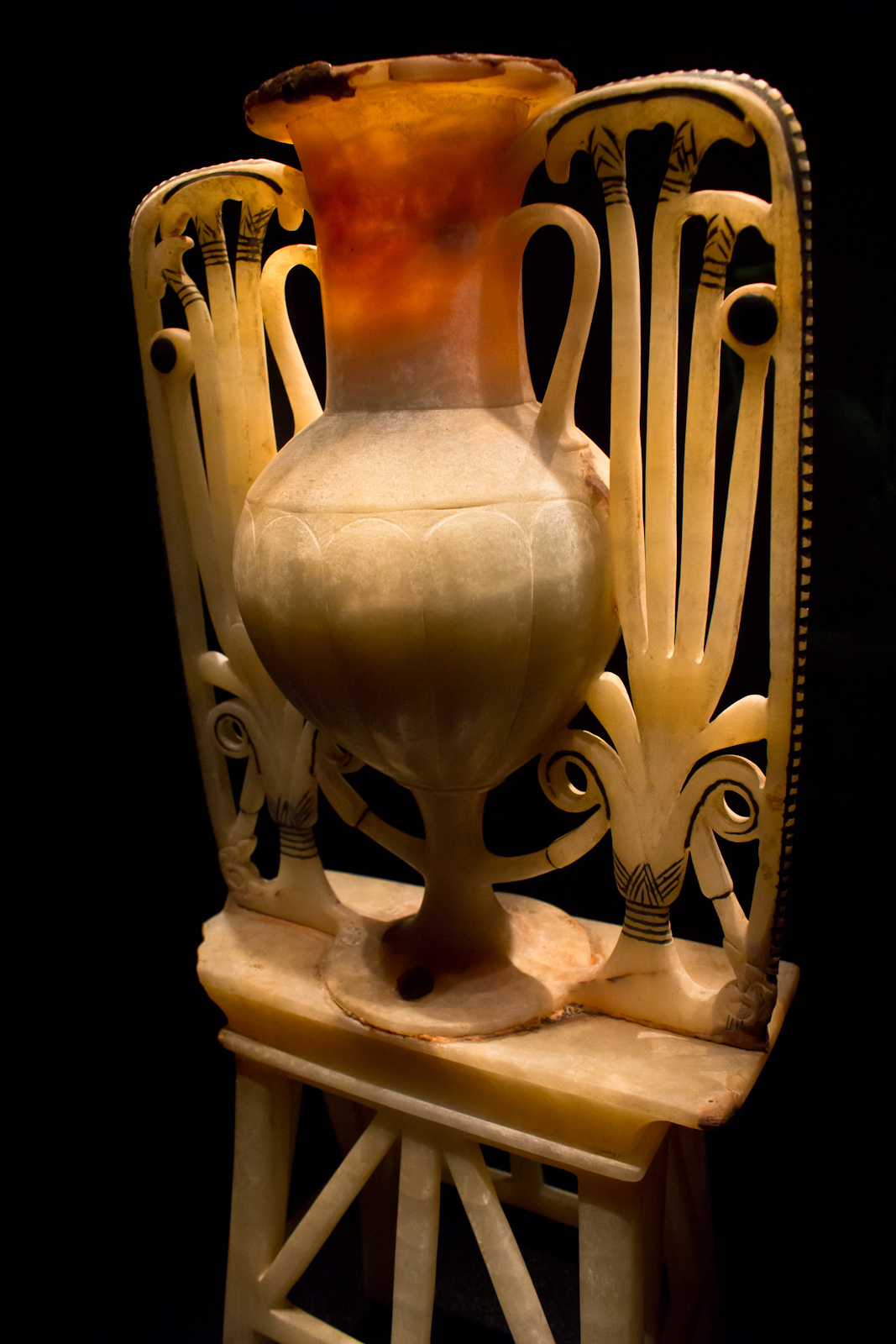
- Oils, unguents and cosmetic vessels in alabaster, some still holding residue. The finest of them are openwork carvings, absurdly elaborate for containers of ointment.
- Board games. Several senet sets, the ancient Egyptian game of passing, which had funerary significance as well as being something you played on a wet afternoon.
- Sandals, gloves, tunics and folded linen. Textiles almost never survive. These did, and the conservation work that made them displayable took years.
- Food and wine. Baskets of fruit, joints of meat in cases shaped to fit them, and wine jars labelled with vintage, vineyard and chief vintner — the earliest wine labels anyone has.
The burial chamber
The room that holds the sequence everyone knows about: four nested gilded shrines, filling the chamber almost wall to wall, inside them a quartzite sarcophagus, inside that three nested coffins, and inside the innermost coffin the king.
- The shrines. Enormous gilded wooden boxes, assembled inside the tomb because they could not have fitted through the door otherwise. Carter’s team took eighty-four days to dismantle the outermost one.
- The coffins. The outer two of gilded wood; the innermost of solid gold, weighing over a hundred kilograms. It is the single most valuable object from the ancient world by raw material alone, and that is the least interesting thing about it.
- The mask. Gold, inlaid with lapis lazuli, carnelian, obsidian, quartz and coloured glass. About eleven kilograms. It sits alone, in its own space, with a queue that moves slowly.
The treasury
A further room off the burial chamber, guarded by the object that stops most people in their tracks.
- The Anubis shrine. A black jackal, life-size and utterly alert, lying on a gilded shrine mounted on carrying poles. It faced the doorway. Carter found it draped in a linen shawl.
- The canopic assembly. A gilded shrine surrounded by four goddesses with their arms outstretched, containing an alabaster chest, containing four miniature coffins of gold holding the king’s embalmed organs. The coffinettes are the mask in miniature and are, object for object, finer work.
- Model boats. Dozens of them, for travel in the next world.
- Shabtis. Over four hundred figures whose job was to do the king’s agricultural labour in the afterlife on his behalf, along with the miniature tools they would need.
Ten things worth finding that are not the mask
If you want a route through the galleries that produces a better afternoon than queueing twice for the same photograph, look for these.
- The iron dagger. A blade of meteoric iron, made centuries before Egypt worked iron at all, with a gold hilt and sheath. It came from the sky, and its owners knew it.
- The child’s chair. Small, plain, slightly worn. It came from the nursery and went into the tomb with him. It undoes people.
- The walking sticks. Around 130 of them. He had a club foot and needed them, which recasts the golden chariots somewhat.
- The trumpets. Silver and bronze, and famously played in a 1939 broadcast — an act that horrified conservators then and would be unthinkable now.
- The ostrich-feather fan. The feathers themselves have gone, but the gilded handle shows the king hunting the ostriches they came from.
- The floral collar. Real flowers and leaves, sewn together, laid on the mummy. Three thousand years old and recognisably a wreath.
- The corselet. An intricate ceremonial garment of gold and inlay that was found in pieces and reassembled with immense difficulty.
- The gold sandals and toe stalls. Made purely for burial and shaped to individual toes.
- The Ka statue. The king’s spirit-double, in gilded wood, one of the strangest ideas in Egyptian religion given form.
- The unfinished pieces. Several objects show signs of hurried adaptation, some apparently made for someone else and re-inscribed. He died unexpectedly and the burial was assembled at speed.
The mummy question
This confuses more visitors than anything else in Cairo, so plainly: Tutankhamun’s body is not at the Grand Egyptian Museum. It has never left the Valley of the Kings. It lies in KV62, the tomb it was found in, in a climate-controlled case, and you can see it there for a supplementary ticket on a Luxor trip.
Nor is he at the National Museum of Egyptian Civilization in Fustat, which holds the twenty-two other royal mummies moved from Tahrir in 2021 — Ramses II, Seti I, Hatshepsut and the rest. Three locations, three different things: the treasures at Giza, the other kings in Fustat, the boy himself in Luxor.
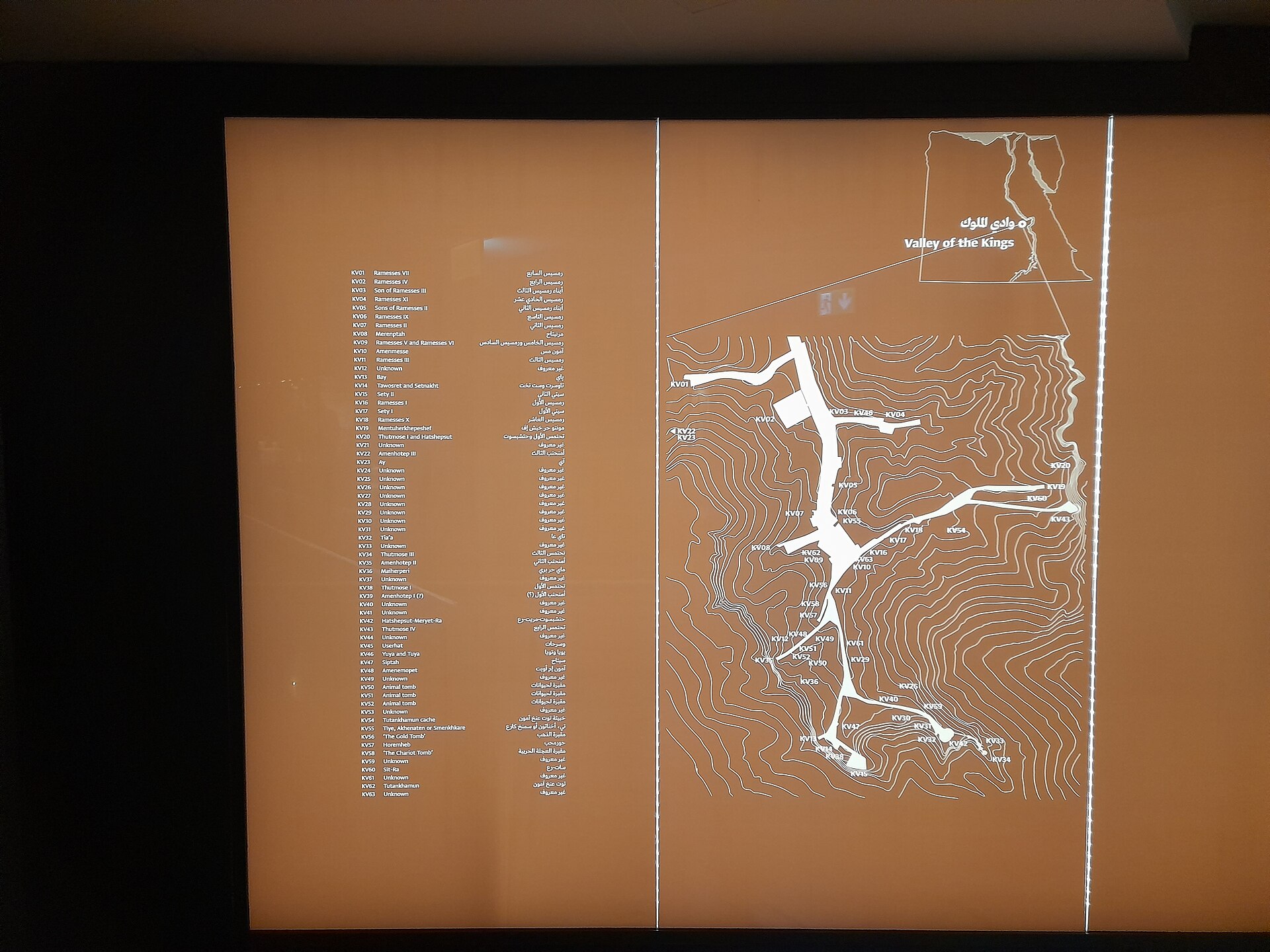
The galleries do explain the tomb’s location and setting, and there is interpretive material on the Valley of the Kings and where KV62 sits among the other tombs. If Luxor is on your itinerary, our guide to getting from Cairo to Luxor and ancient Thebes covers the options.
Practicalities for these rooms specifically
- Go early in your visit, not late. The single most common mistake is doing the twelve main galleries first and arriving here with ninety minutes of museum fatigue already spent. Everything else at the museum will still be there afterwards.
- Allow a full hour, and prefer ninety minutes. An hour is the floor. People who allow two hours do not run out of things to look at.
- Expect low light. The galleries are deliberately dark to protect organic material. Give your eyes a moment when you walk in.
- Photography rules vary within these rooms and have changed since opening. Assume no flash and no tripods, read the signage in each space rather than the one you saw two galleries back, and see our notes on photography rules at Egyptian sites for the wider picture.
- The mask queue moves. It looks worse than it is. Guards keep it going and you will not wait as long as the line suggests.
- No separate ticket. These galleries are included in standard admission — there is no supplement, whatever a reseller tells you. The tiers are set out in our guide to GEM ticket prices and booking.
What is genuinely disappointing
Two honest criticisms, because a page that says everything is wonderful is not much use.
The first is crowd management around the headline objects. The museum is huge and mostly calm, and then you reach the mask and the coffins and everyone who came in during your slot is standing in the same twelve square metres. Nothing in the design solves this, and mid-morning it can be genuinely unpleasant. The fix is timing rather than patience: come at the first slot of the day, or use the Wednesday and Saturday evening openings.
The second is that the sheer completeness works against the small things. When five thousand objects are on show, the child’s chair and the dried flowers have to compete with a wall of gold for attention, and most visitors walk past them. That is not really the museum’s fault, but it does mean the most moving material in the collection is the material you have to look for deliberately.
What we would not describe as disappointing, despite hearing it said: the absence of the mummy. It is in the tomb, it is better off there, and the display is honest about where it is.
If you saw the collection at Tahrir before the move
You did not see this. That is worth saying to anyone who visited Cairo before 2025 and assumes they have covered it.
The old display held the gold in two rooms with cases pushed close together, cards typed decades earlier, and no space to stand back. What you got was proximity to famous objects. What you did not get was the tomb — the sequence, the scale, the ordinary things, or any sense of how the pieces related to one another. Roughly three-quarters of the assemblage was not on show at all.
The comparison between the two museums is worth thinking through properly if you are planning a return trip, and we do that in our head-to-head on the Grand Egyptian Museum and the Tahrir museum. Tahrir remains well worth a morning — our guide to what it holds now covers what stayed behind, which is a great deal more than the coverage of the move suggested.
A ninety-minute route through the galleries
If you want a plan rather than a wander, this is the order that gets the most out of the rooms without leaving you numb.
- First fifteen minutes: the antechamber material. Start with the guardian statues and the animal-sided couches. They set the scale and they are the objects most people walk straight past on their way to the gold.
- Next twenty: the annexe. The everyday things — linen, sandals, board games, wine jars, the alabaster vessels. Do this while you are still capable of noticing small objects, because after the burial chamber you will not be.
- Next thirty: the burial sequence. Shrines, sarcophagus, coffins, mask, in that order. Resist jumping straight to the mask; the nesting is the point, and seeing the four shrines first is what makes the innermost coffin land.
- Next twenty: the treasury. The Anubis shrine, the canopic assembly and the coffinettes. For our money this is the finest workmanship in the entire collection.
- Last five: go back. Return to one object you liked and look at it properly without the queue in your peripheral vision. It is a better use of five minutes than a final lap.
If you have only an hour, cut the annexe to ten minutes and the treasury to fifteen, and keep the burial sequence whole. If you have two hours, spend the extra time in the annexe rather than anywhere else — it is the part of the display that rewards patience most and gets the least of it.
Frequently asked questions
How many Tutankhamun objects are on display?
Upwards of five thousand — effectively the complete contents of the tomb, shown together for the first time since the clearance finished in the 1930s. At Tahrir roughly a quarter of the find was ever on show.
Is the golden mask here?
Yes, in its own space within the galleries. It moved from Tahrir when the new museum opened.
Is Tutankhamun’s mummy here?
No. It remains in tomb KV62 in the Valley of the Kings near Luxor, in a climate-controlled case, and can be seen there for a supplementary ticket. The other royal mummies are at NMEC in Fustat, not here either.
Do the Tutankhamun galleries cost extra?
No. Standard admission covers them along with everything else on the site. Anyone charging a supplement for access to the mask is a reseller adding a margin.
How long should I spend in these rooms?
An hour minimum, ninety minutes comfortably, two hours if you read labels. Do them early in your visit while you still have attention to spend.
Can I take photographs?
Generally yes without flash, but rules differ within the galleries and have changed since opening. Follow the signage in each specific room and the guards rather than another visitor’s example.
Is it too dark to see properly?
The lighting is low to protect textiles, wood and other organic material, but the objects themselves are lit well. Allow your eyes a minute on entry.
What is the best thing in there if not the mask?
Ask ten visitors and you will get ten answers, which is the point. Ours would be the Anubis shrine, the canopic coffinettes and the child’s chair from the nursery.
Is it suitable for children?
Better than most of the museum. Chariots, board games, model boats and a boy king who died at nineteen hold young attention far better than rows of statuary. The low light and the crowding around the mask are the two pinch points.
How much of your visit these rooms should take is worth deciding before you arrive rather than in the queue. An hour is the floor and ninety minutes is comfortable, but the more important decision is where they sit in the day — do them after the staircase and before the main galleries, not last. Our guide to how long the whole museum takes sets out the timings for every section and the sequencing mistake that spoils most visits.
Related Cairo Guides
- Grand Egyptian Museum: the complete visitor guide
- Tickets, prices and how to book online
- GEM or Tahrir: which museum to choose
- What the Tahrir museum holds now
- Cairo to Luxor and the Valley of the Kings
- Every museum in Cairo worth your time
Photo Credits
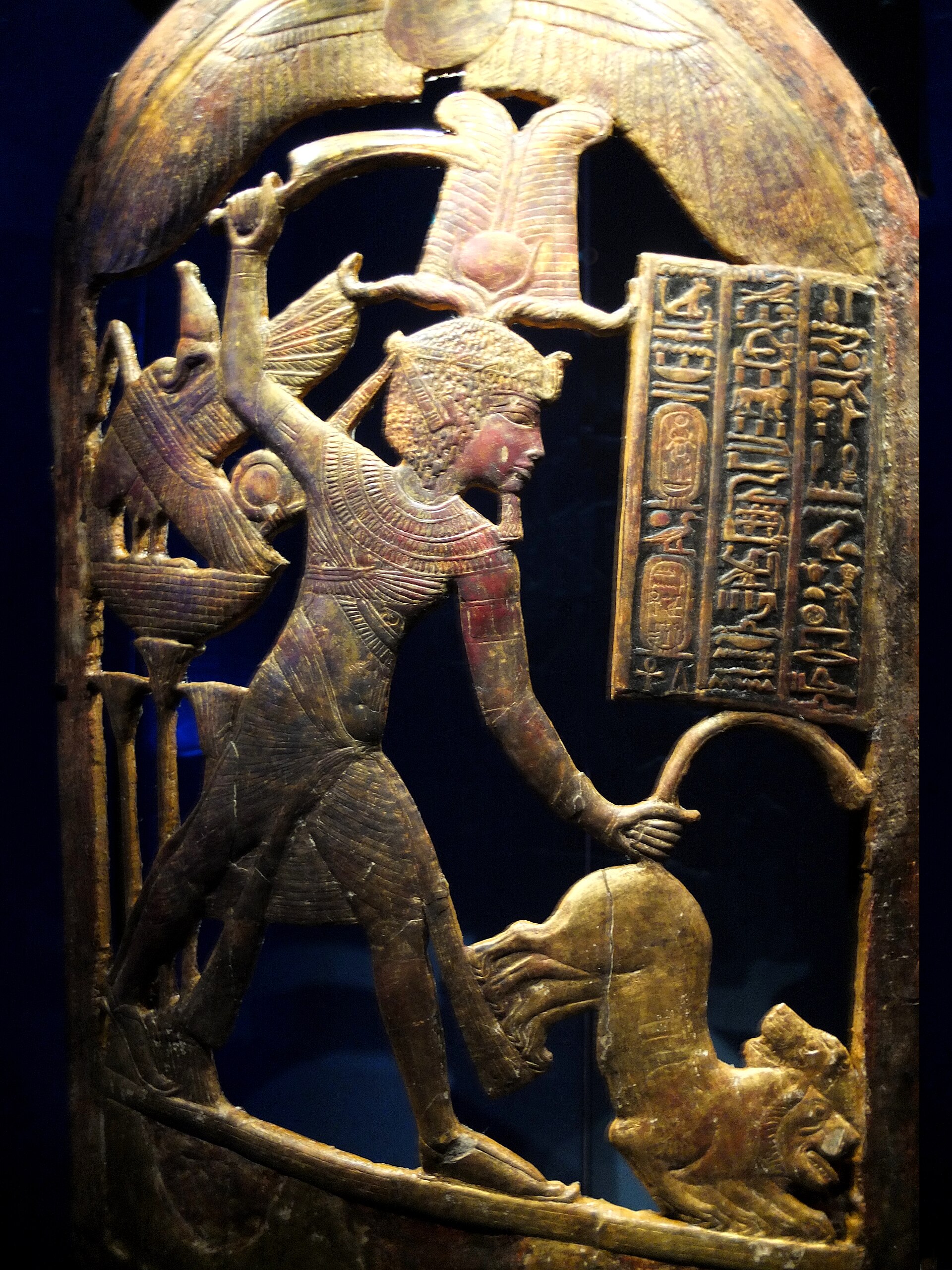
Ceremonial shield of Tutankhamun: photo by Siren-Com, via Wikimedia Commons (CC BY-SA 4.0).
Alabaster unguent vase: photo by ddenisen (D. Denisenkov), via Wikimedia Commons (CC BY-SA 2.0).
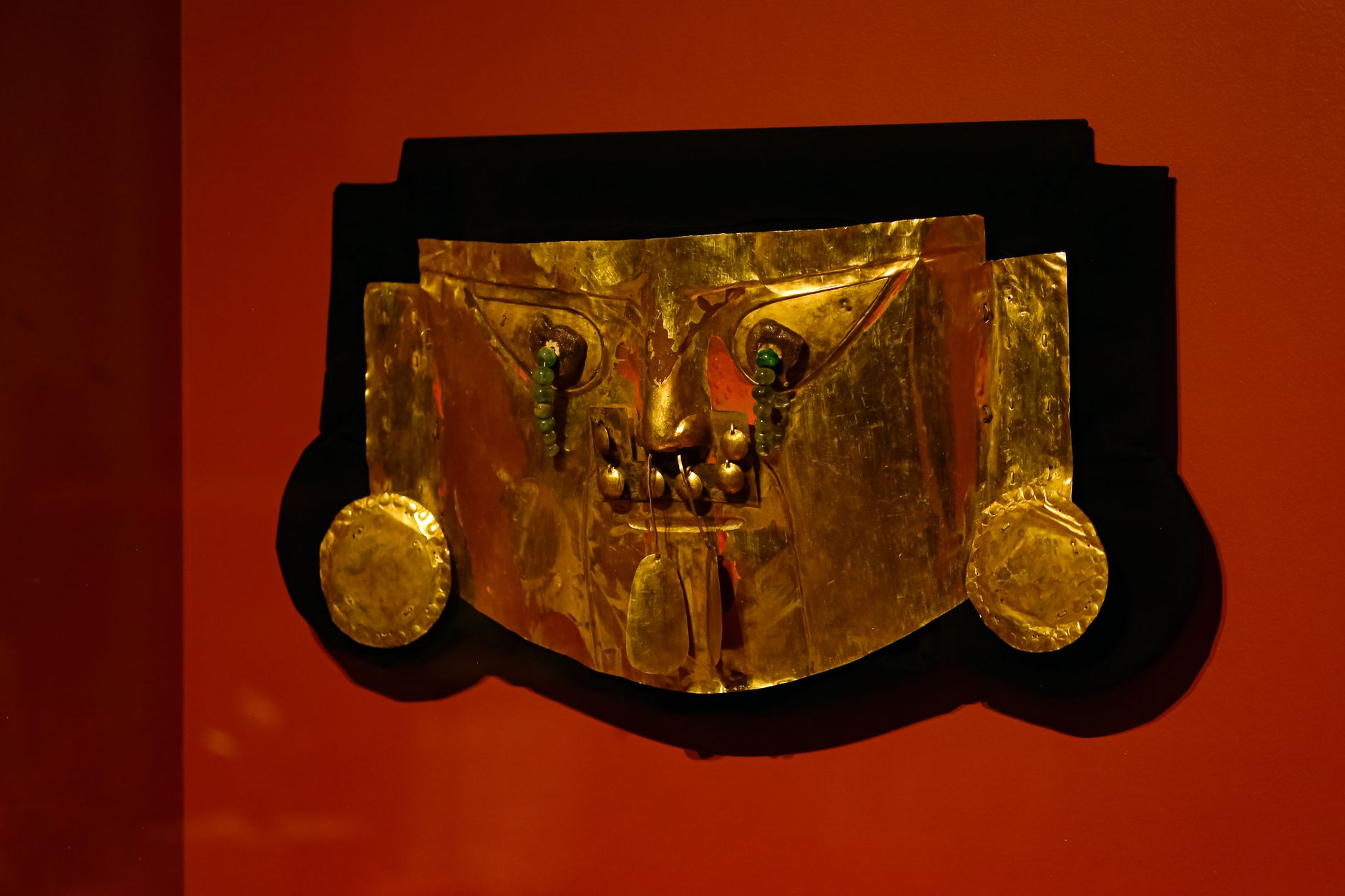
Valley of the Kings gallery panel: photo by Amr F.Nagy, via Wikimedia Commons (Public domain).