This article contains advertising. Our booking links are routed through a partner that adds commission tracking automatically, so if you book through one we earn a commission from the provider, at no extra cost to you. It never affects what we recommend. Affiliate disclosure
The Citadel of Saladin is the medieval fortress crowning Mokattam Hill, and a single ticket (around 550 EGP, roughly $11) gets you into all of it: the alabaster-clad Mosque of Muhammad Ali, two older mosques, three museums, and a wall-top terrace with the best free skyline in Cairo. Budget two to three hours, go late, and let the view do the heavy lifting.
I’ve sent friends here on their first afternoon in the city and on their last, and it works either way. The Citadel ties together 700 years of Egyptian rule in one walled compound you can actually walk across in an hour, and it sits high enough that on a clear day you can pick out the Pyramids of Giza on the western horizon. This is the practical, opinionated version of the Cairo Citadel of Saladin guide — the history that matters, what’s genuinely worth your time inside, the ticket and dress-code realities for 2026, how to get up there, and how to fold it into a full day of Islamic Cairo. It’s one of the cornerstone stops in our wider Cairo museums and cultural attractions guide.
From Saladin to Muhammad Ali: 700 years on one hill
Salah al-Din al-Ayyubi — Saladin to the West — started building here in 1176, choosing Mokattam Hill partly for its commanding height and partly, the story goes, because meat left out overnight stayed fresh up here in the breeze while it spoiled down in the city. Defensive logic and clean air, both. He never lived to see it finished; the fortress was completed under his successors, but his name stuck, and it has been Salah al-Din’s Citadel ever since.
What makes the place fascinating is that nobody ever tore it down and started over. Each dynasty just built on top of the last. The Mamluks expanded it heavily in the 14th century, especially under Sultan al-Nasir Muhammad, whose own mosque still stands inside the walls. The Ottomans garrisoned it after 1517. Then came Muhammad Ali Pasha in the early 1800s — an Albanian-born Ottoman officer who seized control of Egypt, modernised it ruthlessly, and is generally credited as the founder of modern Egypt’s ruling dynasty. He cleared away the crumbling Mamluk palaces and stamped his own monument on the skyline. For roughly 700 years, from the 12th century to the late 1800s, this hill was the seat of Egyptian government. That’s the through-line: one fortress, four eras, layered like sediment.
One dark footnote worth knowing before you go. In 1811, Muhammad Ali invited the surviving Mamluk leaders to a celebration at the Citadel, then had them ambushed and killed in the narrow passage by the Bab al-Azab gate. The massacre wiped out the Mamluk political class in an afternoon and cemented his hold on power. Stand near that gate and the history stops being abstract.
The Mosque of Muhammad Ali (the Alabaster Mosque)
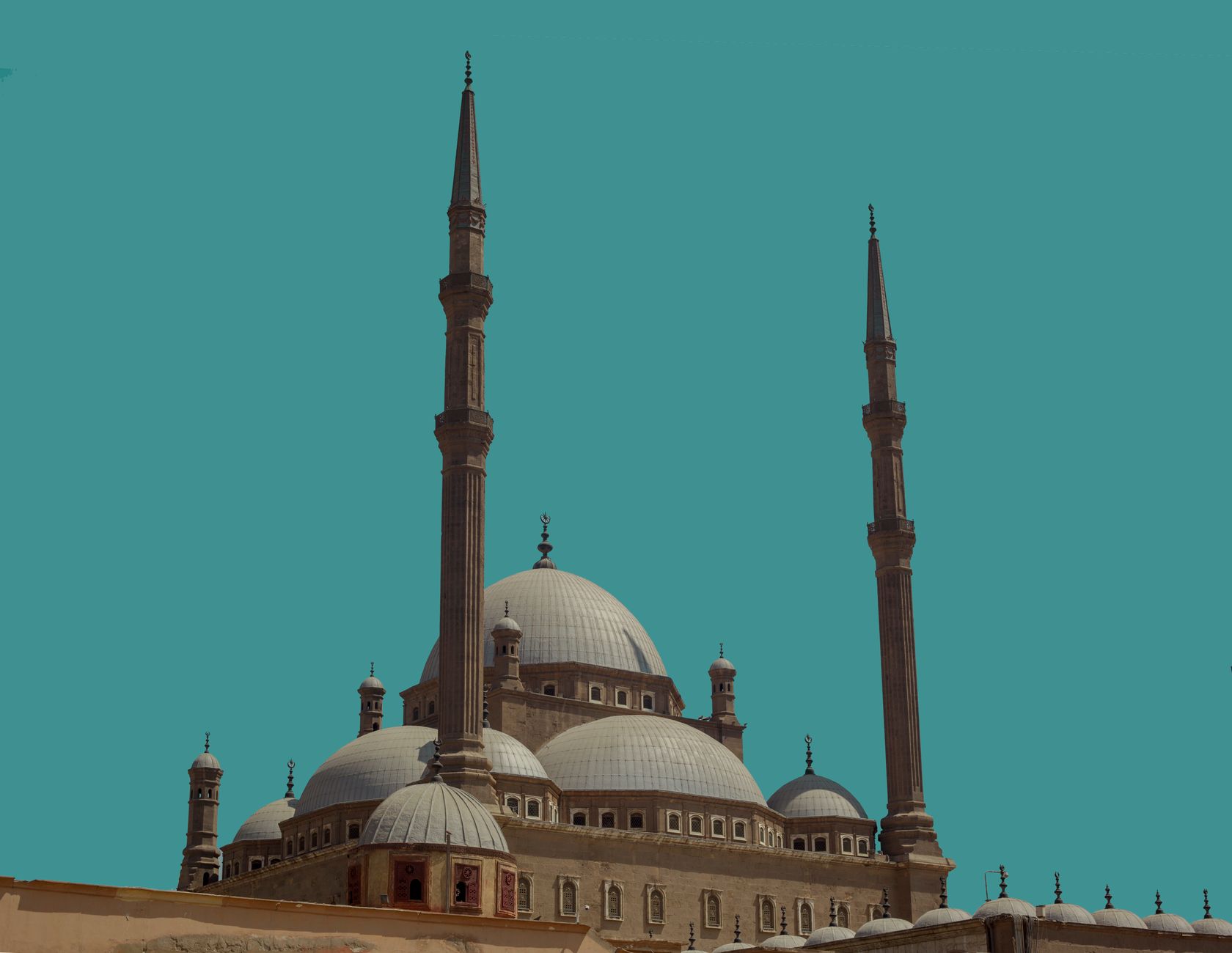
This is the headline, and it earns the billing. Built between 1830 and 1848, the Mosque of Muhammad Ali looks nothing like the rest of Cairo’s Islamic architecture — and that’s deliberate. Muhammad Ali wanted Istanbul, not Cairo. The design is pure Ottoman, modelled on the great imperial mosques of the Bosphorus, with a 21-metre central dome ringed by half-domes and cascading smaller ones, and two pencil-thin minarets rising about 84 metres — the tallest in Egypt. From across the city, those twin spires are how you find the Citadel on the horizon.
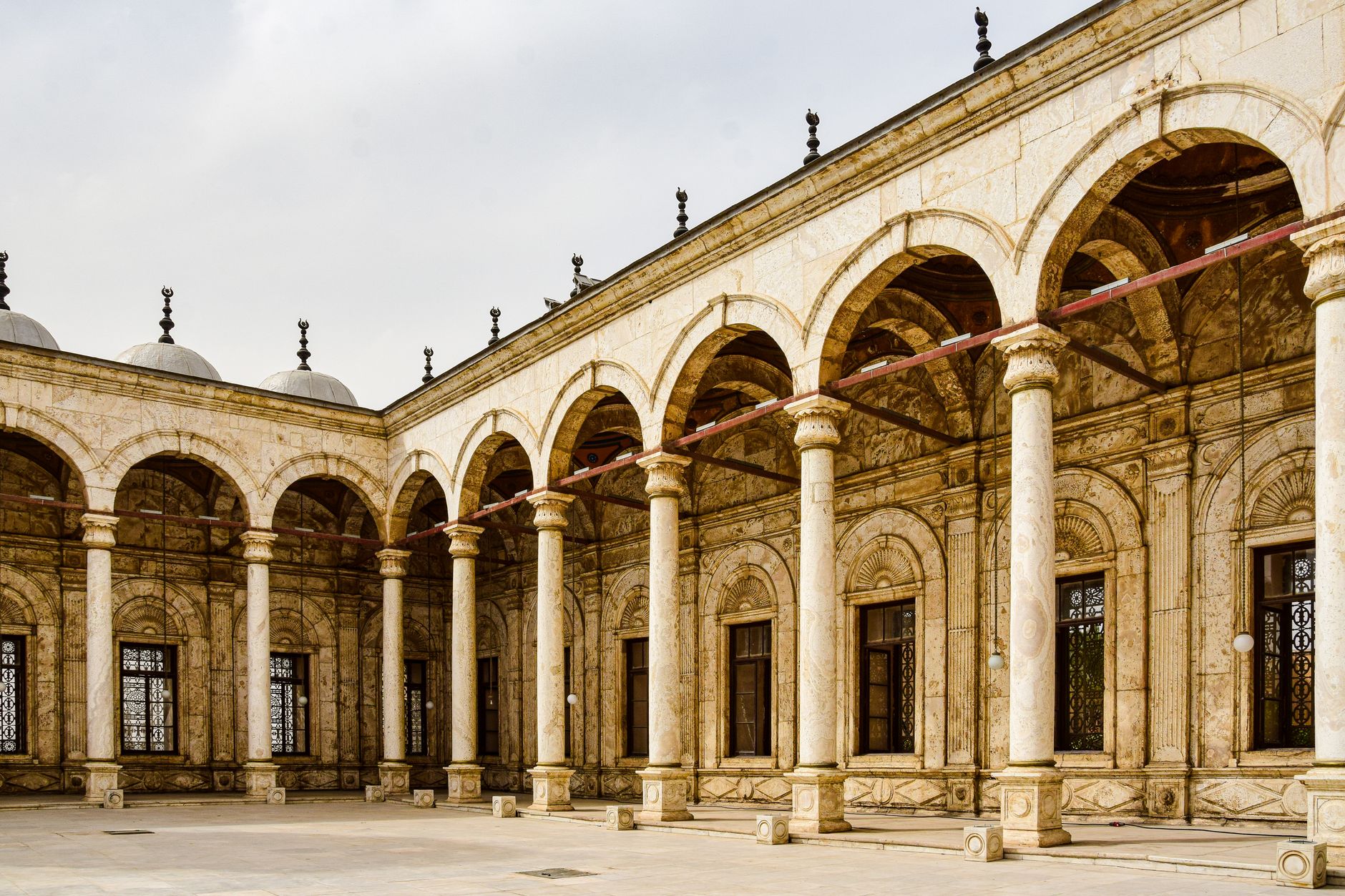
The “Alabaster Mosque” nickname comes from the pale marble-like alabaster panelling that sheathes the lower walls of the courtyard and interior. Step inside and the scale hits you: a vast carpeted prayer hall under that soaring dome, concentric rings of hanging lamps that drop low over your head, Quranic calligraphy worked into the ceilings, and Muhammad Ali’s own tomb tucked behind a bronze screen in one corner. It’s grand rather than delicate — built to impress, and it does.
Don’t miss the courtyard clock tower. It was a gift from King Louis-Philippe of France in 1846, sent in thanks for the Luxor obelisk that now stands in the Place de la Concorde in Paris. The catch: the clock arrived damaged and, by most accounts, never reliably kept time. Egypt traded a 3,000-year-old obelisk for a broken French clock — locals have been making that joke for nearly two centuries.
What else is inside the walls
Most visitors photograph the big mosque and leave, which is a shame, because the same ticket covers a lot more. Here’s what’s actually worth your time:
- The Mosque of al-Nasir Muhammad — a 14th-century Mamluk mosque, far older and plainer than Muhammad Ali’s, with a wonderful open courtyard and minarets tiled in green and blue faience. If you want to see real Cairene Islamic architecture rather than an Ottoman import, this is the one.
- The Sulayman Pasha Mosque — a small, early-Ottoman mosque from the 1520s, often quiet. Quick stop, lovely painted dome.
- The National Military Museum — housed in a former royal palace, it runs from pharaonic warfare through to the modern army, with tanks and aircraft parked outside. Worth a wander even if military history isn’t your thing; the palace rooms alone are something.
- The Police Museum — small and genuinely odd, with exhibits on famous Egyptian crimes and a perch with one of the best Citadel viewpoints right beside it.
- The Carriage Museum — royal horse-drawn carriages from the 19th and 20th centuries, recently restored.
- Bir Yusuf (the Joseph Well) — a medieval well sunk an astonishing 87 metres down through solid rock, with a spiral staircase that once let animals walk down to haul water. An engineering marvel that almost nobody bothers with. Go look.
The view: Cairo from the walls
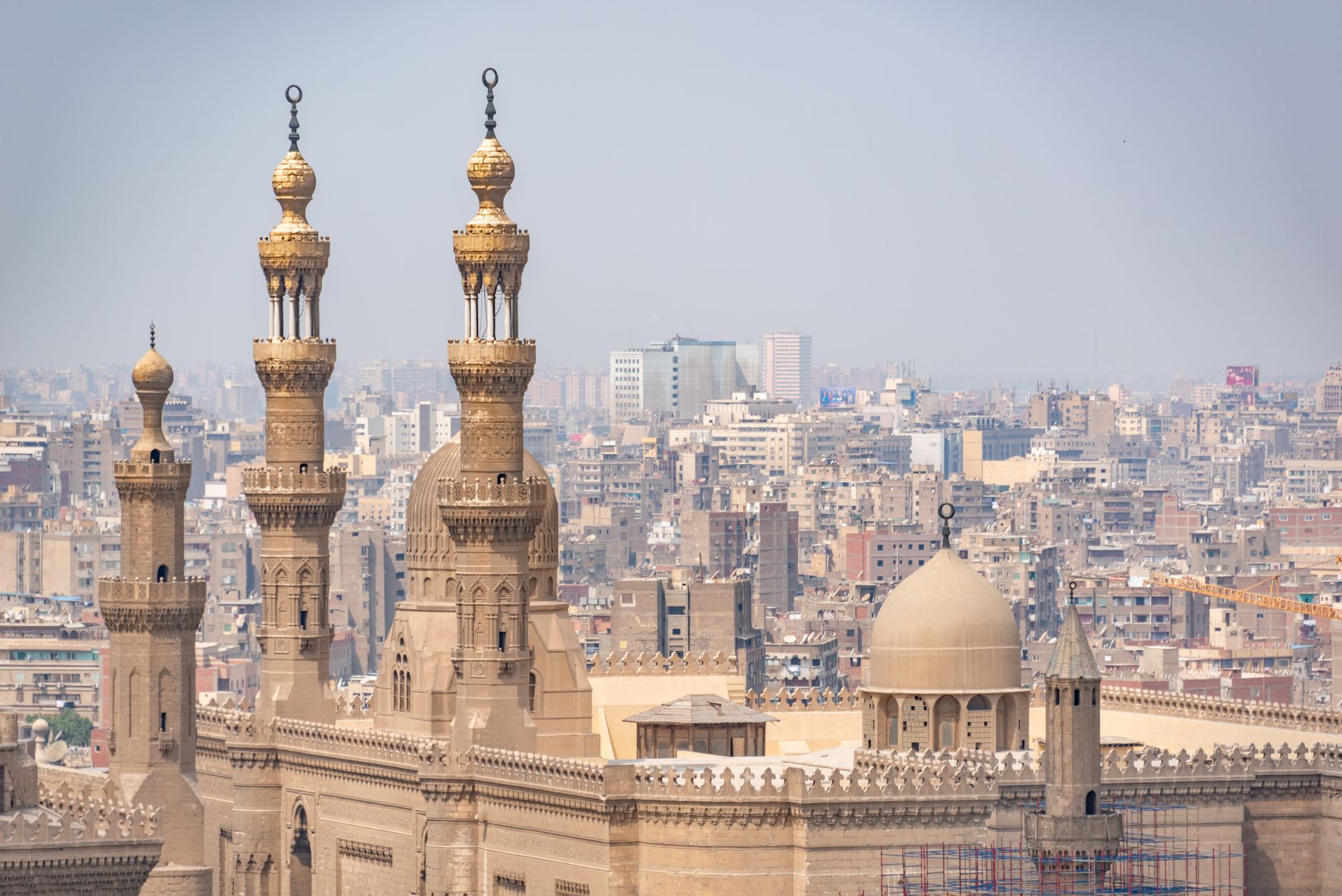
For my money, the terrace below the Alabaster Mosque is the single best vantage point in central Cairo, and it’s included in your ticket. The whole medieval city spreads out beneath you — a forest of minarets and domes, the long line of Sultan Hassan and al-Rifai mosques directly below, the modern sprawl beyond, and on a clear, low-pollution day the Pyramids of Giza as faint grey triangles on the western horizon. Haze is the enemy; mornings after rain or a windy late afternoon give you the cleanest shot. Come an hour or two before closing and the light turns gold across the domes. Photography is allowed throughout the complex, so bring a wide lens for the mosque interior and something with a bit of reach for the skyline.
If the terrace leaves you wanting more height, Cairo’s other great vantage point stands across the river on Gezira Island, where a lift ride to the lotus-shaped deck hands you the Nile, this hill and the Pyramids in one slow turn.
Tickets, hours and the card-only reality
One combined ticket covers everything inside the walls — all three mosques and all three museums — so there’s nothing extra to buy once you’re through the gate. Prices for 2026 (always subject to change at Egyptian sites):
| Ticket | Price (2026) |
|---|---|
| Adult (foreign visitor) | ~550 EGP (~$11) |
| Student (valid ISIC card) | ~275 EGP |
| Child under 6 | Free |
| Parking | ~10 EGP |
Hours: generally 9 AM to 5 PM, with summer months often running an hour later; last entry is usually around an hour before closing, so don’t roll up at 4:45. During Ramadan the Citadel closes earlier, mid-afternoon.
Here’s the thing first-timers get caught out by: as of 2026, nearly all Egyptian monuments and ticket offices are card-only — they no longer take cash at the window. Bring a Visa or Mastercard that works abroad and tell your bank you’re travelling so it doesn’t get declined. If your card fails, you’re stuck at the gate. There’s more on this and the rest of the on-the-ground etiquette in our notes on prayer times, dress and tipping.
A practical scheduling note: the Mosque of Muhammad Ali closes to visitors during the five daily prayer times — each closure lasts roughly half an hour — and shuts for about 90 minutes around Friday midday prayers. If you only have a short window, avoid Friday lunchtime, and check the rough prayer times for the day so you don’t arrive mid-closure.
What to wear
You’re entering working mosques, so the dress code is real, not a suggestion. Cover shoulders and knees; long trousers or a long skirt, and a top with sleeves. Women should carry a scarf to cover their hair before going inside the prayer halls — if you forget, scarves are usually available to borrow at the mosque entrance. Everyone removes their shoes before stepping onto the carpets (slip-ons save you a lot of fumbling). Beyond the mosques, the complex is open and exposed, the paths are uneven stone, and there’s very little shade — so comfortable walking shoes, a hat, sunscreen and a bottle of water make the difference between a pleasant visit and a hot, footsore one. Concessions inside are thin.
How to get there
The Citadel sits on Mokattam Hill in Islamic Cairo, southeast of the centre, and it is not on a metro doorstep — that’s the one slightly awkward thing about it.
- Uber or Careem is by far the easiest option. Reckon on 15–25 minutes and a low fare from central Cairo or Khan el-Khalili, longer (45–60 minutes) from out by the Giza pyramids. Have the app drop you at the main visitor gate, not a random spot on the ring road below.
- Metro doesn’t serve the Citadel directly. The nearest useful stations are El-Malek El-Saleh and Mar Girgis on Line 1; from either you’ll still want a short taxi or rideshare up the hill, as it’s a steep, traffic-heavy walk you won’t enjoy in the heat.
- On foot, the Citadel connects down to the Sultan Hassan and al-Rifai mosques immediately below, and from there you can walk the historic spine of Al-Muizz Street up toward Khan el-Khalili in around half an hour.
If the metro, white taxis and rideshare apps still feel like a black box, it’s worth reading up on how Cairo’s main sights string together before you go, so you’re not zig-zagging across town between stops.
Pairing it with Sultan Hassan and al-Rifai below
Don’t treat the Citadel as a one-and-done. Directly beneath it stand two of Cairo’s most jaw-dropping mosques, separated by a narrow pedestrian lane. The Sultan Hassan Mosque (1356–1363) is one of the great masterpieces of Mamluk architecture — colossal, austere, with four soaring vaulted halls around a central courtyard and acoustics that make a whisper carry. Facing it across the lane, the al-Rifai Mosque is far newer (completed in the early 20th century) and holds the tombs of Egypt’s last royal family and, oddly enough, the last Shah of Iran. They take a separate small entry fee and an hour or so combined, and visiting all three in one go is the classic Islamic Cairo afternoon.
A sensible full day looks like this: arrive at the Citadel mid-morning when it’s cooler, work through the mosques and a museum or two, break for lunch, then drop down to Sultan Hassan and al-Rifai and finish by walking Al-Muizz Street into Khan el-Khalili for mint tea at El Fishawy as the sun goes down. For more ways to string this quarter together with the rest of the city, our guide to things to do in Cairo is the place to start.
How long should you spend?
- Alabaster Mosque and the view only: 1.5 hours if you’re moving briskly.
- Citadel with a couple of mosques and one museum: 2.5–3 hours — my recommendation for most people.
- Everything, all three museums included: closer to 4 hours.
- Citadel plus Sultan Hassan and al-Rifai below: add an hour to whatever you’re doing inside.
Should you hire a guide? For 700 years of overlapping history, yes — a licensed Egyptologist turns a pretty fortress into a story you’ll actually remember, and the difference is stark. If you’re already planning a museum-heavy trip, it’s worth seeing how the Citadel slots in alongside the city’s big collections: the Grand Egyptian Museum out by Giza, the older Egyptian Museum on Tahrir Square, and, for a completely different chapter of the city’s faith history, the Coptic Museum in Old Cairo.
Cairo Citadel FAQ
How much does it cost to visit the Citadel in 2026?
Around 550 EGP (roughly $11) for foreign adults, about 275 EGP for students with a valid ISIC card, and free for children under 6. One ticket covers all three mosques and all three museums inside. Payment is card-only at the gate.
What’s the most famous building inside?
The Mosque of Muhammad Ali, nicknamed the Alabaster Mosque, built 1830–1848 in pure Ottoman style. Its 84-metre twin minarets are the tallest in Egypt and the easiest way to spot the Citadel from across the city.
Can you really see the Pyramids from the Citadel?
Yes, on a clear day. From the terrace below the Alabaster Mosque the Pyramids of Giza appear as faint shapes on the western horizon. Haze often hides them, so you’ll have the best luck after rain or on a breezy afternoon.
How do I get to the Citadel?
Easiest is Uber or Careem — 15–25 minutes from central Cairo. The metro doesn’t reach it directly; from El-Malek El-Saleh or Mar Girgis station you’ll need a short taxi up Mokattam Hill.
What should I wear?
Cover shoulders and knees; women should bring a scarf for their hair inside the mosques, and everyone removes shoes before entering prayer halls. Add a hat, sunscreen and comfortable shoes for the exposed, uneven grounds.
How long do I need, and when should I go?
Allow 2.5–3 hours for a proper visit. Late afternoon is best for the light and the views, but avoid Friday midday when the main mosque closes for about 90 minutes around prayers.
The short version
One hill, four dynasties, a single ticket, and the finest panorama in central Cairo — the Citadel rewards anyone willing to slow down and look. Go in the afternoon, dress for the mosques, bring a card that works, and walk down afterwards to Sultan Hassan and al-Rifai to round out the day. When you’re ready to plan the rest of your culture stops, head back to our Cairo museums and cultural attractions guide for the full picture.
The Citadel works best as the last stop of a day spent in the medieval city rather than as a destination in its own right — arrive in the late afternoon, when the light warms and the haze often lifts enough to show the pyramids from the walls. That is how we sequence it in our two days in Cairo itinerary.