This article contains advertising. Our booking links are routed through a partner that adds commission tracking automatically, so if you book through one we earn a commission from the provider, at no extra cost to you. It never affects what we recommend. Affiliate disclosure
The single most useful thing to know about Cairo etiquette is that almost nothing here is about rigid rules. Egyptians forgive nearly any honest mistake from a visitor who is clearly trying. Cover your shoulders and knees, learn three words of Arabic, accept the tea, carry small notes for tips, and ask before you photograph a person. Do those five things and you will sail through the city with the kind of warmth most tourists never see.
Cairo is a city of more than 22 million people, layered with Pharaonic pride, Islamic tradition, Coptic Christian heritage and a fast, modern street life. It can feel loud and pushy at first, but underneath runs an old code of hospitality that rewards anyone who pays attention. This guide is the practical version of that code, for a traveller who wants to fit in rather than stand out, and it pairs well with our top-to-bottom guide to the city for the bigger picture.
How not to stand out (or give offence)
Standing out in Cairo is rarely about your face or your accent. It is about a handful of small signals. Skimpy clothing reads as either disrespectful or naive. Eating a sandwich while walking during Ramadan reads as careless. Pointing a camera at a woman without asking reads as rude. None of these get you in real trouble, but they all add friction and attract the exact attention most travellers say they want less of.
The flip side is just as true. Greet a shopkeeper in Arabic and watch the price soften and the smile widen. Dress modestly and the staring drops noticeably. Learn the rhythm of a Cairene conversation, which always opens with a few rounds of “how are you, how is the family, thank God” before anyone gets to the point, and you stop feeling rushed by what is actually a courtesy. Patience and warmth count for far more here than efficiency, and rushing the pleasantries is the genuine faux pas, not fumbling the grammar.
One cultural concept worth carrying in your head is ibn el-balad, literally “son of the country,” the idea of someone who embodies generosity, wit and loyalty. The other is karam, the deep tradition of hospitality that means a near-stranger might invite you home for dinner and absolutely mean it. When a vendor offers tea before talking prices, that is usually karam first and sales second. Read it generously and you will rarely be wrong.
Karam and the right-hand rule are the two habits that carry you furthest, and there are perhaps a dozen more worth knowing before you arrive. Our wider rundown of Egyptian customs for visitors works through greetings, shoes, gift-giving and the small gestures that read as rude without meaning to.
Dress code: what to actually wear in Cairo
Cairo is conservative by Western standards but pragmatic in practice. Nobody expects you to dress like a local. They do expect you to keep shoulders and knees covered in most public places, and the heat makes loose, breathable clothing the smart choice anyway. Think cotton and linen, not Lycra.
For women
The reliable standard, and the one every honest 2026 guide still repeats, is shoulders and knees covered in public. Loose tops, maxi dresses, long skirts and linen trousers all work, stay cool, and cut down on unwanted attention at the same time. Sleeveless tops, short shorts and very tight clothing will draw stares, especially in traditional areas like Islamic Cairo, around Khan el-Khalili, and in ordinary residential neighbourhoods away from the tourist track.
Carry a lightweight scarf at all times. It is the single most useful item in your Cairo bag: it covers your hair for a mosque, drapes over your shoulders when you feel exposed, doubles as sun protection, and adds a layer in over-air-conditioned restaurants. In the cosmopolitan pockets, like Zamalek, Garden City, Maadi and the big malls, you will see plenty of Egyptian women in Western dress and standards relax considerably. Even there, a little modesty is appreciated and costs you nothing.
For men
Long trousers are the default in the city. Chinos or lightweight cotton trousers are fine everywhere and signal respect at mosques, churches and in conservative districts. Shorts are increasingly common on younger Egyptians in casual settings, but a vest with no shirt reads as too casual for the street. At hotel pools and beach resorts, normal swimwear is completely fine.
At mosques and churches
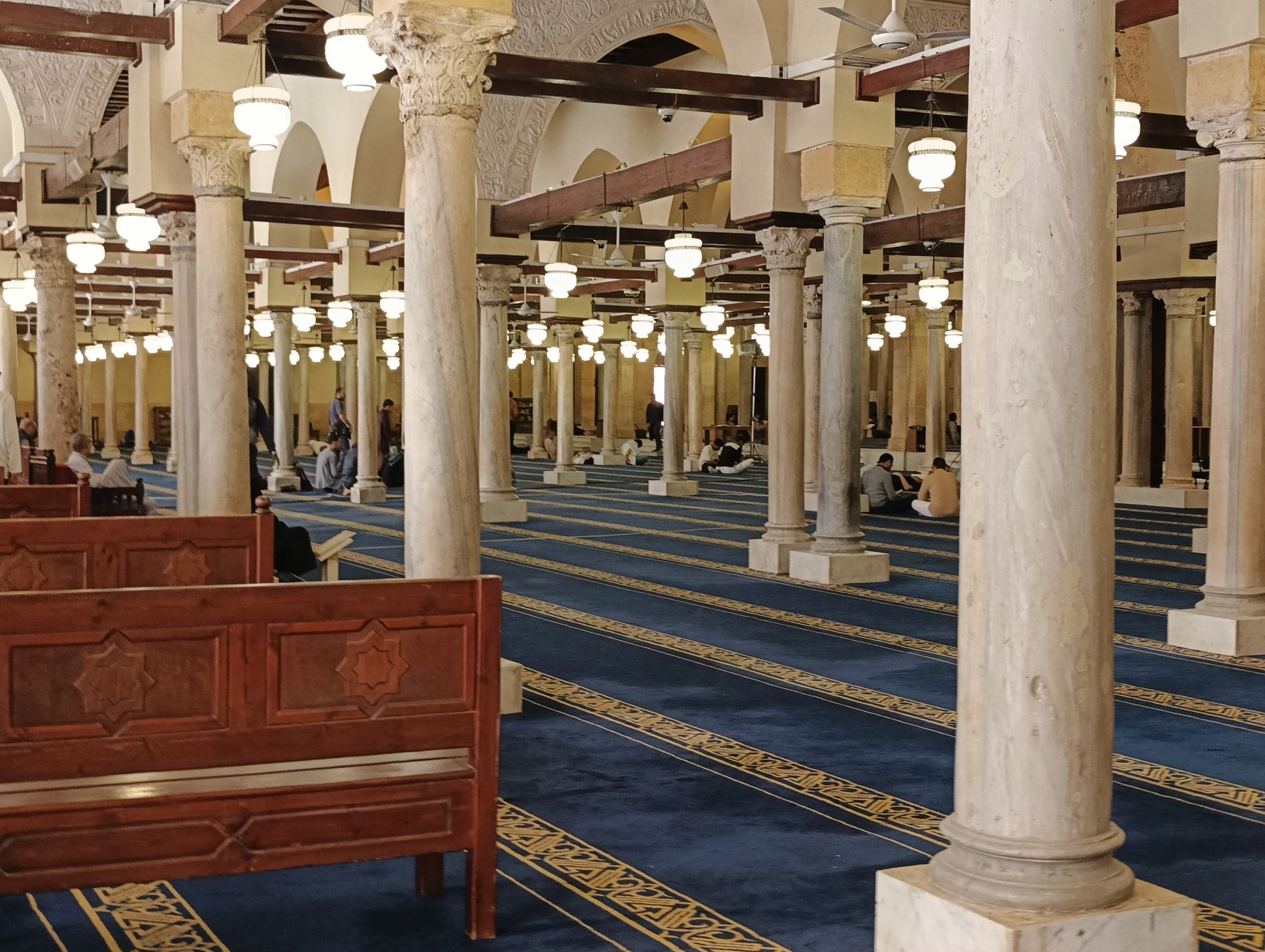
Mosques have the strictest expectations and they apply to everyone. Men: long trousers and a shirt that covers the shoulders, sleeves past the elbow ideally. Women: hair covered with a scarf, arms covered to the wrist, legs covered with a long skirt or trousers. Shoes come off before you step onto the prayer-hall carpet, so slip-ons save you a fiddly moment. Big mosques such as Al-Azhar and Sultan Hassan usually keep loaner robes and head coverings for visitors who turn up underdressed, but bringing your own scarf is simply more comfortable. Coptic churches are a touch more relaxed, though covered shoulders and knees are still expected for both sexes. There is a fuller rundown of the major religious sites in our guide to Cairo’s museums and cultural attractions.
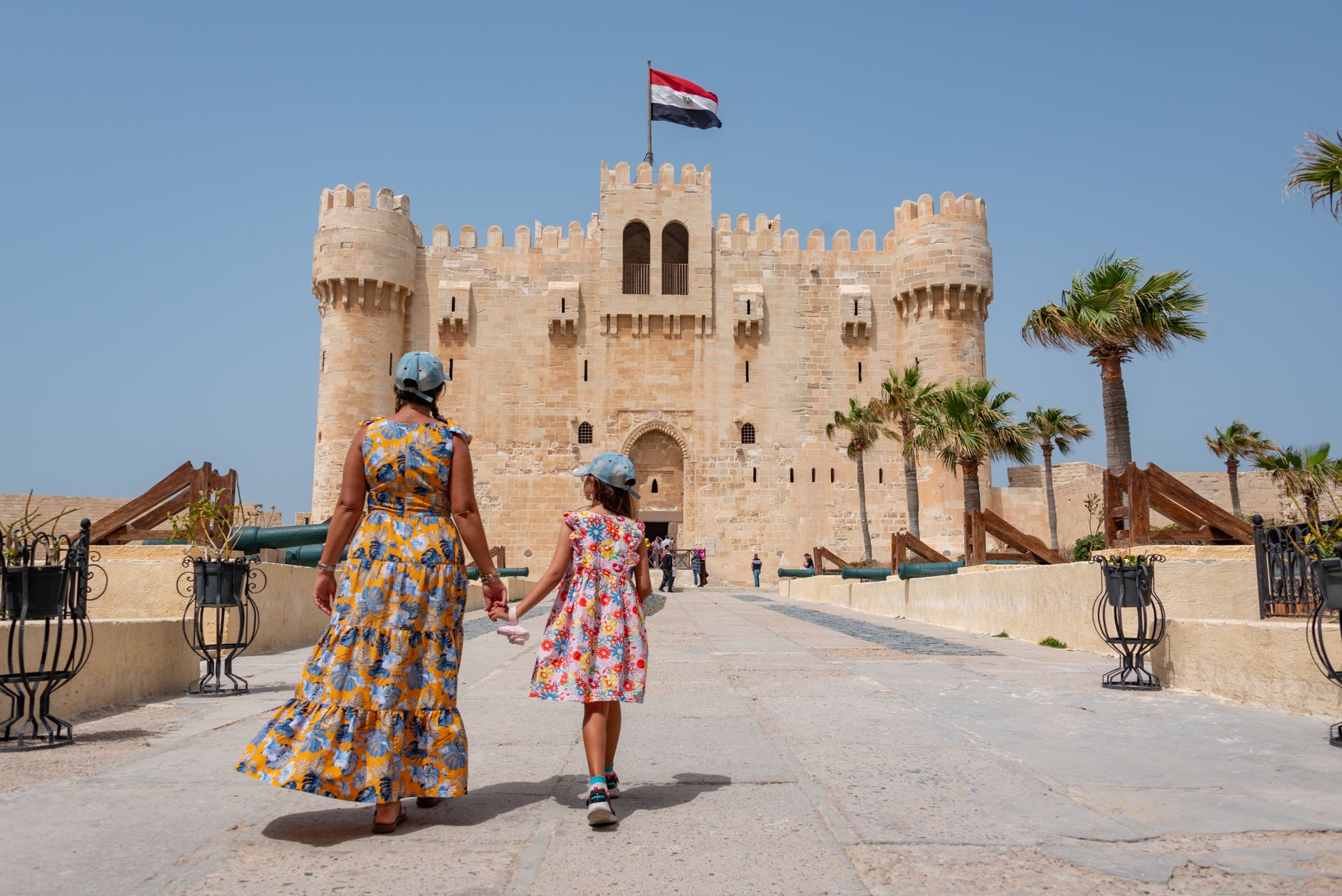
Packing is where most of this gets decided, and the mistakes are predictable: shorts on men at mosque doors, one scarf for a week of sites, sandals on Islamic Cairo’s broken pavements. We break down what to actually put in the suitcase season by season, including the mosque-door rules that catch men out.
Greetings and the Arabic that actually helps
You do not need to speak Arabic to travel Cairo well, but a dozen words will change every interaction you have. Start with the universal greeting: as-salamu alaykum (peace be upon you), answered with wa alaykum as-salam. It crosses religious lines and is used by Muslims and Christians alike. Drop it when you enter a shop or meet someone and you have already made a good impression.
Here is the short list worth memorising:
- Sabah el-kheir / masa’ el-kheir — good morning / good evening
- Shukran — thank you; afwan — you’re welcome
- Min fadlak (to a man) / min fadlik (to a woman) — please
- La shukran — no, thank you (your gentle, all-purpose decline for persistent vendors)
- Bikam? — how much? (essential in any market)
- Mumkin soora? — may I take a photo?
- Insha’Allah — God willing, used constantly about anything in the future
- Alhamdulillah — thank God, used for gratitude, relief, and “I’m full, thanks”
- Khalas — enough / that’s it / done, a handy word for ending a haggle
On the physical side: handshakes between men are warm and can last longer than you expect, sometimes followed by a light cheek kiss between friends. When a man meets a woman, he should wait to see if she offers her hand first. Plenty of more conservative women prefer not to shake hands with men outside the family, and the right response is simply to place your right hand over your heart, which is a graceful gesture of respect that works for everyone. Egyptians stand closer in conversation than many visitors are used to; stepping back repeatedly can read as cold. Eye contact signals attention and respect, though prolonged staring, particularly at women, does not.
One thing to keep light: Egyptians love to talk about family, food, football and their city, and they will happily go all day on Egyptian history. Compliments about the food and the hospitality always land. Tread gently around politics, criticism of religion, and the Israeli-Palestinian conflict, which is an emotionally charged subject for most people here. Criticising Egyptian leaders or the military in public is best avoided entirely, regardless of anyone’s private views.
Ten or fifteen phrases is genuinely the whole investment here, and the return is disproportionate: prices soften, conversations open, and drivers stop treating you purely as a fare. We list the Arabic worth memorising before landing, with rough pronunciation and the situation each phrase covers.
Religion and Ramadan: visiting during the holy month
Roughly 90 percent of Egyptians are Sunni Muslim and most of the rest are Coptic Christian, and religion is woven through ordinary daily life. You will hear the call to prayer five times a day from mosques all over the city, and people pausing to pray is completely normal. None of this requires anything of you beyond basic courtesy: lower your voice near a mosque at prayer time, never walk in front of someone who is praying, and observe rather than interrupt.
Mosque and church etiquette
Visit mosques outside prayer times where you can, and steer clear of the Friday midday prayer, which is the busiest and most important of the week. If prayers start while you are inside, move quietly to the side and wait. Photography varies by mosque, so look for signs or ask, and never photograph people in the act of praying. In Coptic churches, dress modestly, sit quietly in the visitor area during services, and don’t take part in communion or other sacraments, which is exactly what is expected of non-Coptic visitors.
Visiting during Ramadan
Ramadan in 2026 ran from the evening of 18 February, with the first day of fasting on 19 February, through to around 20 March, with Eid al-Fitr following. Dates shift each year with the lunar calendar and depend on the moon sighting, so confirm before you book if your trip falls near that window. Visiting during Ramadan is genuinely rewarding if you adjust your rhythm, and the daytime hours in late winter are mild, which helps.
You are not expected to fast. What is expected is discretion in public during daylight: avoid eating, drinking or smoking on the street, on public transport, and in markets while people around you are fasting. Inside your hotel, a licensed restaurant, or anywhere set up for tourists, eating and drinking by day is completely fine. Many local eateries close until iftar, the sunset meal, so plan your daytime food around hotel and tourist restaurants. Some attractions trim their hours, often closing an hour or two earlier, so check ahead.
The payoff comes after sunset. The streets fill with festive lanterns called fanous, Ramadan tents serve traditional drinks like qamar al-din (apricot juice), and the whole city turns social and celebratory between iftar and the pre-dawn meal, suhoor. Evenings, in short, become the best time to be out. If your trip overlaps the holy month, our guide to Egyptian food in Cairo is worth a look for what to seek out once the fast breaks.
Timing a trip around the holy month changes almost everything about a day here: opening hours, restaurant availability, traffic at sunset, the mood after dark. Our guide to visiting Cairo during Ramadan settles what stays open, what shifts, and which evening traditions justify staying up for.
Baksheesh: how tipping really works
Baksheesh is the small-tips system that oils almost every service interaction in Cairo, and it is normal and expected rather than optional charity. Service wages are low, so these little payments are a real part of people’s income. The trick to staying comfortable with it is simple: keep a stack of small notes on you at all times. Five, ten and twenty-pound notes are the workhorses.
Here is a rough field guide for 2026. Treat these as ballpark figures, not fixed tariffs; round to whatever feels right for the service.
| Who | Customary baksheesh |
|---|---|
| Restaurant server (on top of any service charge) | 5–10% extra, given directly |
| Casual / street eatery | Round up, or 10–20 EGP |
| Hotel porter | 20–50 EGP per bag |
| Housekeeping | 20–50 EGP per day, left in the room |
| Bathroom attendant | 5–10 EGP |
| Tour guide | ~USD 10–15 per person per day |
| Driver | ~USD 5–8 per day |
| Mosque shoe-minder / site helper | 10–20 EGP |
A practical note on currency: for daily small tips, Egyptian pounds are simpler and more useful to the person receiving them. For guides and drivers, US dollars or euros are often appreciated because the value is more stable, though pounds are always fine. Restaurants frequently add a service charge of around 12 percent, but it does not always reach the staff, so a few percent directly to your server is the kind thing to do. Hand baksheesh with your right hand and a smile. It runs on mutual respect, not begging, and once you relax into it the whole thing feels natural. For the bigger money picture, including ATMs and cash strategy, see our Cairo budget and money guide.
Photography etiquette
Good news first: as of 2026, personal photography with a phone, tablet or standard camera is free in public spaces and at archaeological sites across Egypt, so you no longer pay a separate snapping fee just to shoot the streets or the monuments. That covers the fun stuff. The rules that remain are about people and security, and they matter.
Always ask before photographing a person, especially women, children and anyone in traditional or religious dress. “Mumkin soora?” does the job, and most Cairenes are delighted to be asked and will happily pose. Photographing someone who has said no, or who clearly looks uncomfortable, is a real breach of etiquette here. In markets, snapping a stall’s goods at length without buying anything irritates vendors, so make a small purchase if you have been shooting their wares.
The hard line is security infrastructure. Do not photograph military sites, police, checkpoints, government buildings, or bridges over the Nile. This is taken seriously and can mean your device is searched, your photos deleted, or worse, with detention a genuine possibility. When in doubt, put the camera down and ask. Inside museums, policies vary; non-flash photography is generally fine at the Grand Egyptian Museum and the Egyptian Museum with a standard ticket, while some special exhibitions still charge a photo permit. There are more specific tips for monument shots in our Pyramids of Giza visitor guide.
The permit rules are stricter than the etiquette, and they change by site: tripods, professional bodies, drones and video all sit in different categories. Our breakdown of where cameras are actually allowed lists the museums that charge a photo fee and the places where a lens gets you stopped.
Women travellers: the honest version
Cairo is broadly safe for women, including solo travellers, but it would be dishonest to pretend street harassment does not exist. The reality most experienced travellers report is verbal comments, staring and persistent vendor attention, concentrated in crowded areas and markets, rather than anything physically threatening. It is manageable, not dangerous, and it drops off sharply outside the busiest tourist zones.
A few things genuinely help. Dressing modestly cuts the attention noticeably. A wedding ring, real or not, earns a little more social distance, since married women are afforded more respect. For getting around, use Uber or Careem rather than flagging street taxis, especially after dark; your route is tracked and there is no fare argument. On the metro, the first two carriages of every train are reserved for women, marked with pink signs on the platform and firmly enforced by staff and passengers alike, and they are a calm refuge from rush-hour crush. If someone is persistent, a firm imshi (go away) is effective, and don’t be shy about enlisting nearby people or staff. Carry yourself with confidence even when you are not feeling it; chin up, eyes up, keep moving. Our wider guide to where to stay in Cairo can help you pick a neighbourhood that feels comfortable to base yourself in.
None of this is the full picture for a woman travelling alone, which deserves more than one section. There is a longer honest take on solo female travel covering harassment realities, what to wear on a crowded metro, which neighbourhoods feel easiest after dark, and how repeat visitors handle vendor pressure.
Haggling without the headache
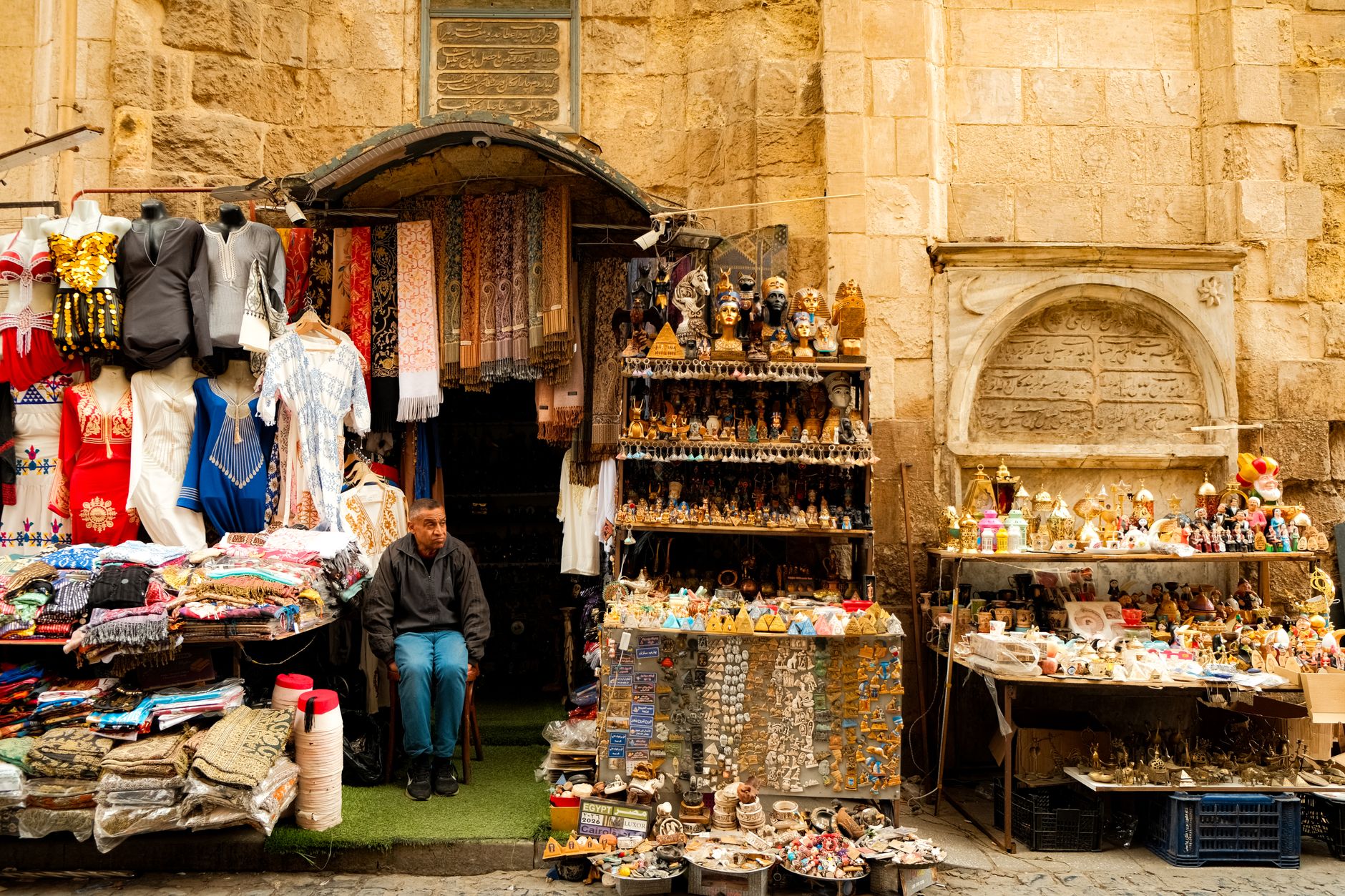
In Cairo’s markets, haggling is not just tolerated, it is half the fun and a social ritual in its own right. The mechanics are simple: the first asking price is a starting point, not a real number. Counter low, somewhere around 40 to 50 percent of the opener, and work toward a middle. Keep it light and good-humoured throughout, because aggressive bargaining backfires here; this is a game, not a fight.
Walking away is your strongest and most polite move. If the vendor calls you back with a better price, you know there is still room. If they let you go, the price was probably fair. Before you commit to anything in Khan el-Khalili, wander a few stalls selling the same thing to learn the price range, and watch your bill closely, since “gift” items can quietly appear on the total. Fixed-price shops do exist in the malls and some Zamalek and Maadi boutiques, where haggling is not expected and trying to will only confuse people. For the where and what of shopping, our Cairo shopping and markets guide covers the souvenirs worth buying and the ones to skip.
Hospitality, invitations and dining manners
If an Egyptian invites you home, treat it as the honour it is, because karam runs deep and the invitation is almost always sincere. Bring a small gift: pastries, good chocolates or fruit all work well, while flowers are less of a thing here. Take your shoes off at the door unless told otherwise. Expect far more food than anyone could finish, since abundance is the whole point. Try everything, praise it generously, and accept a second helping to please your host, but you don’t have to clear your plate. Declining a third round with a warm “alhamdulillah” (thank God, I’ve had plenty) is perfectly polite.
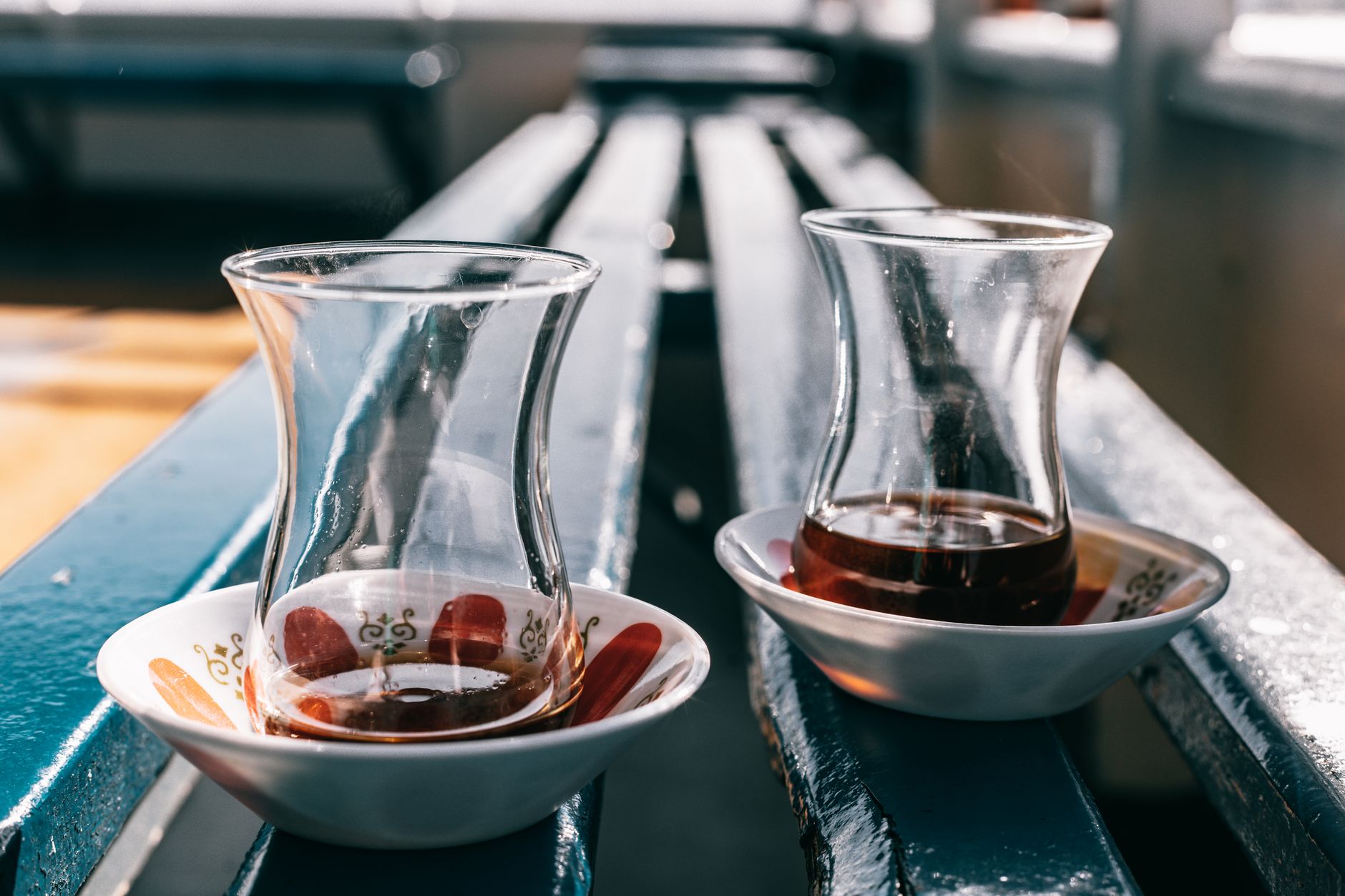
At the table, eat with your right hand. The left is traditionally considered unclean for passing food, and this is observed even by people who are not especially religious. If you are left-handed, make the effort with your right for communal dishes; cutlery in either hand at a formal place setting is fine. And if someone offers you tea or coffee, accept at least one cup. Egyptian tea comes strong and very sweet in a small glass unless you ask for sukkar khafif (light sugar) or min gher sukkar (no sugar); Turkish coffee arrives in a small cup with the grounds left to settle. Refusing hospitality repeatedly is one of the few things that can quietly offend, so when in doubt, say yes to the tea.
Bring children into that equation and the hospitality goes up a level, with waiters fussing and strangers offering sweets before you have sat down. There is a fuller account of travelling here with children covering pushchair-hostile pavements, which sites hold young attention, and realistic daily pacing.
Alcohol and conservative norms
Alcohol is legal and available to tourists in Cairo, but it lives in defined spaces rather than out on the street. You can buy it at licensed shops (the Drinkies chain is the most widespread), at airport duty-free on arrival, and at hotel bars and licensed restaurants. You can drink it in those licensed venues, on many Nile cruises, and in your hotel. What you cannot do is drink in public, meaning streets, parks, public transport or public beaches, which can lead to a fine or worse. Public drunkenness goes down very badly in a conservative society, so keep it low-key, and avoid drinking anywhere near mosques or in obviously traditional neighbourhoods.
During Ramadan, alcohol service is reduced and discreet, sometimes paused in daylight hours, so don’t expect business as usual. More broadly, Egypt is socially conservative, and a little restraint goes a long way: keep public displays of affection minimal, dress with the room you are in, and you will avoid almost all friction.
Public behaviour and a few hard “don’ts”
Most of getting Cairo right is just good manners turned up a notch, but a handful of specifics are worth committing to memory because they are easy to get wrong:
- Don’t show the soles of your feet or shoes to anyone; it reads as a real insult in Arab culture, so mind how you sit.
- Don’t point at people with a single finger; use an open hand.
- Don’t blow your nose loudly at the table.
- Don’t eat, drink or smoke openly on the street during Ramadan daylight.
- Don’t criticise Islam, Egyptian politics or the military in public conversation.
- Don’t photograph anything military, police or security-related, ever.
- Don’t assume a woman in a headscarf wants to discuss her clothing, or that it implies anything about her at all.
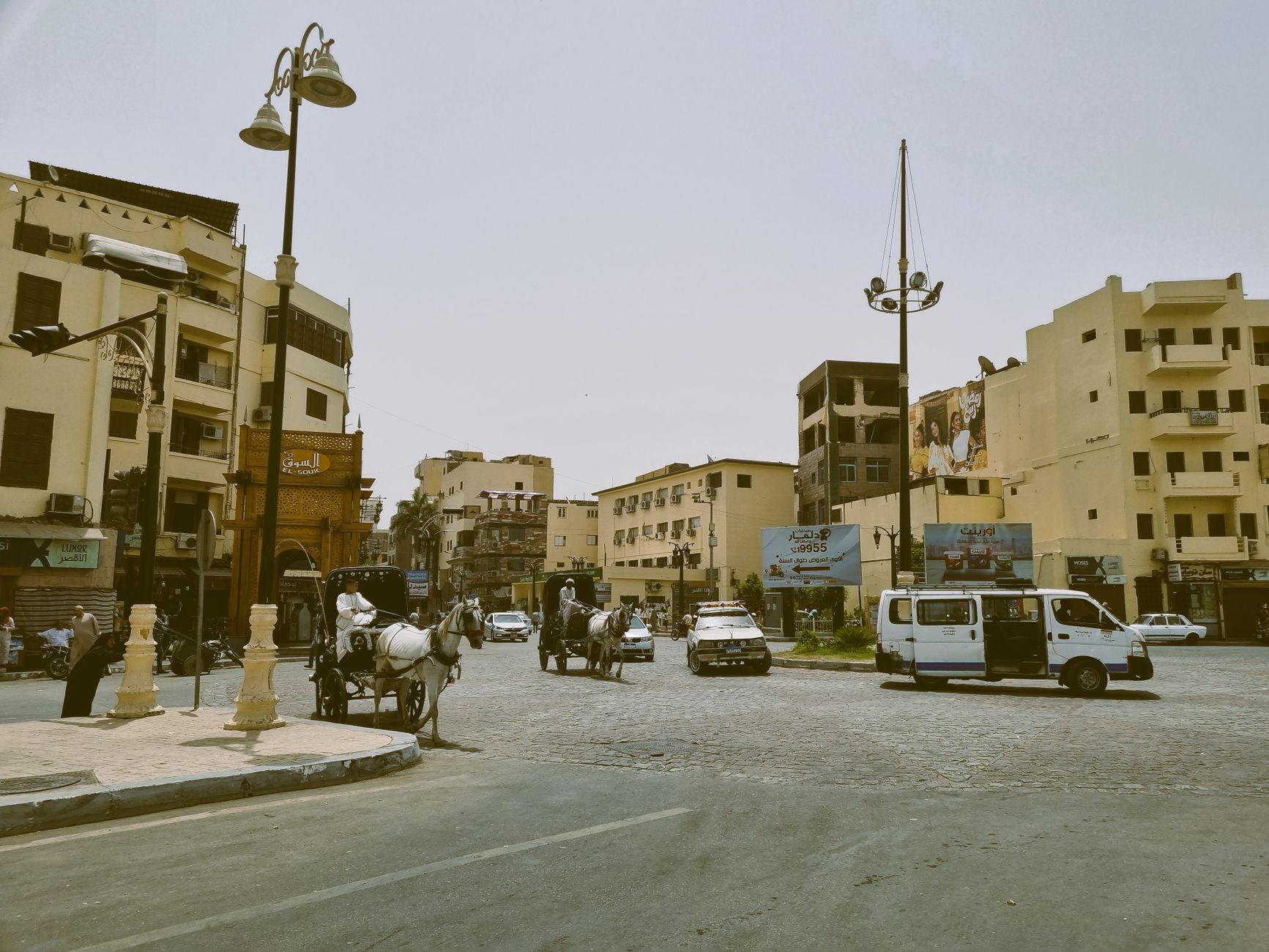
On the street itself, two practical realities. First, the traffic: Cairo has few working pedestrian signals and cars rarely stop for you. The local method is to step in deliberately and walk at a steady, predictable pace so traffic flows around you, never running or stopping suddenly. If that feels too much, cross alongside a local or use a pedestrian bridge. Second, the noise: Cairo is genuinely one of the world’s loudest cities, and earplugs or noise-cancelling headphones make a real difference if your room faces a busy street. Build in a quiet retreat or two, like Al-Azhar Park or a late-afternoon felucca on the Nile.
Two hazards in this section, the traffic and the dust, are the ones most likely to send you looking for a pharmacy, and what happens next, from stomach trouble to which private hospitals take walk-ins, sits in our rundown of healthcare for visitors.
Common scams and how to handle them gracefully
Like any big tourist city, Cairo has its scams. None of them are sinister once you can see them coming, and the same calm, friendly “la shukran” defuses most of them. Knowing the classics in advance lets you stay relaxed instead of suspicious of everyone, which would be a shame in a city this hospitable.
The “it’s closed” guide
Someone near a major site tells you it is closed for prayers, renovation or a holiday, and offers to walk you to a “better” entrance or shop instead. The site is almost always open exactly as scheduled. Smile, say no thank you, and head for the official entrance. The same goes for self-appointed guides who fall into step beside you, narrate a few sights, then ask for money; a polite decline at the very start saves the awkward bit later.
The papyrus and perfume detour
A taxi driver or friendly stranger suggests a visit to their “uncle’s” papyrus factory or perfume shop as a cultural experience. Some are legitimate, but the referrer earns a commission baked into inflated prices. Visit shops on your own rather than through a stranger’s introduction. Quick tell for papyrus: real papyrus is made from the plant, has visible layered fibres when you hold it to the light, and doesn’t crack when rolled, while cheap banana-leaf imitations are brittle and printed-uniform.
Taxi and camel-ride pricing
The “broken meter” is the old taxi standby, followed by an inflated fare on arrival. Sidestep it entirely with Uber or Careem, which run all over Cairo with transparent pricing. If you do take a street taxi, agree the fare before you get in, or type the number into your phone’s calculator and show the driver so there is no “misunderstanding” later. At the Pyramids, camel and horse operators love to quote a low price to get you on, then demand a much higher one to bring you back, so always agree the full price including the return before you mount, ideally with the number written down. Our guide to things to do in Cairo flags the experiences where this comes up most.
The shoe trick and “free” gifts
Someone “accidentally” flicks something onto your shoe, then offers to clean it for a fee, or presses a small “gift” into your hand and demands payment once you’ve accepted it. If something lands on your shoe, just walk on and deal with it yourself later. If a gift appears unbidden, smile, hand it straight back, and keep moving. Firmness with a smile is the whole skill.
Papyrus shops, the invented museum closure, the meter that mysteriously stops working: the repertoire is finite and the amounts are usually small. Our full catalogue of Cairo scams and the fixes ranks them by how often travellers actually report them and gives the sentence that ends each one.
A short list of cultural do’s
If you remember nothing else, remember these. Greet people in Arabic. Accept the tea. Dress modestly, especially at religious sites and in traditional areas. Carry small notes for baksheesh. Ask before you photograph anyone. Take your shoes off for mosques and homes. Eat and greet with your right hand. Haggle with humour. Lower your voice near prayer. Show real interest in Egyptian history, which genuinely delights people. Do those, and Cairo opens up.
Half of that list is really a packing problem: small notes need a slim wallet, shoes-off means slip-ons, and modest cover in serious heat means linen rather than denim. The case-by-case packing list we actually use sorts it by season and by what is cheaper to buy once you land.
Frequently asked questions about Cairo etiquette
Do women have to cover their hair in Cairo?
Not in general. On the street, in shops, restaurants and most tourist areas, your hair can be uncovered. The exception is mosques, where women must cover their hair with a scarf, along with arms and legs. That is exactly why a lightweight scarf is the one item worth carrying everywhere: it is ready the moment you step toward a prayer hall.
Is it rude to refuse tea or food?
Refusing once is fine, but turning down hospitality repeatedly can quietly offend, because offering tea or food is a sincere expression of generosity rather than a sales move. The easy fix is to accept at least one cup of tea. If you are full at a meal, decline further helpings warmly with “alhamdulillah,” which signals gratitude rather than rejection.
How much should I tip in Egypt?
Keep small notes handy and tip widely in modest amounts. Roughly: 20–50 EGP per bag for porters and per day for housekeeping, 5–10% extra for restaurant servers on top of any service charge, 5–10 EGP for bathroom attendants, and around USD 10–15 a day for a guide. Egyptian pounds are best for daily tips; dollars or euros are fine, and often preferred, for guides and drivers.
Can I drink alcohol in Cairo?
Yes, in licensed venues. Hotel bars, licensed restaurants, Nile cruises and shops like Drinkies all serve or sell it, and you can buy duty-free on arrival. Drinking in public, on the street, in parks or on public transport is illegal and can get you fined or detained. During Ramadan, service is reduced and discreet. Keep it low-key, and avoid drinking near mosques or in conservative areas.
Is photography allowed everywhere?
Personal photography with a phone or standard camera is free at public spaces and archaeological sites as of 2026, so the monuments and streets are fair game. Always ask before photographing people, especially women and children. Never photograph anything military, police, checkpoints, government buildings or Nile bridges; that is taken seriously and can mean a device search or detention.
What does baksheesh actually mean?
Baksheesh is the catch-all word for the small tips and gratuities that lubricate everyday service in Egypt, from the porter to the person who minds your shoes at a mosque. It is a normal, expected part of the culture rather than begging, and it supplements wages that are genuinely low. Carry plenty of small notes and the whole thing becomes second nature within a day or two.
Is Cairo safe for solo female travellers?
Broadly yes, with awareness. The main issue is verbal harassment and persistent attention in crowded areas, which is annoying rather than dangerous and eases outside the busiest spots. Dress modestly, use Uber or Careem instead of street taxis at night, take the women-only metro carriages (the first two, marked in pink), and respond to persistence with a firm, confident no.
How do I handle aggressive vendors politely?
A calm, smiling “la shukran” (no, thank you) while you keep walking handles almost everything; eye contact and a confident pace help more than arguing. Don’t break stride to debate or apologise. For a genuinely persistent follower, “khalas” (enough) said firmly, or simply continuing on without engaging, closes it down without rudeness.
Go deeper: plan the rest of your Cairo trip
Etiquette is the foundation; here are the guides that build the rest of a great visit on top of it:
- Complete Guide to Visiting Cairo — the big-picture plan for your whole trip.
- The best of Cairo’s museums, mosques and markets — the experiences and sights worth your days.
- Where to Stay in Cairo — neighbourhoods and hotels to match your style.
- Cairo Egyptian Food Guide — what to order and the dining manners that go with it.
- Shopping in Cairo — markets, souvenirs and the art of the haggle.
- Pyramids of Giza Visitor Guide — tickets, timing and on-site etiquette.
- Cairo Budget and Money Guide — cash, ATMs and how far your money goes.
Get the small things right and Cairo gives back tenfold. A scarf in your bag, a few words of Arabic on your tongue, small notes in your pocket, and the patience to let a conversation breathe: that is the whole toolkit. The monuments are extraordinary, but the warmth of the people is what travellers remember, and most of it is unlocked by simply showing you came ready to respect the place.