This article contains advertising. Our booking links are routed through a partner that adds commission tracking automatically, so if you book through one we earn a commission from the provider, at no extra cost to you. It never affects what we recommend. Affiliate disclosure
The single best photo you’ll take in Cairo is probably one you have to get up at 5am for. The light here is the whole game: the same pyramid that looks flat and grey at noon turns warm gold in the early light, and most of the famous Cairo photography spots live or die on whether you showed up at the right hour. Get the timing right and the city hands you more usable frames per day than almost anywhere on earth.
Cairo rewards the same pattern in winter haze and in the flat light of June: arrive early, chase the edges of the day, and respect the rules at the monuments. Below are the spots actually worth your card space, when to be there, exactly where to stand, and the permit-and-drone reality nobody warns you about until customs is holding your bag open.
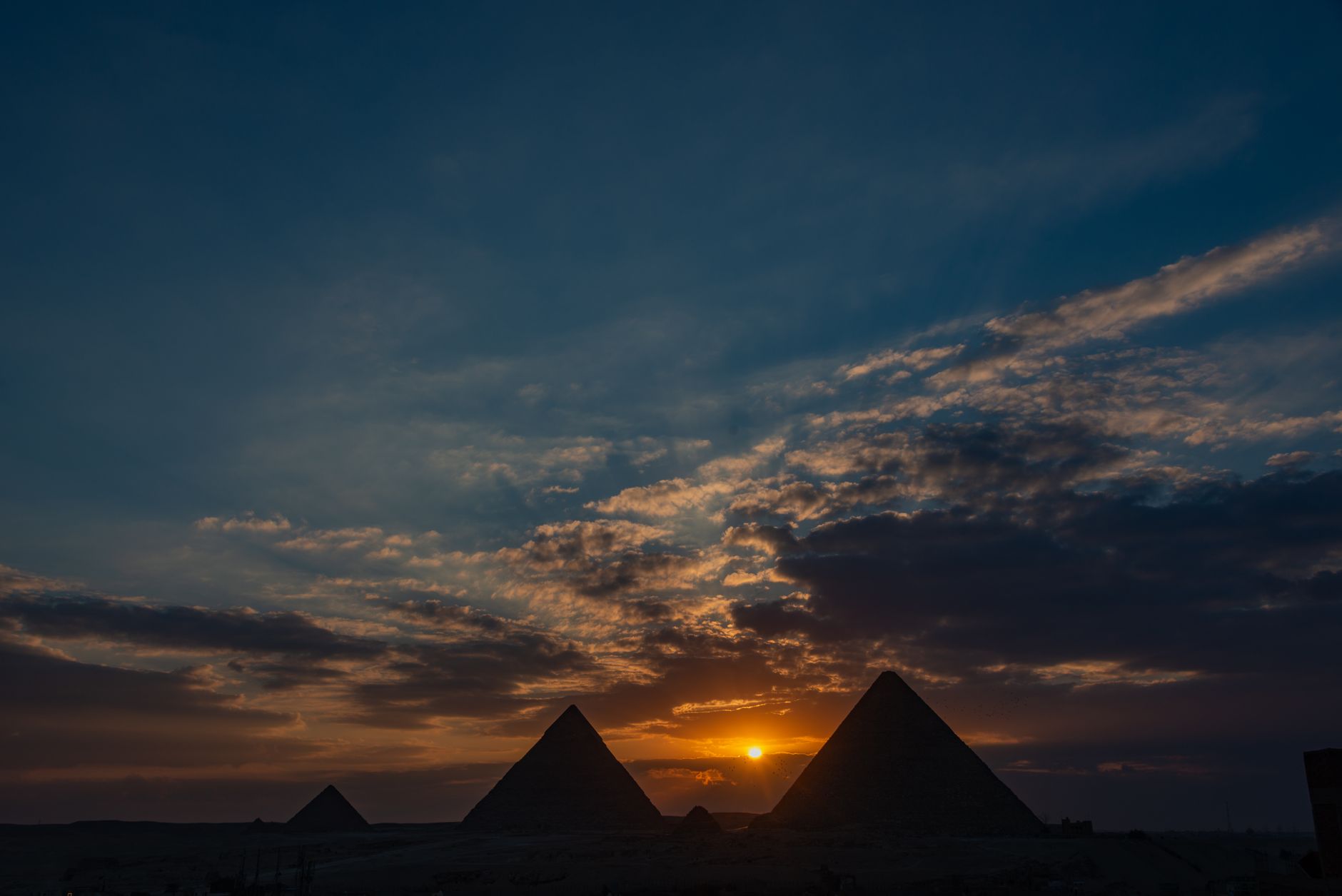
The pyramids: golden hour is non-negotiable
Everyone photographs the Pyramids of Giza. Almost nobody photographs them well, because they roll up at 11am with a tour bus and shoot straight into washed-out haze with two thousand other people in frame. Don’t be that person.
The plateau opens at 7am (8am during Ramadan), and the first hour after the gates open is the entire reason to come. Be at the eastern face of the Great Pyramid while the sun is still low and the limestone goes pink-gold. Shoot fast, bracket your exposures, and don’t fuss with settings while the light is doing its thing. November through February gives you the cleanest air; March into May brings a dustier, more golden haze that some photographers actually prefer for silhouettes.
For the postcard composition — all three pyramids stepping back in a line — head to the panoramic point on the desert plateau south of the complex. You’ll usually need a camel or horse to reach it (agree the price in writing before you mount, and ignore anyone who tells you it’s “free, only tip”), or you can grab the same angle from the terrace at 9 Pyramids Lounge with a cold drink instead of a saddle. For the Sphinx-and-pyramid-in-one-frame shot, the Sphinx on the eastern side of the plateau is your spot; try a 70–200mm lens, which compresses the scale better than a wide angle.
At sunset the pyramids glow hardest in the last half hour before the sun drops. The internet-famous angle — pyramids and Sphinx peeking over a Pizza Hut and KFC across the road from the Sphinx gate — is real, and it’s the cultural-clash shot everyone shares. It’s gloriously silly and worth ten minutes.
Al-Muizz Street and Khan el-Khalili: shoot after dark
Al-Muizz Street is the roughly one-kilometre spine of medieval Islamic Cairo, a UNESCO-listed corridor where Fatimid, Ayyubid, Mamluk and Ottoman buildings stack against each other for a thousand years of architecture in one walk. Most people see it midday and wonder what the fuss is about. The trick is to come back just after sunset, when the facades are floodlit, the daytime crowds have thinned, and the carved stone glows warm against a deep blue sky. Walk it from Bab al-Futuh down toward Bab Zuwayla; the Sabil-Kuttab of Abdel Rahman Katkhuda, with its painted wooden ceilings, is a standout.
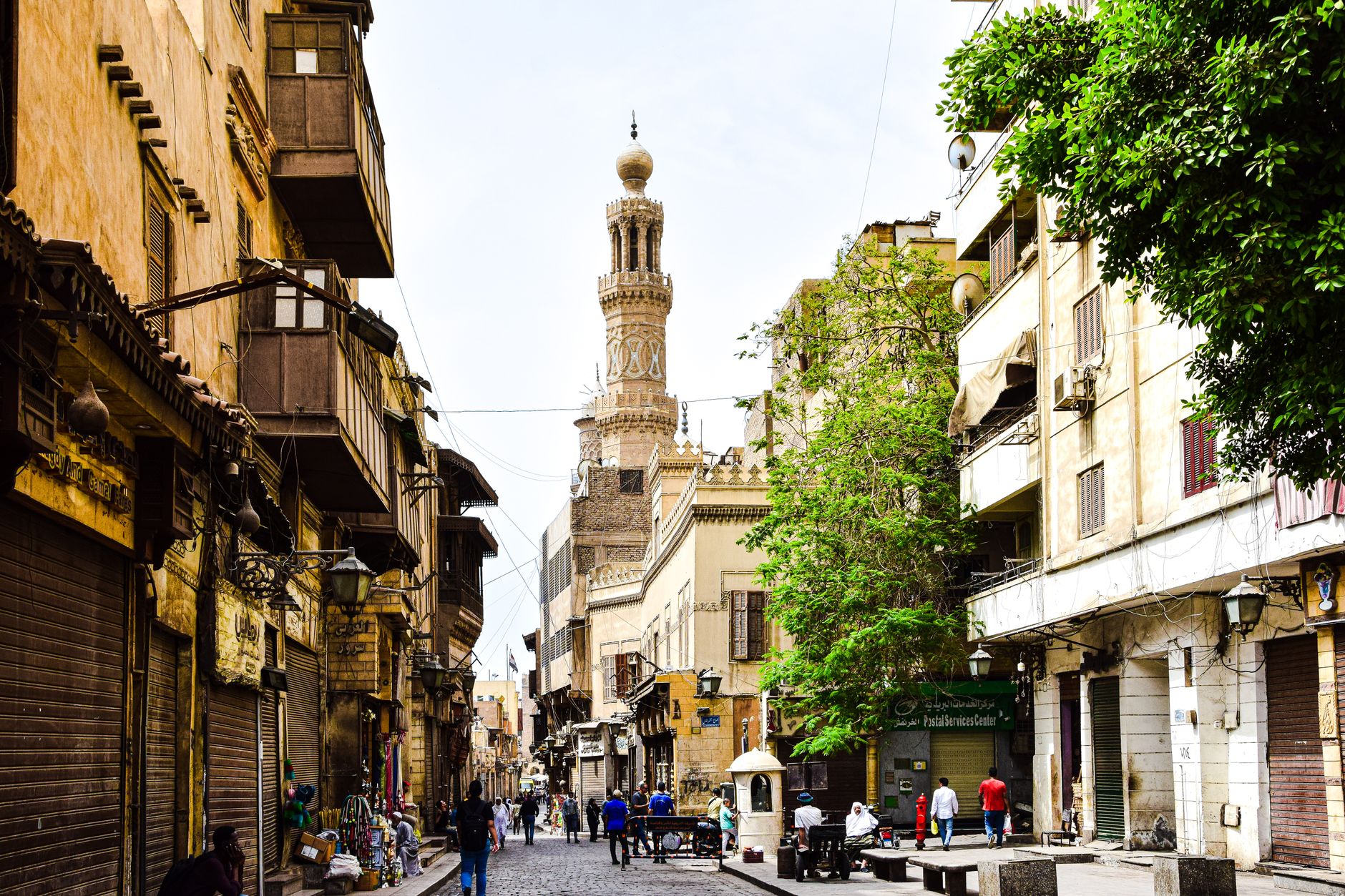
Khan el-Khalili runs off the southern end of all this, and it’s at its best in late afternoon into early evening, when the copper lanterns switch on and the narrow alleys fill with that orange glow. Shoot wide open — f/2.8 or faster — to handle the low light and throw the background soft. The Bab al-Ghuri archway near Al-Hussein Square is the single most photographed frame in the bazaar for a reason. Duck into El Fishawy, the centuries-old tea house, for candid faces and brass clutter, but ask before you point a lens at anyone close up. A smile and a gestured camera does the job; be ready to show them the result.
If you want a structured route through the medieval quarter rather than wandering blind, our guide to Cairo’s off-the-beaten-path experiences maps out corners of Islamic Cairo most tour groups skip entirely.
The Citadel and the Muhammad Ali Mosque
The Citadel of Saladin gives you two completely different shots in one stop. Outside, the Ottoman-era Muhammad Ali Mosque — the “Alabaster Mosque” — throws up silver domes and twin pencil minarets that photograph beautifully from the western courtyard in late-afternoon light. Inside, it’s all hanging chandeliers, alabaster panels and geometric pattern; shoot it outside prayer times, take your shoes off, dress modestly, and women should cover their hair.
Don’t leave without walking out to the Al-Gawhara Terrace on the Citadel’s edge. On a clear day it lays the whole city out beneath you — a sea of minarets running toward the hazy outline of the pyramids on the horizon. It’s the best free panorama of Cairo you’ll get without paying for a tower, and it’s at its best an hour before sunset.
While you’re in the area, the 14th-century Sultan Hassan Mosque next door is criminally under-shot. Its soaring central courtyard with four iwans is made for symmetrical, wide-angle compositions, the entry fee is small, and you’ll have a fraction of the crowds. Mid-morning, when sun pours into the courtyard, is the moment.
Coptic Cairo and Al-Azhar Park
Down in Old Cairo, the Hanging Church suspends its nave above a Roman gatehouse, and the wood-carved interior with marble pillars rewards a late-morning visit, when daylight filters through the high windows. Entry is free; behave like you’re in a working church, because you are. The lanes of Coptic Cairo around it — narrow, stone, often empty — are quietly some of the most atmospheric streets in the city. For the fuller picture of what’s inside the area’s churches and the nearby Coptic Museum, our walk through Cairo’s major museums is worth a read before you go.
For green and calm, Al-Azhar Park is the move — 74 acres (30 hectares) of landscaped gardens on a hill that was a rubble dump until twenty-odd years ago. The formal water channels and palm avenues frame the Citadel and the old city skyline perfectly, and the hilltop terraces are a genuinely lovely place to catch sunset and the call to prayer rolling across the rooftops. There’s a modest entry fee, a few hundred EGP at most, and far fewer photographers than you’d expect.
Something stranger sits out in Heliopolis, where a pink mansion carved with elephants and Hindu deities stands among suburban villas and photographs beautifully in late-afternoon light. Our guide to the pink palace out in Heliopolis covers ticketing, interior access and the angles that work.
The Nile, Cairo Tower and rooftops at sunset
The Nile is best photographed from a bridge. Qasr El Nil Bridge, the one guarded by four bronze lions linking Tahrir to Zamalek, is the classic: shoot west at sunset for downtown’s Belle Époque silhouettes, or east for Zamalek and the Cairo Tower. After dark it’s a strong spot for long exposures of traffic light trails. The 187-metre Cairo Tower is closed to visitors for development and maintenance works, so shoot it from the bridge instead — go about half an hour before sunset for golden light.
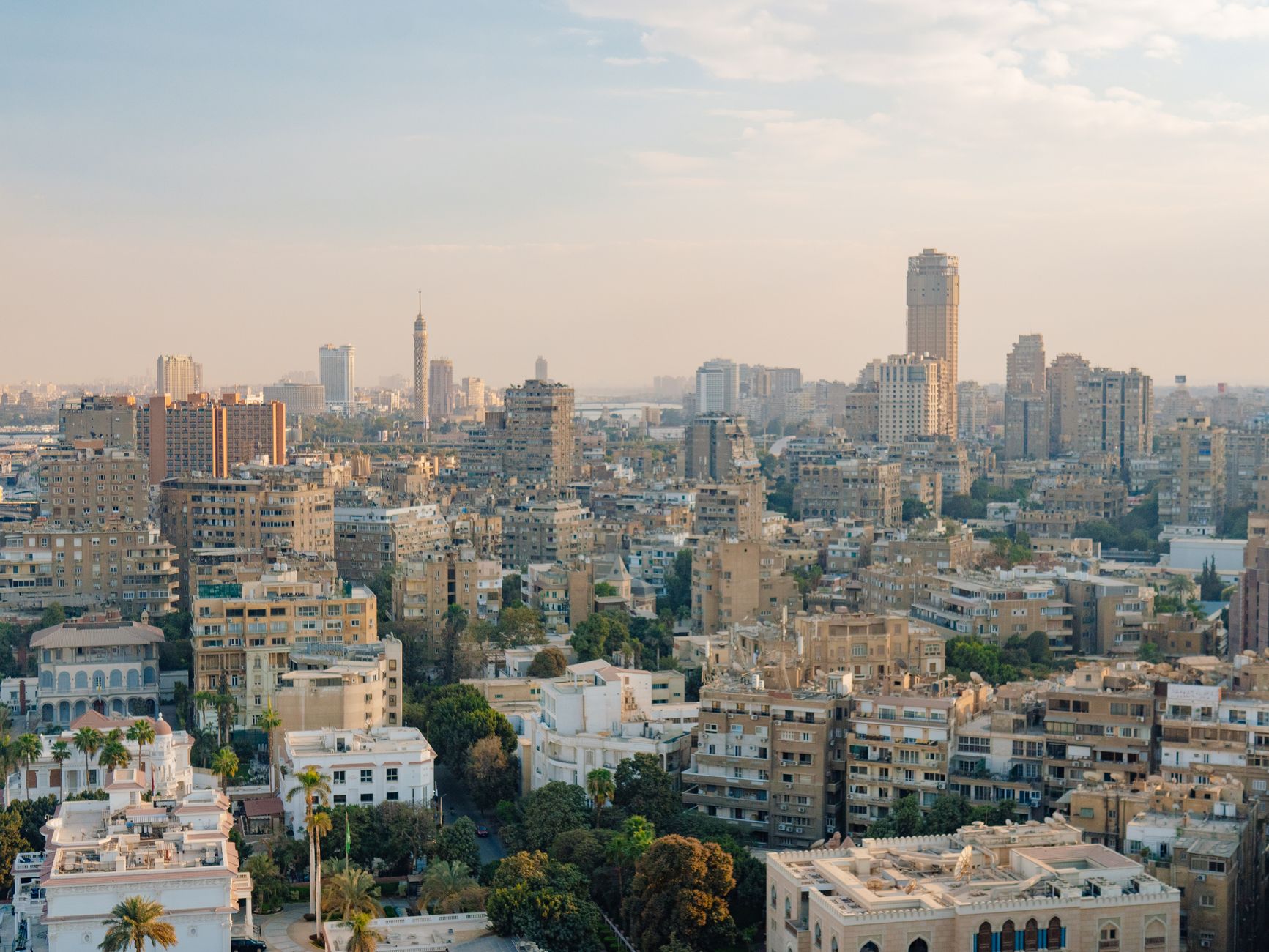
Rooftops deserve a look too. Plenty of downtown and Zamalek hotels and cafes have open terraces, and blue hour over a tangle of satellite dishes, minarets and the slow bend of the Nile is the shot that actually says “Cairo” rather than “monument.” Ask your hotel; many will let you up even if you’re not staying, especially around a drink. For more ideas on the city after dark — rooftop bars, the river, illuminated streets — see our Cairo nightlife guide.
Best time of day, spot by spot
| Spot | When to go | Why |
|---|---|---|
| Pyramids of Giza | First hour after the gates open at 7am | Warm early light, thin crowds |
| The Sphinx | First hour after opening | Beat the tour buses |
| Pizza Hut / KFC viewpoint | Sunset | Backlit pyramid silhouettes |
| Khan el-Khalili | Late afternoon to early evening | Lantern glow |
| Al-Muizz Street | Just after sunset | Facades lit, crowds gone |
| Muhammad Ali Mosque / Citadel | Hour before sunset | Warm light, skyline view |
| Sultan Hassan Mosque | Mid-morning | Sun fills the courtyard |
| Coptic Cairo churches | Late morning | Window light indoors |
| Al-Azhar Park | Sunset | Skyline and gardens |
| Qasr El Nil Bridge | Sunset and blue hour | Lion statues, light trails |
Permits, tripods and the drone reality (2026)
This is the part that trips people up, so here’s the current picture as of 2026. The short version: personal photography is mostly free and easy, tripods and drones are where the rules bite.
- Personal cameras are free at the sites. Shooting with a phone, DSLR or mirrorless camera for your own use is free at the Pyramids, the Grand Egyptian Museum and the archaeological sites, as long as you’re not using a tripod, external flash or lighting rig. No flash inside museums.
- Inside the pyramids costs extra. Exterior photography is covered by your standard ticket, but going inside the Great Pyramid requires a separate ticket, and flash and tripods are restricted in there.
- The Grand Egyptian Museum (GEM): personal photography is allowed without flash. Tripods aren’t, and some rooms — royal mummies, certain special exhibitions — are signed as no-photo zones. Commercial shoots need a permit arranged in advance.
- Tripods are the catch. They’re generally fine outdoors but banned inside museums, tombs and the interior of the pyramids to protect floors and keep walkways clear. Where outdoor tripod use is permitted, expect a small flat fee, on the order of 20 EGP per site per day. If you need a tripod indoors, you’re into paid-permit territory — confirm rates onsite.
- Drones are effectively off the table. That includes the pyramids: importing or flying one without advance permission from the Ministry of Defence can mean up to seven years in prison or a fine of EGP 5,000–50,000. Leave it at home — the few licensed aerial shots you see were arranged through long official channels you won’t replicate on a holiday.
- Never point a lens at the military. Don’t photograph officials without their consent, and treat military property and sensitive government, police and security sites as restricted: get authorisation first. This one isn’t a suggestion.
Museum photo-permit fees, where they apply, have run roughly the equivalent of a few US dollars up to around twenty per camera in recent years, with extra for tripods and commercial use. Rates change, so confirm at the ticket window rather than trusting a number you read online.
Rules shift by site and by who is asking, so it pays to know the categories before you unpack a bag at a gate. We set out where cameras, tripods and drones stand legally, which museums still charge a photo permit, and what officials count as commercial shooting.
A note on photographing people
Cairenes are, by and large, warm and happy to be photographed — but you ask first. Especially with women and children. A grin and a raised camera usually gets a yes, and being ready to show the photo afterward seals it. Tip a few EGP for a craftsman or tea seller who poses. If someone’s clearly unhappy, delete the frame in front of them on the spot and move on. And if a kid bounds up asking for a photo with you, it’s almost always sincere — Egyptians love a shared camera moment.
What to pack for Cairo’s light and dust
Two things define shooting here: the quality of the light and the relentlessness of the dust. A wide angle (16–35mm or so) is your most-used lens for architecture, mosque interiors and the pyramids; a 24–70mm covers daily walking and street; a 70–200mm earns its place compressing the pyramids from the Sphinx area and grabbing candids. A fast 35mm or 50mm prime is gold in the dim lanes of Khan el-Khalili.
Bring a polariser — it cuts haze and saturates that desert sky over the pyramids more than any edit will. A weather-sealed body helps, because the grit gets everywhere; pack a blower, microfibre cloths and a lens pen, and check your sensor for dust spots when you get home. Spare batteries, a power bank for long days, and a cross-body strap to keep gear tight in crowds round it out.
Frequently asked questions
What’s the best time of year to photograph Cairo?
November to February for the clearest air and kindest light. March can deliver gorgeous golden haze (and the odd sandstorm). Summer is harsh and flat midday — restrict outdoor shoots to sunrise and sunset.
Can I bring a drone to Cairo?
Almost certainly not. Drones are tightly restricted in Egypt, the pyramids included: importing or flying one without advance permission from the Ministry of Defence can mean a fine or prison. Leave it at home.
Do I need a permit to photograph the Pyramids?
Not for personal exterior shots — that’s covered by your ticket. You need a separate ticket to photograph inside the Great Pyramid, and any tripod, lighting or commercial work needs a permit.
Where do I get the most iconic pyramid shot?
The Sphinx, on the eastern side of the plateau, for pyramids-and-Sphinx in one frame, and the panoramic point south of the complex (camel ride or 9 Pyramids Lounge) for all three in a line.
Is street photography allowed in Cairo?
Generally yes, with common courtesy — ask before shooting people close up. Don’t photograph officials without their consent, and treat military property and sensitive government, police and security sites as restricted: get authorisation first.
How do I avoid the crowds?
Be there at opening — the pyramids, GEM and the Citadel are quietest in the first hour. Mid-week beats the Friday–Saturday weekend. And lean on the under-visited sites: Sultan Hassan Mosque, Al-Azhar Park, Coptic Cairo’s back lanes.
Plan the rest of your shoot
Most of these spots double as the city’s best sights, so build the photography into a wider plan rather than treating it as a separate mission. Start with our must-see Cairo sights and activities pillar for the full sweep of what’s worth your time, then layer in the specifics: the off-the-beaten-path experiences guide for the medieval quarter and hidden corners, the museums guide for the GEM and Coptic Cairo, and the nightlife guide for the city after dark. If you’re shooting on a tight budget, our guide to Cairo on a shoestring covers a surprising number of these viewpoints that cost nothing to reach. And when the camera’s away, the companion guide to Cairo dining sorts out where to eat between sunrise and sunset.
Show up early, chase the light to the edges of the day, mind the tripod-and-drone rules, and treat the people you photograph like guests rather than props. Do that, and three days in Cairo will leave you editing for months.