This article contains advertising. Our booking links are routed through a partner that adds commission tracking automatically, so if you book through one we earn a commission from the provider, at no extra cost to you. It never affects what we recommend. Affiliate disclosure
Here’s the thing nobody tells you before a Cairo trip: the desert starts at the edge of the suburbs. You can be quad biking across the Giza plateau, cantering a horse along the dunes behind the Sphinx, or hiking a limestone canyon — all within 30 to 40 minutes of a downtown hotel. The best outdoor activities in Cairo aren’t a separate holiday from the pyramids; they happen in the same sand. Below is what’s actually worth doing, what it costs in mid-2026, who to book with, and — crucially — when, because between June and August the wrong timing will cook you.
I’ve split this into what’s genuinely in or beside Cairo (Giza dunes, the Nile, Wadi Degla, the city parks) and the easy escapes that need a half or full day (Fayoum, Ain Sokhna). For the broader picture, this sits under our main Cairo sightseeing guide, and there’s plenty of overlap with the more unusual experiences around the city if you want to get off the standard trail.
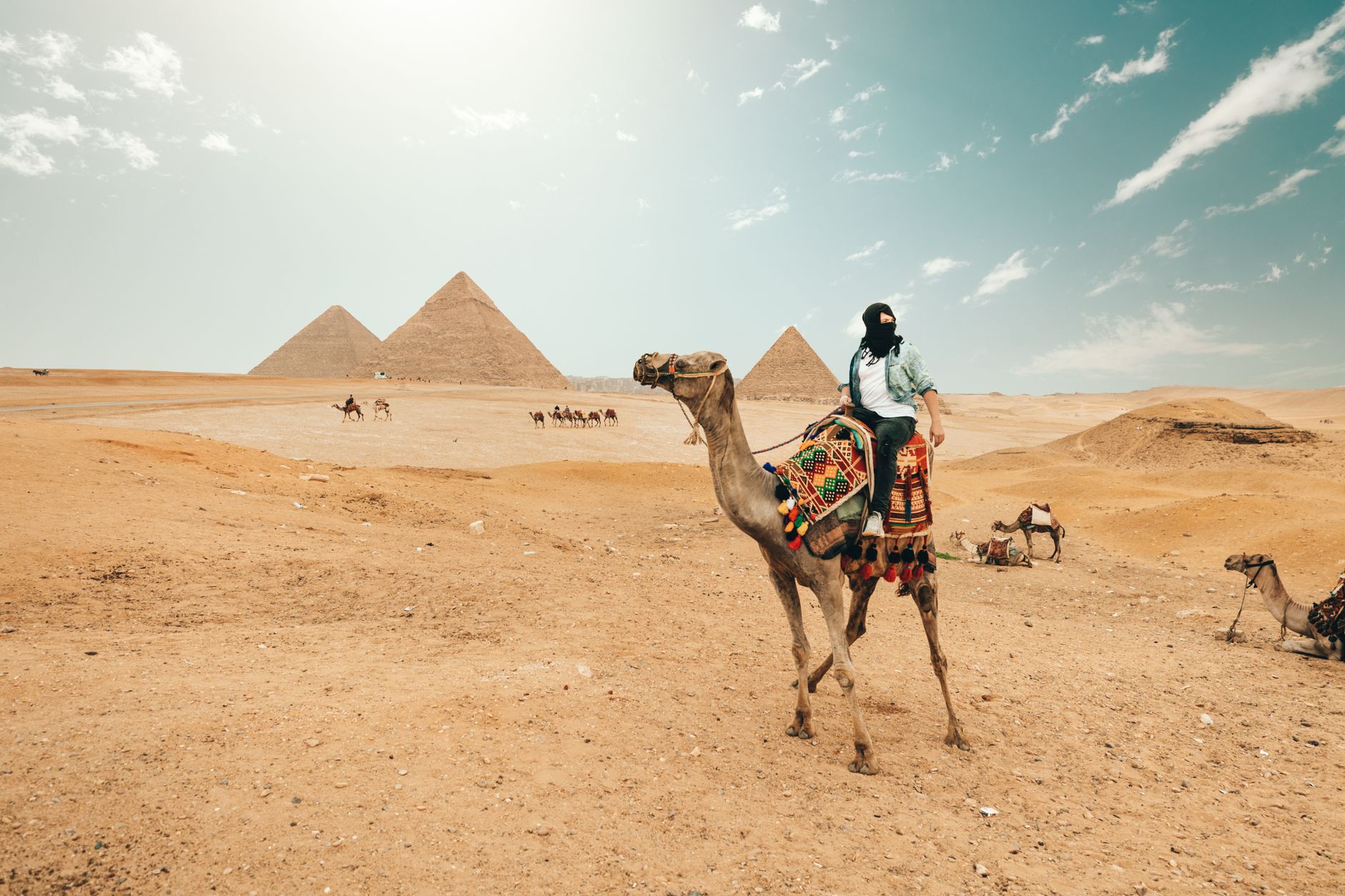
Horse and Camel Riding at Giza
This is the one I’d push to the top of the list, and most tour packages skip it in favour of a 15-minute camel photo-op that everyone regrets. Behind the official pyramid enclosure, on the Nazlet El-Semman side near the Sphinx, sit a row of stables. From there you ride out into open desert and look back at all three pyramids lined up across the dunes — no fences, no crowds, no one selling you scarves. It is, hands down, the best view of Giza there is, and you get it on horseback.
A few honest words on the stables. Reputation varies enormously and the well-known names (FB Stables, KG, Sahara Stables and a handful of others booked through platforms like PyraRides) keep their horses in far better condition than the touts who’ll grab you at the main gate. Pick a stable in advance. Expect to pay somewhere from 600 EGP per hour and up (roughly $12–15) for a horse — more at sunrise and sunset, which is when you want to go anyway. Agree the price, the duration, and exactly what’s included before you mount, ideally written on your phone. The classic scam is a cheap quoted rate that balloons with “guide tips,” “camera fees,” and a longer route you didn’t ask for.
Camels are available at the same stables and along the plateau itself. Honestly, a camel is slower, less comfortable, and better as a novelty than a way to actually cover ground — but a short sunset camel ride with the pyramids behind you is a lovely thing and the kids will lose their minds. If you only do one, make it the horse.
When: Sunrise (around 6 AM in summer, 7 in winter) or the last 90 minutes before sunset. Midday in June through August is genuinely dangerous for both you and the animal — don’t.
Quad Biking and 4×4 Desert Safaris
If horses aren’t your thing, the same desert delivers on an engine. Quad bike tours run from the Giza plateau and from operators a little further out toward Saqqara and Abu Sir, ripping across the dunes with the pyramids on the horizon. Tours are usually one to two hours and include a safety briefing, helmet, and a guide. Reliable names include Memphis Tours, Cairo Top Tours, Egypt Breeze Tours, and Sun Pyramids Tours.
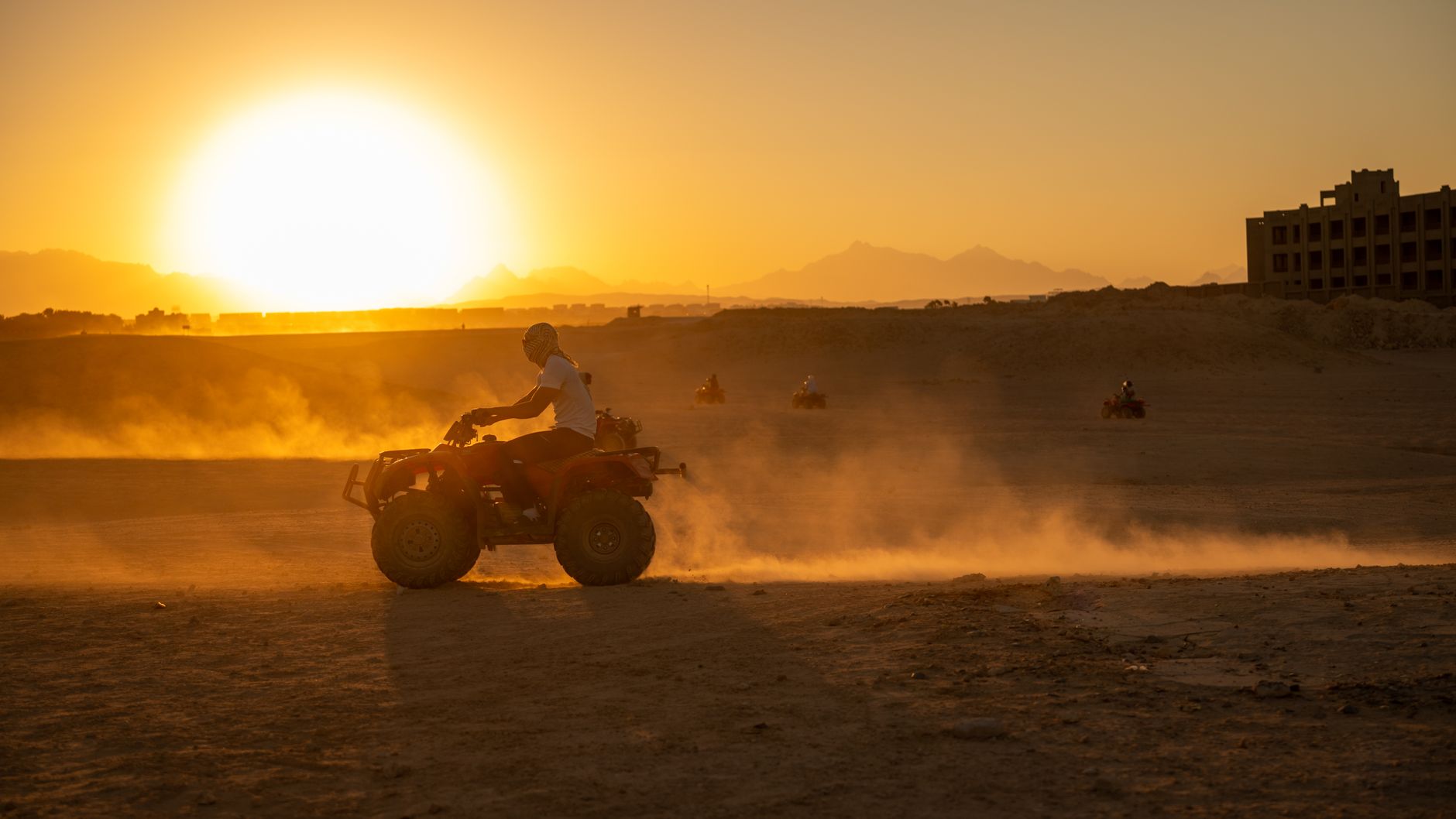
Reckon on $25–60 per person, or roughly 450 EGP and up if you’re paying a local rate at the stable rather than a packaged tour. A quick reality check: the cheapest quads are often clapped-out and the “tour” is a 20-minute loop. Confirm the machine’s condition and the actual route before you hand over money. For something bigger, half- and full-day 4×4 safaris head deeper into the Western Desert fringe with dune bashing, sandboarding, and a Bedouin-camp lunch, running $60–150 per person.
Sandboarding usually comes bundled with these. The El Qattaniya dunes east of Cairo are the closest decent spot; the serious dunes are out at Bahariya. Boards and a quick lesson are provided, and it’s beginner-friendly — closer to sledging than snowboarding, and you’ll get sand absolutely everywhere.
On the Nile: Feluccas, Kayaks and Rowing
The Nile through central Cairo is too busy with cruise boats and barges for casual paddling, but there’s still water to be had if you know where.
The felucca — the lateen-sailed wooden boat that’s been on this river for centuries — is the classic, and a sunset sail is one of the genuinely romantic things you can do here. You hire the whole boat with its captain, not a seat. Around Zamalek and the Garden City corniche, expect roughly 250–500 EGP per hour for the boat (negotiate, and agree it before boarding). The catch nobody mentions: feluccas need wind. On a dead-calm afternoon you’ll drift in slow circles; a breezy evening gives you an actual sail. Go late in the day for both the wind and the light.
Kayaking and stand-up paddleboarding happen on the quieter stretches south in Maadi, where a few operators run guided morning sessions, and out on the lakes in Fayoum (more on that below). Rentals run roughly $10–30 per hour. For something more structured, the Cairo Rowing Club in Zamalek has welcomed guest rowers for over a century and can give beginners a basic Nile rowing introduction. And if the dinner-cruise floats feel too packaged, smaller motorboats run the Maadi–Cairo Tower stretch for a fraction of the fuss.
Feluccas are the one Cairo activity worth doing twice, once at sunset with everyone else and once mid-morning when the river is empty. Rates sit near $15 to $30 an hour for the whole boat, and the haggling, timing and boarding points get a guide of their own.
Rowing and paddling are not the only ways to get on the water under your own steam. Local fishermen will put you in a small wooden boat for around $20–80 a person, and what a Nile fishing trip involves is set out in full, catch expectations included.
Hiking and the City’s Wild Edge: Wadi Degla
Wadi Degla Protectorate is Cairo’s best-kept outdoor secret and it’s barely 15–30 minutes from Maadi. It’s a 60-square-kilometre desert valley — a dry limestone canyon you walk straight into, with marine fossils embedded in the rock walls from when this was all seabed. There are foxes, hares, the odd gazelle, and a surprising number of birds. Mountain bikers use the gravel tracks; hikers follow the canyon floor as far as their legs allow.

Entry is cheap — a small protectorate fee, well under 100 EGP — and it’s open daily, roughly 7 AM to 6 PM (shorter in winter, so go early). There’s almost no shade and no shops once you’re in, so carry far more water than you think you need. A guide isn’t essential for the first stretch but is worth it if you want to push deeper or learn the geology. This is the easiest real hike near the city, and after a few days of traffic and museums it’s a genuine reset.
For city views with less commitment, the Mokattam Hills escarpment on Cairo’s southeastern edge gives you a panorama over the whole sprawl — best on a clear, cool morning. Cairo also has a small indoor climbing scene (The Wall in Maadi and Sheikh Zayed) if the weather’s against you.
Parks and Gardens: The Outdoor Cairo Most Visitors Miss
Not every outdoor day has to involve a helmet or a hiking trail. Al-Azhar Park is the one I send everyone to, and it’s astonishing how few tourists make it. Built on what was a 500-year-old rubbish dump and opened in the mid-2000s, it’s 30 hectares of formal gardens, fountains, and lawns on a hill in Islamic Cairo — and the view from its terraces, out across the medieval skyline of minarets to the Citadel, is one of the best in the city. Come late afternoon, walk it as the light softens, and have a drink at the hilltop restaurant as the call to prayer rolls across the rooftops.
It’s open daily from 9 AM to around 11 PM (later in Ramadan), and entry is modest — roughly 40 EGP for adults, about 25 for children. Tickets are sold at the gate on Salah Salem Road only; there’s no online booking, so just turn up. Bring some cash. Pair it with a wander through the al-Muizz street area just below and you’ve got a perfect low-effort afternoon. For other no-cost green and open-air ideas, our guide to exploring Cairo without spending has more.
Down in Zamalek, the small Aquarium Grotto Garden and the riverside corniche paths give you a shady stroll, and the island’s leafy streets are pleasant on foot in the cooler months. None of this is wilderness — but it’s outdoors, it’s calm, and it’s a side of Cairo the standard itinerary skips entirely.
Day-Trip Escapes: Fayoum and Ain Sokhna
Two destinations sit close enough to fold into a Cairo trip without an overnight, though both reward staying longer.
Fayoum is about 100 km southwest, two hours by road, and it’s where Cairenes go for nature. Lake Qarun and the protected lakes of Wadi El Rayan — which include Egypt’s only natural waterfalls — are calm enough for kayaking and paddleboarding, and you’ll find operators running both day sessions and the increasingly popular night kayaking outings on the Magic Lake under the stars. Lake Qarun has also quietly become Egypt’s go-to kitesurfing spot outside the Red Sea, with a few schools renting gear. Add the surreal fossil desert of Wadi El Hitan (Whale Valley), a UNESCO site full of 40-million-year-old whale skeletons left from when the Sahara was ocean, plus the pottery studios of Tunis Village, and Fayoum easily justifies a full day or a weekend. Reckon on $60–120 for a day trip depending on group size.
Ain Sokhna is your fastest beach fix — about two hours east on the Red Sea coast, with swimming, snorkelling, and basic water sports. It’s not the Sinai or Hurghada, but for a day’s break from the desert dust it does the job, and plenty of Cairo families do exactly that on a Friday. For more excursions in this range, see our pillar’s day-trip coverage, and if you’re nervous about anything more strenuous, sort travel insurance with adventure cover via our Cairo cultural and practical guides beforehand.
What Things Cost (Mid-2026)
Prices below are typical 2026 ranges. Activities booked locally at a stable or with a felucca captain are quoted in Egyptian pounds and are negotiable; packaged tours through agencies are usually priced in US dollars and fixed. Always confirm the rate and what’s included before you start.
| Activity | Duration | Approx. cost |
|---|---|---|
| Horse riding at Giza | 1 hour | From ~600 EGP (~$12–15) |
| Short camel ride, Giza | 30–60 min | ~300–600 EGP |
| Quad biking, Giza plateau | 1–2 hours | $25–60 / from ~450 EGP |
| 4×4 desert safari | Half/full day | $60–150 |
| Felucca sail (whole boat) | 1–2 hours | ~250–500 EGP/hr |
| Kayak / SUP rental | Per hour | $10–30 |
| Wadi Degla hike | Half-day | Under 100 EGP entry; more with guide |
| Al-Azhar Park entry | — | ~40 EGP adult / ~25 child |
| Fayoum day trip | Full day | $60–120 |
| Ain Sokhna beach day | Full day | $40–90 |
The Heat Is the Whole Game: When to Go
I cannot stress this enough. From October to April, you can be outdoors comfortably all day — this is the season for everything above. From May to September, restrict any desert or sun-exposed activity to early morning (roughly 5–9 AM) or after about 5 PM. Cairo summer afternoons regularly push past 38°C, and the open desert is hotter and shadeless. Heatstroke is a real risk, not a brochure caveat.
Two more timing notes. The khamsin sandstorm season (roughly mid-March to mid-May) brings sudden dusty winds that can flatten a desert plan — keep those days flexible. And the parks, the Nile, and indoor climbing are your fallback when it’s too hot or too windy for the dunes. For the full month-by-month breakdown, our guide to Cairo after dark also covers the evening activities that work brilliantly in summer when daytime is a write-off.
Those blocked-out summer afternoons have to go somewhere, and between noon and five the sensible answer is the same one Cairenes reach for during a khamaseen dust storm: a list of things to do under a roof.
Safety and Booking Sense
- Book stables and operators with a name and reviews, not whoever shouts loudest at the gate. Check the animal or vehicle’s condition before you commit.
- Agree the full price and route up front, in writing on your phone if you can. This kills 90% of the “extra fees” disputes.
- Carry far more water than feels necessary and reapply SPF 50 — desert UV is brutal even when it doesn’t feel hot.
- Never head into the desert alone. For anything multi-day, confirm the operator carries a satellite phone and emergency kit.
- Keep your passport on you for desert checkpoints, and carry small cash for park gates and tips.
Frequently Asked Questions
Can you ride horses at the Pyramids of Giza?
Yes — stables on the Nazlet El-Semman side rent horses (and camels) that you take out into open desert behind the pyramids. Book a reputable stable in advance, ride at sunrise or sunset, and agree the price and duration before you mount. Expect from around 600 EGP per hour.
What’s the best outdoor activity in Cairo for beginners?
A guided hike in Wadi Degla or a quad bike tour at Giza — both need zero prior experience. For something gentler, an afternoon at Al-Azhar Park or a sunset felucca on the Nile is hard to beat.
Is it safe to be outdoors in Cairo in summer?
Only with timing discipline. From May to September, keep desert and sun-exposed activities to before 9 AM or after 5 PM, hydrate constantly, and use the parks, Nile, or indoor options in the brutal midday hours.
Can I kayak on the Nile in Cairo?
Central Cairo is too busy for casual kayaking, but quieter stretches in Maadi have guided sessions, and the calm lakes of Fayoum (about two hours away) are excellent — including night kayaking on the Magic Lake.
How much does Al-Azhar Park cost and when is it open?
Roughly 40 EGP for adults and about 25 for children, paid at the Salah Salem Road gate (no online tickets). It’s open daily from around 9 AM to 11 PM, later during Ramadan. Late afternoon is the best time for the skyline view.
Is Fayoum worth a day trip from Cairo?
Very much so. Wadi El Rayan’s lakes and waterfalls, kayaking on Lake Qarun, the Whale Valley fossils, and Tunis Village pottery make it one of the best outdoor escapes near the city — easily a full day, better as an overnight.
Putting It Together
Most people leave Cairo having only looked at it through a bus window and a museum case. Don’t. Pick one active morning — a ride out behind the pyramids, a hike into Wadi Degla, a paddle on a Fayoum lake — and one easy outdoor evening, like a felucca at sunset or the terraces of Al-Azhar Park, and the whole trip shifts from sightseeing to actually being here. Plan the rest with our Cairo attractions and activities pillar, and when you’re hungry after a day in the sand, our where-to-eat companion for the city will point you somewhere good.