This article contains advertising. Our booking links are routed through a partner that adds commission tracking automatically, so if you book through one we earn a commission from the provider, at no extra cost to you. It never affects what we recommend. Affiliate disclosure
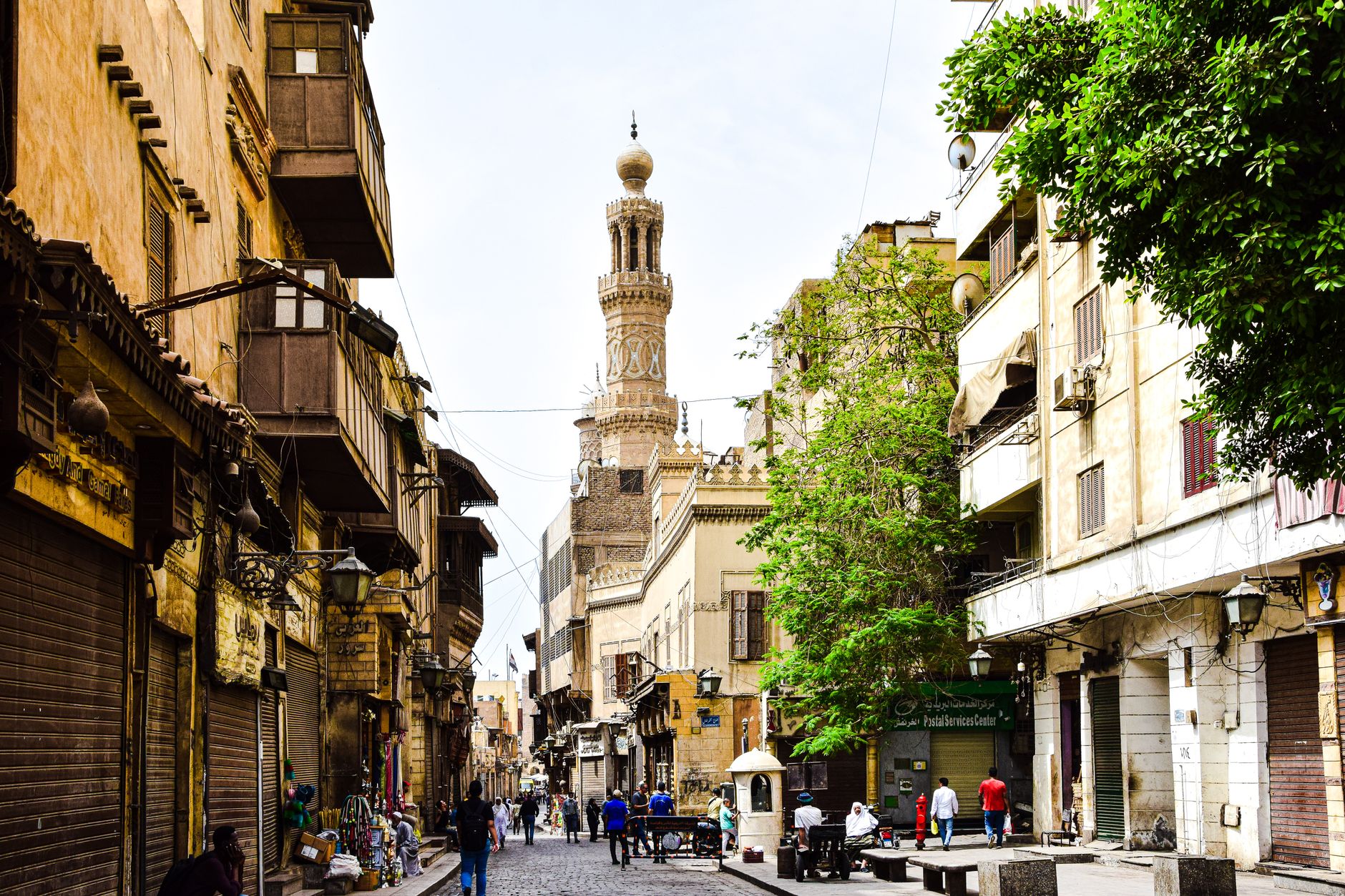
Here’s the thing most people don’t realise before they land: Cairo is one of the cheapest great cities on earth to actually experience. The headline sights — the Pyramids, the Grand Egyptian Museum — cost real money. But a huge slice of what makes Cairo memorable is free or close to it. Walking medieval Al-Muizz Street, stepping into 1,100-year-old mosques, watching the Nile go pink from a bridge railing, getting lost in Khan el-Khalili — none of that needs a ticket. You can fill three or four days this way and spend almost nothing.
This is an honest accounting of the genuinely free things to do in Cairo, plus a handful that cost a dollar or two and are too good to leave out — clearly flagged as such. I’ve left out the “free” stuff that isn’t (more on the fake-guide hustle later). If you want the full sightseeing picture including the paid headliners, start with our must-see Cairo highlights pillar; this piece is the budget half of it.
What’s actually free in Cairo (and what only sounds free)
Let me set expectations honestly, because a lot of budget guides blur the line. Three categories of things in Cairo are reliably free: working mosques (you dress respectfully and tip the shoe-minder a few pounds), the street itself in the historic quarters, and the Nile waterfront. That’s an enormous amount of the city right there.
What sounds free but isn’t: the “monument” mosques that have been turned into ticketed sites (Sultan Hassan, the Citadel mosques), the Pyramids plateau, the museums, and anyone on the street offering to “show you around for free.” Al-Azhar Park gets called free constantly — it isn’t, but the entry fee is so small it barely registers. I’ll flag every paid item below with what it actually costs. As a rough conversion through mid-2026, reckon on roughly 48–50 Egyptian pounds to the US dollar; that’s how I’ve worked out the dollar figures, and the exact rate drifts, so treat them as ballpark.
If you want the full inventory rather than my highlights, a companion piece runs through every Cairo sight that costs nothing to enter, flags the handful carrying sneaky camera or shoe-storage charges, and groups them by district so you can chain several into one walk.
Islamic Cairo: the single best free day in the city
If you only do one free thing in Cairo, make it this. Medieval Islamic Cairo is a dense, living maze of Fatimid, Ayyubid, Mamluk and Ottoman architecture, and most of it you experience just by walking through.
Walk Al-Muizz Street, end to end (free)
Al-Muizz li-Din Allah Street runs roughly a mile straight through the medieval city, and UNESCO has called this corridor the densest concentration of Islamic-era monuments anywhere in the world. Walk it from Bab al-Futuh in the north down to Bab Zuwayla in the south and you pass mosques, madrasas, public fountains and merchant houses the whole way. It takes one to two hours at a browsing pace, longer if you keep stopping (you will). The northern, pedestrianised stretch gets lit up beautifully after dark and is genuinely lovely at night. Costs nothing. The architecture and the street life are the whole point.
Mosque of Ibn Tulun (free)
This is my favourite spot in the whole city, and it’s free. Built in 879 CE, it’s Cairo’s oldest mosque still in one piece — older than Notre-Dame, older than Westminster Abbey — and its vast brick courtyard is one of the few genuinely quiet places in central Cairo. The spiral minaret with the external staircase is the only one in the city you’re actually allowed to climb, and the rooftop view is worth the wheeze up. Entry is free; there’s a voluntary donation box and the shoe-keeper will expect a small tip — keep a 50 or 100 EGP note handy and you’re golden. Go early or late and you might have the courtyard nearly to yourself.
Al-Azhar Mosque (free)
Founded in 970 CE and home to one of the oldest continuously operating universities on the planet, Al-Azhar is a working religious and academic centre, not a museum — which is exactly why it’s free and why it feels alive. The marble courtyard and the cluster of minarets are stunning in low light. Non-Muslims are welcome outside the five daily prayer times; cover up, take your shoes off, and keep your voice down. It sits right across from Khan el-Khalili, so the two pair naturally.
Khan el-Khalili (free to wander)
The bazaar has been trading for around 600 years and it costs nothing to walk into. Don’t go for the souvenirs — go for the atmosphere: coppersmiths hammering, the spice stalls, the tea sellers, the call to prayer rolling off Al-Hussein Mosque next door. Duck into El Fishawy, the centuries-old café in the middle of it, and a mint tea runs you well under a dollar while you watch the whole circus go by. If you do want to buy, haggle hard and start at roughly a third of the asking price. Browsing, though, is free, and at golden hour the light down the lanes is ridiculous.
Sultan Hassan Mosque (paid — about 80 EGP / under $2)
I’m including this even though it isn’t free, because it’s the finest Mamluk interior in Cairo and the price is trivial. Entry is around 80 EGP — call it a dollar and a half — which also gets you the Al-Rifa’i Mosque facing it. If your budget genuinely can’t stretch to one mosque ticket, skip it; otherwise it’s one of the best small splurges in the city.
Bab Zuwayla (exterior free; small fee to climb)
The southern gate of the medieval walls anchors the bottom of the Al-Muizz walk. Standing under it costs nothing. Climbing the twin minarets for one of the best rooftop panoramas of the old city’s domes and minarets costs a small fee — well worth it if you’ve got the legs.
Coptic Cairo: free, ancient, and gloriously quiet
South of downtown, the old Christian quarter clusters around a Roman fortress, and almost everything in it is free to enter. It’s compact, walkable and far calmer than Islamic Cairo. The Mar Girgis metro stop drops you right at the entrance for a fare of about 8 EGP.
- The Hanging Church (free) — built on top of a Roman gatehouse, so the nave literally hangs over the gap. Atmospheric any time, especially during a Sunday-morning service.
- Saints Sergius and Bacchus Church (free) — tradition says the Holy Family sheltered in the crypt here during their flight into Egypt. Old, dim and lovely.
- Ben Ezra Synagogue (free) — Cairo’s oldest synagogue, tied by legend to the spot where the infant Moses was found. Free outside service hours.
- Mar Girgis Lane (free) — the sunken pedestrian alley threading all of it together is one of the most photogenic walks in the city.
For the ticketed museums nearby and across town, our survey of Cairo’s museum scene sorts out what’s worth the entry fee and what isn’t.
The Nile, the Corniche and the bridges (all free)
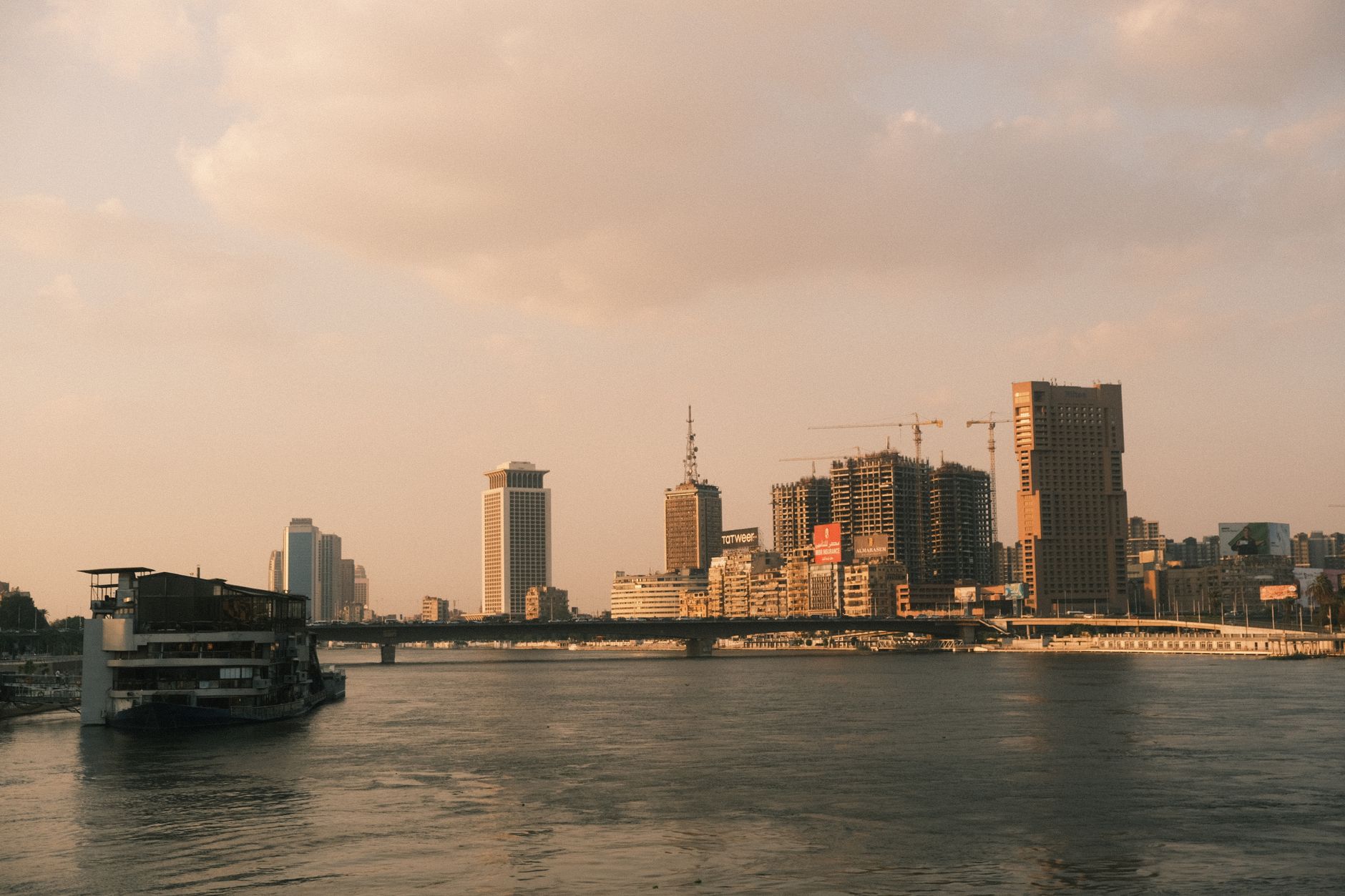
The river is the city’s best free attraction and most visitors underrate it. The Corniche — the riverside promenade — runs for miles, and the stretch from the Cairo Tower in Zamalek south through Garden City and downtown is the prettiest. Go at sunset. It costs nothing and it’s where Cairenes actually hang out in the evening.
Qasr El Nil Bridge links Tahrir Square to Zamalek and is the most photographed bridge in the city, guarded by four bronze lions that everyone in Cairo uses as a meeting point. Walking it across and back at dusk, with the felucca sails catching the last light below you, is free and genuinely one of my favourite Cairo half-hours.
While you’re on Gezira island, just wander Zamalek — the leafy streets around 26th of July Street, the embassy blocks near the Marriott, the cafés ringing the Opera House complex. It’s the most relaxed free pottering in Cairo. The quirky Aquarium Grotto Garden here is a 19th-century rock-grotto folly with an entry fee of only a pound or two; usually half-empty, slightly bonkers, worth a look.
Al-Azhar Park: cheap, not free, and worth it anyway
Every budget list calls Al-Azhar Park free. It is not — but it’s about as close as paid gets. As of 2026 adult entry runs roughly 35 EGP on weekdays and 40 EGP on weekends (children a little less), which is well under a dollar. Cards work at the Salah Salem gate, though cash moves the queue faster. For that, you get manicured gardens, fountains, a couple of cafés, and the best sunset view in Cairo: the Citadel and the Mosque of Muhammad Ali glowing gold across the rooftops. It’s open late, to around 11pm. Frankly it’s one of the best-value tickets in the country, so don’t let the “it’s not technically free” thing put you off.
The Pyramids, for free-ish
You cannot get onto the Giza plateau without a ticket — that part is firmly paid, and these days you’ll usually need a card rather than cash at the gate. But you can see and photograph the Sphinx and the three great pyramids from outside the fence. The famous angle is from the eastern roadside near the Pizza Hut in Giza, which has become a genuine tourist sight in its own right — that “Sphinx framed by a fast-food sign” shot. An Uber out and back from central Cairo costs only a few dollars. It’s not a substitute for going in, but if the plateau ticket blows your budget, the free view is still a real experience.
The same goes for the Sound and Light Show, when it is running: the ticket is steep, but the lights and audio carry, and plenty of rooftop cafés in Giza let you watch the spectacle for the price of a tea and shisha. Cheeky, but it works.
Free culture: dance, prayer and festivals
Some of the best free experiences in Cairo are events, not places.
- Tannoura (Sufi spinning) at Wikala al-Ghuri — free performances are staged most weeks at this restored Mamluk caravanserai in Islamic Cairo. An hour of whirling colour and live music for nothing. Show up early; word has spread and seats fill. Schedules shift, so check locally before you trek over.
- Friday gatherings at the great mosques — witnessing the rhythm of the call to prayer and the Friday crowds from the public approaches to Al-Azhar or Sultan Hassan is a quietly powerful, completely free thing. Dress modestly and observe rather than intrude.
- Coptic Christmas (7 January) — if you’re in town, the Christmas Eve mass and the street life around Coptic Cairo are free to witness and genuinely moving.
- Sham el-Nessim — Egypt’s ancient spring festival, the Monday after Coptic Easter (April or early May), when half the city picnics along the Nile. Free, and charming if you happen to overlap with it.
Cultural institutes run free programming too — the American University in Cairo’s downtown Tahrir Cultural Center, the Goethe-Institut, the Institut Français and the British Council all host free films, talks and exhibitions; check their current calendars. Downtown also has free contemporary-art spaces like the Townhouse Gallery and Cairo Atelier worth a drop-in.
Because the Tannoura nights and the moulid processions move with the calendar rather than the clock, it pays to line your dates up against Cairo’s year of festivals and saints’ days before you book.
Free walking routes worth doing on your own feet
Cairo rewards aimless walking more than almost any city I know. A few self-guided routes that cost nothing:
- Downtown Belle Époque loop — Talaat Harb Square, the grand early-20th-century facades, the old Café Riche, the streets around Mahmoud Bassiouny. European Cairo, slightly faded, full of character.
- Garden City — the curving, tree-shaded diplomatic quarter with its grand villas. Quiet and almost entirely tourist-free.
- Heliopolis — an early-1900s suburb laid out in Art Nouveau and neo-Moorish style; the Baron Empain Palace and the Basilica are the landmarks. Free to wander.
If you’d rather a structured route with directions, our off-the-beaten-path experiences guide maps out a few less-obvious corners that pair well with these.
One genuinely free market trip: Birqash camel market
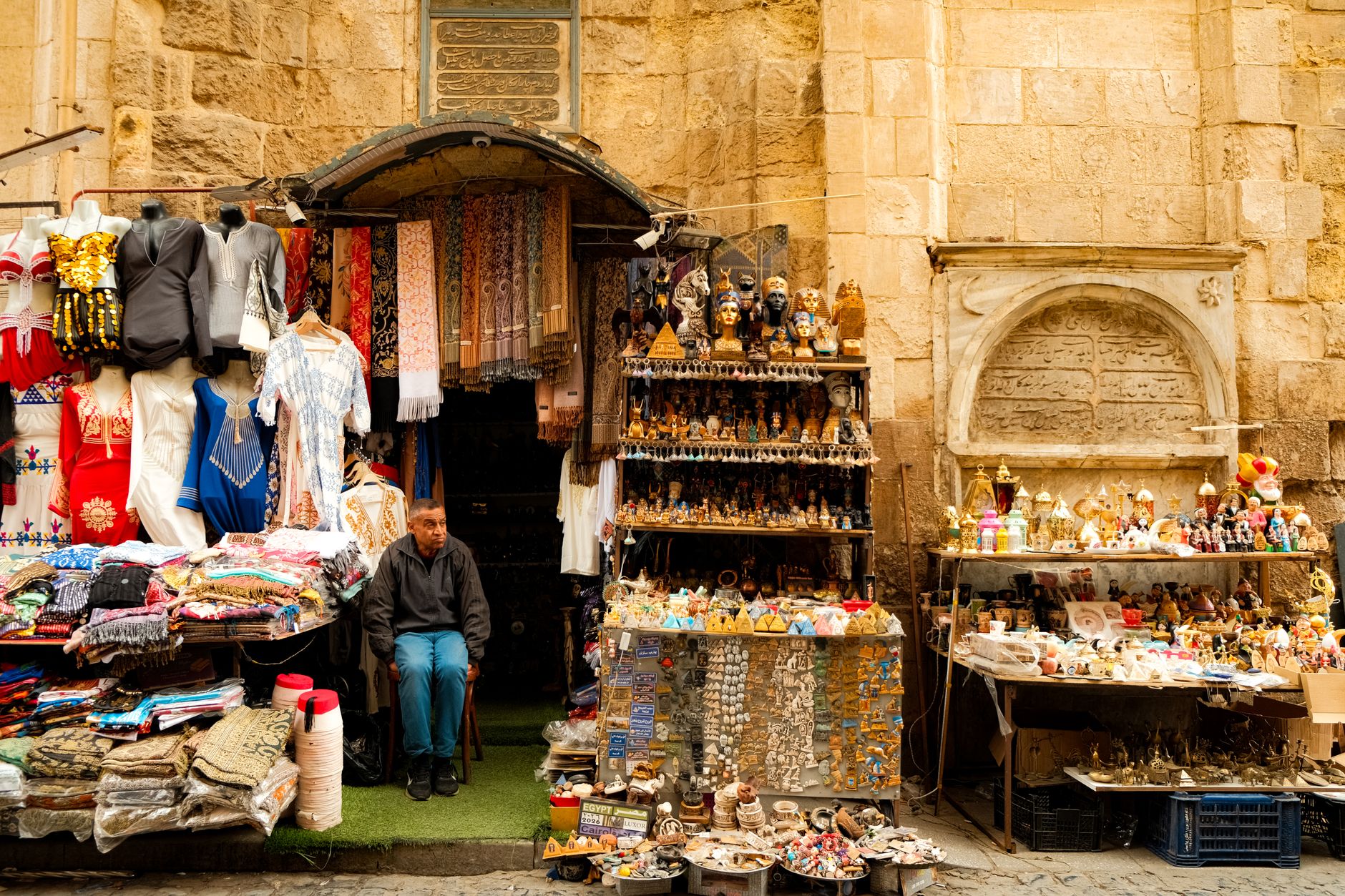
For something completely different, the Birqash camel market runs on Friday mornings in the desert outside the city. Entry is free; the only cost is getting there, and going early is essential. It’s raucous, dusty, totally unpolished and one of the most authentic things you can do near Cairo. Closer in, the traditional clothing stalls around Al-Azhar are free to drift through for a window into ordinary Cairene life rather than the tourist trade.
Cheap, not free: eating well for a couple of dollars
The atmosphere’s free; the food’s nearly so. Cairo street eating is some of the best value on the planet:
| Dish | Where | Rough cost |
|---|---|---|
| Koshari (the national plate) | Abou Tarek, downtown | $1–$2 |
| Foul & ta’amiya breakfast | Any street cart | under $1 |
| Hawawshi (spiced meat in bread) | Tabei El Domyati | $2–$3 |
| Sugarcane juice | Street vendors | well under $1 |
| Karkadeh (hibiscus tea) | Khan el-Khalili cafés | under $1 |
| Fresh baladi bread | Neighbourhood bakeries | a few cents |
For the full rundown of where to eat cheaply and what to order, our guide to eating well for less goes deep on street food and budget restaurants.
An almost-free three-day plan
Day 1 — Islamic Cairo. Walk Al-Muizz Street from Bab al-Futuh to Bab Zuwayla. Free at Al-Azhar Mosque and Ibn Tulun. Koshari lunch ($2). Mint tea at El Fishawy and a slow browse through Khan el-Khalili in the late-afternoon light.
Day 2 — Coptic Cairo and the river. Free morning at the Hanging Church, Saints Sergius and Bacchus, and Ben Ezra Synagogue (metro there, about 8 EGP). Cheap downtown lunch. Afternoon Corniche walk from Tahrir over Qasr El Nil Bridge to Zamalek, finishing with sunset at Al-Azhar Park (about 35 EGP).
Day 3 — Pyramids view and downtown. Uber to the Giza roadside viewpoint for the free Sphinx-and-pyramids photo (a few dollars each way), then a self-guided Belle Époque wander through downtown in the afternoon. A shared felucca on the Nile at sunset runs only a few dollars if you want one paid treat.
Across three days you’ll spend something like $30–$60 on food, transport and the odd tiny entry fee — and the sightseeing itself is almost all free. If a night out tempts you, our Cairo at night guide covers the cheap-and-cheerful end as well as the splashy bits, and if you’re travelling as a couple the romantic things to do guide has more sunset-and-felucca ideas that don’t cost much.
Stretch this plan to a full week and the arithmetic shifts: beds, transport and the occasional ticket start to accumulate. A realistic fifty-dollar daily budget for Cairo shows where that money goes across seven days, and which single splurge is worth breaking it for.
Budget-day etiquette and the small print
- Dress modestly at mosques and churches — shoulders and knees covered; women bring a scarf for the head.
- Tip the shoe-keepers at mosques. A small note is the done thing and it’s not optional in spirit.
- Refuse the “free” guides. Anyone who attaches themselves to you offering a free tour, a free look inside, or to take your photo will want paying, often aggressively. A polite, firm “la, shukran” and keep walking.
- Carry small EGP notes for tips and bits and pieces — and note that the Pyramids and the ticketed monuments increasingly want a card at the gate, so don’t rely on cash there.
- Photograph people respectfully — ask first, especially with women and children, and never point a camera at soldiers, police or checkpoints.
- Use the metro. At roughly 8 EGP a ride it’s the cheapest way across town by a mile, and it skips the traffic.
Free Things to Do in Cairo FAQ
Are mosques in Cairo free to visit?
Most working ones, yes — Al-Azhar, Ibn Tulun, Al-Hussein and the everyday neighbourhood mosques are free (tip the shoe-keeper). The “monument” mosques that have been ticketed, like Sultan Hassan and the Mosque of Muhammad Ali at the Citadel, charge a small entry fee.
Is Khan el-Khalili free to enter?
Completely. It’s a public market — wandering, looking and soaking up the atmosphere cost nothing. Only buying does, and even that’s negotiable.
Can I see the Pyramids and Sphinx without paying?
Not from the plateau — going inside the site needs a ticket (usually card-only now). But you can see and photograph both for free from the eastern roadside near the Pizza Hut in Giza, which is the classic budget shot.
Is Al-Azhar Park free?
No, but it’s close. Adult entry in 2026 is around 35 EGP on weekdays and 40 at weekends — well under a dollar — for the best sunset view in the city. Cards are accepted at the gate.
Can I really do Cairo in three days on almost nothing?
Yes. Budget roughly $30–$60 across three days for food, transport and a few tiny entry fees, and fill the days with free experiences: Islamic Cairo, Coptic Cairo, the exterior Pyramids view, the Corniche and the bridges, and Al-Azhar Park. Add one paid headliner — the Grand Egyptian Museum, or the Pyramids interior — and you’ve got a trip that punches far above its cost.
Are there free walking tours in Cairo?
Tip-based ones come and go rather than running on a fixed timetable. Check current operators on social media, hostel-organised walks, or Couchsurfing meetups close to your dates — but be clear that “tip-based” still means you pay something at the end.
The bottom line
Cairo is one of the few world capitals where a near-zero budget still buys you the real city. Al-Muizz Street, Ibn Tulun, Khan el-Khalili, Coptic Cairo, the Corniche and the bridges, the Giza viewpoint, a cheap café tea you’ll remember for years — string those together and you’ve genuinely seen Cairo, not a watered-down version of it. Spend the money you saved on one great splurge and a lot of street food, and you’ll have done the city properly. For everything paid and unpaid in one place, loop back to our complete Cairo activities guide and build out the rest from there.