This article contains advertising. Our booking links are routed through a partner that adds commission tracking automatically, so if you book through one we earn a commission from the provider, at no extra cost to you. It never affects what we recommend. Affiliate disclosure
Stand at the Giza plateau car park for ten minutes and you can watch the whole Cairo tour industry go past: air-conditioned coaches unloading forty people behind a raised flag, private cars with an Egyptologist and a family of four, a couple on their own with a phone map and a look of quiet determination, and a steady line of men offering camels, horses and “special prices”. All of them paid something different to be there, and some of them paid far more than they needed to. Choosing between Cairo tours and buying your own tickets is one of the biggest money decisions of a Cairo trip, and it is surprisingly easy to get wrong in both directions.
This is the booking guide: what kinds of tours exist, what you can simply buy yourself and at what official price, where to book, how to read a tour listing, and when a guide is worth every pound. Ticket prices below are the Ministry of Tourism and Antiquities’ published foreign-visitor rates, checked in October 2026 at roughly EGP 53 to the US dollar. The Egyptian pound has been repriced several times in recent years, and ticket prices rise with it, so treat every figure as the right order of magnitude and confirm on the official site before you go. What to see is covered in our guide to the best things to do in Cairo; this page is about how to pay for it.
The official ticket prices, at a glance
Everything else on this page builds on these numbers, because every tour price is either these tickets plus transport and a guide, or a price that hides them. Foreign-visitor rates, October 2026:
| Site | Foreign adult | Foreign student | Notes |
|---|---|---|---|
| Giza plateau (general entry) | EGP 700 (about USD 13) | EGP 350 (about USD 7) | Does not include the pyramid interiors or some tombs |
| Great Pyramid interior | Separate ticket on top of plateau entry | Half the adult rate | Confirm the current price at the ticket office or on egymonuments.gov.eg |
| Grand Egyptian Museum | Priced on the official portal, tickets.gem.eg | Discounts and free entry (under-6s) listed on the portal | Timed tickets, sold only online; foreign prices rise by USD 5 from 1 November 2026 |
| Egyptian Museum, Tahrir | EGP 550 (about USD 10) | EGP 275 (about USD 5) | Audio tour EGP 75 extra |
| National Museum of Egyptian Civilization | EGP 550 (about USD 10) | EGP 300 (about USD 6) | Under-6s free |
| Saqqara (site entry) | EGP 600 (about USD 11) | EGP 300 (about USD 6) | Individual tombs and the Serapeum are extra |
| Saqqara inclusive ticket | EGP 1,400 (about USD 26) | EGP 700 (about USD 13) | Site, Imhotep Museum, the Nobles’ and New Kingdom tombs, Mereruka and Mehu |
| Cairo Citadel | EGP 550 (about USD 10) | EGP 275 (about USD 5) | Area entry ticket; the on-site cart and vehicle entry are charged separately |
Two rule changes matter to some readers. Since 1 January 2026, visitors from Arab countries pay the foreigner rate at sites run by the Supreme Council of Antiquities, where they previously had their own tier. And the Grand Egyptian Museum’s board has approved a USD 5 rise in its foreign-visitor prices from 1 November 2026, so anything quoted before then is already slightly low. Full detail on each site is in our guides to Giza pyramids tickets and prices and booking Grand Egyptian Museum tickets.
Add those up for a classic three-day first visit — the Giza plateau, the Grand Egyptian Museum, Saqqara and one more museum — and the tickets alone come to a few thousand pounds per adult. That is the floor. Any tour that seems to cost less than the tickets it promises is either leaving them out or planning to make the difference back somewhere else.
Do you need a tour in Cairo at all?
Honestly, for some of it, no. Cairo is a city where independent travel works well in places and badly in others, and the smart move is to pay for help only where it earns its keep.
Where you can comfortably go it alone
- The Grand Egyptian Museum. It is modern, well signed and designed for independent visitors, with timed tickets you buy online. The official portal also sells a Guided Tour ticket, a museum-run group tour, if you want a guide without hiring one.
- The National Museum of Egyptian Civilization and the Egyptian Museum at Tahrir. Both are easy to reach by taxi or ride-hailing app, both sell tickets at the door, and the Egyptian Museum offers an audio tour. A guide adds stories; you will not get lost without one.
- The Citadel, Khan el-Khalili and Islamic Cairo’s main streets. Busy but navigable. Our self-guided walking routes cover them step by step.
Where a guide or a tour earns its money
- The Giza plateau. Not because the pyramids are hard to understand, but because the plateau is large, hot and full of people trying to sell you something. A good guide handles the logistics, keeps the touts at a distance and knows where to stand for the views. First-timers who go alone often spend more on rides and “helpers” than a guide would have cost.
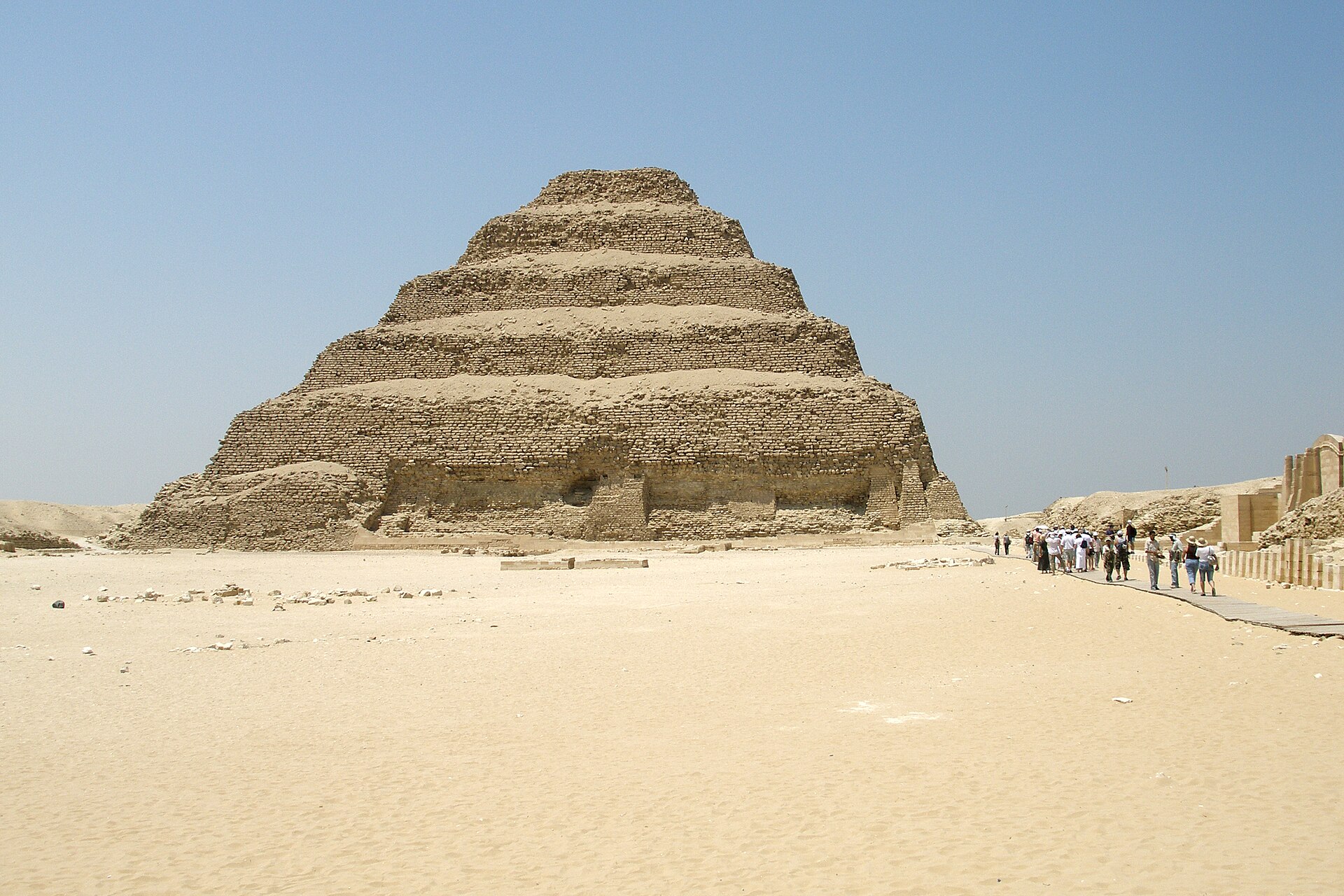
- Saqqara and Dahshur. Spread out, poorly served by public transport and full of tombs whose meaning is invisible without context. A car is close to essential, and a guide transforms the visit.
- The Egyptian Museum at Tahrir, if you care about the objects. It is crowded with treasures and thin on modern labelling. An hour with an Egyptologist there is worth a day with a guidebook.
- Anything out of town. Alexandria, Fayoum, Wadi el-Rayan, the White Desert: transport is the hard part, and a tour solves it. Our day trips from Cairo guide lays out the options.
Our verdict for most first-time visitors: book a guide for Giza and Saqqara (ideally the same day), do the Grand Egyptian Museum on your own or on its own guided tour, and walk Islamic Cairo independently with a good route. That covers the highlights with help exactly where it pays.
The kinds of Cairo tours, and who each one suits
Search for tours in Cairo and you get thousands of listings that look alike. Underneath, there are only a handful of products, and knowing which one you are looking at makes comparison much easier.
Private guided day tours
A car, a driver and a licensed guide for you alone, usually for six to nine hours. You set the pace, ask every question you like and skip what bores you. For families, couples and anyone who dislikes waiting for a group, this is the best product in Cairo, and the price gap with group tours is smaller than people expect, especially for three or four travellers sharing the car.
Small-group tours
Typically a minivan with a guide and up to a dozen or so strangers. Cheaper per person than private for solo travellers and couples, with the social upside of company. The catch is timing: pickups across the city can eat the first hour, and the day moves at the speed of the slowest member. Check the maximum group size in the listing; “small group” means different things to different operators.
Large coach tours
The cheapest guided option, and often the one bundled with hotel packages and cruise excursions. Forty people, a microphone, fixed timings and very little flexibility. Fine if you value price over everything else; frustrating if you want to linger at Saqqara or skip a shopping stop.
Multi-day packages
Cairo plus Luxor and Aswan, often with a Nile cruise, a domestic flight or the sleeper train, hotels and guides bundled together. Good value when the bundle matches what you would have booked anyway; less so when it locks you into hotels you would not have chosen. Read exactly which entry tickets are included day by day, because packages vary more here than anywhere.
Layover tours
Pyramids-between-flights tours that collect you at Cairo International and bring you back in time to fly. They work, but only with enough time, and the good operators are the ones who will tell you when your connection is too short. Our guide to Cairo layover tours explains what is realistic.
Food, walking and evening experiences
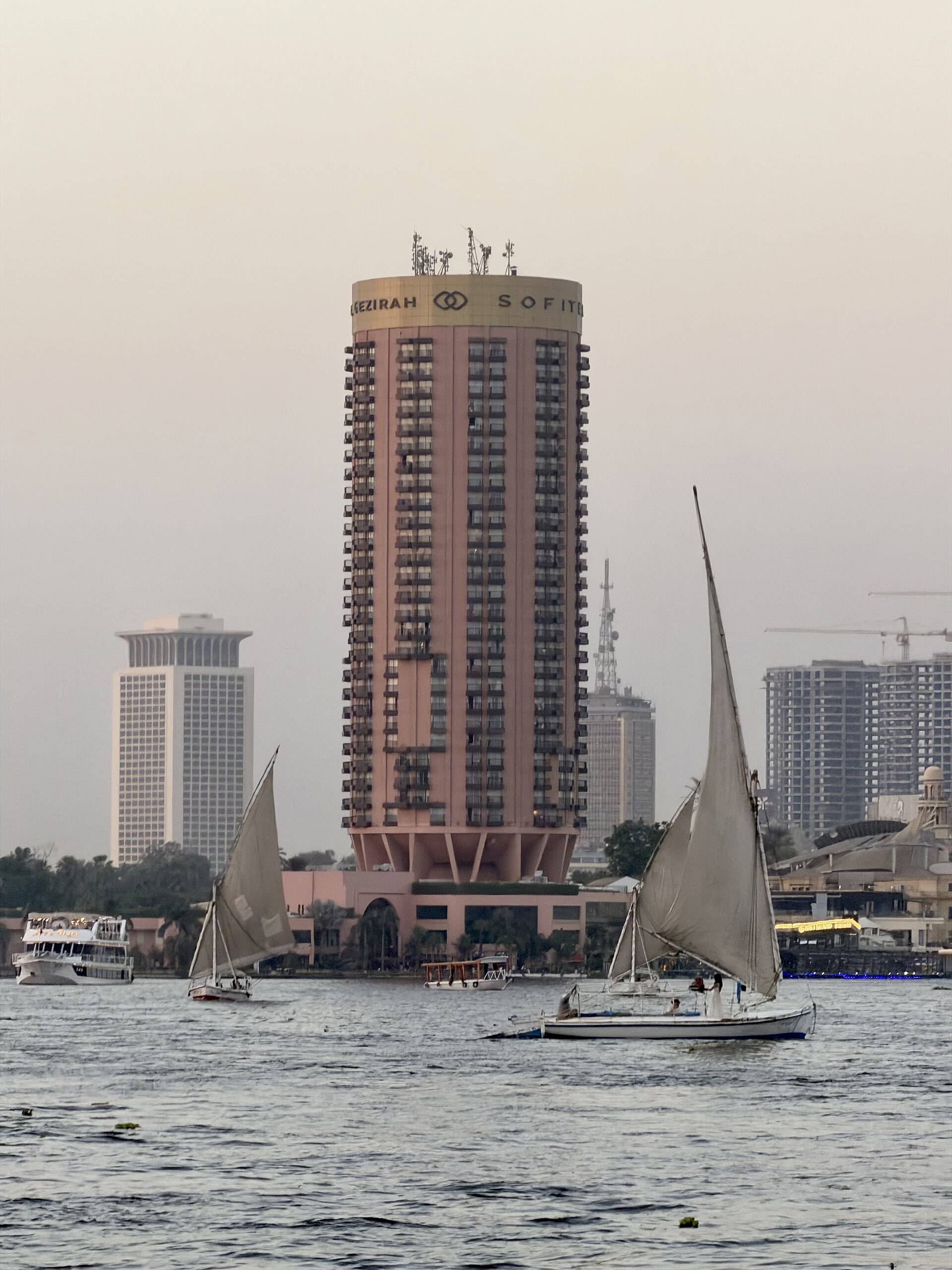
Street-food walks through Downtown or Islamic Cairo, felucca rides on the Nile at sunset, dinner cruises with a belly-dance and tanoura show. (The Sound and Light show at the pyramids is a different case: its official site says it is temporarily suspended for development works, so check there before you plan an evening around it.) These are the easiest experiences to book on the day and the hardest to compare, because quality varies enormously. Our guides to Cairo food tours, Nile dinner cruises and felucca rides cover each one.
Adventure add-ons at Giza
Camel and horse rides, quad bikes on the desert edge, sunset viewpoints. These are sold everywhere, at every price, and they are where most bad experiences at Giza begin. If you want one, book it as part of a tour with a clear price, or read our camel ride guide before you negotiate at the plateau. One thing to know before you search: hot-air ballooning is a Luxor activity. Listings that promise a “Cairo balloon ride” are almost always Luxor packages with a flight attached.
Tickets you can buy yourself
The cheapest way to see Cairo is to buy official tickets yourself and pay only for the transport and guiding you actually want. Here is how each one works.
Grand Egyptian Museum: online only, from one site
The museum’s own ticketing portal, tickets.gem.eg, describes itself as the only official website for its tickets, and says the museum is not responsible for tickets bought through other platforms. Tickets are for a specific date and time slot, are not transferable, and are not refundable except in cases of force majeure. Two products are sold: standard admission and the museum’s Guided Tour ticket, which is a group tour rather than a private guide. If a tour operator includes the museum, ask how they are buying the tickets; a reputable one will book through the official portal or have its own guide accompany you.
The galleries open at 09:00 every day and close at 18:00 on Sundays, Mondays, Tuesdays, Thursdays and Fridays, and at 21:00 on Wednesdays and Saturdays, with last entry an hour before closing. Those two late evenings are a gift for anyone who spends the morning at the pyramids.
Ministry sites: Giza, Saqqara, the museums and the Citadel
The Ministry of Tourism and Antiquities runs the other major sites and publishes their prices on its official site, egymonuments.gov.eg, which also sells tickets online. At the Giza plateau the ministry has added self-service machines that take bank cards, alongside the ticket windows. Carry a card that works abroad, and some cash as a backup, and you will be covered whichever way the counter wants to be paid that day.
Opening hours are where you need to be careful. The ministry’s own pages do not always agree with each other, and winter and summer timetables differ, so check the site’s page on egymonuments.gov.eg shortly before you go. The Egyptian Museum at Tahrir and the National Museum of Egyptian Civilization both list 09:00 to 17:00, with the ticket window closing at 16:00, and NMEC adds a Friday evening session from 18:00 to 21:00.
The Great Pyramid interior
Going inside the Great Pyramid is a separate ticket on top of plateau entry, and it is not cheap. The ministry’s own page and recent Egyptian press reports have quoted different prices, so confirm the current figure at the ticket office or on egymonuments.gov.eg. Interior tickets are limited, and in the busiest months they can run out, which is one argument for arriving early or letting a tour operator handle it. Whether it is worth it is a genuinely personal call: the passage is steep, narrow and hot, and the burial chamber is bare. Our guide to going inside the Great Pyramid helps you decide.
The Cairo Pass
The Ministry of Tourism and Antiquities sells a Cairo Pass that covers the archaeological sites and museums of Greater Cairo, with one notable exception: the National Museum of Egyptian Civilization. The pass is valid for five days, is sold at the ticket counters of the Egyptian Museum at Tahrir, the Giza plateau and the Citadel, and needs a copy of your passport and a passport photo. If you buy a Luxor Pass in the same calendar year, the second pass is half price.
Whether it saves money depends entirely on how much you will see in five days. Ask for the current price at one of those counters, then add up the individual tickets for what you actually plan to visit (the table above is a start) and compare. For a dense five-day itinerary of Giza, Saqqara, Dahshur, the museums and the Citadel, it can come out ahead; for a two-day visit, it rarely will. Check, too, whether the Grand Egyptian Museum is included before you count on it.
Pricing a tour quote yourself
The quickest way to tell whether a quote is fair is to take it apart. Every guided day in Cairo is made of the same four pieces: entry tickets, a car and driver, a guide, and the operator’s margin. You know the first piece exactly, because it is published. Here is the arithmetic for one of the most popular days, Giza and Saqqara together, for two foreign adults:
| Piece | For two adults | Where the number comes from |
|---|---|---|
| Giza plateau entry | EGP 1,400 (about USD 26) | EGP 700 each, ministry price |
| Saqqara inclusive ticket | EGP 2,800 (about USD 53) | EGP 1,400 each, ministry price |
| Tickets subtotal | EGP 4,200 (about USD 79) | Before any pyramid interior |
| Car and driver for the day | Ask the operator to quote it separately | Varies with the car and the hours |
| Licensed guide | Ask the operator to quote it separately | Varies with language and experience |
Swap the Saqqara inclusive ticket for plain site entry at EGP 600 each and the ticket bill for two drops to EGP 2,600, but you lose most of the tombs that make Saqqara special. Add the Great Pyramid interior and it climbs again. Either way, you now have a floor. If a “private tour with all entry fees” for two people costs barely more than those tickets, the money is being made somewhere else, usually in a shopping stop. If a quote is far above the floor, ask for it to be broken down; a good operator will happily show you what the car, the guide and the tickets each cost.
The same logic works for any day. Price the tickets from the table at the top of this page, then judge the rest of the quote on what you are getting: the quality of the guide, the size of the group, the hours and the flexibility. For students, the ministry’s student rates are roughly half the adult price at most sites, so a student card can cut the ticket floor almost in two. Carry the card itself.
Where to book: platforms, local operators and hotels
Once you know what you want, there are three ways to buy it. None is always best.
| Where | Good for | Watch out for |
|---|---|---|
| Global platforms (GetYourGuide, Viator and similar) | Reviews, easy comparison, card payment, standard cancellation terms | The same local operator listed under several names; prices padded by commission |
| Local operators, booked direct | Flexibility, private itineraries, often a better price | Payment by bank transfer or on the day; fewer protections if it goes wrong |
| Your hotel | Convenience, accountability, pickup that is guaranteed to find you | Usually the most expensive; the guide may be whoever is free |
| On the street or at the site | Nothing you could not get better elsewhere | Unlicensed guides, inflated prices, shopping detours |
Cancellation terms, in plain English
The big platforms publish their default rules, and they are similar. GetYourGuide’s general terms give a full refund if you cancel more than 24 hours before the activity starts, and nothing if you cancel later or do not show up, though an individual listing can set different terms. Viator’s standard policy also lets you cancel or change up to 24 hours before the start, while some of its products are marked as non-refundable. Always read the cancellation line on the specific listing before you pay, not the platform’s general promise. When booking direct with a local operator, get the cancellation terms in writing, in the same email or message as the price.
The platform-versus-direct question
Many of the tours on the big platforms are run by Cairo operators who also take direct bookings. Booking direct can be cheaper and more flexible, especially for a private tour you want to customise. Booking through a platform buys you a standard refund process, a review history you can trust a little more, and someone to complain to. A sensible middle path is to find an operator with a long, consistent review record on a platform, book your first tour there, and book direct for anything after that if the first day went well.
How to read a Cairo tour listing
Most disappointment with Cairo tours comes from something that was technically in the listing but easy to miss. Before you book, find the answer to each of these:
- Are entry tickets included? This is the big one. Many low headline prices exclude them, and the tickets can be worth more than the tour. “Entry fees” in the excluded list means you will pay at each gate.
- Which tickets, exactly? Plateau entry is not the Great Pyramid interior. Saqqara site entry is not the inclusive ticket. A listing that says “pyramids entry” should say which.
- Private or shared? “Private transport” with a shared guide is not a private tour.
- Who is guiding? A licensed Egyptologist guide and a driver who “speaks English” are very different products. Professional guides in Egypt are licensed; ask to see the licence on the day.
- Is lunch included, and where? A “local restaurant” lunch on the Giza tour circuit is often a large tourist restaurant with a shop attached.
- Are there shopping stops? Papyrus, perfume, alabaster and carpet “factories” pay commission to guides and drivers. A good listing says “no shopping stops” outright. If it does not mention them, ask.
- What time is pickup, and from where? Hotels in Zamalek, Downtown and Giza are not equally convenient for a pyramids tour.
- How long is it really? An eight-hour tour with ninety minutes of pickups and two shopping stops is a five-hour tour.
- What are the cancellation terms? As above: the listing’s own line, not the platform’s slogan.
A listing that answers all nine clearly is usually run by someone who has nothing to hide. A listing that answers none of them, with a price that looks too good, usually makes its money on the day.
Shopping stops and commission: the honest picture
The commission system is the open secret of Cairo tourism. Many guides and drivers are paid partly through commission on what their passengers buy, which is why so many tours “happen” to pass a papyrus institute, a perfume palace or a carpet school. The products are not always bad. The prices usually are, because the commission is built in.
You can avoid most of it with three habits. Book tours that state “no shopping stops” in writing. If a stop happens anyway, say once, politely and clearly, that you are not buying, and stay by the door or in the car. And buy what you want from shops you chose yourself, in Khan el-Khalili or Zamalek, with time to compare. Our guide to buying papyrus in Cairo explains why the “institute” version is often banana leaf, and our safety and scams guide covers the wider set of tricks around the big sites.

Guides: licences, languages and what a good one does
A good Cairo guide is worth more than any tour company’s brochure. The best are trained Egyptologists who can read the hieroglyphs on a tomb wall, tell you which king the guards are yawning past, and know when to stop talking so you can just look.
- Ask for a licensed guide. Tour guiding in Egypt is a licensed profession. A reputable operator will tell you the guide’s name in advance and confirm that they are licensed, and the guide should be able to show you their ID on the day.
- Ask about language and specialism. Cairo has guides working in many languages, so ask for yours rather than settling for English. If you care about one period, Old Kingdom tombs or Islamic Cairo, ask for a guide who specialises in it.
- Meet the guide where it counts. At the Giza plateau and Saqqara, an Egyptologist adds the most. At the Grand Egyptian Museum, its own Guided Tour ticket is a cheaper alternative.
- Agree the day in advance. Which sites, in what order, how long at each, and no shopping stops. A good guide welcomes this; a guide who pushes back is telling you something.
Tipping guides and drivers
Tips are expected at the end of a guided day, for the guide and separately for the driver, and they are not usually included in the tour price. How much depends on the length of the day and the quality of the service, and it is one of the most-asked questions about Cairo. Our Cairo tipping guide gives a full breakdown, from guides and drivers to the restroom attendants at the sites. Keep small notes ready; a guide who has to break a large note for you is an awkward end to a good day.
When to book
- The Grand Egyptian Museum: as soon as your dates are fixed, especially for a weekend or a Wednesday or Saturday evening slot. Tickets are timed and sold online only.
- Private guides and popular tour operators: a few weeks ahead in the cooler months, when Cairo is busiest; a few days ahead in summer.
- Group tours: a day or two ahead is usually fine, outside the busiest holidays.
- Felucca rides and dinner cruises: the day before, or on the day.
- Great Pyramid interior: buy it early in the day if you are buying at the site, because the number of tickets is limited.
Photography rules at the big sites
Camera rules are a common source of surprise charges and arguments, so it pays to know them before you go. At the Grand Egyptian Museum, personal photography is allowed except in designated areas of the Tutankhamun Galleries, and flash, tripods, selfie sticks and drones are not permitted. At the Egyptian Museum in Tahrir, photography with a phone is free. The National Museum of Egyptian Civilization bans flash, tripods and monopods. Drones are not allowed at the Grand Egyptian Museum, so leave yours at home. If anyone at a site asks you for a “photo fee” that is not printed on an official sign or ticket, it is a tip request, not a rule.
Three sample booking plans
The right mix of tours and independent tickets depends on who you are. Here is how it might look for three different trips.
First-timers, three days, mid-range budget
- Day 1: a private guided day at Giza and Saqqara, with entry tickets either included or paid at the gates, and a written “no shopping stops” agreement.
- Day 2: the Grand Egyptian Museum on a timed ticket from the official portal, independently or on the museum’s own guided tour, then a felucca at sunset.
- Day 3: Islamic Cairo and Khan el-Khalili on foot with a self-guided route, and the Egyptian Museum at Tahrir or NMEC by taxi.
Independent and budget-minded, four or five days
- Buy every ticket yourself, price the Cairo Pass against your plan, and use ride-hailing apps between sites.
- Hire a car and driver, not a guide, for one day to Saqqara and Dahshur, because the transport is the hard part.
- Splash out on a guide for half a day at Giza or the Egyptian Museum, where the context matters most.
A family with children
- A private tour for any day with a lot of driving, so you control the breaks, the air conditioning and the snacks.
- The Grand Egyptian Museum on a weekday morning, with its Children’s Museum and wide spaces.
- Short, fun add-ons booked in advance at a fixed price, a felucca or a short camel ride, rather than negotiated in the heat.
If something goes wrong
Most Cairo tours go smoothly. When one does not, a few steps help.
- The driver does not turn up. Contact the operator through the booking platform’s messaging, or directly by WhatsApp, at once. Keep screenshots. After a reasonable wait, book a ride yourself and ask for a refund.
- The tour is not what was described. Raise it on the day, politely, with the guide; then in writing with the operator or platform, quoting the listing.
- You are pressured to buy, ride or tip. Say no once, clearly. A licensed guide working for a reputable company will back off. Note the name and report it to the operator.
- A site is unexpectedly closed or a ticket is unavailable. Ask what the operator will substitute or refund before the day continues, not after.
Paying by card, through a platform with a clear refund policy, is the simplest protection for anyone nervous about a first tour in Cairo.
Frequently asked questions
Is it better to book Cairo tours in advance or when I arrive?
Book private guides, popular operators and Grand Egyptian Museum tickets in advance, especially in the cooler months. Felucca rides, dinner cruises and many group tours can wait until you arrive. Never book with someone who approaches you in the street or at a site.
Do Cairo tours include entry tickets?
Some do and many do not. Check the “included” and “excluded” lists in every listing. Where tickets are excluded, budget for the official prices: EGP 700 for Giza plateau entry and EGP 550 for the Egyptian Museum at Tahrir for foreign adults in October 2026, for example.
How much does it cost to visit the pyramids without a tour?
Plateau entry is EGP 700 (about USD 13) for a foreign adult, plus transport and any extras such as the Great Pyramid interior. Our Giza tickets guide breaks down every option.
Can I buy Grand Egyptian Museum tickets at the door?
Plan not to. The museum sells timed tickets through its official portal, tickets.gem.eg, which it describes as the only official place to buy them. Tickets are for a fixed date and time and are not refundable except in cases of force majeure.
Is the Cairo Pass worth it?
Only if you will see a lot in five days. It covers Greater Cairo’s ministry sites and museums except the National Museum of Egyptian Civilization. Ask for the current price at the Egyptian Museum, Giza or Citadel counters and compare it with the individual tickets you would buy.
Is GetYourGuide or Viator safe for Cairo tours?
Both are widely used, and both offer free cancellation up to 24 hours before the start on their standard policy, though individual listings can differ. The quality depends on the local operator behind the listing, so read recent reviews and the listing’s details carefully.
Should I hire a guide for the Grand Egyptian Museum?
It is optional. The museum is designed for independent visitors, and its official portal sells a museum-run Guided Tour ticket if you want one. A private Egyptologist adds depth for enthusiasts.
Do I need to tip my guide and driver?
Yes, tips are expected for both at the end of the day and are not usually included. See our tipping guide for amounts.
For the pyramids specifically, the choice usually comes down to four formats: a half-day at Giza, Giza with the Grand Egyptian Museum, Giza with Saqqara, or a quieter day at Saqqara, Dahshur and Memphis. Our comparison of pyramids tours from Cairo sets real operator prices side by side and shows what each one actually includes.
Whether to share the day is one of the biggest decisions in planning your sightseeing. Our guide to private vs group tours in Cairo works through the cost maths with real operator prices, and shows why the answer usually changes once there are two or more of you.
Related Cairo Guides
- Cairo Itineraries: Day-by-Day Plans for 1 to 7 Days
- Saqqara Step Pyramid Day Trip from Cairo
- The Egyptian Museum at Tahrir Square: Complete Guide
- The National Museum of Egyptian Civilization and the Royal Mummies
- The Best Nile Cruise Companies in Cairo
Photo Credits
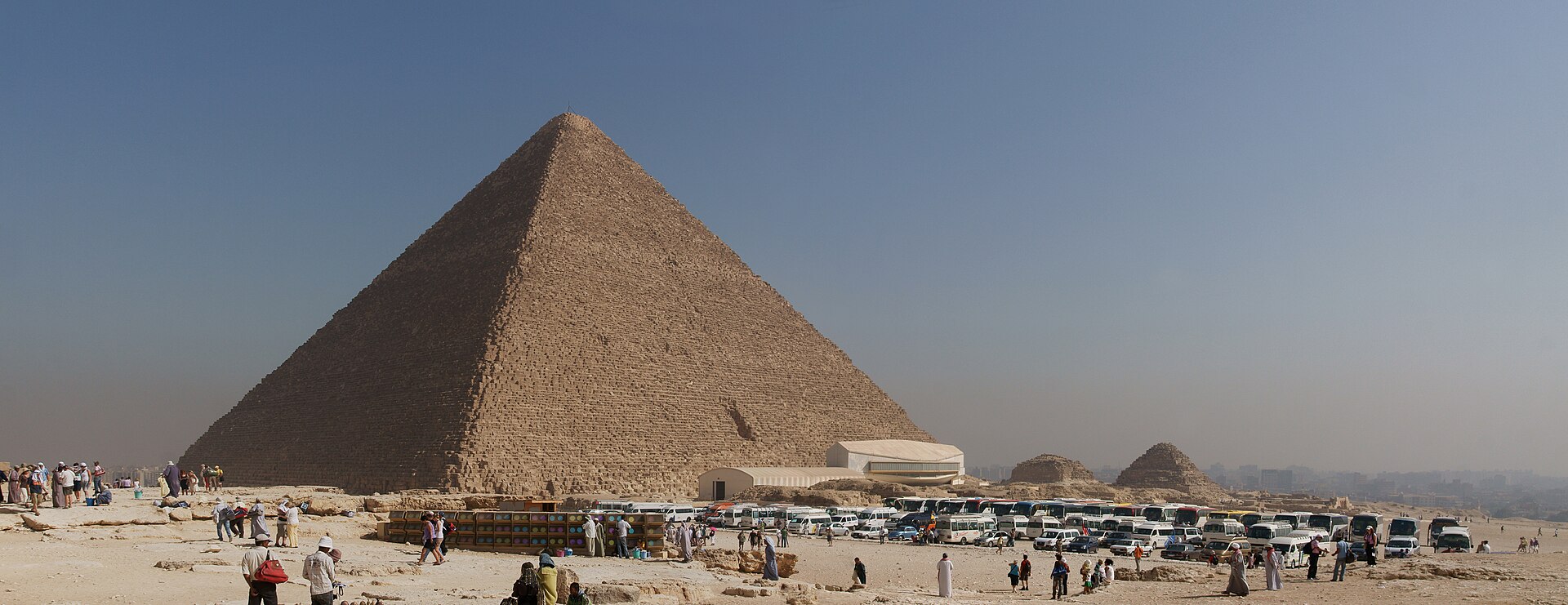
Tourist buses and the Great Pyramid of Giza (featured image): photo by kallerna, via Wikimedia Commons (CC BY-SA 3.0).
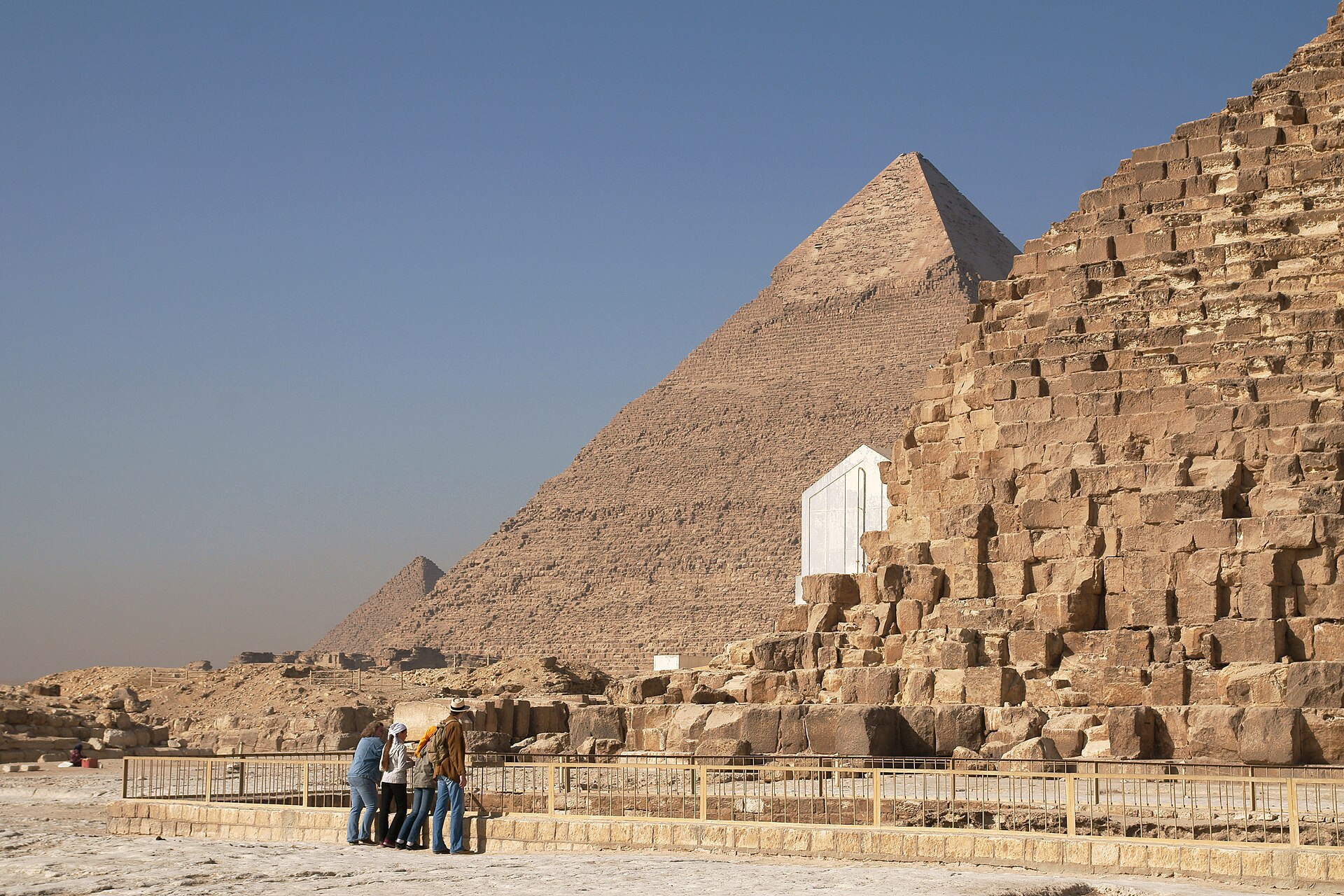
Visitors at the base of the Great Pyramid, with the Pyramid of Khafre behind: photo by kallerna, via Wikimedia Commons (CC BY-SA 3.0).
Feluccas on the Nile in Cairo: photo by Slyronit, via Wikimedia Commons (CC BY-SA 4.0).
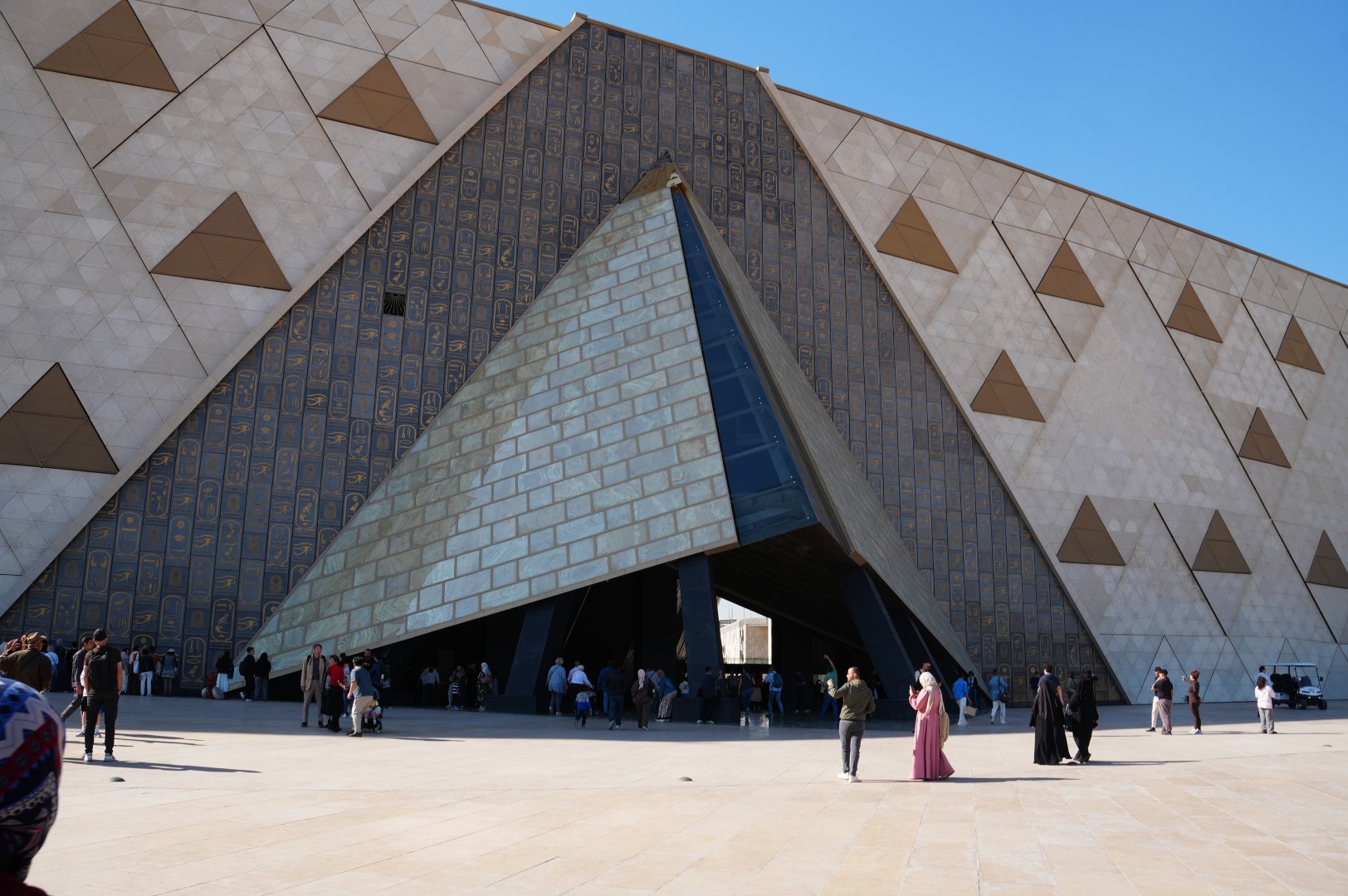
Main entrance of the Grand Egyptian Museum: photo by Ibrahim.ID, via Wikimedia Commons (Public domain).