This article contains advertising. Our booking links are routed through a partner that adds commission tracking automatically, so if you book through one we earn a commission from the provider, at no extra cost to you. It never affects what we recommend. Affiliate disclosure
Cairo International has more banks than most visitors expect. The Cairo Airport Company’s own directory lists a dozen across the three terminals, from Banque Misr and the National Bank of Egypt to HSBC and Banque du Caire. Their exchange offices sit in the arrivals halls before immigration, and there are ATMs on both sides of passport control. Money, in other words, is easy. Data takes a little more thought, because a Cairo airport SIM card is cheap and quick to buy but not every network’s tourist line is sold the same way, and the order you do the two jobs in matters more than people expect.
This guide covers the four connectivity and money jobs that can be done before you leave the airport, and only the airport versions of them: SIM cards and eSIMs, the free Wi-Fi, ATMs and currency exchange. It also covers what to do with leftover pounds on the way home. The city-wide picture — every network’s bundles, where to change money in town, which cards work where — is in our guides to SIM cards and internet in Cairo and money and currency exchange in Cairo. Prices were checked in October 2026 against the operators’ own sites, at roughly EGP 53 to the US dollar. The pound has been repriced several times in recent years, so treat every figure as the right order of magnitude rather than a quote.
At a glance: four jobs, one order
| Job | Where at the airport | Typical cost (October 2026) | Our verdict |
|---|---|---|---|
| Cash | Bank ATMs, before and after passport control | Your own bank’s fees, plus any the machine shows on screen | Do this first: the SIM kiosk, porter and driver all want pounds |
| SIM card | Operator counters in the arrivals area | From EGP 100 (about USD 2) for 5 GB to EGP 300 (USD 6) for 20 GB on WE’s tourist bundles | Worth it for any stay over three days |
| Wi-Fi | Passenger network in the terminals | Described as free | Fine for a message home; do not rely on it to book a ride |
| Currency exchange | Bank exchange offices in the arrivals halls, before immigration | The posted rate; check it against the Central Bank’s | Change a small amount if you arrived with cash only |
The order works like this: visa if you need one, then passport control, then cash, then the SIM card, then your ride. Each step makes the next one easier. Here is why, and what each one involves.
The order to do things in
Most first-day problems at Cairo airport come from doing things in the wrong order. The classic version goes like this. A traveller lands at 2 a.m. with no pounds and a phone that only works on Wi-Fi, walks out through customs, finds that the phone counter wants cash, goes back to look for an ATM, comes out again to book an Uber, loses the airport Wi-Fi at the kerb, and ends up accepting a ride from whoever is standing nearest. Every part of that can be avoided.
- Visa, if you need one. The traditional visa sticker is sold for cash at the bank counters before passport control, and Cairo also runs a digital QR-code visa paid by card, either online before you fly or at self-service kiosks in the arrivals halls. Our step-by-step guide to the Egypt visa on arrival covers both, with the current fees.
- Passport control. Nothing to buy here, but keep your hotel address handy for the arrival card.
- Cash from a bank ATM. There are machines before immigration as well as after it, so you can sort this at the first one you pass. Take out enough for the first two or three days (worked out below).
- A SIM card. Do it before you walk out into the public arrivals hall, if you can. Bags at Cairo can take a while at night, and a counter visit fits neatly into that gap.
- Customs, then your ride. By the time you reach the kerb you have pounds for tips, data for an app, and a working number for a driver to call.
If you have already set up a travel eSIM before you flew, skip step four and keep the time. If you are being met by a hotel driver who has your flight number, you need less cash on day one, but you will still want data. The full arrival sequence — porters, customs rules, the taxi gauntlet — is in our guide to arriving at Cairo airport.
SIM cards at Cairo airport
Egypt has four mobile networks: Vodafone Egypt, Orange Egypt, e& Egypt (still branded etisalat on parts of its own website, and still called Etisalat by most Egyptians) and WE, the mobile arm of state-owned Telecom Egypt. All four sell lines meant for visitors, and any of them is fine for a trip that stays in Cairo and Giza. Where they differ is in how much they tell you before you get to the counter.
Where to buy
The operators’ counters are in the arrivals area, so you deal with them after passport control and before you head out to meet your driver. Which networks are staffed, and where exactly, varies by terminal and by the hour, and opening times are not published. If you land in the small hours and find a counter shut, do not panic: use the free Wi-Fi to message your hotel or book your ride, and buy a SIM in the city the next day. Every network has branches in the big malls, in Downtown, in Zamalek and in Heliopolis.
What you will pay
Two of the four networks publish their tourist bundles clearly, and they make the useful benchmark. These are the prices on the operators’ own pages in October 2026:
| Network and bundle | What you get | Price | Good for |
|---|---|---|---|
| WE Mobile Egypt 300 | 20,000 MB, 120 local minutes, 60 international minutes, 30 days | EGP 300 (about USD 6) plus tax | A week or two of maps, messaging and ride-hailing |
| WE Mobile Egypt 100 | 5,000 MB, 60 local minutes, 20 international minutes, 30 days | EGP 100 (about USD 2) plus tax | A short stay or a backup line |
| e& Travel 200 | 7 GB, 100 local minutes, 5 international calls | EGP 200 (about USD 4), tax included | A long weekend with some calls home |
| Orange Holidays Line | Tourist line with data bundles | Check the Holidays Line page on Orange Egypt’s website or the counter’s price board | Comparing at the counter |
| Vodafone | Tourist line with data bundles | Check Vodafone Egypt’s website or the counter’s price board | Comparing at the counter |
Both WE bundles are for tourists only and can be renewed when they run out; e& says its Travel 200 bundle cannot be renewed, so a heavy user would need a top-up instead. Orange and Vodafone price their tourist lines on their own sites and on boards at the counter, and those figures change often enough that it is better to read them on the day than to rely on a number from a blog. The point of the table is the order of magnitude: a month of local data in Egypt costs a few dollars, not tens of dollars, so there is no reason to buy the smallest bundle and run out halfway through the trip.
As a rough guide, a week of maps, messaging, ride-hailing and the odd photo upload sits comfortably inside 20 GB. If you stream video, back up photos as you go or run a laptop off your phone, buy more than you think you need.
What to bring, and how long it takes
SIM registration in Egypt is mandatory, so you need your passport. The assistant registers the line to you, puts the SIM in your phone and activates the bundle. Make sure your phone is unlocked before you travel: a handset tied to your home network will not accept an Egyptian SIM, and no counter can fix that.
Four habits save trouble later:
- Test it at the counter. Open a map, send a WhatsApp message and load a web page before you walk away. Problems are fixed in two minutes at the counter and take an afternoon to fix in town.
- Photograph your new number and the receipt. You will need the number for ride-hailing apps, restaurant bookings and your hotel, and you will not remember it.
- Keep your home SIM safe. Tape it inside your passport cover or put it in the small bag the assistant gives you. Losing it means trouble with two-factor codes from your bank at home.
- Ask what the bundle includes. Some packages split their allowance between general data, social apps and minutes, so a headline figure can mean less than it looks if you mostly watch video. Ask the assistant to show you the breakdown before you pay.
The 2026 phone rules
Egypt changed how imported phones are treated in January 2026, when the customs exemption that used to let arriving passengers bring a phone in duty-free came to an end. Visitors are not affected in practice. According to Egypt’s Customs Authority, a tourist who buys a local tourist line gets an automatic 90-day exemption for their phone, and the clock starts again on each visit. Phones running on foreign SIMs or roaming are not charged at all. The rule mainly matters to Egyptians and long-stay residents; if you are staying longer than three months, ask about it when you buy your SIM.
Which network to choose
For Cairo and Giza alone, honestly, it barely matters. All four networks cover the city and the pyramids area, and the deciding factor at 1 a.m. is usually which counter has the shortest queue. WE is the easiest to budget for because its tourist bundles are published in full; e&’s Travel 200 suits a short trip with a few calls. If your trip continues to Luxor, Aswan, the Western Desert or the Red Sea coast, ask at the counter about coverage on your route, and look at the operator’s coverage map before you choose. The full comparison of networks and top-ups is in our connectivity guide.
eSIMs: skipping the counter entirely
A travel eSIM bought online before you fly is the alternative to the airport queue. You install it at home, switch it on when the wheels touch the ground, and have data before you leave your seat. On cost per gigabyte it usually loses to a local bundle, often by a wide margin, so compare the price of the eSIM you are looking at with the tourist bundles above. On convenience it wins, and for some trips that matters more.
- An eSIM makes sense for stays of three days or fewer, for arrivals in the small hours when you want to walk straight out, for layovers, and for anyone who dislikes queues more than they mind paying extra.
- A local SIM makes sense for a week or more, for heavy data use, and for anyone who wants an Egyptian number. Some local services and Wi-Fi logins send one-time codes by text, and an Egyptian number receives them reliably.
- Both is a sensible combination if your phone supports two lines: a small eSIM for the arrival, then a cheap local bundle bought at the airport or in town the next day.
Egypt’s own networks do offer eSIMs, but not in a way that helps on arrival. Orange Egypt launched eSIM in December 2024, and its own announcement says new customers have to visit a branch to get one. In practice, a physical SIM from an airport counter is still the quickest way onto a local network.
Free Wi-Fi at Cairo airport
Passenger Wi-Fi is available in the terminals and is described as free, though coverage and login rules vary by terminal; the Cairo Airport Company’s website is the place to check. Connecting works the usual way: join the airport network that appears in your phone’s list, open a browser, and follow the login page. Network names change from time to time, so pick the one that is plainly the airport’s rather than an open hotspot with a vague name. If the login asks for a phone number and a text code, and your foreign number does not receive it, that is one more argument for having data of your own.
Treat the airport Wi-Fi as good enough for a message to say you have landed, and not much more. Speeds vary with how many flights have just arrived, and no terminal network reaches far beyond the doors, which is exactly where you need it most: at the kerb and in the ride-hailing pickup areas. Booking an Uber on airport Wi-Fi and then losing the connection as you walk out to meet the driver is a very common first-night problem. If you have no data, either book your ride from inside and agree a pickup point you can find without the app, or use the official transport desks in the arrivals hall. Our guide to Uber and Careem in Cairo explains the pickup points and how to pay.
Three things to do before you fly, whatever you plan to buy on arrival:
- Download offline maps of Cairo and Giza in Google Maps or a similar app. They work with no signal at all.
- Screenshot your hotel’s name and address, ideally in Arabic as well as English, so you can show it to a driver.
- Save your hotel’s phone number and your airport driver’s WhatsApp number, if you have one, where you can find them offline.
Lounges have their own Wi-Fi, and it is usually the calmer place to work or upload photos. If you are flying out with lounge access, our guide to Cairo’s airport lounges lists them terminal by terminal.
ATMs at Cairo airport
For most visitors an ATM is the cheapest and simplest way to get Egyptian pounds, at the airport and everywhere else. The Cairo Airport Company lists ATMs both before and after immigration, and the banks on its directory include Banque Misr, the National Bank of Egypt, CIB, QNB Alahli, HSBC, Banque du Caire, Bank of Alexandria, ADIB and Mashreq. That is plenty of choice, so there is no need to settle for the first machine you see if it looks unfamiliar.
Use a bank’s machine
Stick to an ATM with a bank’s name on it. A bank machine is less likely to swallow a card, easier to deal with if it does (the bank has a counter nearby), and shows its fees clearly on screen. If a machine adds a charge of its own, the fee should appear on screen before the cash comes out, so read the screen and cancel if the fee looks steep. Your home bank may still charge its own foreign-transaction or withdrawal fee on top, and that is between you and your bank.
Limits
Withdrawal limits vary from bank to bank and machine to machine, and your own card has limits too, often lower than the machine’s. If a withdrawal is refused, try a smaller amount before you assume the card is blocked. Tell your bank you are travelling to Egypt before you leave home, and carry a second card from a different bank in a separate pocket. An ATM that swallows your only card at 2 a.m. is a miserable start to a trip.
Always decline the conversion
Some machines offer to charge your card in your home currency rather than in pounds, and present it as a convenience. It isn’t. This is dynamic currency conversion, and the rate built into it is almost always worse than the one your own bank would apply. Choose to be charged in Egyptian pounds every time, at ATMs and when paying by card in shops and restaurants.
How much to take out on arrival
Enough for the first two or three days, and no more. Most of Cairo’s day-to-day costs are small and paid in cash, but you will pass plenty of ATMs in the city. Here is what the first 48 hours usually need cash for:
- Your ride into town, if you pay the driver in cash. The fares from each terminal are in our guide to Cairo airport transfers.
- Your SIM card, which on the published tourist bundles is EGP 100–300 plus tax.
- Tips: the porter, the driver, hotel staff and restroom attendants. Our Cairo tipping guide covers who expects what.
- Street food, cafés, water and small purchases, which add up faster than you would think.
We would take out somewhere around EGP 4,000–6,000 (about USD 75–115). That covers the essentials with a comfortable margin for a sit-down dinner or an unplanned taxi, without being so much that losing a wallet would ruin the trip. Check how you will pay for entry tickets to the big sites, as some can be paid by card.
The big-note problem
ATMs tend to pay out in large notes, and EGP 4,000 can arrive as a thin stack of 200-pound notes. That is awkward in a country where a porter’s tip and a bottle of water cost a small fraction of one. Break a couple of notes straight away: pay for your SIM card with one, buy a coffee or a bottle of water at an airport café with another, and ask for the change in small notes. If you change foreign cash at a bank counter, ask for a mix of denominations. Most counters will oblige, and “small notes, please” is worth saying before they count, not after.
Currency exchange at Cairo airport
The exchange counters at Cairo airport are bank counters. The Cairo Airport Company’s directory places exchange offices in the arrivals halls of all three terminals, before immigration, which is also where the visa sticker is sold. They change the major currencies at a posted rate. If you arrived with cash rather than cards, or prefer not to use ATMs, they are a perfectly reasonable place to change enough for the first day or two.
Is the airport rate worse?
It is easy to check, so check rather than guess. The airport company itself points travellers to the Central Bank of Egypt for the day’s official rates, and those are on the CBE website. Before you reach the counter, look up the CBE rate or the live mid-market rate on your phone and compare it with the “we buy” rate on the board. The gap between the two is what the counter is charging you. If it is small, there is no reason to hunt around town for a slightly better rate. If it is large, change only what you need for tonight’s ride and the first day, and use an ATM or a bank branch in the city for the rest. Either way, do the sum before you hand over your money, not after.
Not with the man in the arrivals hall
Before the Central Bank let the pound float in March 2024, there was a wide gap between the official rate and the street rate, and private money-changing was common. That gap has largely closed. Today there is no good reason to change money with anyone who approaches you in the arrivals hall or the car park offering a “better rate”. At best you save very little. At worst you get counterfeit, withdrawn or short-counted notes, with no receipt and no way of getting your money back. Use a bank counter or an ATM.
What notes to bring
- Clean, undamaged notes. Torn, heavily marked or very old foreign notes are often refused or exchanged at a worse rate. This applies to US dollars in particular.
- US dollars, euros or sterling. These are the easiest to change everywhere in Egypt. Other currencies are less reliably accepted once you leave the airport.
- Some foreign cash for the visa sticker, if you plan to buy one at the bank counter. The digital QR-code visa is card-only, so a working card is the more important thing to carry.
Keep the receipts
Keep every exchange receipt, in the envelope the counter gives you or folded into your passport. You will rarely be asked for one in Egypt, but if you want to change unspent pounds back into dollars or euros when you leave, a counter may want to see that the pounds were bought officially in the first place. A receipt makes that a thirty-second conversation instead of a refusal.
Paying for everything else on arrival day
Not everything at the airport takes the same money. A quick reference:
| What | Cash or card? | Where to check the amount |
|---|---|---|
| Visa sticker at the bank counters | Cash, foreign currency | Our visa-on-arrival guide, or the board at the counter |
| Digital QR-code visa (kiosk, app or website) | Card only | The official visa-on-arrival portal shows the fee before you pay |
| SIM card and bundle | Pounds in cash is safest; ask about cards | EGP 100–300 plus tax on WE’s tourist bundles; the board for others |
| Porter | Pounds in cash | Our tipping guide |
| Official transport desk | Ask; cash always works | The desk quotes a fixed price before you go |
| Uber or Careem | Either; set it in the app | The app shows the fare before you book |
| Coffee, water, snacks | Either at most outlets | Airport prices, higher than in town |
The pattern is simple: anything official and anything priced in dollars can usually go on a card, and anything involving a person’s hand — porters, drivers’ tips, a counter whose card machine is down — wants pounds in cash.
Arriving late at night
A lot of flights into Cairo land between midnight and dawn, and the airport is a different place at that hour. Banks’ exchange offices and ATMs keep working, but phone counters can be thinly staffed or shut, and the queue for the one that is open can be long when two wide-bodies have landed together. Three adjustments make a night arrival painless:
- Sort data before you fly. A small travel eSIM or your home network’s roaming pass for one day costs less than the stress of a dead phone at the kerb, and you can buy the local SIM at a city branch after breakfast.
- Book the ride in advance. A hotel transfer or a pre-booked driver with your flight number means no app, no Wi-Fi and no haggling at 3 a.m. The pickup points and fixed-price options are in our transfer guide.
- Still get cash. Even with a driver waiting, you will want pounds for the porter and a tip at the hotel door. A bank ATM before immigration takes two minutes.
On the way home: spending down and changing back
The cheapest way to deal with leftover Egyptian pounds is not to have many. Stop drawing cash two or three days before you fly, use cards for the big final purchases, and arrive at the airport with only enough for a porter, a coffee and a final tip. Your SIM card keeps working until you leave, so there is no need to switch back to roaming before the airport.
If you do have pounds to change back, ask at a bank counter landside before you go through passport control. Changing early leaves time to try another counter if the first cannot help that day. Have your exchange receipts with you, expect a less generous rate than you got going the other way, and do it early: queueing at a bank counter while your flight is boarding is a bad trade. Airside, cafés take pounds and cards, and the shops are happiest with cards. Our guide to departing from Cairo airport covers the timing, the two security checks and what the duty-free shops are actually good for.
When to wait and do it in town instead
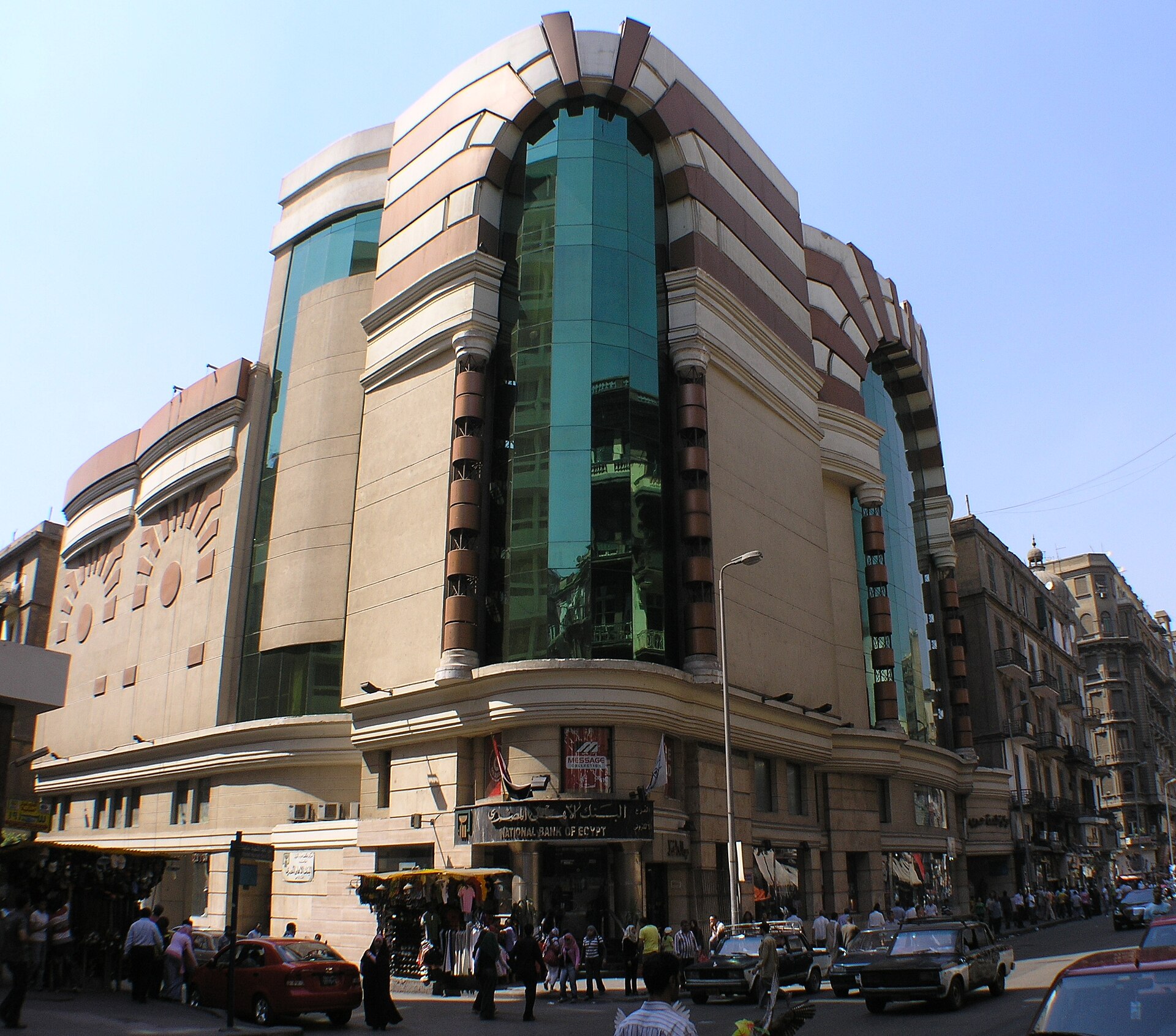
The airport is convenient, but it is not the only place to do any of this, and on some nights it is not the best one. If the queue is long, the network you want is missing, or the exchange rate on the board looks poor, wait. You can buy a SIM and change money easily the next morning. All four networks have branches in the big malls and on the main shopping streets of Downtown, Zamalek and Heliopolis, and the major banks have branches and ATMs across every district a visitor is likely to stay in. With a hotel driver waiting or a pre-booked transfer, you can leave the airport with nothing more than a handful of pounds and still have a perfectly smooth first evening.
What you should not do is leave the airport with no way to pay and no way to communicate. One of the two — cash or data — is the minimum. Both is better.
Common first-night mistakes
- Going to the phone counter before the ATM. If the counter wants cash and you have only dollars or a card, you will be walking back the way you came.
- Using an unbranded ATM. There are bank machines on both sides of passport control. Use one of those.
- Accepting the conversion offer. Always choose pounds. Your bank’s rate is almost always better.
- Taking out too much. There is no need to carry a week’s cash from the airport. ATMs are everywhere in the city.
- Booking a ride on airport Wi-Fi with no data of your own. The connection drops at the kerb exactly when the driver calls.
- Changing money with a stranger. Since 2024 the “better rate” is not better, and the risks are real.
- Throwing away exchange receipts. They are what lets you change pounds back at the end of the trip.
- Bringing a locked phone. Check it is unlocked before you leave home. No airport counter can fix it.
Frequently asked questions
Can I buy a SIM card at Cairo airport?
Yes. The operators have counters in the arrivals area, and all four Egyptian networks — Vodafone, Orange, e& and WE — sell lines for visitors. Bring your passport, because registration is mandatory, and an unlocked phone. WE’s published tourist bundles cost EGP 100 for 5 GB or EGP 300 for 20 GB, plus tax, valid for 30 days.
Is a Cairo airport SIM card more expensive than one bought in the city?
The tourist bundles are national products with national prices, so the bundle itself should cost the same. What the airport costs you is choice: fewer networks may be staffed at night. If the price on the board looks very different from the operator’s own website, ask why before you pay.
Which network is best for tourists?
For Cairo and Giza, any of the four works. WE is the easiest to budget because its tourist bundles are published in full. If you are travelling on to Upper Egypt, the desert or the Red Sea, ask at the counter about coverage on your route.
Is there free Wi-Fi at Cairo airport?
The airport has a passenger network, described as free; join it and follow the browser login page. It is fine for a quick message, but too patchy beyond the terminal doors to rely on for booking and meeting a ride.
Do ATMs at Cairo airport charge fees?
Any fee the machine adds should appear on screen before you take the cash, and your home bank may charge its own. Use a machine with a bank’s name on it, and always choose to be charged in Egyptian pounds.
How much cash should I get at Cairo airport?
We would take out EGP 4,000–6,000 (about USD 75–115). That covers the ride into town, a SIM card, tips and food for the first two or three days. After that, use ATMs in the city as you need them.
Should I exchange money at the airport or in the city?
Compare the counter’s “we buy” rate with the Central Bank of Egypt’s rate or the live rate on your phone. If the gap is small, change what you need at the airport. If it is large, change only enough for the first night and use an ATM or a bank branch in town for the rest. Never change money with people who approach you in the arrivals hall.
Can I change Egyptian pounds back when I leave?
Ask at a bank counter landside, before passport control, and have your original exchange receipts with you. The rate is less generous going that way, so it is better to spend down your pounds over the last few days.
Related Cairo Guides
- Cairo International Airport (CAI): The Complete Traveler Guide
- Cairo Airport Terminals 1, 2 and 3: Which One Are You In?
- Cairo Travel Budget, Costs and Money Guide
- Cairo Safety Tips and Scam Awareness
- First Time Visiting Cairo: Essential Tips and Planning
Photo Credits
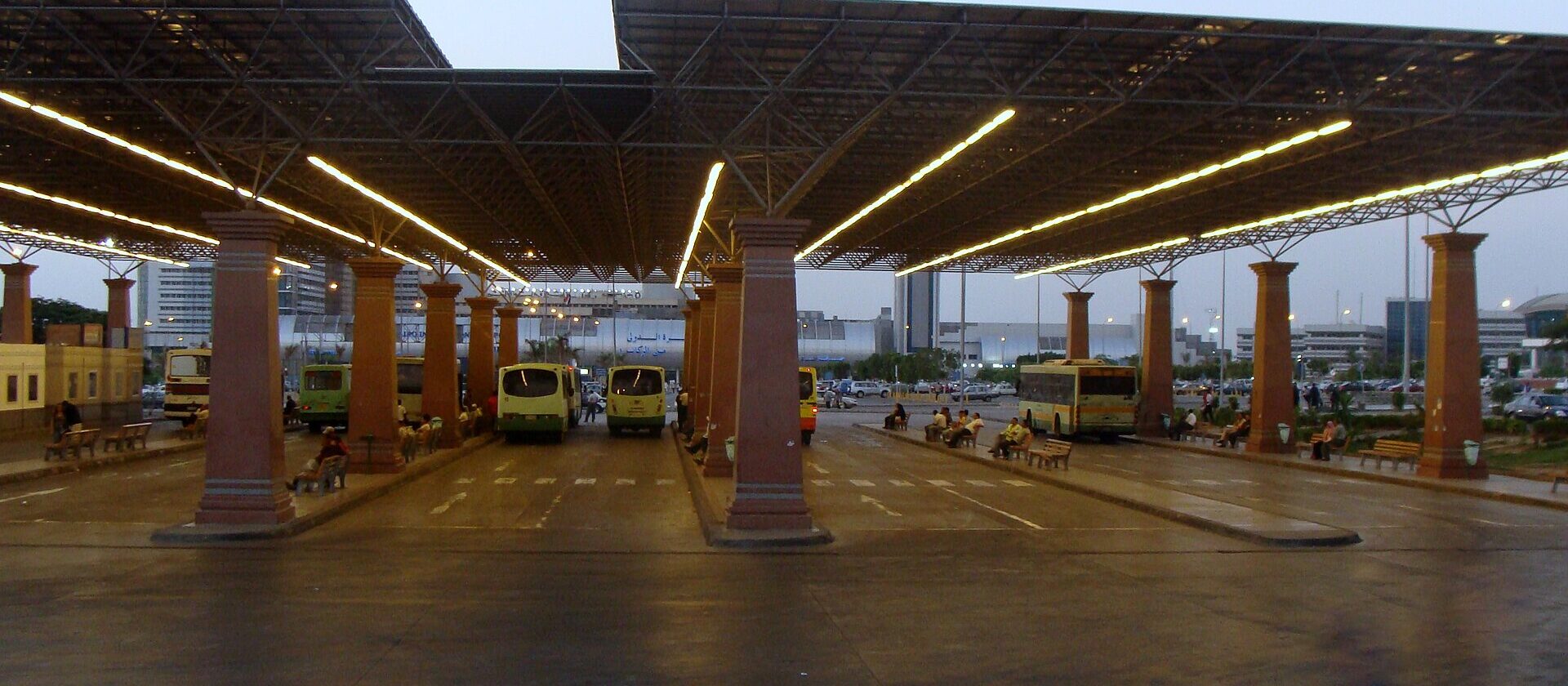
The bus station at Cairo International Airport (featured image): photo by Mo7amedsalim, via Wikimedia Commons (CC BY-SA 3.0).
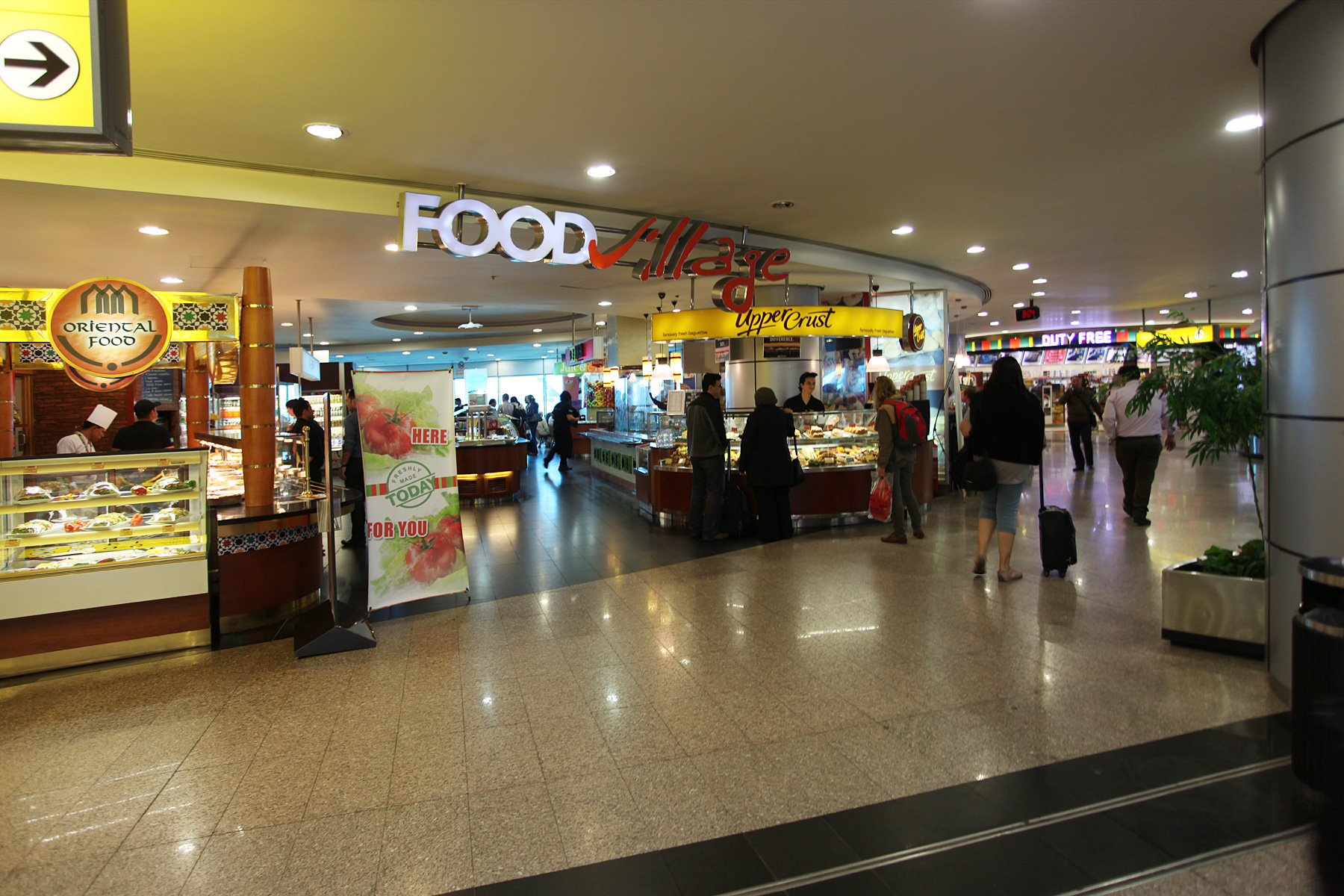
The Food Village food court in Terminal 3: photo by Roland Unger, via Wikimedia Commons (CC BY-SA 3.0).
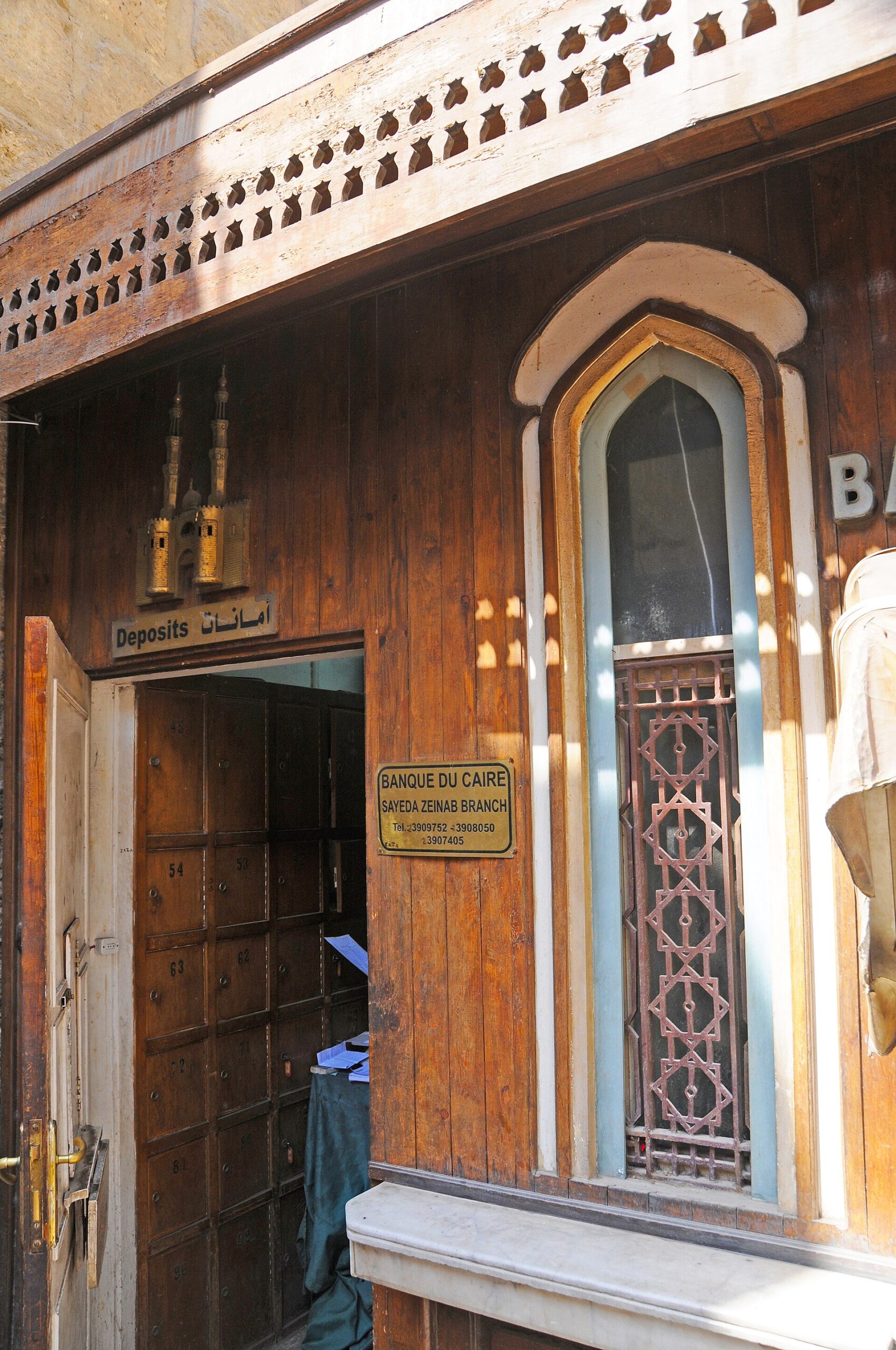
Banque du Caire branch, Sayeda Zeinab: photo by David Broad, via Wikimedia Commons (CC BY 3.0).
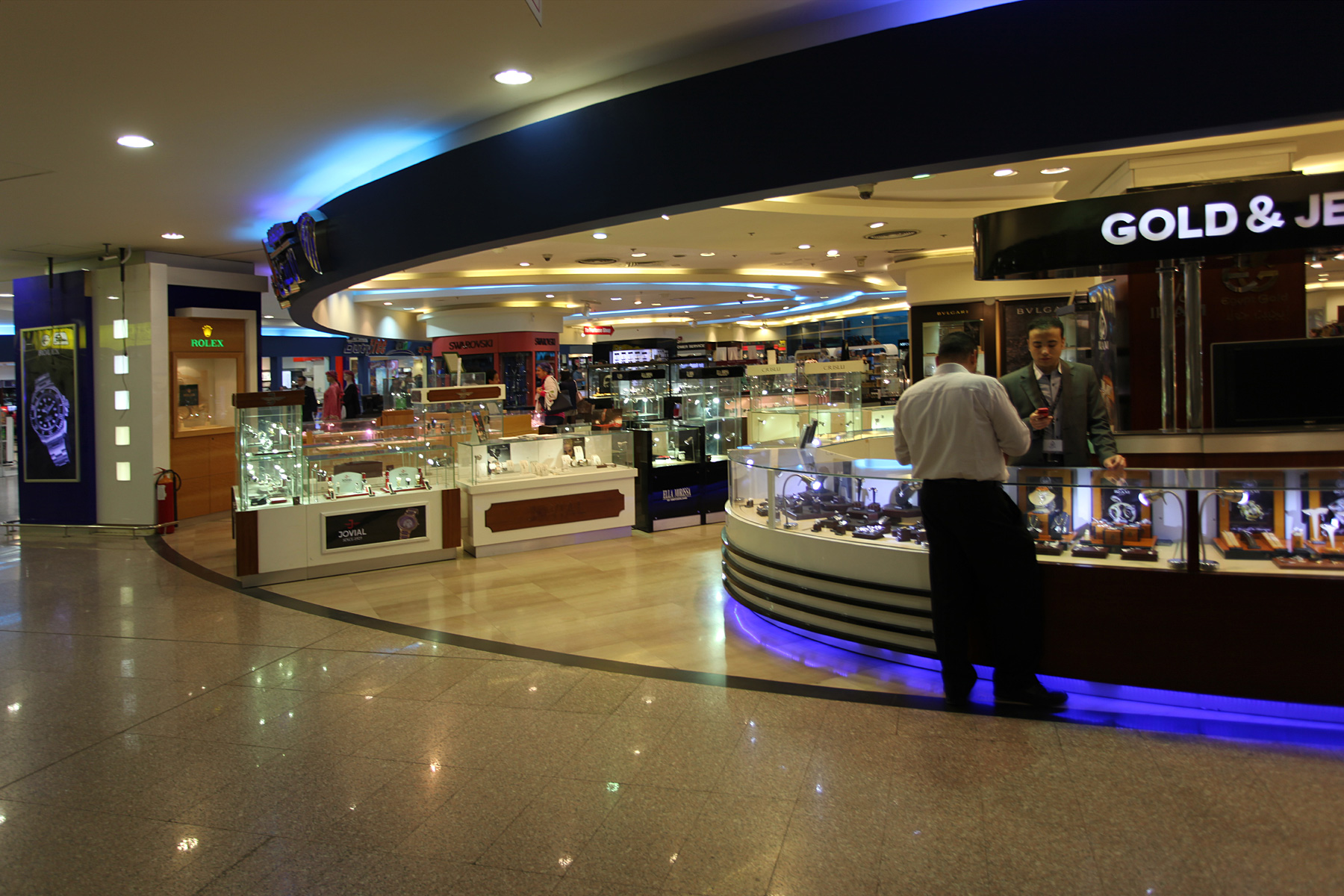
Duty-free shops airside in Terminal 3: photo by Roland Unger, via Wikimedia Commons (CC BY-SA 3.0).
National Bank of Egypt branch at Talaat Harb Mall, Downtown Cairo: photo by Daniel Mayer, via Wikimedia Commons (CC BY-SA 4.0).