This article contains advertising. Our booking links are routed through a partner that adds commission tracking automatically, so if you book through one we earn a commission from the provider, at no extra cost to you. It never affects what we recommend. Affiliate disclosure
Yes, you can go inside the Great Pyramid — but read this before you pay for it. For an extra ticket on top of plateau entry (roughly 1,500 EGP, about $30, as of mid-2026), you crouch-walk up a hot, narrow passage, climb the genuinely jaw-dropping Grand Gallery, and stand in a bare granite room with an empty stone box. That last part surprises people. There are no carvings, no treasure, no mummy. Just the room, the climb, and the bragging rights.
I think it’s worth doing once if your knees and lungs are up to it. But plenty of travellers come out wishing they’d kept their money and their dignity. This guide tells you honestly what the interior is actually like, what you’ll see, how to get the ticket, who should absolutely skip it, and why the cheaper insides of Khafre and Menkaure are a smart backup. It pairs with our wider walkthrough of the Giza plateau and the 2026 Giza tickets and prices guide.
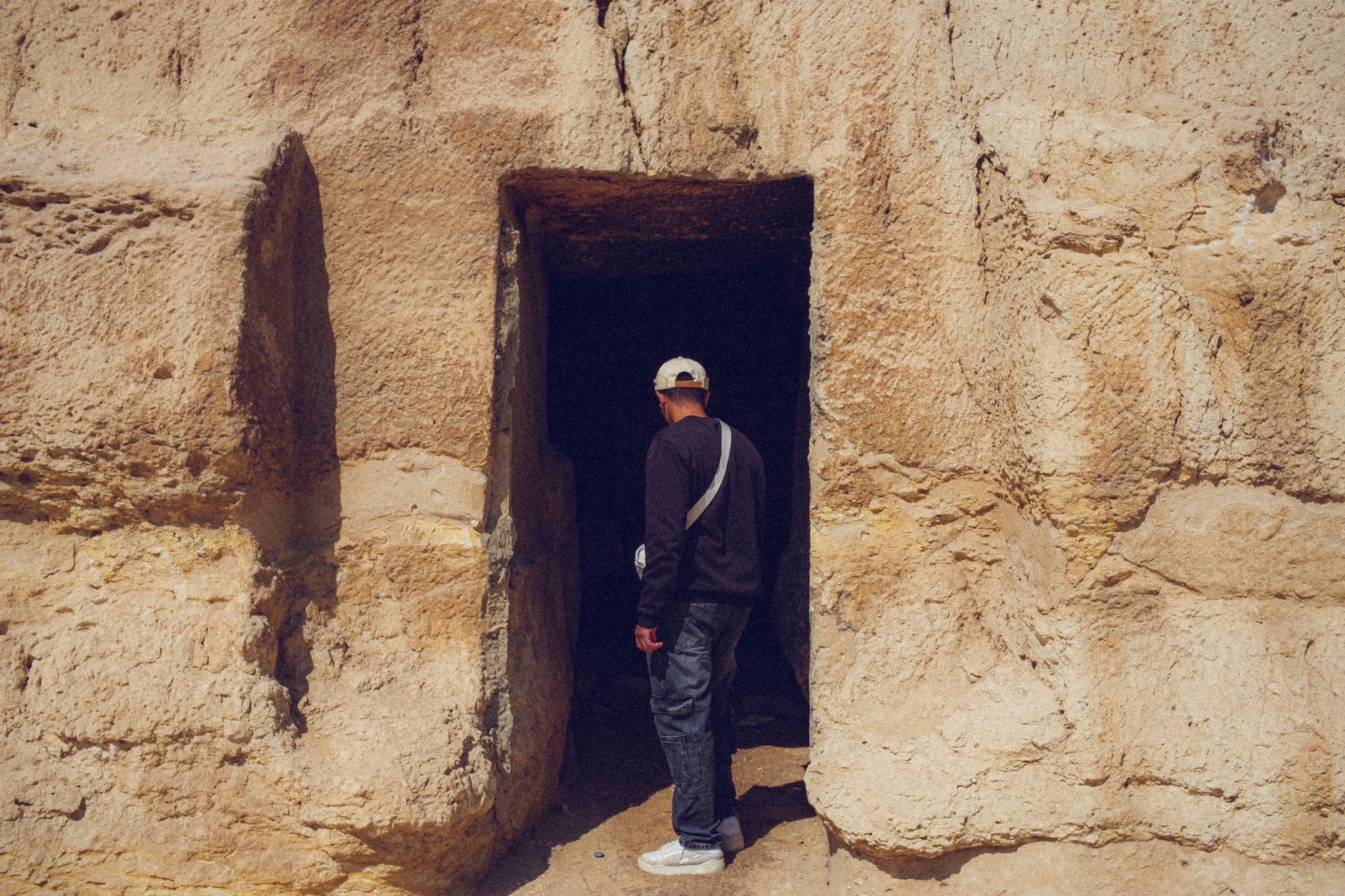
What’s actually inside the Great Pyramid
Let’s manage expectations first, because this is where people get caught out. The inside of Khufu’s pyramid is not a decorated tomb. If you’re picturing the painted walls and hieroglyph-covered ceilings you’ve seen in photos, those are at the Valley of the Kings in Luxor — a different place, hundreds of kilometres south. The Great Pyramid’s chambers are bare, polished stone. That’s the whole point and the whole disappointment, depending on who you ask.
Here’s what you pass through, in order:
- The Robbers’ Tunnel — your way in. This isn’t an original entrance; it was hacked through the masonry around 820 CE on the orders of Caliph Al-Ma’mun, whose workers were hunting for treasure they never found.
- The Ascending Passage — the hard bit. Low, steep, and stuffy. You walk bent double.
- The Grand Gallery — the payoff. A soaring corbelled limestone vault, around 47 metres long, climbing at a sharp angle with the ceiling stepping inward high above your head. This is the one genuinely astonishing space inside.
- The Antechamber and King’s Chamber — the destination. A granite-lined room holding a single lidless granite sarcophagus. Empty. Always has been, as far as anyone knows.
- The Queen’s Chamber — branches off lower down, sometimes closed. Smaller and frankly underwhelming next to the King’s Chamber.
There’s also an unfinished Subterranean Chamber far below, reached by a long, miserable descending passage. It’s almost never open to visitors, and you’re not missing much. And yes — the famous “void” detected above the Grand Gallery in 2017 by physicists using cosmic-ray muon scanning is real, but it isn’t accessible. You won’t see it.
The interior experience, step by step
I’ll walk you through it the way it really unfolds, sweat and all.
1. The entrance and the low tunnel
You duck into the Robbers’ Tunnel and immediately you’re bent over, shuffling through a cramped passage into the body of the pyramid. It’s dim, the air goes still, and within seconds you understand this is a physical thing, not a museum stroll. People who are even slightly claustrophobic feel it right here.
2. The Ascending Passage — the part people complain about
This is the hardest stretch. The passage is roughly a metre square — call it about 1.2 m tall — climbing at a 26-degree angle. You cannot stand up. You shuffle upward in a half-crouch, gripping the wooden cleats underfoot and the rails on the walls. It’s hot, it gets stuffy fast, and if a group is coming down while you’re going up, there’s an awkward squeeze-past in near-darkness. It’s only about 40 metres, but your thighs will tell you it felt longer.
3. The Grand Gallery — the reason to do this at all
And then the ceiling lifts away. You emerge into the Grand Gallery and suddenly you can stand, and the corbelled vault climbs nearly nine metres above you, each course of limestone stepping inward toward the top. It is, no exaggeration, one of the most impressive interior spaces left from the ancient world. The slope is still steep and you’re still climbing wooden steps, but you barely notice because you’re staring upward. The sound changes too — voices carry and echo. If anything inside the pyramid earns the ticket, it’s this.
4. The King’s Chamber — bare, silent, anticlimactic for some
At the top, through a low antechamber, you reach the King’s Chamber. It’s a plain rectangular room lined entirely in granite, with a single granite sarcophagus at the far end. No lid. No body. No carvings. The room is austere and quiet, and a lot of people find that emptiness oddly powerful — you’re standing in the middle of a 4,500-year-old mountain of stone. Others look around, think “is this it?”, and head back out. Both reactions are normal. Give it a minute before you judge.
5. The descent — secretly the worst part
Going down the Ascending Passage is harder than going up for a lot of people. You’re bent over again, but now gravity is pulling you forward down a steep ramp and your knees take the strain. Go slowly, hold the rails, and let faster people pass. This is where the back and knee twinges happen.
How long it takes and what it costs
Time inside is short. Plan it like this:
| Stage | Roughly how long |
|---|---|
| Climb up the passage | 5–10 minutes |
| Grand Gallery | ~5 minutes |
| King’s Chamber | 5–15 minutes (depends on the crowd) |
| Descent | 5–10 minutes |
| Total inside | 30–45 minutes |
Budget 60–90 minutes overall once you add the ticket queue and getting to the pyramid base. On the money side, here’s where things stand in mid-2026 — and note these have changed, so don’t trust an old blog:
- Giza plateau entry: around 700 EGP (~$13) for adults — this just gets you onto the site.
- Great Pyramid interior add-on: around 1,500 EGP (~$30) on top of plateau entry. This figure has risen sharply over the past couple of years, so confirm it on the day.
- Total to actually go inside Khufu: roughly 2,200 EGP (~$43) all in.
- Students: usually 50% off with a valid ISIC card.
- Payment: Egypt’s monuments are card-only at the gates now — bring a working Visa or Mastercard, not just cash.
Getting the ticket (and why it sells out)
The interior of the Great Pyramid is capped. The daily limit is small — commonly reported as around 150 visitors in the morning and 150 in the afternoon, sometimes tighter. That’s a tiny allocation for a monument that draws thousands of people a day, which means the interior supplement frequently sells out, especially in high season.
Two reliable ways to lock it in:
- Book ahead online through the official Egyptian Ministry’s portal, egymonuments.com. This is the safest route in peak months (October to April) when interior slots vanish.
- Buy at the gate first thing. If you’re winging it, get to the plateau right at opening (around 8 AM) and buy the interior ticket immediately, before the morning quota is gone. Don’t wander off to photograph the Sphinx first and come back at 11 — it’ll be sold out.
For the full ticket picture, including the combined plateau passes and the Solar Boat Museum, our Giza tickets and prices guide breaks down every fee.
One thing that surprises people: no photos inside
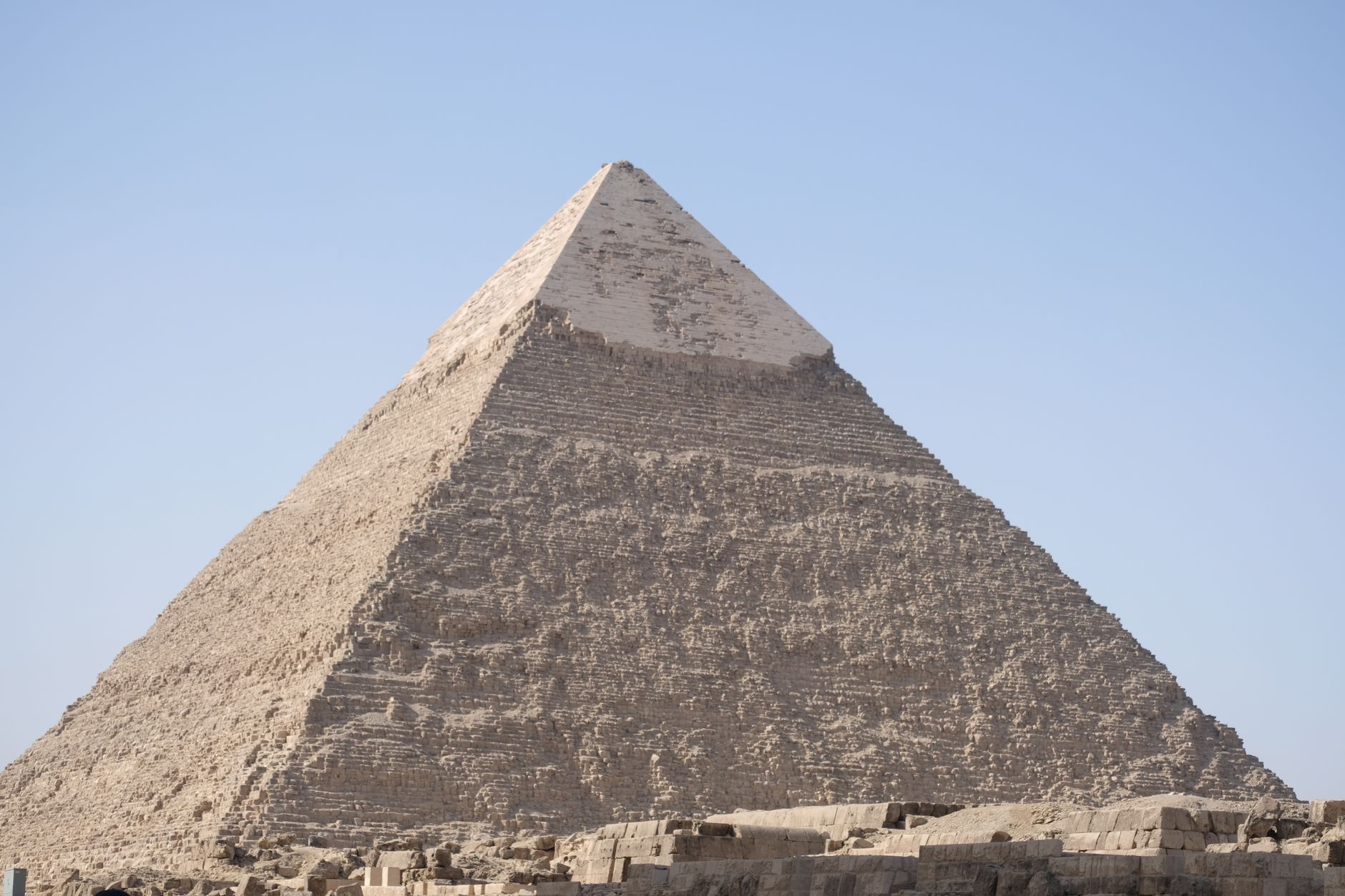
Plan to leave your camera in your pocket. Photography rules inside the Great Pyramid have tightened, and in practice you should expect no photography in the chambers — guards routinely tell visitors to put phones and cameras away, and any camera use that is permitted may require a separate photo ticket bought in advance. Don’t count on getting that Grand Gallery shot for your feed. Treat the visit as something you experience rather than document. If a great pyramid photo is what you’re after, the dramatic exterior shots of Khufu from the plateau are where you’ll get them anyway.

Who should genuinely skip this
I don’t say this to be dramatic. The passages are tight, steep, hot, and poorly ventilated, and there is no wheelchair access, no air conditioning, and no easy bail-out point once you’re committed. Sit this one out if you have:
- Claustrophobia or anxiety in tight spaces — this will not be the place you conquer it.
- Asthma, COPD, or respiratory sensitivity — the air is close and there’s old limestone dust.
- Serious back, knee, or hip problems — the bent-over climb and descent are brutal on joints.
- Heart conditions aggravated by exertion in heat.
- Limited mobility — there is no way to accommodate wheelchairs or walkers.
- Late pregnancy or recent surgery.
One more honest filter: if you’re visiting in the dead of summer (June through August), the inside is significantly worse. The stone holds a steady temperature, but with no airflow and a passage full of bodies, it feels far hotter and stuffier than the thermometer suggests. Mid-morning in July is the worst combination of heat and crowds.
The smart backup: Khafre and Menkaure interiors
Here’s a tip a lot of guides skip. You don’t have to go inside the Great Pyramid to go inside a pyramid. The two other big pyramids on the plateau also have accessible interiors, and they’re a fraction of the price.
| Pyramid interior | Approx. price (2026) | What it’s like |
|---|---|---|
| Khufu (the Great Pyramid) | ~1,500 EGP (~$30) | The Grand Gallery is the star. Sells out, most demanding. |
| Khafre | ~100 EGP (~$3) | Cheaper, smaller, no grand gallery, but you still get the crouch-walk and a granite burial chamber. Often open when Khufu is sold out. |
| Menkaure | ~100–200 EGP (~$3–7) | Smallest and most intimate. Quietest of the three. Closes for restoration more often, so check on the day. |
My honest take: if you simply want the experience of being inside an ancient pyramid — the tunnel, the climb, the burial chamber — and you don’t specifically need the Grand Gallery, Khafre at around 100 EGP gives you 80% of the feeling for a tiny fraction of the cost. It’s hot and cramped too, but you won’t feel cheated standing in a bare room when you only paid three dollars to get there. Do Khufu for the Grand Gallery; do Khafre or Menkaure when the Great Pyramid is full or your budget is tight.
What to wear and bring
- Light, breathable clothes. You will sweat through them. A t-shirt and breathable trousers beat anything heavy.
- Closed-toe shoes with grip. The wooden ramps and worn stone get slippery underfoot.
- A small bottle of water — finished before you go in. There’s nothing inside and nowhere to put a bag down comfortably; drink up at the entrance.
- A handkerchief or wet wipes for sweat and dust.
- Your passport or ID, which security may ask to see.
Leave large bags, tripods and drones behind — drones are banned over the plateau entirely. Travel light; you’re climbing, not strolling.
Fitting it into your pyramid day
If you’re doing the interior, anchor your morning around it. Arrive at opening, buy the interior ticket immediately, see the pyramids and Sphinx from outside while you acclimatise, then enter Khufu on an early slot before the heat and tour buses peak. Come out, hydrate at the panoramic viewpoint, and only then think about a camel or horse ride across the plateau (agree the price in writing first — that’s its own saga).
With the heavy lifting done by lunchtime, the afternoon is free for the Grand Egyptian Museum, which now displays the full Tutankhamun collection and is the natural companion to a pyramids day — our overview of Cairo’s museum options covers it in full. If the pyramids are part of a broader Egypt loop, our day trips from Cairo guide maps out Saqqara, Dahshur and beyond. And to end the day, the evening sound and light show, once it reopens after its current suspension, lights up the plateau after dark — a relaxed, sit-down contrast to crawling through a passage on your hands and knees.
Timing the interior climb depends on where you are standing when the gates open, and the plateau is far larger than photographs suggest. Our walkthrough of the plateau layout and shuttle stops maps the current entrance, the electric shuttle route, and honest walking distances between the three pyramids.
Frequently asked questions
How much does it cost to go inside the Great Pyramid in 2026?
Around 1,500 EGP (~$30) for the interior add-on, on top of roughly 700 EGP plateau entry — so about 2,200 EGP (~$43) total. Prices have risen recently and the gates are card-only, so confirm the current figure on the day and bring a working card.
Can you take photos inside the Great Pyramid?
Generally no. Photography in the chambers is restricted and guards routinely ask visitors to put cameras and phones away; any permitted camera use may need a separate photo ticket. Don’t bank on getting interior shots — save your photography for the exterior.
Is it worth going inside the Great Pyramid?
For a reasonably fit, curious first-timer, yes — mainly for the Grand Gallery, which genuinely stops you in your tracks. But the chambers are bare and the climb is hot and cramped. If you have claustrophobia, mobility issues, or you’re visiting in peak summer, the exterior is plenty and the much cheaper Khafre interior is a great substitute.
How fit do I need to be?
You don’t need to be an athlete, but you must be able to walk bent over for several minutes up a steep, hot passage and back down again. If stairs and tight spaces are a problem for you, skip it.
Are there mummies or treasure inside?
No. Khufu’s body has never been found, the sarcophagus is empty, and the interior was stripped in antiquity. The chambers are undecorated — no hieroglyphs, no gold. That surprises a lot of visitors, so go in knowing it.
Is the interior wheelchair accessible?
No. The passages are narrow and steep with wooden ramps and no accommodations whatsoever for wheelchairs, walkers, or limited mobility.
What if the interior ticket is sold out?
Go inside Khafre or Menkaure instead — they’re capped less tightly, cost a fraction of the price (around 100–200 EGP), and still give you the tunnel-and-chamber experience. Or pre-book Khufu online via egymonuments.com on your next trip.
The honest verdict
Going inside the Great Pyramid is a genuine one-off — a short, sweaty scramble through the core of the oldest of the Seven Wonders, with the soaring Grand Gallery as its reward and a bare granite room as its strangely moving finale. If you’re fit, curious, not claustrophobic, and visiting outside the worst of the summer heat, do it once; most people are glad they did. If any of those boxes don’t tick, stand back, take in Khufu from the plateau, and slip into Khafre’s cooler-on-the-wallet interior instead. Either way, book ahead, go early, bring a card not just cash, and accept that the best souvenir here is the memory, not the photo.
Plan the rest of your trip
Use these guides to round out your Cairo plans: