This article contains advertising. Our booking links are routed through a partner that adds commission tracking automatically, so if you book through one we earn a commission from the provider, at no extra cost to you. It never affects what we recommend. Affiliate disclosure
Ten US dollars for a glass of wine. That was the first real number of the evening, handed over at a bar on the top deck of a moored boat in Zamalek while the sun went down behind the Cairo skyline and a waiter set out bread baskets three decks below. It is an absurd price in a country where a full koshary dinner costs a fifth of that. It was also, for about four minutes, completely worth it.
That is the whole experience in miniature. A Cairo dinner cruise is not a good restaurant, it is not a serious cultural performance, and the boat barely goes anywhere. What it is, when it lands well, is two hours of warm air, a lit-up river, a whirling Sufi dancer in a light-up skirt, and a genuinely strange pleasure in eating mediocre grilled chicken while the Qasr El Nil bridge slides past a window. Roughly 1,300–2,500 EGP (about $26–50) buys the standard version in 2026.
What follows is what the evening actually feels like, hour by hour, and how to stack the odds so you get the good version rather than the one people write angry reviews about.
The quick verdict: is a Nile dinner cruise worth it?
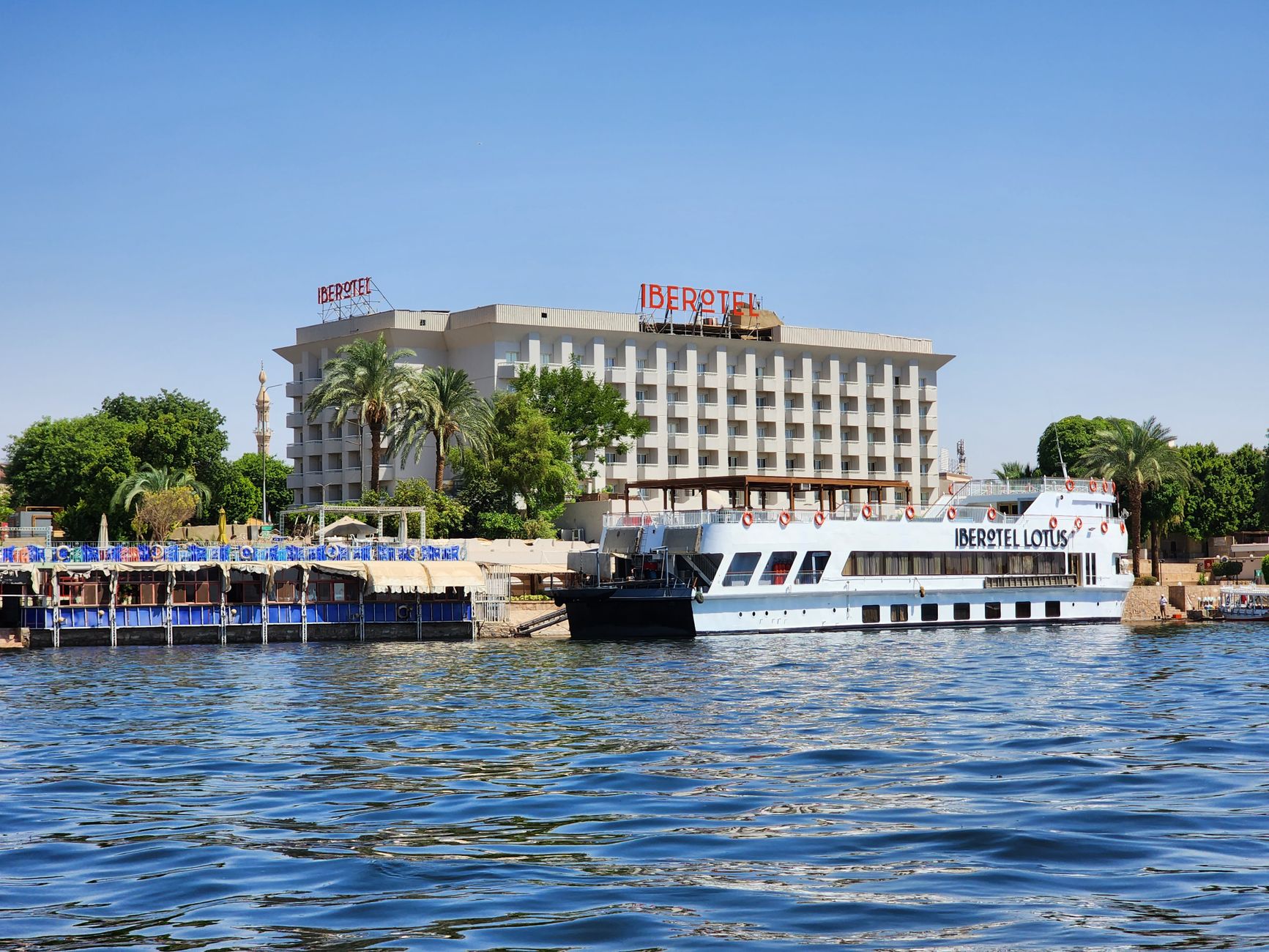
Short answer: yes, once, if you go in expecting a fun night out rather than a fine meal, and if you pick your boat and your departure slot with some care. It is the easiest way to spend an evening on the water in Cairo, and it is one of the very few tourist experiences here that Egyptian families also do — birthdays, engagements, graduations. That crossover is a big part of why it works.
| Tier | 2026 price per person | What you get | Who it suits | Worth it? |
|---|---|---|---|---|
| Bargain boats | 600–1,200 EGP (~$12–24) | Buffet, full show, no transfer, packed room | Backpackers, anyone who just wants to be on the river | Yes for the price — but expect noise and queues |
| Standard multi-deck | 1,300–2,500 EGP (~$26–50) | Buffet, band, tanoura, belly dance, often hotel pickup | First-timers, families, groups | Yes — this is the sweet spot |
| Named premium boats | 2,600–4,500 EGP (~$52–90) | Better kitchen, fewer covers, reserved window tables | Couples, food-conscious travellers | Yes if the meal matters to you |
| Hotel-run or private table | 4,500–8,000 EGP (~$90–160) | Proper service, a la carte in some cases, quieter room | Anniversaries, business dinners | Only for a genuine occasion |
| Moored restaurant boat (no sail) | 700–1,500 EGP (~$14–30) for a meal | Same river views, no motion, no show | Seasickness-prone, anyone who hates a floorshow | Often the smarter choice |
One clarification that saves a lot of confusion: none of these are the multi-day Nile cruises you may have read about. Those sail between Luxor and Aswan, hundreds of kilometres south. Everything on this page is a two-hour evening loop inside Cairo, and the wider rundown of what the river offers in the city puts the dinner cruise in context alongside feluccas, the Corniche and riverside dining.
What you are actually buying: two hours and a very short loop
Set your expectations here and everything else improves. The advertised cruise is a loop of the central stretch of the Nile between the bridges — typically out from the dock, up past Zamalek and the Cairo Tower, a turn, and back. Depending on the boat and the traffic on the water, you might cover three or four kilometres in total, at walking pace.
Some boats do less than that. A recurring complaint in recent reviews is boats that cast off late, potter in slow circles for half an hour, and return — one traveller measured about 200 metres of actual progress in thirty minutes. Others do not leave the dock until forty minutes into the advertised sailing time, because the kitchen and the show run to their own schedule and the captain waits.
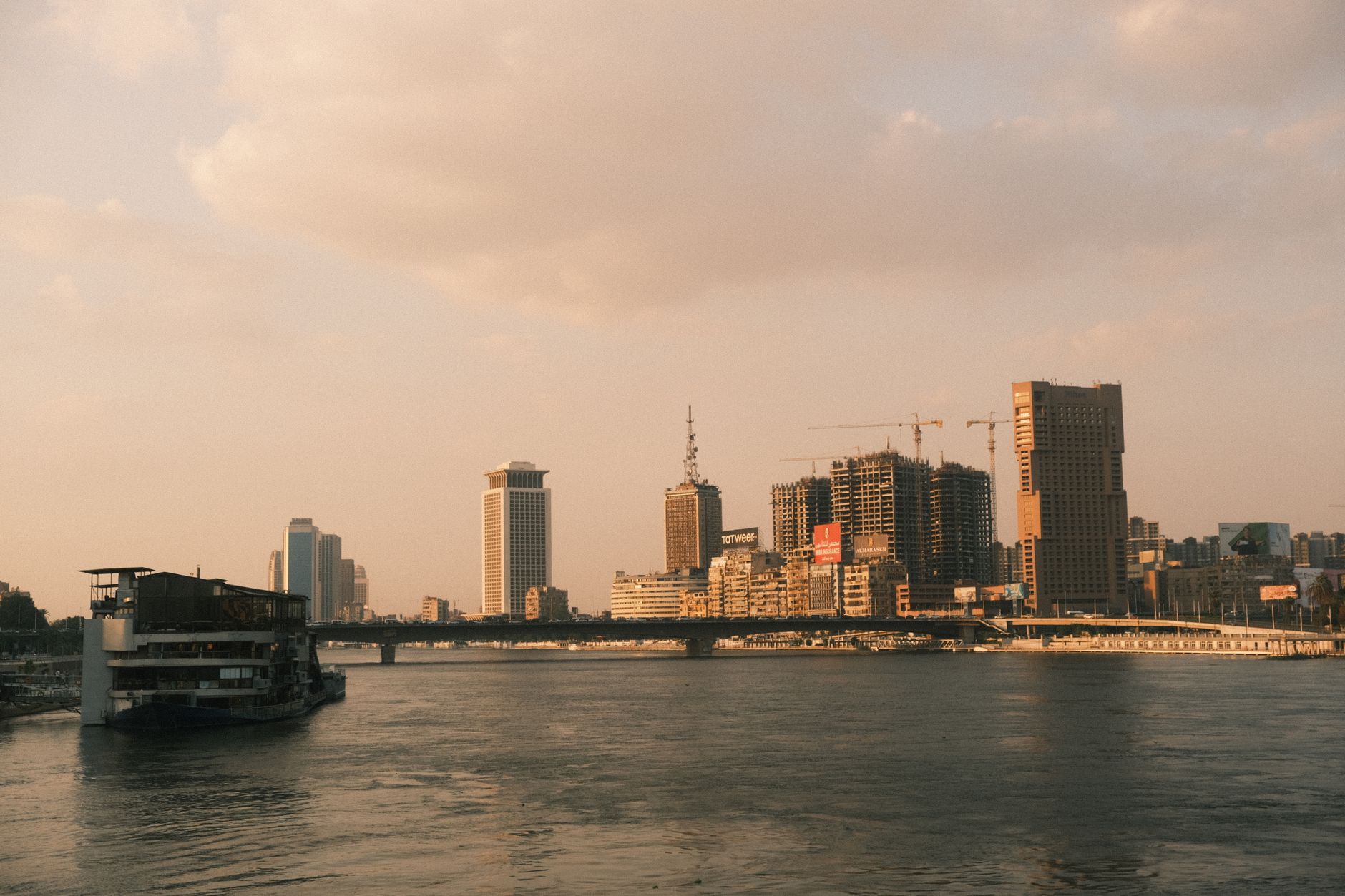
This is less of a scandal than it sounds, because the view barely changes anyway. Cairo’s riverfront at night is a wall of lit hotel towers, floodlit bridges and other cruise boats strung with coloured bulbs. You are not sailing past temples. You are sitting inside a glass box on water, in the middle of a huge city, and the pleasure is atmospheric rather than scenic. Anyone hoping for a slow drift through the desert dusk should be looking at a felucca at golden hour instead.
Total commitment: two hours on the water, and three or more door to door once you factor in transfers and Cairo traffic. Book nothing else that evening.
The boats: what actually differs between them
Operator names get thrown around a lot, and comparing them properly is a job in itself — our separate breakdown of how the Cairo cruise companies stack up on price and reliability handles booking channels, commissions and the resale scams. What matters for the experience itself is the boat’s category, not its brand.
Large multi-deck floating restaurants
The workhorses: two or three decks, 150–300 covers, a stage at one end of the dining room, a buffet line along one wall, and an open top deck that is the best part of the boat. The room is loud and the service brisk, and the atmosphere depends almost entirely on how full the boat is — half full is delightful, sold out is a scrum.
Smaller and premium boats
Fewer tables, better linen, a kitchen that plates rather than trays. The show is smaller in scale — one dancer, one tanoura performer, a trio rather than a six-piece band — which most people find an improvement. You pay roughly double for it.
Moored restaurant boats
Permanently tied to the bank, no engine, no loop. You get the same river-lit view from a table, better food more often than not, and no show unless the venue runs one. If the point of the evening is dinner rather than spectacle, this or one of Cairo’s upscale riverside dining rooms will serve you far better than any buffet cruise.
Where they board
Three main clusters. Zamalek and southern Gezira — the Saraya El Gezira stretch near the Cairo Marriott, about 15 minutes by taxi from downtown. Giza Corniche — a run of dedicated docks along El Nil Street on the west bank, where several of the big themed boats live. Garden City and the central Corniche — near the Four Seasons and Semiramis, the most convenient for downtown hotels. Staying in one of the hotels that face the water can reduce the whole transfer problem to a five-minute walk.

Hour by hour: what the evening actually looks like
Here is a realistic timeline for the prime 8 PM departure on a standard boat. Earlier and later slots shift the whole thing but keep the same shape.
| Time | What happens | What to do about it |
|---|---|---|
| 7:00–7:15 PM | Hotel pickup if booked. Traffic is the wildcard. | Leave more buffer than the operator suggests. |
| 7:30 PM | Ticket office at the dock. Vouchers checked, sometimes hand-written tickets issued. A 10–15 minute queue is normal. | Arrive at the front of this queue, not the back — it decides your table. |
| 7:40 PM | Boarding opens. Bar is running. Top deck is empty and lovely. | Go straight up. This is the best twenty minutes of the night. |
| 7:55 PM | Seating. Staff offer you a table near the stage or near the windows. | Take the windows unless you badly want a close-up of the dancer. |
| 8:00–8:20 PM | Cast off, often late. Live band starts, sometimes before the boat moves. | Do not panic about the delay; the clock runs on the show, not the sail. |
| 8:15 PM | Buffet opens. A rush forms immediately. | Wait ten minutes. Hot dishes get replenished and the queue evaporates. |
| 8:55 PM | Tanoura set — 15–20 minutes of continuous spinning. | The visual highlight. Video it; still photos rarely work. |
| 9:20 PM | Belly dance set — 20–25 minutes, sometimes split into two appearances. | Have small notes ready if you are at a front table. |
| 9:15–9:30 PM | Buffet closes. Dessert table and tea or coffee stay out. | Grab dessert before the show if you are a dessert person. |
| 9:45 PM | Turn for home, boat comes alongside. | Last chance for the top deck and the skyline shot. |
| 10:00–10:10 PM | Everyone off, briskly. The 10 PM crowd is already waiting. | Have a ride booked; the dock rank charges tourist rates. |
The turnaround is the detail people do not anticipate. These boats run two or three sittings a night, so the end of your evening is a hard stop rather than a gentle wind-down. Nobody lingers over coffee.
The buffet, honestly assessed
Expect a generous, warm-ish, competently made hotel-banquet spread. On a good boat that means a proper mezze section — hummus, baba ghanoush, tahini, pickles, tabbouleh and a serious salad table — followed by grilled chicken, kofta and kebab, a fish dish, rice, pasta, a stew or two, and a dessert counter with umm ali, basbousa, konafa and cut fruit. Bread arrives at the table.
On a bad boat it means the same list, at a lower temperature, replenished slowly, with the good items running out before the second wave of diners reaches the counter. Reviews split almost exactly along this line: fresh food and huge portions with tasty grilled fish from one traveller, cheap and not tasty at all from another, on comparable boats at comparable prices. Food quality is the least predictable part of the whole product.
Vegetarians do fine — Egyptian cooking is naturally full of plant-based dishes, and the mezze and salad sections alone make a full meal, though vegans should check whether the rice and stews are cooked with ghee or stock. Our guide to eating plant-based in Cairo covers the phrases and the pitfalls. A la carte does exist, but almost exclusively on premium and hotel-run boats; the standard product is buffet only. And if food is genuinely the point of your trip, you will get far more out of hunting down the dishes Cairo actually does brilliantly on land.
The entertainment: tanoura, belly dance, and a very loud band
The show is the reason most people book, and it is better than cynics expect and worse than the marketing implies.
Tanoura
The standout. A tanoura performer spins continuously for fifteen to twenty minutes in a huge layered skirt, often lit from within with coloured LEDs, peeling off and manipulating the layers while never stopping rotating. It descends from Sufi whirling, a devotional practice, and the tourist version is a folkloric spectacle rather than a religious one, but the physical achievement is real and it holds a room. Genuinely impressive, and the bit children remember.
Belly dance
Twenty to twenty-five minutes, usually one dancer, often in two appearances. Quality varies enormously between boats — some hire skilled professionals, others hire whoever is available on a Tuesday. It is a mainstream Egyptian performance art, not adult entertainment, and it is entirely family-appropriate. Dancers work the room and audience participation is common; the polite response if you are pulled up is to have a go for thirty seconds and sit down.
The band, and the volume problem
An oriental ensemble — oud, tabla, keyboard, vocalist — plus Arabic pop covers and a short international set on some boats. This is where the complaints concentrate. Sound systems are frequently overdriven, and a common review is that conversation becomes impossible once the music starts, with guests migrating to the top deck to escape; one party reported missing the second dance set entirely because they had fled the noise. If you are a quiet-dinner person, that alone may disqualify the format, and a night built around the city’s bars, rooftops and after-dark venues will suit you better.
Photography is allowed throughout and nobody will stop you filming. Skip the flash — it ruins the tanoura’s light effects and irritates everyone at the neighbouring tables.
What is included versus what costs extra
The advertised price covers less than most people assume. Drinks are the catch, every time.
| Item | Usually included? | Typical 2026 extra cost |
|---|---|---|
| Two-hour sail, buffet and show | Yes — this is the ticket | — |
| Bottled water at the table | Usually yes | — |
| Soft drinks and juice | Often not | 60–150 EGP each (~$1–3) |
| Tea and Turkish coffee | Sometimes, with dessert | 50–120 EGP (~$1–2.50) |
| Beer | Almost never | 200–350 EGP (~$4–7) |
| Wine by the glass | No | 350–550 EGP (~$7–11) |
| Shisha on the top deck | No | 150–350 EGP (~$3–7) |
| Hotel pickup and drop-off | Sometimes | $10–20 per person |
| Guaranteed window table | No, on standard boats | Premium tier or an upgrade fee |
| Souvenir photo at the gangway | No | 100–250 EGP if you want the print |
| Tips for crew and performers | No | 200–400 EGP per couple |
Watch the phrase “open bar.” On cheaper boats it very often means unlimited soft drinks with alcohol charged separately at bar prices, and some boats impose a minimum beverage spend that is not mentioned until you are seated. Read the inclusions line on your booking, and assume anything not explicitly listed is billed.
Alcohol is available on almost all tourist cruise boats, which makes them one of the easier places to get a drink in Cairo, but the markup is aggressive. Bring cash — card machines on boats are unreliable and the exchange rates offered on board are poor, so change money before you go using the advice in our guide to changing money in Cairo.
Seating, dress code and the practical stuff
The window table question. On most boats, seating is assigned on arrival and staff will actively offer you a choice: close to the stage, or out by the windows. Take the windows. You still see the show perfectly well across a room that size, you can hear yourself think, and you get the thing you came for — the lit city moving past the glass. The front tables are for people who want to be pulled up to dance. Arriving early is the single most effective way to get the table you want; there is no other lever on a standard ticket.
Dress code. Smart casual, barely enforced on standard boats — jeans and trainers pass without comment. Most guests, Egyptian and foreign, dress up a bit: a collared shirt, a dress or smart trousers. Shorts and flip-flops will make you feel conspicuous rather than get you turned away, and premium boats are stricter. Bring a layer for the breezy top deck and the aggressive air conditioning inside. Our what to wear in Cairo guide covers dressing comfortably and respectfully across the city.
Children. Welcome and common; Egyptian families bring kids routinely. Reduced rates are standard, usually under-fives free and a half-price band to around eleven. The problem is timing, not content — the 8 PM sitting ends after 10 PM, so the earlier departure is the family slot. Our family travel guide to Cairo covers the rest.
Accessibility. Genuinely mixed. Larger boats usually have ramp access to the main deck and an accessible toilet, but upper decks are stairs-only and dock approaches can be uneven. Never rely on a generic accessibility tick: name the vessel, state the requirement, and get written confirmation. Our accessibility guide for Cairo covers how to phrase that so you get a real answer.
Tipping. Budget 200–400 EGP (roughly $4–8) per couple for the evening. Waiters expect something even where a service charge appears on the bar bill; 50–100 EGP to the tanoura performer or dancer if you enjoyed it and they come past your table; 50 EGP for a driver on a hotel transfer. Bring small notes, because nobody will have change. The customs behind all of this are set out in our explainer on baksheesh and service charges.
Who will be disappointed by this
I would rather talk you out of it now than have you spend an evening resenting it. Skip the dinner cruise if you recognise yourself here.
- Serious eaters. A banquet buffet cooked for 200 people at once is never going to be more than fine. If dinner is the event, book a restaurant.
- Anyone wanting a quiet, romantic evening. The volume alone kills it. A moored restaurant boat, a felucca at dusk, or one of the ideas in our roundup for couples in Cairo will do far more for a special night.
- Travellers allergic to organised fun. There is audience participation, there is a roving photographer, and there is a conga at some point. It is unapologetically packaged.
- People expecting scenery. The route is short, urban and repetitive. If you want the river to look like the river, go out on a small boat in the last hour of daylight instead.
- Anyone hoping for authentic Sufi practice. Tanoura on a tourist boat is folkloric performance. It is excellent as spectacle; it is not devotion.
How to make the night actually good
Everything below is free or costs almost nothing, and together they are the difference between a great evening and a shrug.
- Take the earliest departure. Boats typically run at roughly 6, 8 and 10 PM. The first sitting gets you the freshest buffet, the emptiest boat and the calmest staff — and, if you time it right, the last of the daylight from the top deck before you sail.
- Board 45 minutes early. Boarding opens well before departure and almost nobody uses it. That empty top deck at dusk is the best part of the night, and it is already in the ticket you bought.
- Ask for a window table at the moment you are seated. Not before, not after. Say it politely and directly; staff routinely accommodate it if you are among the first aboard.
- Eat first, watch second. Hit the buffet in the opening ten minutes while the trays are full and hot, then relax through the show instead of queueing during it.
- Go on a weeknight. Thursday and Friday evenings are the local going-out nights and the boats fill with wedding and birthday parties. Fun if you want a party, miserable if you want a table.
- Bring 500 EGP in small notes. Tips, a drink, shisha, a taxi. Nothing on the boat is well set up for cards or big notes.
- Book your own ride home. Drivers at the dock quote tourist prices to a captive audience at 10 PM. Order a car from the app instead — our notes on using Uber and Careem in Cairo cover pickup points and pricing.
What nobody tells you
The top deck is the real product. Open air, actual quiet, the whole skyline, and on most boats it is completely free to use. Many guests never go up. Spend twenty minutes there before dinner and twenty at the end, and the evening transforms.
The show often starts before the boat moves. Musicians work to a schedule, not a departure. Do not read the band starting as a sign you have sailed, and do not read a late cast-off as a cancelled night.
Nobody checks the dress code, but everyone notices it. This is a going-out occasion for Egyptian guests, and hiking gear will not get you refused — it will just make you the only person in the room who looks like they wandered in off a tour bus.
“Two hours” sometimes includes boarding. Some operators count from gangway to gangway, so an advertised two-hour cruise can mean ninety minutes of actual sailing. Not a scam, but worth knowing before you feel short-changed.
The photographer is a commission worker, not staff. The photo taken as you board comes back framed at 100–250 EGP later in the evening. A polite “no thank you” is completely normal and nobody minds.
When to go: season and slot
Cairo’s dinner cruise season is effectively year-round, but the experience changes with the calendar.
October to April is peak. Evenings sit around 12–20°C, the top deck is comfortable with a jacket, and boats are busy enough to book two or three days ahead. The sun sets around 5 to 5:30 PM in midwinter, so a 6 PM sailing starts in darkness — but a 5:15 boarding puts you on deck for the last of the light.
May to September brings daytime heat in the high 30s, which is exactly when an air-conditioned boat earns its keep. Dusk shifts to around 7 PM, so the prime 8 PM departure gives you blue hour on the water, and you can often book same-day.
Ramadan reshuffles everything. Cruises run but schedule around iftar, and the post-iftar hours on the river are among the liveliest and most atmospheric of the year. Confirm times directly rather than trusting a listing.
Avoid Thursday and Friday nights if you want space, and check whether your dates collide with Egyptian wedding season, when private charters swallow whole boats. For the broader picture of what each month in the city feels like, see our month-by-month guide to visiting Cairo.
Frequently asked questions
How much is a Nile dinner cruise in Cairo in 2026?
Standard boats with buffet and full show run about 1,300–2,500 EGP per person (roughly $26–50). Bargain listings start near 600 EGP (~$12), and named premium boats reach 2,600–4,500 EGP (~$52–90). Hotel-run and private-table options go higher. Drinks are extra almost everywhere, and hotel transfers add $10–20 per person if they are not bundled.
How long is the cruise, and does the boat really move?
Two hours is standard, though some operators count boarding within that. The boat does move, but only on a short loop of the central river — often three or four kilometres at slow speed, with reports of boats covering far less. Treat the sail as ambience rather than sightseeing, and do not be alarmed if you cast off twenty minutes late.
Is the belly dancing appropriate for children?
Yes. Egyptian belly dance on these boats is a mainstream folkloric performance, family-oriented and non-explicit, and local families bring children to it routinely. The tanoura show is usually the bigger hit with kids anyway. The real issue with children is timing rather than content: the 8 PM sitting runs past 10 PM, so book the earlier departure.
Are drinks included in the ticket price?
Rarely. Bottled water at the table is usually included; soft drinks, tea, beer and wine almost always cost extra, and prices are steep, with wine running 350–550 EGP a glass (~$7–11). Treat “open bar” claims with suspicion, because on cheaper boats it often means soft drinks only, sometimes with a minimum beverage spend added once you are seated.
What should I wear on a Nile dinner cruise?
Smart casual. Jeans and trainers will not get you turned away on a standard boat, but most guests dress up — a collared shirt, a dress or smart trousers. Skip shorts and flip-flops. Premium and hotel-operated boats are stricter. Bring a light jacket or wrap for the open top deck and for the heavy air conditioning inside.
Can I take photos and video during the shows?
Yes, freely. No boat restricts guest photography during the performances, and video works far better than stills for the tanoura’s spinning skirt. Avoid flash, which wrecks the lighting effects and annoys nearby tables. Similar common-sense courtesies apply elsewhere in the city, which our guide to photography rules in Cairo sets out in full.
Do I need to book in advance?
Two to three days ahead is plenty in peak season (October to April), and same-day is often possible in summer. Booking early matters more for the departure slot and any window-table upgrade than for availability itself. The mechanics of who to book through, and which channels quietly add commission, are covered in our comparison of Cairo’s Nile cruise operators.
Is it better than the pyramids sound and light show?
Different evenings entirely. The cruise is social, loud and food-centred; the sound and light show at Giza is a seated outdoor spectacle at the monuments themselves. If you have one free night and you have already seen the pyramids by day, the cruise is the more fun choice. If you have not, the pyramids after dark hit harder, once the show reopens: its official site said in October 2026 that it is temporarily suspended due to development works.
My recommendation
Book the earliest departure on a mid-range boat, on a weeknight, and get to the dock forty-five minutes before you sail. Go straight to the top deck, buy the overpriced drink, and watch the light go off the water while the crew sets up below. Take the window table when they offer it, eat in the first ten minutes, and let the tanoura do its thing. That version costs about the same as the version people write bad reviews about, and it is a properly good night.
And if any of that sounds like work — if what you actually want is the river, quietly, with nobody dancing at you — walk down to the Corniche instead, find a captain, and pay four hundred pounds for an hour under a sail. It is still the best thing on this water.