This article contains advertising. Our booking links are routed through a partner that adds commission tracking automatically, so if you book through one we earn a commission from the provider, at no extra cost to you. It never affects what we recommend. Affiliate disclosure
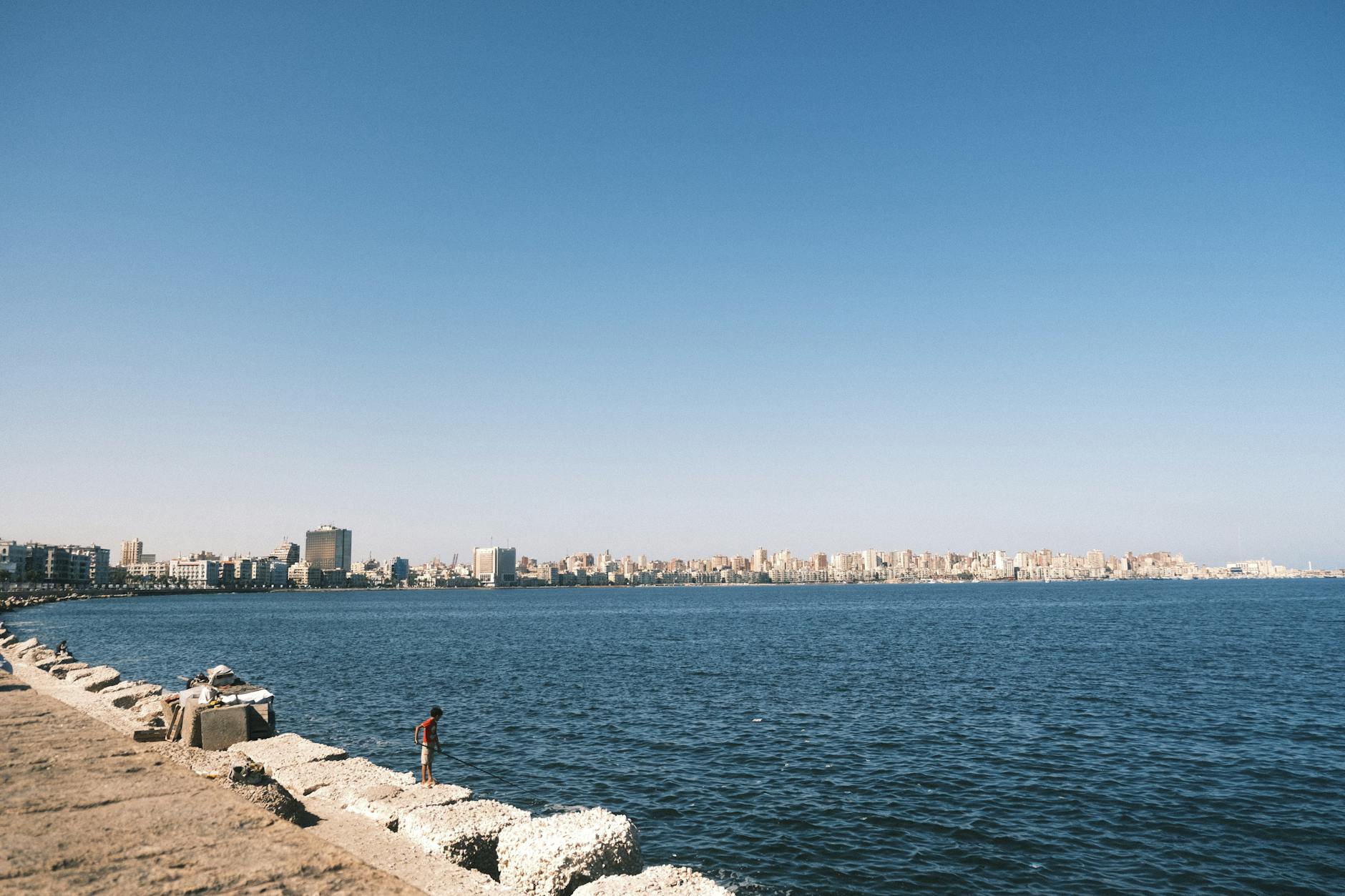
The Talgo pulls out of Ramses Station just after eight, and by half past ten you are walking out of Alexandria’s Misr Station into air that smells of salt instead of diesel. Two and a half hours, 208 kilometres, and the city has changed completely: wider streets, older cafés, tall French-windowed apartment blocks with their paint peeling in the salt air, and a grey-blue sea at the end of every road. Most visitors see Alexandria on a rushed day trip and come home with a photograph of the Citadel of Qaitbay and very little else. This cairo and alexandria itinerary takes the other approach: three nights in Cairo, two in Alexandria, and time to see Alexandria in the evening, which is when the city makes sense.
This page is the five-day, two-city route: what to do each day, where to sleep, which train to catch and what it all costs. If you only have a single day for Alexandria, our Alexandria day trip from Cairo covers that version. Prices were checked in September 2026 and are given in Egyptian pounds with a US dollar equivalent at roughly EGP 48 to the dollar, except the train, where foreigners are now charged in dollars. Treat every figure as the right order of magnitude; the pound has been repriced repeatedly, and tariffs move with it.
The route at a glance
| Day | Sleep in | Morning | Afternoon | Evening |
|---|---|---|---|---|
| 1 | Cairo | Pyramids of Giza from opening | Grand Egyptian Museum | Early night |
| 2 | Cairo | Al-Muizz Street and Khan el-Khalili | Ibn Tulun Mosque or the royal mummies at NMEC | A felucca on the Nile |
| 3 | Alexandria | Morning train from Ramses; Roman theatre at Kom el-Dikka | Citadel of Qaitbay and the Eastern Harbour | Seafood in Anfoushi, a walk on the Corniche |
| 4 | Alexandria | Catacombs of Kom el-Shoqafa and Pompey’s Pillar | Graeco-Roman Museum and the Bibliotheca Alexandrina | Old cafés at Raml Station, Stanley Bridge after dark |
| 5 | Cairo, or fly out | Montaza gardens or the Royal Jewellery Museum | Train back to Cairo, or fly from Borg El Arab | Last night in Cairo |
The logic is to do Cairo first, while you are fresh and before jet lag has worn off, because Cairo is the harder, hotter, more demanding city. Alexandria is the reward: slower, cooler, easier on the feet, and at its best when you have nowhere to be.
Why sleep in Alexandria instead of doing a day trip
The day trip is possible, and many people do it. But look at the arithmetic. Leave your Cairo hotel at 07:00, reach Ramses in the morning traffic, spend two and a half hours on the train each way, and you get roughly six hours in Alexandria, most of it in the middle of the day and much of it in taxis between sights that are spread along twenty-odd kilometres of coastline. You see the monuments. You miss the city.
Staying two nights changes three things. First, you get the evenings, and Alexandria is an evening city: the Corniche fills with families after sunset, the seafood restaurants in Anfoushi get going at nine, and the old Greek and Italian cafés around Raml Station are at their most atmospheric when the lights come on. Second, you can do the Catacombs of Kom el-Shoqafa first thing in the morning, before the tour groups arrive from Cairo at around eleven. Third, you are no longer rushing, and Alexandria punishes rushing more than any other Egyptian city — its pleasures are small ones, a coffee, a sea view, a two-hour lunch, and none of them works on a schedule.
Honest verdict: if you have fewer than four days in Egypt, skip Alexandria entirely and give the time to Cairo. With four days it is a close call; with five or more, or if you have been to Cairo before, the overnight is worth far more than the day trip, and it is the version of this trip we recommend.
Getting between the cities: train, car or bus
This is the one decision that has changed most in recent years, because the train is no longer the obvious bargain. Since December 2022, foreigners on Egyptian National Railways have paid dollar fares set far above what Egyptians pay. The full comparison, with booking steps and stations, is in our guide to Cairo to Alexandria transport options; here is what matters for this route.
| Option | Time | Cost per person (early 2026) | Worth it? |
|---|---|---|---|
| Talgo train, 1st class | ~2.5 hours | USD 50 each way | Yes for solo travellers; the most comfortable way to go |
| Talgo train, 2nd class | ~2.5 hours | USD 40 each way | Fine; the difference is seat width |
| VIP or Express train | 2.5–3 hours | USD 35–40 each way | Older trains, same stations |
| Private car and driver | ~3 hours, traffic permitting | Priced per car, not per person | Often better for two or more; door to door, and you can stop at Wadi el-Natrun |
| GO Bus or similar coach | 3–3.5 hours | A fraction of the train’s foreigner fare | Yes on a budget; comfortable, but you are at the mercy of the Desert Road traffic |
If you take the train
Trains leave Ramses Station in Cairo and terminate at Misr Station, Alexandria’s main station, calling at Sidi Gaber about three kilometres before. Get off at Misr Station for the downtown hotels and the Roman theatre. Morning departures from Ramses have been running at around 06:00, 08:00, 08:10, 09:00, 10:00 and 11:15, then roughly every one to two hours through the day, but check the current timetable on the Egypt Trains app before you commit. Foreigners cannot use the official railway website to book; buy at the Arab and Foreign Reservation Office upstairs at Ramses, with your passport, or through an agency such as Bookaway or 12Go, which adds a fee but saves a trip to the station. Book a couple of days ahead in busy periods.
If you go by car
For a couple or a family, a private car one way is worth pricing against two or three train tickets, because the foreigners’ fare has closed most of the gap. The car also gives you a stop that the train cannot: the Coptic monasteries of Wadi el-Natrun sit just off the Desert Road about halfway between the two cities, and an hour there turns a transfer into an outing. Our guide to the Wadi el-Natrun monasteries covers visiting hours and dress. Avoid driving out of Cairo on a Thursday afternoon in summer, when half the city heads for the coast.
Day 1: The pyramids and the Grand Egyptian Museum
Start with the big one. Be at the Giza plateau for opening — 07:00 on the current official hours, although many guides still say 08:00 — and enter through the new visitor centre on the Fayoum road side, where the electric shuttle included in your ticket runs between the Great Pyramid, the Panorama Point, Khafre, Menkaure and the Sphinx. Plateau entry is EGP 700 (about USD 15) for a foreign adult, card only; the Great Pyramid’s interior is an extra EGP 1,500 (about USD 31) and worth it only if you are comfortable with a long, steep, stooping climb to a bare granite chamber.

Be finished by late morning and move on to the Grand Egyptian Museum, about two kilometres away, for the afternoon. Tickets are EGP 1,450 (about USD 30) for a foreign adult and are sold online only, in timed slots, so book an early-afternoon slot before you travel. Give it at least three hours: the Grand Hall and its eleven-metre Ramses II, the Grand Staircase, the complete Tutankhamun collection, and Khufu’s 4,500-year-old boat, which used to sit beside the Great Pyramid. The way we sequence the two sights, including where to eat in between, is in our plan for the GEM and the pyramids on the same day. On Wednesdays and Saturdays the galleries stay open until 21:00, which takes the pressure off the afternoon.
Sleep central tonight rather than in Giza. Your train leaves Ramses on the morning of day three, and a hotel downtown, in Garden City or in Zamalek saves you an hour-long cross-city crawl at the worst time of day.
Day 2: Medieval Cairo and the Nile
Spend the morning in the medieval city. Start at Bab al-Futuh, the northern gate, and walk Al-Muizz Street south for about a kilometre to Bab Zuweila, past the Qalawun complex, the Khanqah of Barquq and the finest run of Mamluk architecture anywhere. Khan el-Khalili is thirty seconds off the street, halfway down, and makes a good coffee stop rather than a shopping expedition. At the end, climb Bab Zuweila’s minarets for a view over the rooftops.
After lunch, choose one. The Mosque of Ibn Tulun, built between 876 and 879, is the oldest mosque in Egypt surviving largely in its original form, with a vast, calm courtyard and a spiral minaret; entry is free, and the Gayer-Anderson Museum is next door. Alternatively, the National Museum of Egyptian Civilization in Fustat holds 22 royal mummies, Ramses II among them, and costs EGP 550 (about USD 11) for a foreign adult, with the Royal Mummies Hall included. Our guide to NMEC and its mummies explains the evening session, which runs from 18:00 to 21:00 and can replace the felucca if you prefer.
End the day on the water. A felucca from the Corniche at sunset costs from around EGP 400 (about USD 8) for the whole boat for an hour, agreed in pounds before you step aboard, and it is the quietest hour you will have in Cairo. If you want a fuller version of these two Cairo days, with alternatives and a Friday–Saturday variation, see our two-day Cairo weekend itinerary.
Day 3: The morning train to the Mediterranean
- 08:00 — Train from Ramses, ideally a Talgo if the current timetable has one around this time. Arrive twenty minutes early, and learn the Arabic numerals for your carriage number, because coach numbers are often shown only in Arabic.
- 10:30 — Misr Station. Drop your bags at the hotel, or leave them at the reception if the room is not ready.
- 11:00 — The Roman theatre at Kom el-Dikka, a short walk from the station. It is small, horseshoe-shaped and made of white marble, the only one of its kind in Egypt, and there is a scatter of baths, villas and lecture halls around it. Allow forty-five minutes.
- 12:30 — Lunch at Mohamed Ahmed, the long-standing ful and falafel place off Saad Zaghloul Square, where a table full of dishes costs almost nothing and the falafel comes out of the fryer as you order.
- 14:30 — Taxi west along the Eastern Harbour to the Citadel of Qaitbay.
- 17:00 — Walk back along the Corniche towards downtown as the sun drops.
- 20:30 — Seafood in Anfoushi or Bahary.
The Citadel of Qaitbay
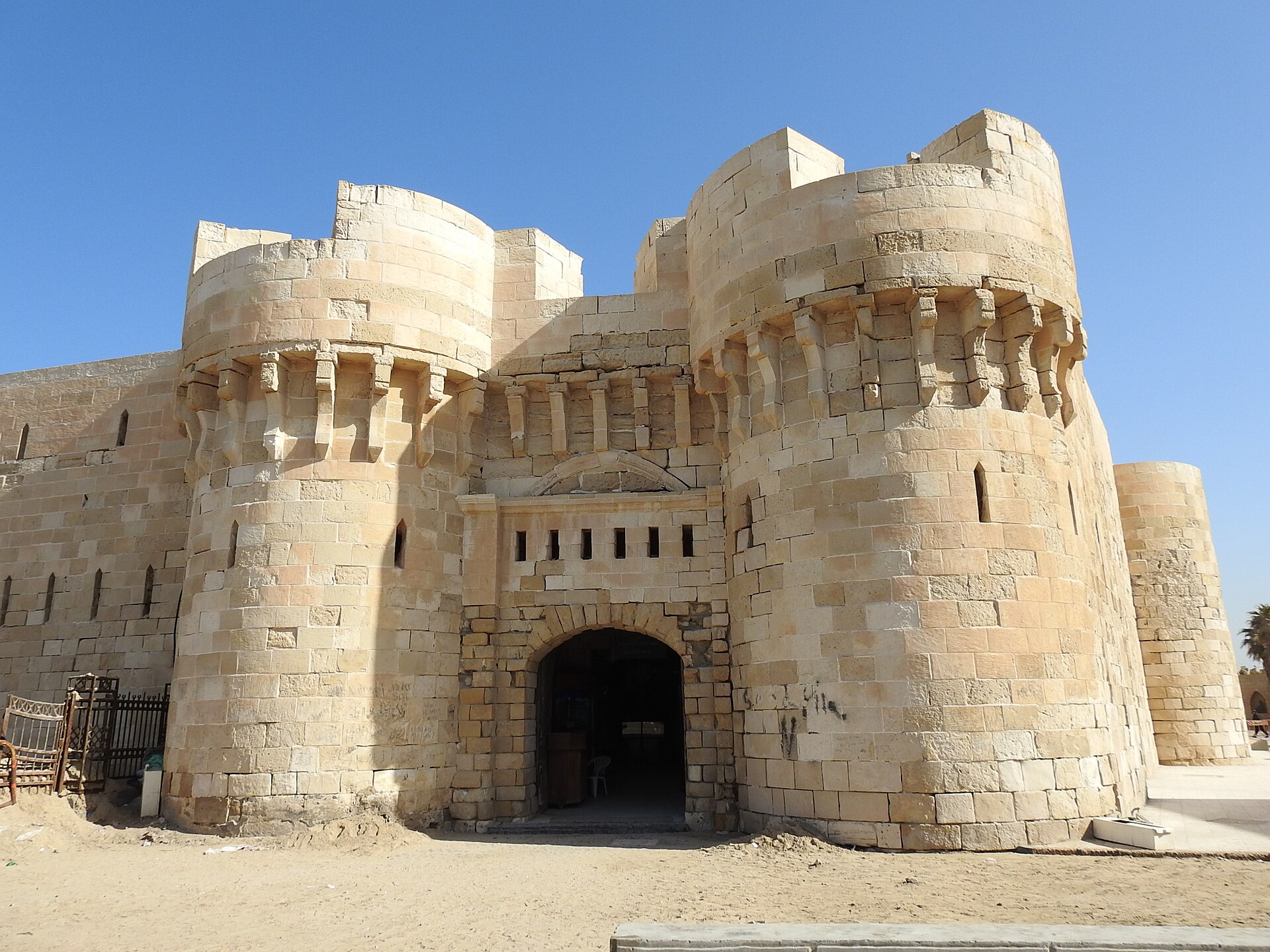
Sultan Qaitbay built this squat, honey-coloured fortress in 1477 at the tip of the peninsula that closes the Eastern Harbour, on the site of the Pharos — the lighthouse of Alexandria, one of the Seven Wonders of the ancient world, which had been brought down by earthquakes. Some of its stones are thought to be reused in the fort. Walk the ramparts, look out over the harbour and the fishing boats, and then sit on the breakwater outside with everyone else. Honest verdict: the interior rooms are fairly bare, and nothing of the lighthouse survives above water. You come for the position, the sea and the sense of standing where the Pharos stood, and that is enough.
Seafood by the kilo
Alexandria’s defining meal is fish chosen from a bed of ice, weighed, and then grilled, fried or baked in a clay pot while you eat salads, tahini and bread. Kadoura in Bahary is the classic of the genre and is usually packed with Alexandrian families; the fish restaurants along the Eastern Harbour Corniche are more polished and pricier. The one rule: ask the price per kilo, and ask to see the weight, before anything goes on the grill. It is not a scam so much as a habit, and the bill for a big fish can surprise you.
Day 4: Ancient Alexandria, underground and on the shelf
Morning: the Catacombs and Pompey’s Pillar
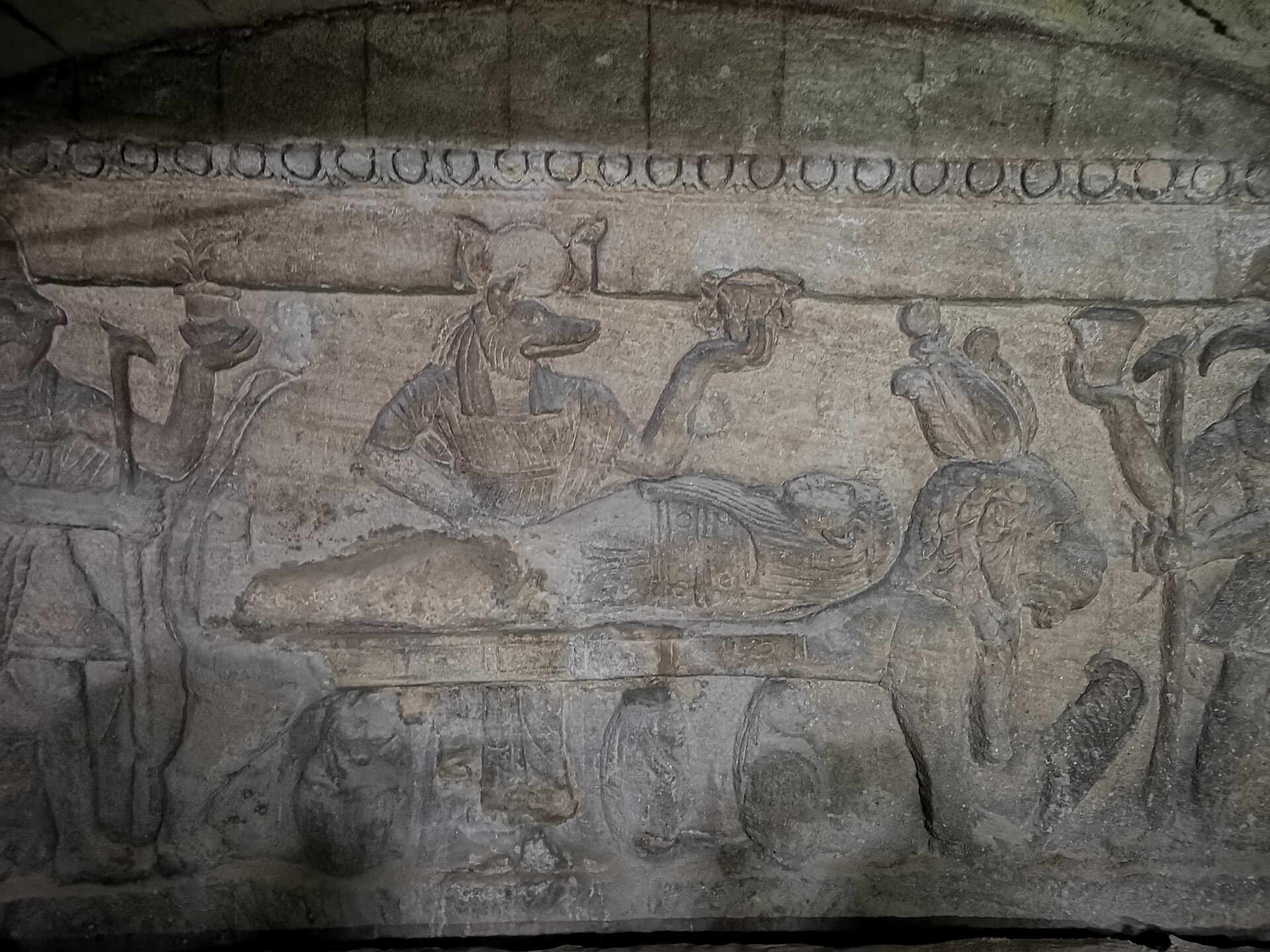
Be at the Catacombs of Kom el-Shoqafa when they open. Dug in the second century AD and, as the story goes, rediscovered in 1900 when a donkey fell through the ground, they spiral down three levels into the rock around a central shaft. The main tomb is the strangest and most wonderful thing in Alexandria: Egyptian gods carved in Roman style, Anubis dressed as a Roman legionary, Greek architecture framing a pharaonic scene of a mummy on a lion-shaped bier. It is the whole story of Alexandria in one room — a Greek city, founded by a Macedonian, ruled by Rome, still worshipping Egyptian gods. The lowest level is flooded and closed. Photography rules vary, so ask at the entrance.
Five minutes away, Pompey’s Pillar is a single column of red Aswan granite about 27 metres high, raised around AD 297 in honour of the emperor Diocletian and named for Pompey only by later travellers who got it wrong. Two sphinxes and the scant remains of the Serapeum temple lie around it. It takes twenty minutes and is worth doing only because it is next to the catacombs.
Midday: the Graeco-Roman Museum
Alexandria’s Graeco-Roman Museum spent the best part of two decades closed for restoration before reopening in 2023, and it is now the best place in Egypt to understand the Ptolemaic and Roman centuries that the pharaonic museums in Cairo tend to skip: portrait sculpture, coins, mosaics, Tanagra figurines and a great deal of Serapis. If it is closed on the day, the Alexandria National Museum on Fouad Street, in a restored Italianate palace, covers the city’s whole history in a compact three floors and is a good substitute.
Afternoon: the Bibliotheca Alexandrina
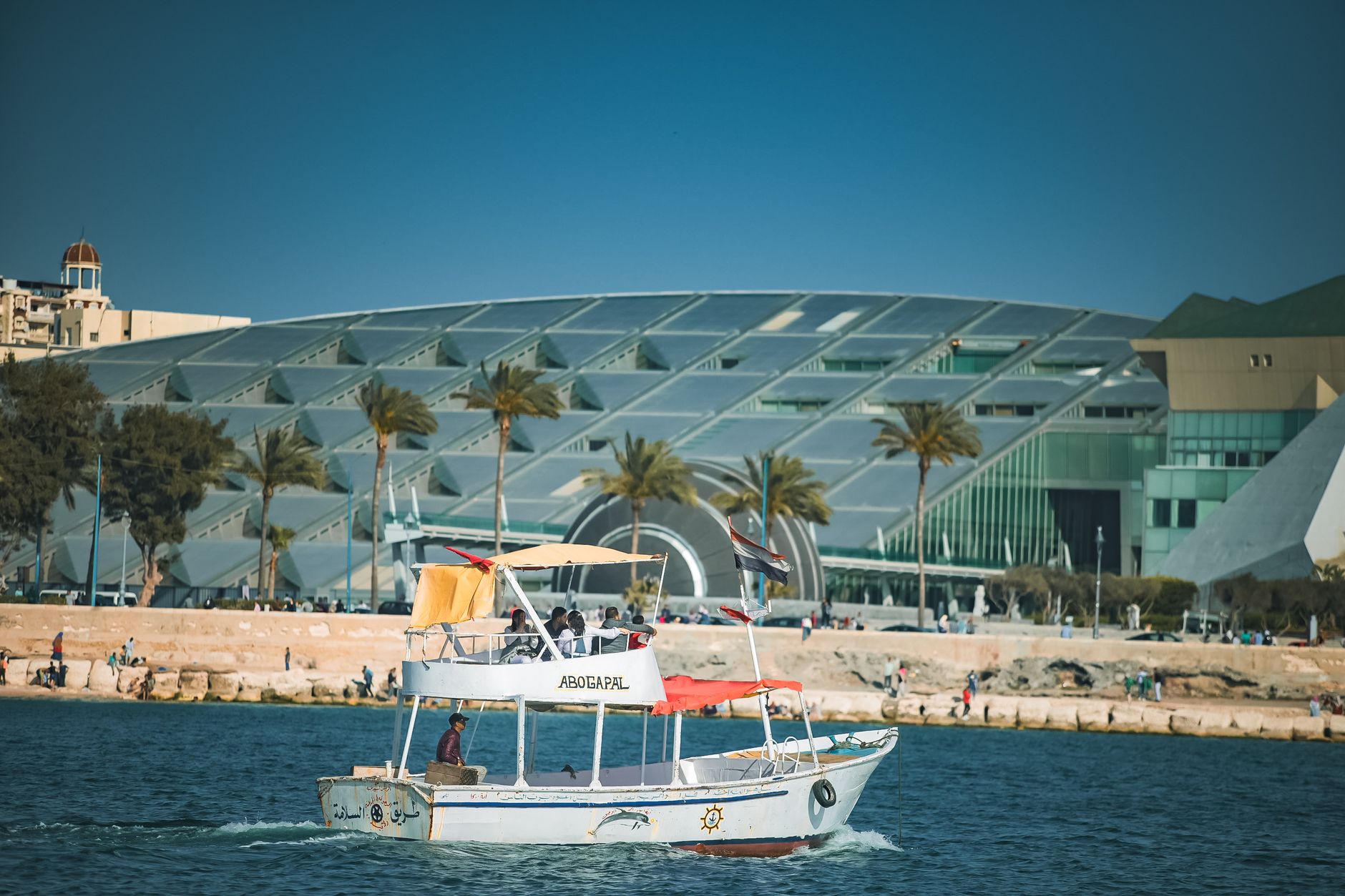
The new library of Alexandria opened in 2002 on the seafront near where the ancient one is thought to have stood. Be clear about what it is: nothing of the ancient Library survives, anywhere, and the Bibliotheca does not pretend otherwise. What it is instead is one of the great buildings of modern Egypt — a vast tilted disc rising out of the ground towards the sea, with a granite outer wall carved with letters and symbols from scripts all over the world, and a terraced reading room designed to hold millions of books that is genuinely breathtaking. Inside the complex there are several museums, including antiquities and manuscripts, and a planetarium. Buy a ticket for the building and whichever museum interests you, and check the opening hours on the day, as they vary.
Evening: the old cafés and the Corniche
Alexandria’s cosmopolitan past is easiest to feel in its cafés. Around Raml Station and Saad Zaghloul Square, Délices has been selling Greek-style pastries since 1922, Trianon still has its old-world dining room, and the poet Cavafy, whose apartment is now a small museum, famously worked in an office above it. Brazilian Coffee Stores still roasts its own beans. Have coffee and a pastry, then take a taxi east along the Corniche to Stanley Bridge after dark, when its towers are lit and the whole seafront is out walking.
Day 5: A slow morning, then back to Cairo
Keep the last morning light. There are two good options.
- Montaza gardens. The former royal estate at the eastern end of the city has gardens, palms and small beaches around the palace. The palace itself is closed to visitors, and the round trip from downtown takes an hour or more in traffic. Honest verdict: pleasant, not essential, and the first thing to cut.
- The Royal Jewellery Museum. In the eastern district of Zizinia, a princess’s palace from the 1920s displays the jewels of the old royal family, and the building’s painted ceilings and stained glass are almost as good as the collection. Easier to fit in, and more rewarding per hour.
After lunch, take an early-afternoon train back to Cairo, which puts you at Ramses by late afternoon, and spend the final night either centrally or, if you fly early the next morning, near the airport in Heliopolis. Do not plan to take the train back on the day of an international flight. Egyptian trains can run late, and missing a long-haul flight to save one hotel night is a very bad trade.
Or fly out of Alexandria
Alexandria has its own international airport, Borg El Arab, about 45 kilometres south-west of the city, with flights mainly to the Gulf, Turkey and a handful of European destinations. If your airline flies there, an open-jaw ticket — into Cairo and out of Alexandria — removes the return journey entirely and gives you back most of day five. It is worth pricing before you book anything else.
Where to stay in Alexandria
There are two sensible bases, and they suit different trips.
Downtown, around Raml Station and Saad Zaghloul Square, puts you within walking distance of the Corniche, the old cafés, the Roman theatre and Misr Station. The Steigenberger Cecil, open since 1929 on Saad Zaghloul Square and a fixture of Lawrence Durrell’s Alexandria Quartet, is the classic choice; there are simpler hotels in the surrounding streets. This is the right base for a two-night stay.
The eastern Corniche, from Stanley to San Stefano, has newer, larger hotels with pools, sea views and quieter nights, including the Four Seasons at San Stefano. The trade-off is that almost everything on this itinerary is then a taxi ride away. Uber and Careem both operate in Alexandria and are the easiest way to get around; our guide to Uber and Careem in Egypt explains how they work and what to watch for.
Whichever you choose, know that “sea view” on the Corniche also means Corniche traffic, which runs all night. Ask for a high floor.
When to go
The two cities have different climates, and the best months for the pair are the shoulders: March to May and October to November. Alexandria is noticeably milder than Cairo in summer, with a sea breeze and highs around 30 °C, but in July and August it fills with Egyptian holidaymakers, hotel prices peak, and the Desert Road jams on Thursday evenings and again when everyone drives back on Saturday. In winter the situation reverses. Cairo is lovely, with daytime highs around 18–24 °C in December and January, but Alexandria turns grey, windy and wet, with most of its year’s rain falling between November and February, sometimes in storms that flood the Corniche.
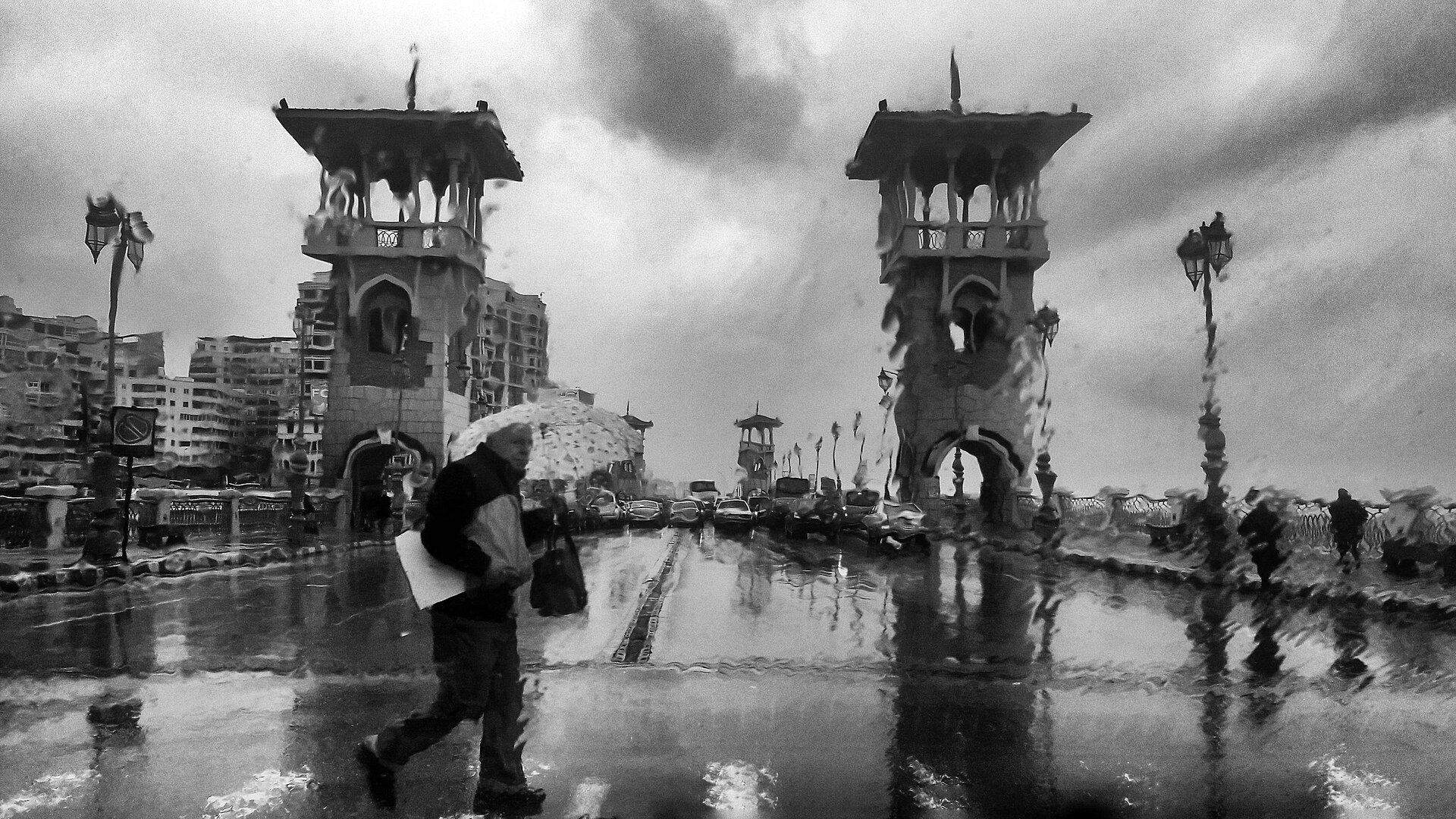
Winter Alexandria has its own appeal — empty, moody and cheap — but pack a proper waterproof and expect to spend more time in cafés than on the Corniche. The month-by-month picture for Cairo is in our guide to the best time to visit Cairo.
What five days cost
These are per-person figures for the sightseeing and transport on this route, excluding hotels and food. Alexandria’s sites each charge their own ticket; current tariffs are posted by the Ministry of Tourism and Antiquities and at each gate, and we have not quoted them where we could not confirm the 2026 figure.
| Item | Cost (checked Sept 2026) | Notes |
|---|---|---|
| Giza plateau entry | EGP 700 (~USD 15) | Shuttle included; card only |
| Great Pyramid interior (optional) | EGP 1,500 (~USD 31) | On top of plateau entry |
| Grand Egyptian Museum | EGP 1,450 (~USD 30) | Online, timed slots only |
| NMEC and the Royal Mummies (optional) | EGP 550 (~USD 11) | Mummies Hall included |
| Ibn Tulun Mosque | Free | Dress modestly |
| Felucca, one hour | From ~EGP 400 (~USD 8) per boat | Split between the group |
| Talgo return, 1st class | USD 100 | USD 80 in 2nd class |
| VIP or Express return | USD 70–80 | Older trains |
| Alexandria sites | Separate ticket at each | Kom el-Dikka, Qaitbay, the Catacombs, Pompey’s Pillar, the museums, the Bibliotheca |
The train is the line that surprises people. A return in first class now costs more than the Grand Egyptian Museum, the pyramids and NMEC combined, which is why the private-car and coach options deserve a serious look if you are travelling with anyone else.
Longer, shorter and other variations
Four days
Cut to one night in Alexandria: train out on the morning of day three, Kom el-Dikka, Qaitbay and seafood that evening, then the Catacombs first thing on day four and the midday train back. You lose the Bibliotheca, or the museum, and the slow morning, but you keep the evening, which is the point of staying over.
Six or seven days
Add a third Cairo day, for Saqqara, Coptic Cairo or simply a slower pace, and consider one extra Alexandria excursion. Rosetta, about an hour east, has Ottoman merchants’ houses and the fort near where the Rosetta Stone was found in 1799 (the stone itself is in London). El Alamein, around two hours west, has the Second World War cemeteries and museum, and is for enthusiasts only. For more ideas beyond these two cities, our guide to day trips from Cairo covers Fayoum, the oases and the Red Sea.
With Luxor and Aswan
If Upper Egypt is also on the list, keep Alexandria as a short add-on and give the extra days to the south, where the temples need them. The week-long version of that trip is our seven-day Egypt itinerary through Luxor and Aswan.
With children
Alexandria works well for families — the sea, the fort and the catacombs are all child-friendly, and the milder summer helps — but keep the Cairo half gentle. Our day-by-day family plan for Cairo is the one to adapt for the first three days.
Mistakes to avoid
- Trying to book the train on the official website. Foreigners cannot. Use the reservation office upstairs at Ramses or an agency, and carry your passport.
- Assuming Alexandria is walkable end to end. The centre is, but the city is a long strip along the coast, and Montaza, Stanley and the Catacombs are all taxi rides from downtown.
- Going looking for the Library and the Lighthouse. Neither survives. The Bibliotheca is a modern building and Qaitbay stands on the Pharos site; both are worth seeing for what they are.
- Planning a city beach day in summer. Alexandria’s city beaches are crowded, often fee-paying and conservative. For a proper beach, you need the North Coast west of the city, which is a different trip.
- Leaving Cairo on a summer Thursday. The Desert Road fills with weekenders heading for the coast. Travel midweek if you can.
- Returning to Cairo on the day you fly home. Give yourself a night between the train and an international flight.
- Not asking the price of the fish. Seafood is sold by weight. Ask the price per kilo and see the fish weighed before it is cooked.
The recommendation
If you have five days and have not been to Egypt before, this is the most satisfying way to spend them without flying south: the monumental ancient world in Cairo, the medieval Islamic city, and then a Mediterranean port with two thousand years of Greek, Roman and cosmopolitan history, taken slowly. Book the Grand Egyptian Museum slot and the train before you leave home, stay downtown in Alexandria, and do not skip the evenings. For every other length of Cairo trip, start from our complete set of Cairo itineraries.
Frequently asked questions
Is it worth staying overnight in Alexandria?
Yes, if you have at least five days in Egypt. A day trip gives you about six hours in the city, mostly in the midday heat and in taxis, and misses the evenings, when the Corniche, the seafood restaurants and the old cafés come alive. One night lets you see the Catacombs before the Cairo tour groups arrive; two nights lets you slow down, which is what Alexandria rewards.
How many days do you need for Cairo and Alexandria?
Five days is the sweet spot: three nights in Cairo and two in Alexandria. Four days works with a single night in Alexandria. With fewer than four days, spend all of them in Cairo; with a week, add a third Cairo day and an excursion from Alexandria to Rosetta or El Alamein, or head south to Luxor instead.
What is the best way to get from Cairo to Alexandria?
For a solo traveller, the Talgo train from Ramses: about two and a half hours, comfortable and central at both ends. For two or more people, price a private car as well, because foreigners’ train fares are now set in dollars and a car is door to door, with the option of stopping at the Wadi el-Natrun monasteries. On a tight budget, the GO Bus coaches cost a fraction of the train.
How much is the train from Cairo to Alexandria for foreigners?
As of early 2026, foreigners pay USD 50 each way in first class on the Talgo and USD 40 in second, and USD 35–40 on the older VIP and Express trains. Egyptians pay far less, in pounds. Buy at the Arab and Foreign Reservation Office upstairs at Ramses, with your passport, or through an agency such as Bookaway or 12Go.
Can you fly out of Alexandria instead of Cairo?
Yes. Borg El Arab airport, about 45 kilometres south-west of Alexandria, has international flights, mainly to the Gulf and Turkey, with some European routes. If your airline flies there, an open-jaw ticket into Cairo and out of Alexandria saves the return journey and most of a day. Check the schedule before you plan the rest of the route.
Is Alexandria better in summer or winter?
Spring and autumn are best for the pair of cities. In summer Alexandria is cooler than Cairo but crowded with Egyptian holidaymakers and at its most expensive. In winter it is quiet and cheap but grey, windy and often wet, with storms between November and February, just when Cairo’s weather is at its best.
Can you still see the Library of Alexandria and the Lighthouse?
No. Nothing of the ancient Library survives, and the Pharos lighthouse was brought down by earthquakes centuries ago. The modern Bibliotheca Alexandrina, opened in 2002 near the old Library’s likely site, is a superb building in its own right, and the fifteenth-century Citadel of Qaitbay stands on the site of the Pharos, possibly built partly with its stones.
Should Alexandria go at the start or the end of the trip?
The end, in most cases. Cairo is more demanding — hotter, louder, more walking, more early starts — and is better done while you are fresh. Alexandria’s slower pace makes it a natural wind-down, and if you can fly home from Borg El Arab, it also saves the journey back.
Related Cairo Guides
- Five days in Cairo without leaving the city
- Khan el-Khalili, lane by lane
- The Cairo food guide
- Where to stay in Cairo
Photo Credits
The main gate of the Citadel of Qaitbay, Alexandria: photo by Cecioka, via Wikimedia Commons (CC BY-SA 4.0).
Anubis and a mummy on a lion-shaped bier, Catacombs of Kom el-Shoqafa: photo by Following Hadrian, via Wikimedia Commons (CC BY-SA 2.0).
Stanley Bridge in the rain, Alexandria: photo by Mona Abo-Abda, via Wikimedia Commons (CC BY-SA 4.0).