This article contains advertising. Our booking links are routed through a partner that adds commission tracking automatically, so if you book through one we earn a commission from the provider, at no extra cost to you. It never affects what we recommend. Affiliate disclosure
Two days is the length most people actually end up with in Cairo. It is the standard stopover on the way to Luxor or the Red Sea, the shape of a long weekend from the Gulf or Europe, and the amount of time a business trip leaves over. It is also, in our view, the efficient minimum — the point at which the city stops being a checklist and starts being a place. A good 2 days in cairo itinerary does one thing that the one-day version cannot: it lets you spend a full morning at Giza without the museum breathing down your neck, and a full day in the medieval city without treating Al-Muizz as a corridor between two monuments.
Below is the split that works, hour by hour, plus the variations for a Friday–Saturday Egyptian weekend, for summer heat, and for anyone arriving on a late flight. Costs were checked in September 2026 and should be read as the right order of magnitude — Egyptian entry fees track the pound and the pound has moved repeatedly. If you are still deciding on the length of the trip, the Cairo itineraries hub compares every option from one day to a fortnight.
The split, in one line each
- Day one — Giza and the Grand Egyptian Museum. The pyramids in the cool of the morning, lunch away from the gate, the museum on an afternoon slot, the Nile in the evening.
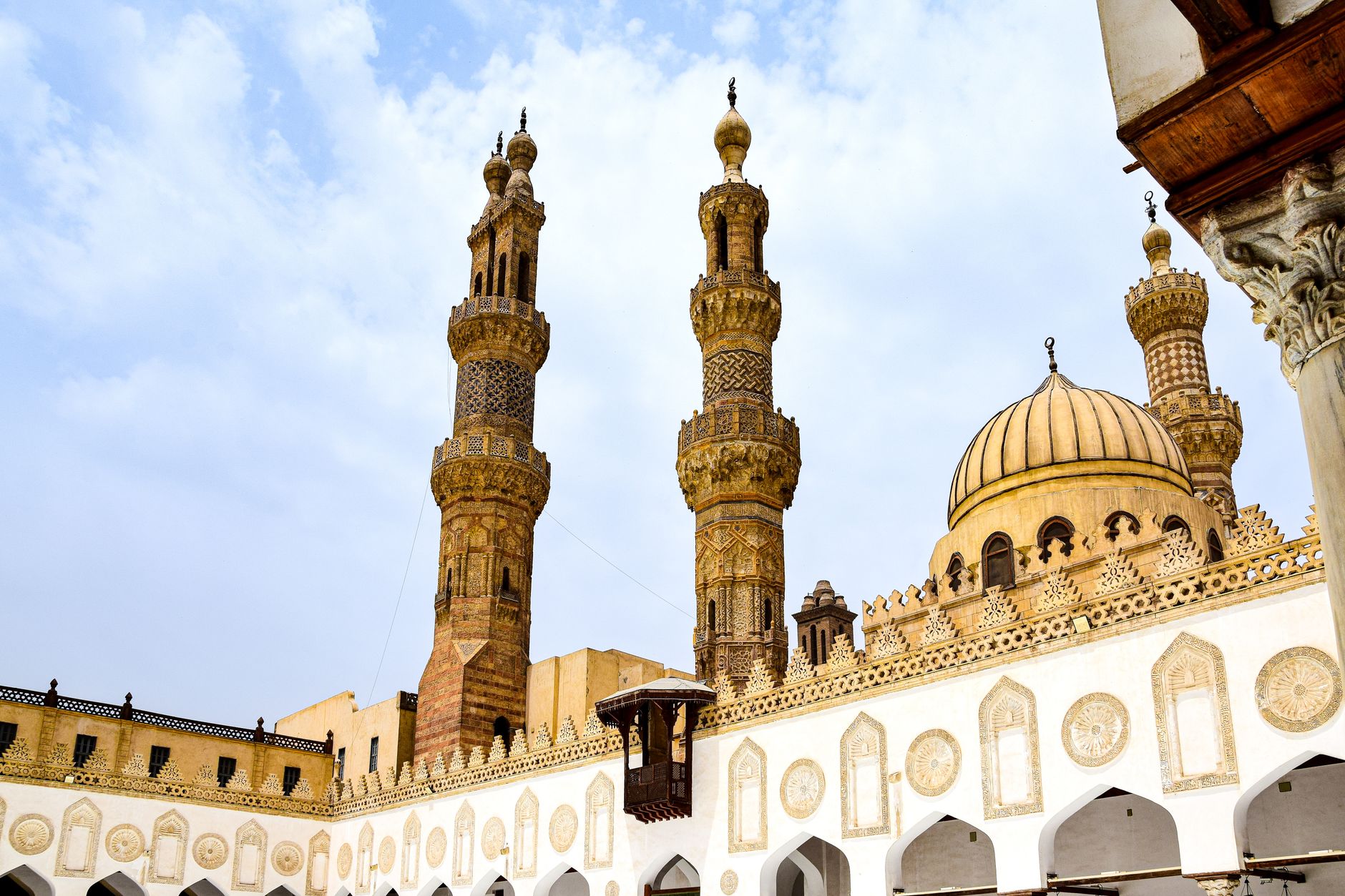
- Day two — Islamic Cairo. Al-Muizz on foot from north to south, Khan el-Khalili, Ibn Tulun and the Citadel, finishing high up as the light goes.
That is the whole plan, and its virtue is that neither day crosses the city. Day one lives on the western edge; day two lives on the eastern one. You will lose perhaps forty minutes each way to travel instead of the two to three hours a badly-ordered two-day trip burns.
What two days cost
| Item | Price (checked Sept 2026) | Notes |
|---|---|---|
| Giza plateau entry | EGP 700–800 (~USD 15–17) | Pyramid interior is a separate ticket |
| Grand Egyptian Museum | EGP 1,450 (~USD 30) | Timed slot, booked online only |
| Citadel of Saladin | EGP 450–550 (~USD 9–11) | Covers the mosques and museums inside |
| Ibn Tulun Mosque | Free | Small tip for the shoe attendant is normal |
| Gayer-Anderson Museum | EGP 150–250 (~USD 3–5) | Next door to Ibn Tulun |
| Bab Zuweila minaret climb | EGP 100–150 (~USD 2–3) | Best view in the medieval city |
| Ride-hailing, per cross-town trip | EGP 150–350 (~USD 3–7) | Roughly double at rush hour |
| Meals, mid-range, per day | EGP 400–900 (~USD 8–19) | Far less if you eat street food |
| Felucca, one hour, whole boat | EGP 400–600 (~USD 8–12) | Agree the price before boarding |
| Two days, one person, no guide | ~EGP 5,000–6,500 (~USD 105–135) | Excludes hotel |
Day one: Giza and the Grand Egyptian Museum
08:00 — At the gate
Everything about day one depends on being at the Giza entrance when it opens. The plateau has almost no shade, the coaches begin arriving around half past nine, and the low morning light is far kinder to both the stone and your photographs than the flat glare of midday. In summer this is not a preference but a requirement.
08:15–10:00 — The pyramids
Walk the base of the Great Pyramid first — it takes longer than anyone expects, which is the point of doing it — then head up to the panorama viewpoint where all three pyramids line up in the sand. With two days you have the luxury of not hurrying this, so take the twenty minutes to sit down and look at it.
Interior access is a separate ticket and worth doing once, if you are not claustrophobic and your knees will cooperate. Be clear about what it is: the Grand Gallery is an extraordinary piece of engineering, and the burial chamber at the end of it is a bare granite room with an empty sarcophagus. People who go in expecting painted walls come out disappointed. People who go in for the passage itself come out delighted.
10:00–11:00 — The Sphinx and the valley temple
Down to the Sphinx enclosure. The valley temple beside it is regularly walked past and should not be — its granite-cased limestone blocks are some of the most impressive stonework on the whole plateau, and the causeway from Khafre’s pyramid comes down there.
This is also where the touts concentrate. The routine is well-worn: a price for the camel ride up, a second and much larger negotiation to come down again once you are on the animal on the ridge. If you want the ride, and it does make a good photograph, agree the total, the duration and the return before you get on, typed into a phone if necessary. If you do not want it, a calm “no thank you” while continuing to walk works better than any argument. Nobody at the gate telling you the site is closed is telling you the truth.
11:30–13:00 — Lunch, off the plateau
The restaurants immediately outside the Giza gate charge what they charge because their customers have no alternative. Ten minutes towards Giza town or the museum and you will eat considerably better for a third of the price.
13:30–16:30 — The Grand Egyptian Museum
Book the slot before you fly. On-site sales are suspended and entry is entirely timed and pre-booked, which makes this the one fixed point in your two days.
Three hours is a comfortable highlights visit. Take the Tutankhamun galleries first — the complete collection is here now, around five thousand objects, the golden mask among them. Then the Grand Staircase, six storeys of colossal statues climbing towards a window that frames the pyramids you were standing under at nine this morning, which is a better piece of staging than anything a museum designer usually gets to attempt. Khufu’s solar boat, a real cedar ship reassembled from over a thousand pieces, is the third thing not to miss.
One fact to sort out in advance, because it disappoints a lot of visitors: Tutankhamun’s treasures are here, his mummy is not. It remains in his tomb in the Valley of the Kings at Luxor. The twenty-two royal mummies of other pharaohs are at the National Museum of Egyptian Civilization at Fustat. The full GEM visitor guide sets out the layout properly.
Evening — the Nile
Get to the river. A felucca for an hour at sunset costs a fraction of a dinner cruise and is the better hour on the water — a lateen sail, no amplified band, and the city sliding past. Agree the price for the whole boat before you step on.
Dinner cruises are the alternative and they are not a con: the Tanoura spinning, the belly dance and the buffet are genuinely enjoyable if you take them in the spirit intended. They are also a two-and-a-half-hour commitment at the end of a day that started at seven. On a two-day trip we would put the felucca on night one and dinner somewhere on land.
Day two: Islamic Cairo, north to south
08:30–11:30 — Al-Muizz Street
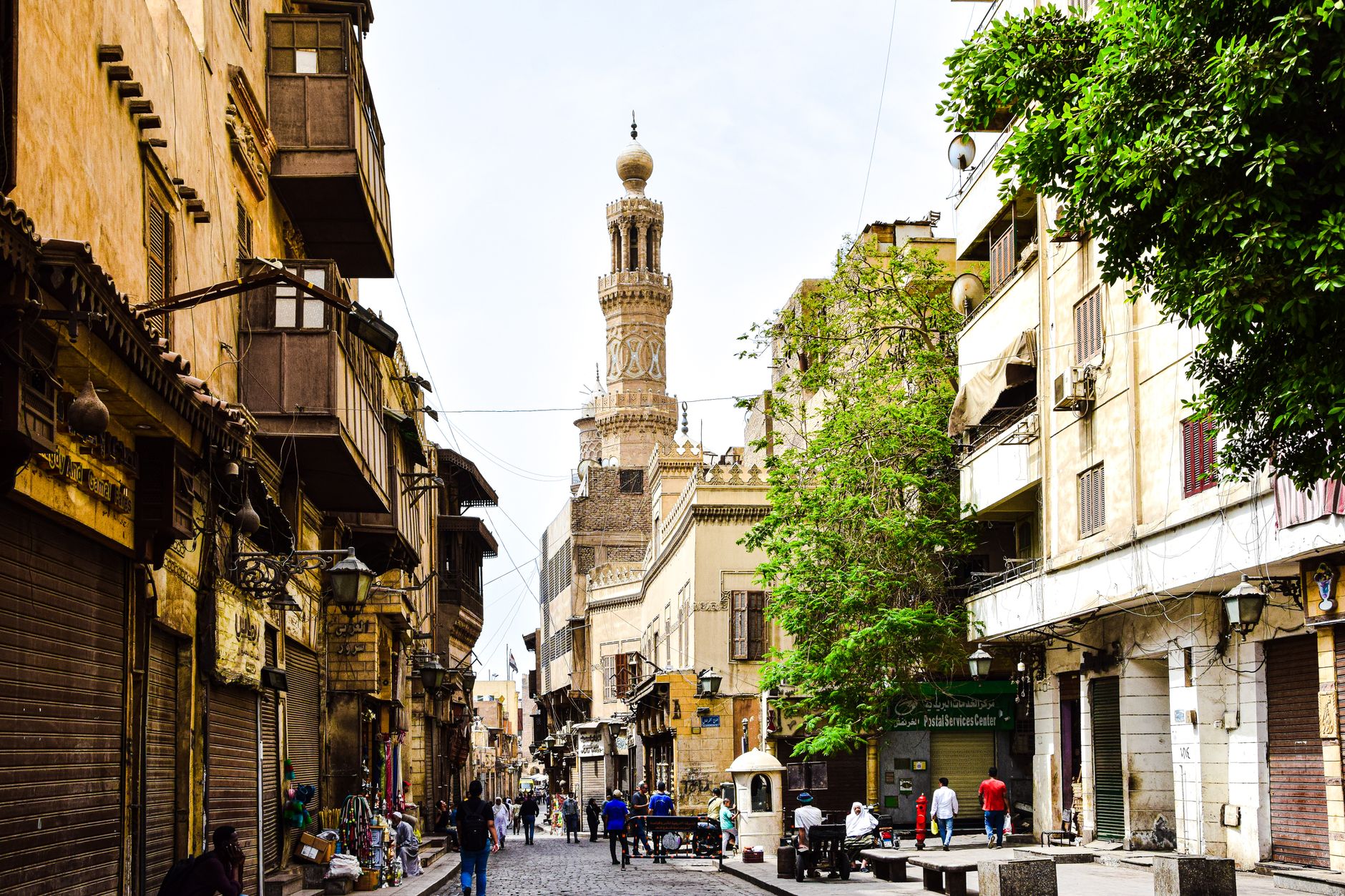
Start at Bab al-Futuh, the northern gate, and walk south. Al-Muizz runs roughly a kilometre to Bab Zuweila and holds the greatest concentration of medieval Islamic architecture anywhere in the world — the Qalawun complex with its madrasa, mausoleum and hospital, the Khanqah of Barquq, Hamam Inal, the Sabil al-Selehdar, the Amir Besthak Palace, one façade opening onto the next.
Walk it north to south and the morning sun stays behind you. Go early and you get the street as it actually works: shutters going up, bread being delivered on head-carried trays, deliveries on handcarts, before the tour groups arrive around eleven.
At the southern end, climb the minarets of Bab Zuweila. The view across the rooftops and the forest of minarets is the best in the medieval city and hardly anybody bothers.
11:30–13:00 — Khan el-Khalili
Khan el-Khalili is not on Al-Muizz, which surprises almost everyone. It is thirty seconds off it, down an alley. The souk is a warren of lanes selling brass, glass, textiles, spice, alabaster and a very great deal of tourist tat, and the pleasure is in the walking rather than the buying.
If you do buy, haggle — the opening price is several times the real one and this is a normal, good-humoured transaction rather than a confrontation. Our bargaining guide covers the mechanics. Coffee at El Fishawy is a tourist ritual, and none the worse for that.
13:30–15:30 — Ibn Tulun and Gayer-Anderson
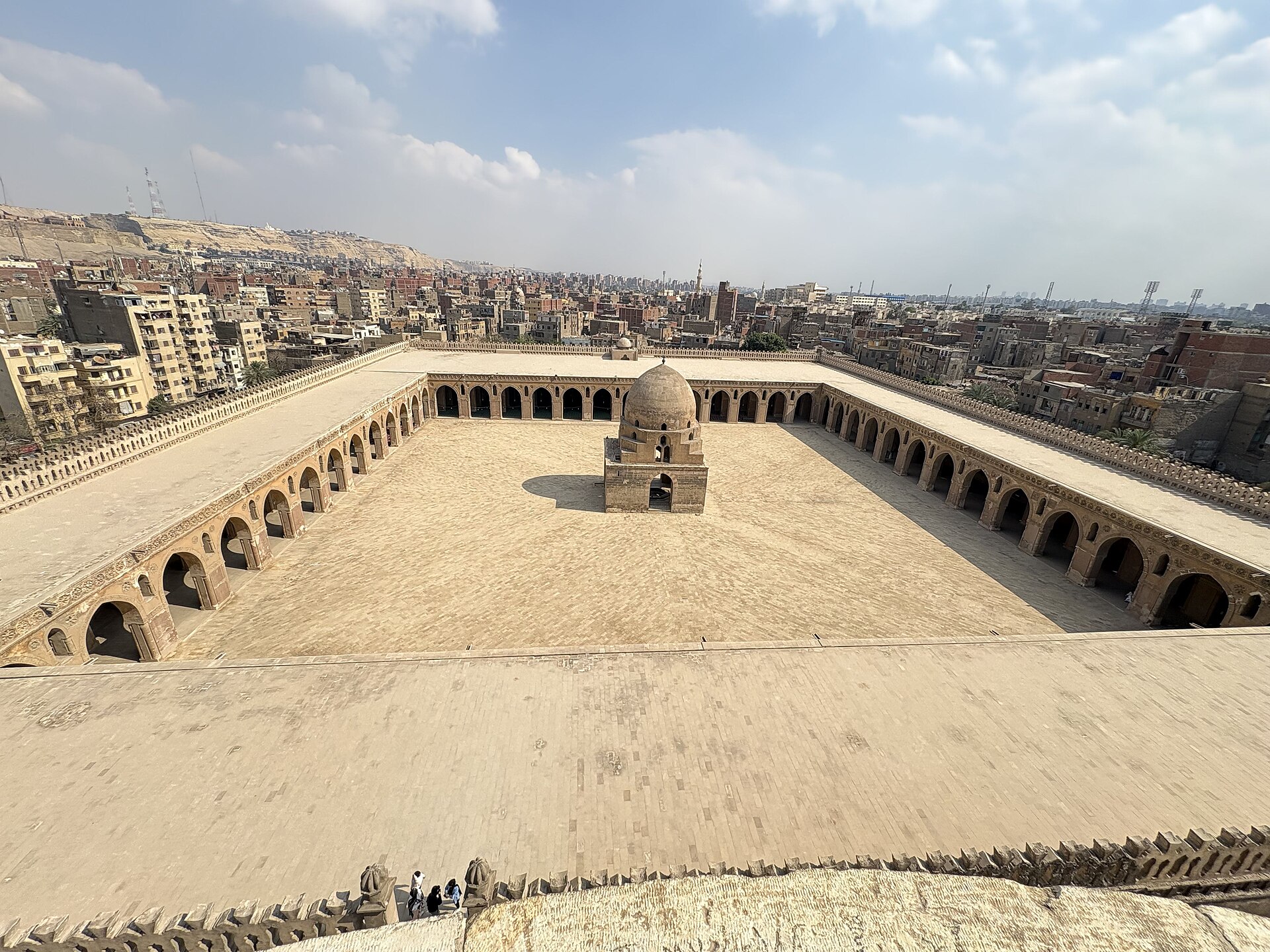
A short ride south-west takes you to the Mosque of Ibn Tulun, built between AD 876 and 879 by an Abbasid governor sent from Baghdad. It is the oldest mosque in Egypt surviving largely in its original form, and after three hours in the density of Al-Muizz the size and plainness of its courtyard is a physical relief. Entry is free; allow an hour; climb the spiral minaret, which looks like nothing else in Cairo.
The Gayer-Anderson Museum shares a wall — two Ottoman houses joined together and filled with the collection of a British officer who lived there in the 1930s. Small, eccentric, and one of the most enjoyable half-hours in the city.
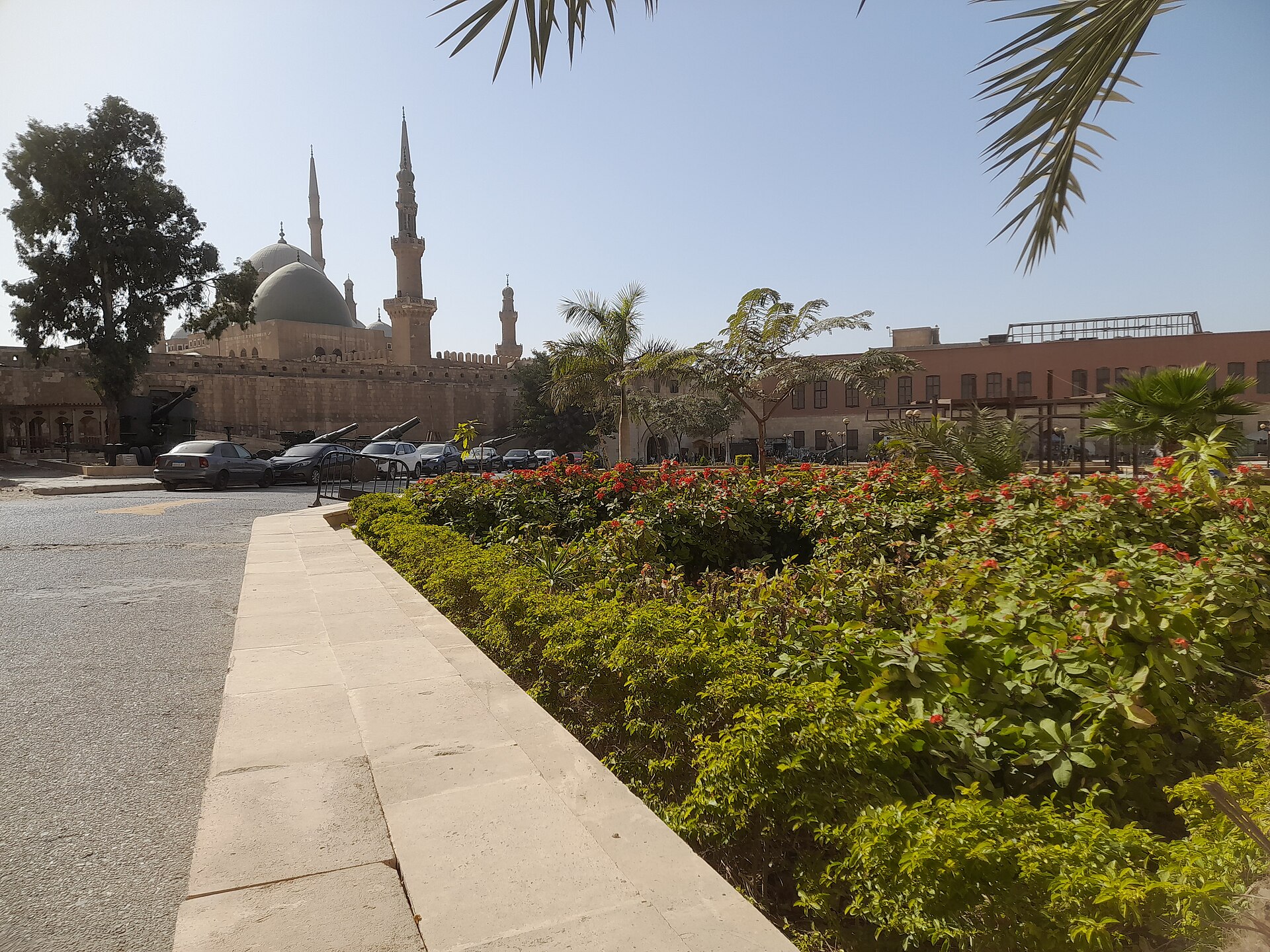
16:00–18:00 — The Citadel of Saladin
Finish high. The Citadel sits on the Mokattam spur above the city, and the Mosque of Muhammad Ali with its Ottoman domes and pencil minarets is the silhouette on every Cairo postcard. The mosque’s interior is more theatrical than beautiful — the alabaster and the chandeliers are a nineteenth-century statement rather than a medieval masterpiece — but the terrace outside it, looking west across the whole city towards the pyramids on a clear day, earns the trip on its own.
Late afternoon is the right time: cooler, the light warmer, and the haze often lifts enough to make the pyramids visible from the walls. Al-Azhar Park is close by if you would rather end on grass than on stone.
Variations worth knowing about
If your two days are Friday and Saturday
Friday is the main congregational prayer day, and mosques including Al-Azhar and Ibn Tulun close to non-worshippers around midday prayers. It is not a disaster — visit early or after about two — but it does mean the Al-Muizz morning wants to start at eight rather than nine, and the Friday khutbah is a good hour to be at the Citadel or in a café instead. Friday and Saturday are also the local weekend, so Khan el-Khalili, Al-Azhar Park and the Corniche are at their busiest and liveliest.
If it is June, July or August
Reverse the emphasis rather than the order. Giza still has to be a morning; there is no way around that. But on day two, do Al-Muizz early, take a long indoor lunch, and move the Citadel to the last possible hour. Consider swapping the afternoon for the Museum of Islamic Art, which is air-conditioned and badly underrated.
If you arrive on a late flight
Do not try to make the arrival evening productive. Sleep, and start day one at eight. Two full days beats two and a half tired ones. The airport is north-east of the city, so if your priority is Giza, staying out west shortens day one considerably — see where to stay in Cairo for the trade-off between a pyramid-side base and a central one.
If you have seen the pyramids before
Swap day one for Saqqara and Dahshur. The Step Pyramid at Saqqara is older than anything at Giza, and the Red Pyramid at Dahshur can often be walked into with no queue at all — an experience Giza does not offer at any price. It is a full day with a driver, and it is the best day trip within an hour of Cairo.
The two evenings
Two days gives you two evenings, and they are worth planning rather than leaving to whatever is nearest the hotel. Cairo is a night city in a way that few visitors expect: the heat drops, the streets fill, families come out, and a great deal of the social life of the place happens between eight and midnight.
Evening one — the river
After a day on the plateau you want water and air. A felucca is the cheap, quiet option. If you would rather stay on land, the Corniche between Qasr El Nil Bridge and the Semiramis is a genuinely pleasant walk after dark, with families out on the railings and the bridge lights on the water. Zamalek, on the island, is the reliable choice for dinner — the restaurant density is the best in the city and it is walkable, which almost nowhere else in Cairo is.
Evening two — Al-Muizz, again
This is the recommendation people are most surprised by. Go back to Al-Muizz after dark. The central run is pedestrianised and floodlit, the monuments are lit from below, the daytime crowds have gone, and the street returns to being a street — families walking, tea being carried between shops, the cafés full. It is one of the best free hours in Cairo and it costs you nothing but the taxi.
If you would rather sit still, Al-Azhar Park is the alternative: a hilltop park built on what was five centuries of rubble, with the Citadel and the medieval skyline laid out in front of you and a restaurant terrace to watch it from.
How the plan holds up in each season
- December to February. Highs of 18–24 °C (65–75 °F), evenings down to 10–15 °C, rain rare. The best two days of walking weather in the year; take a jacket for the evening. Prices and crowds spike over Christmas and New Year, so fix the museum slot early.
- March to May. Warm, bright and the best all-round compromise, with occasional spring khamsin winds throwing dust over the plateau for a day or two and flattening the views from the Citadel.
- June to August. Both mornings become non-negotiable and both afternoons want to be indoors. The plan still works; it is simply less forgiving of a late start.
- September to November. Cooling steadily, still bright, thinner crowds by late autumn. Arguably the best time of year to do exactly this itinerary.
Ramadan moves roughly eleven days earlier each Gregorian year and shifts opening hours across the city, including at both museums. The evenings during Ramadan are extraordinary and the daytime rhythm is slower; if your weekend falls inside it, check every opening time individually rather than assuming the published ones hold.
What not to attempt in two days
Do not add Saqqara to the standard plan. It is the commonest overreach. Saqqara is a good half-day and a poor ninety minutes, and squeezing it in means doing Giza badly to make room. Save it for a three- or four-day trip, where it has a day of its own.
Do not try both great museums. The GEM and the Egyptian Museum at Tahrir in forty-eight hours means three hours in each and a rushed cross-town trip between them. Pick the GEM on a first visit. Tahrir is excellent and it will still be there.
Do not book the hop-on hop-off bus. The format needs a compact city and Cairo is emphatically not one. The stops sit well away from the sights, the traffic makes the timetable notional, and two days of ride-hailing costs less and moves faster.
Do not accept the papyrus or perfume stop. Almost every organised tour includes one. They are commission stops, and what most visitors are sold as papyrus is banana leaf. On a two-day trip the half-hour is genuinely expensive. See our papyrus buying guide if you actually want the real thing.
Do not schedule the sound and light show on day one. It is a long day already. If you want it, night two, and know that it is more of a period piece than a spectacle.
Practical notes
Book one thing, and only one
The Grand Egyptian Museum sells timed slots online and does not sell at the door. Everything else in this plan — Giza, the Citadel, Gayer-Anderson, Bab Zuweila — you buy on the day. Fix the museum slot first and let both days arrange themselves around it.
Carry cash in small notes
Cards work at hotels and larger restaurants and almost nowhere else. Entry fees, taxis, tips, street food and the shoe attendant at a mosque all want cash, and small notes specifically. Baksheesh — the small tipping woven through daily life here — is normal and expected, not a scam, although it is occasionally used as one.
Dress and shoes
Shoulders and knees covered, for everyone. Women should carry a scarf: hair must be covered inside mosques and shoes come off at the door. Sturdy footwear matters more than most people plan for — the plateau is sand and broken limestone, and Al-Muizz is uneven medieval paving for a kilometre.
Water and air
Tap water is not recommended for drinking; buy sealed bottles and more than you think you need. Cairo also carries regularly high dust and air pollution, and the standard official advice for anyone with a lung condition is to take medical advice before travelling.
Getting between the two days
Ride-hailing through Uber or Careem is the default — metered, inexpensive, no negotiation. The metro is genuinely fast on the north–south spine and will beat a car at rush hour, but it serves neither the Giza plateau nor the GEM. Full detail in getting around Cairo.
Frequently asked questions
Is two days enough for Cairo?
It is enough for the two headline halves of the city — Giza with the Grand Egyptian Museum on one day, Islamic Cairo on the other — done at a reasonable pace without cutting corners. It is not enough to add Coptic Cairo, Saqqara or the Egyptian Museum at Tahrir, and trying to is the way a two-day trip goes wrong. If you can add a third day, the return on it is larger than on any other day of a Cairo trip.
What is the best order for two days?
Giza first. Do the pyramids on your first full morning while you are freshest, before Cairo’s pace has worn you down, and while there is still a day left in reserve if the weather turns dusty. Islamic Cairo is more flexible, more shaded and easier to reshuffle.
Should you hire a guide?
For Giza, yes if the budget allows — the plateau does not explain itself and a good Egyptologist changes the day entirely. For the Grand Egyptian Museum, much less so; it is well labelled and easy to navigate alone. A guided day one and a self-guided day two is the split most people are happiest with. Private full-day Cairo tours of around ten hours run to roughly USD 110 per person, group equivalents nearer USD 80.
Can you add Saqqara to a two-day trip?
Not without damaging it. Saqqara, Dahshur and Memphis together are a full and genuinely rewarding day, and an hour and a half at the Step Pyramid on the way back from Giza is a poor substitute. If Saqqara matters to you more than the medieval city, swap day two for it rather than trying to squeeze both.
Where should you stay for a two-day trip?
Central Cairo or Zamalek suits this plan best: you are on the river, the restaurants are good, and both days start with a manageable drive in opposite directions. Giza makes day one easier and day two harder, and is worth it mainly if a pyramid view from the room is a priority in itself.
Is the Citadel worth the entry fee?
For the position and the view, yes. For the Mosque of Muhammad Ali’s interior, opinions divide — it is a nineteenth-century statement in alabaster rather than a medieval masterpiece, and some visitors find it gaudy. Go late in the afternoon for the light and the terrace and it is comfortably worth the money.
How much should two days in Cairo cost?
Around USD 105–135 per person for entries, transport and food without a guide or hotel, on the plan above. A budget traveller eating street food and using the metro can do it for half that; add a private guide and car and you are looking at USD 80–110 a day on top.
A third day buys more than a third of a trip. It adds Coptic Cairo, the royal mummies at Fustat and — more valuable than either — two hours of unallocated afternoon. See how we spend it in the three-day Cairo itinerary.
Related Cairo Guides
- All Cairo itineraries, one to fourteen days
- If you only have twenty-four hours
- The Citadel of Saladin in detail
- Khan el-Khalili: the complete souk guide
- Visiting the Pyramids of Giza
- Self-guided walking routes
- Saqqara and the Step Pyramid
- Feluccas, cruises and the Corniche
Photo Credits
The Citadel of Saladin and the Mosque of Muhammad Ali: photo by Amr F.Nagy, via Wikimedia Commons (Public domain).
Courtyard of the Mosque of Ibn Tulun: photo by ولاء, via Wikimedia Commons (Public domain).