This article contains advertising. Our booking links are routed through a partner that adds commission tracking automatically, so if you book through one we earn a commission from the provider, at no extra cost to you. It never affects what we recommend. Affiliate disclosure
The customs hall at Cairo ends in a set of sliding doors, and the moment they open you meet Egypt at full volume. It is loud, warm and entirely harmless, but it is also where most first-time visitors make their first expensive decision, usually within ninety seconds of walking out. Cairo airport arrivals are easy once you know the sequence and have made your choices before the doors open. This guide is about making those choices early.
We follow the whole process after landing: getting off the aircraft, passport control, baggage reclaim, customs — what you can bring and what gets confiscated — and then the arrivals hall itself, where to get money and a SIM card, how to find your driver, and how to get through what we call the taxi gauntlet without overpaying. The visa step is covered in its own guide to the visa on arrival at Cairo airport, and the full comparison of ways into the city in our guide to Cairo airport transfers. Rules and prices were checked in October 2026.
Arrivals at a glance
| Step | What to know |
|---|---|
| Off the aircraft | Airbridge or bus from a remote stand |
| Visa (if needed) | Arrange the e-Visa or QR code in advance if you can |
| Passport control | Queue for foreign passports; have your hotel address ready |
| Baggage reclaim | Check the belt on the screens; porters expect a tip |
| Customs | Bags are often X-rayed on the way out; drones need Ministry of Defence permission in advance |
| Arrivals hall | Cash, SIM, then your driver, an official desk or an app ride |
Queues at every step lengthen when several flights land close together, so give yourself generous time before you book an onward connection or a driver’s pickup.
Step 1: off the aircraft

At Cairo you leave the aircraft either through an airbridge straight into the terminal or down the steps to a bus, which is common for overnight arrivals and busy periods. On a bus, it pays to stand near the doors: the first people off the bus are the first into the visa and passport queues.
Once inside, follow the signs for arrivals and passport control. If you are connecting to another flight on the same ticket, follow the flight-connection signs instead — you do not go through immigration at all. Which terminal you have landed in depends on your airline; our guide to Cairo’s three airport terminals explains the pattern, and it matters mainly for where your driver should wait.
Step 2: the visa, if you need one
Before passport control comes the visa area, with bank counters selling paper visa stickers and, since August 2026, self-service kiosks selling a digital QR-code visa. The visa-on-arrival fee has been USD 30 since March 2026; the digital version costs USD 36 including a service charge and is paid by card. If you bought a QR code online before you flew, or have an e-Visa, walk straight past. The one mistake to avoid is joining the passport queue without a visa, because the officers will send you back. The details, and what to do if something goes wrong, are in our step-by-step guide to the visa on arrival.
Step 3: passport control
Queue at the desks for foreign passports. Couples and families can usually approach the desk together, and children travel on their own passports and need their own visas. The officer checks your passport and visa, and may ask where you are staying and for how long. Have your hotel’s name and address ready — on paper or saved on your phone where you can find it without a signal — and your onward or return ticket to hand; you may not be asked for either, but it keeps things moving if you are.
There is no faster lane for ordinary tourists, and nothing useful to be gained by switching queues. What you can control is everything around it: have your documents in your hand before you reach the front, take off sunglasses and hats, and keep phones away while you are at the desk.
Step 4: baggage reclaim
Screens in the reclaim hall show which belt your flight’s bags will arrive on. Luggage trolleys are available. Porters will offer to take your bags; if you accept, you will be expected to tip, so agree first, and keep some small notes for it — our guide to tipping in Cairo suggests sensible amounts. If you would rather manage your own trolley, a polite “la, shukran” (no, thank you) is all it takes.
If your bag does not arrive
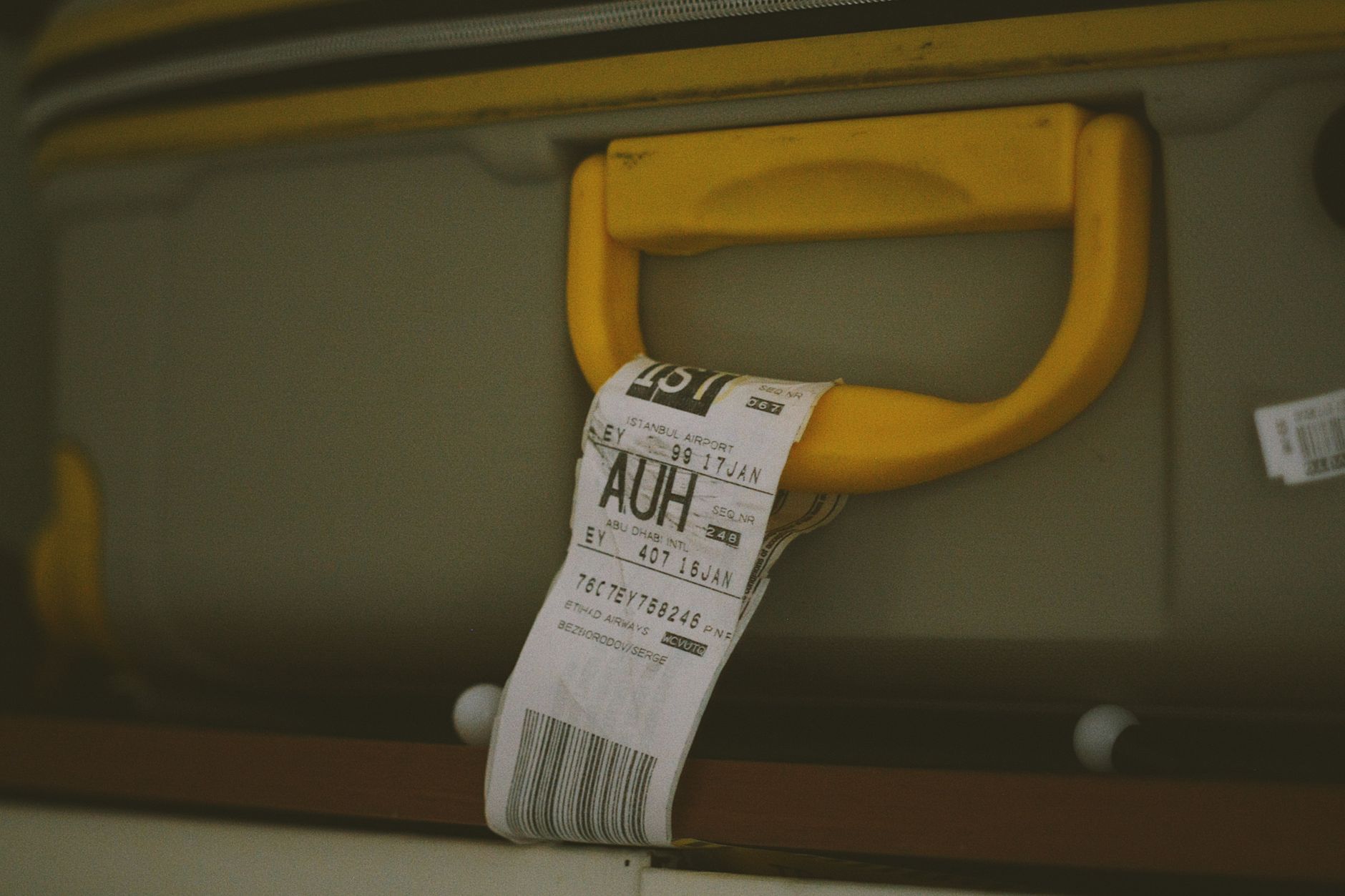
Do not leave the reclaim hall. Go to your airline’s baggage-services desk, which will be in or next to the reclaim area, with your boarding pass and bag-tag stubs, and file a report before you go through customs. Keep a copy of the report and the reference number, note the name of the person you spoke to, and ask how and where the bag will be delivered. Most delayed bags turn up within a day or two; your travel insurance may cover essentials in the meantime, so keep receipts. Once you have passed through customs, getting back into the reclaim hall to report a missing bag is difficult.
Step 5: customs
Most visitors walk through customs without stopping, but bags are often put through an X-ray machine on the way out, and officers can and do open bags that look interesting. Know what you are carrying.
| Item | The rule (as commonly stated in 2026) | Notes |
|---|---|---|
| Tobacco | 200 cigarettes, or 25 cigars, or 200 g of tobacco | Personal allowance |
| Alcohol | One litre of spirits within the personal allowance for arriving tourists | Applies to what you bring in; check customs.gov.eg before you pack more than a bottle |
| Foreign currency | Amounts over USD 10,000, or the equivalent, must be declared | Declare on arrival; keep the paperwork for departure |
| Egyptian pounds | Limits apply to carrying pounds in and out | Rarely an issue for visitors; check the current limit if you are carrying a lot |
| Drones | Banned without permits from the civil aviation and defence authorities | Routinely confiscated at the airport |
| Professional filming or communications equipment | May need prior approval | Personal cameras and phones are fine |
| Mobile phones | Tourists have a 90-day exemption from the phone customs fee | Check the Telecom Regulatory Authority (tra.gov.eg) for the current rules |
Drones: the classic problem
Importing or using a drone in Egypt requires permission from the Ministry of Defence in advance. The X-ray machines on the way out of customs find them easily. If a drone is found, expect it to be held at the airport, and getting it back is slow and uncertain at best. Leave it at home.
Your phone
Egypt has run a customs system for imported mobile phones since January 2025, and the general exemption for phones carried by passengers ended on 21 January 2026. Tourists keep an exemption of 90 days. For a normal holiday, that means your phone simply works. It is worth knowing only so that you are not alarmed by warnings aimed at long-stay residents.
Duty-free shopping after you land
Egypt allows new arrivals a window — reported as 48 hours from entry — to make duty-free purchases, mainly of alcohol, at Egypt Duty Free shops, with your passport. It is a local quirk worth knowing if you want a bottle for a Nile-view balcony, since alcohol is not sold everywhere in Egypt. Check the current rules and allowances at the shop.
Step 6: the arrivals hall
After customs you come out into the arrivals hall, which in every terminal has the same essentials: ATMs, bank exchange booths, mobile-network kiosks, official transport desks, hotel and tour-company representatives and a café or two. Do things in this order.
- Get some Egyptian pounds. Use an ATM, or change a modest amount at a bank booth — enough for the first day or two: the transfer if you have not prepaid, tips, water and a meal. Our guide to money in Cairo covers cards, cash and exchange rates for the rest of your trip.
- Get connected. Buy a tourist SIM or data package at one of the network kiosks — you need your passport — or switch on the eSIM you set up before you flew. Airport packages are convenient rather than cheap; our Cairo SIM card guide compares the options.
- Then, and only then, deal with transport. With cash and data, you can use a ride-hailing app, message your driver or walk calmly to an official desk. Without them, you are negotiating from a position of weakness.
The taxi gauntlet
The approaches start in the arrivals hall and continue outside. Some of the men offering taxis are licensed drivers, some are touts working for drivers waiting in the car park, and a few wear lanyards that look official and are not. None of them is dangerous. The problem is price: a fare agreed in a hurry in the arrivals hall has a way of growing on the journey, with extras for each bag, for each passenger, for the tolls or for the “airport fee”, and by the time you reach your hotel it is hard to argue.
The rule is simple: do not agree a ride with anyone who approaches you. Use one of these instead.
| Option | Reported price to central Cairo (2026) | Pros | Watch out for |
|---|---|---|---|
| Pre-booked transfer with a name board | Agreed in advance | Someone waiting with your name; ideal at night, with children or for Giza | Send your flight number so they track delays |
| Official limousine desk in the arrivals hall | Around EGP 400–700 (USD 8–15), fixed and prepaid | Set price, no negotiation, no data needed | Agree the total at the desk, including bags; Giza costs more |
| Uber or Careem | Around EGP 200–300 (USD 4–6), more to Giza and at peak times | Cheapest mainstream option; price shown upfront | Follow the app to the designated pickup point; drivers sometimes cancel |
| A driver who approaches you | Whatever you agree, plus whatever gets added | None worth the risk | Extras for bags, passengers, tolls and “fees” |
Treat those prices as the right order of magnitude: they are the ranges quoted in 2026 and move with traffic, time of day and the pound. The step-by-step for each option is in our guide to Uber and Careem in Cairo and our wider airport transfers guide.
How to say no
Politely, briefly and without stopping. “La, shukran” — no, thank you — with a smile and a small shake of the head works almost every time. Explaining that you have a driver, or asking how much, invites a conversation you do not need. If someone takes your trolley or bag without asking, take it back firmly and say you are fine. And if you do end up in an unofficial taxi, agree the full price in Egyptian pounds, including bags and any tolls, before the car moves.
Meeting your driver
If you have pre-booked, your driver will usually wait just outside the customs exit with a name board. Before you fly, send the company your flight number rather than just your arrival time, so they can track delays, and get a WhatsApp number for the driver or the dispatcher. When you land, send a short message once you have cleared passport control — reclaim and customs can take a while, and it saves the driver from wondering whether you missed the flight.
If you cannot see your name when you come out, do not wander into the car park with a stranger who says he is your driver. Stand somewhere visible near the exit, message the company, and give it ten or fifteen minutes. If nobody appears, walk to an official limousine desk or order an app ride, and sort out the refund with the transfer company later.
Arriving at night
Flights reach Cairo through the night, and there are ATMs in all the terminals. But some kiosks and cafés close or thin out in the small hours, and a tired arrival is exactly when the taxi gauntlet does its best work. For a night landing, book a transfer before you fly, or at least have a ride-hailing app set up with a card and a way to get data the moment you land. At night the roads are clearer, and a transfer to downtown or Zamalek can take as little as thirty to forty minutes; Giza is further. If your hotel will not have your room ready until the afternoon, tell them your arrival time — many will hold a room or offer somewhere to rest.
Flying straight on within Egypt
If you are landing from abroad and flying on to Luxor, Aswan or the Red Sea the same day, you will normally clear immigration in Cairo, so everything above applies before your domestic flight. On a single ticket with bags checked through, you then head for your departure gate for the domestic leg, usually in Terminal 3 if you are flying EgyptAir. On separate tickets — which is how most travellers book domestic flights — you collect your bags, clear customs, walk out into the arrivals hall and then go back into departures to check in again, with the terminal-door security check in between. Allow at least three hours, more if the domestic flight leaves from a different terminal. Our Cairo layover guide sets out realistic connection times.
Your first hour in Cairo: a checklist
- Visa sorted before the passport queue: QR code, e-Visa or cash for the sticker.
- Hotel name and address saved offline and written down.
- Egyptian pounds from an ATM or a bank booth — enough for a day or two, in small notes for tips.
- Data: a tourist SIM from an arrivals-hall kiosk, or an eSIM set up before you flew.
- Transport: your driver messaged, an official desk, or an app ride from the pickup point — never someone who approached you.
- Water and something to eat, especially after a night flight.
- Nothing ambitious planned for the rest of the day. Arrival day in Cairo is for getting settled, not for the pyramids.
Arriving with children or reduced mobility
Pushchairs taken to the aircraft door are usually returned at the door or on the baggage belt; ask the cabin crew which, before you land. With small children, the bus from a remote stand and the passport queue are the long parts, so keep snacks and water in your hand luggage. If you need wheelchair assistance, request it through your airline when you book, not at the airport; our Cairo accessibility guide covers getting around the city. And for families, a pre-booked transfer with child seats — confirmed in writing, because ordinary taxis and app cars almost never have them — is worth every pound.
Mistakes that cost time and money
- Joining the passport queue without a visa. You will be sent back to the visa area.
- Leaving the reclaim hall without reporting a missing bag. File the report before customs.
- Packing a drone. It will almost certainly be confiscated.
- Agreeing a taxi with someone who approached you. Use a pre-booked driver, an official desk or an app.
- Walking out without cash or data. Sort both in the arrivals hall before you think about transport.
- Handing your trolley to a porter without agreeing. It is a paid service, and that is fine — but decide first.
- Going to the car park with a stranger who says he is your driver. Wait near the exit and message the company.
Frequently asked questions
How long does it take to get through arrivals at Cairo airport?
Around forty-five minutes on a quiet afternoon, from the aircraft door to the kerb, and up to two hours in the small hours when several long-haul flights land together. The visa and passport queues cause most of the variation; buying the digital visa QR code or an e-Visa before you fly removes one of them.
What happens at customs at Cairo airport?
Most visitors walk through without declaring anything, but bags are often put through an X-ray machine on the way out and can be opened. Declare foreign currency over USD 10,000 or its equivalent. Drones are banned without permits and are routinely confiscated. Normal personal items, cameras and phones are fine.
Can I bring alcohol into Egypt?
Arriving tourists may bring one litre of spirits within their personal customs allowance. New arrivals are also reported to be allowed a window of about 48 hours to buy duty-free alcohol at Egypt Duty Free shops with their passport. Check the current allowance before you pack more than a bottle.
Will my phone work in Egypt, and do I have to pay a fee?
Yes, it will work. Egypt’s customs system for imported phones began in January 2025 and the general passenger exemption ended on 21 January 2026, but tourists keep a 90-day exemption. Tourist SIMs are sold at kiosks in the arrivals hall; you need your passport.
What is the best way to get a taxi at Cairo airport?
Avoid anyone who approaches you. Use a pre-booked transfer, the official limousine desk in the arrivals hall — around EGP 400–700 (USD 8–15) to central Cairo — or Uber or Careem from the designated pickup point, at around EGP 200–300 (USD 4–6) to central Cairo. Giza costs more, and prices rise at peak times, so check the quote in the app or at the desk before you agree.
Where do drivers meet you at Cairo airport?
Usually just outside the customs exit in the arrivals hall, holding a name board. Send your transfer company your flight number in advance and message the driver once you have cleared passport control. If you cannot find them, wait visibly near the exit and contact the company rather than following anyone into the car park.
Are there ATMs and SIM cards in the arrivals hall?
Yes. Every terminal’s arrivals hall has ATMs, bank exchange booths and kiosks for the main mobile networks, where you can buy a tourist SIM or data package with your passport. Get some pounds and a data connection before you deal with transport; it makes every transport option easier.
What should I do if my luggage does not arrive?
Stay in the baggage reclaim hall and go to your airline’s baggage-services desk with your boarding pass and bag-tag stubs. File a report before you pass through customs, keep the reference number, and ask how the bag will be delivered. Keep receipts for essentials you buy in the meantime, as your airline or insurance may cover them.
When it is time to go home, the process runs in reverse with more security: a screening at the terminal door before you reach check-in, exit passport control, then a second full check before the gate. Our guide to Cairo airport departures works backwards from your boarding time, starting with when to leave your hotel.
Cash and data are the two jobs worth finishing before you step out into the public arrivals hall, and the order matters: get pounds from a bank ATM first, then buy the SIM. Our guide to getting a SIM card, cash and Wi-Fi at Cairo airport lists which banks operate at the airport, what the tourist bundles cost and how much cash to take out for the first few days.
Related Cairo Guides
- Cairo International Airport: the complete guide
- Staying safe and avoiding scams in Cairo
- First time in Cairo: essential planning
- Where to stay in Cairo
Photo Credits
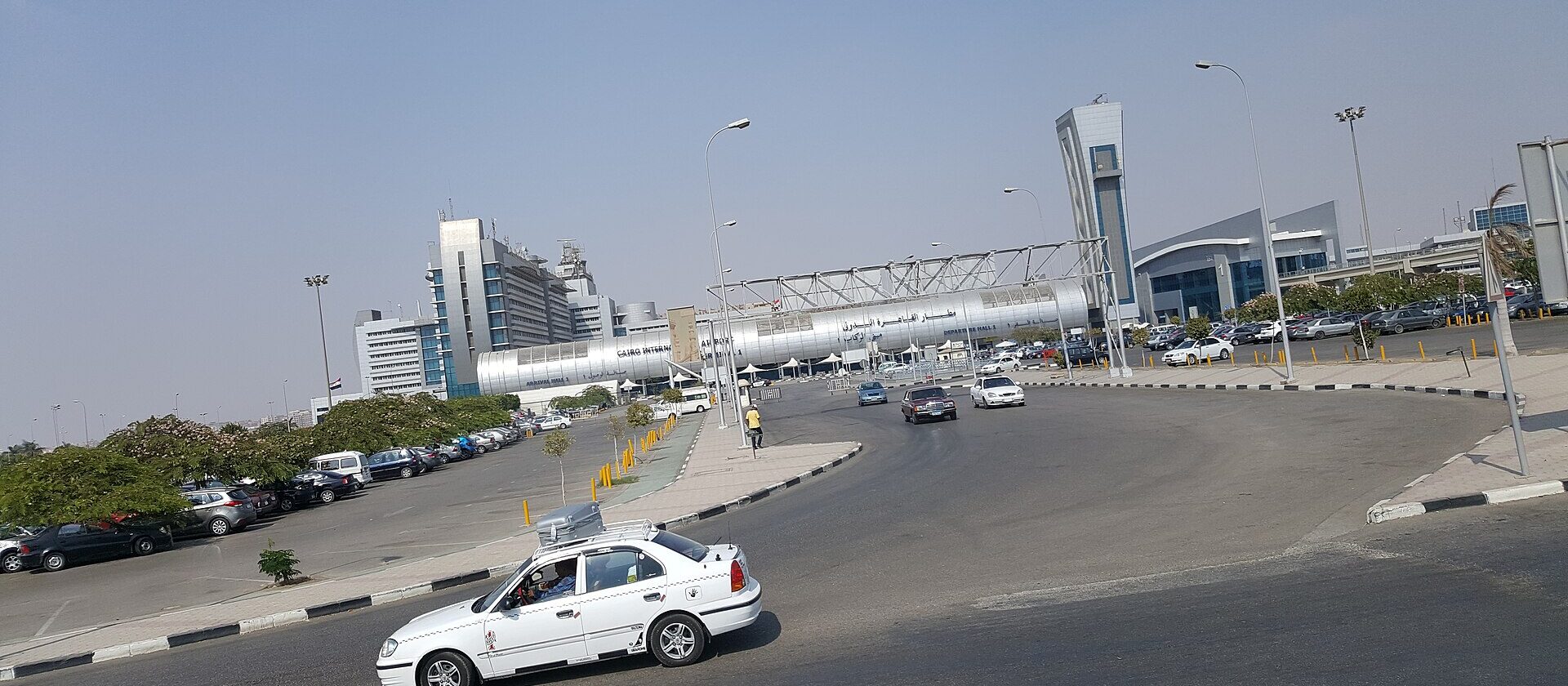
A white Cairo taxi outside the Terminal 1 arrivals building (featured image): photo by Ovedc, via Wikimedia Commons (CC BY-SA 4.0).
A checked-baggage tag on a suitcase handle: photo by Sergei Bezborodov / Pexels, source.
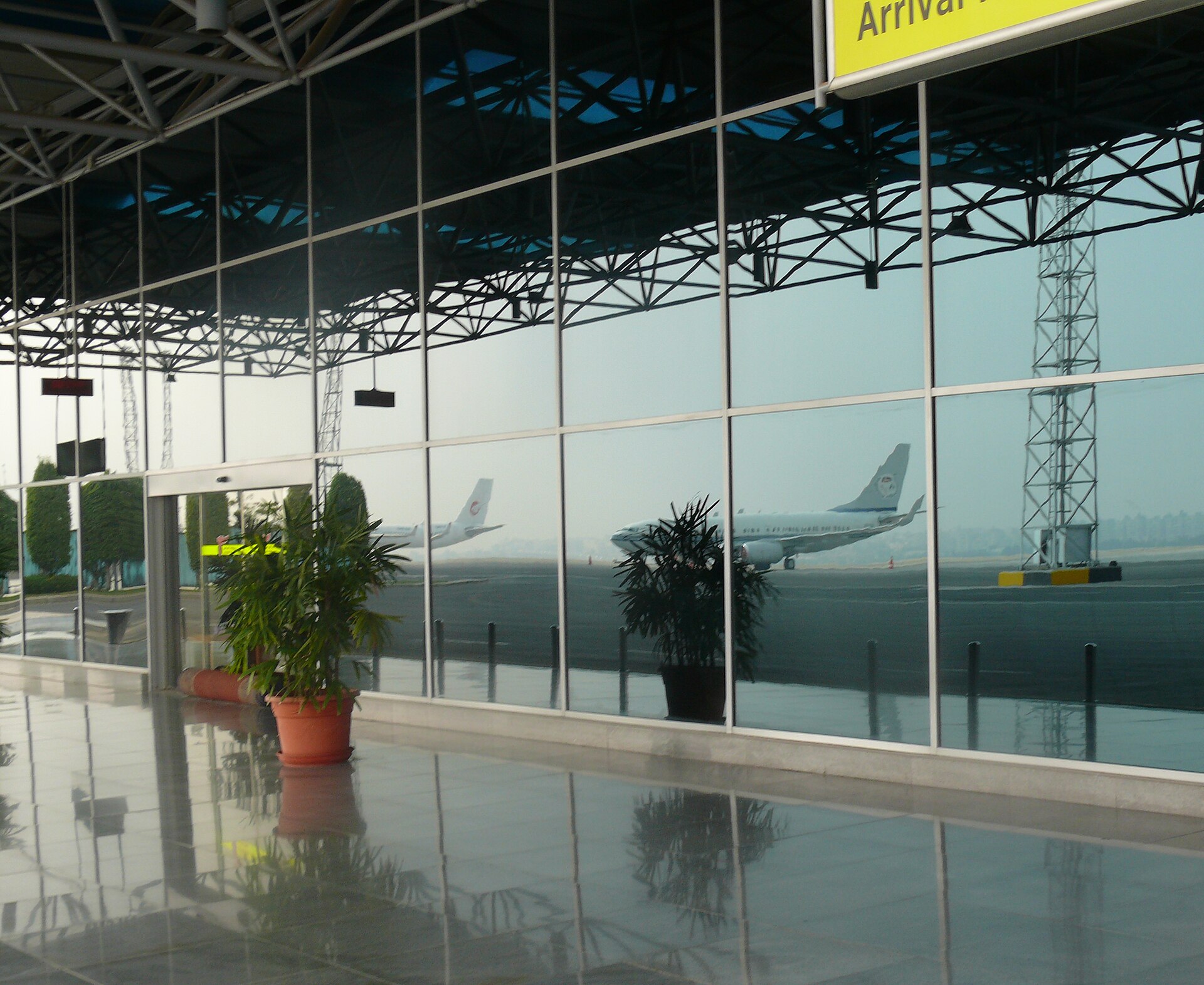
An arrivals building at Cairo International Airport: photo by Ad Meskens, via Wikimedia Commons (CC BY-SA 3.0).
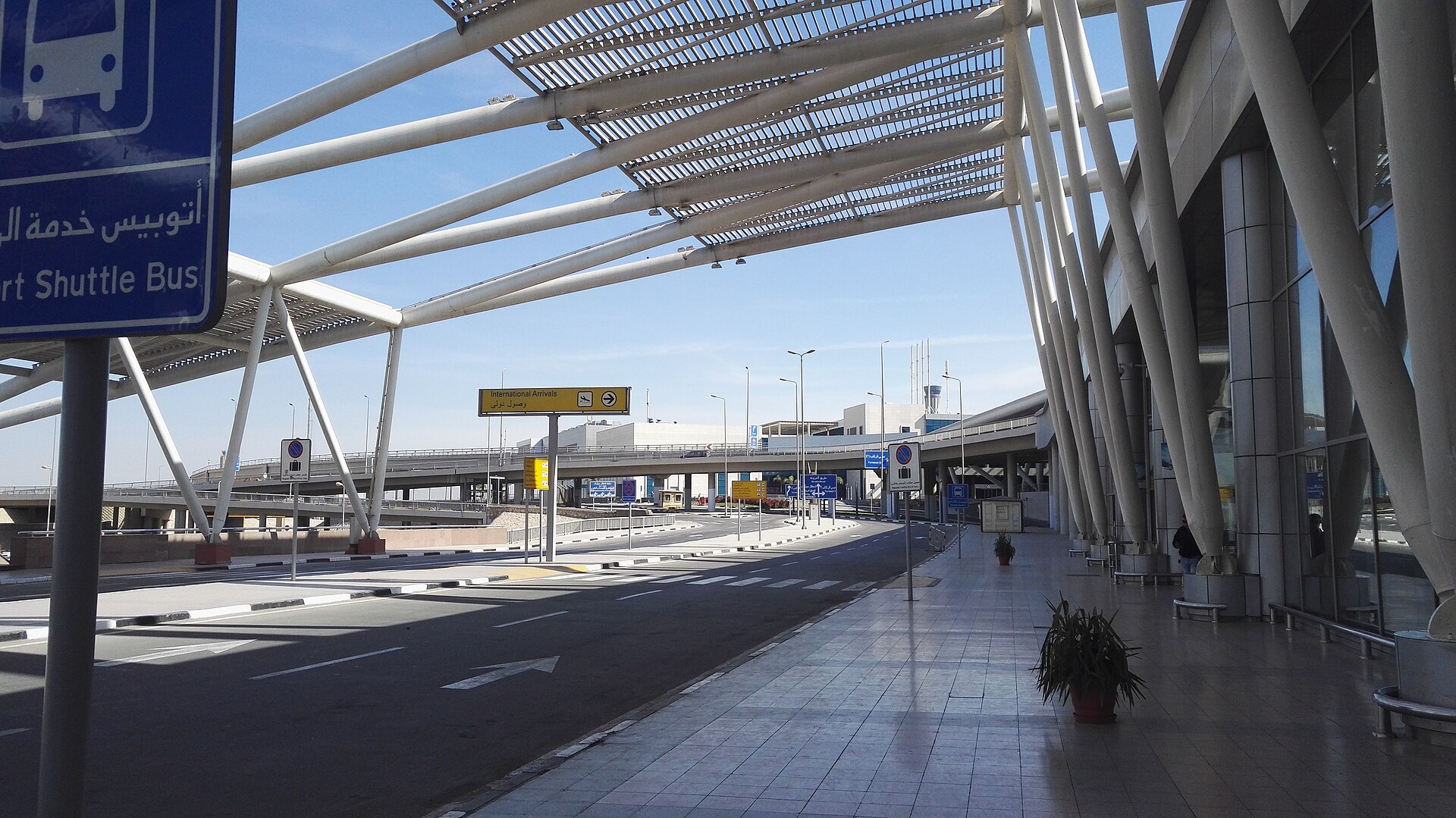
The Terminal 3 kerbside: photo by Alensha, via Wikimedia Commons (CC BY-SA 4.0).