This article contains advertising. Our booking links are routed through a partner that adds commission tracking automatically, so if you book through one we earn a commission from the provider, at no extra cost to you. It never affects what we recommend. Affiliate disclosure
The question comes about five minutes after you get into the car. “Terminal one or terminal three?” asks the driver, and it turns out that “the airport” is not an answer at Cairo. Terminal 1 is a separate building on its own road, Terminals 2 and 3 sit together some distance away, and a wrong guess on departure day means a slow loop of the airport road system with your check-in deadline getting closer. The cairo airport terminals are not hard to use once you know which is which. The trouble is that almost nobody tells you until you are already on the way.
This page covers the terminal question in detail: which airlines use which terminal (and how confident anyone can be about that), how to confirm yours, what each terminal is like, and how to move between them by people mover, airbridge or shuttle bus, with realistic connection times. For everything else about the airport — arrival, visas, transfers into the city, layovers, lounges — start with our complete Cairo International Airport guide. Information was checked in September 2026.
The three terminals at a glance
| Terminal | Opened | Main users | Connected to | What it is like |
|---|---|---|---|---|
| Terminal 1 | 1963, extended and renovated many times since | A mix of foreign airlines, often regional, low-cost and charter carriers | Terminals 2 and 3 by people mover and shuttle bus, landside | The oldest; spread across several halls; a separate building |
| Terminal 2 | 1986; rebuilt and reopened in September 2016 | Many foreign airlines, including a large share of the Gulf and European carriers | Terminal 3 by an airbridge; Terminal 1 by people mover and bus | Compact and modernised; works as one complex with Terminal 3 |
| Terminal 3 | April 2009 | EgyptAir, domestic and international, and its Star Alliance partners | Terminal 2 by an airbridge; Terminal 1 by people mover and bus; Le Méridien hotel by a link bridge | The largest and newest; long walks between gates |
| Seasonal Flight Terminal | 2011 | Hajj and Umrah flights in pilgrimage seasons | — | Most leisure travellers never see it |
Which terminal is my airline?
This is where most online guides go wrong, and we would rather be honest than tidy. When we compared published airline-by-terminal lists in September 2026, they agreed on the big picture and disagreed on plenty of the detail — the same airline appears in Terminal 1 on one site and Terminal 2 on another, and some lists still include airlines that stopped flying years ago. Allocations at Cairo do change, usually when the airport rebalances traffic between buildings. So the table below gives the pattern and our confidence in each line, and the next section tells you how to get a definite answer for your own flight.
| Airline or group | Usual terminal | How confident? |
|---|---|---|
| EgyptAir, international and domestic | Terminal 3 | High. Its hub; occasional flights use Terminal 2 |
| EgyptAir’s Star Alliance partners — Lufthansa, Swiss, Austrian, Turkish Airlines, Aegean, Ethiopian and others | Terminal 3 | High. Terminal 3 is the Star Alliance base |
| Gulf and Middle Eastern carriers outside Star Alliance — Emirates, Etihad, Saudia, Gulf Air, Kuwait Airways, Oman Air, Royal Jordanian, Middle East Airlines | Terminal 2 in most current lists | Medium. Some lists place individual airlines in Terminal 1 |
| European carriers outside Star Alliance, such as British Airways and Air France | Terminal 2 in most current lists | Medium. Check on the day |
| Qatar Airways | Sources disagree between Terminals 1 and 2 | Low. Always confirm |
| Low-cost, charter and smaller regional airlines | Often Terminal 1 | Low to medium. Confirm with the airline |
| Hajj and Umrah flights in pilgrimage season | Often the Seasonal Flight Terminal | Medium. Your airline or agent will tell you |
The one rule you can rely on: if you are flying EgyptAir or connecting onto it, you are almost certainly in Terminal 3. Everyone else should confirm, because the cost of guessing wrong is a cross-airport transfer at exactly the wrong moment.
How to find out for certain
In order of reliability, from best to worst:
- Your airline’s app or online check-in on the day. The boarding pass or the check-in confirmation usually shows the terminal, and it reflects any late change.
- The airport’s own flight information. Search by flight number on the day; it is the best source for same-day moves.
- Your booking confirmation or e-ticket. Accurate when issued, but it can be overtaken by a change after you booked.
- A text or email from the airline. Some airlines send the terminal with their check-in reminder.
- Your hotel, driver or tour company. Usually right, sometimes a confident guess. Treat it as a second opinion.
- A list on a travel website, including this one. Useful for planning, never for the day itself.
When you tell a driver where to go, give the airline name as well as the terminal number. Cairo drivers know the airport by airline — “EgyptAir” means Terminal 3 to almost anyone who drives there regularly — and saying both catches the occasional mix-up before it becomes a problem.
Terminal 3: EgyptAir’s home
Terminal 3 opened in April 2009 and is the one most visitors to Cairo pass through. It is the hub for EgyptAir’s domestic and international network, so if you are flying on to Luxor, Aswan, Sharm el-Sheikh or Hurghada with EgyptAir, or arriving on an EgyptAir long-haul flight, this is your building. Its Star Alliance partners use it too, which makes it the terminal for most one-ticket connections through Cairo.
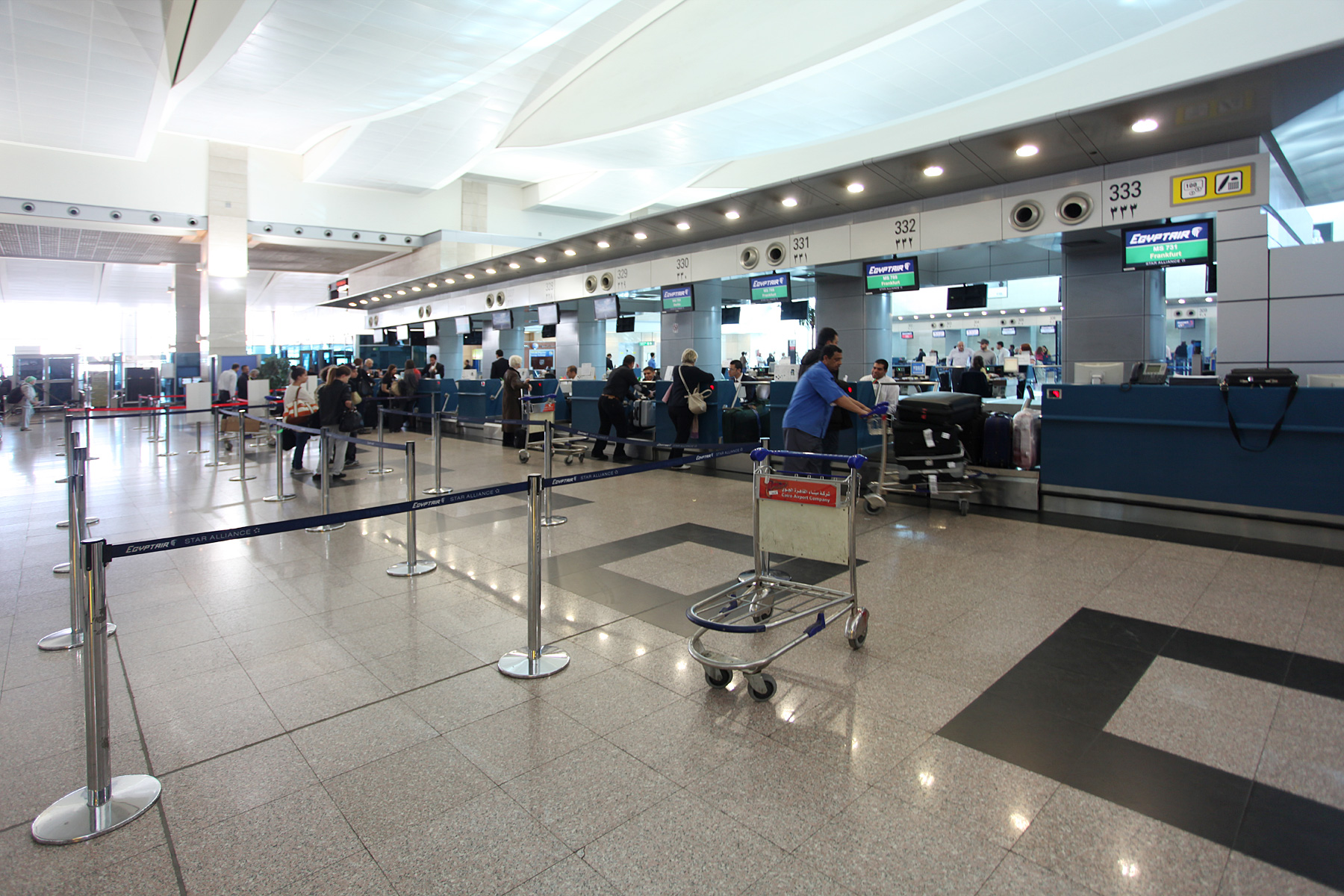
It is a big, bright, airy building, well signed in Arabic and English, and it works well for most of the day. The downside of its size is walking: gates can be a long way from security, and it pays to head for yours as soon as it is announced rather than waiting by the shops. The airside area has the widest choice of food and duty-free shopping at the airport. Terminal 3 is also where you will find the link bridge to the Le Méridien Cairo Airport hotel, the closest real hotel to any gate at CAI, and the airbridge that joins it to Terminal 2.
Terminal 2: the rebuilt neighbour
Terminal 2 first opened in 1986, closed for a major reconstruction in 2012 and reopened on 28 September 2016 with its gates doubled from seven to fourteen. It now operates as an integrated complex with Terminal 3, and the two are joined by an airbridge. It handles a large share of the foreign airlines that serve Cairo, including many of the Gulf and European carriers.
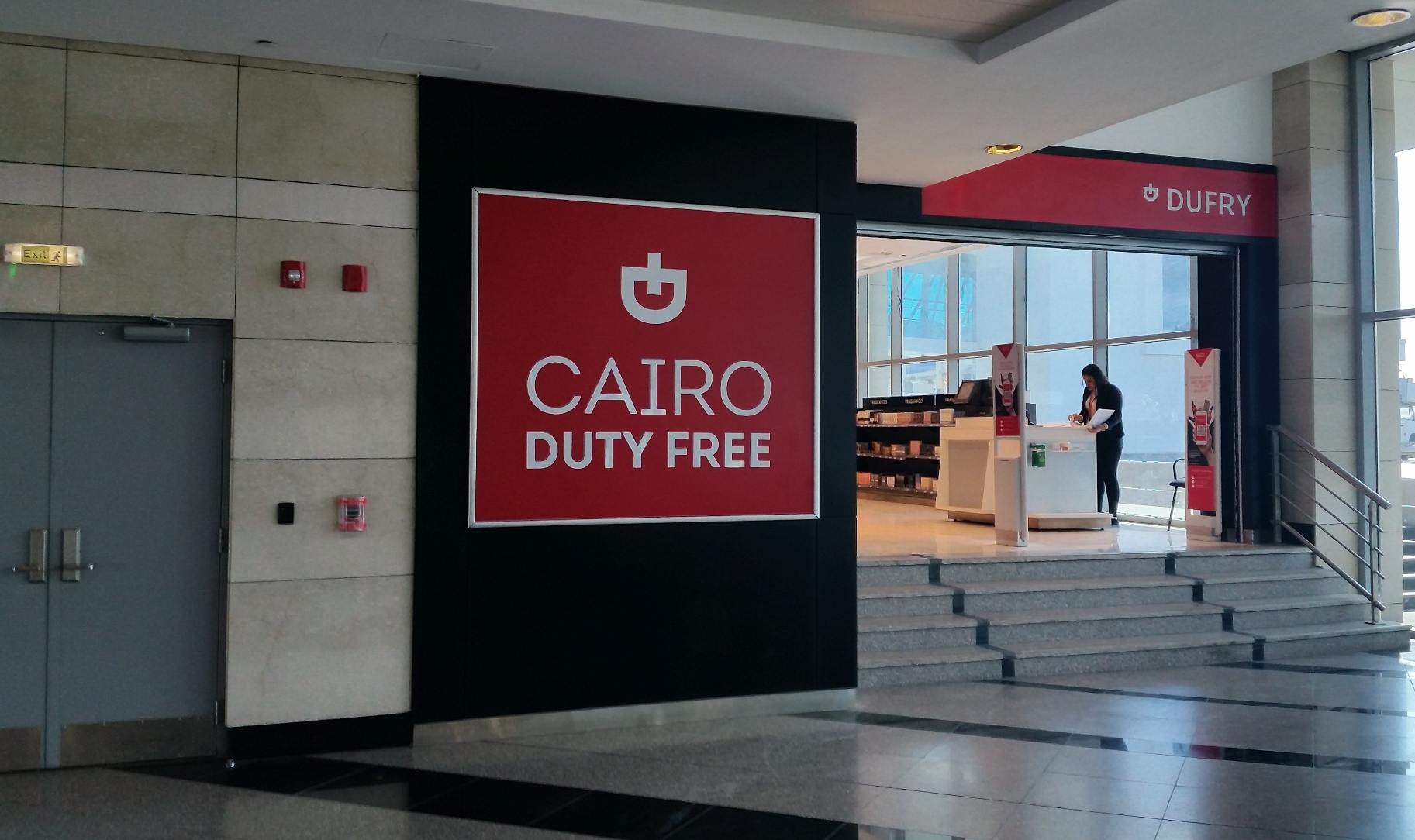
Being smaller than Terminal 3, it is usually quicker to get through, with shorter walks to the gates. Facilities are more limited than next door, so if you have a long wait, eat before you go through. For departing passengers, the practical point is that Terminals 2 and 3 share an approach: if a driver drops you at the wrong one of these two, the walk between them is an inconvenience rather than a disaster. That is not true of Terminal 1.
Terminal 1: the original
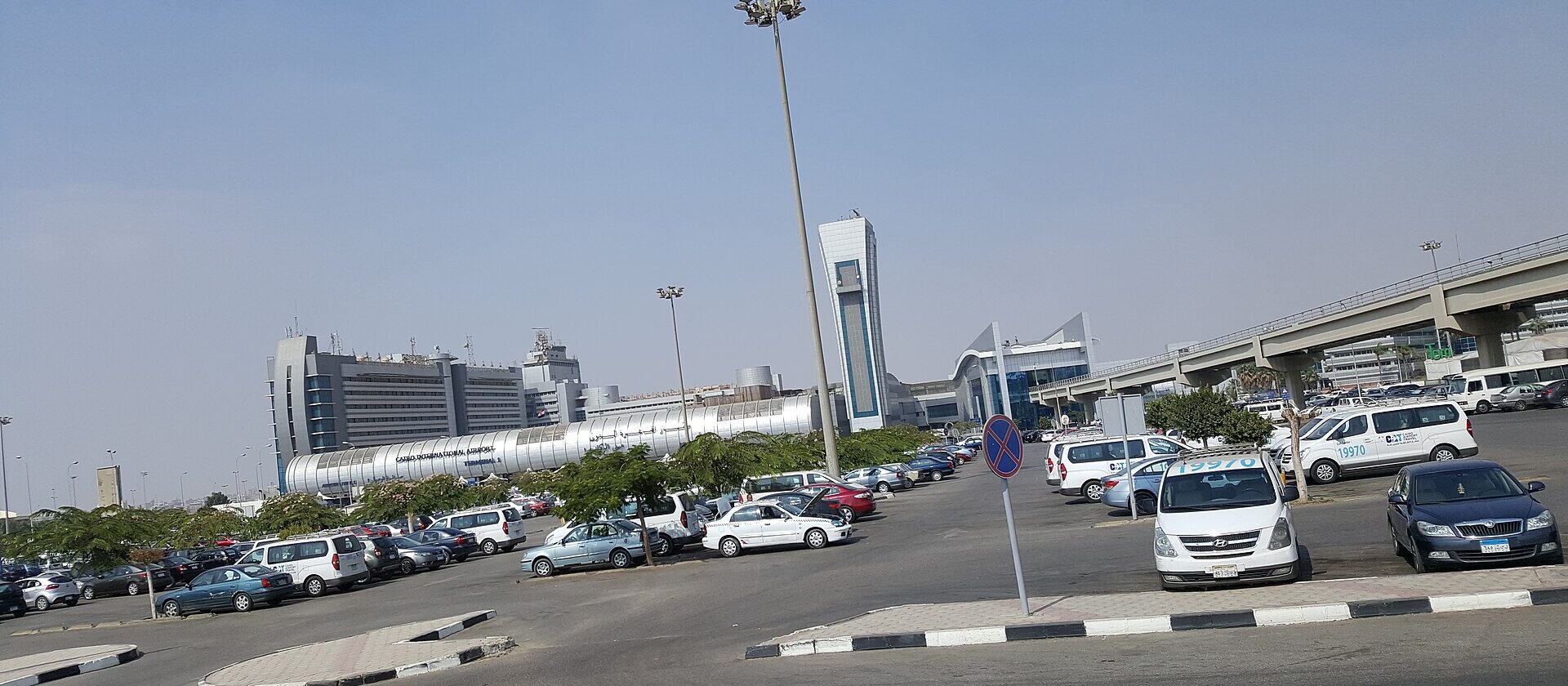
Terminal 1 opened in 1963 and has been extended repeatedly since — new halls were added in the late 1970s and 1980, and a renovation was completed in 2003. It is the oldest and most dated of the three, spread across several halls with their own entrances, and it sits apart from the Terminal 2 and 3 complex on its own section of the airport road system. Today it handles a mix of foreign airlines, often regional, low-cost and charter carriers.
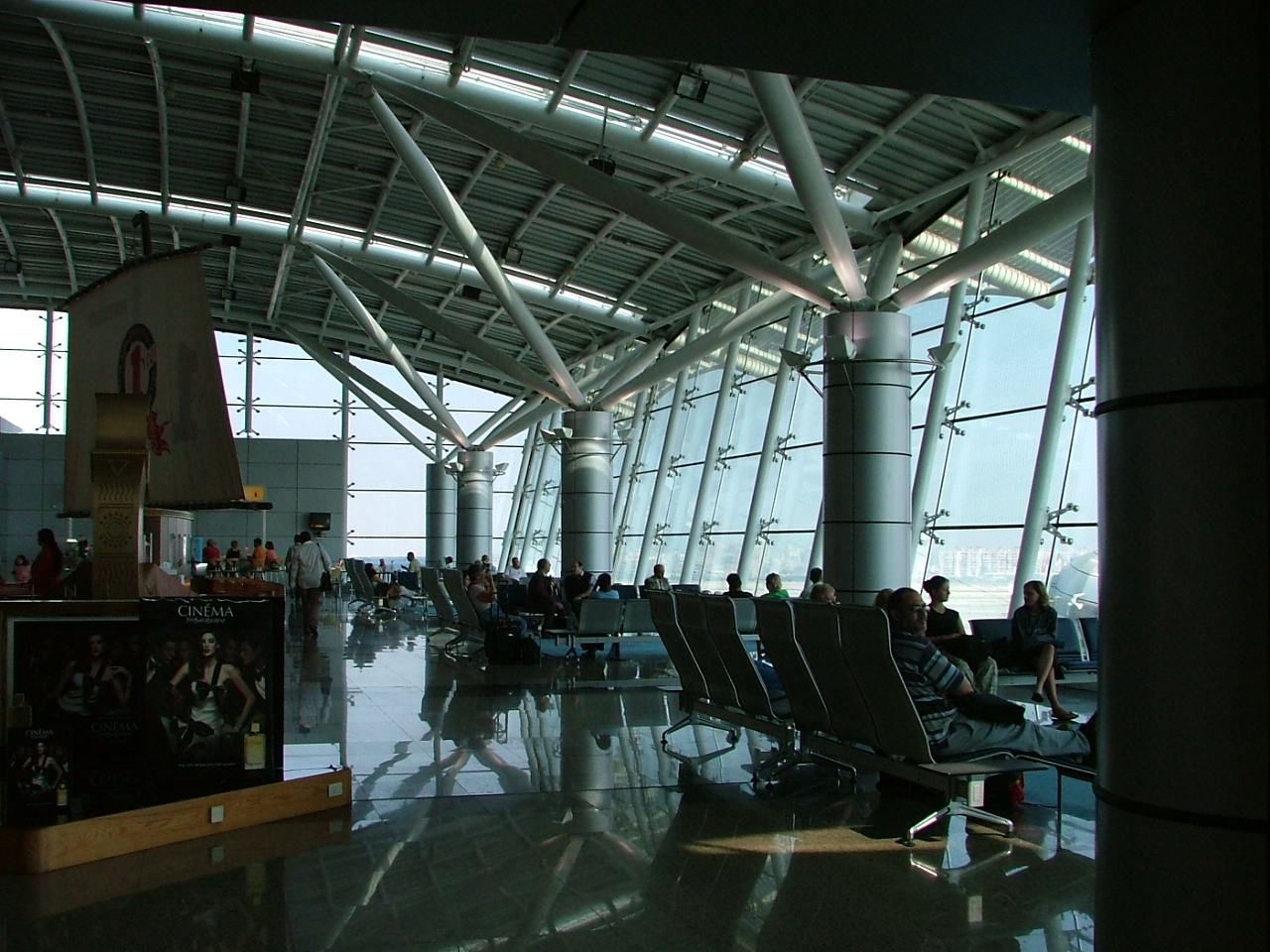
Because Terminal 1 is divided into halls, the terminal number alone is not always enough: check your hall as well, and look for the airline’s name on the signs as you approach. Allow a little extra time here. Queues at the terminal-door security check can be slow at peak times, and facilities airside are thinner than in Terminal 3.
The Seasonal Flight Terminal
Opened in 2011 with capacity for more than three million passengers a year, the Seasonal Flight Terminal exists to take pilgrimage traffic away from the main buildings during the Hajj and Umrah seasons. If you are flying to Jeddah or Medina at those times, your airline or agent will tell you if your flight has been moved here. Otherwise you can ignore it.
Trips that use two terminals
A very common Egypt itinerary touches two different Cairo terminals without the traveller ever noticing until the last day. You fly in on a Gulf or European airline, spend a few days in Cairo, fly EgyptAir to Luxor or Aswan, and fly back to Cairo to catch the flight home. That is potentially three different flights through two terminals, and the one that goes wrong is usually the last.
| Leg | Likely terminal | What to watch |
|---|---|---|
| International arrival on a non-Star Alliance airline | Terminal 2, sometimes Terminal 1 | Tell your pickup driver the flight number, not just the terminal |
| EgyptAir domestic flight to Luxor, Aswan or the Red Sea | Terminal 3 | Arrive two hours early; the terminal-door security check applies to domestic flights too |
| EgyptAir domestic flight back to Cairo | Arrives at Terminal 3 | You are now landside in Terminal 3, not in the terminal you fly home from |
| International departure home on a non-Star Alliance airline | Terminal 2 or Terminal 1 | Allow time to move across, and check in again with your bags |
The last two rows are the trap. If you land from Luxor at Terminal 3 in the afternoon and fly home from Terminal 1 that evening, you have to collect your bags, get yourself across to Terminal 1 by people mover, shuttle bus or taxi, and check in from scratch, with the terminal-door security queue in between. On separate tickets, which is how most travellers book their domestic flights, nothing is checked through. Give that change at least three to four hours, or better, fly back from Upper Egypt the day before your flight home and spend a last night in Cairo.
Domestic flights on other airlines
EgyptAir’s domestic flights are the easy case: Terminal 3. Private carriers such as Air Cairo and Nile Air also fly domestic routes from Cairo, and they have used different terminals over the years, so confirm theirs in the booking or the airline’s app. The flights themselves are short — about seventy-five minutes to Luxor, roughly an hour to Sharm el-Sheikh and around an hour and a half to Aswan — but the time on the ground at each end is what fills the day.
A useful phrase
Most airport drivers understand “Terminal 1, 2, 3” in English, but if you want to be sure, the Arabic numbers are wahed (one), itnein (two) and talata (three): “terminal talata” gets you to Terminal 3. Add the airline name and you have removed almost all the room for error.
Getting between the terminals
There are three ways to move around the terminal area. None is instant, and which one you can use depends on whether you are inside or outside security.
The automated people mover
A driverless people mover links Terminal 1 with the Terminal 2 and 3 complex, and also serves the multi-storey car park and the AirMall. Because it serves those public areas, it runs landside — outside security — so using it means you are moving between terminals as an ordinary member of the public, not as a transfer passenger. For a departing traveller dropped at the wrong terminal, or for anyone moving between the car park and the terminals, it is the easiest way across.
The airbridge between Terminals 2 and 3
Terminals 2 and 3 are joined by an airbridge, which is why they are often described as a single complex. On foot, with a bag, allow a good fifteen minutes between the two, and more if you have to pass another security check on the way. Follow the signs for your terminal or for flight connections rather than trying to navigate by instinct; the complex is large and the corridors look alike.
Shuttle buses
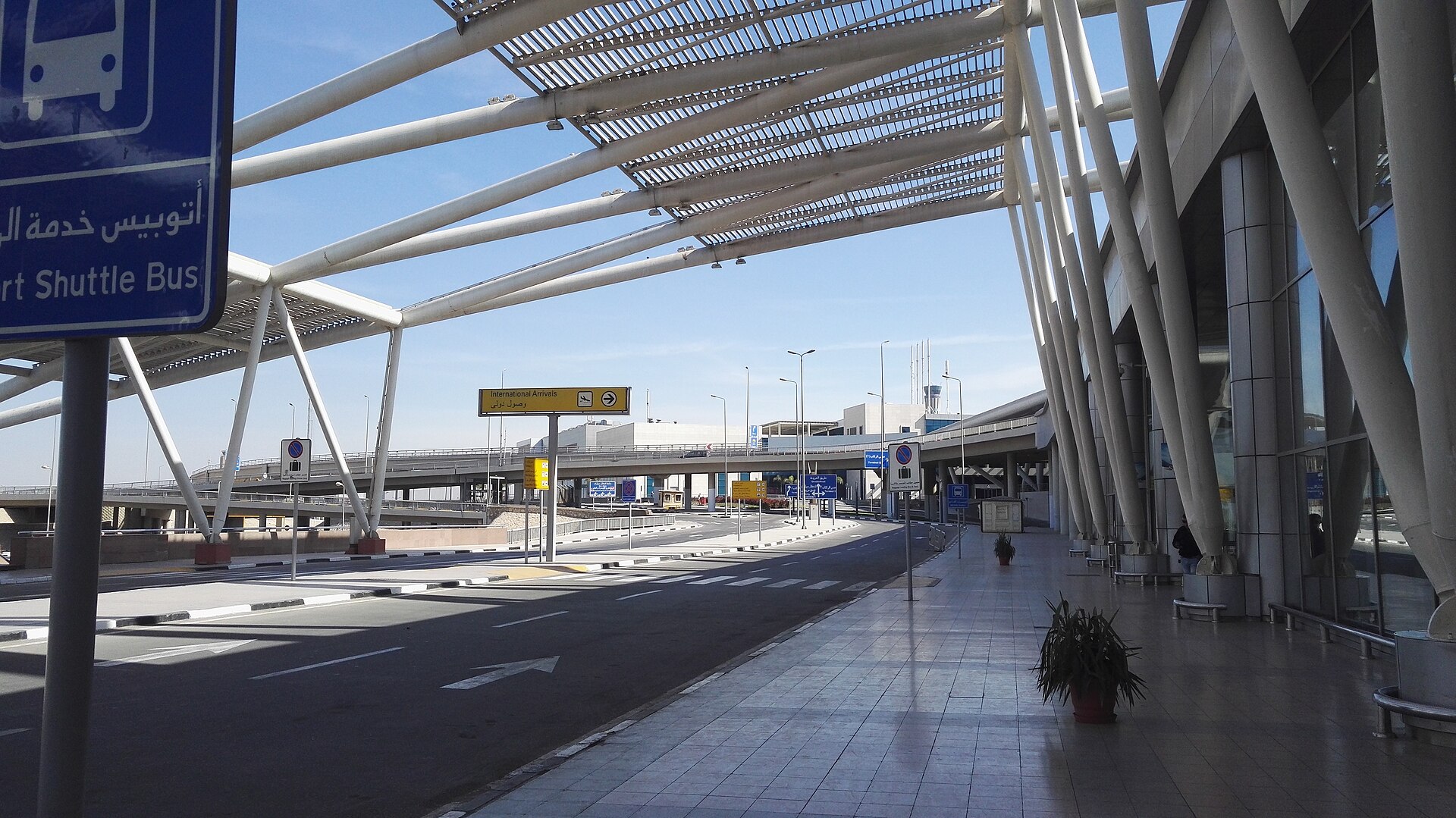
Shuttle buses run between the terminals on the landside roads, with stops on the kerb outside the terminals marked by blue “Airport Shuttle Bus” signs like the one outside Terminal 3. They are a useful fallback if the people mover is not running or you cannot find its station, but they are slower, and at busy times you may wait. A taxi or ride-hailing car can also do the trip between Terminal 1 and Terminals 2 and 3, but the one-way road system means it is rarely quicker than it looks on the map.
How long do connections between terminals take?
These are our planning buffers, based on what each transfer actually involves. They are not the airport’s or any airline’s official minimum connection times, which are set per airline and per route and appear when you book; if your ticket gives you less time than an official minimum, the airline will not sell it to you as a connection.
| Your connection | What it involves | Allow at least |
|---|---|---|
| Same terminal, one ticket, bags checked through | Transfer security, a walk to the gate | 1 to 1.5 hours |
| Terminal 2 to 3 or back, one ticket | Airbridge walk, transfer security | 1.5 to 2 hours |
| Terminal 1 to Terminals 2 or 3, one ticket | A transfer arranged by the airline or transfer desk; ask at check-in how it works | 2 to 3 hours |
| Any terminals, separate tickets | Immigration (so a visa if your nationality needs one), baggage reclaim, customs, a landside move, check-in, exit immigration and security | 4 hours or more |
| International arrival to an EgyptAir domestic flight | Usually immigration in Cairo, then the domestic connection in Terminal 3; check whether bags are checked through | 2 to 3 hours |
The separate-ticket line is the one that catches people. If you have booked two unconnected flights through Cairo, you are not a transfer passenger in the airline’s eyes: you have to enter Egypt, collect your bags and start again, and if your first flight is late, your second airline owes you nothing. Build in at least four hours, and more at night when the immigration halls are busiest. The mechanics of that — visas, transit rules and bag re-checks — are covered in detail in our layover guides, and the visa rules themselves in our guide to Egypt visa requirements.
Arriving: which terminal will you land at?
You arrive at the terminal your airline uses, and each terminal has its own arrivals hall, with its own ATMs, exchange booths, SIM kiosks and transport desks. This matters for your pickup. If a driver is meeting you, send them your flight number rather than just the terminal, so they can check for late changes, and agree a meeting point — the exit of the arrivals hall after customs is standard. If you are using a ride-hailing app, the pickup point is signposted from each arrivals hall; our guide to Uber and Careem in Cairo explains how airport pickups work, and our full rundown of airport transfer options compares the alternatives.
Departing: getting to the right door
On departure day, confirm the terminal the evening before and again on the morning of the flight in your airline’s app. Arrive three hours before an international flight and two before a domestic one: every terminal has a security check at the entrance, before check-in, and friends and family generally cannot come inside with you. If you arrive at the wrong terminal, do not panic and do not jump into the first taxi offering to take you. Between Terminals 2 and 3, walk. Between Terminal 1 and the others, use the people mover or the shuttle bus, and allow half an hour or more door to door.
If you are being driven by an ordinary taxi, agree the terminal before you set off; our tips on taking taxis in Cairo apply to airport runs as much as anywhere. And if you need help with mobility between terminals, request wheelchair assistance through your airline when you book, not at the kerb; our Cairo accessibility guide has more on getting around.
Parking and drop-off
Drop-off is at the kerb outside each departures area, and drivers are expected to unload and move on; lingering is discouraged, and the approach roads are closely managed. For longer stays, the multi-storey car park is linked to the terminals by the people mover. If someone is collecting you, it is usually easier for them to park and meet you at the arrivals exit than to circle the kerb waiting for you to appear.
Mistakes to avoid
- Assuming all Cairo terminals are in one building. Terminal 1 is separate. Getting it wrong costs time you may not have.
- Trusting a single online list. They disagree and they go out of date. Your airline’s app on the day is the source that counts.
- Giving the driver only a terminal number. Add the airline name. It catches mistakes on both sides.
- Booking a separate-ticket connection with two hours to spare. You will need to clear immigration, collect bags and check in again. Allow four hours or more.
- Forgetting the visa on a landside transfer. If your connection takes you out through immigration, you need to be eligible to enter Egypt.
- Taking a taxi between terminals without agreeing the fare. The people mover and the shuttle bus exist precisely so you do not have to.
- Checking only the terminal in Terminal 1. Check the hall as well.
Frequently asked questions
Which terminal does EgyptAir use at Cairo airport?
Terminal 3, for both international and domestic flights; it is EgyptAir’s hub and the base for its Star Alliance partners. Occasionally an EgyptAir flight uses Terminal 2, which is joined to Terminal 3 by an airbridge. Confirm in the EgyptAir app or on your boarding pass on the day of travel.
Which terminal is Emirates at Cairo?
Most current lists place Emirates in Terminal 2, alongside many of the other Gulf carriers. Published lists do not all agree, and allocations at Cairo change from time to time, so check the Emirates app or your booking on the day. If you are dropped at Terminal 3 by mistake, Terminal 2 is a walk across the airbridge.
Which terminal is Turkish Airlines at Cairo?
Turkish Airlines is a Star Alliance member, and Star Alliance airlines at Cairo are based in Terminal 3 with EgyptAir. As with every airline here, confirm on the day, because some published lists place it elsewhere.
Which terminal is Qatar Airways at Cairo?
Published sources disagree, with some listing Terminal 1 and others Terminal 2. Treat this one as a must-check: look at the Qatar Airways app or your booking confirmation on the day of travel, and tell your driver the airline name as well as the terminal.
Are Terminals 2 and 3 connected?
Yes. They work as one integrated complex and are joined by an airbridge. Allow around fifteen minutes on foot between them, more with heavy bags or if a security check is involved. Terminal 1 is a separate building and is connected to them by a landside people mover and shuttle buses.
How do I get from Terminal 1 to Terminal 3?
Take the automated people mover, which links Terminal 1 with the Terminal 2 and 3 complex, the multi-storey car park and the AirMall, or the shuttle bus from the kerb. Both run landside, outside security. Door to door, including walking and waiting, allow at least half an hour; a taxi is possible but rarely quicker because of the road layout.
How long do I need to change terminals at Cairo?
On a single ticket, allow at least one and a half to two hours between Terminals 2 and 3, and two to three hours between Terminal 1 and the others. On separate tickets, allow four hours or more, because you will have to clear immigration, collect your bags and check in again. These are planning buffers, not official minimum connection times.
Is there a hotel connected to the terminals?
Yes. The Le Méridien Cairo Airport hotel is linked directly to Terminal 3 by a bridge, and sleep pods have been available in all three terminals since 2025. For a longer stop, there are more hotels in Heliopolis, a short drive from the airport.
If your connection is long enough to think about leaving the airport, the terminal is only half the question. Our layover guide for Cairo airport works out how many hours you really need for the pyramids, and which visa route gets you out.
Related Cairo Guides
- Getting around Cairo: the transport guide
- SIM cards and internet in Cairo
- Tipping porters, drivers and everyone else
- What to prepare before you fly to Cairo
Photo Credits
The Terminal 3 kerbside with its shuttle-bus stop: photo by Alensha, via Wikimedia Commons (CC BY-SA 4.0).
Terminal 1 and its car park (featured image): photo by Ovedc, via Wikimedia Commons (CC BY-SA 4.0).
Terminal 1 departure lounge: photo by Beebah, via Wikimedia Commons (CC BY-SA 3.0).
EgyptAir check-in in Terminal 3: photo by Roland Unger, via Wikimedia Commons (CC BY-SA 3.0).
Cairo Duty Free in Terminal 2: photo by Amsguc, via Wikimedia Commons (CC BY-SA 4.0).