This article contains advertising. Our booking links are routed through a partner that adds commission tracking automatically, so if you book through one we earn a commission from the provider, at no extra cost to you. It never affects what we recommend. Affiliate disclosure
You land at Cairo International at 1am, the queue for passport control snakes back past the duty-free, and the moment you clear it a man in a lanyard asks if you need a taxi. You want to check the hotel’s address, message the driver who is supposedly waiting, and glance at the map. Your phone says “No Service”. This is the fifteen minutes that decides whether your first night in Egypt is calm or flustered, and it costs about 300 EGP (roughly $6) to fix.
Here is the number that matters most: a 30-day tourist bundle from any of Egypt’s four networks runs roughly 200–600 EGP ($4–12) for 7GB to 47GB of data, and the kiosks selling them sit inside the baggage hall, before the final customs check. Walk past them and you’re buying in town tomorrow instead. A travel eSIM costs several times more per gigabyte but works before you’ve stood up from your seat. This guide settles which of those is right for you, what the four operators actually deliver where you’ll be standing, and two things most other articles get wrong in 2026: the phone customs rules that changed in January, and the fact that WhatsApp voice calls still don’t reliably work.
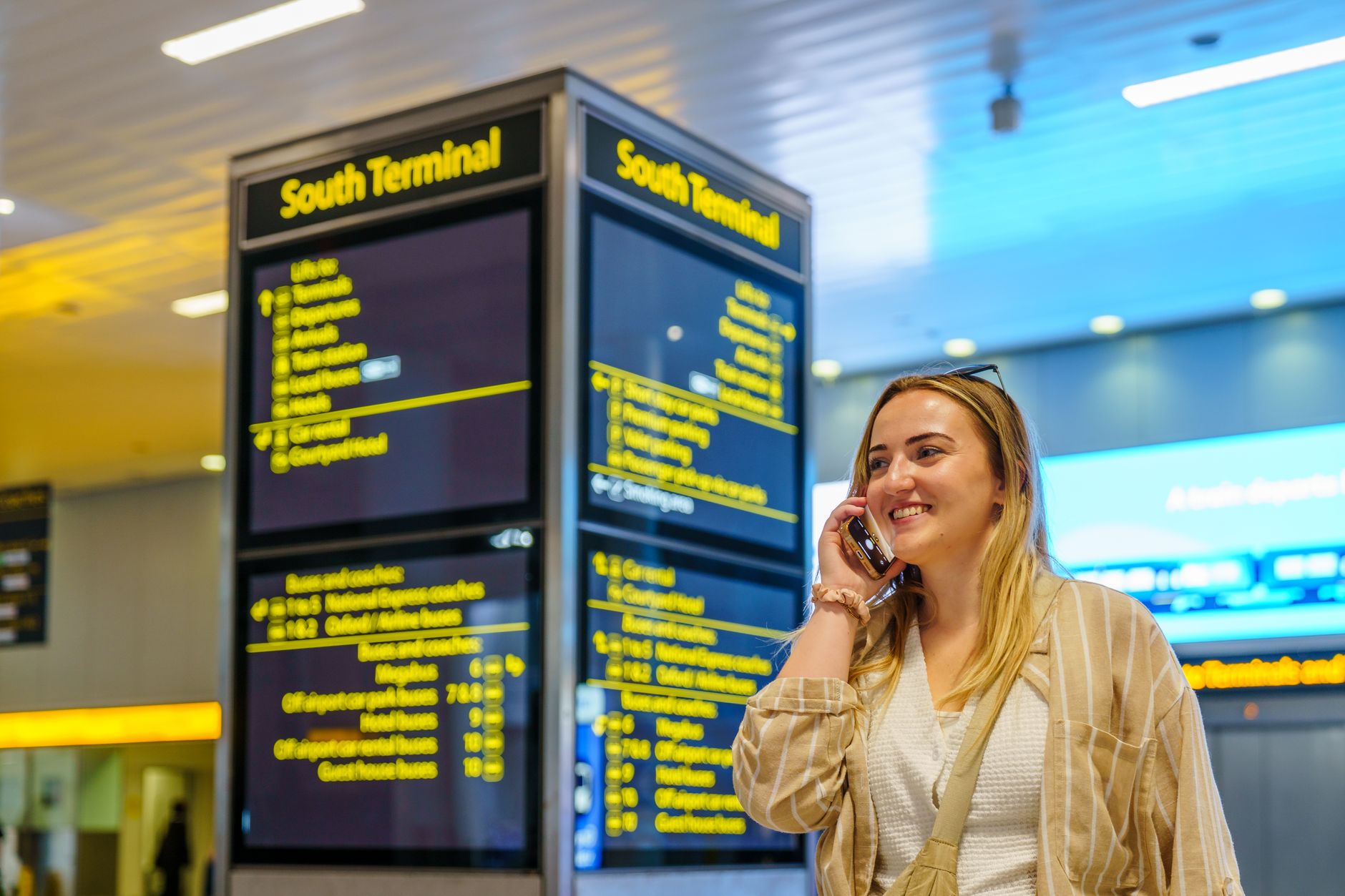
Quick verdict: five ways to get online in Cairo
Prices below are as of mid-2026, when a dollar bought about 50 EGP. The pound floats and has moved a lot, so treat the EGP figures as a live range and the dollar figures as the stable comparison.
| Option | Typical cost | Setup effort | Best for | Worth it? |
|---|---|---|---|---|
| Local prepaid SIM (bought in Egypt) | 200–600 EGP ($4–12) for 7–47GB, 28–30 days | 10–20 min, passport required | Anyone staying 4+ days | Yes — cheapest data you’ll find anywhere |
| Travel eSIM (Airalo, Nomad, Saily, Holafly) | $9–42 for 1–20GB | 2 minutes, done at home | Short trips, tight connections, queue-haters | Yes if the hour saved beats $20 |
| Local operator eSIM | Same as local SIM prices | Shop visit or app, passport still required | Newer phones, longer stays | Good, but you still find a shop |
| Home carrier roaming | $5–15/day, or eye-watering per-MB | None | 48-hour stopovers only | No — worst value on this list |
| Wi-Fi only (hotels and cafés) | Free | None | Nobody, honestly | No — you want a map in the street |
My short answer, before the detail: buy a local SIM at the airport if you’re staying more than three days, and add a cheap travel eSIM as a backup if your phone supports both. That combination costs under $20 and removes almost every way this can go wrong.
The four networks in 2026, and who wins where
Egypt has four operators — Vodafone Egypt, Orange Egypt, e& Egypt (the company formerly and still colloquially called Etisalat), and WE, the mobile arm of state-owned Telecom Egypt. Articles still listing “the three main providers” are running on old information; WE has been a full competitor for years and now posts some of the country’s fastest download speeds.
The genuinely new thing is 5G. Egypt switched on commercial 5G on 4 June 2025, at a launch event staged at the foot of the Giza pyramids, with all four operators going live simultaneously. Any guide claiming Egypt has no 5G was written before that date.
What 5G means in practice is less exciting than the launch photos. Opensignal’s analysis of the first months found Egyptian 5G users still spent about 95% of their time on 4G, because operators launched on 2.6GHz spectrum rather than the deeper mid-band their Gulf neighbours used. Where you do connect, downloads ran about 3.4 times faster than 4G — but Egypt’s average 5G download speed of around 64.5 Mbps was less than half Tunisia’s. A $3.5 billion spectrum deal signed in January 2026 allocates roughly 410MHz more across the four operators, phased through 2030. For a trip in 2026: expect good 4G nearly everywhere, and treat 5G as a pleasant surprise in central Cairo.
On coverage, the old ranking holds. Vodafone has the widest national footprint and the most consistent signal once you leave the capital. Orange is a close second in cities and strong on 5G availability and upload speed. e& delivers excellent 5G experience where it exists, from a smaller footprint. WE wins on raw speed but is the thinnest network away from major roads. If you’ll spend your whole trip between Zamalek, Downtown and Giza, all four serve you fine.
What the tourist packages actually cost
All four operators sell dedicated visitor bundles, usually valid 28 or 30 days, and all bundle voice minutes you probably won’t use. Figures below reflect 2026 pricing; operators reshuffle constantly, so read the board at the counter rather than arguing about a number you saw online.
| Operator | Package | Data | Voice included | Price |
|---|---|---|---|---|
| Orange | Orange Holidays | 20GB / 28 days | 120 local minutes | ~200 EGP ($4) |
| Orange | Orange Holidays Super | 47GB / 28 days | 120 local minutes | ~450 EGP ($9) |
| e& (Etisalat) | Traveler 200 | 7GB / 30 days | 100 local + 5 international min | ~200 EGP ($4) |
| e& (Etisalat) | Traveler 450 | 25GB / 30 days | 250 local + 20 international min | ~450 EGP ($9) |
| e& (Etisalat) | Traveler 600 | 40GB / 30 days | 400 local + 30 international min | ~600 EGP ($12) |
| WE (Telecom Egypt) | Mobile Egypt 100 | 5GB / 30 days | 60 local + 20 international min | ~100 EGP ($2) |
| WE (Telecom Egypt) | Mobile Egypt 300 | 20GB / 30 days | 120 local + 60 international min | ~300 EGP ($6) |
| Vodafone | Tourist Line | ~20–30GB / 28 days | Local + international minutes | ~500–900 EGP ($10–18) |
Two things to notice. Vodafone is consistently the most expensive of the four in Egypt, and it is still usually the right choice if you’re travelling beyond Cairo, because coverage beats price the moment you’re in a minibus somewhere with one bar. Second — and this catches people out — Vodafone’s international website sells “travel SIMs” for Egypt at $22 to $60. Those are not the same product as the Tourist Line sold at the counter in Cairo for a fraction of that. Buy in Egypt.
Watch for “units” rather than gigabytes on some Vodafone and Orange packages. Both have historically counted data from social apps at a different rate to everything else, so a headline 47GB bundle can mean far less if you’re streaming video. Ask the assistant directly: “how many GB of YouTube is this?” It’s a better question than “how many GB is this?”
eSIM vs local SIM: the real cost per gigabyte
This is where 2026 differs most from the advice you’ll find elsewhere. Travel eSIMs are genuinely good now — instant, no passport, no counter — but they are not cheap relative to Egyptian retail prices, and the gap is wider here than in most countries because Egyptian data is unusually inexpensive in dollar terms.
| Provider | Sample plan | Price | Approx. cost per GB | Network used |
|---|---|---|---|---|
| Orange Egypt (local) | 47GB / 28 days | ~450 EGP ($9) | ~$0.19 | Orange |
| e& Egypt (local) | 40GB / 30 days | ~600 EGP ($12) | ~$0.30 | e& |
| WE (local) | 20GB / 30 days | ~300 EGP ($6) | ~$0.30 | WE |
| Nomad | 10GB / 30 days | ~$23 | ~$2.30 | Orange + Vodafone |
| Nomad | 20GB / 30 days | ~$35 | ~$1.75 | Orange + Vodafone |
| Saily | 5GB / 30 days | ~$20 | ~$4.00 | Local partner networks |
| Airalo | 20GB / 30 days | ~$42 | ~$2.10 | Orange |
| Holafly | 7 days, unlimited-style | ~$36.50 | n/a (daily cap applies) | Local partner networks |
Read that column again: you’re paying six to twenty times more per gigabyte for the convenience. For a 48-hour stopover where you’ll burn 2GB, a $9 eSIM is obviously right — the time saved is worth more than the money. For ten days of maps, ride-hailing, photo uploads and calls home, a local SIM saves you $30 and gives you an Egyptian number, which turns out to matter.
On networks: Airalo’s Egypt plans run on Orange, and Nomad is unusual in offering both Orange and Vodafone, the more resilient combination if you’re heading into the desert. Holafly’s unlimited plans carry a fair-use daily allowance beyond which speeds drop. Every travel eSIM skips passport registration, because the underlying line is registered to the provider rather than to you.
Egypt’s own operators do support eSIM now. Orange states plainly that tourists are eligible and provisions them through the My Orange app or in a shop; Vodafone and e& offer profiles too. The catch: you generally still appear in person with your passport, so you get the convenience of no plastic without the convenience of no queue. It’s useful mainly for phones with no SIM tray at all.
Buying a SIM at Cairo Airport, step by step
The process is quick — under fifteen minutes if you know where you’re going — but the layout confuses people daily.
- Clear passport control and enter the baggage hall. Don’t rush for the exit. Operator kiosks at Cairo International are typically inside the baggage claim area near the belts, as well as in the arrivals halls of Terminals 2 and 3. Walk out through the final customs check without stopping and going back is a hassle.
- Do a lap before you commit. The four kiosks sit at different belts and post different offers. Two minutes of comparison while your suitcase circles costs nothing.
- Have your passport out. Registration is legally required. Staff copy your passport photo page and your entry stamp or visa. No fingerprints or passport photos, unlike some neighbouring countries.
- Ask the units question. “How many gigabytes of video does this actually give me?” Get the answer before you pay.
- Pay. Visa and Mastercard are usually accepted; Amex often isn’t. Carry cash regardless — read our notes on where to change money without getting shaved, because the airport rate is not your friend.
- Have them insert and test it in front of you. People skip this. Load a webpage, send a message, confirm you have data — not just signal bars. Activation is usually instant but can take half an hour.
- Photograph your new Egyptian number. You’ll need it for café Wi-Fi one-time passwords and delivery apps, and you will not remember it.
- Stow your home SIM somewhere safe. The tiny plastic sleeve they hand you is designed to be lost. Put it in your passport wallet.
Is the airport marked up? Mildly — historically a few dollars over a city shop for the same bundle. It is not a rip-off, and the time you’d spend hunting a branch in Mohandessin tomorrow is worth more than the difference. Get the SIM here, then get on with the business of getting into the city with a working map in your hand.
If you would rather have everything sorted before you leave the terminal, our airport-specific guide to Wi-Fi, SIM counters and ATMs at Cairo International covers what to bring to the counter, what to do if you land after the phone desks have closed, and why a cash withdrawal should come first.
Buying in the city — and the kiosk trap
If you arrived without data, or want to switch networks mid-trip, official branches are all over Cairo: Vodafone, Orange, e& and WE have shops in the big malls, on Talaat Harb in Downtown, in Zamalek and in Heliopolis. Bring your passport again. Flagship-store staff speak good English; smaller franchises are hit and miss.
Avoid the corner kiosk selling SIMs from a plastic tub. The problem isn’t usually fraud, it’s registration. Egyptian law requires every line to be registered to an identified person, and the standard workaround at unofficial sellers is to hand you a card already registered to somebody else. It works — until it doesn’t. Third-party lines get suspended without warning, you can’t get support for a number that isn’t yours, and any ride-hailing or delivery account tied to it goes with it. A saved $2 isn’t worth it; our read on how safe Cairo really is covers the wider pattern of low-stakes shortcuts that cost you later.
Hotels sometimes offer to “sort out a SIM” for you. That’s a convenience with a markup rather than a trap, but ask what network and what package before agreeing.
The VoIP problem: why your WhatsApp calls won’t connect
This is the most useful thing in this guide, and it’s missing from almost every competitor article, most of which cheerfully claim “FaceTime works perfectly.”
It generally doesn’t. Egypt has restricted voice and video calling over internet apps for years — WhatsApp, Messenger, FaceTime, Skype and Viber calls are throttled or blocked at network level, while text, photos and voice notes pass through fine. The legal basis is Egypt’s telecoms law, which reserves international voice traffic to licensed operators. In late 2024 the regulator publicly signalled it intended to lift the VoIP ban, generating a wave of optimistic blog posts. As of 2026 the restrictions have not been comprehensively removed, and users in Egypt continue reporting app calls that fail.
In practice: your messages send instantly, then you press call and it rings forever, or connects for four seconds and dies. It’s inconsistent — varying by network, by hour, and by whether you’re on mobile data or hotel Wi-Fi. Some travellers on international travel eSIMs report VoIP working, plausibly because that traffic routes through a foreign gateway, but don’t plan a trip around it. If a scheduled video call is non-negotiable, assume it will fail and have a plan B.
What to do about it
In order of how much I’d recommend them: use text and voice notes instead of calls, which work everywhere; use your bundle’s included international minutes for an actual phone call, which is why those 20–60 minutes are less useless than they look; or use a VPN.
On VPNs: they are not illegal to own or use in Egypt, and plenty of residents and businesses use them routinely. The legal exposure comes from what you do with one — using a circumvention tool to reach politically restricted content is where trouble lives, not calling your mother. Practically, Egypt monitors and sometimes blocks VPN protocols and specific servers, so install and test yours before you fly; VPN provider sites can be hard to reach once you’re in-country. Pick a provider with obfuscated or stealth server options. Using one on café Wi-Fi is good practice anyway.
Coverage where you’ll actually be standing
Blanket claims about “excellent coverage throughout Cairo” are true enough to be useless. The granular version:
The Giza plateau. Signal is solid at the gates, the ticket area and the main viewing points, and all four networks reach the site — 5G was literally switched on here. It thins at the far western edge near the panorama point and directly behind the pyramids, where the stone blocks a lot. Download ticket QR codes and any audio guide before you pass the gate. Our guide to timing your arrival at the pyramids is worth reading alongside this.
Islamic Cairo and Khan el-Khalili. Coverage is fine; the buildings are the problem. Deep inside the covered sections of the bazaar, and inside thick-walled mosques and madrasas, you’ll drop to one bar or nothing. GPS also drifts in the narrow lanes, placing you a street sideways. Download the offline map area first, because navigating out of the alleyways around the main souk without one is a real test of patience.
The metro. Tunnel coverage is patchy and inconsistent between lines. Assume no data between stops and load your route before you go down the stairs — our walkthrough of how the metro actually works explains the line map you should screenshot.
Desert day trips. Here the network you chose starts to matter. Saqqara, Dahshur and Fayoum have workable coverage on main roads and in town centres. The Western Desert is different: the oases have service in their centres only, and once you’re out among the chalk formations on a White Desert overnight or off-road near the Bahariya oasis, expect nothing at all. Vodafone is the least-bad option out there. Tell someone your itinerary, and download offline maps for the whole route.
Hotel Wi-Fi, café Wi-Fi, and pocket hotspots
Nearly every Cairo hotel includes free Wi-Fi, and quality tracks price closely. Five-star Nile-side properties deliver connections that will handle a video call; mid-range hotels give you something adequate that collapses at 9pm when everyone’s back in their rooms; budget hostels often have one router doing the work of four. If connectivity matters for work, ask before booking rather than trusting the listing — the neighbourhood you pick affects this less than the property does.
Cafés are the reliable fallback. The chains — Cilantro, Costa, Starbucks, Beano’s — have solid free Wi-Fi and function as offices for half of professional Cairo, a habit our tour of the city’s coffee shop scene gets into. One friction point: several networks require an SMS one-time password to log in, and some only accept Egyptian numbers — a small but real argument for a local SIM over a data-only eSIM. Traditional ahwas, the street cafés with backgammon and shisha, mostly don’t have Wi-Fi.
Malls including Cairo Festival City and Citystars offer free Wi-Fi at variable speeds. Museums are inconsistent; assume nothing at the Grand Egyptian Museum beyond the café areas.
Pocket Wi-Fi? Skip it for Cairo. You’re paying a rental fee plus a deposit for a device you have to charge, carry and not lose, to solve a problem a 300 EGP SIM solves. The one exception is a family of four or five who all need data and only one of whom wants to deal with registration. Otherwise tether from your phone; every Egyptian tourist bundle allows it.
Topping up: cards, apps and codes
Running out mid-trip is common, because bundles are generous on paper and less so in practice. Topping up is easy once you know the mechanics.
Scratch cards are sold everywhere — kiosks, pharmacies, supermarkets, the grocery on your hotel’s corner — from about 10 EGP up. Scratch off a code, dial it, done. Foolproof, and it needs no app, card or Arabic.
Operator apps — Ana Vodafone, My Orange, the e& app and My WE — let you top up with an international card, buy add-ons and, crucially, see your actual remaining data rather than guessing. Download yours before leaving the shop, while somebody who speaks the language can help you log in.
USSD codes work when nothing else does. Balance checks are typically *555# on Vodafone, #100# on Orange, *555# or *888# on e&, and *550# on WE. Recharging from a scratch card is usually #102*[card number]# on Orange and *556*[card number]# on e&. Codes change, so photograph the ones printed on your SIM pack — that’s the authoritative list for whatever you actually bought. Customer service is generally on 2000 across networks, with English-speaking agents.
Budget roughly 300–600 EGP ($6–12) for connectivity across a one-week trip including a top-up. Set against what a Cairo trip costs by travel style, that’s a rounding error — which is exactly why you should over-buy data rather than economise.
What nobody tells you
Egypt now taxes phones brought in by travellers, with a tourist exemption you should understand. On 21 January 2026, Egypt ended the long-standing customs exemption on mobile phones carried in by passengers, introducing a one-time charge of 38.5% of the device’s value, handled digitally through the Telephony app and government payment gateways. Tourists remain exempt for 90 days per visit when using an Egyptian SIM, and devices used only on foreign SIMs or roaming aren’t affected. For a normal holiday this changes nothing. It matters if you’re staying beyond three months, or bringing in a second brand-new handset that could look like an import — register it before the grace period expires or it can be blocked from local networks.
An Egyptian number is worth more than the data. Café Wi-Fi logins, food delivery apps, some payment confirmations and the occasional taxi dispatch all want a local number. Data-only travel eSIMs give you internet without one, and that gap shows up at annoying moments.
Your home number stops receiving SMS the second you swap SIMs. If your bank texts two-factor codes to the SIM you just pulled out, you’ve locked yourself out of your own money in a foreign country. Use dual-SIM with your home line active for texts and the Egyptian line for data, or move your bank to an authenticator app first. That belongs on the list of things to sort before departure, not on the list of things to discover in an airport.
“Unlimited” almost never means unlimited. On both local packages and travel eSIMs, unlimited plans carry a fair-use threshold, after which you’re throttled to a speed that makes maps sluggish and video impossible.
Heat kills battery faster than data does. A phone left in July sun will drain and sometimes thermally shut down. Carry a power bank — a dead phone is the same as no SIM, and taxi negotiations go better when you can show a ride-hailing app’s price on your screen.
Download offline maps before you fly, not after you land on airport Wi-Fi that may not work. Greater Cairo plus Giza is a big download; do it at home the night before.
Cairo connectivity FAQ
How much does a SIM card cost in Egypt in 2026?
Tourist bundles run from about 100 EGP ($2) for 5GB on WE up to 600 EGP ($12) for 40GB on e&, with most travellers landing around 300–450 EGP ($6–9) for 20–47GB valid 28 to 30 days. The SIM itself is usually free; you’re paying for the bundle. Vodafone sits at the top of the range.
Which network has the best coverage for a Cairo trip?
For Cairo and Giza alone, all four are fine and Orange offers the best value. If your itinerary includes desert excursions, Upper Egypt or the Red Sea, Vodafone’s wider national footprint is worth the extra few dollars. WE and e& are excellent value but thin out fastest away from major population centres.
Do I need my passport to buy a SIM in Egypt?
Yes. Registration is a legal requirement and the vendor will copy your passport photo page and your entry stamp or visa. It takes a few minutes and needs no fingerprints or photos. Anyone offering to sell you a SIM without seeing your passport is selling a line registered to someone else — decline.
Do WhatsApp and FaceTime calls work in Egypt?
Messaging works fine. Voice and video calls over WhatsApp, FaceTime, Messenger, Skype and Viber are restricted at network level and frequently fail, despite regulator statements in late 2024 about lifting the ban. Behaviour varies by network and time of day. Use text and voice notes, your bundle’s international minutes, or a VPN tested before you travel.
Is it legal to use a VPN in Egypt?
Owning and using a VPN is not itself illegal, and it’s common among residents and businesses. The risk attaches to what you use it for — accessing politically restricted content is where problems start. Some VPN protocols and servers are blocked, so install and configure yours before you arrive rather than trying to download one in-country.
Is an eSIM better than a local SIM for Egypt?
It’s faster and more convenient, and several times more expensive per gigabyte. For trips under three days, or if you’d rather not queue after a long flight, a travel eSIM is the right call. For anything longer, a local SIM is dramatically better value and gives you an Egyptian number that Wi-Fi logins and local apps ask for.
Does Egypt have 5G?
Yes — commercial 5G launched across all four operators on 4 June 2025. Coverage is still limited and most usage remains on 4G, but where you catch 5G in central Cairo, speeds are several times faster. A large spectrum allocation signed in January 2026 should expand availability progressively.
How much data do I need for a week in Cairo?
Around 10–15GB covers a week of maps, messaging, ride-hailing, social media and photo uploads for one person. Add another 10GB if you stream video or tether a laptop. Since 20GB packages cost about $6, there’s no sensible reason to buy the smallest bundle and then run out.
Will my phone work in Egypt at all?
If it’s unlocked and reasonably modern, yes — Egypt uses standard GSM bands and every current handset works. Check that your phone is carrier-unlocked before leaving home; a locked handset will reject an Egyptian SIM, and there’s nothing a Cairo shop assistant can do about it.
What I’d actually do
Buy an Orange Holidays Super package — around 47GB for roughly 450 EGP ($9) — at the airport kiosk in the baggage hall before you clear customs, test it in front of the assistant, and photograph your new number. That’s the best price-to-coverage ratio for a visitor whose trip centres on Cairo and Giza, which describes almost everyone reading this. If you’re pushing on to Luxor, the Western Desert or the Red Sea, pay the extra for Vodafone and don’t think about it again. And if you’re landing at 2am with a tight connection or a strong dislike of queues, spend $20 on a Nomad or Airalo eSIM before you fly, land connected, and call the premium the price of an unbothered arrival.
Either way, do it in the first hour. Everything else about a first day in Cairo — the money, the fares, the tipping, the small negotiations — goes better when you can see a map and send a message.