This article contains advertising. Our booking links are routed through a partner that adds commission tracking automatically, so if you book through one we earn a commission from the provider, at no extra cost to you. It never affects what we recommend. Affiliate disclosure
Shopping in Cairo splits neatly into two worlds. There’s Khan el-Khalili and the old souks, where nothing has a price tag and a brass lantern costs whatever you can talk it down to. And there’s the air-conditioned mall world, where the tags are fixed and you could be anywhere. This guide covers both, but spends most of its time on the part that actually rewards local knowledge: the bazaars, what’s genuinely worth buying, how to spot the fakes, and how to haggle without getting fleeced or, frankly, ripping anyone off.
Quick version if you’re short on time: head to Khan el-Khalili in the morning, buy a personalised cartouche, real papyrus from a certified shop, loose spices, and a hand-blown perfume bottle. Skip the “antiques” and the saffron that’s too cheap to be real. Pay in Egyptian pounds, in cash, and expect the first price you hear to be roughly double what you’ll actually pay.
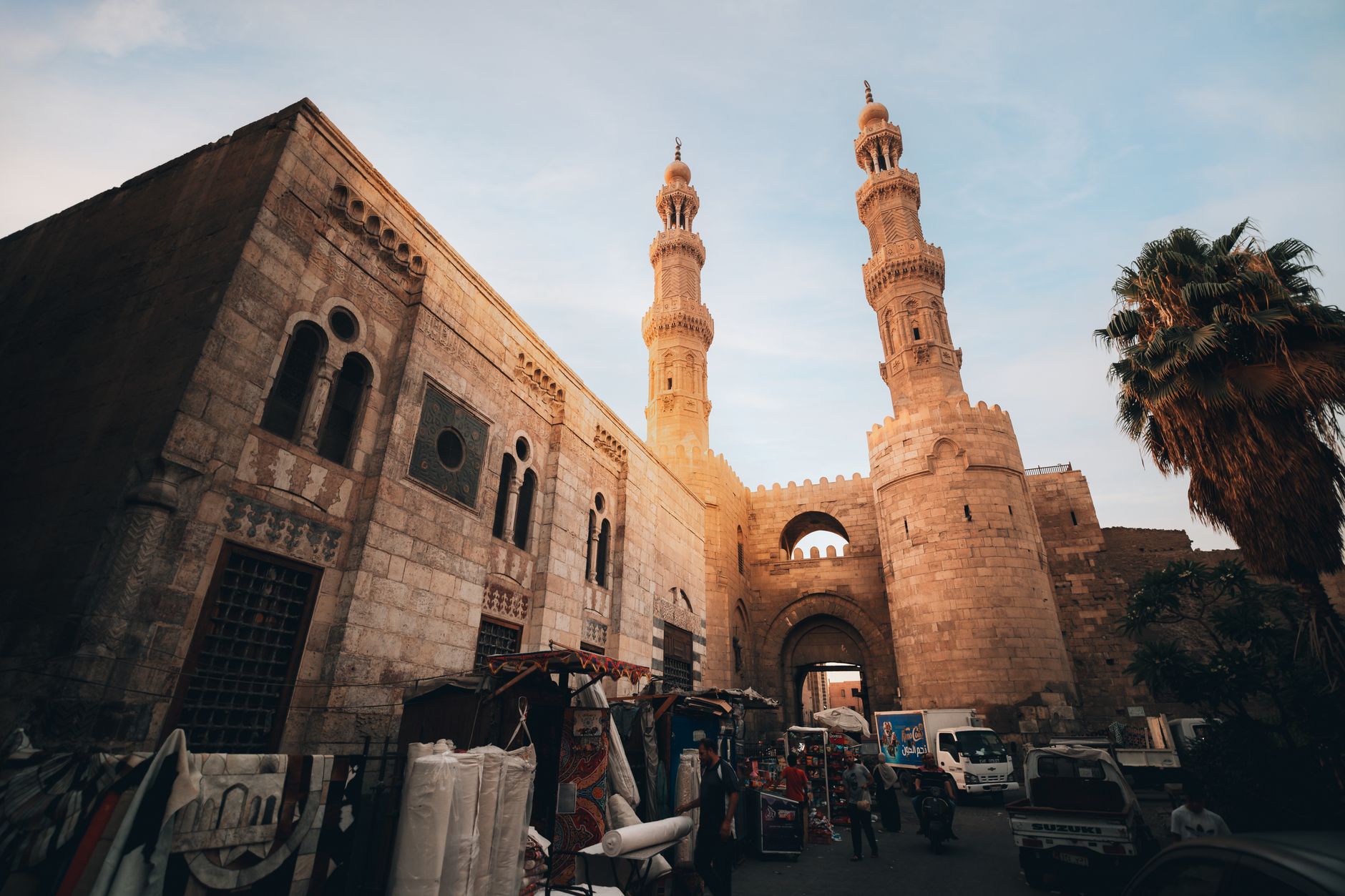
Khan el-Khalili: how to actually navigate it
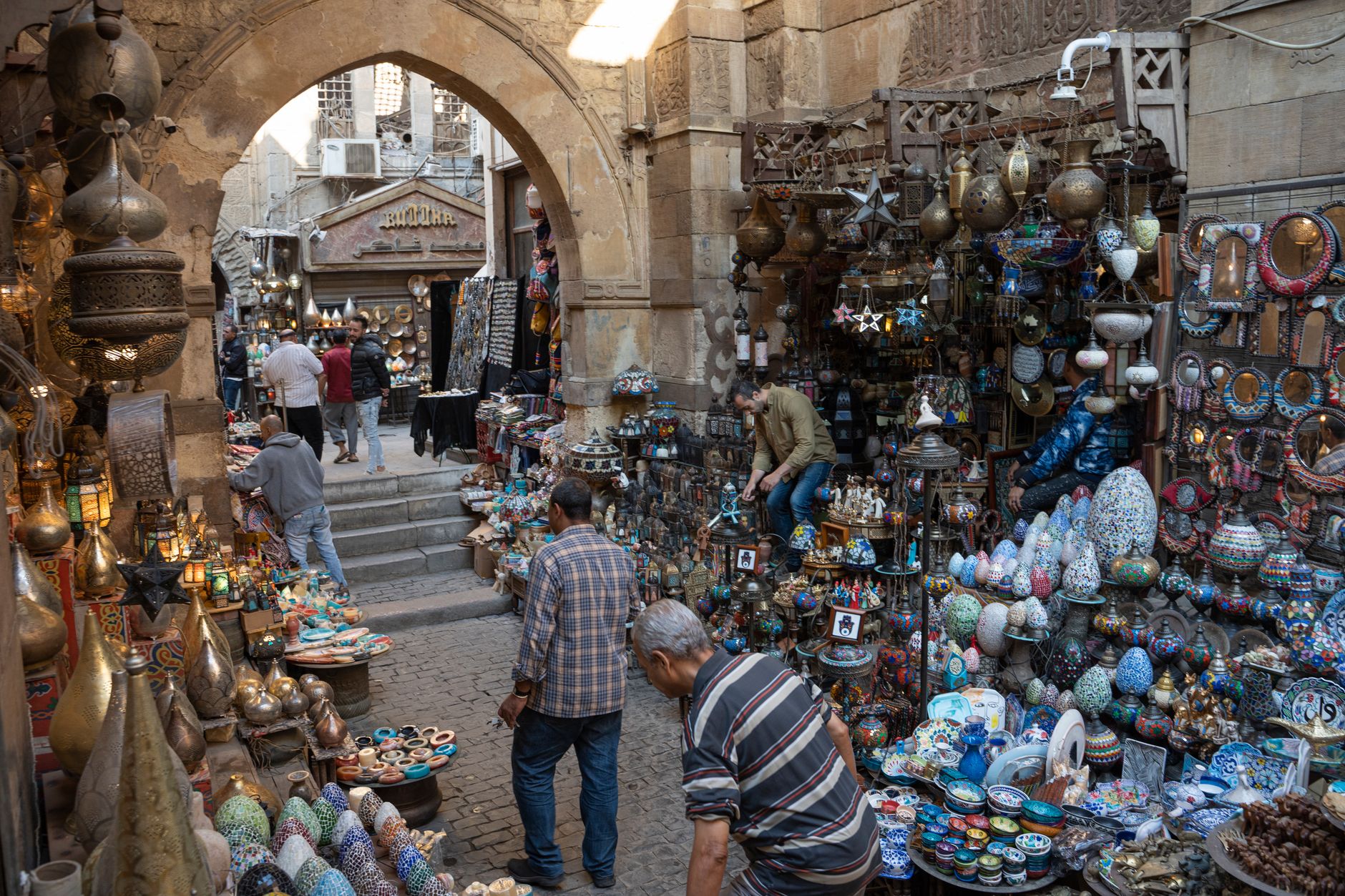
Khan el-Khalili has been a working market since 1382, when it went up during the Mamluk era, and it has never really stopped trading. It sits in the middle of Islamic Cairo, loosely bounded by Al-Azhar Street to the south, the spine of Al-Muizz Street to the west, and the Al-Hussein Mosque to the north. Inside, the lanes twist and branch with no obvious logic, but the trades do cluster: goldsmiths in one section, coppersmiths hammering away in another, then textiles, spices, leather, perfume oils, and the inevitable rows of souvenir stalls near the main entrances.
That clustering is the key to navigating it. The shops crowding the obvious entry points off Al-Hussein Square charge the most and sell the most generic stuff. The further in you push, down the quieter side lanes, the better the prices and the more likely you are to find someone who actually makes what they sell. Don’t be afraid to get lost. The bazaar isn’t that big, you’ll keep hitting a recognisable edge, and the touristy fringe is never more than a few minutes’ walk away. If you want to pair the shopping with the surrounding monuments, Islamic Cairo is one of the richest corners of the city for it, and our guide to things to do in Cairo maps out the mosques and madrasas within a short stroll of the market.
Go in the morning. Aim to arrive between 10am and noon, when shutters are just coming up, vendors are fresh, and the lanes aren’t yet a slow-moving crush of people. The bazaar is genuinely magical after dark, all warm light and carnival energy, but the 6pm-to-10pm crowds make it hard to inspect goods properly or hold a calm negotiation. Many shops close around midday on Friday for prayers and reopen in the afternoon. Budget two to three hours minimum; an enthusiast could lose a whole day in here.
When you need a break, the obvious move is El Fishawi, the coffeehouse that’s been pouring mint tea and Turkish coffee in the same alley since 1773. It’s touristy and it knows it, but sitting there with a shisha and a glass of tea, watching the market churn past, is one of those Cairo moments worth the slightly inflated bill.
What’s actually worth buying at Khan el-Khalili
The bazaar’s signature craft is metalwork. Hand-beaten brass and copper trays, coffee sets, plates, and above all the pierced lanterns (fanous, plural fawanees) that throw lacework shadows across a room. A small brass coffee set runs roughly 200 to 500 EGP depending on size and detail; lanterns range from pocket-sized at around 100 EGP to floor-standing showpieces that climb well past 2,000. These are the kind of thing where a few extra pounds genuinely buys you better craftsmanship, so handle a few before you commit.
The other star is the cartouche, covered in its own section below. Beyond those, the things I’d steer people toward are loose spices, perfume oils in hand-blown glass, and real papyrus from a shop that can prove it. The things I’d steer people away from: anything described as an “antique,” mass-produced resin scarabs sold as carved stone, and bulk saffron at a price that makes no sense.
There is far more to the bazaar than one visit reveals. Our complete guide to Khan el-Khalili goes lane by lane, with the workshops worth seeking out, the cafés to rest in and the best hours to arrive.
Best souvenirs to actually buy (and the junk to skip)
Egypt produces some genuinely beautiful things and a mountain of disposable tat, often on adjacent stalls. Here’s how to tell them apart, item by item.
Papyrus: real versus banana-leaf fake
Real papyrus is made from the Cyperus papyrus reed, sliced into strips, soaked, and pressed into sheets the same way the ancient Egyptians did it. The trouble is that the large majority of “papyrus” sold by street vendors, around the Pyramids, and in uncertified tourist shops is actually banana leaf, corn husk, or sugarcane pulp, chemically coated to look the part. The fakes can look fine on day one and then yellow, crack, and fall apart within months.
Three quick tests, and you don’t need the vendor’s permission to do the first two:
- The bend test. Flex a corner gently. Real papyrus bends and springs back without cracking. Banana leaf creases and splits along the fold.
- The light test. Hold it up to a light or a window. Genuine papyrus shows a clear cross-hatch of strips laid at right angles. Fakes show no real fibre structure, just a printed surface.
- The residue test. Rub the surface lightly. Chemically treated imitations leave a chalky powder on your fingers. Real papyrus leaves nothing.
For peace of mind, buy from a government- or tourism-ministry-approved papyrus institute, where they’ll demonstrate the soaking-and-pressing process and hand you a certificate of authenticity. Expect roughly 50 to 500 EGP for small-to-medium genuine pieces, more for large, detailed work. The banana-leaf versions are fine as a few-dollar keepsake, just don’t pay papyrus money for them.
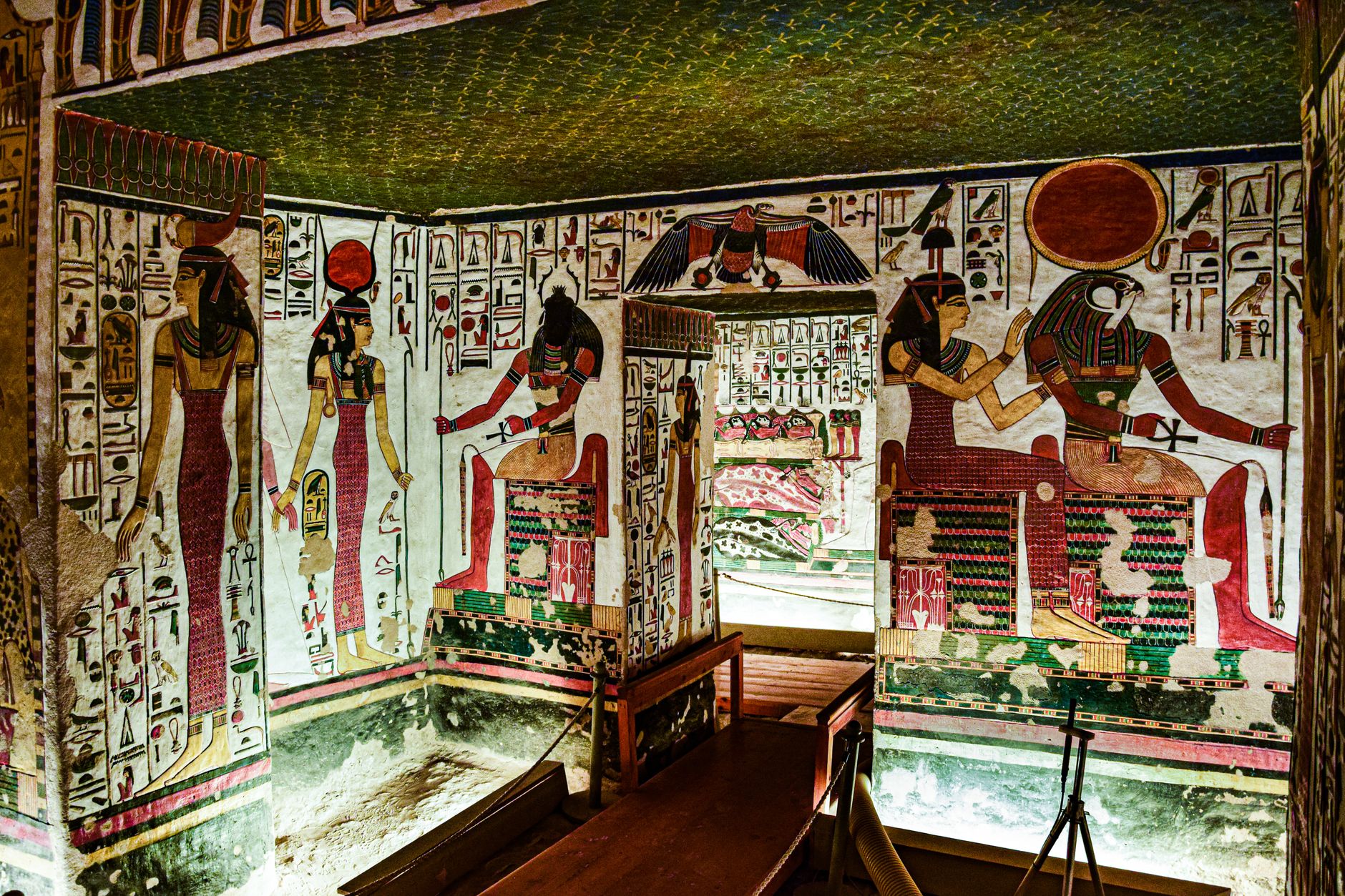
The test takes ten seconds once you know it. Our papyrus buying guide walks through how genuine papyrus is made, what the real thing costs and which galleries are worth your time.
Spices, herbs and karkade
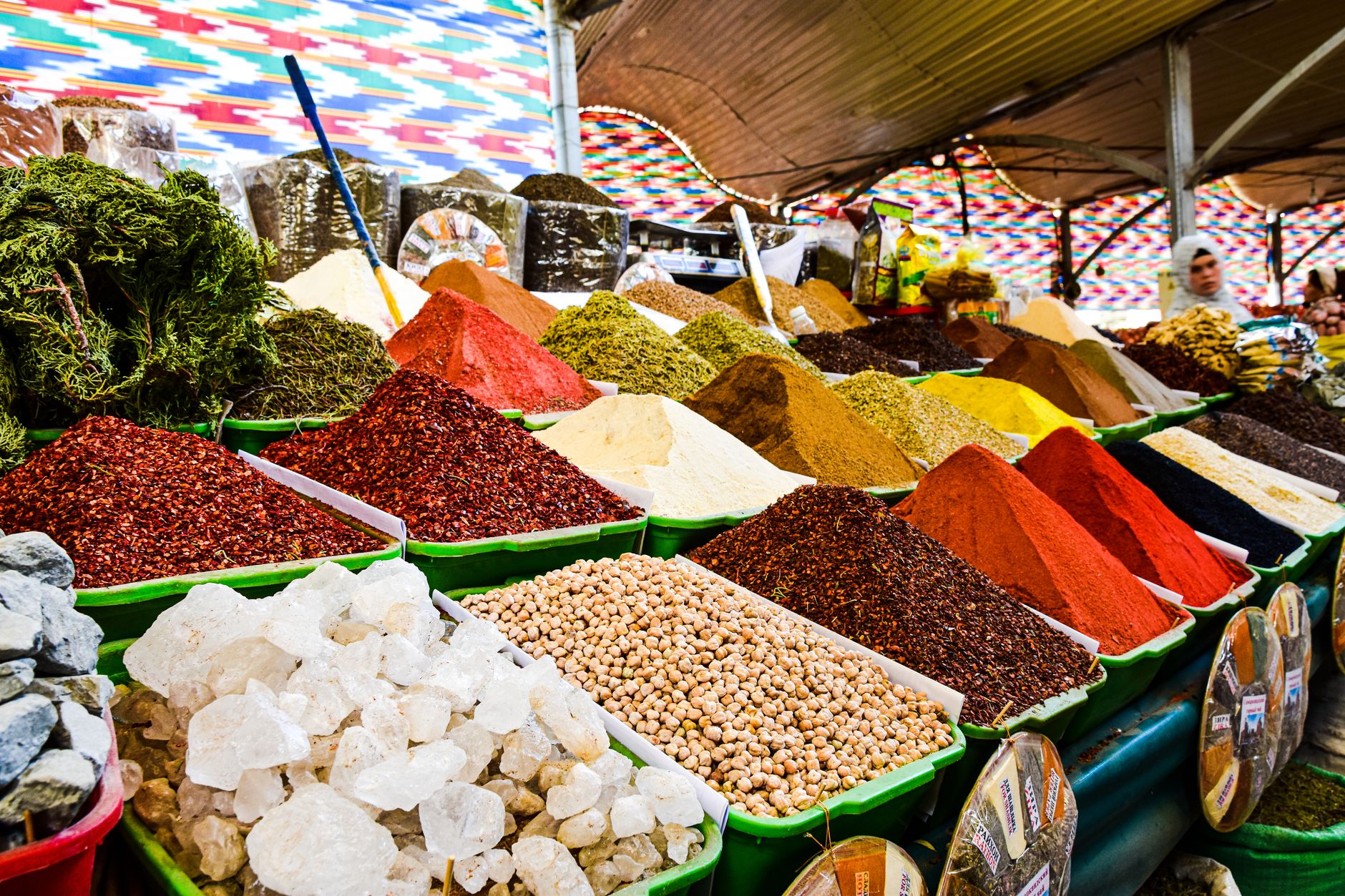
Cairo’s spice stalls are a sensory event in their own right, mounded cones of red, gold, and ochre that smell incredible. The buys worth carrying home: Egyptian cumin (earthier and more aromatic than the Indian kind), coriander, cinnamon, cardamom, black seed (habba sawda), and dried hibiscus for karkade, the ruby-red tea that’s practically the national drink. Dukkah, the nut-and-spice blend you dip bread and oil into, packs flat and makes a great edible gift.
Two warnings. First, prices swing wildly: the stalls by the tourist entrances charge a heavy premium, while vendors deeper in Khan el-Khalili or along El-Mosky are far cheaper. Second, be very sceptical of saffron. It’s one of the most faked spices on earth, and “saffron” sold cheap and by the heap is almost always dyed safflower or corn silk. Real saffron is expensive, deep red with slightly trumpet-shaped threads, and sold in small quantities. If the maths seems too good, it isn’t saffron. If you want to understand what these spices do in an actual Egyptian kitchen before you buy a bagful, our guide to Egyptian home cooking walks through the dishes they end up in.
The spice stalls reward a slow browse. Our guide to Cairo’s spice market covers what to smell for, which blends are worth carrying home and how to avoid the dyed-and-padded tourist mixes.
Gold, silver and the cartouche
Egyptian gold is a genuinely good buy, partly because the jewellery is usually 18 or 21 karat (higher purity than the 14k that’s standard in much of the West), and partly because it’s priced transparently: the daily gold rate by weight, plus a separate making charge for the craftsmanship. As of late June 2026, the going rate is around 5,675 EGP per gram for 21k and about 4,864 EGP per gram for 18k, though it moves daily, so check the day’s price before you negotiate the labour. Ask the shop to weigh the piece in front of you, point out the karat stamp, and write you a receipt stating weight and karat. Reputable goldsmiths in the bazaar do this as a matter of course.
The cartouche is Egypt’s signature souvenir for a reason. It’s an oval frame holding your name (or a chosen word) spelled out in hieroglyphs, and a skilled jeweller will engrave one while you wait, usually in 30 to 60 minutes. Silver cartouches start around 200 EGP; gold ones from roughly 1,500 EGP for simple 18k designs, scaling with weight. Other classic motifs worth knowing: the Eye of Horus (protection), the ankh (life), the scarab (rebirth), and the lotus. Insist your name be written correctly, ideally have the jeweller show you the hieroglyphic spelling before they start cutting.
Gold is sold by weight here, which makes it one of the few genuinely good-value buys in the city. Our Egyptian gold jewellery buying guide explains the hallmarks, the daily rate and how to check the workmanship charge.
Perfume oils and glass bottles
Egypt’s perfume tradition runs back to the pharaohs, and the oils here are concentrated essences applied straight to the skin rather than alcohol-based sprays. Lotus, jasmine, sandalwood, musk, and amber are the classics, alongside house blends with names invented purely for tourists. The hand-blown glass bottles are arguably the better souvenir, little sculptures with gold or silver tracery, from tiny travel vials to ornate display pieces. A small bottle of decent oil runs roughly 50 to 200 EGP; the glass bottles from about 30 EGP up to several hundred for elaborate ones. A fair number of shops will blend you a custom scent on the spot, which makes a more personal gift. Be aware that some “essential oils” are heavily cut with carrier oil; a serious shop will let you smell and test before you commit.
Egyptian cotton
Egyptian cotton earned its global name from the extra-long-staple fibres grown in the Nile Delta, which spin into fabric that’s softer and more durable than ordinary cotton. The catch is that the label is wildly abused worldwide, so in Cairo you actually have an advantage: buy from established local makers and you can be confident it’s the real thing. Look for the Cotton Egypt Association certification, the mark that guarantees genuine Egyptian-sourced fibre, rather than relying on thread count alone (a number that’s easy to inflate and only loosely tied to quality).
The standout buys are bed linen, bath towels, and simple shirts or scarves. Skip the souvenir-stall “Egyptian cotton” scarves of dubious origin and instead head to dedicated linen brands with shops in Zamalek, Maadi, and the bigger malls, several of which carry proper certification. You’ll pay more than a market stall but a fraction of what the same quality costs abroad.
Real Giza cotton is worth the hunt, and plenty of what is labelled as such is not. Our guide to Egyptian cotton and textiles covers thread counts, the mills to trust and where to buy without the markup.
Alabaster, handicrafts and the “antiques” trap
Alabaster has been carved here since pharaonic times, and the good stuff is genuinely lovely: vases, candle holders, and figurines in translucent stone that glows honey-gold when you shine a phone torch through it. That glow is the test. Hold a piece up to light; real alabaster lights up warmly, while resin or cheap stone stays dark and dead. Small pieces start around 50 EGP and climb into the thousands for large carved work. Check for cracks and chips, and treat suspiciously uniform, “perfect” pieces as likely moulded fakes, real carving always carries small variations.
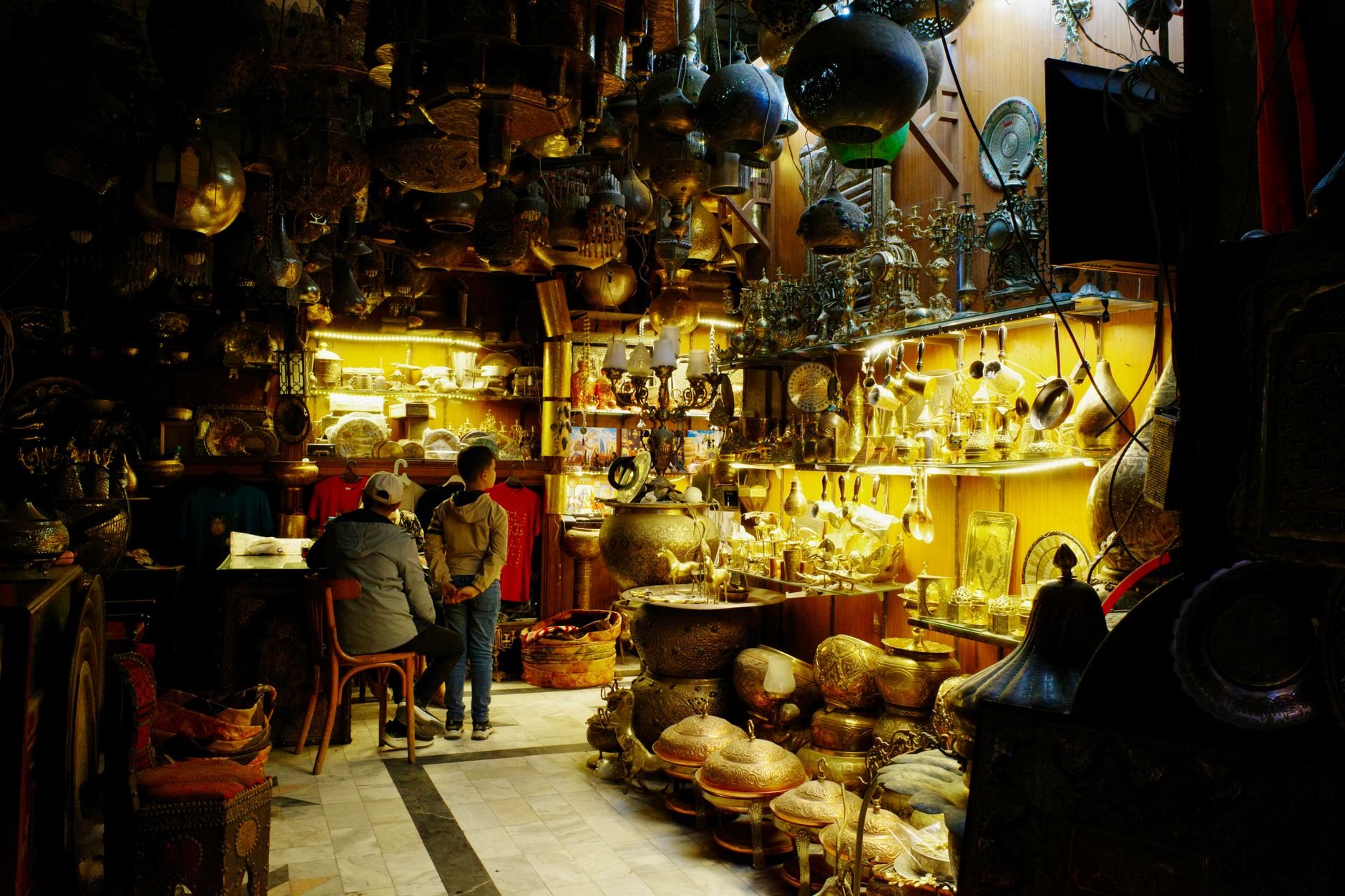
The same logic flags the biggest con in the souk: the “antique.” Almost every dusty, artificially aged “ancient” trinket in a bazaar stall is a recent reproduction with a backstory bolted on. And here’s the important bit, exporting genuine Egyptian antiquities is illegal, full stop. Customs at Cairo airport do check. Modern reproductions are perfectly legal to take home, so buy them as the decorative copies they are, keep the receipt, and don’t pay relic prices for last month’s casting. For more on the customs and conduct side of all this, our etiquette rundown for market visits covers what you can and can’t carry, plus the social cues that make haggling go smoothly.
For the longer list, with fair prices attached and notes on what survives the flight home, see our guide to the best souvenirs to buy in Cairo.
What to buy, where, and the fair price
Use this as a rough sanity check. Prices are 2026 ballparks for what you should aim to pay after bargaining in a traditional market, not the opening number a vendor throws out. Quality, size, and your haggling all move them.
| What to buy | Best place to buy it | Fair price (after haggling) |
|---|---|---|
| Silver cartouche pendant | Goldsmiths’ section, Khan el-Khalili | 200–600 EGP |
| Gold cartouche (18k, simple) | Goldsmiths’ section, Khan el-Khalili | From ~1,500 EGP (by weight + making) |
| Genuine papyrus (small–medium) | Certified papyrus institute | 50–500 EGP |
| Brass/copper coffee set | Coppersmiths’ lanes, Khan el-Khalili | 200–500 EGP |
| Pierced brass lantern (fanous) | Khan el-Khalili metalwork stalls | 100–2,000+ EGP by size |
| Loose spices (per 100g) | El-Mosky / deeper bazaar stalls | 20–80 EGP |
| Dried hibiscus (karkade, ~250g) | Spice stalls | 40–80 EGP |
| Perfume oil (small bottle) | Perfume oil shops, Khan el-Khalili | 50–200 EGP |
| Hand-blown glass bottle | Perfume / glassware stalls | 30–300 EGP |
| Small alabaster piece | Khan el-Khalili stone-carving shops | From ~50 EGP |
| Egyptian cotton linen set | Certified linen shops (Zamalek/Maadi/malls) | 1,000–5,000 EGP |
| Khayamiya (appliqué panel) | Tentmakers’ Street, off Bab Zuweila | Varies widely by size/detail |
For a solid haul, a papyrus painting, a cartouche, a few bags of spice, a perfume oil with a nice bottle, a small alabaster piece, and a handful of smaller gifts, budget roughly 3,000 to 8,000 EGP (about 60 to 160 USD at mid-2026 rates). That leaves room to bargain comfortably and say yes to the odd unplanned find.
Bargaining: how to haggle without the headache
In Cairo’s souks, haggling isn’t a confrontation, it’s the expected ritual, and refusing to play it actually marks you out as the easy mark. Outside shops with a visible “fixed price” sign, basically every price is negotiable, and the opening number is theatre. Expect it to be roughly two to three times the fair price, set high precisely so there’s room to come down.
The rhythm goes like this. The vendor names a high price. You show mild interest, suggest it’s far too much, and counter at around 40 to 50 percent of what they asked. They act wounded and shave a little off. You nudge up. Back and forth you go, converging somewhere in the region of 55 to 65 percent of the original ask. For anything substantial, the whole dance takes five to fifteen minutes, and it’s meant to be enjoyable.
A few things that genuinely work:
- Browse cool, buy warm. The moment a vendor reads that you must have something, your leverage evaporates. Ask prices casually, on several things, not just the one you want.
- Open at 40 percent, settle around 60. It feels aggressive the first time; it isn’t. It’s the script everyone knows.
- Smile, joke, take the tea. Accepting the offered glass of tea or coffee does not obligate you to buy. It just makes the whole thing friendlier, and friendly negotiations land better prices than grumpy ones.
- The walk-away is your strongest card. Thank them politely and start to leave. Half the time you’ll get called back with a better number. Only do it for real, though, seasoned vendors can smell a bluff.
- Bundle and pay cash. Buying two or three things from one shop typically unlocks another 10 to 15 percent, and cash beats card on price almost every time.
- Know the rate first. Price the same item at three or four stalls before committing. It’s the single best way to call a vendor’s “lowest in the bazaar” bluff.
Since all of this runs on cash and on a feel for what things should cost, it pays to read up on the currency and daily-spend side before you go. Our guide to costs and currency in Egypt covers exchanging money, why airport ATMs give poor rates, and roughly what a day in the city costs, all useful context when you’re deciding whether 400 EGP for a lantern is a steal or a stitch-up.
When NOT to bargain
Haggling has a lane, and stepping outside it just reads as rude. In malls, supermarkets, pharmacies, chain stores, and anywhere with displayed fixed prices, the price is the price. Same for restaurants and cafés. And for taxis, don’t haggle a meter, just use Uber or Careem, where the fare is set in the app and the whole negotiation disappears, exactly the approach our getting around Cairo guide recommends for moving between shopping districts without the fare drama.
Haggling is a skill you can learn in an afternoon. Our bargaining tips for Cairo’s markets gives you the opening numbers, the walk-away line and the rhythm of a negotiation that stays friendly.
Beyond Khan el-Khalili: the local markets
Khan el-Khalili gets the fame, but some of Cairo’s most rewarding shopping happens in markets that exist for Cairenes, not tourists, which means lower prices and far less performance.
El-Mosky and Ataba
El-Mosky Street (you’ll also see it as El-Muski) runs from Ataba Square straight into the back of Khan el-Khalili, and it’s where locals actually shop, textiles, clothing, accessories, and household goods at something close to wholesale. Prices drop noticeably the moment you cross from the tourist lanes into El-Mosky proper. Ataba Market, at the western end near the square, is one of the city’s oldest and most chaotic, piled with everything from electronics and books to shoes and school supplies. Neither is polished, but both give you the real commercial pulse of the city.
Wekalet El-Balah
Down in Boulaq by the Nile, Wekalet El-Balah is Cairo’s great wholesale textile and clothing market, fabrics by the bolt, imported second-hand and vintage pieces, and new garments at rock-bottom prices. Its name means “Date Warehouse,” from the building’s first life. Designers and bargain-hunters dig through it for one-off finds; it rewards patience and a willingness to rummage.
Tentmakers’ Street (Khayamiya)
Tucked just south of Bab Zuweila, the Street of the Tentmakers is the last covered market in Cairo and the home of khayamiya, the hand-stitched appliqué panels traditionally used for festival tents. As wall hangings or cushion covers they’re among the most distinctive things you can carry home, made by hand, in front of you, by artisans whose craft is genuinely under threat. This is one souvenir I’d happily pay a fair price for without grinding too hard.
The tentmakers are one thread in a much wider craft scene. Our guide to Cairo’s handmade crafts and artisans tracks down the glassblowers, coppersmiths, weavers and woodworkers still practising across the city.
Mohamed Ali Street and the Friday Market
Mohamed Ali Street, running down from the Citadel, is the historic heart of Cairo’s musical-instrument trade, ouds, qanuns, neys, and tablas, if you want the real thing rather than a wall-hanging drum. And on Friday mornings, the sprawling Souq El-Gomaa (Friday Market) near Sayeda Aisha is the city’s biggest, most anarchic flea market: antiques, furniture, car parts, bric-a-brac, all of it. It’s not a tourist attraction and it’s intense, but if you’re comfortable in a crowd and go early with only the cash you’re willing to lose, there are real finds in the chaos.
These are also the streets where Cairo’s antiques trade lives. Our guide to antiques and vintage shopping in Cairo points you toward the dealers, the Friday Market stalls and the paperwork you need before taking anything old out of Egypt.
Modern malls: City Stars, Mall of Egypt and more
When the heat and the haggling wear you down, Cairo’s malls are a genuine relief, fixed prices, air conditioning, international brands, and somewhere to sit. They’re also where Egyptian families spend their weekends, so they’re a slice of modern Cairo in their own right.
- City Stars (Nasr City) is one of the largest malls in the Middle East, with hundreds of stores across several levels, a cinema, an ice rink, a bowling alley, and a cavernous food court. Busiest on Thursday and Friday evenings. Handy if you’re staying in Heliopolis or Nasr City.
- Mall of Egypt (6th of October City) is best known for Ski Egypt, an indoor snow slope where you can genuinely snowboard in the desert, plus the usual Zara/H&M/Apple line-up across hundreds of shops. Spacious and modern; worth the trip if the novelty appeals or you’ve got kids to entertain.
- Cairo Festival City (New Cairo) leans upscale, with Egypt’s largest IKEA, a Carrefour hypermarket, strong dining, and a big outdoor fountain. Convenient if you’re based in New Cairo.
Beyond the big three, Point 90 in New Cairo draws a younger crowd, and the Four Seasons Nile Plaza mall in Garden City is the address for high-end international labels in a Nile-front setting. For most travellers, though, the malls are a half-day diversion at most, the soul of shopping in Cairo is out in the souks.
Air conditioning, fixed prices and international brands have their place, particularly in high summer. Our guide to Cairo’s modern shopping malls compares the big centres, their opening hours and what each is actually good for.
Shopping districts worth a wander
Zamalek, the leafy Nile island, is the city’s boutique-and-gallery quarter, design shops, bookstores, antique dealers, and some of the best places to buy certified Egyptian cotton at retail. The streets around Shagaret El-Dorr and 26th of July are made for an unhurried browse. Maadi, the green expat-favoured suburb to the south, clusters its shops and cafés around Road 9 and is good for imported goods and contemporary Egyptian design. Downtown, around Talaat Harb Street, is having a revival, old-school tailors and shoe shops sharing the Belle Époque blocks with new concept stores, used bookshops, and vintage racks. And Heliopolis (Masr El-Gedida) pairs pretty early-20th-century shopping streets around Korba with the City Stars complex, plus some of the best bakeries in town for edible gifts.
Practical tips: money, hours, safety, shipping
Money. Egyptian pounds, in cash, are king in the souks, carry plenty of small notes, since breaking a big bill can stall a sale. A handful of tourist shops will take dollars or euros, but you’ll always do better in local currency. Cards, contactless, and mobile wallets are now standard across the malls and chain stores; in traditional markets, assume cash only.
Hours. Most market shops open around 9 or 10am and run to 8 or 9pm, with some bazaar stalls going past 11pm. Malls run roughly 10am to midnight. Expect reduced hours around Friday midday prayers. During Ramadan the whole rhythm shifts later, shops open mid-morning and the souks and malls stay busy well past midnight, with the post-iftar hours the liveliest of all and plenty of seasonal sales.
Safety. Khan el-Khalili is well patrolled and safe for visitors; the main hazard is persistent sales patter, not crime. Keep cash in a front pocket, leave the flashy jewellery and watch at the hotel, and stay aware of your bag in the crush. The one scam to actively dodge: the over-friendly “guide” or tout who materialises near your hotel or a big sight and offers to walk you to a shop with “the best prices.” They earn 20 to 40 percent commission on whatever you buy, which you pay for in inflated prices. A confident “la, shukran” (no thanks) ends it. If you want a guided shopping run, book through your hotel or a proper operator. Cairo is, on the whole, an easy and welcoming city to shop in, and our broader Cairo travel guide covers the general safety picture if it’s your first trip.
Shipping and customs. Buying something big, a rug, furniture, a large alabaster piece? Most reputable shops will arrange international shipping for a fee; get a detailed receipt and ask about insurance. For carry-home items, pad fragile pieces with clothes in the middle of your case. Check your own country’s rules on importing spices, dried herbs, and other agricultural goods before you load up, some are restricted. And to repeat the one that matters: real antiquities are illegal to export and customs do check, so stick to clearly modern reproductions and keep your receipts.
FAQ: shopping in Cairo
Is bargaining expected in Cairo?
Yes, in the traditional markets and bazaars. Outside shops with fixed-price signs, almost everything is negotiable, and the first price is set deliberately high. Open at roughly 40 to 50 percent of the asking price and expect to settle somewhere around 55 to 65 percent. In malls, supermarkets, pharmacies, and chain stores, prices are fixed and haggling isn’t appropriate.
How do I tell real papyrus from fake?
Flex a corner: real papyrus bends and springs back, fakes (banana leaf, corn husk, sugarcane pulp) crack along the fold. Hold it to the light: genuine papyrus shows a cross-hatch of strips laid at right angles, fakes don’t. Rub the surface: chemically treated imitations leave a chalky residue. For certainty, buy from a tourism-ministry-approved papyrus institute that issues a certificate.
Is it safe to buy gold in Cairo?
Yes, and it’s often good value. Egyptian jewellery is usually 18 or 21 karat, and pricing is transparent: the day’s gold rate by weight plus a separate making charge. In mid-2026 that’s roughly 5,675 EGP per gram for 21k and about 4,864 for 18k, but it moves daily. Ask to see the karat stamp, have the piece weighed in front of you, and take a receipt stating weight and karat. Reputable goldsmiths in Khan el-Khalili do all of this without fuss.
What should I avoid buying?
Skip anything sold as a genuine “antique”, almost all are reproductions, and exporting real antiquities is illegal anyway. Be wary of cheap “saffron” (usually dyed safflower), banana-leaf papyrus sold at real-papyrus prices, mass-produced resin pieces passed off as carved stone, and “Egyptian cotton” of unknown origin from souvenir stalls. Avoid touts who steer you to a “special” shop; you’ll pay their commission.
How much should I budget for souvenirs?
For a decent spread, a papyrus painting, a cartouche, some spices, a perfume oil and bottle, a small alabaster piece, and a few smaller gifts, budget roughly 3,000 to 8,000 EGP (about 60 to 160 USD). Carry it in cash, in small denominations, for the market stalls.
What’s the best souvenir to bring home from Cairo?
The personalised gold or silver cartouche is the classic for good reason, it’s genuinely skilled work, made for you while you wait, and unmistakably Egyptian. Real papyrus, a hand-blown perfume bottle, and a hand-stitched khayamiya panel are the other standouts. Loose spices and karkade are the easiest, most affordable gifts to pack.
Can I pay by card in the markets?
Generally no. Khan el-Khalili and the local souks run on cash, and you’ll get better prices paying cash anyway. Cards, contactless, and mobile wallets work fine in the malls, chain stores, and upscale boutiques. Carry plenty of small notes for the bazaars.
Go deeper: plan the rest of your trip
Shopping slots neatly between the rest of a Cairo itinerary. A few guides to pair with this one:
- Complete Cairo travel guide — the overview, from visas to safety to how long to stay.
- Things to do in Cairo — the mosques, monuments, and sights surrounding Khan el-Khalili in Islamic Cairo.
- Where Cairo actually eats — the dishes those spices belong in, plus where to eat near the bazaar.
- Culture and etiquette guide — haggling manners, customs rules, and what not to take home.
- Budget and money guide — cash, exchange rates, and what things actually cost.
- Getting around Cairo — metro, Uber, and white taxis between the souks and the malls.
- Where to see the real antiquities — the Grand Egyptian Museum and more, for context on the pharaonic motifs you’ll see on every stall.
- Where to stay in Cairo — neighbourhoods and hotels, including Zamalek if you want the boutiques on your doorstep.
Last word: the best thing you’ll bring back from a Cairo souk usually isn’t the lantern or the cartouche, it’s the half-hour of tea, jokes, and good-natured argument it took to buy them. Lean into that, pay a fair price with a smile, and you’ll do just fine.