This article contains advertising. Our booking links are routed through a partner that adds commission tracking automatically, so if you book through one we earn a commission from the provider, at no extra cost to you. It never affects what we recommend. Affiliate disclosure
At nine in the morning the Grand Hall belongs to about forty people. At half past eleven the same space holds several hundred, and the queue for the golden mask has become a thing you join rather than walk past. Nothing about the building changes; only the hour does. Getting the Grand Egyptian Museum opening hours right — and, more to the point, choosing the right slot within them — makes more difference to a visit than almost any other decision you will take.
This page sets out the official hours, including the two late nights most visitors never hear about, and then gets into the useful part: which hours are quiet, which days are busy, how the seasons change the calculation, and when to go if you want the building close to yourself. Hours were confirmed against the museum’s own ticketing portal in September 2026.
Official opening hours
| Day | Complex | Galleries |
|---|---|---|
| Sunday | 08:30–19:00 | 09:00–18:00 |
| Monday | 08:30–19:00 | 09:00–18:00 |
| Tuesday | 08:30–19:00 | 09:00–18:00 |
| Wednesday | 08:30–22:00 | 09:00–21:00 |
| Thursday | 08:30–19:00 | 09:00–18:00 |
| Friday | 08:30–19:00 | 09:00–18:00 |
| Saturday | 08:30–22:00 | 09:00–21:00 |
Two details that catch people out. The complex opens half an hour before the galleries, so an 08:30 arrival buys you the plaza, the shop and a coffee rather than an early look at the collection. And last entry is one hour before the galleries close — 17:00 on a normal day, 20:00 on Wednesday and Saturday. A ticket for a slot after that does not exist, and turning up at 17:30 on a Tuesday means going home.
The museum does not close for a weekly rest day, which is unusual and welcome. It has closed at short notice for state occasions and official visits, so if you are travelling around a national holiday it is worth a glance at the ticketing portal before you set off.
The two late nights nobody uses
Wednesday and Saturday, galleries until 21:00 and the complex until 22:00, are the most underexploited thing the museum offers. Almost every tour, every cruise excursion and every hotel concierge routes visitors through the middle of the day, which leaves the evenings comparatively empty.
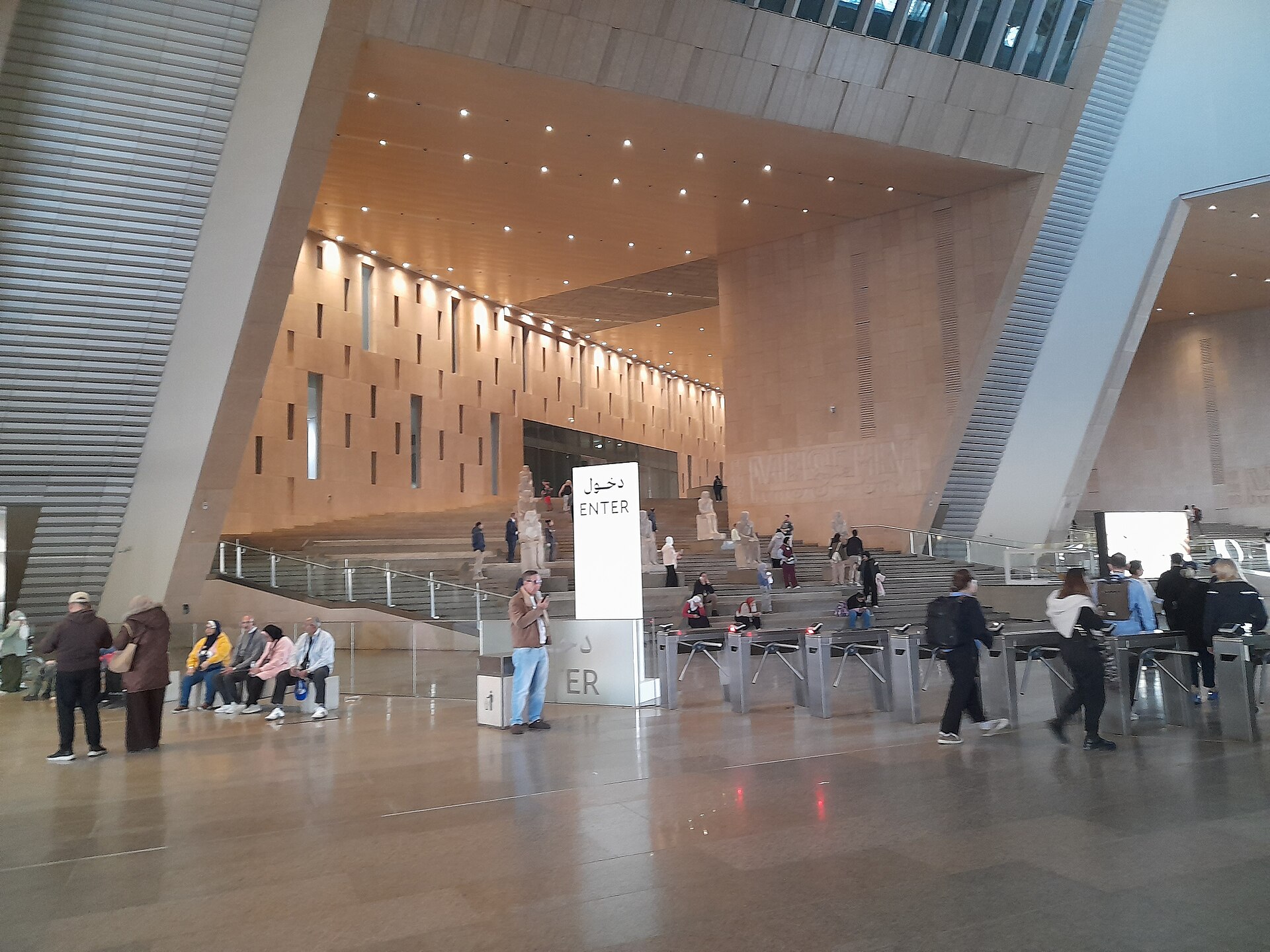
What you get for arriving at seven on a Wednesday: galleries running at perhaps a third of their midday density, the building lit from within rather than by the desert sun, and the pyramids through the staircase window as silhouettes against whatever the sky is doing. The mask has a queue of a dozen people rather than eighty.
What you give up: the twelve main galleries deserve more than two hours, so an evening visit is a highlights visit unless you arrive by six. And the journey home afterwards has to be arranged rather than assumed — although in practice the roads at 21:00 are the clearest of the day and the run back into the city is quicker than the one out.
The one situation where we would say no to an evening slot: when it sits between you and an early flight. Cairo’s traffic is forgiving at that hour but not reliably so, and the museum is a long way from the airport.
Hour by hour: when it is actually quiet
| Time | How busy | Verdict |
|---|---|---|
| 09:00–10:30 | Very quiet | The best window of the day, comfortably |
| 10:30–12:30 | Busiest | Tour groups and cruise coaches overlap |
| 12:30–14:00 | Busy but easing | Groups break for lunch; galleries thin |
| 14:00–16:00 | Moderate | Perfectly pleasant, good for a half-day visit |
| 16:00–17:00 | Quiet | Short, but calm — last entry is 17:00 |
| 17:00–21:00 (Wed/Sat) | Quietest of all | The insider option |
The mid-morning peak has a specific cause. Organised tours from Cairo hotels leave after breakfast and arrive between ten and eleven; coach parties from the Alexandria cruise berths reach Giza around the same time; and both funnel straight into the Tutankhamun galleries, because that is what people came for. The crowding is concentrated rather than general — the main galleries stay walkable even when the mask does not.
Day by day
- Sunday to Tuesday are the quietest days of the week. Fewer domestic visitors, fewer school parties, and the standard closing time. If your schedule is flexible, aim here.
- Wednesday is quiet by day and excellent in the evening. Arguably the single best day of the week to visit.
- Thursday gets busier through the afternoon as the Egyptian weekend begins, and the roads out of the city are at their worst that evening.
- Friday is the Egyptian weekend proper. Domestic visitors and families in numbers, with a noticeable lull around midday prayers. The roads, by contrast, are the clearest of the week before noon.
- Saturday is the busiest day of the week and also the second late night. Avoid the middle of it; the evening is fine.
None of this should stop you visiting on a Saturday if that is the day you have. The timed-slot system means the museum never becomes genuinely unpleasant — capacity is controlled at the door. What changes is the pace at which you move and how long you stand behind other people.
Season by season
Best: October to April
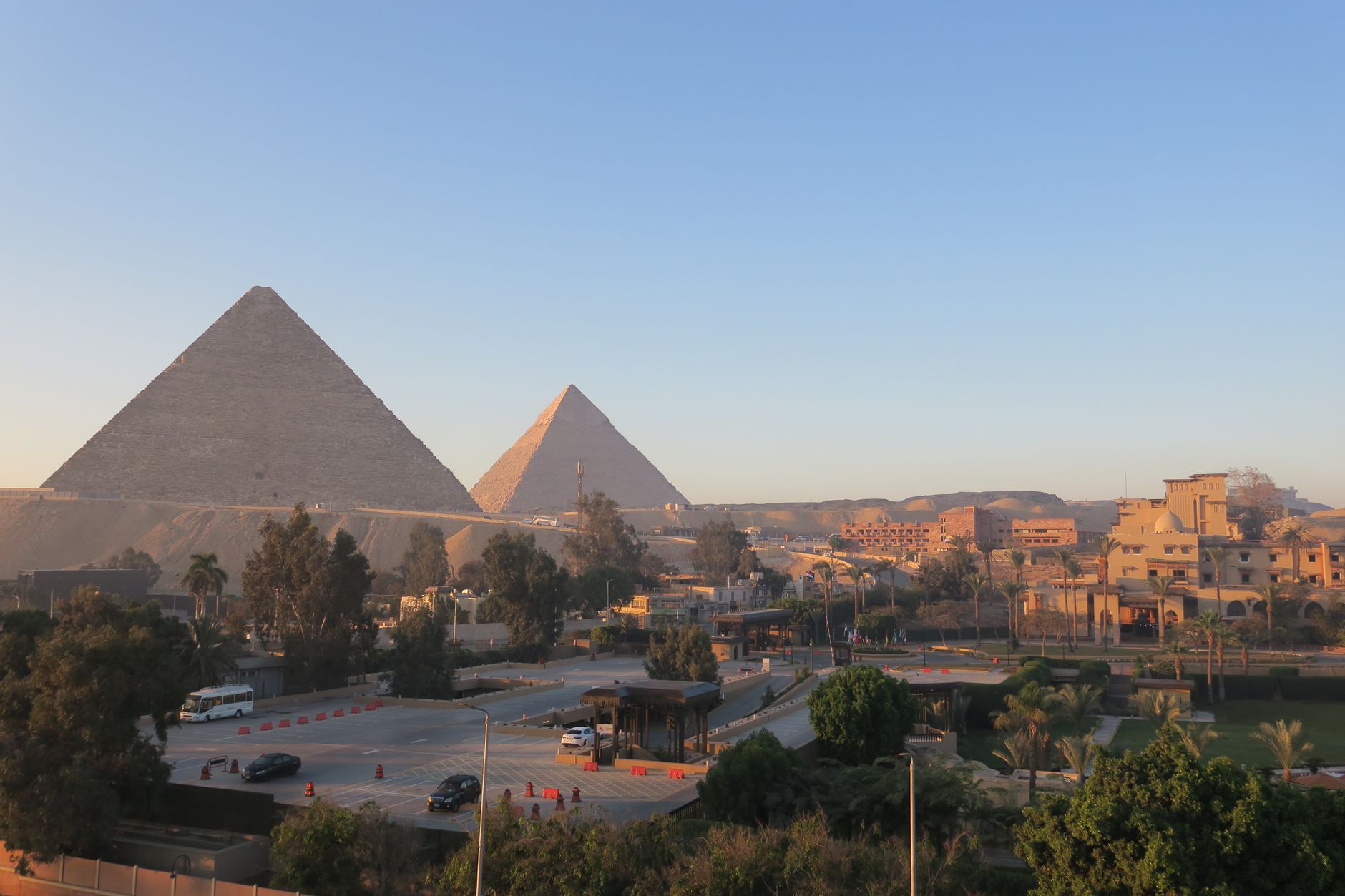
Cairo’s comfortable half of the year, and the museum’s busiest. Daytime highs of 18–24 °C in December and January make the walk from the plaza pleasant rather than punishing, and pairing the museum with a morning at the pyramids becomes genuinely enjoyable rather than an endurance exercise.
The cost is crowds and prices. Christmas and New Year are the peak of the peak — book two weeks ahead for that fortnight and expect the mid-morning crush to be worse than usual. Our notes on timing a Giza visit to dodge the crowds apply to the museum as much as to the plateau.
Shoulder: May and September
Hot but manageable, and noticeably quieter. September in particular is a good compromise — the summer heat is breaking, the peak-season crowds have not arrived, and slots are available at short notice.
Hardest: June to August
Cairo in high summer is brutal outdoors and the museum is, paradoxically, one of the best places in the country to be. It is fully air-conditioned, entirely step-free, and offers several hours of shelter from conditions that make the pyramid plateau genuinely unpleasant after ten in the morning.
So the summer strategy inverts the usual advice: do the plateau at first light, be indoors by eleven, and treat the museum as the middle of the day rather than an afternoon extra. Crowds are lower and slots are easy to get.
Ramadan
Hours can shift during Ramadan, and traffic patterns shift dramatically — the roads are extraordinary in the hour before iftar and then almost empty. The museum itself is quieter through the day. Confirm hours on the ticketing portal rather than assuming, and see our guide to travelling in Cairo during Ramadan for how the rhythm of the whole city changes.
What drives the crowd pattern
Understanding why the museum fills when it does makes the pattern easier to work around, and it is not simply a matter of when people feel like getting up.
Three flows dominate. The first is the Cairo hotel tour, which leaves the city after breakfast, absorbs an hour or more of Ring Road, and deposits people at the plaza between ten and eleven. The second is the cruise excursion: ships calling at Alexandria bus passengers down for a fixed-length day, and those coaches arrive in convoy within a narrow window. The third is the domestic weekend, which is a Friday and Saturday phenomenon and behaves quite differently — families arrive later, stay longer and spread across the building rather than heading straight for the mask.
What that means in practice is that the crush is predictable and narrow. It is concentrated in the Tutankhamun galleries, it peaks between about 10:30 and 12:30, and it dissolves noticeably once the groups break for lunch. Nothing about it is random, which is precisely why a 09:00 slot works so reliably.
It also explains why the main galleries stay comfortable even at the worst hour. Groups on a fixed schedule do not have time for twelve halls of chronological display; they go to the gold and then they leave. If you find yourself in the building at midday, this is the workaround — do the main galleries while everyone else is queueing, and come back to Tutankhamun at two.
Light, and the one thing worth timing for
The staircase window at the top of the climb frames the three pyramids, and it is the most photographed thing in the building after the mask. It is also entirely at the mercy of haze.
Cairo’s air is frequently dusty, and the middle of a hot day is when visibility is worst — the pyramids can dissolve into a pale smudge between about eleven and three. Early morning and the last hours before sunset are markedly better, and after a rare rain the clarity is extraordinary.
Inside, the translucent alabaster front wall does something worth catching: it glows. Early morning light through that screen is the best the interior gets, and on a Wednesday or Saturday evening the effect reverses as the building lights up from within.

Pairing the hours with the rest of a Giza day
The museum’s opening times only really make sense alongside the plateau’s, because most people are doing both and the two sites keep different rhythms.
The pyramids open earlier and close earlier, and their best hour is the first one — before the heat, before the coaches and before the camel touts have found their stride. The museum’s best hour is also its first, which creates an obvious conflict and one clean resolution: give the plateau the early morning, because it is the site that genuinely deteriorates as the day goes on, and give the museum the afternoon, because it is climate-controlled and unbothered by the sun.
That leaves one attractive variation for anyone with a Wednesday or Saturday to play with. Plateau at opening, a long lunch and a proper rest through the worst of the afternoon, then the museum from around five with the galleries emptying and the building lighting up. It is a more humane shape for a day than the standard back-to-back version, and it uses the late opening for exactly what it is good for.
The sound and light show at the pyramids runs in the evening and is a separate proposition again — worth knowing about if you are already out at Giza after dark, and covered in our guide to what else fills a Cairo day.
Putting it together: the best times to visit
- 09:00 on a Sunday, Monday or Tuesday. The quietest combination available, with the whole day ahead of you and the best light through the alabaster screen.
- Wednesday evening from 18:00. The connoisseur’s answer. Calm galleries, the building lit, pyramids in silhouette.
- Early afternoon after a pyramid morning. The standard Giza day, and it works — arrive around one o’clock with three hours in hand.
- Any midsummer midday. Counterintuitive and correct: the museum is where you want to be when the plateau is unbearable.
And the times to avoid if you have a choice: Saturday between 10:30 and 13:00, the fortnight around Christmas and New Year at any hour before lunch, and the final hour before closing on a standard day, when you will be moved along before you have finished.
What is open when the galleries are not
The half-hour before the galleries open and the hour after they close are not dead time, because the complex keeps its own longer hours — and knowing what is accessible in those windows is genuinely useful when you are early or waiting for a car.
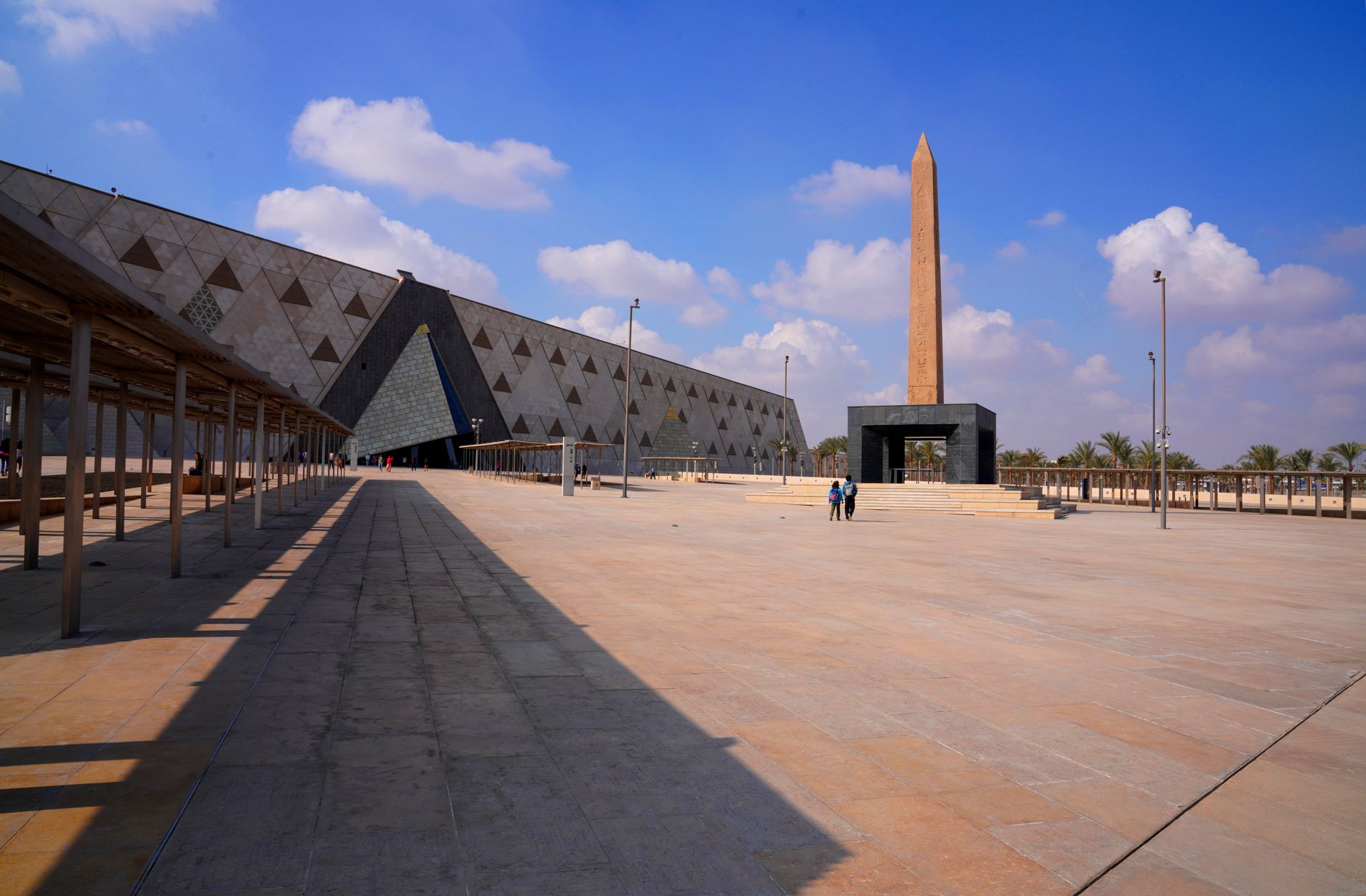
From 08:30 you have the entrance plaza, the hanging obelisk, the gardens and the commercial area. That is enough for a coffee, a look at the façade in the best light of the day, and a walk beneath the obelisk to see the cartouche carved on its underside — a small thing that most visitors miss entirely because they arrive at their slot and go straight in.
At the other end, when the galleries close the commercial area stays open for an hour. The shop is genuinely good, and browsing it after the collection rather than before is the right order — you will know what you actually want. It is also a considerably more comfortable place to wait for a ride-hail than the plaza, particularly on a summer evening or after a late Wednesday closing when everybody leaves at once.
The gardens are worth ten minutes if the haze has lifted. They sit on the pyramid side of the building and give you the view without the window and the crowd in front of it.
How the slot system interacts with hours
Worth restating because it changes the arithmetic. Your booked window governs your arrival, not your departure — once through the turnstiles you may stay until the galleries close.
That makes the earliest slot the best value on the ticket. A 09:00 entry on a Wednesday theoretically buys you twelve hours inside; a 16:00 entry on a Tuesday buys you two. Same price. If you want a long visit, book early and let the day unfold, rather than booking late and finding the galleries emptying around you.
The corollary for short visits: if you only have two hours, a late slot is fine and the galleries will be calmer for it. Full booking mechanics are in our guide to GEM tickets and timed entry, and our breakdown of how long each section takes will tell you whether the window you are considering is realistic.
Timing it around a wider Egypt trip
Where the museum falls in your itinerary changes which hours suit you, and a few patterns come up often enough to be worth naming.
Arriving in Cairo, then heading south
Most Egypt itineraries start in Cairo and continue to Luxor and Aswan. If that is you, resist the temptation to put the museum on your arrival day. Long-haul jet lag plus a hundred thousand objects is a poor combination, and the Tutankhamun galleries in particular deserve a functioning brain. Day two, early slot, is the better shape — and if you are taking the sleeper train south, the museum sits comfortably on the day before rather than the day of departure.
Ending in Cairo before flying home
This works well, with one caveat about the last day. If your flight is in the evening, a 09:00 museum slot leaves plenty of margin. If it is in the morning, do not attempt it — the museum is on the opposite side of the city from the airport and the arithmetic does not leave room for Cairo traffic to misbehave.
A short city break
On a three-day trip the museum and the pyramids fill one day between them, and the honest advice is to give them the first full day rather than the last. Weather, strikes, illness and traffic all have a habit of eating the final day of a short trip, and this is the one you least want to lose.
Returning visitors
If you have been to Cairo before and seen Tahrir, the calculation shifts entirely. You do not need the mid-morning slot everyone else is fighting over, because you are not working through the collection for the first time. A Wednesday evening, two hours, straight to the material you actually want — this is the best version of a museum visit available and almost nobody takes it. Our comparison of the two museums is worth reading if you are deciding how to split a return trip between them.
Frequently asked questions
How far ahead should I book to get the slot I want?
A few days is enough for most of the year, and the early slots are the first to go rather than the last. For late December and early January, when the peak season and the Christmas and New Year crush overlap, book a fortnight ahead if the 09:00 window matters to you. In midsummer the same slot is often available the day before.
What time does the Grand Egyptian Museum open?
The complex opens at 08:30 daily and the galleries at 09:00. The half-hour difference gets you the plaza and the shop, not the collection.
What time does it close?
Galleries close at 18:00 on Sunday, Monday, Tuesday, Thursday and Friday, and at 21:00 on Wednesday and Saturday. The complex stays open an hour longer in each case.
When is the last entry?
One hour before the galleries close — 17:00 most days, 20:00 on Wednesday and Saturday.
Is the museum open every day?
Yes, there is no weekly closing day. It has occasionally closed at short notice for state occasions, so check the portal if you are travelling around a national holiday.
What is the quietest time to visit?
The first slot of the day, or a Wednesday or Saturday evening. Both are considerably calmer than the 10:30–12:30 peak.
Which day is busiest?
Saturday, followed by Friday — the Egyptian weekend brings domestic visitors and families. Sunday to Tuesday are the quietest days.
Does my ticket slot limit how long I can stay?
No. The slot is an arrival window only; you may stay until the galleries close. Booking early therefore gives you the longest possible visit for the same money.
Are the evening openings worth it?
Very much so, and they are the least crowded hours the museum has. Just do not schedule one immediately before an early flight.
When is the best light for the pyramid view?
Early morning or late afternoon. Haze commonly obscures the view through the middle of a hot day.
Do hours change in summer or during Ramadan?
Standard hours run year-round, but Ramadan can bring adjustments. Confirm on the ticketing portal before travelling rather than relying on a published schedule.
Related Cairo Guides
- Grand Egyptian Museum: the complete visitor guide
- Tickets, prices and timed entry
- How long to allow at the museum
- Getting there from anywhere in Cairo
- Best time to visit the pyramids
- Cairo’s seasonal calendar
Photo Credits
Entry turnstiles and staircase: photo by Amr F.Nagy, via Wikimedia Commons (Public domain).
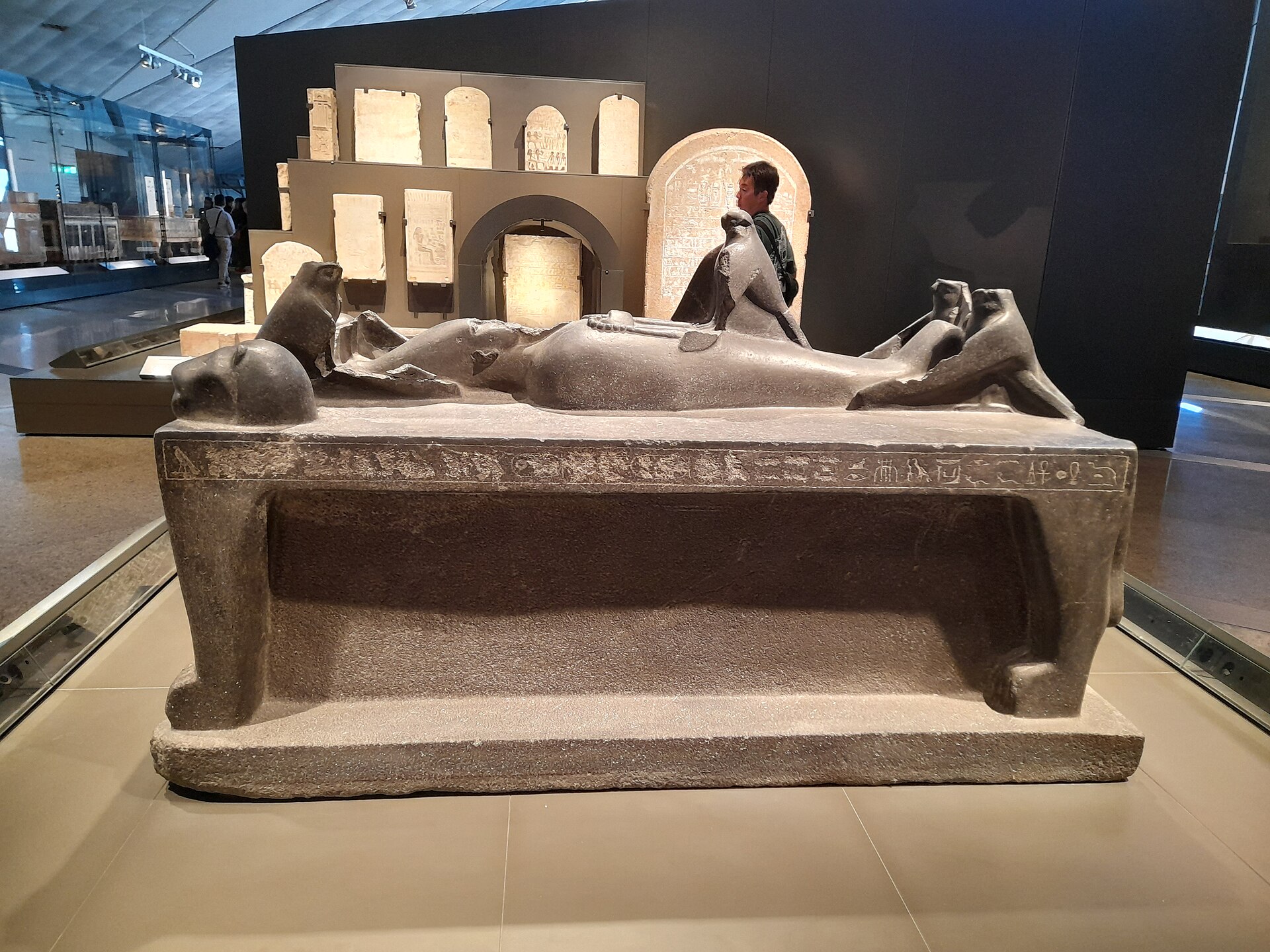
Funerary couch in a quiet gallery: photo by Amr F.Nagy, via Wikimedia Commons (Public domain).