This article contains advertising. Our booking links are routed through a partner that adds commission tracking automatically, so if you book through one we earn a commission from the provider, at no extra cost to you. It never affects what we recommend. Affiliate disclosure
The most common way this journey goes wrong is not traffic. It is a driver who hears “the museum at the pyramids”, nods, and drives you to the pyramids gate — where you stand in a car park two kilometres short of where you meant to be, with a timed entry slot ticking. Knowing how to get to Grand Egyptian Museum means knowing that it is a separate destination from the plateau, that the Ring Road decides your journey time rather than the distance does, and that there is no metro station anywhere near it.
This page covers the route from every part of Cairo people actually stay in, what each option costs, how long to allow, where drivers drop you and what the walk from there is like. Fares were checked in September 2026 and move with fuel prices and surge pricing, so treat them as the right order of magnitude.
Where it actually is
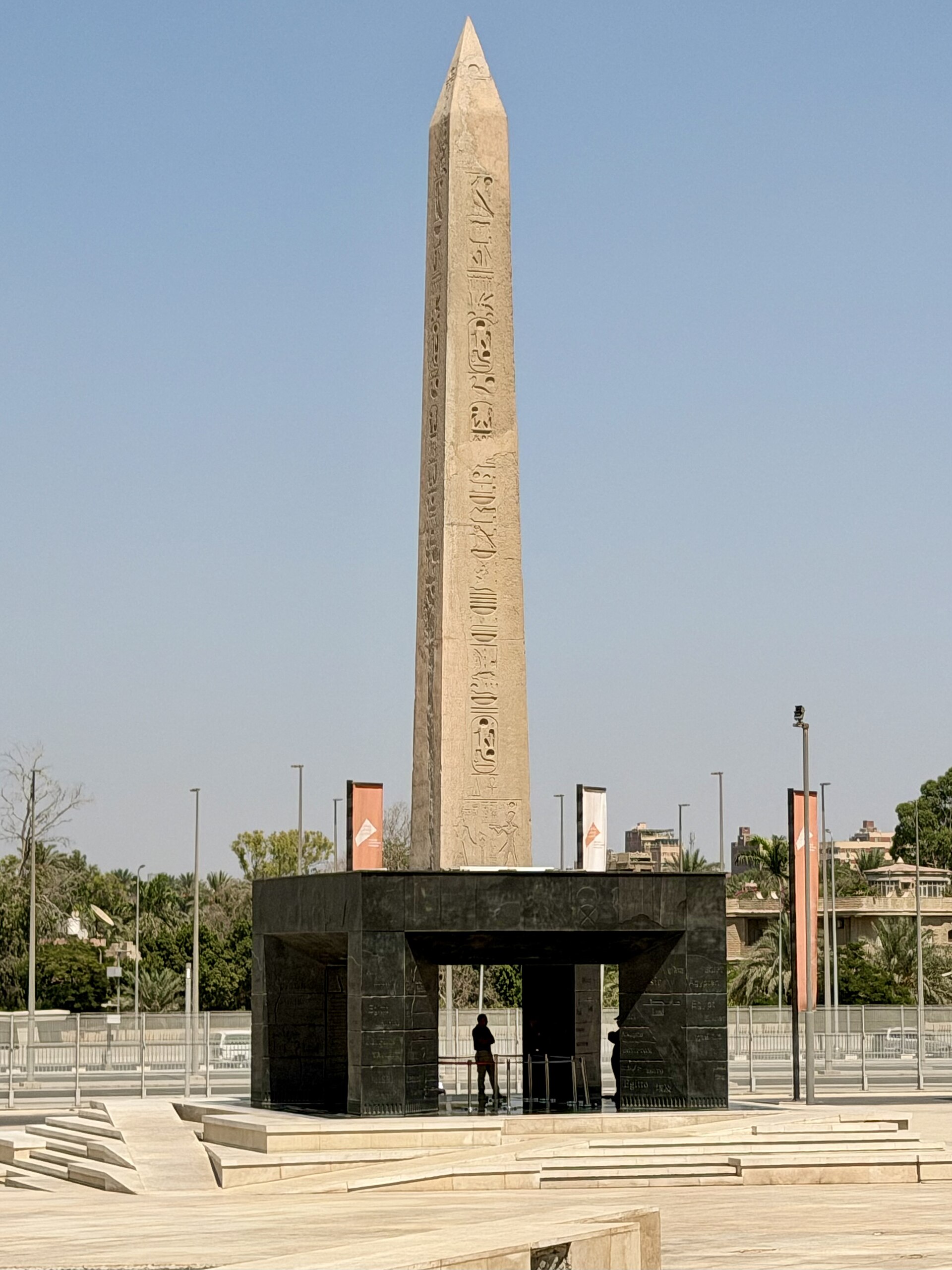
The museum sits on the desert edge west of Giza, on the approach road towards 6th of October City, roughly two kilometres from the pyramid plateau and about twenty kilometres from Tahrir Square. It is a large, unmissable building once you are close, and the entrance plaza is marked by a hanging obelisk you can walk beneath.
What matters for navigation is that it is not in Giza town, not at the plateau entrance, and not on any metro line. Search apps know it well by name now, which was not true in the first months after opening, but drivers vary and some still default to the pyramids.
Journey times and costs from around the city
| From | Best option | Cost | Time |
|---|---|---|---|
| Downtown / Tahrir | Uber or Careem | EGP 250–400 (~USD 5–8) | 45–90 min |
| Zamalek | Uber or Careem | EGP 250–400 (~USD 5–8) | 45–85 min |
| Giza / Dokki / Mohandessin | Uber or Careem | EGP 180–300 (~USD 4–6) | 30–60 min |
| Pyramid plateau gate | Ride-hail or short taxi | EGP 80–150 (~USD 2–3) | 10–15 min |
| Maadi | Uber or Careem | EGP 350–500 (~USD 7–10) | 60–100 min |
| Heliopolis / Nasr City | Uber or Careem | EGP 350–550 (~USD 7–11) | 60–110 min |
| Cairo airport (CAI) | Ride-hail or pre-booked transfer | EGP 500–800 (~USD 10–17) | 60–100 min |
| 6th of October / Sheikh Zayed | Uber or Careem | EGP 120–250 (~USD 3–5) | 15–30 min |
| Downtown, budget route | Metro to Giza + ride-hail | EGP 10 + EGP 150–250 | 60–95 min |
Fares checked September 2026. The wide time ranges are not hedging — the Ring Road genuinely varies by that much, and a journey that takes forty-five minutes at eight in the morning can take ninety at five in the afternoon.
Ride-hailing: the default, and why
For almost everyone, Uber or Careem is the right answer. Both operate across Cairo, both are cheap by international standards, and both solve the two problems that make Cairo taxis tiresome for visitors: the fare is agreed before you get in, and the destination is a pin rather than a conversation.
That second point is the important one here. Drop the pin on the museum rather than typing a name, and check the map before you accept. It removes the entire category of ending up at the plateau gate.
- Book from inside your hotel lobby rather than the street, so you are not standing on a pavement while a driver circles.
- Expect surge pricing in the morning rush and around 17:00–19:00. The difference can be substantial.
- Careem is often better for scheduled rides and tends to have more cars in the outer districts.
- Cash or card both work. If paying cash, carry small notes; drivers frequently cannot change a 500.
Our fuller guide to using ride-hailing apps in Cairo covers account setup, tipping and the local quirks of both services.

The return journey, which is the harder half
Getting there is straightforward. Getting back catches people out, and it is worth planning before you go in rather than after four hours on your feet.
Coverage at the museum is generally fine and cars are available, but the complex is large and the pickup point is not always where you expect. Two practical things help. First, walk out to the plaza and let the app place you properly before ordering, rather than ordering from inside where the pin lands on a building the size of a small airport. Second, be patient at closing time — everyone leaves simultaneously and the surge is real, particularly after the late Wednesday and Saturday closings.
If you are on a tight schedule, or travelling with children, or leaving after dark, arranging a car to wait is worth the premium. A driver will typically wait several hours for a negotiated fee, and it converts the least predictable part of the day into a fixed cost.
Street taxis, and when they make sense
Cairo’s white metered taxis are everywhere, cheap in principle, and a mixed proposition for this particular trip.
The meter exists and drivers will sometimes use it. More often, for a journey this long and to a destination outside the usual downtown circuit, you will be quoted a flat fare before you get in. That is not a scam in itself — it is how longer runs work here — but it does mean you are negotiating, in a second language, about a route you do not know, before a timed entry slot.
Agree the fare explicitly before the doors close, and expect to pay somewhat more than the ride-hail equivalent for the privilege of not having agreed it on an app. A reasonable target for downtown to the museum is EGP 300–450, and a driver asking EGP 800 is trying his luck.
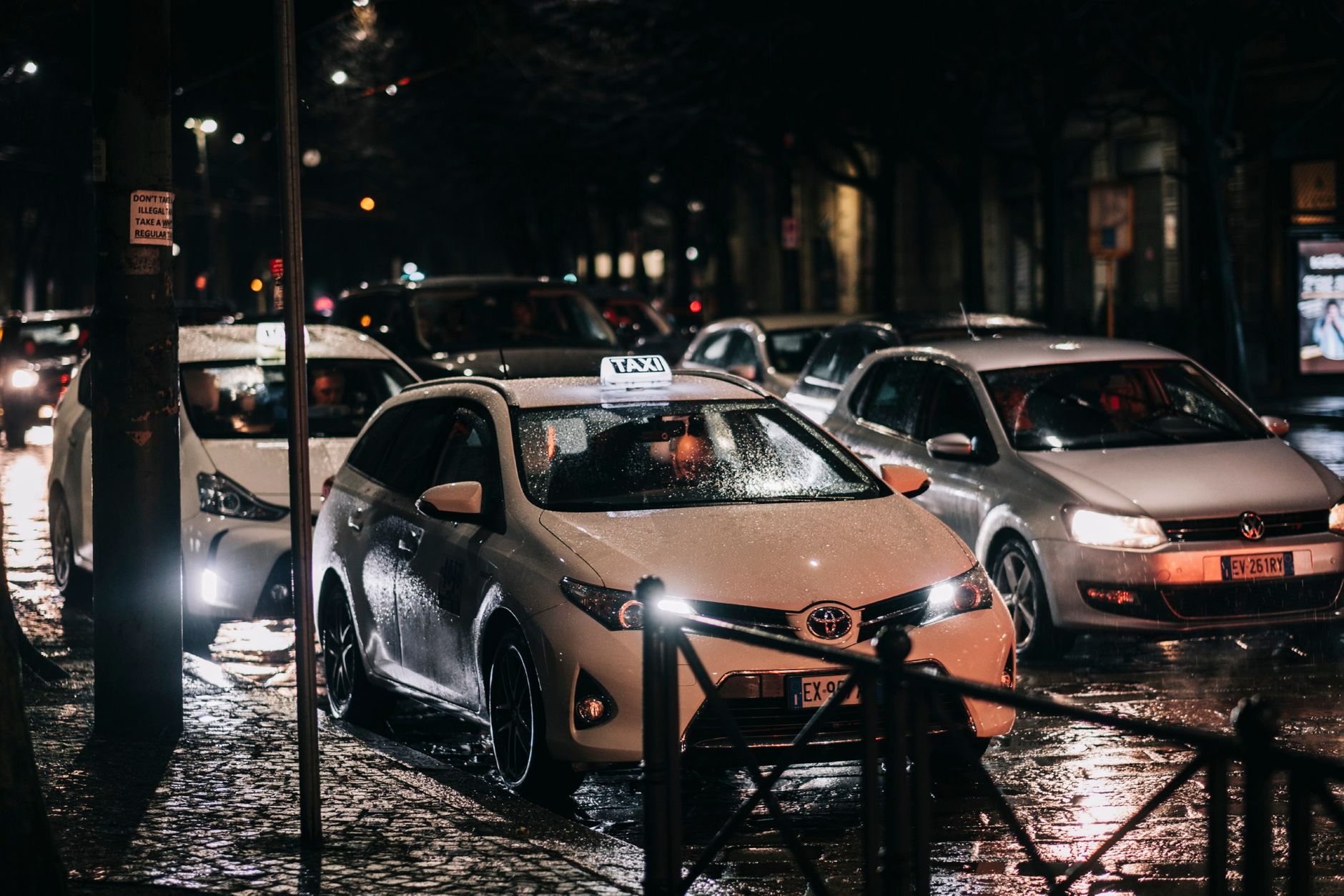
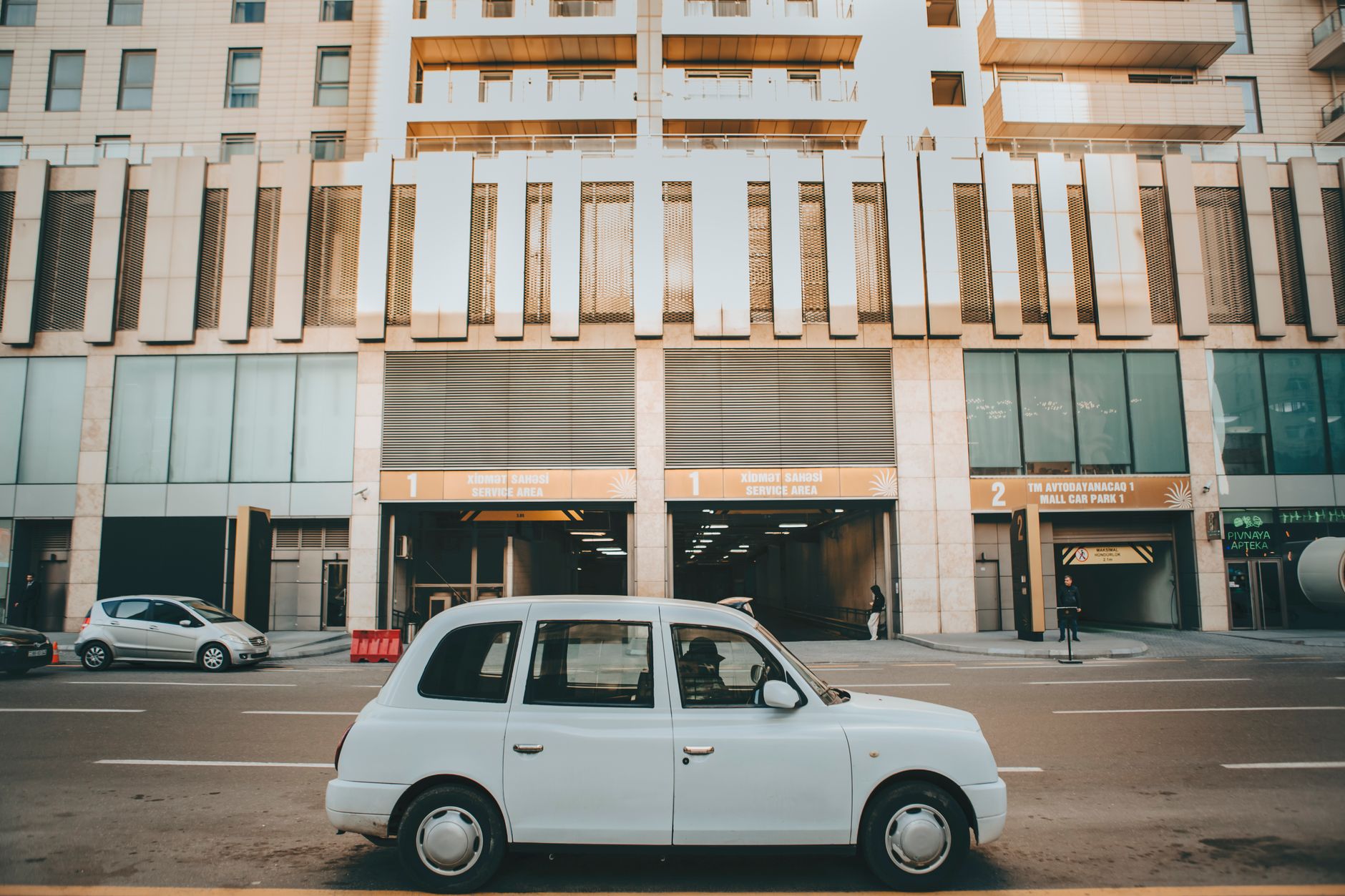
Where street taxis genuinely win is the short hop from the plateau gate to the museum. There are always cars waiting at the pyramids exit, the journey is ten minutes, and haggling over EGP 100 is quicker than waiting for an app car to navigate the coach park. Our guide to dealing with Cairo taxis covers the etiquette and the numbers.
The metro question
There is no metro station at the museum, no light rail and no monorail connection, whatever a blog post written before the opening might suggest. Anyone telling you otherwise is describing a different project.
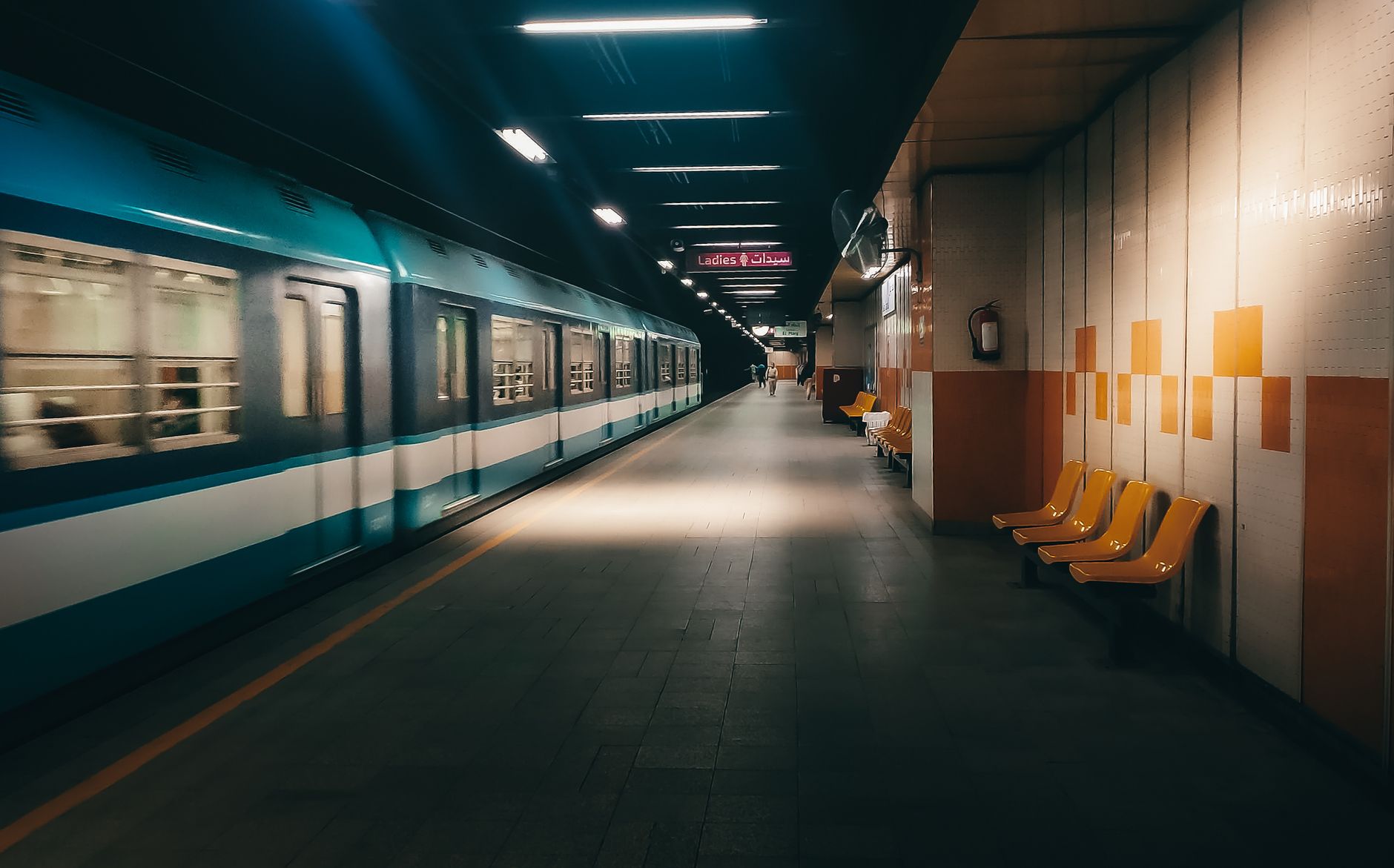
What you can do is use the metro to cut out the worst of the crosstown traffic. Line 2 runs to Giza station, which is roughly a fifteen-to-twenty-minute drive short of the museum. From downtown that means a cheap, fast, traffic-proof leg followed by a shorter ride-hail — total time similar to a direct car, total cost meaningfully lower.
Is it worth it? For a solo budget traveller, yes. For two or more people, the saving shrinks to the point where a direct car is better value for the hassle avoided, and with luggage or children it is not a serious option. The metro itself is genuinely good — clean, cheap, frequent — and our guide to riding the Cairo metro covers the women-only carriages, ticket machines and etiquette.
Buses and microbuses
Public buses and the microbus network do serve the corridor out towards 6th of October, and Egyptians use them to reach the area for a handful of pounds. We do not recommend either for this trip, and it is worth being clear about why rather than being vaguely discouraging.
Microbuses have no fixed stops, no route maps in English, no announced destinations and no luggage space; you flag them down, shout your destination and are expected to know where to get off. They are a genuinely efficient system if you can read it, and effectively unusable if you cannot. The saving over a ride-hail — perhaps EGP 200 on a journey you will make twice — does not justify arriving flustered and late for a slot you paid EGP 1,450 for.
There is one exception worth knowing. If you are staying in 6th of October or Sheikh Zayed, local services run close to the museum and the journey is short, familiar to residents and easy to ask about at your accommodation. That is a different proposition from working it out from downtown as a visitor.
Driving yourself
There is a large car park on site and it is rarely full outside public holidays, so the museum is one of the easier places in greater Cairo to drive to. Whether you should drive in Cairo at all is a separate question, and for most visitors the answer is no.
If you are already renting a car for a wider Egyptian trip, the run out along the desert road is among the more straightforward drives in the region — dual carriageway, clearly signed, and outside the worst of the city. If you are considering renting purely for this journey, do not. Two ride-hail trips cost a fraction of a day’s hire and you will not spend the museum visit thinking about your car.
Combining the trip with the pyramids
Since the two sites are ten minutes apart, most people do them on the same day, and the logistics reward doing it in one specific order.
Go to the plateau first, arriving at opening. Spend three hours there while the light is good and the heat and the touts are both low. Then take a short ride-hail hop to the museum, eat, and go in on a booked afternoon slot.
The reverse fails for a reason that is obvious in hindsight: you finish four hours of air-conditioned galleries and step out into the worst of the afternoon at an exposed desert site. Same two tickets, materially worse day. Our full museum guide covers the combined day, and the general run out to Giza has the wider transport picture.
One practical note on the hop between them: it is short but it is not walkable. Two kilometres of desert-edge road with no pavement, in Egyptian sun, carrying whatever you brought. Take a car.
From the airport, and on a layover
Cairo International is on the opposite side of the city, and the journey is sixty to a hundred minutes each way depending on the hour. That matters enormously if you are trying to fit the museum into a layover.
The arithmetic to run: a six-hour layover leaves roughly three hours on the ground after immigration, travel and the return buffer, and a four-hour layover leaves you nothing usable at all. Egyptian layover tours generally aim to have you back at the airport around three hours before departure, which is the right instinct.
Our honest view: if the museum time available is under two hours, the pyramids are the better use of a layover — they tolerate a short visit far better than a hundred thousand objects do. If you are set on the museum, book a car that waits, take the earliest slot your schedule permits, and read our timings in how long the museum actually takes before committing.
Arriving: the last five hundred metres
Drop-off is at the entrance plaza, and there is a fair walk from there to the galleries — the site slopes upward by design and the distances are generous.
- Allow twenty minutes between getting out of the car and standing in front of your first object. Security scanning, bag lockers and the walk itself all take time.
- Have your QR code ready at full screen brightness before you reach the scanners.
- Large bags go in lockers near the entrance, so factor in that stop.
- There is shade on the plaza but not much of it. On a summer afternoon, do not arrive an hour early expecting somewhere pleasant to wait.
When to travel, and what the Ring Road does to your day
Distance is not the variable here. Cairo’s Ring Road is, and understanding its rhythm is worth more than any route choice.
The morning peak runs roughly 07:30 to 10:00 and the evening one from about 16:00 to 19:30, and in both windows a forty-five-minute journey can become ninety without anything unusual happening. Thursday evening is the worst of the week — it is the start of the Egyptian weekend and the whole city moves at once. Friday morning is the best window of the entire week, with genuinely light traffic before midday prayers.
What follows for planning:
- For a 09:00 slot, leave downtown by 07:30. That looks excessive and it is the correct amount of caution. Arriving early costs you a coffee; arriving late costs you a supervisor conversation.
- Avoid a late-afternoon departure from the city. Setting off at 16:00 for a 17:00 slot is optimistic in a way Cairo will punish.
- The return after a late Wednesday or Saturday closing is fine. The roads are clear by 21:00 and the journey back is often the fastest of the day.
- Ramadan changes everything. Traffic before iftar is extraordinary as the whole city races home to eat, and then the roads empty almost completely for an hour. Plan around the sunset time rather than the clock — our guide to visiting Cairo during Ramadan covers how the rhythm shifts.
One further note that saves a surprising amount of grief: journey-planner estimates in Cairo are optimistic almost as a rule. Whatever your app says, add a third to it for anything that crosses the Nile or touches the Ring Road at a peak hour, and treat the number it gives you as a best case rather than an expectation.
What is not worth paying for
A bundled transfer sold with your ticket. Many resellers wrap a car into the price at several times what the same journey costs on an app. If a package quotes transport as a line item, compare it against EGP 250–400 before accepting.
A hotel car for this route. Cairo hotels will happily arrange a car at three to five times the ride-hail fare. Occasionally worth it for an early airport run; rarely worth it for a museum trip in daylight.
The hop-on hop-off bus. These exist in Cairo and they do not cope with the city’s sprawl — the distances between attractions are too great and the traffic too unpredictable for a fixed circuit to be efficient. For a destination twenty kilometres from downtown, it is the slowest option available.
A full-day coach tour, if the museum is the point. Packages bundling the plateau, the Sphinx, Saqqara, Memphis and two commission-paying shops cannot fit the itinerary into daylight, and the museum is always what gets compressed.
Staying nearby to skip the journey entirely
The most effective way to solve this journey is to not make it. If the pyramids and the museum are the centre of your trip, sleeping in Giza rather than downtown removes two long crosstown runs and turns a ninety-minute morning commute into a ten-minute one.
The practical gain is bigger than it sounds. It puts the first entry slot of the day within reach without a pre-dawn start, which is the single best thing you can do for the quality of a museum visit. It also means the pyramids at opening — the other genuinely time-sensitive thing in Cairo — become easy rather than heroic.
The trade-off is real and worth stating. Giza’s dining, nightlife and general street life do not compare with Zamalek or downtown, and a few nights out there can feel isolating if sightseeing is not filling every day. The usual compromise for a week-long trip is two nights near the plateau at the start, then move into the city.
Prices out there span everything from budget guesthouses with rooftop pyramid views to international five-star properties, and the view premium is substantial at every level. Our rundown of where to stay near the pyramids sets out which streets are genuinely close and which listings are stretching the definition.
Frequently asked questions
Will my driver know where it is?
Usually, yes — the museum has been open long enough to be a familiar destination, and it is one of the largest buildings in greater Cairo. The failure mode is not ignorance but assumption: a driver hears the word pyramids and heads for the plateau gate, which is a different place two kilometres away. Setting the destination as a map pin rather than a spoken name removes the problem entirely, and it is worth checking the route on screen before you accept the ride.
Is there a metro to the museum?
No. There is no metro, tram, light rail or monorail station at the site. The nearest metro is Giza on Line 2, about fifteen to twenty minutes away by car.
How far is it from the pyramids?
Roughly two kilometres, or ten to fifteen minutes by car. It is not walkable — there is no pavement and the sun is unforgiving.
How much is an Uber from downtown?
Around EGP 250–400, or USD 5–8, each way at September 2026 rates. Surge pricing applies in the morning and evening peaks.
How long does it take from central Cairo?
Between forty-five and ninety minutes, decided almost entirely by the Ring Road rather than by distance. Leave a generous buffer before a timed slot.
Can I get a taxi back easily?
Yes, cars are available, but walk out to the plaza before ordering so the pin lands somewhere a driver can reach, and expect a surge at closing time when everyone leaves together.
Should I book a car to wait?
Worth it if you are on a schedule, travelling with children, or leaving after dark. Otherwise a ride-hail on the way out is cheaper and works fine.
Is it easy to reach from the airport?
Straightforward but slow — sixty to a hundred minutes each way. That travel time is what makes short layovers unworkable.
Can I drive and park there?
Yes, there is a large and cheap car park that is rarely full outside public holidays. Renting a car purely for this trip is not worth it.
What is the cheapest way to get there?
Metro to Giza station on Line 2, then a short ride-hail. Best value for a solo traveller; for two or more, a direct car costs little more.
Related Cairo Guides
- Grand Egyptian Museum: the complete visitor guide
- How long to allow at the museum
- Uber and Careem in Cairo
- Riding the Cairo metro
- Cairo to Giza: every transport option
- Cairo airport transfers
- Giza hotels within reach of the plateau
Photo Credits
Hanging obelisk on the museum plaza: photo by Slyronit, via Wikimedia Commons (CC BY-SA 4.0).
Ride-hailing app on a phone: photo by freestocks.org, via Pexels.