This article contains advertising. Our booking links are routed through a partner that adds commission tracking automatically, so if you book through one we earn a commission from the provider, at no extra cost to you. It never affects what we recommend. Affiliate disclosure
The single best time to visit the Pyramids is the moment the gates open at 7 AM, on a weekday, ideally in November or early March. Do that and you’ll get the plateau in its quietest, coolest, most photogenic state — a good 90 minutes before the first tour buses roll in around 9 or 10. Everything else in this guide is just refining that one decision.
I’ve been out to Giza at every hour the plateau allows, in roasting July and in the soft light of a November dawn, and the gap between a well-timed visit and a badly-timed one is enormous. Same pyramids, completely different day. Below is how to get the good version — by time of day, day of week, season, and how the big 2026 changes to the plateau shift the maths. Pair it with our Pyramids of Giza complete visitor guide for the full picture.
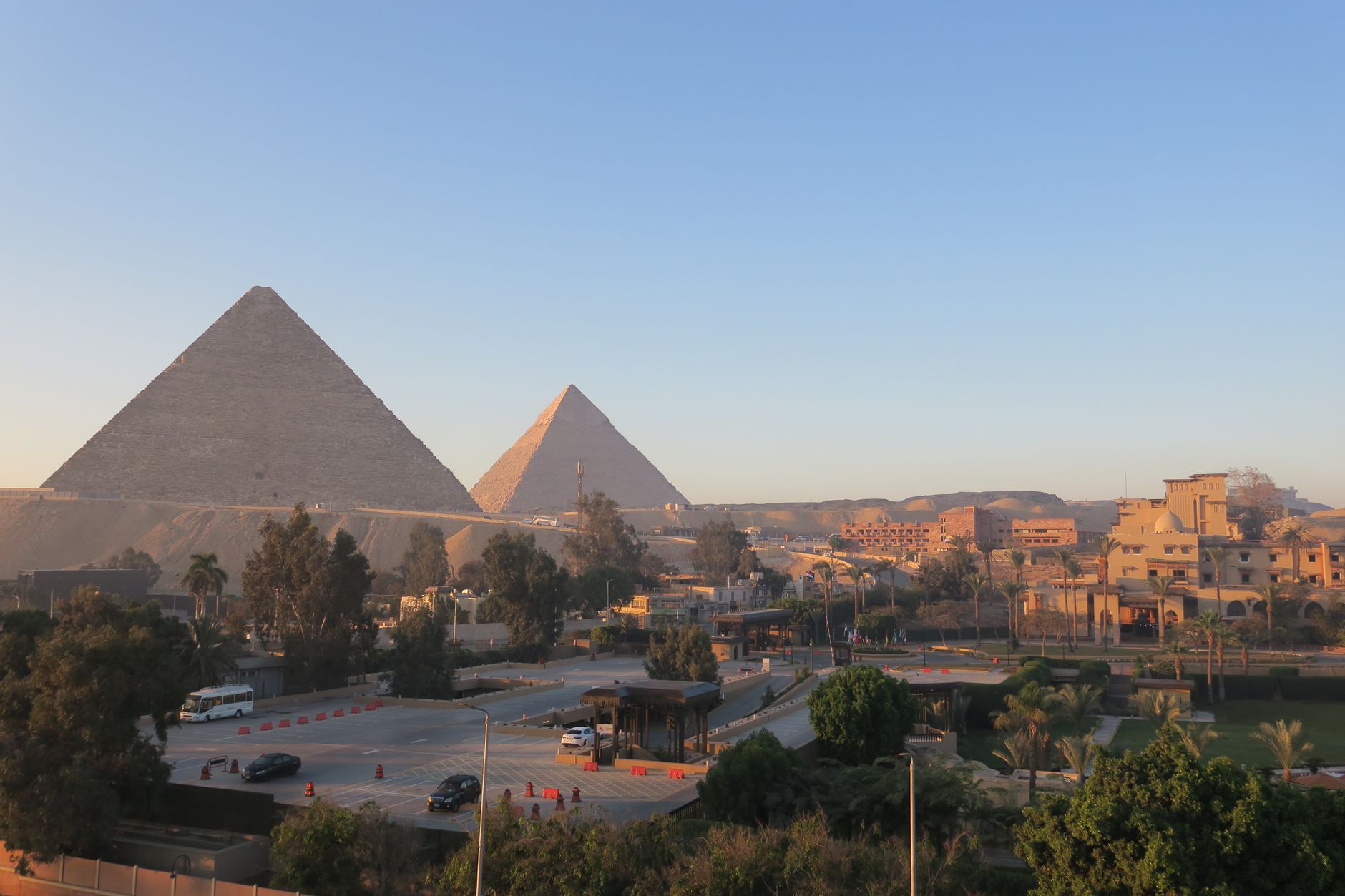
The Honest Short Answer
If you only remember one thing: arrive at opening, on a Tuesday or Wednesday, in November or early March. That combination hands you cool air (20–25°C), low-angled light that makes the limestone glow, the major coach groups still stuck at their hotel breakfasts, and shoulder-season prices on flights and rooms. You don’t need a tour to get this. You just need to set an alarm.
The worst time? Mid-morning in peak winter, on a weekend, during the Christmas–New Year crush. Everything that makes the early visit magic flips: heat building, queues forming, vendors fully awake, and coach after coach disgorging 40-person packs onto the panorama point.
What Changed in 2026 — and Why It Affects Your Timing
This matters before we talk hours, because the plateau doesn’t work the way old guidebooks describe. The main entrance has moved. You no longer go in by the Marriott Mena House; the new Great Gate sits on the Cairo–Fayoum road on the south side, anchored by a proper Visitors Center with self-service ticket machines, cafés, clean restrooms and step-free access.
Private cars and tour buses are no longer allowed inside the site. Once you’re through, you get around either on foot — most of the headline monuments sit within a kilometre of each other — or on the new electric shuttle, an air-conditioned hop-on, hop-off loop that’s included in your ticket and stops at the Great Pyramid, Khafre, Menkaure, the Panorama viewpoint and the Sphinx.
For timing, two practical consequences. First, build in a few extra minutes at the Great Gate: there’s a ticketing and security step before you reach the stones, so the “arrive 15–30 minutes before opening” rule matters more than ever. Second, the shuttle is a gift for an early start — at 8 AM you can ride straight out to the empty Panorama point for the classic three-pyramids shot, then work your way back as the crowds trickle in. By late morning that same shuttle is full and you’re queuing for it. For the full breakdown of fares and what’s included, see our Giza Pyramids tickets and prices guide.
The entrance shuffle matters as much as the clock. The old Mena House gate is no longer the main way in, and where you enter decides how far you walk between monuments, so study the plateau layout and the new gates before you commit to an arrival time.
Opening Hours at the Pyramids
Hours shift with the season, and a little around Ramadan. As of 2026:
| Season | Opens | Closes | Last entry |
|---|---|---|---|
| October–April (winter) | 8:00 AM* | 5:00 PM | 4:00 PM |
| May–September (summer) | 7:00 AM | 6:00–7:00 PM | ~5:00 PM |
| Ramadan | 8:00 AM | ~3:00 PM | ~2:00 PM |
*A note worth flagging: the official opening has been creeping earlier, and through the warmer half of the year the gates are widely reported opening at 7 AM. Whatever the posted time, the principle holds — be there for the first minutes, not the first hours. If your trip is in shoulder season and you’re unsure, plan around a 7 AM open and you’ll never be caught out arriving too late.
Best Time of Day: The 7 AM Open vs the Golden-Hour Window
There are two genuinely good windows in a day at Giza, and a long stretch in the middle to avoid.
Right at opening — the top pick
The first 90 minutes are unbeatable. The coaches from central Cairo don’t arrive until 9 or 10 (their guests are still at the breakfast buffet), so you get cool air, soft directional light raking across the faces of the pyramids, and clear sightlines for photos. The camel and horse handlers are slower to pounce at this hour, and the inside of the Great Pyramid — which turns into a hot, airless scrum by mid-morning — is at its most bearable. If you do one thing right, make it this.
Mid-morning to early afternoon — skip it
From around 10 AM to 2 PM the plateau is at its most crowded and, in summer, its most punishing. Coach groups peak, lines build at the Khufu interior entrance, and on a July afternoon the open ground tops 40°C with no real shade. Photography becomes an exercise in waiting for strangers to clear the frame. There’s no reward here that the morning didn’t offer in better conditions.
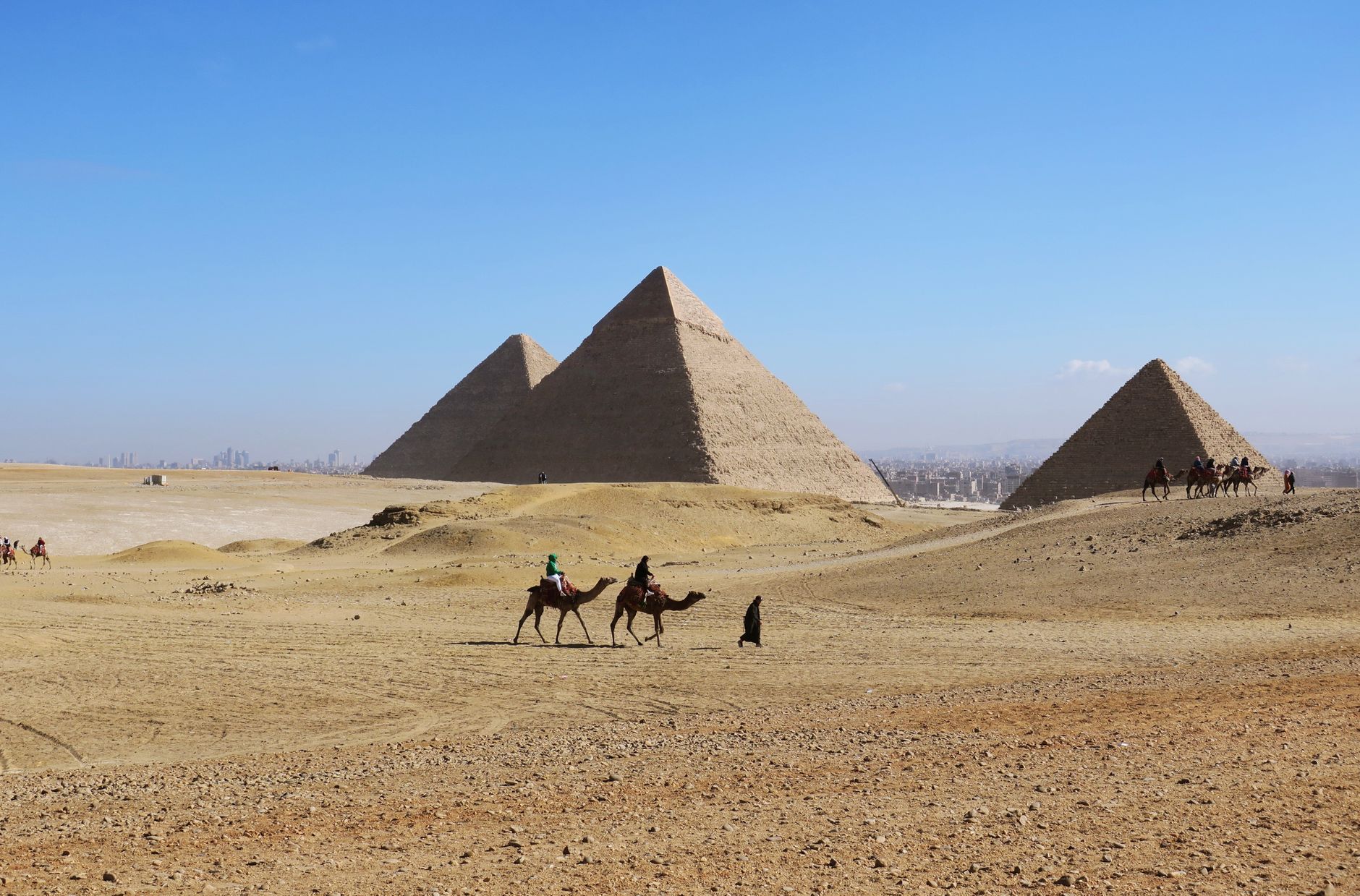
Late afternoon — the strong second choice
From about 3 PM the day swings back in your favour. Most morning coaches have left, any late arrivals come in smaller numbers, the heat eases and the light turns golden again — this time warm rather than cool. The last hour before the gates lock is superb for photography, with long shadows and that honeyed glow on the stone. If you’re not a morning person, this is your window. Just keep an eye on closing and the shuttle’s last loop so you’re not stranded at the far end of the plateau.
After dark
The plateau reopens for the evening Sound and Light Show when it is running, which needs a separate ticket; its official site said in October 2026 that the shows are temporarily suspended due to development works. It’s a fun add-on for first-timers and worth it if you’ve only seen the pyramids by day; skip it if you’ve already had your golden-hour fill.
Timing buys you the light; where you plant your feet decides whether you use it. The Panorama Viewpoint, the Sphinx enclosure and the desert road each peak at a different hour, and a shot-by-shot breakdown of the plateau pairs every angle with its window.
Best Day of the Week
The day you choose matters almost as much as the hour. Egypt’s weekend is Friday and Saturday, so those are the busiest with local families, and Fridays carry a real risk of a midday prayer-related pause. Sundays draw heavy coach traffic. The quietest days are the middle of the week.
| Day | Crowds | Verdict |
|---|---|---|
| Tuesday | Light | Best overall |
| Wednesday | Light–moderate | Close second |
| Monday | Moderate | Fine |
| Thursday | Moderate | Pre-weekend pickup |
| Sunday | Moderate–heavy | Coach-heavy |
| Friday / Saturday | Heavy | Avoid; Friday closure risk |
One local quirk worth knowing: Egyptian school groups tend to be off on Mondays and Thursdays, which is part of why Tuesday and Wednesday feel calmest of all.
Best Season and Month
Broadly, October through April is the comfortable half of the year, and within that, three months stand out.
November is my pick for most people — pleasant temperatures (roughly 20–28°C), low rain and sandstorm risk, crowds that haven’t yet hit the peak-winter wall, and prices well below the December–February high. It’s the genuine sweet spot.
March and early-to-mid April are nearly as good: spring warmth, light crowds, fair prices, and lovely afternoon light. The one caveat is the khamsin sandstorm season, which runs roughly mid-March into May and can flatten visibility for a day or two — so keep an indoor backup like the Cairo museums ready to swap in.
October is a strong shoulder month too, cooling off after summer with thinner crowds than November.
What to avoid, and why:
- December–February: the weather’s lovely but it’s peak season — heaviest coach traffic and hotel rates running 30–50% above shoulder.
- June–September: brutal heat, often 38–43°C, viable only at sunrise and after 5 PM. Many travellers route around Cairo entirely in high summer.
- Christmas and New Year (roughly Dec 20–Jan 7): the worst of both — extreme crowds and the highest prices of the year. If you must come then, book everything months ahead.
Avoiding the Tour-Bus Crush
The single most reliable crowd-avoidance tactic is also the simplest: beat the coaches. They run on hotel-breakfast time and arrive in a predictable wave between 9 and 11 AM. Get through the Great Gate by 7:30, ride the shuttle out to the far monuments first, and you’ll have done the busy spots before the wave hits. By the time the panorama point fills up, you’re already heading the other way.
The same logic applies to the camel and horse riders and the souvenir vendors — they’re noticeably mellower first thing. A confident “la, shukran” and a steady walk past handles most of it; agree any camel price, route and duration before you get on, never after.

Timing matters on a tour too. Half-day tours that start at opening time beat the coaches to the plateau, and a Giza-and-Saqqara day is far more pleasant in the cooler months. Our guide to the main pyramids tour formats and what they cost helps you pick the right one for your dates.
A Recommended Plan for the Perfect Day
Here’s the day I’d actually run — a November weekday, pyramids in the cool morning, the Grand Egyptian Museum in the afternoon when the plateau is at its worst.
- 7:00 AM — Leave your hotel. From central Cairo it’s 30–60 minutes depending on traffic; an Uber or Careem runs roughly $5–$15.
- 7:30 AM — Arrive at the Great Gate, grab tickets from the machines, clear security.
- ~8:00 AM — In as the plateau opens. Take the shuttle straight to the Panorama point for the three-pyramids shot while it’s empty.
- 8:30 AM — Work back through Menkaure and Khafre, then the Great Pyramid (do the interior now, while it’s coolest, if you’ve bought that ticket).
- 10:30 AM — The Sphinx, before the light goes flat on its face.
- 11:30 AM — A camel or horse ride out to the dunes for the wide panorama, or a coffee at the Visitors Center.
- 12:30 PM — Lunch — the Mena House terrace still has the best pyramid view in the city.
- 2:00 PM onward — The Grand Egyptian Museum next door, now fully open and an easy walk or short hop from the plateau. A natural pairing; see our day trips and excursions guide if you’d rather build the pyramids into a wider loop.
Want the golden-hour version instead? Flip it: museum in the morning, plateau from 3 PM, and end on the warm light and thinning crowds of the last hour.
Best Time to Visit Pyramids FAQ
What is the best time to visit the Pyramids?
A weekday at opening — aim for the 7 AM gates in the warmer months — ideally a Tuesday or Wednesday in November or early March. You get cool air, the best light, and a clear plateau before the coaches arrive.
What time do the Pyramids open?
Officially 8 AM in winter and 7 AM in summer, though the warmer-season open has been trending toward 7 AM. Closing is around 5 PM in winter and 6–7 PM in summer, with earlier hours during Ramadan.
When do the tour buses arrive?
The big coach groups roll in between 9 and 11 AM, after hotel breakfast. Be through the gate by 7:30 and you’ll have a head start of well over an hour.
What’s the best month?
November, for the best balance of comfortable weather, manageable crowds and shoulder-season prices. October, March and early April are close behind.
Should I visit on a Friday?
Better not. Friday is part of the Egyptian weekend, it’s busy with local families, and there’s a chance of a midday closure around prayers. Tuesday and Wednesday are the calmest days.
How does the new 2026 entrance change things?
You now enter via the Great Gate on the Cairo–Fayoum road, not the old Mena House gate. Cars and buses can’t go inside — you walk or use the included electric shuttle — so leave a little extra time for the ticket-and-security step at the Visitors Center, and use the shuttle to reach the far viewpoints early.
Is it worth visiting in summer?
Only at the edges of the day. June through September is genuinely hot — sunrise and after 5 PM are workable, midday is not. If you’re sensitive to heat, choose another season.
Can a tour get me in earlier than everyone else?
No — tours don’t grant special early access. What they buy you is logistics: pre-arranged tickets and someone handling the queues. The early plateau is open to anyone who shows up at opening.
Pulling It Together
Time it right and Giza rewards you out of all proportion to the effort. The formula is short: a weekday, at opening, in November or early March, with the Grand Egyptian Museum saved for the hot, crowded afternoon. Get through the new Great Gate before 7:30, take the shuttle to the empty Panorama point first, and for the first ninety minutes the oldest of the Seven Wonders is more or less yours. Skip the weekends, skip the Christmas crush, skip the summer midday — and the same pyramids that drew Herodotus and Alexander will feel, briefly, like a private appointment.
Keep planning with our Pyramids of Giza complete visitor guide, sort your entry in the tickets and prices guide, and line up the rest of your day with our day trips from Cairo guide.
The same logic now has to cover two sites rather than one, and they do not keep the same hours. The museum along the road runs to 21:00 on Wednesdays and Saturdays, which opens up a far more humane shape for a Giza day: the plateau at first light, a long rest through the afternoon heat, then the galleries in the evening. Our guide to the museum’s opening hours and best times explains how to pair the two.
There is now a second reason to be at the gate for opening. With the museum two kilometres away and open into the afternoon, the sensible shape of a Giza day is plateau first and galleries second — which means the early start buys you the good hours here and loses you nothing later, since the museum is climate-controlled and much the same at any time. Our guide to combining the two in one day works through the timings.