This article contains advertising. Our booking links are routed through a partner that adds commission tracking automatically, so if you book through one we earn a commission from the provider, at no extra cost to you. It never affects what we recommend. Affiliate disclosure
At around 50 Egyptian pounds to the US dollar in mid-2026, a large bowl of koshari at the most famous koshari house in the country costs roughly 100 EGP, which is about two dollars. You pay at a cashier’s window first, get handed a paper ticket, carry it to a counter where a man with a ladle builds the bowl in about eleven seconds, and then you sit down and work out which of the three bottles on the table is the one that will hurt you. That is genuinely the whole transaction. It is also the single best-value hot meal in any major world capital I can think of.
The catch is that almost every price you will read online is wrong, because the pound has moved hard and food inflation in Egypt has been running in double digits. Egypt’s annual headline inflation was 13.0% in July 2026, and restaurants and hotels have been inflating at a similar clip. A guide written in 2023 that says “koshari costs 15 pounds” is not lying — it is just three currency collapses out of date. This guide gives 2026 ranges, tells you what to pay in local pounds versus dollars, explains the ordering mechanics nobody writes down, and is honest about which cheap food is worth your stomach and which is not.
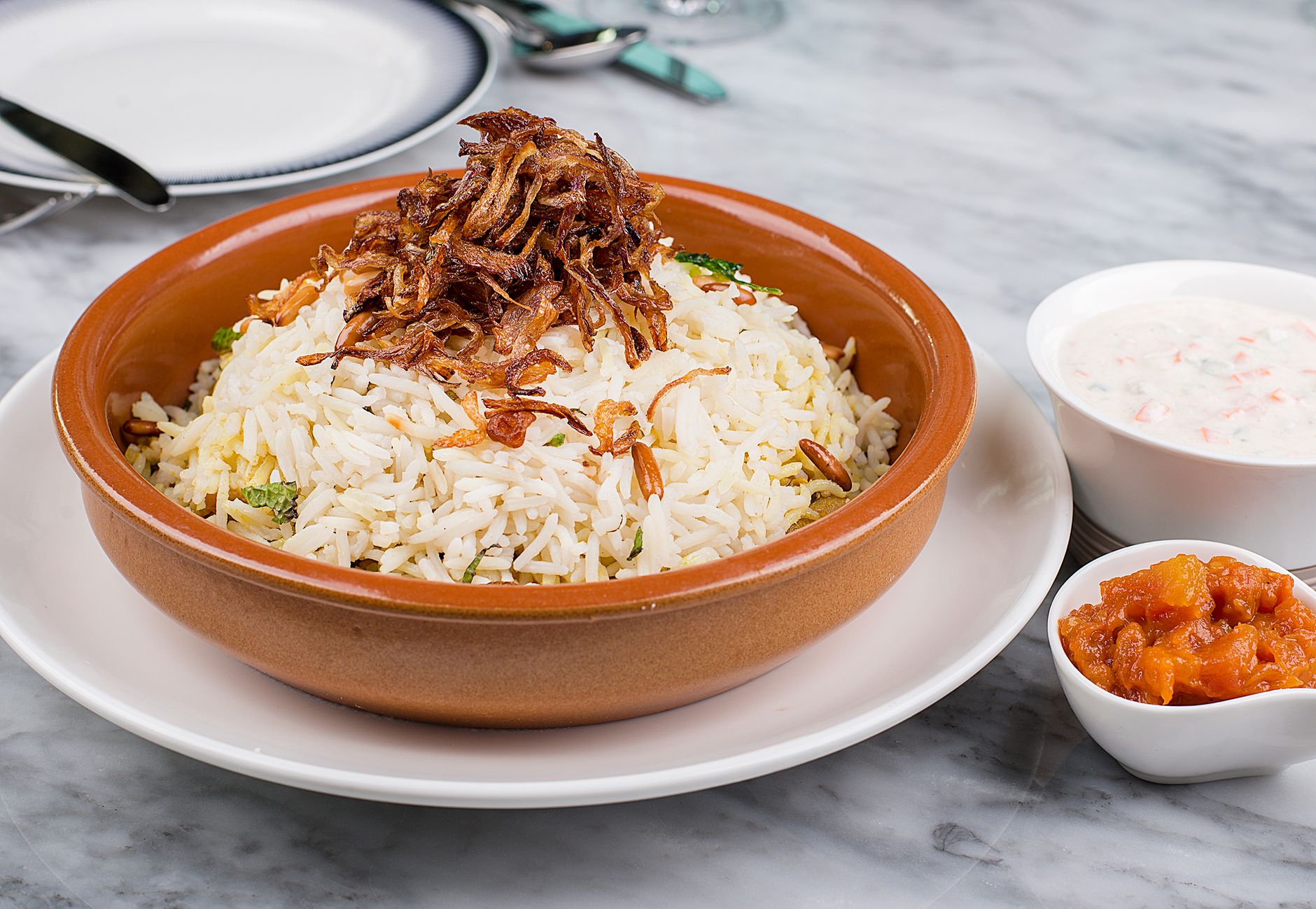
At a Glance: What the Budget Staples Cost in 2026
These are mid-2026 ranges from local neighbourhood vendors, not tourist-strip pricing. Expect roughly 15% to 45% on top of these numbers anywhere within sight of a monument, a five-star lobby or a tour bus car park.
| Item | Local price (EGP) | ≈ USD | Worth it? |
|---|---|---|---|
| Koshari, medium bowl | 40–80 | $0.80–1.60 | Yes. The best calorie-to-pound ratio in Egypt, and genuinely good food. |
| Ta’ameya sandwich | 10–25 | $0.20–0.50 | Yes, emphatically. Egypt’s falafel is fava-based, green inside, better than the chickpea version. |
| Ful medames, plate | 30–60 | $0.60–1.20 | Yes for breakfast. Heavy and slow-burning; you will not need lunch until 3pm. |
| Shawarma sandwich | 30–60 | $0.60–1.20 | Fine, not special. Egypt does it competently, Syria and Lebanon do it better. |
| Hawawshi | 50–100 | $1–2 | Yes. Spiced minced meat baked into bread; the best cheap meat dish in the city. |
| Feteer meshaltet | 60–180 | $1.20–3.60 | Split it. A whole one defeats most people and the sweet versions climb fast. |
| Fresh sugarcane juice (asab) | 15–30 | $0.30–0.60 | Yes, if the mill is spinning constantly. Grassy, sweet, weirdly refreshing. |
| Fresh mango juice, in season | 25–45 | $0.50–0.90 | Yes, June to September. Out of season it is usually a syrup mix. |
| Tea (shai) at a local ahwa | 10–25 | $0.20–0.50 | Yes. Renting a chair for an hour is included in the price. |
| Baladi bread, subsidised loaf | 0.20 (20 piastres) | under $0.01 | Not for sale to you, realistically — but it explains why sandwiches cost pennies. |
That last line is the hidden engine of the whole scene. Egypt raised the price of subsidised baladi bread to 20 piastres a loaf in June 2024, the first increase since 1989, and has held it there through 2026 even after fuel price rises. Bread being effectively free is why a stuffed sandwich can cost less than a bottle of water.
Why Every Price List You’ve Read Is Out of Date
Two things have happened to Egyptian prices since 2022, and they pull in opposite directions for a visitor. The pound has devalued repeatedly — it now sits around 50 to the dollar, having been under 20 not long ago — which makes Egypt dramatically cheaper in foreign currency. At the same time, domestic prices have chased that devaluation upward, with food and beverage inflation running high through 2025 and 2026.
The practical effect: in pounds, everything has roughly tripled or quadrupled since 2021, while in dollars it is still cheaper than it was. When a blog tells you a falafel sandwich costs “5 pounds”, that number is dead — but the underlying claim, that it costs about a quarter, is still roughly right. Read old guides for the dollar figures and ignore the pound figures entirely.
My working tiers for 2026: under 100 EGP is a snack, 100–300 EGP is a proper meal at a local place, 300–700 EGP is a sit-down restaurant with tablecloths, and above 1,000 EGP ($20) a head you have left the budget conversation and entered the territory of our rundown of Cairo’s standout dining rooms. Set those against the wider numbers in our guide to what a Cairo trip does to your wallet and food stops being the scary line item.
The Dish-by-Dish Breakdown: What to Eat and Where to Get It
Cairo’s budget food is not one thing. It splits into breakfast food, carb food, meat food and pastry food, and each has a different natural venue. Ordering hawawshi at a koshari counter makes as much sense as ordering sushi at a pub.
| Dish | What it is | 2026 price (EGP) | Where to get it |
|---|---|---|---|
| Koshari | Rice, macaroni, lentils, chickpeas, tomato sauce, fried onions | 25–80 local; 60–120 at Abou Tarek | Dedicated koshari shops only — never a general restaurant |
| Ful medames | Fava beans simmered overnight in a copper qidra, mashed with oil, lemon, cumin | 30–60 plate; 10–20 sandwich | Morning ful carts, 6am–11am; every residential street has one |
| Ta’ameya | Fava-bean fritters, sesame crust, green inside | 3–8 each; 10–25 in a sandwich | The same carts as ful; fried to order in the morning |
| Hawawshi | Spiced minced beef baked inside baladi bread | 50–100 | Neighbourhood grills and bakeries, usually evening |
| Shawarma | Shaved marinated meat, tahini, pickles | 30–60 local; 90–150 at chains | Late-night takeaway strips; Downtown and Mohandiseen |
| Kebda eskandarani | Alexandrian-style fried liver with chilli and garlic | 60–140 sandwich or plate | Specialist liver houses; Imbaba is the spiritual home |
| Feteer meshaltet | Layered laminated pastry, sweet or savoury | 60–180 | Feteer bakeries; the good ones only make feteer |
| Mahshi | Stuffed vine leaves, courgettes, peppers | 80–200 portion | Home-cooking canteens and chains like Gad |
| Roz bel laban / mahalabia | Rice pudding and rosewater milk pudding | 25–60 | Dairy shops and koshari places, sold in plastic tubs |
Two of those deserve promotion above the rest. Hawawshi is the dish visitors most often miss and most often love, because it reads as “meat pie” and delivers something better. And ta’ameya is the one I would put in front of anyone who thinks they know falafel — it is fluffier, herbier and cheaper than the Levantine version, and it anchors the classic Egyptian morning spread that costs about a dollar.
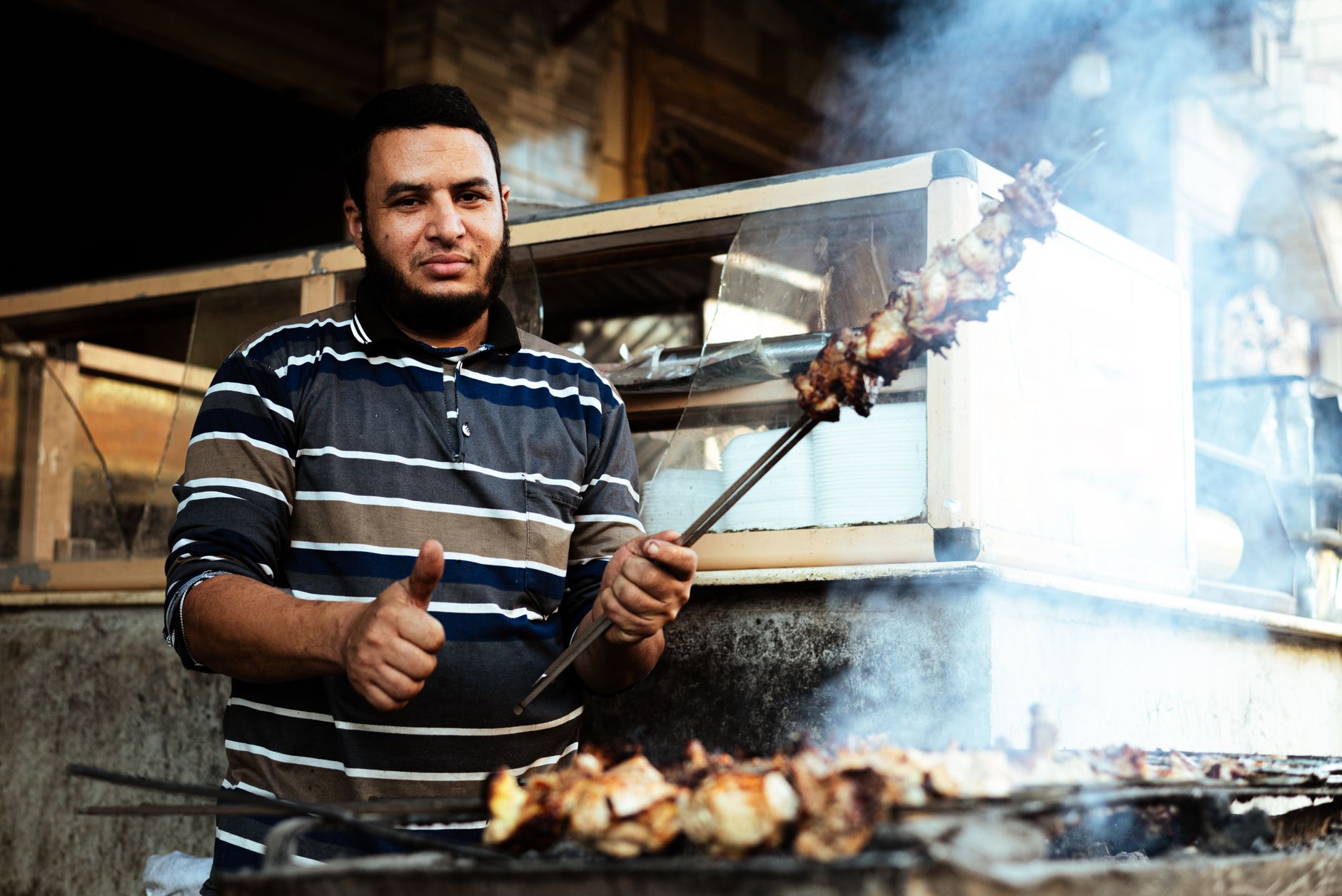
How to Actually Order: The Mechanics Nobody Explains
This is the single biggest gap in every cheap-eats listicle, and it is the thing that makes first-timers hover outside a busy koshari shop for five minutes before giving up and going to a hotel restaurant.
The pay-first, ticket-second system
At most established koshari houses and many popular local restaurants, you do not sit down and get served. You go to the cashier’s window near the entrance, say what you want and what size, pay in cash, and receive a printed or handwritten ticket. You then carry that ticket to the serving counter and hand it over. Only then does food appear. Trying to order at the counter first will get you politely redirected, and trying to pay at the end will confuse everybody. If there is a queue at a window and a separate queue at a counter, that is what you are looking at.
Sizes, in one word each
Koshari comes in three: sogheer (small), mutwasit (medium) and kebeer (large). Say the word, hold up the corresponding vague hand gesture, and you are done. A medium defeats most people who are not used to it. Order small on your first attempt — you can always go back, and the difference is about 20 pounds.
The sauces are your job, not theirs
Your bowl arrives with tomato sauce already on it and two bottles alongside. Da’a is the garlic-and-vinegar liquid; use a lot, it is what makes the dish work. Shatta is the chilli sauce; use a little until you know it. Then stir the whole bowl thoroughly from the bottom. Eating koshari in unmixed layers is the clearest tourist tell there is.
Six words that do 90% of the work
- Bikam? — how much? Ask before you commit, always.
- Wahed — one. Combine with pointing.
- Ana nabati — I’m vegetarian.
- Mish harr — not spicy.
- Aish — bread.
- Hesab — the bill, at places that do run a tab.
Carry small notes. A 500-pound note at a ful cart at 7am is a genuine problem for the vendor, and change scarcity is a real feature of daily life here. Break big notes at supermarkets and metro stations — the metro ticket windows are reliably good for this.
The Named Institutions: What They Cost Now
Every guide lists the same eight places. Few check whether the prices still hold or whether the doors are still open. Here is where they stand in 2026.
Koshary Abou Tarek (Downtown, near Talaat Harb) is still the koshari cathedral — several floors, essentially one dish, done with more care than the volume suggests. Expect roughly 60–120 EGP depending on size, so $1.20–2.40. It is not the cheapest koshari in Cairo and it is not trying to be; you are paying a small premium for consistency and for staff who have seen a confused foreigner before. Compare it against the rest of the field in our head-to-head on the city’s koshari counters.
Zooba is the polished version: Egyptian street classics rebuilt with design, air conditioning, English menus, card payment and branches all over town including one at the Grand Egyptian Museum. Reckon on 200–400 EGP a head ($4–8), which is three to five times a street vendor. Worth it once, on your first day, as a low-stress introduction to dishes you will then buy for a fifth of the price elsewhere.
Felfela, Downtown, has been running since 1959 and is still open in 2026, still full of fake foliage and lanterns, still strong on ta’ameya, ful and grills. It has drifted upmarket in real terms: budget 250–800 EGP per person ($5–16), with lunch commonly landing around 500–600 EGP. It is no longer a budget restaurant in Cairene terms. It is still cheap in dollars and it is still charming.
Gad is the chain that actually feeds Cairo — dozens of branches, fluorescent lighting, laminated photo menus, sandwiches and grills and mahshi at genuinely local prices. Not atmospheric, extremely useful, open late, and the safest bet when you want a proper meal for under 200 EGP without gambling on a cart.
El Fishawy in Khan el-Khalili has poured tea since 1797 and runs 24 hours a day under the seventh generation of the same family. Tea sits around 20–40 EGP, shisha more. You are paying for the mirrors and the alley, not the drink, and that is a fair trade for an hour. Do it after sunset when the tour groups thin out, and fold it into a proper wander through the main souk.
El Abd patisserie, founded 1947, with its permanently mobbed Talaat Harb branch, is where Cairo buys pastry. Baklava and Egyptian sweets are sold by weight; a modest bag runs 100–250 EGP. There is no seating, there is no queueing system, and the technique is to get to the counter and speak clearly.
Kebdet El Prince in Imbaba is the famous liver house, open roughly midday to 5am, and the reason people take a taxi across the river at 1am. Note that at least one listing has shown it as temporarily closed during 2026 — check before you travel out there, and have a backup. Sobhy Kaber in Rod al-Farag is the grill counterpart, but be clear-eyed: kebab is sold by the kilo, and a serious order there is a 600–1,200 EGP experience, not a cheap eat. It is where budgets go to die, deliciously.
Neighbourhood by Neighbourhood: Where Cheap Is Actually Good
Not all cheap food in Cairo is good, and not all good food is where the guidebooks send you. The variable that matters most is turnover, and turnover follows residents, not tourists.
| Area | Budget food verdict | Typical meal (EGP) | Go for |
|---|---|---|---|
| Downtown (Wust el-Balad) | Best all-round. Dense, competitive, mostly locals | 60–200 | Koshari, ful carts, late-night shawarma, El Abd sweets |
| Islamic Cairo / Khan el-Khalili | Mixed. Tourist-priced on the main lanes, honest two streets back | 80–250 on the lanes; 40–120 behind | Tea at Fishawy, grills around Al-Hussein, feteer |
| Zamalek | Poor value for street food, good for mid-range | 200–600 | Cafés, bakeries, Zooba; not carts |
| Maadi (Road 9) | Comfortable rather than cheap; expat pricing | 250–700 | Sit-down meals, brunch, quiet evenings |
| Giza / pyramids road | Worst value in the city by a distance | 300–900 for mediocre food | Nothing. Eat before or after |
| Imbaba / Rod al-Farag | Best specialist meat, zero atmosphere concessions | 100–400 | Liver, kebab, offal, late nights |
The Giza line deserves emphasis. The restaurants along the pyramids approach road exist to catch people who are hungry, hot and captive after four hours on the plateau, and they price accordingly for food that is rarely better than average. Eat a big breakfast, carry a sandwich, and save the meal for when you are back across the river — which is easy enough to plan around using the practical routes between central Cairo and the plateau. If you are choosing a base partly on where you will eat, the neighbourhood comparison for visitors is worth ten minutes.
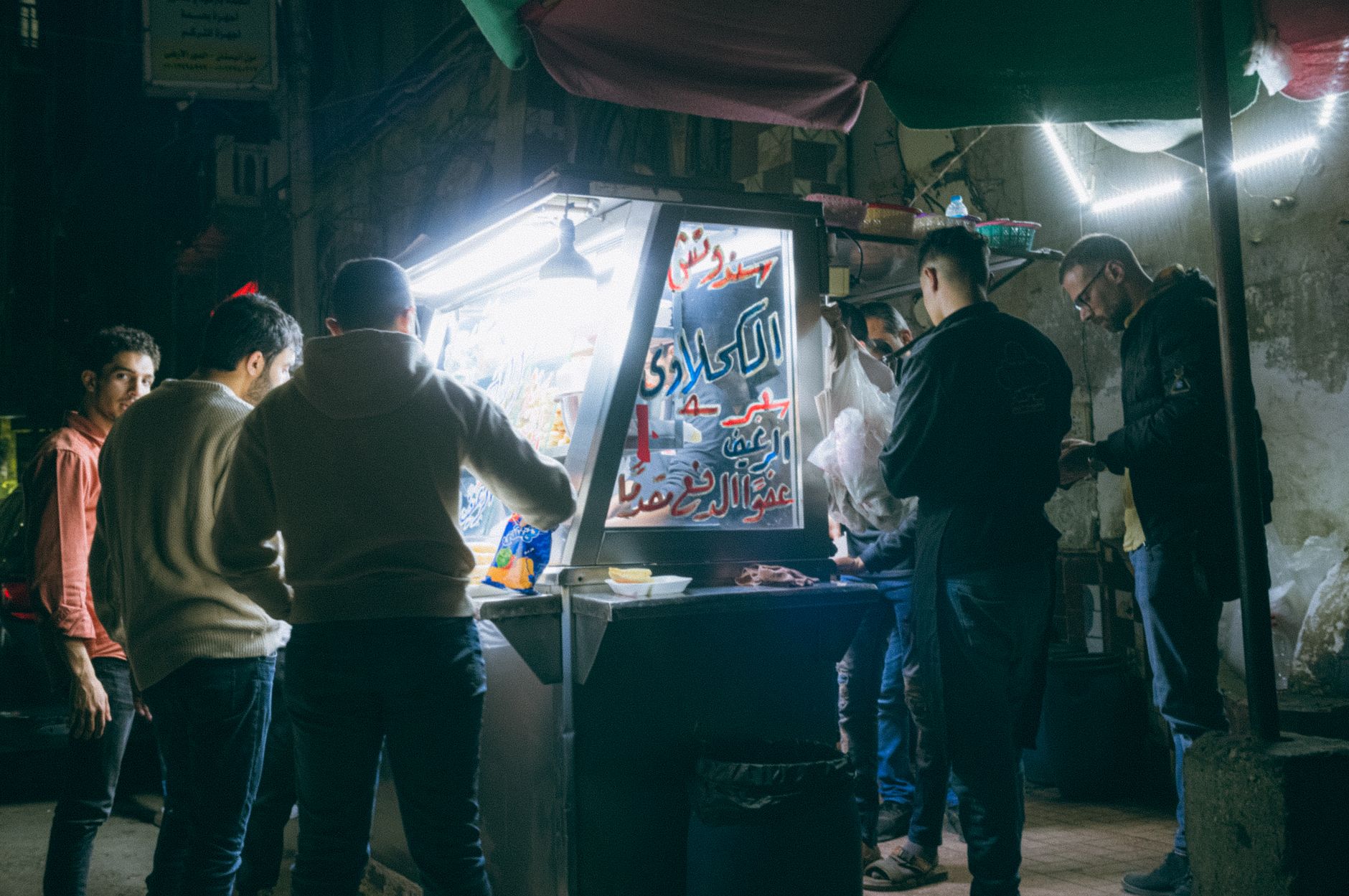
Three Daily Food Budgets That Actually Hold Up
These are per person per day, for someone eating three times plus drinks, at mid-2026 prices. I have padded each one slightly, because the failure mode is not overspending on food — it is being underfed at 4pm and panic-buying something expensive.
| Tier | Daily EGP | ≈ USD | What a day looks like |
|---|---|---|---|
| Street-only | 150–300 | $3–6 | Ful and ta’ameya breakfast (50), koshari lunch (60), hawawshi or shawarma dinner (80), juice and tea (40) |
| Mixed | 350–700 | $7–14 | Street breakfast, sit-down local lunch at Gad or similar (200), one proper dinner (300), café stop, bottled water |
| Sit-down | 800–1,600 | $16–32 | Hotel or café breakfast, Zooba-tier lunch (300), a real restaurant dinner with drinks (700+), coffee and dessert |
Two honest caveats. First, bottled water is a real recurring cost — budget 15–30 EGP per 1.5-litre bottle and expect to drink three litres a day in summer. Second, alcohol destroys the arithmetic instantly; a single beer in a licensed venue can cost more than an entire street-only day of eating. If you want the whole picture rather than just the food column, the full trip costing shows how food compares to accommodation and entry tickets, and it is usually the smallest line of the three.
Food is the easiest line to squeeze, which is exactly why a fifty-dollar day in Cairo reads as comfortable rather than punishing. Our breakdown of a fifty-dollar Cairo day spreads that figure across a bed, transport, entry tickets and meals, so you can see which line to cut first.
Breakfast Is the Cheapest and Best Meal of the Day
If you eat one thing from this article, make it an Egyptian breakfast bought from a cart between 7am and 10am. Ful medames is fava beans simmered overnight in a tall copper pot, then mashed at the counter with olive oil, lemon, cumin and garlic. Ta’ameya is fried to order beside it. Both go into warm baladi bread with tomato, rocket and pickled things, for somewhere between 10 and 25 pounds a sandwich.
Two sandwiches and a glass of tea will cost you 50–70 EGP — around a dollar — and will hold you until mid-afternoon in a way that a hotel buffet somehow does not. The carts are busiest between 7.30 and 9.30, which is exactly when you want to be there, because the frying is continuous and nothing sits.
The important structural point: this is when you are eating at the same moment and the same price as everyone around you. Nobody has a tourist menu at 7am. The rest of the day is when pricing diverges. Build your eating schedule around that fact and you will spend less and eat better, a principle that runs through our wider guide to eating in Cairo as well.
Drinks: Juice Stands, Tea and the Economics of Sitting Down
Cairo’s juice stands are one of the great cheap pleasures. Sugarcane juice (asab) comes out of a grinding mill, costs 15–30 EGP, and tastes like grassy liquid sugar — order it where the mill never stops turning, because it separates and oxidises fast. Mango is the seasonal star from roughly June to September, at 25–45 EGP; outside those months, most “mango” is a syrup base and you should switch to guava or orange.
Tea is where the economics get interesting. A glass of shai at a local ahwa costs 10–25 EGP, and the price includes the chair, the table and the right to occupy them for as long as you like. Nobody will hurry you. Cairo has effectively priced sitting down at about forty cents an hour, which is the cheapest thing in the city and one of the best, and it is what the coffee-house culture here is genuinely built on.
Order tea ala keifak to choose your own sugar level; the default is very sweet. Turkish coffee comes sada (no sugar), mazbout (medium) or ziyada (sweet) for about the same money. Speciality coffee shops in Zamalek and Maadi charge 90–180 EGP for a flat white, which is a different transaction entirely.
Eating Street Food Without Losing Two Days of Your Trip
Travellers’ diarrhoea is the most common illness affecting visitors to Egypt, and most cases clear up in two to four days. That is worth stating plainly rather than dramatising: the risk is real, it is manageable, and avoiding street food entirely is both unnecessary and a waste of the trip. What matters is knowing which items are structurally low-risk.
Low risk
- Anything that came off a fire or out of hot oil in front of you — ta’ameya, hawawshi, grilled meat, feteer.
- Koshari from a high-volume shop, where components are cooked in bulk and turned over constantly.
- Ful from a busy morning cart, held at temperature in a sealed copper pot.
- Bread. Baked hot, handled minimally.
- Sealed factory-bottled water and canned drinks.
Higher risk
- Raw salad, garnish and unpeeled fruit — typically washed in tap water.
- Ice, unless you are somewhere that clearly uses commercial ice; ice is frequently made from tap water.
- Tap water for drinking or brushing teeth. It is treated but not safe for unaccustomed stomachs.
- Unpasteurised dairy, and cream-based sweets that have been sitting warm in a display case.
- Anything lukewarm, and anything that has been sitting under a heat lamp on a quiet street.
How to read a stall in ten seconds
Look for the queue and look at who is in it. A stall with six Egyptians waiting is turning over stock faster than it can spoil, which is the entire safety mechanism. Watch whether the person handling money is the person handling food — separation of those roles is a genuinely good sign. Check that the frying oil looks amber rather than black. And go where the crowd is between 12pm and 2pm or after 8pm, not at the dead hours in between.
Pack oral rehydration salts and an anti-diarrhoeal for the flight rather than hunting for a pharmacy at 3am, although Cairo pharmacies are plentiful, cheap and open late. Ease in over your first 48 hours rather than eating five street meals on day one.
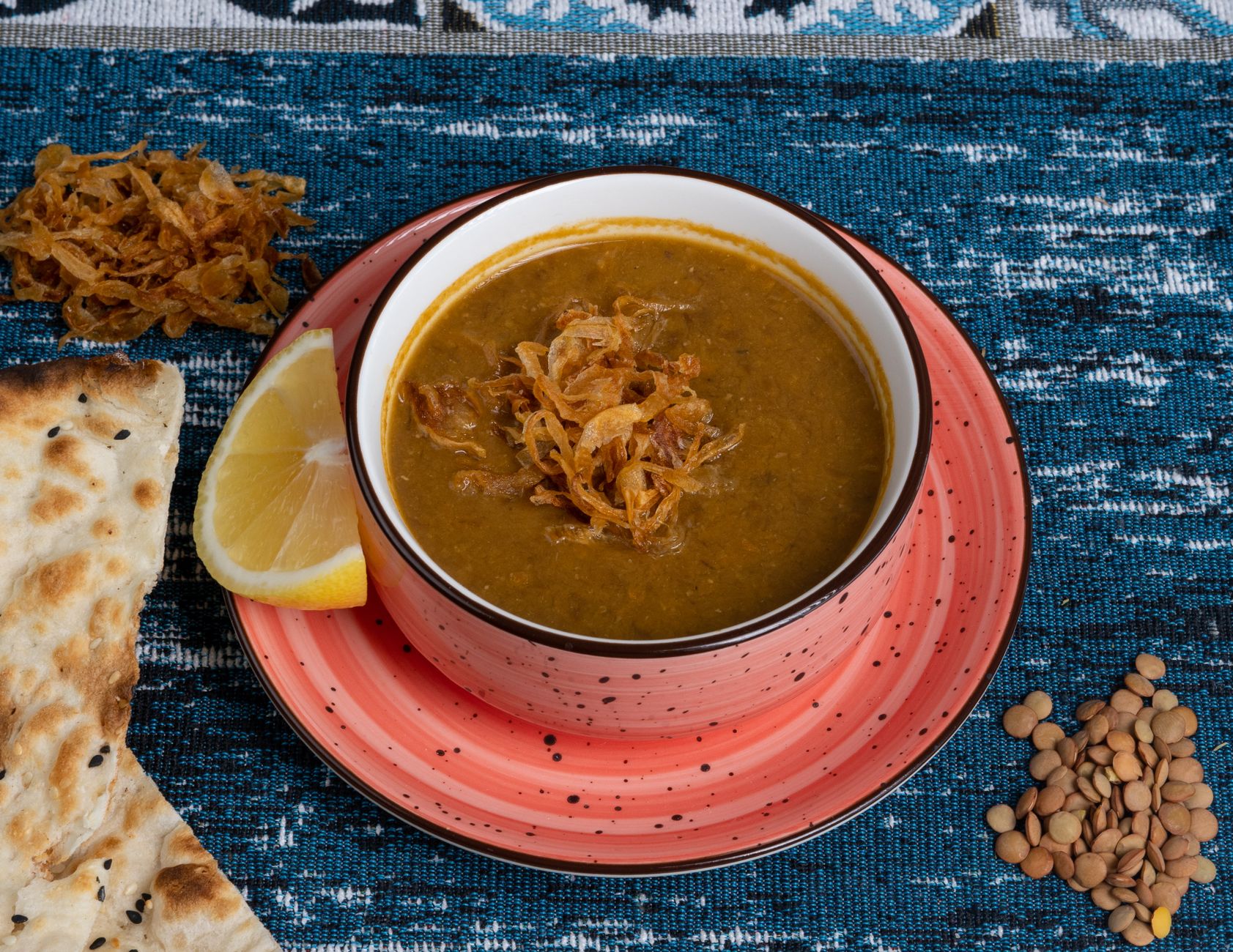
What Nobody Tells You About Eating Cheap in Cairo
The “tourist menu” is usually a separate laminated card. If you are handed a menu with English and photos while the table beside you has a different one, you are looking at different prices for the same food. Ask for the Arabic menu, or ask “bikam?” before ordering. This is common in the alleys around Khan el-Khalili and rare everywhere else.
Portion sizes are not calibrated to you. A “medium” koshari is a full meal for a person doing manual labour. A “large” is a challenge. Order down one size from your instinct on the first attempt.
Cash is still king at the bottom of the market. Zooba, Gad and anything with a till will take cards. Carts, koshari windows and ahwas will not. Carry 200–300 EGP in small notes every day and treat it as the price of eating well.
Service charge does not mean the tip is handled. Sit-down restaurants add 12% service plus 14% VAT, and the service charge rarely reaches the person who served you. A small extra note in hand is normal at that level; at a street cart, nothing is expected.
The cheapest good meal and the most famous good meal are not the same. Abou Tarek is excellent and it is also 50–80% dearer than the unnamed koshari shop three streets away that locals actually use. Eat at both. The unnamed one is often the better bowl.
Fridays are quiet, and Ramadan rewrites everything. Midday Friday, much of the informal food economy pauses for prayers. During Ramadan, daytime street food largely vanishes and then the entire city eats at once at sunset — a spectacular but completely different experience, covered in our guide to eating through the fasting month.
Vegetarians have it easier than almost anywhere. Koshari, ful, ta’ameya, mahshi and most mezze are meat-free by default and always have been, which is why plant-based eating in Cairo is more about vocabulary than availability. Watch only for meat stock in soups and for ghee in pastry.
Cheap Eats in Cairo: FAQ
What is the cheapest full meal in Cairo in 2026?
A ful or ta’ameya sandwich from a morning cart, at 10–25 EGP, or about 25 cents. Two of them plus tea comes to roughly 60 EGP — just over a dollar — and is a genuine meal rather than a snack. A small koshari at 25–40 EGP at a neighbourhood shop is the next cheapest thing that will actually fill you.
How much should I budget per day for food?
Street-only eating runs 150–300 EGP a day ($3–6). A mixed approach with one sit-down meal is 350–700 EGP ($7–14). Eating in restaurants for every meal takes you to 800–1,600 EGP ($16–32). Add 50–90 EGP daily for bottled water, and considerably more if you drink alcohol.
Is Cairo street food safe to eat?
Broadly yes, if you stick to food cooked hot in front of you at a busy stall. The real risks are raw salad, ice made from tap water, unpasteurised dairy and anything lukewarm. Travellers’ diarrhoea is common but usually resolves in two to four days. Carry rehydration salts and ease in over your first two days.
Can I drink the tap water in Cairo?
No. Use sealed bottled water for drinking and for brushing your teeth, and skip ice at informal places. Bottled water costs 15–30 EGP for 1.5 litres at a corner shop and considerably more at hotels and tourist sites, so buy it from supermarkets in multipacks.
Do I need cash, or will cards work?
Cash, in small notes. Chains and sit-down restaurants take cards, but koshari windows, ful carts, juice stands and traditional ahwas are cash-only and often short of change. Carry 200–300 EGP in 10s, 20s and 50s each day.
How do I order at a koshari shop without speaking Arabic?
Pay at the cashier first, say sogheer, mutwasit or kebeer for small, medium or large, take the ticket you are given to the serving counter, and hand it over. Add the garlic-vinegar da’a generously and the chilli shatta cautiously, then stir the bowl thoroughly before eating.
Where should I avoid eating in Cairo?
The restaurant strip along the Giza pyramids approach road is the worst value in the city — high prices for ordinary food aimed at captive visitors. The main tourist lanes of Khan el-Khalili run 15–45% above normal, though walking two streets back fixes that. Hotel restaurants in five-star properties price in dollars.
Is Abou Tarek actually the best koshari in Cairo?
It is the most consistent and the most visitor-friendly, and at 60–120 EGP it is still cheap by any international measure. It is not the cheapest, and plenty of Cairenes will argue for their own local shop. Try it once, then try a neighbourhood counter and compare — the gap is smaller than the fame suggests.
Is it worth doing a food tour instead of exploring alone?
If you have three days or fewer, or you are nervous about street stalls, a guided evening is a good investment — you cover six vendors you would never have found and learn the ordering conventions in one go. Prices run well above what the food alone costs, so treat it as a lesson rather than a meal. Guided culinary walks in Cairo covers the options.
Where I’d Send You First
Start at a ful cart before 9am on your first morning, before you have adjusted your expectations upward. Spend 60 pounds, eat standing up, and notice that it was better than breakfast at your hotel. Then do koshari for lunch at a shop with no English signage, hawawshi for dinner from a neighbourhood grill, and finish with tea at an ahwa where you sit for an hour and pay less than a dollar for the privilege. That is a complete day of excellent food in Cairo for under $6, and you will have spent it eating exactly what the people around you eat. Everything above that price point in this city is a choice about comfort, not about quality — which, if you are travelling on a budget, is about the most useful thing a destination can offer. Fill the gaps between meals with the things in Cairo that cost nothing at all.