This article contains advertising. Our booking links are routed through a partner that adds commission tracking automatically, so if you book through one we earn a commission from the provider, at no extra cost to you. It never affects what we recommend. Affiliate disclosure
A Cairo dinner cruise costs about $35, lasts two hours, and boards ten minutes from your hotel. A Nile cruise costs about $600, lasts four nights, and does not leave from Cairo at all — it sails between Luxor and Aswan, 650 km to the south, and you get there by plane or sleeper train. Those are two entirely different products with almost the same name, and the single most expensive mistake people make on this topic is paying a Cairo agency a deposit for the first while imagining the second.
So let me settle that first, then get on with the useful part: what a fair 2026 price is, which booking channel gives the best mix of price and protection, and how to check that the operator taking your card details is a licensed business rather than a Facebook page with a payment link. The good news is that the Cairo evening-boat market is small, the licensing register is public and free to search, and ten minutes of checking eliminates almost everything that goes wrong.
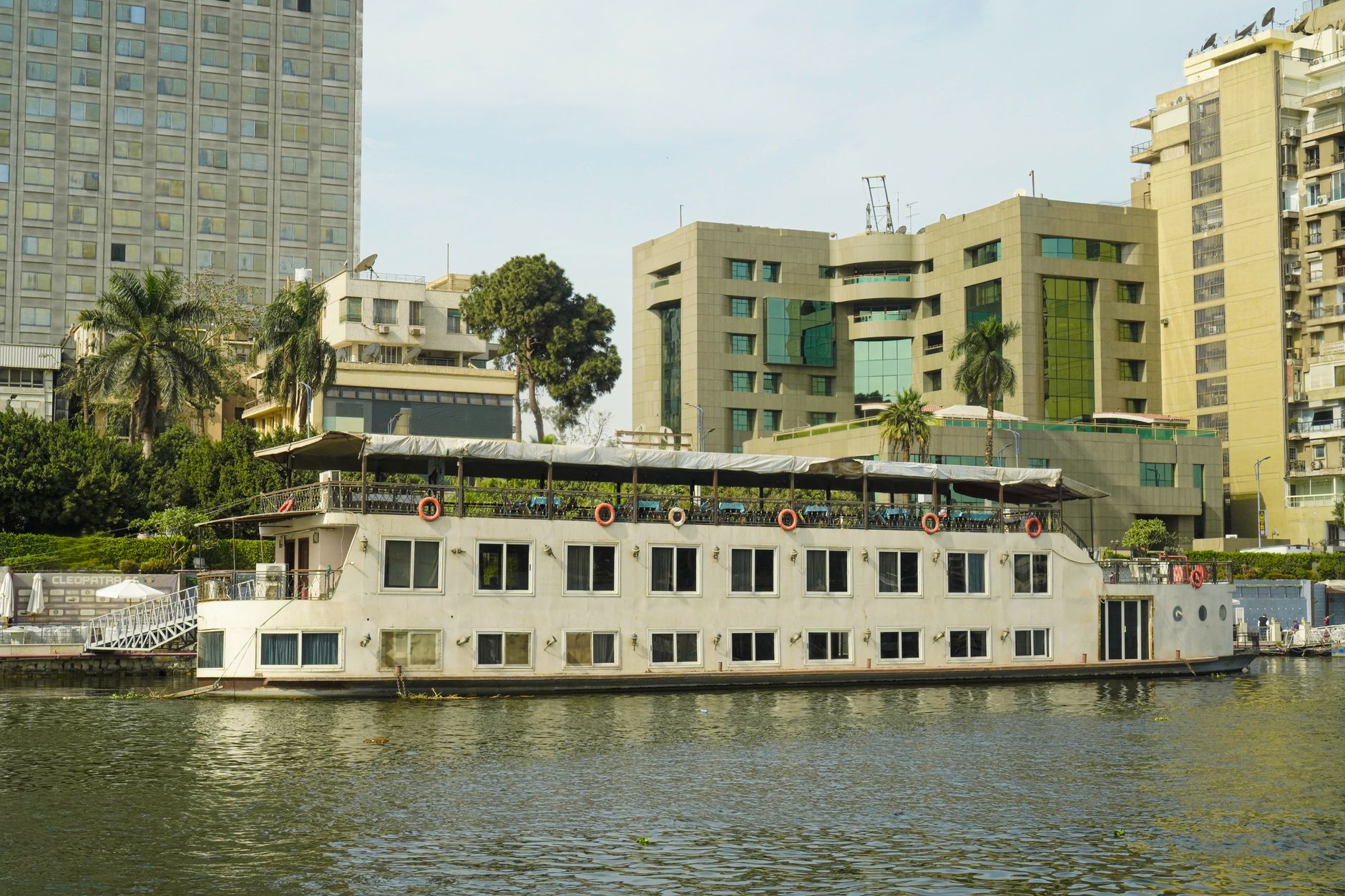
The two things people mean by “a Nile cruise”
Here is the distinction in plain terms. A Cairo evening cruise is a floating restaurant. It boards on the Corniche in Cairo or Giza, sails a slow loop of a few kilometres between the bridges, serves a buffet, puts on a belly dance and tanoura show, and returns you to the same dock. Nobody sleeps aboard. Nobody visits a temple. It is a night out, and a good one — our guide to what the evening on board is actually like covers the food, the show and the seating politics in detail, so I will not repeat it here.
A multi-day Nile cruise is a floating hotel. You board at Luxor or Aswan, sleep in a cabin for three, four or seven nights, and the boat moves you between Karnak, Edfu, Kom Ombo, Esna and Philae with a guide meeting you at each site. It is a full segment of an Egypt itinerary, not an evening.
The search engines make the confusion worse, because a cruise query typed from a Cairo hotel returns results for both. Some agencies will happily sell you a “Nile cruise package” that turns out to be a domestic flight to Luxor plus a boat — fine and normal, as long as you understood that when you paid.
| What you might mean | Where it departs | Typical 2026 price | Worth it? |
|---|---|---|---|
| Cairo dinner cruise with show | Corniche El Nil, Giza or Maadi | $25–55 (1,250–2,750 EGP) per person | Yes, once. Book mid-range, not cheapest. |
| Premium Cairo dinner cruise | Zamalek / Giza docks | $65–95 (3,250–4,750 EGP) per person | Only for an occasion — the extra buys service, not scenery |
| Felucca sail, one hour | Any Corniche dock | 400–600 EGP per boat, not per head | Best value on the river, full stop |
| 3–4 night Luxor–Aswan cruise | Luxor or Aswan, never Cairo | $440–1,000 per person, 5-star | Yes — the single best add-on to a Cairo trip |
| Dahabiya (small sailing boat, 6–12 cabins) | Esna or Aswan | $900–3,300 per person for 4–7 nights | Yes if the budget stretches; quieter, slower, better |
| Long Cairo–Aswan cruise, 12–15 nights | Cairo or Aswan, a handful of sailings a year | $3,000+ per person | Niche. Fixed dates, sells out, book a year out |
If you take nothing else from this page: you cannot casually board a multi-day cruise in Cairo next Tuesday. The long Cairo–Aswan sailings exist — Mövenpick’s Darakum has run them, with a handful of dates a year — but they are a fixed-calendar product, not something a concierge conjures up overnight.
Who actually runs Cairo’s evening boats
Most of the Nile cruise companies Cairo visitors encounter online are not the people who own the boat. The dinner-cruise fleet is far smaller than the number of company names online suggests. A few dozen vessels sail the central stretch; hundreds of “companies” resell seats on them. That resale layer is the key to not overpaying.
Broadly there are three tiers. At the top, hotel-affiliated boats: the Nile Maxim is moored at the Cairo Marriott in Zamalek and sold through Marriott’s own activities channel as well as third parties, so the service standards and the complaint route are a chain’s. Safest bookings, priciest.
Second, long-established independents. Nile Pharaohs runs Pharaonic-styled boats from the Giza Corniche with hotel pickup as standard. Nile Crystal traces to the Misr Travel lineage — the state travel company founded in 1934, and licence number 1 in the national register — and sails from the Maadi Corniche near Athar El Nabi. Andrea, Nile Naomi and Sequoia sit in the same bracket. Real businesses with real docks, and the backbone of the market.
Third, and largest by volume, the resellers: agencies that buy seats in blocks and sell them under their own branding on OTAs, on Facebook, and through the man in the hotel lobby. Many are perfectly legitimate. Some are one person with a WhatsApp number. The listing you are looking at on a booking site is very often a reseller, not the boat.
Separately, note the boats that never sail — Le Pacha 1901, a converted turn-of-the-century paddle steamer off Zamalek, and the nearby Blue Nile Boat are permanently moored restaurant complexes. They show up in cruise searches, but you will not move. If you want a table on the water rather than a lap of the river, book one of those; the same logic applies to the river-facing hotels along the Corniche, where the view comes free with the room.
What a fair 2026 price looks like
The pound is floating and volatile; through August 2026 it traded around 50 EGP to the dollar, moving between roughly 49.5 and 51.5 inside a single month. Figures here are given in both currencies so you can sanity-check them against the rate on the day, and it pays to understand how exchange and cash withdrawals work here before comparing quotes.
For a shared Cairo dinner cruise with buffet, show and hotel transfer, the honest 2026 bands are:
- Under $15 (750 EGP): exists on the OTAs, usually a large boat, thin buffet, group transfer that collects six hotels. Not a scam, just basic.
- $25–40 (1,250–2,000 EGP): the sweet spot. Decent boat, proper buffet, transfer included, soft drinks included.
- $45–60 (2,250–3,000 EGP): better boats, more space per guest, sometimes à la carte instead of buffet.
- $65–95 (3,250–4,750 EGP): premium and hotel-affiliated boats, live band, table service.
- $120+ per person for a shared seat: you are being marked up. Private charters are a different product and legitimately cost more.
Two adjustments. Alcohol is almost never included, even on premium boats; soft drinks usually are. And an “included” group transfer can add 45 minutes at each end — if you are in Zamalek and the boat is in Giza, an Uber or Careem straight to the dock often costs less than the supplement. Set the total against what the rest of your Cairo days will run to: one premium cruise equals about two days of everything else.
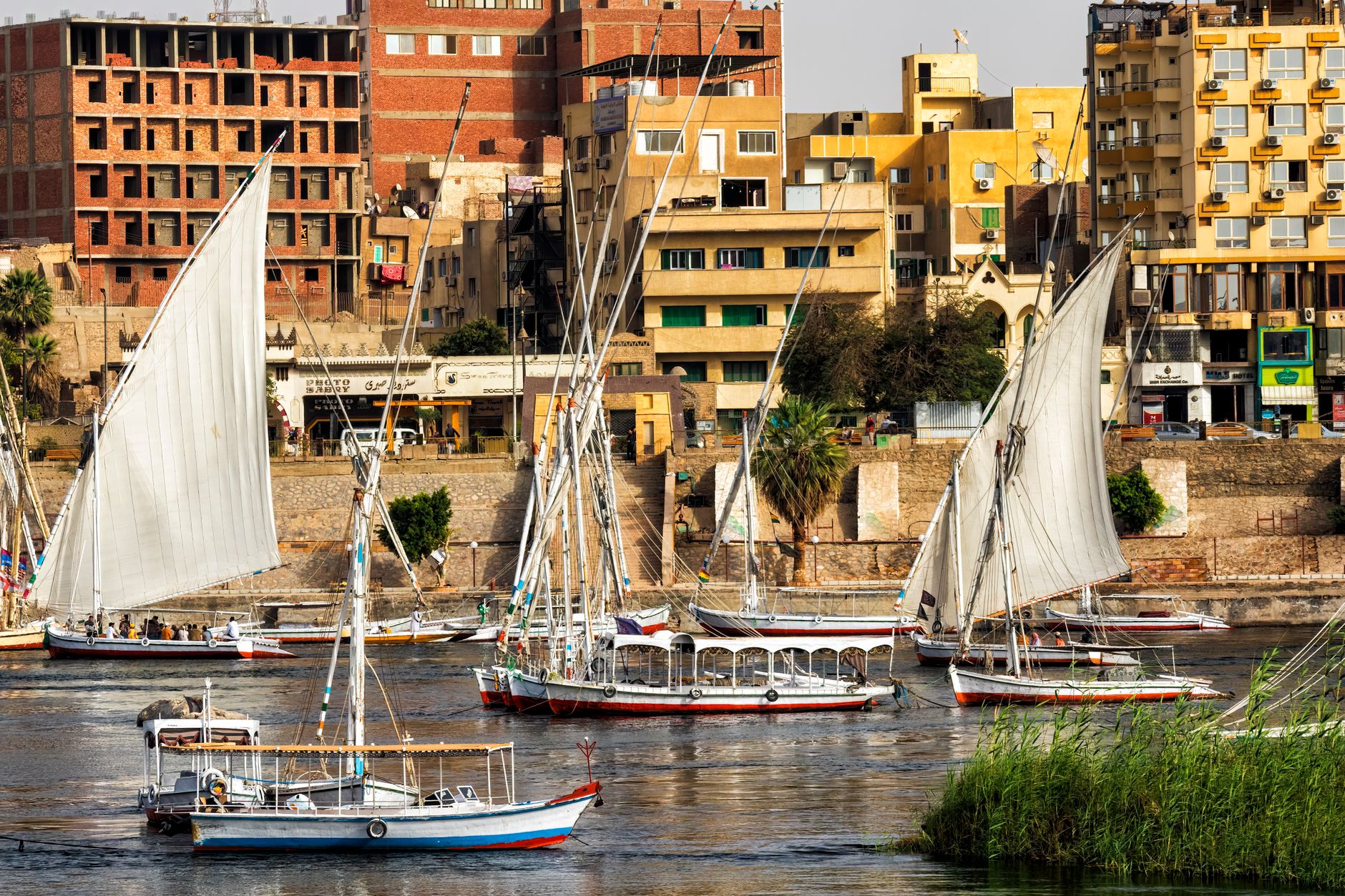
The multi-day southern cruise market, briefly
You are reading a Cairo page, so this is only what you need to route yourself onward. The southern fleet clusters into a few recognisable formats:
| Format | Nights | 2026 price per person | Suits |
|---|---|---|---|
| Aswan → Luxor, upstream-to-down | 3 | $350–600 budget, $600–900 5-star | Tight itineraries. Fewer sites, cheaper. |
| Luxor → Aswan | 4 | $440 budget, $500–800 deluxe, $900–1,600 peak 5-star | The default. Best sites-per-night ratio. |
| Round trip Luxor–Aswan–Luxor | 7 | $900–1,900 | Slow travellers, repeat visitors |
| Dahabiya sailing boat | 4–7 | $900–3,300 | Couples, small groups, anyone allergic to buffets |
| Suite-only luxury ships | 4–5 | $1,200–3,000 | Splurge trips |
Prices swing hard by season: a cabin at $650 in shoulder months lists at $900–1,600 from November to February. Almost every quoted rate includes cabin, three meals a day, a licensed Egyptologist guide, site transfers and temple entrance fees — check that last one, because their absence is how a suspiciously cheap quote gets cheap. Drinks, tips and the optional Abu Simbel excursion are extra.
The dahabiya solves the main complaint about the big boats. It carries 10 to 20 passengers in 6 to 12 cabins under sail, moors at villages and minor sites the big ships cannot reach, and feeds you properly rather than by chafing dish. Slower, dearer, and most people who have done both would not go back.
If four nights in the south is more than your trip can absorb, the compromise is a single long day among the Theban temples flown out and back from Cairo. It is exhausting and it works.
Booking channels compared
This is where the money is won or lost. The same seat on the same boat can vary threefold depending on who sells it, and the cheapest channel is not always the right one.
| Channel | Typical price vs. baseline | Cancellation flexibility | Risk if it goes wrong |
|---|---|---|---|
| Direct with the boat operator | Baseline; sometimes 20–30% under OTA rates | Varies wildly; often 48 hours, sometimes none | Moderate — recourse depends entirely on the company |
| OTA (Viator, GetYourGuide, Klook) | +10–30% | Standardised free cancellation up to 24 hours before | Low — the platform refunds and mediates |
| Hotel concierge | +30–60% (commission is built in) | Usually flexible, sometimes billed to the room | Very low — the hotel has to face you at breakfast |
| Cairo tour operator / DMC | Baseline to +20%, better on multi-day packages | Negotiated; expect a written policy | Low if ETAA-licensed, high if not |
| Street tout or lobby “agent” | Anything from a bargain to 4x | None | High — no paper trail, no refund |
My rule: for a $30 Cairo evening, book on an OTA and take the free 24-hour cancellation — the flexibility beats the $6 you would save going direct. For an $800 southern cruise, book with a licensed Egyptian operator or a reputable international agency, because you want a named human answerable when a boat is swapped or a guide fails to appear.
The concierge is not a rip-off exactly — the markup buys a fixer who will chase the driver when he fails to turn up. Just know you are paying for that, and that the instincts which serve you when negotiating a price in Khan el-Khalili apply politely here too.
How to check an operator is actually licensed
Egypt has a real, public, free register and almost no visitor uses it. Every legal travel company must be licensed by the Ministry of Tourism and Antiquities and registered with the Egyptian Travel Agents Association. The ETAA’s searchable Travel Agents Directory at etaa-egypt.org lists 2,231 member companies, filterable by city and district, each entry showing the licence number and company name with a detail page carrying contact and owner information.
What a licence number looks like: a plain sequential integer, not a long alphanumeric code. Misr Travel holds licence 1. Numbers in the low hundreds indicate a company registered decades ago; the register runs into five figures for newer entrants. If someone sends you a “licence” that looks like a bar code or a made-up string of letters, that is not what Egyptian licences look like.
The practical check takes three minutes:
| Check | How | Pass looks like | Fail looks like |
|---|---|---|---|
| ETAA registration | Search the directory by city and company name | Entry exists, name matches exactly | No entry; or a similar-but-different name |
| Licence number | Ask for it; compare to the register entry | Number and company name match | Refusal, delay, or a mismatched number |
| Physical address | Look it up on a map | A commercial address in Cairo, Giza or Luxor | A flat, a PO box, or no address at all |
| Payment destination | Check whose name is on the account | The company’s own registered name | An individual’s personal account |
| Written confirmation | Ask for a voucher naming the vessel | Boat name, date, time, dock, inclusions | “We will confirm the boat on the day” |
| Contactability | Call the landline on the register entry | Someone answers who knows your booking | WhatsApp only, number changes |
A caveat worth stating: individual dinner boats are often operated under a marine or restaurant licence rather than a travel-agency one, so the boat itself may not appear in the ETAA list even though the agency selling you the seat should. Check the seller, not just the vessel.
Reading reviews without being fooled
The numbers on review manipulation are public. Tripadvisor identified 2.7 million fake submissions in 2024 — around 8% of the 31.1 million posted that year, more than double the 2022 figure. Paid “review farms” pay as little as $10 a review. Egypt’s tour and cruise sector, with its dense reseller layer and low barriers to listing, attracts exactly this behaviour.
So read reviews forensically rather than by star average:
- Sort by lowest first. The one-star reviews tell you what actually goes wrong. If they all describe the same failure — a different boat, a surprise bar bill — believe them.
- Click the reviewer. An account with one review, posted the week the listing launched, is worth nothing. Real accounts have a scattered history across countries and categories.
- Watch the language. Repeated phrasing across supposedly different reviewers is the fingerprint of a single source or an AI tool.
- Check the photos. Guest photos of the actual buffet and the actual deck are hard to fake at scale. A listing with only glossy marketing images is a listing with no verified customers.
- Weight recent reviews heavily. Management changes and refits lapse; anything older than a year describes a different business.
The scams that actually happen on this river
These are documented patterns in the Egyptian cruise market, not accusations against any named company — but they are common enough that you should book defensively. Our page on the scams that circulate around Cairo’s tourist sites covers the land-based versions.
The vessel swap
You book a named boat with photographs. On the night you are walked to a different, older boat with the explanation that yours is “under maintenance” or “full”. The photos in the listing belonged to a boat the seller has no contract with. Defence: get the vessel name in writing on your voucher, and make the booking conditional on it.
The drinks that were “included”
The listing said drinks included; on board that means one soft drink, and the bill at the end says otherwise. There are documented cases of items being added to receipts after the customer signed. Defence: ask specifically what “included” covers before boarding, photograph the bill before you sign it, and keep your copy.
The phantom booking
Money is taken by a website or social media account impersonating a known cruise brand, and no reservation ever exists. Cruise companies have issued formal notices about unauthorised resellers copying their site design and offering deals below any real cost base. Defence: reach the operator through a phone number you found independently, not one supplied in the same message that took your money.
Commission pressure
Street touts near the Corniche docks and, occasionally, hotel staff on commission steer you to whoever pays them best, with urgency tactics — tonight only, last two seats. Defence: never buy on the street, and never buy in under a minute. There is a boat tomorrow.
The unhonoured voucher
A prepaid voucher from an intermediary is rejected at the dock because the intermediary never paid the boat. Defence: prefer channels that hold your money until after delivery, or pay a deposit only.
The “cruise from Cairo” package
Aimed at multi-day bookers: a package sold as a “Nile cruise from Cairo” turns out to hinge on a domestic flight nobody mentioned — or one that is not actually included. Defence: read the itinerary line by line and ask directly whether internal flights are booked and ticketed.
Deposits, payment and cancellation
For a Cairo evening cruise, no deposit should be required at all. Either pay in full on a platform with free cancellation up to 24 hours before, or pay on arrival. Anyone demanding a wire transfer for a $35 dinner is not running a normal business.
For a multi-day cruise, a deposit of around 25% at booking with the balance due on arrival is the industry norm. What matters is how you pay it. Credit card is strongest, because it carries chargeback rights. Bank transfer is acceptable if — and only if — the account is in the company’s registered name rather than an individual’s. Western Union and similar cash-transfer services give you no recourse whatsoever, however plausible the explanation. And never email card details as plain text; issuers have refused liability where the customer handled them carelessly.
On cancellation windows, a fair 2026 standard looks like this: full refund up to 24 hours before for a Cairo evening cruise; 30 days out for a full refund on a multi-day cruise, tapering to 50% at 14 days and nothing inside 7. Terms harsher than that are not necessarily fraud, but they should be priced in — and they are the reason to check that your travel insurance covers trip cancellation, because a non-refundable cruise deposit is exactly the sort of loss a policy exists to absorb.
Budget for tipping separately. Crew gratuities on a multi-day boat are a real line item, usually collected into a shared box at the end, and our breakdown of what baksheesh is actually owed sets out the expectations.
Questions to ask before you pay
Send these as one message. How a seller answers is more diagnostic than what they answer: a real operator replies in ten minutes with specifics, a chancer replies with reassurance.
- What is the name of the vessel, and will it be named on my voucher? No name, no booking.
- What is your ETAA licence number and registered company name? Then check it against the directory yourself.
- Exactly what is included — soft drinks, alcohol, taxes, service charge, transfer? Get the list in writing.
- Which dock, and what time does boarding open versus depart? Vague answers mean they do not control the product.
- Is the transfer private or shared, and how many hotels does it collect? This decides whether your evening is two hours or four.
- What is the written cancellation policy, in days and percentages? “We are flexible” is not a policy.
- Who is the account holder for the payment? A personal name ends the conversation.
- For multi-day: are internal flights or train tickets included and ticketed? And in whose name.
- For multi-day: is the guide a licensed Egyptologist, and are temple entrance fees covered? Both are standard inclusions; their absence explains a cheap quote.

What nobody tells you
The boat matters far less than the seat. Every Cairo cruise sails the same three kilometres of river past the same bridges. What differs between a $20 ticket and a $70 one is table spacing, buffet quality and whether the sound system is aimed at your ear. Ask about deck access and window seating before you pay for a brand.
The show is loud and it is not optional. If you want a romantic evening with conversation, a dinner cruise is the wrong purchase; a table at a Nile-view restaurant or a private felucca is the right one. Our list of quieter ways to spend an evening as a couple has better options for that specific brief.
Booking three days out beats booking three months out. Cairo evening cruises rarely sell out and last-minute platform rates often drop. The exceptions are Eid, Christmas–New Year and Valentine’s night, when they genuinely fill.
Cheap is not the same as bad. A $12 cruise on a big boat with a mediocre buffet still puts you on the Nile at night with the city lit up, which is the actual point. Avoid not the cheap end but the unverifiable end.
An hour at 400 EGP beats most of it. A sunset sail on one of the old lateen-rigged sailboats, negotiated at the dock, delivers more river than any buffet will, on the same water. Do that first, then decide whether you want the dinner version; the full range of ways to get out on the river ranks it all side by side.
The multi-day cruise is where your money should go. If you are choosing between three premium Cairo dinner cruises and one four-night Luxor–Aswan sailing, take the sailing. It is not close.
Frequently asked questions
Can I take a multi-day Nile cruise from Cairo?
Not on a normal schedule. Standard multi-day cruises run between Luxor and Aswan. Long Cairo–Aswan itineraries of 12 to 15 nights do exist on a handful of fixed dates each year on ships such as Mövenpick’s Darakum, but they are a specialist product that sells out well ahead. A package advertised as a cruise “from Cairo” almost always means a domestic flight plus a southern boat.
Which is the best Nile cruise company in Cairo?
There is no single answer, and any page that gives you one is guessing. For evening cruises, the hotel-affiliated boats and the long-established independents are the most consistent; for multi-day sailings, judge the specific vessel and its refit date rather than the brand, because fleets vary hugely inside one company. Verification separates a good booking from a bad one, not reputation.
How much should a Cairo dinner cruise cost in 2026?
Roughly $25–55 per person (1,250–2,750 EGP) for a good mid-range boat with buffet, show and transfer. Premium and hotel-affiliated boats run $65–95. Below $15 you get a basic experience rather than a scam. Above $120 for a shared seat, you are paying somebody’s commission.
Is it cheaper to book direct or through Viator or GetYourGuide?
Direct is usually 10–30% cheaper. The platforms buy standardised free cancellation up to 24 hours before, a refund mechanism and a complaints process. For a cheap evening booking the platform is worth its premium; for an expensive multi-day booking, a licensed operator with a written contract is better value.
How do I check an Egyptian tour company is legitimate?
Search the Egyptian Travel Agents Association directory at etaa-egypt.org, which lists licensed companies by city with their licence numbers. Confirm the licence number and company name match what the seller told you, verify the address is commercial, and make sure any payment goes to the company’s registered account. If the seller will not give you a licence number, walk.
What deposit is reasonable for a multi-day Nile cruise?
Around 25% at the time of booking is the industry norm, with the balance due before or on arrival. Pay it by credit card for chargeback protection. Bank transfer to the company’s registered account is acceptable. Cash-transfer services such as Western Union give you no recourse at all and are not appropriate for a deposit.
Are drinks included on Cairo dinner cruises?
Soft drinks usually are; alcohol almost never is, on any tier of boat. Ask exactly what “included” covers before you board, and check the bill line by line before signing — added-after-signature charges are a documented complaint in this market.
What do I do if I have been scammed?
Call the Ministry of Tourism and Antiquities complaints hotline on 19654, which runs 24 hours, or the tourist police on 126. If you paid by card, open a dispute with your issuer immediately and supply the written confirmation and correspondence — which is precisely why you should insist on written confirmation in the first place.
What I would actually book
With one evening in Cairo I would negotiate a felucca at the dock for 400 EGP and spend the difference on dinner ashore. With two evenings and an appetite for the show, I would book a mid-range dinner cruise on a platform with free cancellation, pay $30–40, and read the one-star reviews first. With four spare nights and $700, I would put all of it into a Luxor–Aswan sailing and treat the Cairo boats as what they are: a pleasant night out, not the main event. Whatever you pick, get the vessel name in writing and check the licence number — that is the whole trick. If the evening falls through, the city after dark has plenty else going on.
Choosing an operator is only half the decision — the other half is where the cruise sits in the trip. We set out the full ten-day shape, southbound from Luxor to Aswan with four days in Cairo before it, in our ten-day Egypt itinerary with a Nile cruise.