This article contains advertising. Our booking links are routed through a partner that adds commission tracking automatically, so if you book through one we earn a commission from the provider, at no extra cost to you. It never affects what we recommend. Affiliate disclosure
Short version: Cairo is hot, dry, and sunny almost all year, with a real winter from December to February and brutal heat from June to August. If you want to walk around the Pyramids without melting or freezing, aim for October through April. November and March are the sweet spots. The one wildcard is the khamsin, the spring dust wind, which I’ll get to.
I’ve been to Cairo in February, in May, and once — foolishly — in late July. The difference between those trips wasn’t the city. It was the weather, and how well I’d packed for it. This is a month-by-month breakdown of Cairo weather by month, with the real average highs and lows, what each month actually feels like on the ground, how busy it’ll be, and what to throw in your bag. For the bigger “when should I go” decision and the trade-offs around it, our best time to visit Cairo guide goes deeper on seasons and crowds. This page is the granular version: the calendar.
Cairo’s Climate in One Paragraph
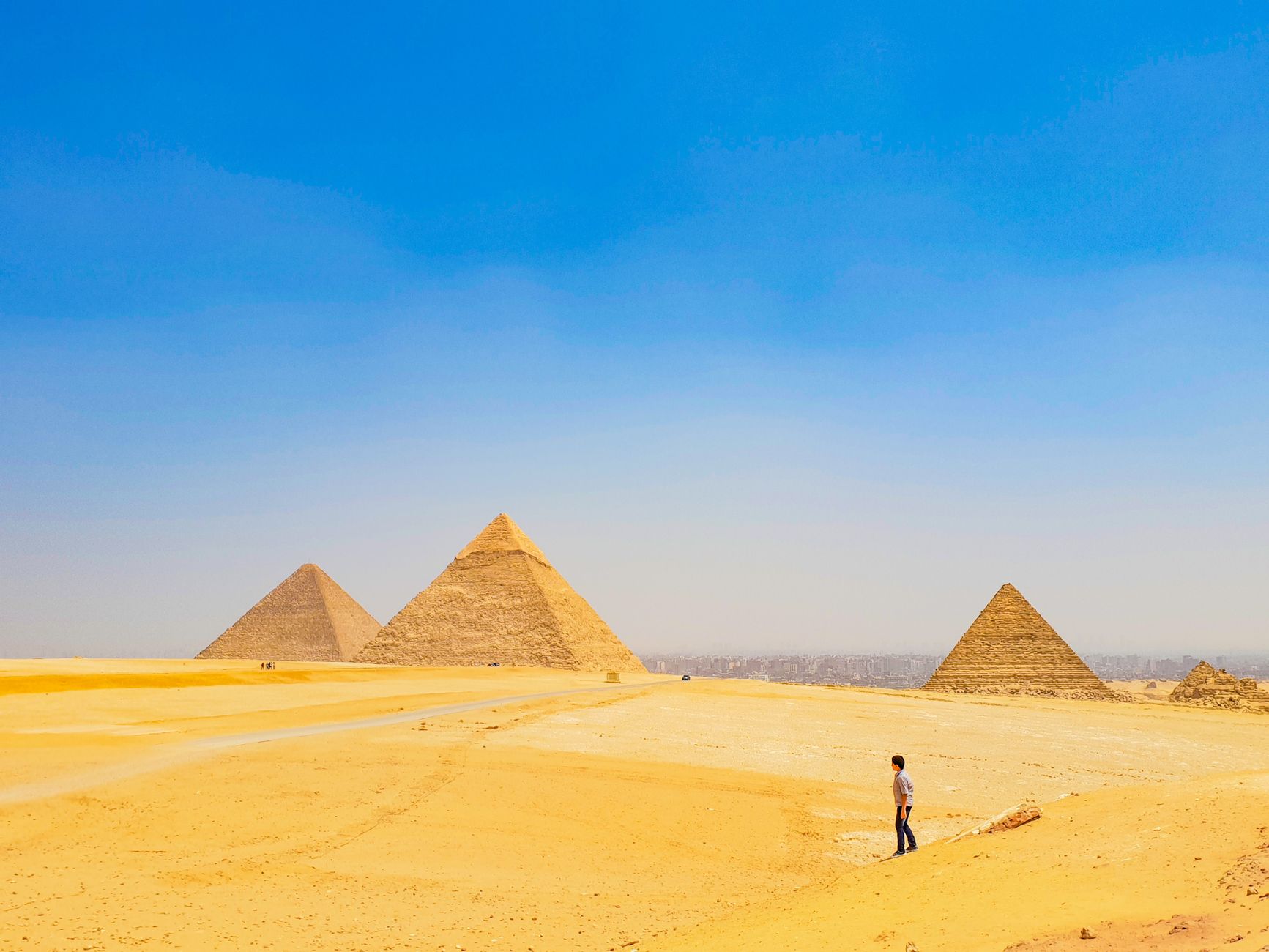
Cairo sits at 30 degrees north, right where the Nile fans out into the Delta, on the edge of the Sahara. The textbook label is hot desert climate. In plain terms: the sun shines roughly 3,500 hours a year, it almost never rains (about 25 mm, or one inch, for the entire year), and the heat is dry rather than sticky for most of the calendar. The big seasonal split is simple. Summer is long, dry, and punishingly hot. Winter is short, mild, and the only time you’ll reach for a jacket. There’s no monsoon, no rainy season worth planning around, and snow hasn’t fallen on the city since 2013.
A few anchor numbers worth keeping in your head: the annual average temperature is about 22°C / 72°F. July is the hottest month, averaging 36°C / 97°F by day. January is the coldest, dropping to an average low of 9°C / 48°F at night. December is technically the wettest month, and even then it’s only about 6 mm of rain. That’s the whole story — everything below is just filling in the months.
Cairo Weather, Month by Month
January — cold for Egypt, lovely for sightseeing
Avg high 19°C / 66°F · Avg low 9°C / 48°F · Rain 5 mm · 3 rain days · 7 sun hours/day
January is the coldest month, and the thing nobody warns you about is the indoors. Cairo buildings rarely have central heating, so a hotel room or apartment can feel genuinely chilly at night even when the daytime was pleasant. Outside, the days are crisp, clear, and great for walking — mid-60s Fahrenheit, the kind of weather where the Pyramids are a joy rather than an endurance test. Nights dip into the 40s, and a rare cold snap can push the low to around 4°C / 39°F. Pack a fleece and a light jacket and you’re fine.
February — winter without the bite
Avg high 21°C / 70°F · Avg low 10°C / 50°F · Rain 4 mm · 3 rain days · 8 sun hours/day
This is my quiet favourite. Afternoons are a touch warmer than January, the sky is reliably blue, and there are fewer people than over the December holidays. You still want a jacket once the sun drops. Right at the end of the month you might catch the very first khamsin event, but it’s uncommon this early. February gives you winter-quality weather with thinner crowds — hard to beat.
March — spring arrives, and so does the dust
Avg high 24°C / 75°F · Avg low 12°C / 54°F · Rain 4 mm · 2 rain days · 9 sun hours/day
Daytimes warm up noticeably in March. It’s the start of spring and, honestly, one of the best months to be here — except that late March is when khamsin risk begins. These are hot, dust-laden winds off the Sahara that can blow for one to three days at a stretch, shoving the temperature up and dropping visibility. Don’t let it scare you off; just build a flexible itinerary so you can swap an outdoor day for a museum day if one rolls in. Bring a scarf and sunglasses.
April — golden light, last of the khamsin
Avg high 28°C / 82°F · Avg low 14°C / 57°F · Rain 1 mm · 1 rain day · 10 sun hours/day
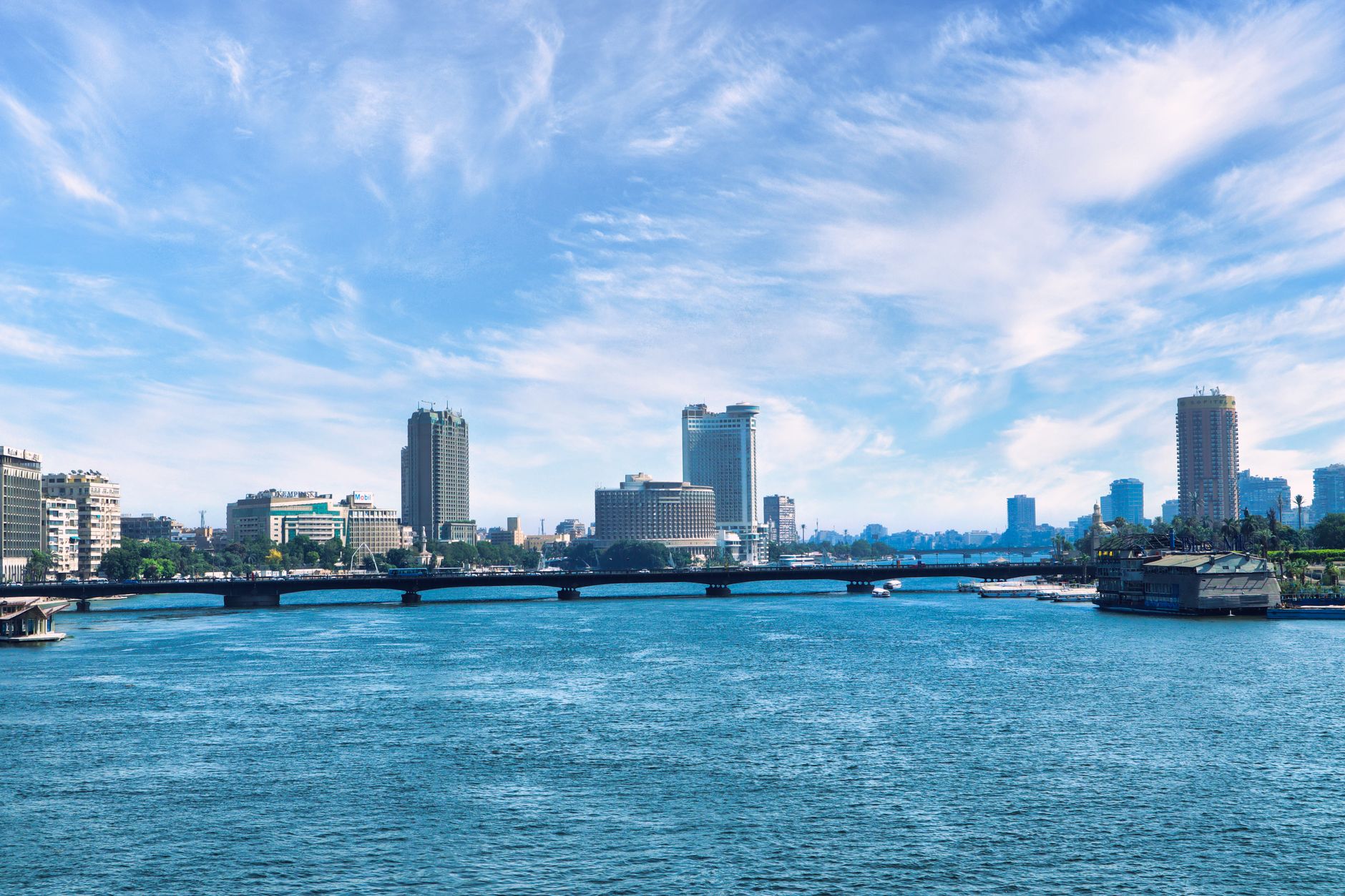
April is one of the most photogenic months in Cairo. Warm but not yet cruel, with that long golden afternoon light that makes the Nile look its best. Khamsin season is still in play through mid-May, so keep the scarf handy. Late April usually brings Sham el-Nessim, Egypt’s ancient spring festival, when locals pour into the parks and along the river for a day out. You’ll start the month in long sleeves and finish it reaching for sunscreen.
May — the heat starts to mean it
Avg high 33°C / 91°F · Avg low 18°C / 64°F · Rain 1 mm · 1 rain day · 11 sun hours/day
May is the turning point. Daytime regularly hits the low 90s Fahrenheit, though evenings stay comfortable. The last khamsin events usually clear out by mid-month. Crowds thin and hotel rates start to soften, which is the upside. The move is to front-load your day: be at the Pyramids by 8 AM, then retreat to something air-conditioned in the afternoon. Drink more water than you think you need.
June — full summer, locals heading north
Avg high 35°C / 96°F · Avg low 21°C / 70°F · Rain 0 mm · 0 rain days · 12 sun hours/day
Summer proper. Early mornings (before 10) and evenings (after 6) are still genuinely pleasant, but midday at any open-air site is rough. Rain is essentially off the table, and humidity ticks up a little thanks to the Nile. This is when Cairenes start fleeing to the North Coast for the season, so the city empties out somewhat and the hotel deals become real.
July — the hottest month, full stop
Avg high 36°C / 97°F · Avg low 23°C / 73°F · Rain 0 mm · 0 rain days · 12 sun hours/day
July is Cairo at its hottest. Daytime highs routinely push past 38°C / 100°F and, in a heat wave, can hit 43°C / 110°F. The desert sun is relentless, shade is scarce in open ruins, and an occasional dust haze hangs over the city. This is the month I got wrong, and I’ll be blunt: July is doable, but only with discipline. Sunrise sightseeing, midday indoors with air conditioning, exploring again in the evening. Carry two litres of water minimum, electrolytes, and a wide-brim hat. Tourist numbers drop, so at least the sites are quiet.
August — July’s twin, a little stickier
Avg high 36°C / 96°F · Avg low 23°C / 74°F · Rain 0 mm · 0 rain days · 12 sun hours/day
August matches July for heat with slightly warmer nights and a touch more humidity. The North Coast exodus continues, which means a quieter city but also some restaurants thinner on the ground and the odd shop shut for the holidays. It’s the cheapest month to visit, and the right call only if you genuinely don’t mind extreme heat in exchange for rock-bottom prices.
September — the heat finally eases
Avg high 33°C / 92°F · Avg low 21°C / 70°F · Rain 0 mm · 0 rain days · 11 sun hours/day
The autumn cool-down begins. Daytime slips back into the low 90s and evenings noticeably soften by mid-month. Crowds are still light but the experience improves fast as the worst of the heat lifts. September is underrated — manageable temperatures, prices that haven’t spiked yet, and quiet sights. A smart shoulder-season pick.
October — the autumn sweet spot returns
Avg high 30°C / 86°F · Avg low 18°C / 65°F · Rain 1 mm · 1 rain day · 10 sun hours/day
October is when comfortable Cairo comes back. Warm but not punishing days, evenings made for outdoor dining, and almost no rain risk. Tourist numbers climb steadily through the month. If it’s your first time and you want easy conditions without peak-season prices, October is one of the best windows on the calendar.
November — the best weather month, in my book
Avg high 25°C / 77°F · Avg low 14°C / 58°F · Rain 3 mm · 2 rain days · 9 sun hours/day
If you cornered me for a single recommendation, I’d say November. The heat has fully broken, khamsin season is long gone, the days are ideal for walking, and the evenings turn crisp. The skies are clear and the atmospheric haze is lower, which photographers love. Pack mostly summer clothes with one warm layer for after dark. Tourism builds through the month toward the December peak, so book ahead.
December — winter, holidays, and the crowds return
Avg high 21°C / 69°F · Avg low 11°C / 52°F · Rain 6 mm · 3 rain days · 7 sun hours/day
December brings proper winter conditions and the start of peak tourist season, especially around Christmas and New Year. Days are cool and sunny, evenings cooler still, and this is the wettest month of the year — which, in Cairo, still means barely any rain. Hotel rates climb. Pack layers: long trousers, a fleece, a light jacket. And remember the heating problem from January; those cool evenings are felt indoors too.
Temperature is only half the wardrobe question in Cairo, and the other half, coverage, does not relax in August. Our dress code rundown for Cairo explains what mosques actually enforce at the door, why men in shorts get turned away more often than women do, and how to stay covered without overheating.
The Quick-Reference Table
Here’s the whole year at a glance. Highs, lows, rainfall, sun hours, and humidity, month by month.
| Month | Avg High | Avg Low | Rain (mm) | Rain Days | Sun Hrs | Humidity |
|---|---|---|---|---|---|---|
| January | 19°C / 66°F | 9°C / 48°F | 5 | 3 | 7 | 57% |
| February | 21°C / 70°F | 10°C / 50°F | 4 | 3 | 8 | 52% |
| March | 24°C / 75°F | 12°C / 54°F | 4 | 2 | 9 | 47% |
| April | 28°C / 82°F | 14°C / 57°F | 1 | 1 | 10 | 40% |
| May | 33°C / 91°F | 18°C / 64°F | 1 | 1 | 11 | 36% |
| June | 35°C / 96°F | 21°C / 70°F | 0 | 0 | 12 | 40% |
| July | 36°C / 97°F | 23°C / 73°F | 0 | 0 | 12 | 47% |
| August | 36°C / 96°F | 23°C / 74°F | 0 | 0 | 12 | 52% |
| September | 33°C / 92°F | 21°C / 70°F | 0 | 0 | 11 | 54% |
| October | 30°C / 86°F | 18°C / 65°F | 1 | 1 | 10 | 54% |
| November | 25°C / 77°F | 14°C / 58°F | 3 | 2 | 9 | 56% |
| December | 21°C / 69°F | 11°C / 52°F | 6 | 3 | 7 | 59% |
The Khamsin: Cairo’s Spring Wind
If there’s one weather event worth understanding before a spring trip, it’s the khamsin. The name comes from the Arabic for “fifty,” loosely the span of days it can recur across the season. These are hot, dust-laden winds that blow up from the Sahara, mostly between mid-March and mid-May, and they’re Cairo’s most distinctive weather by a mile. A khamsin episode tends to last anywhere from a few hours to a few days, and when one arrives it can:
- Spike the daytime temperature by 10–20°F in a matter of hours
- Drop visibility to a few hundred metres in a wall of fine dust
- Coat the entire city — and you — in a gritty haze
- Trigger flight delays at Cairo International
- Aggravate asthma, allergies, and generally irritate eyes and skin
The good news is they’re forecast 24 to 48 hours out, so you get warning. If one’s coming, pack a scarf to cover your nose and mouth, sunglasses, and saline eye drops. Keep your hotel windows shut. If you have any respiratory sensitivity, an N95 mask is worth having. And this is exactly why I keep harping on flexible itineraries in spring: a khamsin day is a museum day, not a Pyramids day.
Other Weather Worth Knowing
Heat waves
In July and August, Cairo gets periodic heat waves where the temperature crosses 43°C / 110°F for several days running. This isn’t just uncomfortable, it’s a real health risk — heatstroke is a genuine danger for anyone sightseeing in open sun mid-afternoon. Treat it seriously: early start, midday indoors, full sun cover.
Flash flooding
Rare, but it happens. The handful of rainy days in December and January can occasionally dump a sudden downpour that swamps Cairo’s limited drainage. Streets in the older neighbourhoods flood ankle-deep, traffic locks up completely, and the smart move is simply to wait it out somewhere indoors.
Air quality
Cairo regularly ranks among the most polluted urban areas in the world, and air quality is worst in late autumn and winter — that’s when farmers burn rice straw in the Delta and weather inversions trap the smog over the city. If you have asthma or COPD, bring your inhaler and consider an N95 for long days outside. I check IQAir or AccuWeather for the daily PM2.5 reading.
Morning fog and UV
On winter mornings (December to February) you’ll sometimes get a low ground fog along the Nile that burns off by mid-morning — pretty, rarely a problem. The bigger thing to respect is the sun. Cairo’s UV index runs “very high” to “extreme” from April through October. Sunburn happens fast at the Pyramids, where there’s no shade. SPF 30 or higher, reapplied every 90 minutes, plus a hat and proper sunglasses.
Those 43°C stretches are a planning problem rather than a discomfort for anyone managing a chronic condition or moving slowly through a site, and our advice for travellers with access needs covers pacing, rest stops and which venues stay properly cool.
Heat exhaustion creeps up on people who feel fine right until they do not, especially on the plateau where there is no shade to retreat to. Our medical guide for Cairo visitors covers rehydration salts, the private hospitals used to foreign patients, and when a stomach bug needs more than rest.
What to Pack, by Season
You can sort the whole year into four packing modes. For the full season-by-season list, our pre-departure prep guide spells out every item; here’s the weather-driven shorthand:
- December–February (winter): Long trousers, layers, a fleece, a light jacket, a scarf, closed-toe walking shoes. Yes, you still need sunscreen.
- March–April (spring): Lightweight long trousers, long-sleeve tops, a scarf for dust protection, a light jacket for evenings. SPF 30+, sunglasses, hat.
- May–September (summer): Loose, breathable, light-coloured linen and cotton — long sleeves and trousers actually shield you from the sun better than shorts do. Wide-brim hat, SPF 50, electrolyte tablets, an insulated water bottle, and a thin scarf for aggressively air-conditioned interiors.
- October–November (autumn): A mix — short and long sleeves, a light layer for evenings, comfortable shoes, sunscreen.
Season sets the fabrics; Cairo sets everything else. Dust, uneven pavements and mosque dress codes shape the list as much as the thermometer does, and our full kit list for an Egypt trip goes item by item, down to the things people only regret having left at home.
Best and Worst Months at a Glance
To boil it all down:
- Best overall: November and March. Comfortable days, cool evenings, manageable crowds. November edges it for clear skies; March for slightly thinner numbers (with the khamsin caveat).
- Best value: September and early October. The heat has eased but prices haven’t fully jumped.
- Cheapest: July and August — if you can handle the heat, the deals are real.
- Most photogenic: April for golden light, November for crisp, haze-free skies.
- Hardest: July and August. Visit-able with discipline, but not the relaxing trip.
- The wildcard: the spring khamsin window, mid-March to mid-May. Plan around it rather than avoid the season entirely.
One broader note for 2026 and beyond: the heat is creeping. Cairo’s average temperatures have been edging up for decades, summers are running hotter, and the comfortable October-to-April window is slowly getting more concentrated. A cool-morning Pyramids visit that worked in May a decade ago now wants an earlier start. Nothing to panic about — just plan your outdoor hours a little tighter than the old guidebooks suggest.
Choosing the month is only half the job, because crowds on the Giza plateau follow a rhythm of their own rather than the thermometer. November and early March stack good weather against thin coach traffic, and timing a plateau visit hour by hour does the rest.
Cairo Weather FAQ
What’s the best month to visit Cairo for weather?
November, narrowly. The summer heat has broken, the khamsin is gone, the days are warm and the evenings crisp, and the skies are clear. March is a close second if you’re willing to risk a dust day or two.
What is the hottest month in Cairo?
July, averaging 36°C / 97°F by day, with heat-wave peaks reaching 43°C / 110°F. August runs neck and neck with slightly warmer nights.
Does it ever rain in Cairo?
Barely. The whole year brings about 25 mm — one inch — of rain, almost all of it in winter. December is the “wettest” month at around 6 mm. You can plan a trip without a single thought for rain gear.
What is the khamsin and when does it happen?
It’s a hot, dusty wind off the Sahara that hits Cairo periodically between mid-March and mid-May, lasting one to three days per event. It spikes temperatures, kills visibility, and coats the city in dust. Pack a scarf and saline drops, and keep your plans flexible in spring.
Is it cold in Cairo in winter?
Mild by most standards, but cooler than people expect, especially at night — January lows average 9°C / 48°F. The real issue is that buildings have little to no heating, so indoors can feel cold in the evenings. Bring a fleece and a jacket for December through February.
Can I visit the Pyramids in summer?
Yes, but go at sunrise. Midday in June through August is genuinely dangerous in open sun. Be there when the gates open, carry plenty of water and a hat, and save the afternoon for somewhere air-conditioned.
Plan the Rest of Your Trip
Weather is only one piece of the puzzle. Once you’ve picked your month, the rest of our full Cairo trip-planning guide covers the practical side of the trip. A few that pair naturally with this one:
- New to the city? Start with our first-time visitor tips and planning guide.
- Booking a base? See our full stay-planning guide for neighbourhoods and hotels.
- Getting around in the heat (or the dust)? Our Cairo transportation guide breaks down the metro, Uber, and taxis.
Read the calendar, pack for the conditions, and Cairo’s weather stops being a problem and starts being just another thing you’ve planned for.