This article contains advertising. Our booking links are routed through a partner that adds commission tracking automatically, so if you book through one we earn a commission from the provider, at no extra cost to you. It never affects what we recommend. Affiliate disclosure
No, Egypt doesn’t require travel insurance to let you in — there’s no policy check at passport control, and there wasn’t in 2026 either. But you still want it, and not for the reasons the brochures push. The real one is simple: Cairo hospitals expect foreign patients to pay before they treat you, and an air ambulance home can run six figures. A decent policy for a week or so costs about as much as one nice dinner on the Nile.
I’ve watched friends agonise over which credit card “already covers them” and then realise, on day three with a stomach bug, that it doesn’t. So this is the unglamorous version: what Cairo travel insurance actually needs to do, what it should roughly cost in 2026, the bits that trip people up, and how to claim without losing your mind. It’s advice, not a sales pitch — I’m not steering you toward any one brand. If you want the wider trip picture, our complete guide to visiting Cairo covers the rest.
One caveat up front: this is general information, not insurance advice. Read your own policy wording and ask the insurer about anything specific to you.
Do you actually need it for Cairo?
Legally, no. Egypt has never made travel insurance a condition of entry, and despite a couple of dodgy websites claiming otherwise for 2026, there’s no mandate — border officers won’t ask to see a policy. The US State Department, the UK Foreign Office and Egypt’s own tourism authority all recommend it, but recommend is the operative word.
Here’s why I’d still get it anyway, in plain terms:
- You pay first, get treated second. Even the good private hospitals in Cairo — Cleopatra in Heliopolis, As-Salam International in Maadi, Dar El Fouad out in 6th of October — want payment upfront or during treatment if you’re a foreigner. A walk-in ER visit might be $100–$300; a proper admission climbs into the thousands fast.
- Your home health plan almost certainly stops at the border. US Medicare and Medicaid, the NHS, Canadian provincial plans, Australian Medicare — none of them meaningfully cover you in Egypt. Most US employer plans only do emergencies, on reimbursement, with a deductible that hurts.
- Evacuation is the one that bankrupts people. An air ambulance back to North America or Europe runs from around $100,000 and can pass $200,000. Even an internal airlift — say Aswan up to Cairo — is roughly $15,000–$25,000. This is the gap that should make you uneasy about skipping coverage.
- Flights here get disrupted. A khamsin sandstorm rolls in, Cairo airport reshuffles, you miss a connection. A policy pays for the replacement hotel night and meals instead of you eating the cost.
- Theft and lost bags happen more than at home, and non-refundable bookings vanish if you, a family member, or your hotel has to cancel.
So: not required, genuinely worth it. The only travellers I’d say can reasonably gamble are young, healthy people on a short, cheap trip — and even then, the evacuation math gives me pause.
What Cairo travel insurance should actually cover
Most policies bundle a stack of benefits. Two of them matter far more than the rest for Egypt: emergency medical and medical evacuation. Everything else is nice to have; those two are the reason the policy exists. Here are the benefit limits I’d treat as a floor in 2026.
| Coverage | Minimum I’d accept | What I’d actually aim for |
|---|---|---|
| Emergency medical / hospital | $50,000 | $100,000+ |
| Medical evacuation / repatriation | $100,000 | $250,000+ |
| Trip cancellation | 100% of trip cost | 100% of trip cost |
| Trip interruption | 100% of trip cost | 150% of trip cost |
| Travel delay | $500 | $1,000+ |
| Baggage loss / delay | $1,000 | $2,000+ |
| 24/7 emergency assistance line | Non-negotiable | Non-negotiable |
That 24/7 line isn’t a throwaway. When something goes wrong at 2am in a city where you don’t speak the language, the people who tell you which hospital to go to and arrange the billing are worth more than any single number on the table.
The extras worth checking before you buy
This is where the fine print earns its keep:
- Adventure-activity cover. The big one for Cairo, and I’ll come back to it — plenty of basic plans quietly exclude camel rides, horseback riding, and diving.
- Pre-existing condition waiver. Usually only available if you buy within about 14–21 days of your first trip deposit. Miss that window and chronic conditions get excluded from medical claims.
- Cancel For Any Reason (CFAR). Adds maybe 40–50% to the premium and only refunds part of your trip cost, but for a once-in-a-lifetime, high-cost trip some people sleep better with it.
- Direct hospital billing. If the insurer can bill the Cairo hospital directly, you skip fronting the cash. Not every insurer offers this in Egypt — ask.
- Security / political evacuation. Covers getting you out in a civil-unrest scenario. More common on pricier plans.
Roughly what it costs in 2026
Price tracks four things: your age, the trip’s total cost, how long you’re going, and the benefit limits you pick. As a rule of thumb, comprehensive travel insurance lands around 4–8% of your total trip cost. For a typical week-long Cairo trip that’s somewhere in the $40–$150 per-traveller range. Age is the big lever — premiums jump after 60 and again after 70.
| Who’s travelling | Length | Trip cost | Rough insurance cost |
|---|---|---|---|
| 30-year-old solo | 7 days | $2,500 | $60–$110 |
| Couple in their 40s | 10 days | $5,000 | $140–$240 |
| Couple in their 50s (Cairo + Nile cruise) | 14 days | $8,000 | $300–$500 |
| Couple in their 60s | 14 days | $10,000 | $700–$1,200 |
| Family of four | 10 days | $10,000 | $280–$480 |
One quietly useful fact: the same coverage can vary 30–50% between insurers, so the price gap is mostly about shopping around, not about getting “more.” Comparison sites like Squaremouth or InsureMyTrip are aggregators — they let you filter by coverage and sort by price rather than locking you into one company. That’s where I’d start, not with whichever ad found you first.
On providers: there’s a long list of reputable names travellers to Egypt use — the adventure-focused ones tend to be friendlier to camel rides and diving, the heavyweight insurers tend to win on evacuation limits, and a couple of subscription-style options suit long-stay digital nomads in Maadi or Zamalek. I’m deliberately not crowning a winner. Get two or three quotes for your trip and compare the actual policy documents; the right pick depends on your age, your itinerary, and whether you’re adding a Red Sea or Luxor leg.
Premiums stay small relative to what they protect against, with a single-traveller week in Egypt quoted at around the price of a decent dinner in mid-2026. Our comparison of Egypt policy coverage tiers sets typical medical and evacuation limits against real air-ambulance figures.
The Cairo-specific things people miss
Camel and horse rides at the Pyramids
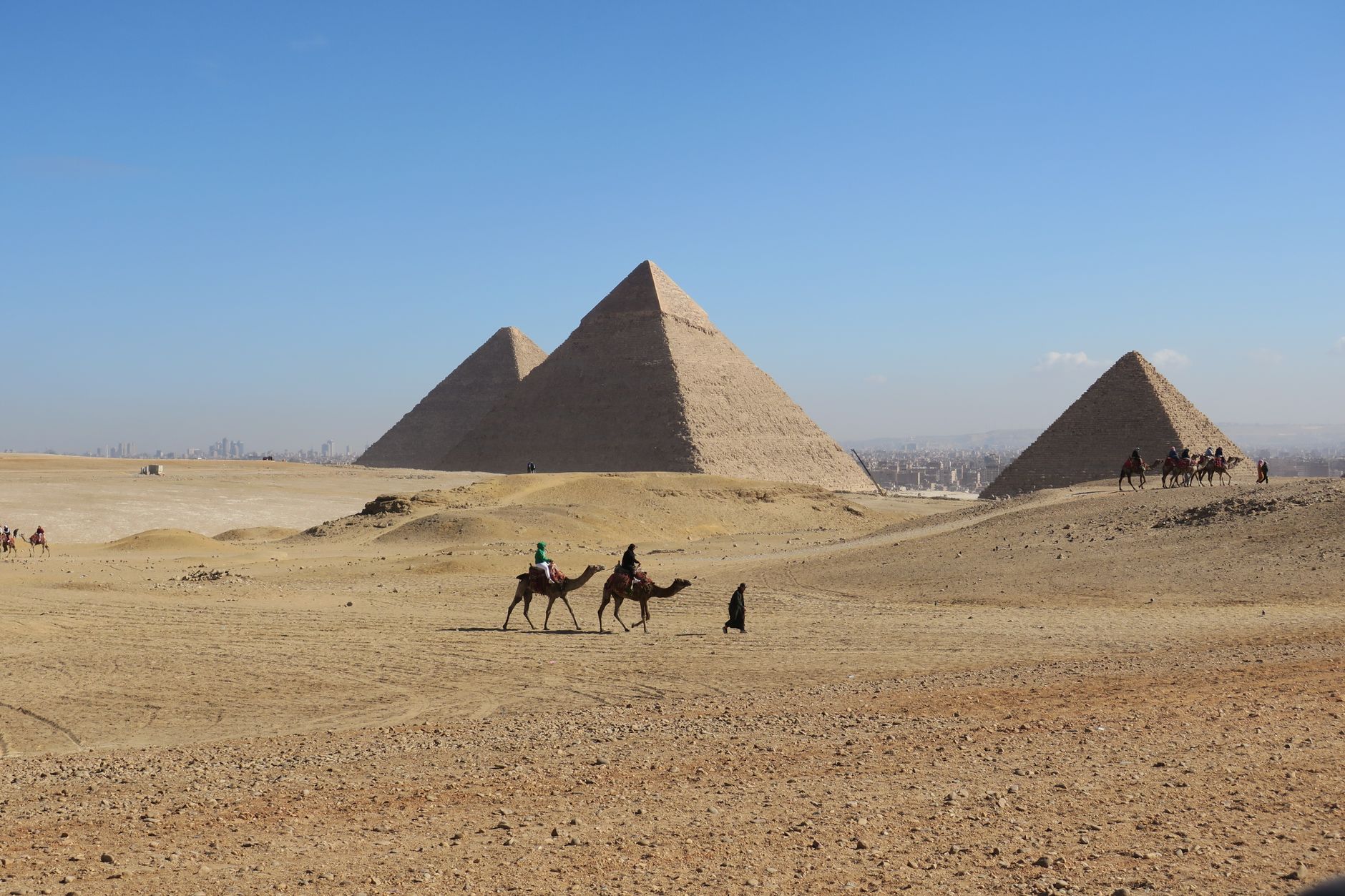
This is the single most common nasty surprise. A camel ride at Giza is, to an insurer, an “adventure activity,” and a chunk of basic plans exclude it. If you fall off and break a wrist — which happens — a plan that doesn’t cover the ride won’t cover the ER bill. Confirm in writing that camel and horse rides are included before you buy. Most adventure-tier plans cover them; don’t assume the cheapest one does. (And separately: agree the camel price with the handler before you get on, in writing if you can — that’s a different headache, but a real one.)
Add-ons beyond Cairo
If your trip stretches past the city, check these specifically:
- Hot-air ballooning over Luxor is excluded from a lot of basic plans. The adventure tiers tend to include it.
- Scuba diving on the Red Sea (Hurghada, Sharm) is usually fine to recreational Open Water depths on adventure tiers. Technical/deep diving rarely is.
- Felucca sails and Nile cruises count as ordinary tourism and are covered as standard — only flag it if your cruise bolts on something active like jet-skiing.
Travel-advisory status
Most policies stay valid as long as your government’s advisory for your destination sits at “exercise increased caution” (Level 2 in the US system) or lower. Cairo is at Level 2 in 2026, so you’re fine. North Sinai and the Western Desert are Level 4 “Do Not Travel” zones — no insurer will cover travel there, full stop. If you’re nervous about the broader picture, our current Cairo security guide goes deeper.
Pre-existing conditions and pregnancy
Cairo’s heat and the sheer amount of walking can stress a chronic condition, so if you have one, buy early enough to get the pre-existing waiver. Pregnancy complications are usually covered up to a set gestational age (often somewhere around 24–32 weeks) — read the wording if it applies to you.
Heat is the other Cairo-specific risk worth pricing in, because a July afternoon on the open plateau is a genuine heatstroke case waiting to happen, so check what the thermometer actually does each month before you decide how hard the itinerary can push.
Insurance decides who pays; it does not decide where you go. Working out in advance which private hospitals treat foreign patients quickly, and how to handle two days of stomach trouble without needing one at all, is what our healthcare notes for visitors is for.
What it usually won’t cover
Worth knowing before you assume you’re protected. The common exclusions across most policies:
- Pre-existing conditions, if you didn’t get the waiver
- Routine care — check-ups, dental cleanings, anything non-emergency
- Cosmetic procedures
- Anything that happens while you’re drunk or on drugs
- Self-inflicted injury
- Travel into Level 4 zones (North Sinai, the Western Desert)
- Items left unattended in public — set your bag down, walk off, and a theft claim likely dies
- Cash and travellers’ cheques
- Genuinely high-risk stuff: skydiving, BASE jumping, racing
- Drone use or photography in restricted areas
The “left unattended” one catches more travellers than you’d think. Insurers read it strictly — your phone on a café table while you go to the counter can count.
How to buy it without overthinking
- Add up your non-refundable bookings — flights, hotels, tours, any Nile cruise. That total is your “trip cost” for cancellation cover.
- Decide what you care about most. Maximum medical and evacuation? Cancellation flexibility? Adventure activities? That tells you which tier to look at.
- Compare quotes on an aggregator, filtering for at least $100k medical and $250k evacuation.
- Read the fine print on your top two or three — pre-existing handling, adventure inclusions, how claims get filed, whether direct billing exists in Cairo.
- Buy within 14–21 days of your first deposit if you want the pre-existing waiver.
- Save the policy and the 24/7 number three ways: in your phone, your email, and a printed copy in your bag. The day you need it is not the day you want to be hunting for a PDF.
It pairs naturally with the rest of your prep — slot the policy details into our Cairo travel checklist so it’s not the thing you forget at the airport.
If you actually have to claim
The order you do things in matters more than people realise. A few quick playbooks:
Medical emergency. If you’re conscious and able, call the insurer’s 24/7 line first — they’ll point you to a specific hospital and arrange direct billing where they can. Cairo’s go-to private hospitals are As-Salam International in Maadi, Cleopatra in Heliopolis, and Dar El Fouad in 6th of October. If you have to pay upfront, keep everything: receipts, the doctor’s notes, prescriptions, a treatment summary, ideally a written diagnosis in English. File within the window the insurer sets, usually 30–90 days.
Theft. Get a police report — the Tourist Police number is 180 — because the written report is what your insurer needs. No report, no payout.
Lost or delayed luggage. File a Property Irregularity Report (PIR) with the airline at the airport before you leave, keep receipts for the essentials you have to buy, and send both to the insurer.
Trip cancellation or interruption. Claw back whatever’s refundable through your booking platforms first, then claim the non-refundable remainder. If you’re cutting a trip short, call the insurer immediately — they handle the return flights and recoverable costs.
The thread running through all of these: documentation. Insurers pay claims that come with paper and stall on the ones that don’t. Getting around the city to a hospital or police station is easier than it looks once you’ve got a plan — our guide to getting around Cairo covers Uber, the metro and white taxis if you need to move in a hurry.
A couple of real-world scenarios
To make the numbers concrete:
- The stomach bug. You pick up a bad case of travellers’ diarrhoea and need IV fluids at a Cairo hospital. Bill: around $400. Covered in full under the medical benefit — $0 out of pocket if direct-billed, reimbursed if you paid.
- The camel fall. You come off a camel at Giza and break your wrist. ER, X-ray and a cast run roughly $1,200. Covered — if your policy includes camel rides. This is exactly why you confirm that one in writing.
- The big one. A 65-year-old has a cardiac event, gets stabilised in Cairo, then air-evacuated to a US hospital. Total: around $185,000. A $100k medical plus $250k evacuation policy pays it. Out of pocket: $0. That single scenario is the whole argument for buying coverage.
Frequently asked questions
Is travel insurance required to enter Egypt in 2026?
No. Egypt doesn’t require it for entry or for a tourist visa, and border officers won’t ask for proof. It’s strongly recommended by the State Department, the UK Foreign Office and Egypt’s tourism authority — but it isn’t mandatory. Ignore any site telling you it’s compulsory; that’s wrong.
How much should it cost?
Roughly 4–8% of your total trip cost. For a typical week in Cairo that’s about $40–$150 per traveller, depending mostly on your age and the limits you choose.
Won’t my US, UK, Canadian or Australian health plan cover me?
Almost certainly not. Medicare gives essentially nothing overseas; the NHS, Canadian provincial plans and Australian Medicare don’t meaningfully cover Egypt. Some Canadian provinces reimburse a small fixed amount, but you front the full bill first. Travel-specific medical cover is the practical fix.
Doesn’t my credit card already cover this?
Some premium cards include trip cancellation, baggage and limited medical — but most cap medical too low and skip serious evacuation entirely. Read the certificate of coverage. Treat card cover as a supplement, not a replacement for a real policy.
Can I buy it after I’ve already left home?
A few insurers let you, but the best coverage and the pre-existing waiver need you to buy before departure. Don’t leave it to the airport gate.
Are camel rides and the Nile cruise covered?
The Nile cruise, yes — that’s standard tourism. Camel rides depend on the plan: many basic policies exclude them, so confirm before you buy. Adventure tiers generally include them.
The short version
Travel insurance for Cairo is the purchase you don’t notice when the trip goes smoothly and the most important one you made when it doesn’t. Aim for $100,000+ medical, $250,000+ evacuation, full trip cancellation, and adventure cover that explicitly includes the camel ride at the Pyramids. Get two or three quotes for your specific trip, read the fine print on the best two, and lock it in within a couple of weeks of your first booking. Then forget about it and go enjoy the city — the planning side is all in our complete Cairo guide and the pre-trip checklist when you’re ready.