This article contains advertising. Our booking links are routed through a partner that adds commission tracking automatically, so if you book through one we earn a commission from the provider, at no extra cost to you. It never affects what we recommend. Affiliate disclosure
The person most likely to get turned away at a Cairo mosque door is not a woman with uncovered hair. It is a man in cargo shorts. Every major mosque in the city keeps a bin of loaner robes and a stack of scarves for women who arrive unprepared, and the attendants hand them out all day without a flicker of judgement. Nobody keeps trousers for men. Show up at the Citadel in knee-length shorts and you will either be draped in a hooded robe that makes you look like a minor character in a fantasy film, or you will stand outside taking photos of the door.
That inversion is a useful way into the whole question. Cairo does not have one dress code; it has about six, and they change by neighbourhood, by hour and by building. In a Zamalek café at 9pm you will see sleeveless tops, cropped trousers and hair down. Twenty minutes south in Sayeda Zeinab at the same hour you will see almost none of that. Neither place is the “real” Cairo. Both are, and dressing well here means reading which one you are standing in.
What follows is the reasoning rather than the inventory: why loose long layers beat shorts in 38°C heat, what the mosques actually enforce, what women who travel here report about clothing and harassment, and what to put on for a Nile dinner, a desert night and a business meeting. The item-by-item list of how many pairs of trousers to bring lives in our separate Cairo packing list. This one is about what to wear, and why.
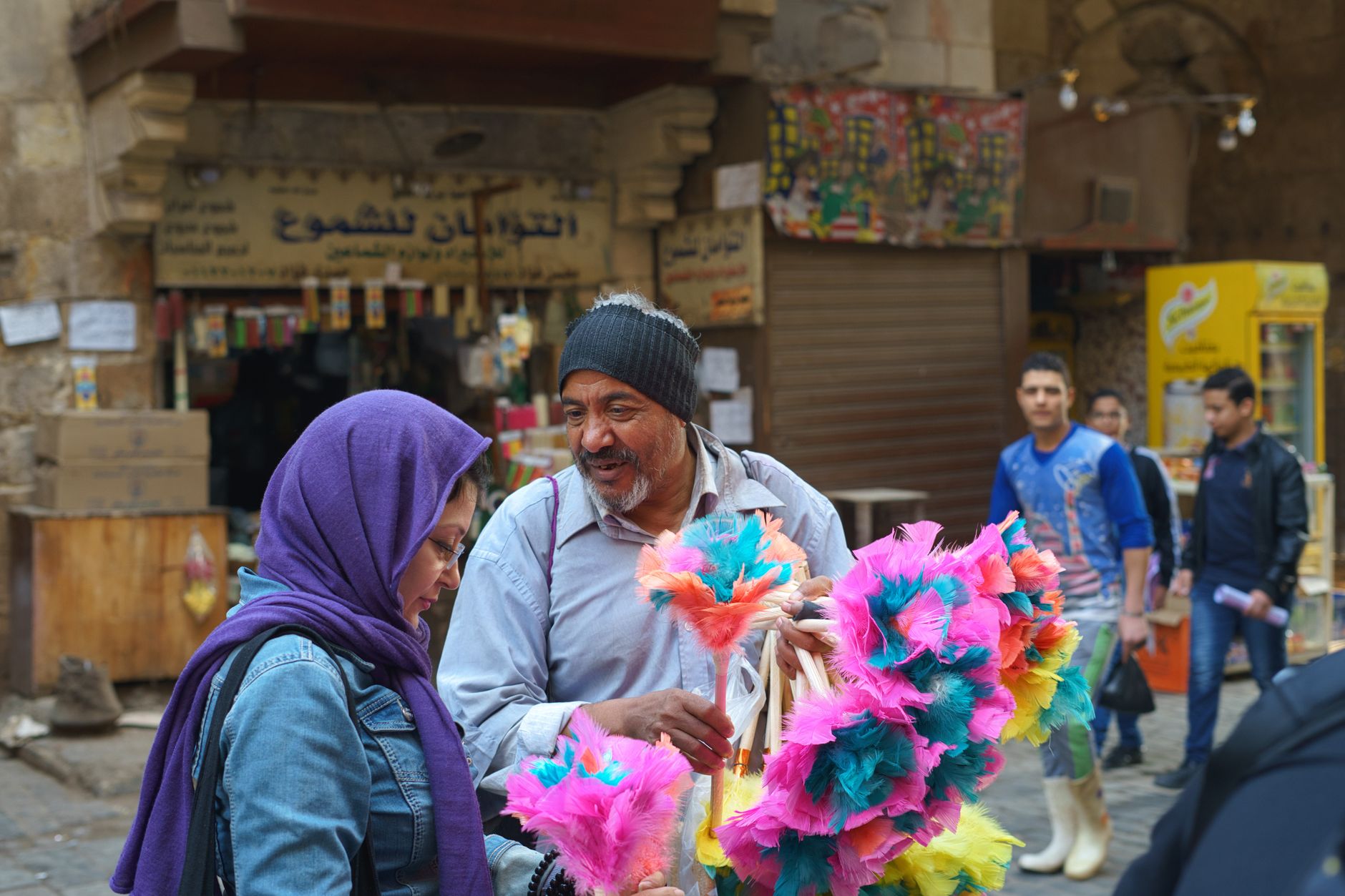
Quick verdict: what to wear where
The fastest way to use this guide is the table below. “Verdict” is my honest read on how much the choice actually matters, because some of these situations are genuinely strict and some are treated as strict by guidebooks and are not.
| Situation | Women | Men | Verdict |
|---|---|---|---|
| Working mosque (Al-Azhar, Ibn Tulun) | Hair covered, arms and ankles covered, loose fit, shoes off | Long trousers, sleeves, shoes off | Strictly enforced. No negotiation, but robes and scarves are lent free |
| Citadel / Mohamed Ali Mosque | Scarf for the prayer hall; shoulders and knees covered outside | Long trousers strongly preferred; robe issued if not | Enforced at the prayer-hall door only. The courtyard is relaxed |
| Coptic churches, Old Cairo | Shoulders and knees covered; hair uncovered is fine | Long trousers, sleeved shirt | Lightly enforced. Shoes stay on. Far less fuss than mosques |
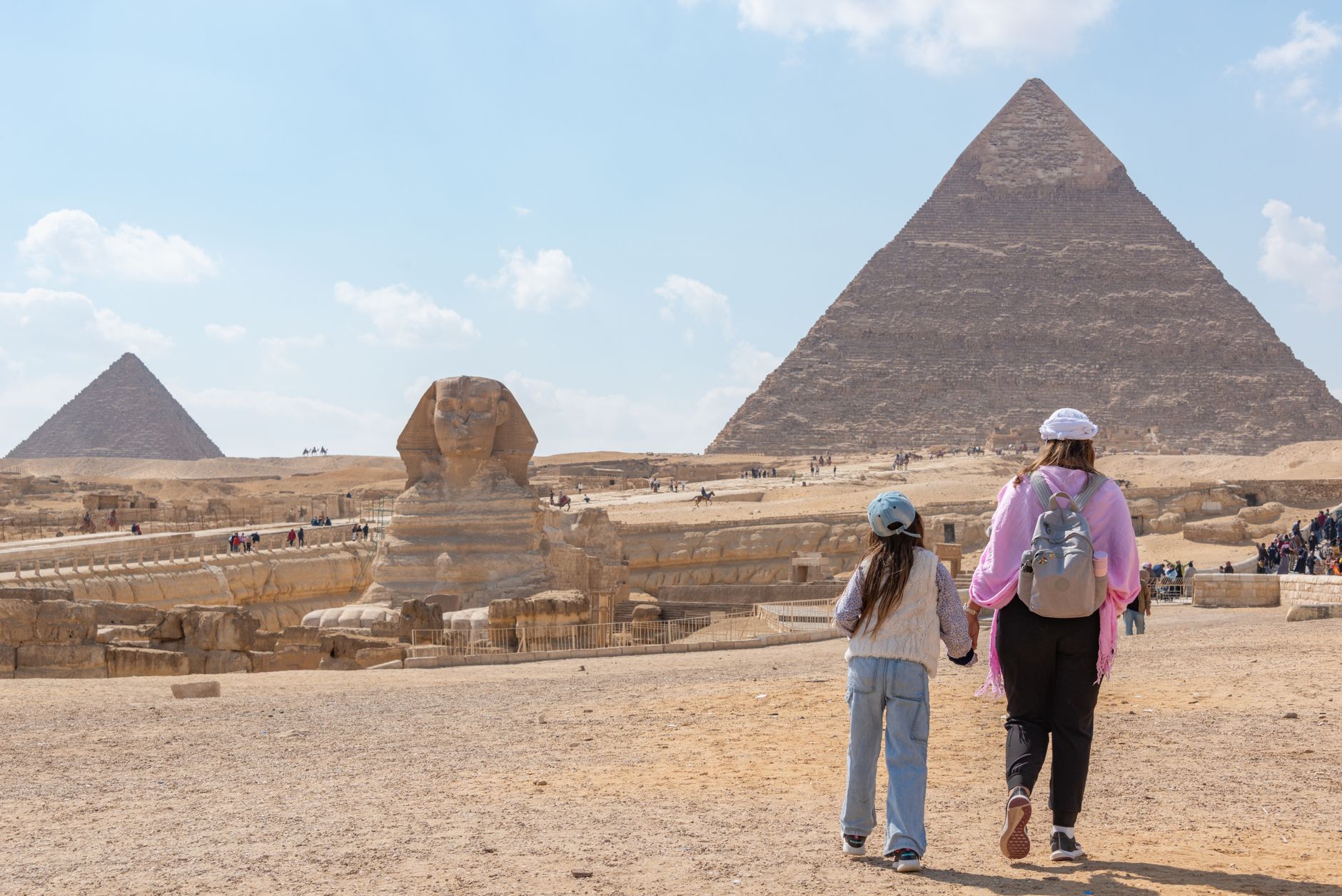
| Giza pyramids plateau | Loose long trousers, sleeved top, hat | Long lightweight trousers, T-shirt, hat | Nobody is checking. This is a sun-and-dust decision, not a modesty one |
| Khan el-Khalili and Islamic Cairo | Covered shoulders, knees and preferably calves | Trousers; shorts are legal but conspicuous | Matters for comfort. Dressing down here reduces friction noticeably |
| Zamalek, Maadi, New Cairo cafés | Anything you’d wear in Lisbon or Athens | Shorts and T-shirt genuinely fine | Doesn’t matter. Guidebooks get this badly wrong |
| Nile dinner cruise | Dress, skirt or smart trousers; wrap for the deck | Chinos and a collared shirt | Smart casual, not formal. A jacket is overkill |
| Hotel pool / Red Sea resort beach | Bikini fine; cover up to walk through the lobby | Swim shorts fine | Relaxed inside the fence, strict outside it |
| Public beach (Ain Sokhna town, Alexandria corniche) | Swim in leggings and a T-shirt, or don’t swim | Shorts fine, no speedos | Genuinely different rules. Locals swim clothed |
| Business meeting | Below-knee skirt or trousers, covered shoulders, closed shoes | Lightweight suit or shirt and trousers, jacket at least on arrival | More formal than you expect. Egypt over-dresses for work |
The rule that actually works: dress for the block, not for the country
Most articles on this subject flatten Cairo into a single conservative monolith and tell you to cover up everywhere. That advice is safe, easy to write, and wrong often enough to make your trip less comfortable than it needs to be. It also produces a specific failure mode: the traveller in a full linen shroud and a scarf, sweating through a Zamalek brunch, surrounded by Egyptian women in sundresses.
The workable rule is calibration. Cairo is roughly 22 million people across neighbourhoods with wildly different incomes, educations and religious registers, and clothing tracks all three. You are aiming to sit somewhere in the middle of whatever range you can see around you. If most women in view have their hair covered, you are in a conservative pocket and should have your shoulders and knees covered too. If half the café has their hair down and is wearing jeans, relax. That single habit — look around, then decide — outperforms any packing rule.
The second half of the rule is that men are not exempt. Foreign men routinely assume dress codes are a women’s problem and wander into Islamic Cairo in above-knee shorts, which local men there simply do not wear. It isn’t offensive; it’s conspicuous, in a place where you already stand out enough, and it is the easiest thing on this list to fix. The broader logic — why appearance carries so much social information here — sits inside our guide to Cairo’s cultural ground rules.
How Cairo actually dresses, neighbourhood by neighbourhood
Here is the part almost nobody writes down. Cairo’s dress spectrum is real, visible and fairly stable, and knowing it means you can pack one bag and adjust with a scarf rather than pack for the strictest possible scenario.
| Area | What local women mostly wear | What you can wear without a second glance |
|---|---|---|
| Zamalek, Garden City, Gezira | Mix of hijab and uncovered hair; jeans, dresses, tailored trousers, occasional sleeveless | Anything short of beachwear. Sleeveless tops are unremarkable in cafés and restaurants |
| Maadi (especially Degla) | Large expat and upper-middle-class Egyptian population; the most relaxed street dress in the city | Knee-length skirts, tank tops with wider straps, shorts on men |
| New Cairo, Sheikh Zayed, Fifth Settlement | Compound and mall culture; gym wear, athleisure, Western brands, plenty of uncovered hair | Whatever you’d wear to a mall in Dubai or Madrid |
| Downtown / Tahrir | Genuinely mixed — office workers, students, hijab and no hijab side by side | Trousers or midi skirt with a T-shirt. Shoulders covered is the comfortable default |
| Heliopolis, Nasr City | Middle-class, moderately conservative; hijab common, full coverage normal | Long trousers, sleeves to the elbow, nothing tight |
| Islamic Cairo, Khan el-Khalili, Al-Darb Al-Ahmar | Overwhelmingly hijab; abayas and long tunics common | Loose long trousers or maxi skirt, sleeves, scarf in your bag |
| Sayeda Zeinab, Imbaba, Bulaq | Working-class and conservative; hijab near-universal, niqab visible | Full cover: long sleeves, ankles covered, loose. You will still attract attention |
| North Coast (Sahel) in summer | Beach clubs at Sidi Abdel Rahman and Almaza Bay where Cairo’s wealthy wear less than they would in Zamalek | Swimwear and cover-ups; this is the least conservative place in Egypt |
The North Coast row surprises people most. Between June and September an entire slice of Cairo society decamps three hours north-west to beach clubs where the dress code is closer to Mykonos than to anything in the capital, then comes home and puts the long sleeves back on. Dress here is contextual rather than fixed, and Egyptians switch registers constantly. Once you notice that, the whole thing stops feeling like a rulebook and starts feeling like a language. If you are still choosing a base, the neighbourhood breakdown for visitors maps onto this same spectrum.
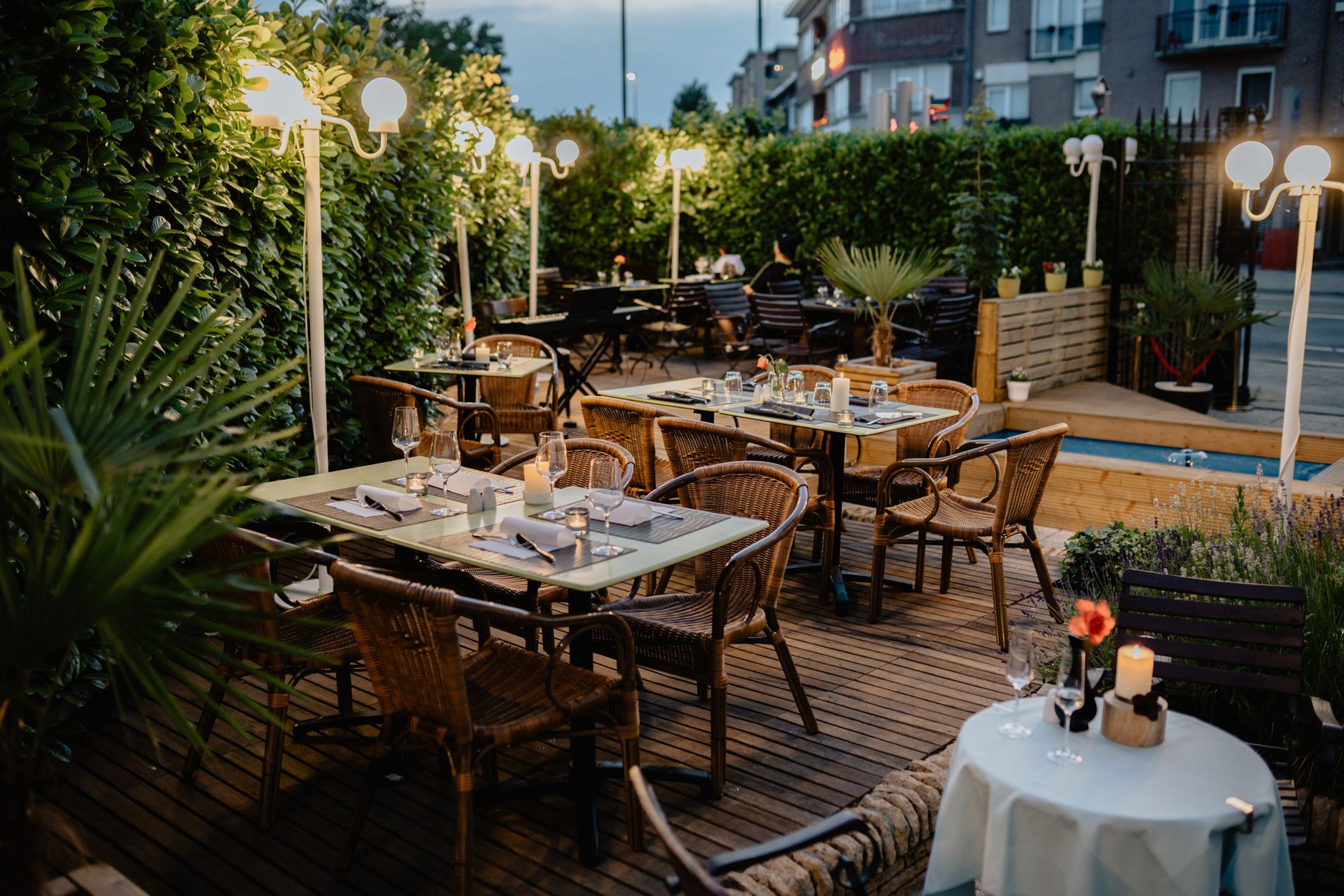
What mosques and churches actually enforce
Religious sites are where the code stops being a suggestion. But the enforcement is more specific — and more forgiving — than the internet implies.
Al-Azhar Mosque
A working mosque and a thousand-year-old university, not a museum, and treated accordingly. Women need hair, arms and legs covered; men need long trousers and sleeves. Shoes come off at the entrance and go into a rack or a plastic bag you carry, and 10–20 EGP is the expected tip if an attendant minds them. Cover-ups exist if you arrive short, though the system is less organised than at the Citadel. Timing matters more than clothing here — visits pause around the five daily prayers, and Friday midday is off-limits to non-worshippers, as our notes on visiting Al-Azhar as a non-Muslim explain.
Mohamed Ali (Alabaster) Mosque at the Citadel
The most tourist-managed mosque in Egypt and the easiest to get right. Entry is included in your Citadel ticket. The courtyard is casual; the prayer hall is not. At the door, attendants hand out headscarves to women who don’t have one and long hooded robes to anyone — man or woman — in shorts or a sleeveless top. These are free, though a small tip is normal and gracious. Shoes come off, and plastic slip-on shoe covers are usually available. Bring or wear socks: the floor is stone, it gets hot, and thousands of people walk it daily. The rest of the Citadel complex and its museums has no dress code at all beyond common sense.
Sultan Hassan and Al-Rifai
The Mamluk pair opposite the Citadel are ticketed monuments as well as mosques. Shoes off, and disposable shoe covers are handed out at Sultan Hassan — which is precisely why slip-ons beat lace-up boots on an Islamic Cairo day. Women should have a scarf ready; you will be asked. The interiors are cavernous and cool, which is a genuine relief in July.
Coptic churches in Old Cairo
Noticeably gentler. Shoes stay on. Shoulders and knees covered for everyone, and women do not need to cover their hair, though many Coptic women do during liturgy and a scarf is a courteous gesture if you arrive mid-service. The Hanging Church, Abu Serga and St George are all fine in trousers and a T-shirt with sleeves. The adjoining museum of Egypt’s Christian heritage is entirely secular in its expectations.
The climate is the real dress code
Here is the thing that reframes everything: in Cairo, the modest option and the comfortable option are usually the same option. Loose long cotton trousers are cooler in direct desert sun than shorts, because they keep the sun off your skin and hold a layer of moving air against it. Long sleeves at Giza will save you more discomfort than they cost. Egyptians have been dressing for this climate for five thousand years, and the galabeya is not a modesty garment that happens to be loose — it is a heat garment that happens to be modest.
| Season | Typical range | What to wear | The mistake people make |
|---|---|---|---|
| Winter (Dec–Feb) | 18–20°C days, 9–11°C nights | Long sleeves, light jumper, an actual jacket after dark | Assuming “Egypt” means warm. January evenings on a Nile deck are cold, and buildings have no heating |
| Spring (Mar–May) | 22–33°C, rising fast | Layers, plus sunglasses and a scarf you can pull over your face | Ignoring the khamsin — hot dust-laden winds from mid-March to mid-May that can lift temperatures 10–20°C in hours and turn the sky yellow |
| Summer (Jun–Aug) | 34–40°C daily highs, 47°C in heatwaves, 60% humidity in August | Loose light-coloured cotton and linen, full sleeves, wide-brim hat, nothing that clings | Wearing less. Skin exposed to Cairo sun at 2pm burns; skin under loose cotton doesn’t |
| Autumn (Sep–Nov) | 30°C in September easing to 22°C by November | Summer kit through September, then add a light layer for evenings | Packing only for heat and shivering through a November night at the pyramids sound-and-light show |
Those are averages, and Cairo overshoots them regularly — the Meteorological Authority has issued warnings for heatwaves peaking near 47°C, with a “feels like” figure well above the thermometer. Check the month-by-month temperature detail before you decide whether the jacket earns its space.
Fabric and colour, on the evidence
Cotton and linen, and almost nothing else. Synthetics that work fine in a European summer become unbearable at 38°C with 55% humidity — polyester holds sweat against you and starts to smell by lunchtime. Light colours are cooler in direct sun; mid-tones like khaki, stone, olive and dusty blue hide Cairo’s other constant, which is dust. Pure white looks wonderful for one hour at Giza and then looks like it has been down a mine.
Then there is laundry maths, which nobody mentions and everybody discovers. Hotel laundry in a mid-range Cairo property runs roughly 40–90 EGP per item, so a full change of clothes can cost 500–700 EGP (about $10–15) a day. Cotton dries in a couple of hours on a Cairo balcony in summer, so a sink wash genuinely works here. Plan on one outfit per day in July — you will sweat through it — and pack fabric you can rinse and hang.
Footwear: the decision you’ll regret most
If you get one thing right, make it this. Cairo’s pavements are an obstacle course: sudden 40cm drops, missing slabs, parked cars forcing you into traffic, hoardings that end footpaths without warning. Islamic Cairo adds centuries-old stone worn slick and uneven; Giza adds fine sand that gets into everything and limestone that is slippery with dew first thing. A day at the pyramids plus a wander around Khan el-Khalili easily totals 12,000 steps on surfaces that punish thin soles.
- Closed, cushioned, broken in. Trainers or light walking shoes with a real sole. New shoes plus Cairo heat equals blisters by day two.
- Slip-on beats lace-up on mosque days. You will take them off three or four times in an Islamic Cairo morning. Laces get old fast.
- Socks are not optional. You will be barefoot on mosque carpet and stone. Carry a clean spare pair.
- Sandals are for the hotel and the Red Sea. Open toes plus Cairo street grit plus a stubbed toe on broken kerbstone is a genuinely miserable combination.
- Skip heels entirely, including for dinner. Restaurant floors are fine; the fifteen metres of pavement between the taxi and the door are not.
If you plan to cover ground on foot rather than by Uber, the practical notes on walking in Cairo explain why pavement quality shapes your route as much as distance does. And for the plateau itself, our full Giza visitor guide covers just how much of the site is unshaded sand.
The core capsule: what actually earns its place
Rather than a count of items, here is what each piece is doing and why. Anything that doesn’t have a job stays home.
Women
| Piece | Why it earns its place | Where it fails |
|---|---|---|
| Loose wide-leg cotton or linen trousers | Mosque-legal, sun-proof, cooler than shorts, works everywhere in the city | Nowhere, honestly. This is the single best Cairo garment |
| Maxi or midi skirt | The coolest thing you can wear in August; reads as respectful anywhere | Windy days on the plateau and camel-riding |
| Two or three long-sleeved cotton shirts | Sun protection plus instant mosque compliance; roll the sleeves in Zamalek | Nothing — bring more of these than you think |
| One large lightweight scarf (pashmina-weight) | Head covering, shoulder cover, sun shield, dust filter in a khamsin, blanket on an over-air-conditioned bus | Never. Bring two |
| One dress you feel good in | Nile dinner, rooftop bar, a nice restaurant | Islamic Cairo, if it’s above the knee or sleeveless |
| Light cardigan or overshirt | Winter evenings, aggressive hotel air conditioning, quick modesty layer | July middays, when it’s dead weight |
Men
| Piece | Why it earns its place | Where it fails |
|---|---|---|
| Two pairs lightweight chinos or technical trousers | Universally acceptable, mosque-legal, dust-tolerant, works for dinner | Nothing. Jeans are the weaker choice — heavy, slow-drying, hot |
| Linen or cotton long-sleeved shirt | Genuinely cooler than a T-shirt in direct sun; instantly upgrades to smart casual | Nothing |
| Three or four cotton T-shirts | Daily base layer; you’ll change more often than you expect | Sleeveless versions, which read badly outside a pool |
| One pair of shorts | Hotel, pool, Red Sea day, Maadi and New Cairo | Mosques, Islamic Cairo, conservative districts, business anything |
| Collared shirt and a light jacket | Business meetings, fine dining, Nile cruise evenings | Daytime sightseeing, where it’s ballast |
| Wide-brim hat, not a cap | Caps leave your ears and neck exposed for six hours at Giza | Windy days without a chin cord |
One cheerful footnote: if you run short, replacing clothes here is easy and cheap. Cotton shirts and tunics run roughly 200–500 EGP in Khan el-Khalili and Downtown, and a well-made galabeya — which is a genuinely excellent hot-weather garment, not just a souvenir — sits around 400–900 EGP (roughly $8–19). Haggling applies, and the main souk guide explains how far below the opening price you should be aiming.
Harassment and dress: what women actually report
This deserves a straight answer rather than a hedge. Street harassment in Cairo is common. UN Women surveying has found that a large majority of Egyptian women report experiencing it, and Egyptian research consistently finds that the women who report harassment are disproportionately modestly dressed and veiled — because that is what most women in Egypt wear. Perpetrators, in study after study, make little distinction between covered and uncovered women.
So the honest framing is this: dressing conservatively is not body armour, and any guide that sells it as such is both wrong on the evidence and quietly blaming women for other people’s behaviour. Egyptian women in full hijab get harassed on the Cairo metro. That is not a wardrobe problem.
What travellers do report, consistently, is a difference in volume of attention rather than a difference in kind. Being visibly foreign is the primary signal; covered shoulders and long trousers reduce the number of comments and stares somewhat, particularly in conservative districts, without eliminating them. Most women who have travelled here at length describe modest dress as a comfort decision — fewer stares, a more relaxed day — rather than a safety measure. The things that actually change outcomes are structural: ride-hailing apps instead of street taxis after dark, the women-only metro carriages, walking with purpose, and being willing to be loudly rude to someone who deserves it. Our solo travel guide covers those tactics, and the wider etiquette article the social scripts that help.
One practical note that women who live in Cairo repeat often: a wedding ring, real or otherwise, shuts down a specific category of conversation faster than any amount of fabric.
Clothing is only one lever, and not the biggest one: time of day, neighbourhood and how you respond all matter more. A fuller treatment of what solo female visitors actually experience covers vendor pressure, taxi choices and how to end an unwanted conversation.
Swimwear: three completely different rulebooks
Egypt runs three parallel swimwear regimes and confusing them is the most common visitor error.
Hotel pools and private resort beaches. Bikinis and swim shorts are entirely normal at any four- or five-star property in Cairo, at Ain Sokhna resorts and across the Red Sea. Nobody blinks. The one rule is that swimwear stays at the pool: throw on a cover-up to cross the lobby or eat lunch. A day trip to Ain Sokhna is the easiest way to test this, and day-pass resorts there operate on full resort rules.
Public beaches. Completely different. On the Alexandria corniche or a public stretch at Ain Sokhna, Egyptian women swim fully clothed — leggings, a long T-shirt, sometimes a burkini — and a bikini would be a spectacle. If you want to swim on a public beach, swim in a rash vest and leggings. It is not a rule anyone will enforce, but it is the difference between a swim and an audience.
North Coast beach clubs. The exception that proves how contextual all this is. Private clubs along the Sahel operate to their own standards, much closer to a Mediterranean resort, and members dress accordingly. Access is generally through a hotel, a rental or an invitation.
Occasion by occasion
A good restaurant. Smart casual, which in Cairo means slightly smarter than you’d expect. Egyptians dress up to eat out. Men: chinos and a collared shirt, closed shoes. Women: a dress, a skirt or tailored trousers; shoulders can be bare in Zamalek and Garden City rooms. Some upper-end dining rooms ask men for long trousers, and a few hotel restaurants enforce it.
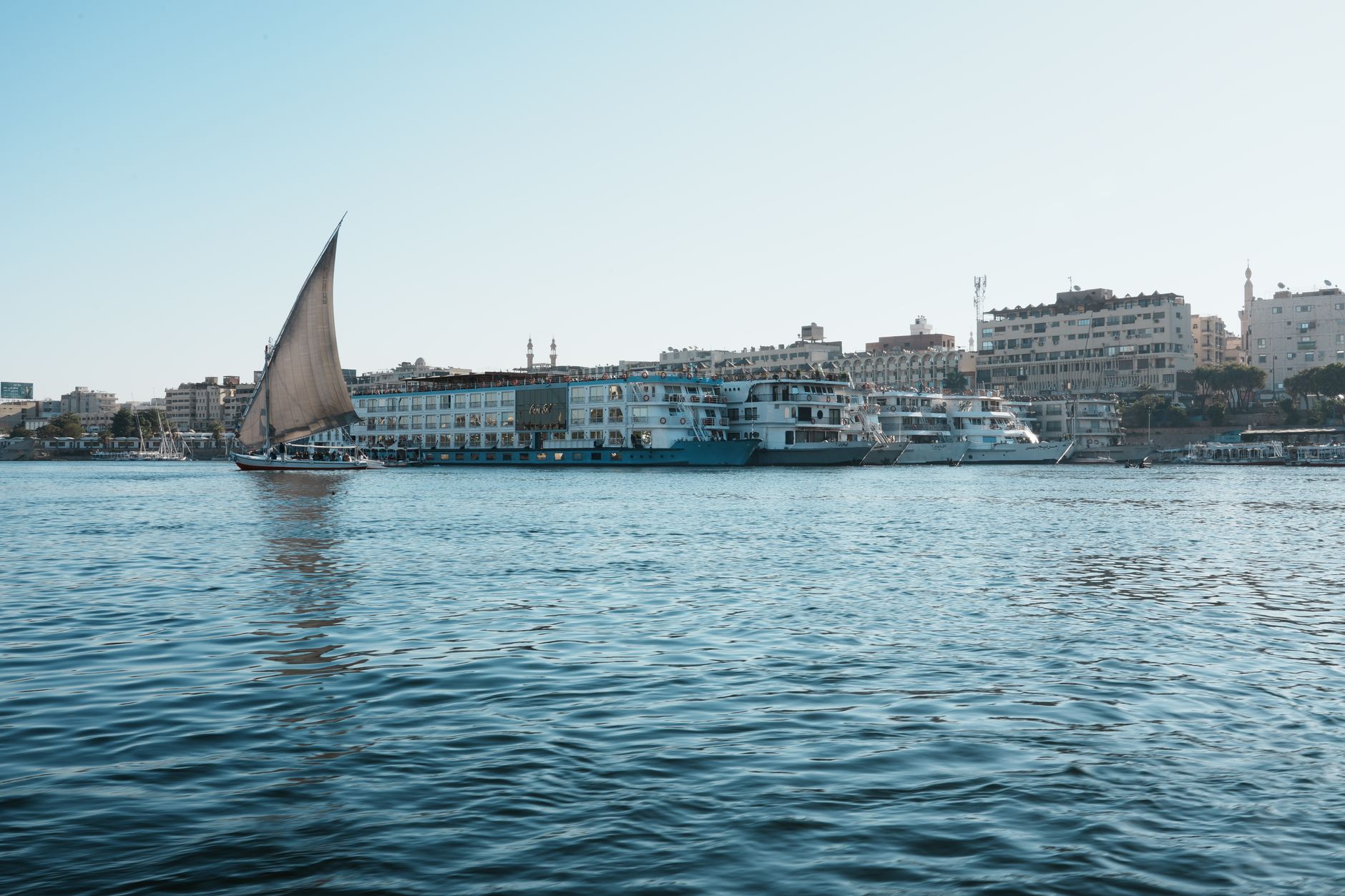
A Nile dinner cruise. Smart casual, plus a layer. The deck is 5–8°C cooler than the street once the boat moves, and from November to March it is genuinely cold on the water after dark. A wrap or light jacket you can leave on your chair is the whole trick.
A mosque morning in Islamic Cairo. The full kit: long trousers or skirt, sleeves, scarf in the bag, slip-on shoes, socks, small notes for shoe attendants. Dress for the strictest building on the itinerary and roll your sleeves up between stops.
A desert trip. Long sleeves and long trousers, non-negotiable — the sun is unfiltered and the sand gets everywhere. A scarf you can wrap around your face is essential rather than decorative. Nights in the Western Desert drop dramatically; on a White Desert overnight, winter temperatures can fall near freezing after a 25°C afternoon. Bring a fleece and warm socks even if it feels absurd packing them in Cairo.
A business meeting. More formal than most visitors expect. Men wear a lightweight suit in navy, charcoal or grey, or at minimum trousers and a long-sleeved shirt with a jacket for the first meeting. Women wear a below-knee skirt or trousers with covered shoulders and arms. Egyptian business culture reads dress as a signal of seriousness; under-dressing costs you more here than it would in London or New York.
Dressing during Ramadan
Ramadan ran from roughly 18 February to 19 March 2026 in Egypt, with Eid al-Fitr around 20–21 March; the 2027 dates will fall about eleven days earlier again, in early February. The clothing implications are simple but real.
Dial modesty up a notch across the whole city during the fasting month, including in areas that are usually relaxed. Zamalek and Maadi soften less than you’d think — the register of the whole city shifts. Cover shoulders and knees as a baseline, keep a scarf handy, and skip anything tight or attention-seeking during daylight hours. Nobody will confront you; the point is that people are fasting in 30°C heat and the social temperature is different.
After sunset it flips. Iftar and the hours afterwards are festive, restaurants are packed, and dress relaxes markedly, especially at hotel iftar buffets and in the tented Ramadan venues where people stay out until 2am. If you’re visiting during the month, the guide to eating in Cairo during Ramadan explains the rhythm of the day, which is what your wardrobe should follow.
What nobody tells you
- Air conditioning is the real reason to pack a layer. Cairo malls, museums, taxis and restaurants are refrigerated to about 20°C. You will go from 39°C to 20°C six times a day. The cardigan is not for the weather; it’s for the buildings.
- Dust ages clothes fast. Two days of Cairo and Giza leave a fine grey film on everything, especially white and black. Mid-tones and small prints hide it.
- Sunglasses matter more than sunscreen at Giza. The glare off pale limestone and sand is brutal and there is essentially no shade on the plateau. Cheap lenses with no UV filtering are worse than none.
- Buy the scarf in Cairo, not at home. Egyptian cotton scarves at Khan el-Khalili or a Downtown fabric shop cost 100–250 EGP, suit the climate better than anything in a Western travel shop, and double as a souvenir.
- Nobody expects you to look Egyptian. A foreign woman wearing hijab in ordinary public settings reads as slightly odd rather than respectful. Cover your hair in mosques; otherwise don’t.
- Your feet will swell. Heat plus 15,000 steps means shoes that fit at breakfast pinch by 4pm. Size up half a size or wear something adjustable.
- Guards at monuments do sometimes intervene. Visitors in very short shorts are occasionally asked to cover up before entering an interior space, even at non-religious sites. A scarf tied as a wrap solves it in ten seconds.
Frequently asked questions
Do women have to cover their hair in Cairo?
Only inside mosques. In ordinary public life — streets, cafés, museums, shops, the metro — foreign women are not expected to cover their hair anywhere in Cairo, and doing so routinely tends to confuse people rather than impress them. Carry a large scarf, use it at the mosque door, and put it back in your bag afterwards. Coptic churches don’t require it either.
Can men wear shorts in Cairo?
In Maadi, Zamalek, New Cairo, hotels, malls and at the pool, yes. At mosques, no — you’ll be issued a robe or turned away. In Islamic Cairo, Downtown and working-class districts they’re permitted but conspicuous, because adult Egyptian men there don’t wear them. Lightweight long trousers are cooler in direct sun anyway, which makes the choice easier than it sounds.
Is it too hot for long trousers in a Cairo summer?
Loose long trousers in cotton or linen are cooler than shorts in direct sun, because they block radiation while letting air circulate. The thing to avoid is tight or synthetic long trousers — skinny jeans in August are genuinely unpleasant. Wide-leg, light-coloured, natural fibre is the formula, and it’s what Egyptians have used for millennia.
What happens if I turn up at a mosque dressed wrong?
At the well-touristed mosques, very little. The Mohamed Ali Mosque at the Citadel lends free hooded robes and headscarves at the prayer-hall door; Al-Azhar and Sultan Hassan can usually cover you too. Shoe covers are handed out where shoes must come off. A 10–20 EGP tip to the attendant is customary. You just don’t get a choice about it.
Can I wear a bikini in Egypt?
At hotel pools and private resort beaches, absolutely — including in Cairo and across the Red Sea. On public beaches, Egyptian women swim clothed and a bikini would draw a crowd; leggings and a T-shirt or a rash vest is the practical answer. Always cover up to walk through a lobby, a restaurant or a resort town.
Are leggings acceptable in Cairo?
As a base layer under a tunic, dress or long top that covers the hips, yes, and plenty of Egyptian women dress exactly that way. Worn alone as trousers, they read as underwear in most of the city and will attract comment outside Maadi, New Cairo and gyms. Also worth knowing: they’re hot, and they don’t breathe.
What should I wear at the pyramids?
Loose long trousers, a long-sleeved light shirt or a T-shirt with sunscreen, a wide-brim hat, real sunglasses and broken-in closed shoes. There’s no dress code and no one is checking — this is entirely about sun, sand and three hours of unshaded walking. If you plan a camel or horse ride, trousers rather than a skirt, and shoes rather than sandals.
Do I need to dress differently during Ramadan?
Slightly. Cover shoulders and knees across the whole city during daylight hours, including in normally relaxed neighbourhoods, and keep things loose and unshowy. Evenings after iftar relax substantially. Ramadan fell in February and March in 2026 and moves roughly eleven days earlier each year.
Should I buy a galabeya to wear?
As a hot-weather garment, it’s excellent — loose, cotton, exactly what the climate demands, and around 400–900 EGP (roughly $8–19) in the souk. As street wear for a foreign visitor it can look like costume, which is why most travellers who buy one wear it at the hotel or back home. Nobody will object either way; it’s a taste question.
The short version
Pack loose cotton, long rather than short, in colours that hide dust, and one large scarf you keep in your bag at all times. Wear shoes you can slip off and walk 12,000 steps in. Then stop worrying and start looking around: match the register of whatever street you’re standing on, dial it up for mosques and Ramadan, and dial it down without guilt when you’re having dinner in Zamalek. Cairo is far more varied than its reputation, and the visitors who dress well here are the ones who noticed.