This article contains advertising. Our booking links are routed through a partner that adds commission tracking automatically, so if you book through one we earn a commission from the provider, at no extra cost to you. It never affects what we recommend. Affiliate disclosure
The first thing to understand is that there is no ticket window. You cannot arrive at the plaza, join a queue, hand over cash and walk in — that option was discontinued and the desks on site now exist to fix problems, not to sell entry. Grand Egyptian Museum tickets are sold online, for a specific date and a specific arrival window, and if you have not bought one before you set off you may not get in at all.
This page covers what each ticket tier actually costs, where the one legitimate booking site is and how to tell it from the dozens of resellers, what happens step by step when you book, what ID you need to claim a reduced rate, and what the museum’s position is on refunds and date changes. Prices were checked in September 2026 and the Egyptian pound has repriced sharply more than once in recent years, so read them as the right order of magnitude and confirm the figure at checkout.
What a ticket costs in 2026
| Ticket | Price | Who qualifies |
|---|---|---|
| Foreign adult | EGP 1,450–1,590 (~USD 30–33) | Anyone 26 and over without Egyptian or Arab nationality |
| Foreign student | ~EGP 730 (~USD 15) | Full-time students up to 25, with a valid international student card |
| Foreign child | ~EGP 730 (~USD 15) | Ages 6–12 |
| Under 6 | Free | Proof of age may be requested |
| Egyptian national | ~EGP 200 (~USD 4) | National ID required |
| Guided Tour Ticket | Admission plus a supplement | Sold as a separate ticket type on the official portal |
Prices checked September 2026. A single admission covers everything inside: the main galleries, the Tutankhamun galleries, the Grand Hall and Staircase, the Khufu boat building, the commercial area and the gardens. There is no premium tier for the golden mask and no separate charge for the boat, which is a genuine improvement on the old Tahrir arrangement where the mummy room was a paid extra on top of entry.
Two figures circulate for the adult rate because the price has moved and different sources caught it at different moments. Budget for the higher one and be pleased if it is the lower. For a family of four with two children over six, you are looking at roughly EGP 4,400 (~USD 92) before you have bought a coffee — which makes this one of the more expensive single admissions in Egypt, and worth planning around rather than absorbing casually.
Where to buy: one site, and it is not the one at the top of the results
The official portal is visit-gem.com, which redirects to tickets.gem.eg. That is the only place selling at face value. Everything else you find is a reseller, an aggregator, or in a handful of cases nothing at all.
This matters more here than at most attractions, because the domain landscape around the museum is genuinely hostile. Search for the museum by name and the first page will hand you a run of sites with names built from the words “grand”, “egyptian”, “museum”, “tickets” and “official” in various orders. Several of them use the word “official” in the page title. They are not.
How to tell a reseller from the real thing
- Check the domain, not the design. If the address bar does not say tickets.gem.eg or visit-gem.com, you are paying someone a margin.
- Count the tiers. The official site sells an Admission Ticket and a Guided Tour Ticket, plus optional add-ons at checkout. A page offering eight packages with names like “Skip-the-Line Premium Access” is a reseller.
- Watch for the countdown. Urgency timers, “only 3 tickets left at this price” and live-visitor counters are marketing devices. The museum does not use them.
- Price sanity check. If the adult total is well north of USD 40 before any tour is included, the difference is commission.
- Beware the bundled transfer. Many resellers wrap a car into the price at a rate several times what the same journey costs on a ride-hailing app.
To be fair to the legitimate resellers: some of them work perfectly well, and if you genuinely want a package with a guide and a car, buying one from an established operator is a reasonable thing to do. The problem is the ones that charge a premium for “priority entry” that does not exist, and the small number that take a payment and deliver a PDF the scanner rejects. If you have been burned by an Egyptian booking before, our guide to the scams that actually catch visitors in Cairo covers the wider pattern.
Booking, step by step
- Go to visit-gem.com. Type it rather than clicking a search result, which sidesteps the entire reseller problem in one move.
- Choose a date. Availability is shown per day. Remember that Wednesday and Saturday run late, and that Friday and Saturday are the Egyptian weekend and busiest with domestic visitors.
- Choose an entry window. Slots run through the day. The earliest is the quietest by a clear margin.
- Pick a ticket type and quantity. Admission or Guided Tour, then the number in each category. Select the reduced rates carefully — you will need to prove them.
- Review any add-ons. These appear at checkout and are optional. Nothing you need for a standard visit is hiding in here.
- Pay by card. International cards are accepted. See the note on card declines below.
- Save the confirmation. Download the PDF, screenshot the QR code, and email it to yourself. Do not rely on being able to open an email in the plaza.
How the timed slots actually work
The slot governs your arrival, not your departure. Once you are through the scanners nobody moves you on when the window closes, and you can stay until the galleries do. This is the single most misunderstood part of the system: people book an early slot and then rush, assuming they will be turned out at the end of it.
Turning up twenty minutes into your window is unremarkable. Turning up an hour late is a conversation with a supervisor, and on a busy weekend that conversation can go badly. Turning up an hour early does not help — you will be asked to wait, usually outside, in the sun.
How far ahead should you book? A few days is enough for most of the year. For late December and early January, when Cairo’s high season and the Christmas and New Year peak collide, book two weeks out and be glad you did. In the quietest stretch of summer you can often book the day before.
Reduced rates and the ID you need to claim them
The discounts are real and generous, and they are also checked. Egyptian sites are considerably stricter about this than most European museums, and the standard response to missing documentation is to sell you a full-price ticket on the spot.
Students
Roughly half price for full-time students up to 25. You need a valid international student card — the physical card, in date. A photograph of it on your phone has been refused, and a university enrolment letter is not a substitute. If you are a student and do not hold one, it is worth getting before you travel, because the same card unlocks reductions right across the country’s sites. Our rundown of student discounts and how far they stretch in Cairo goes through where else it pays off.
Children
Under 6 free, 6 to 12 at the reduced rate. Nobody is going to interrogate an obvious toddler, but if your child is around the six-year mark, carry a passport copy. The same applies at the twelve-year boundary, where a tall twelve-year-old occasionally attracts a question.
Egyptian and Arab nationals
A small fraction of the foreign rate, on production of a national ID. This is standard practice at Egyptian heritage sites and is not something visitors can or should try to work around. If you are travelling with an Egyptian partner, friend or family member, they buy their own ticket at their own rate — the discount attaches to the person, not the booking.
Residents and other categories
Foreign residents of Egypt holding a valid residence permit have historically been able to claim domestic or intermediate rates at Egyptian sites, but practice varies by site and by year. If that applies to you, ask before you buy rather than after, and expect to show the permit itself.
The Guided Tour Ticket, and whether to buy it
Alongside plain admission the portal sells a Guided Tour Ticket, which bundles entry with a museum-run guided route. It costs more than admission alone and it solves a real problem, so it deserves a straight assessment rather than a shrug.
The case for it is pacing. The museum is very large, the collection is very deep, and the most common way to have a mediocre visit is to walk into twelve chronological galleries with no plan and grind to a halt somewhere in the Middle Kingdom. A guide imposes a shape on the day, gets you to the Tutankhamun material while you are still fresh, and answers the questions the labels do not anticipate.
The case against it is that the labelling here is unusually good — bilingual, properly contextualised, and written for someone who does not already know the Eighteenth Dynasty from the Nineteenth. Plenty of visitors do not need a narrator. If you have read anything at all about ancient Egypt before travelling, you will follow the displays without help.
The rule of thumb we would offer: buy it if this is your first serious encounter with Egyptian antiquity, if you are visiting with older children who need someone other than a parent to hold their attention, or if you have only three hours and want them structured. Skip it if you prefer to linger unpredictably, which is the one thing a guided route cannot accommodate.
What we would avoid in every case is the guide who approaches you outside the complex. Quality varies enormously, the price is negotiated in the open with no recourse, and a weak guide will walk you briskly past the things you came to see in order to finish a script. Book the museum’s own, or arrange a named Egyptologist in advance through an operator with a reputation to protect.
Optional add-ons at checkout
The booking flow offers add-ons after you have chosen your tickets. Nothing in there is required for an ordinary visit, and you should read each one on its merits rather than clicking through. The useful test is whether the add-on gives you access to something, or merely gives you a service you could arrange more cheaply yourself — transport being the obvious example, since a ride-hailing app will beat a bundled car on price almost every time.
Booking for families, groups and tour parties
For a family or a small group, the mechanics are simple: one booking, multiple ticket types, one QR code or one per person depending on how the confirmation comes through. Check which you have received before you travel, because arriving as a party of six with a single code on one phone works only if that phone is present and charged.
Mixed-nationality parties need care. If some of you qualify for the Egyptian rate and others do not, buy the tickets in the right categories rather than buying a block at one price — the entitlement belongs to the individual and is checked against their identification at the gate.
Larger organised groups, school parties and tour operators are handled differently from individual bookings, and if you are arranging one it is worth contacting the museum rather than working through the public checkout. For everyone else, the standard flow handles a party of eight without difficulty.
Refunds, changes and no-shows
Here is where you should read carefully, because the picture is not as clean as anyone would like.
The museum’s own terms state that tickets are not refundable after purchase, through any sales channel, except in cases of force majeure as determined by the museum. A ticket is valid only for the date and time printed on it, and failing to use it does not entitle you to a refund or an exchange. That is the official position and it is the one to plan around.
Against that, a number of secondary sources report that online bookings can be rescheduled free of charge up to 24 hours before the visit, and refunded up to 48 hours before. These two statements do not sit comfortably together. The most likely explanation is that the online channel operates a more generous policy than the blanket clause implies, but we have not been able to verify the detail against the museum’s own published terms, which block automated access.
The practical advice that follows from that: read the cancellation terms displayed on the checkout page at the moment you pay, and screenshot them. Treat the ticket as non-refundable when you decide which date to book, and treat any flexibility you are offered as a bonus. Do not book a speculative date on the assumption you can move it.
The museum also reserves the right to cancel, postpone or reschedule tours and events at its discretion, and may offer a voucher for a future visit when it does. That is normal and rarely affects standard admission.
Payment, cards and currency
The portal takes international cards. Two things go wrong often enough to be worth pre-empting.
- Fraud blocks. An Egyptian merchant charging a few hundred dollars is exactly the profile that trips a card issuer’s automated hold, particularly if you are booking from home weeks ahead. Tell your bank you are travelling, or be ready to approve the transaction in your banking app.
- Currency conversion. You will usually be charged in Egyptian pounds. If your card offers to convert to your home currency at the point of sale, decline — the exchange rate on that conversion is invariably worse than your bank’s. Our guide to money and exchange in Cairo covers this in more depth, including why you should not arrive with a wallet of dollars expecting to pay in them.
Cash is not an alternative for entry, but bring some for the day anyway. The shop and restaurants take cards; small purchases, and anything involving a tip, are smoother in notes.
On the day
Allow more time between arriving at the complex and reaching a gallery than you expect. The plaza is large, security scanning is universal at Egyptian sites, and the walk from the entrance to the galleries is deliberately long and uphill.
- Have the QR code ready before you reach the scanner, at full screen brightness. Coverage in the plaza is fine; coverage deeper inside is patchy, and a ticket that lives in a cloud folder is a ticket you cannot open.
- Carry the ID that matches your ticket type. Student card, passport for a borderline child, national ID for a domestic rate.
- Expect a bag scan. Large bags go into the lockers near the entrance.
- Names. Bookings are generally checked against the QR rather than passport names, but a passport in your bag removes the entire category of problem.
If your phone is likely to be your only copy, an Egyptian data SIM is a cheap insurance policy for a whole trip’s worth of bookings — see our notes on getting online in Cairo.
What the ticket does not cover
The most common budgeting mistake: there is no combined museum-and-pyramids ticket. The Giza plateau is a separate site with a separate admission, separate inner-chamber supplements, and a separate queue, roughly two kilometres up the road. Numerous tour listings imply a single price covers both. None do. Our guide to what the Giza plateau charges sets out that second bill, including the extras for going inside the pyramids.
Also not included: transport in either direction, food and drink beyond what you buy on the day, and any guide other than the one attached to a Guided Tour Ticket. Getting there is its own small cost — budget EGP 250–400 (~USD 5–8) each way from downtown by ride-hail, as covered in our rundown of the run out to Giza.
What is not worth paying for
Skip-the-line access. There is no line to skip. Entry is capacity-controlled by timed slot, which is precisely the mechanism that prevents the queue a fast-track would bypass. Anyone charging a premium for it is selling you the standard ticket with a story attached.
Priority or “instant” confirmation. Official bookings confirm immediately. A reseller charging for faster confirmation is charging for their own processing delay.
A printed ticket delivery service. Occasionally offered, entirely unnecessary. The QR code on your phone is the ticket.
The seven-stop coach day. Packages promising the museum, the pyramids, the Sphinx, Saqqara, Memphis, a papyrus workshop and a perfume house cannot fit the itinerary into daylight. The two shops are commission stops. What gets compressed is the museum, and you will have paid for a ticket you spend an hour using.

A worked example: two adults and a ten-year-old
Useful as a sanity check when you are costing a Cairo day.
| Item | EGP | USD |
|---|---|---|
| Two adult admissions | 2,900–3,180 | ~60–66 |
| One child admission (6–12) | ~730 | ~15 |
| Ride-hail from downtown, return | 500–800 | ~10–17 |
| Lunch on site for three | 1,000–1,600 | ~21–33 |
| Museum day total | 5,130–6,310 | ~107–131 |
Add the Giza plateau on the same day and the total climbs again. Eating before you arrive removes the largest discretionary line on that table.
Frequently asked questions
Can I buy a ticket at the museum?
No. Walk-up sales were discontinued and entry requires a pre-booked timed slot bought online. Staff on site handle collection and problems rather than sales. On a very quiet weekday you may be able to book on your phone from the plaza if a slot is free, but that is luck, not a plan.
What is the official ticket website?
visit-gem.com, which redirects to tickets.gem.eg. Type the address rather than following a search result — the reseller sites dominating the results are often styled to look official.
Does one ticket cover the Tutankhamun galleries?
Yes. Admission is all-inclusive and covers the Tutankhamun galleries, the main galleries, the Grand Hall and Staircase, the Khufu boat building, the commercial area and the gardens. There is no supplement for the golden mask.
Can I change my date after booking?
The museum’s terms say tickets are non-refundable after purchase except in cases of force majeure, while some sources report free rescheduling up to 24 hours before and refunds up to 48 hours before. Read the terms shown at checkout, screenshot them, and plan as though the ticket were fixed.
Do I need to print anything?
No. The QR code on your phone is scanned at the entrance. Take a screenshot as a backup — coverage inside the complex is inconsistent.
What ID do I need for a student ticket?
A valid, in-date international student card. Bring the physical card; photographs of it and university letters have been refused, and the fallback is buying an adult ticket at the gate.
Is there a combined ticket with the pyramids?
No, despite what plenty of tour pages imply. The plateau is a separate site with its own admission, roughly two kilometres away, and it has its own supplements for entering the pyramids themselves.
How far ahead should I book?
A few days for most of the year. Two weeks for late December and early January. Same-week booking is usually fine in the summer, when Cairo’s heat thins the crowds considerably.
What happens if I miss my slot?
Officially, a ticket is valid only for the date and time on it and a no-show earns no refund. In practice, arriving somewhat late on a quiet day is often accommodated. Do not rely on it during high season.
Are the tickets cheaper for Egyptians?
Substantially — around EGP 200 against EGP 1,450 or more, on production of a national ID. This two-tier structure is standard at Egyptian heritage sites.
Before you choose a date and a window, it helps to know which of them are worth having. Sunday to Tuesday are the quietest days, the 10:30 to 12:30 stretch is when tour groups and cruise coaches overlap, and the Wednesday and Saturday evening openings run to 21:00 with barely anyone in the building. Our guide to Grand Egyptian Museum opening hours and the best times to go sets all of that out before you commit to a slot.
Related Cairo Guides
- Grand Egyptian Museum: the complete visitor guide
- Giza pyramids: tickets and entry fees
- The Egyptian Museum at Tahrir Square
- Money, cards and exchange in Cairo
- Student discounts and budget travel
- Cairo safety and scam awareness
- SIM cards and staying connected
Photo Credits
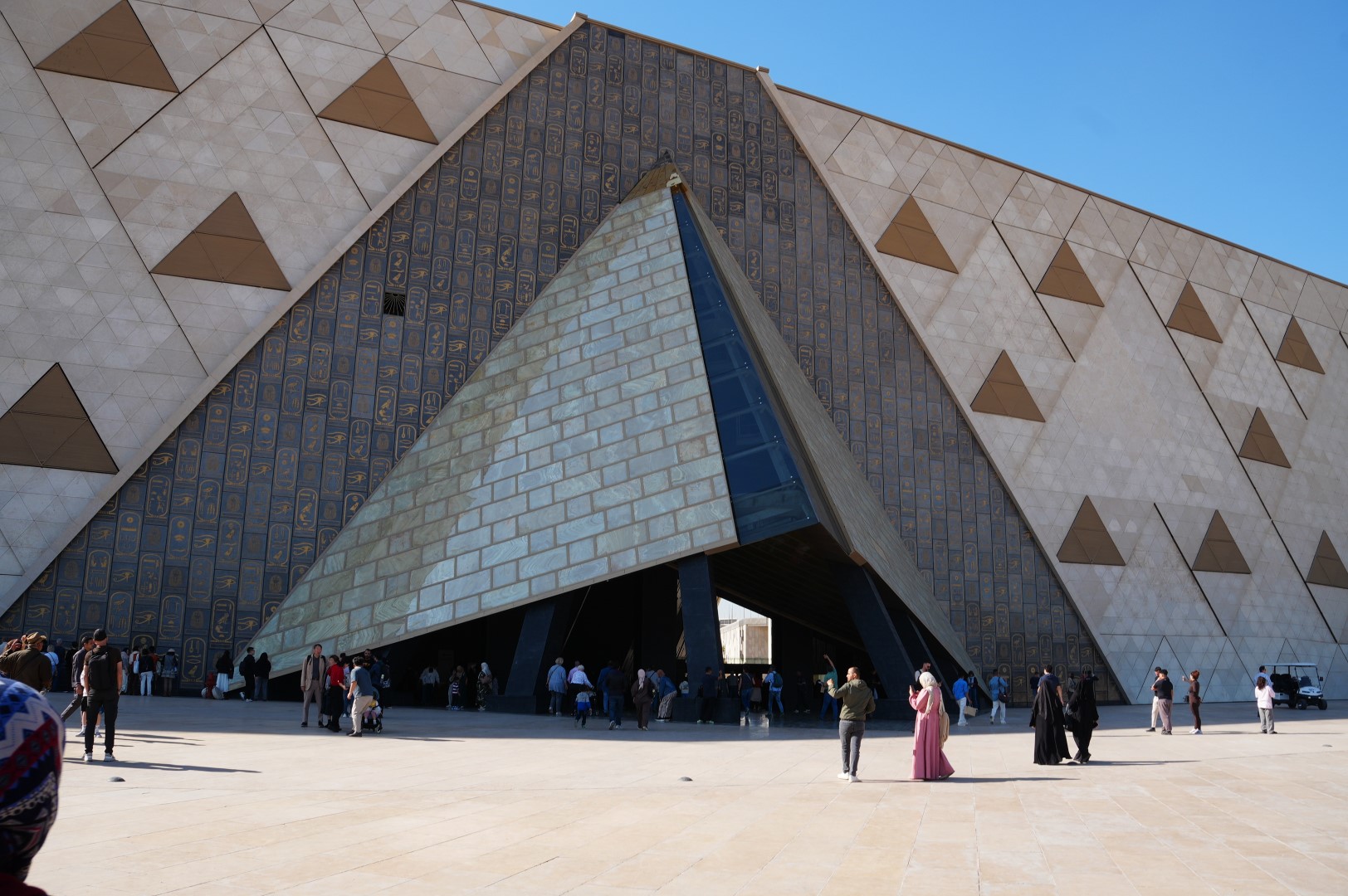
Museum main entrance: photo by Ibrahim.ID, via Wikimedia Commons (Public domain).
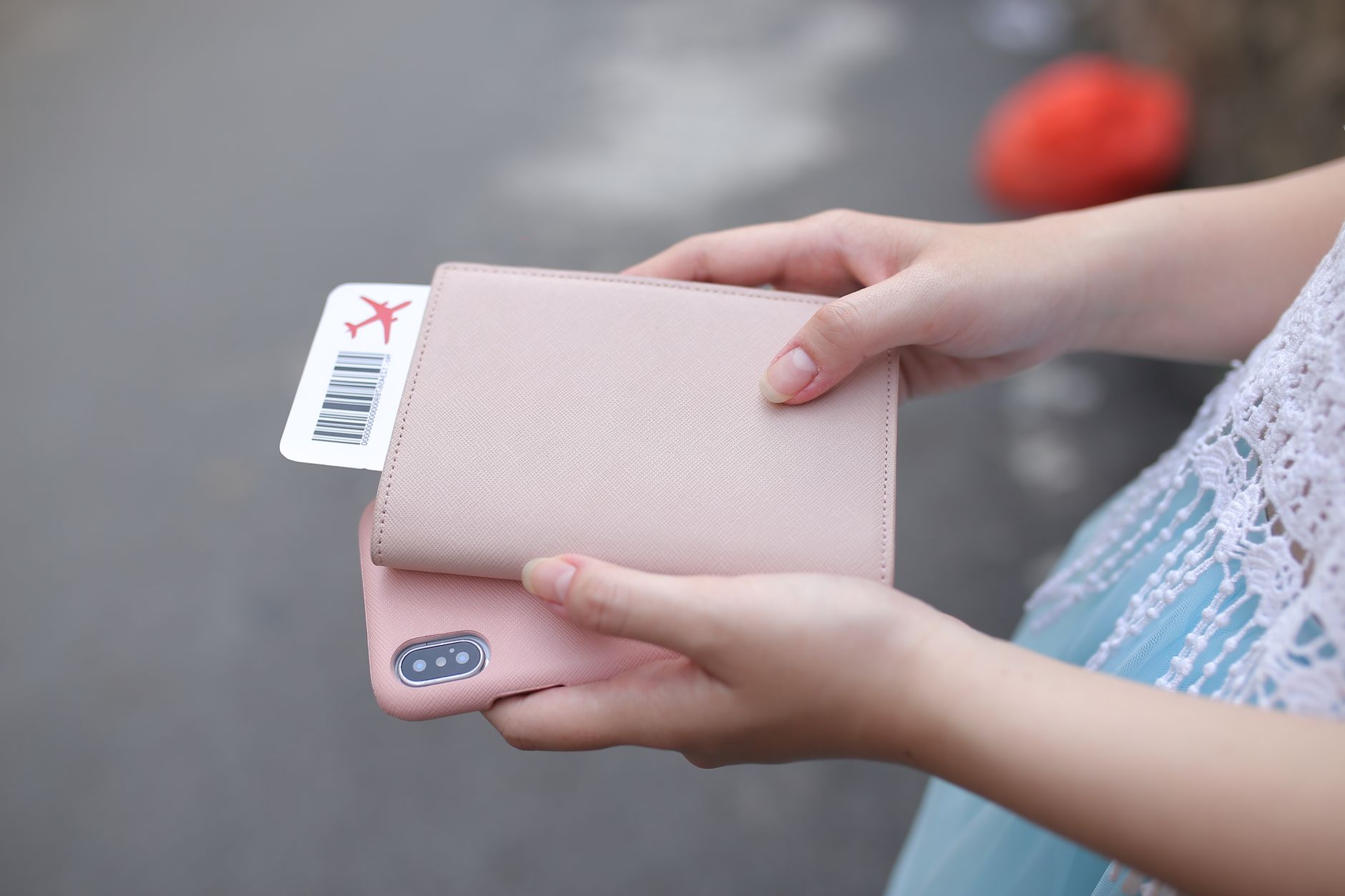
Travel documents and phone: photo by Thiếu Quân Võ Vũ, via Pexels.