This article contains advertising. Our booking links are routed through a partner that adds commission tracking automatically, so if you book through one we earn a commission from the provider, at no extra cost to you. It never affects what we recommend. Affiliate disclosure
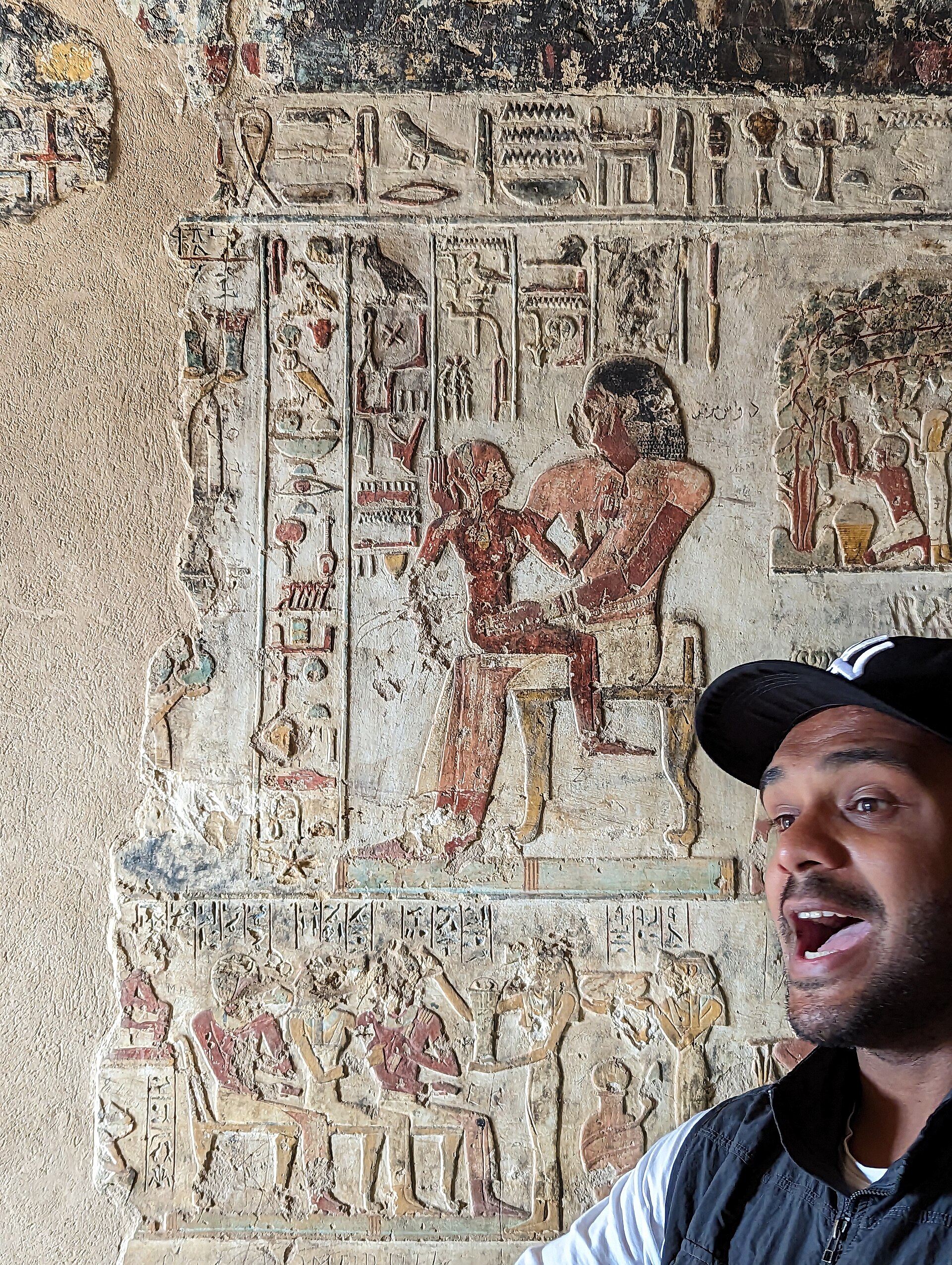
Two couples can walk into the same tomb at Saqqara ten minutes apart. The first sees a dim room with faded carvings of boats and cattle, takes a photograph and leaves. The second has someone with them who points to a man in one of the boats, reads the name in the hieroglyphs above his head, explains why the cattle are being counted and what the scene was meant to do for the dead man in the afterlife, and then stops talking so they can look. Same ticket, same tomb, completely different morning. That gap is what you pay for with a private Egyptologist guide Cairo operators can supply, and it is why choosing the right person matters more than almost any other booking you make for the city.
This guide covers what “Egyptologist” actually means in Egyptian guiding, how guides are licensed, what a private guide costs and how that money is split, where to find a good one, how to vet them before you pay, and what a good guide changes at Giza, Saqqara, the museums and Islamic Cairo. Rules and figures were checked in November 2026 against the Ministry of Tourism and Antiquities’ announcements, the Grand Egyptian Museum’s ticketing site and the operators’ own pages; operator prices change with the season, so check them when you book.
What you are actually hiring
In Cairo, “Egyptologist” on a tour listing almost always means a licensed tour guide, not an academic. Egypt licenses tour guides under its own law, and operators use the word Egyptologist for the guides they send to the pharaonic sites. Many guides have studied tourist guidance or archaeology at university, and the best know the sites in astonishing depth. But the title on a listing is a description, not a separate qualification, so what you are really checking is the licence and, beyond it, the person.
That distinction matters in two directions. It means you should not assume someone calling themselves an Egyptologist at the plateau gate is anything of the kind. And it means a guide who does not use the word can be just as good: plenty of excellent guides specialise in Islamic or Coptic Cairo and would never call themselves Egyptologists at all.
How guiding is licensed in Egypt
The law
Tour guiding in Egypt is governed by Law No. 121 of 1983 on tourist guides and their syndicate, amended in 2007. As the law’s conditions have been quoted in the Egyptian press, a licensed guide must be an Egyptian national of good character, at least 21 years old and medically fit, with a university degree, and must pass the Ministry of Tourism’s exam unless they hold a degree or diploma in tourist guidance from an Egyptian university. The licence is personal, cannot be transferred and runs for five years before it has to be renewed. The same law establishes the guides’ professional syndicate.
The law has been under review. In March 2026 a bill to amend it was referred to committees of the House of Representatives, with stated aims including licences without a time limit and tougher penalties for guiding without one. Check whether any changes have passed before relying on the details above.
The new smart licence cards
In June 2026 the Ministry of Tourism and Antiquities began issuing smart licence cards to guides. The cards act as official identification and as access cards for the electronic gates at archaeological sites and museums, which check that a licence is valid and pick up forgeries. The first batch went out in June, with the rest following on a timetable, so some guides may still carry an older card for a while. Either way, a licensed guide should be able to show you a ministry licence card on the day.
Why the licence matters to you
A licence tells you the guide has met the ministry’s conditions and is accountable to it. It is also practical: a licensed guide works through the site gates legitimately, while someone without a licence who offers to “guide” you inside a site is putting you both in an awkward position. The licence does not tell you whether the guide is good, which is the next part of the job.
What a private guide costs
The official pay floor
The ministry sets the minimum a company must pay a licensed guide. From 1 October 2025 that rose to EGP 1,800 for a full working day of eight hours and EGP 1,100 for a half day of four continuous hours, according to the ministry’s statement as reported in the Egyptian press. At recent exchange rates of roughly EGP 53 to 55 to the dollar, that is about USD 33 to 34 and USD 20 to 21. It is what the operator pays the guide, not a visitor price, and it is a floor: experienced guides, guides in less common languages and specialists earn more.
What you will actually pay
Most operators do not sell a guide on their own. They sell a private tour with the guide, a car and driver, and usually the entry tickets bundled together. Cairo Private Tours’ private half-day at Giza, with a car, hotel pickup, an Egyptologist and the main entry tickets, costs USD 75 for one person or USD 45 each for two to four; its eight-hour Islamic and Coptic Cairo day costs USD 125 for one or USD 75 each for two to four. For the full rate card by tour type, see our guide to what Cairo tours cost.
If you want the guide without the package, for example because you are using Uber or already have a driver, ask an operator for it directly and ask for a quote that separates the guide’s fee, the transport and the entry tickets. A clear, itemised quote is a good sign in itself. Expect to pay more than the official pay floor for a guide hired directly, never less: the floor is what the guide is paid for a day’s work through a company, before the company’s costs.
Tips
Guides are tipped at the end of the day, separately from the tour price, and the driver is tipped separately too. Our Cairo tipping guide gives working figures for both.
Half day or full day?
The ministry’s pay rules recognise two units, a four-hour half day and an eight-hour full day, and operators’ private tours are commonly built on the same units, such as Cairo Private Tours’ four-hour Giza half day and eight-hour day tours. Which you need depends on what you are seeing:
- A half day suits Giza on its own, the Egyptian Museum at Tahrir, or a focused walk through one part of Islamic or Coptic Cairo. Four hours with a good guide at Giza covers the main pyramids, a viewpoint and the Sphinx without exhausting anyone.
- A full day suits Giza with Saqqara, Saqqara with Dahshur and Memphis, or Giza with the Grand Egyptian Museum. Ask whether the eight hours include the driving time: on the long pyramids days, a good part of the day can be spent in the car.
- Two half days can be better than one long day for families, in the heat, or for anyone who flags in the afternoon. A morning at Giza with a guide and a free afternoon at the hotel pool is often a better day than eight hours on the move.
Guides for families and for travellers with limited mobility
With children, ask for a guide who is used to them. The best can turn the pyramids into a story about a king and his builders, set a quiz in the museum, or let a child find the cartouche on a wall before explaining it, and they know when it is time for shade and a drink. Mention ages when you book.
For travellers who find walking, stairs or heat difficult, a private guide is especially valuable, because the day can be built around you: shorter distances, more stops, the best viewpoints reached by car where that is allowed, and no group to keep up with. Say what you can and cannot manage when you ask for a quote, so the operator can plan the route and the vehicle. Our Cairo accessibility guide covers the practical side.
Where to find a good guide
- Through an established local operator. The simplest route. Memphis Tours, Egypt Tours Plus, Cairo Top Tours, Cairo Private Tours and Pyramids Day Tour all sell private tours with licensed guides on their own sites. You get a company to deal with if anything goes wrong, and you can ask for the guide’s name in advance.
- Through your hotel. Good hotels work with guides they trust. Ask the concierge who they use, and still ask the questions below.
- By recommendation. Friends, colleagues and recent travellers who name a specific guide they would hire again are worth a lot. Many of the best guides work largely by word of mouth.
- Through a booking platform. Convenient, with the platform’s refund rules behind you. Check that the listing is for a private guide with a licence, not a driver, and read recent reviews for the guide’s name.
The one place not to find a guide is the entrance to a site. Men who approach you at the Giza gate or outside the Citadel offering to guide you are, at best, an unknown quantity and, at worst, the first step towards a shop or a camel ride you did not want. Our Cairo safety and scams guide covers the usual patterns.
Whichever route you take, the company behind the guide matters as much as the guide. Ask the operator for its licence number and look it up in the Egyptian Travel Agents Association’s online directory before you send a deposit. Our guide to booking Egypt tours online explains how, and how to pay so that you are protected if the booking falls through.
How to vet a guide before you pay
A short exchange of emails tells you most of what you need to know. Ask:
- Who exactly will guide us? A name, in advance. A good operator will tell you, and will not swap the guide on the day without telling you.
- Are they licensed by the Ministry of Tourism and Antiquities? The answer should be an easy yes, and the guide should be able to show the card.
- What languages do they guide in? Cairo has guides in many languages. Egypt Tours Plus, for example, lists English, Portuguese, Spanish, Italian, German and French. Ask for yours rather than settling for English.
- What do they specialise in? The Old Kingdom tombs, the Grand Egyptian Museum’s collection, Islamic Cairo’s architecture, Coptic history. If one period matters most to you, ask for a guide who knows it best.
- What is the plan for the day? Ask for a written outline: which sites, in what order, roughly how long at each, and where lunch is.
- Are there any shopping stops? The right answer is “none, unless you ask”. Get it in writing.
- What is included in the price, and what is not? Guide, car, tickets, lunch, water, and the extra tickets such as the Great Pyramid interior.
Then judge the replies, not just the answers. A guide or operator who answers clearly, adapts the plan to what you said you wanted, and is happy to drop the shopping stops is telling you how the day will go. Evasive answers, a plan that ignores your interests or pressure to book quickly are telling you something too.
What a good guide changes, site by site
Giza
Giza looks simple: three pyramids and a Sphinx. A good guide turns it into a place. They explain how the plateau fits together, from the queens’ pyramids and the mastaba fields to the causeway and the valley temple below the Sphinx, which many independent visitors walk straight past. They know where to stand for the views, which extra tickets are worth it on the day, and how to move you around the site efficiently. And they keep the touts and camel men at a distance, which on its own is worth a good deal of the fee. Our comparison of pyramids tours from Cairo covers the formats.
Saqqara
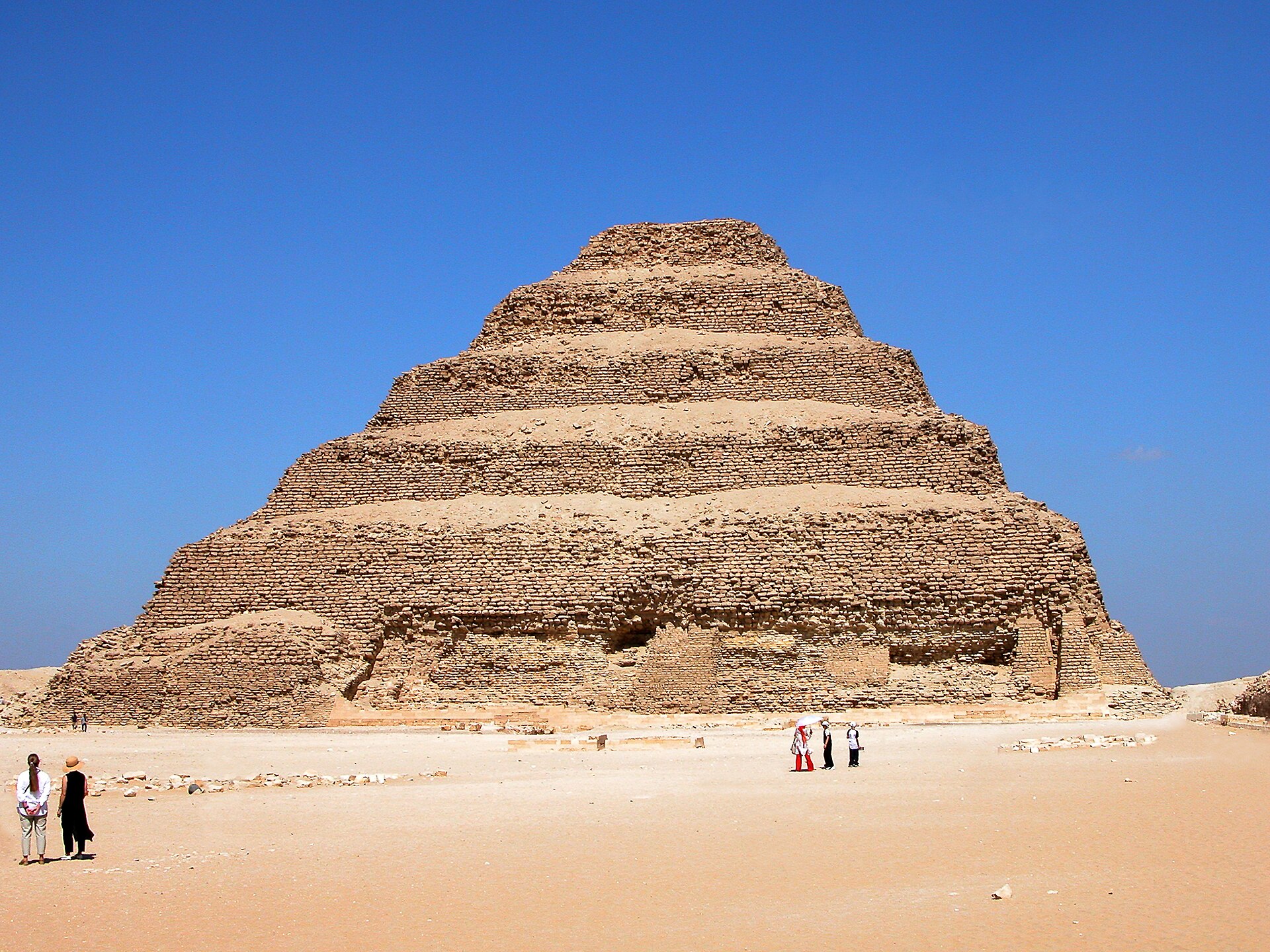
Saqqara is where a guide adds a great deal. The site is spread out, the signage is thin, and the treasures are the decorated tombs, whose walls are covered with scenes of daily life that are close to meaningless without someone to read them. The inclusive ticket covers the site, the Imhotep Museum, the tombs of the Nobles and the New Kingdom, and the tombs of Mereruka and Mehu, which is a lot to make sense of in a day. A guide who knows which tombs are open, what is in each and what to look for turns a hot walk between doorways into the highlight of the trip. Our Saqqara day trip guide has the practical details.
The Grand Egyptian Museum
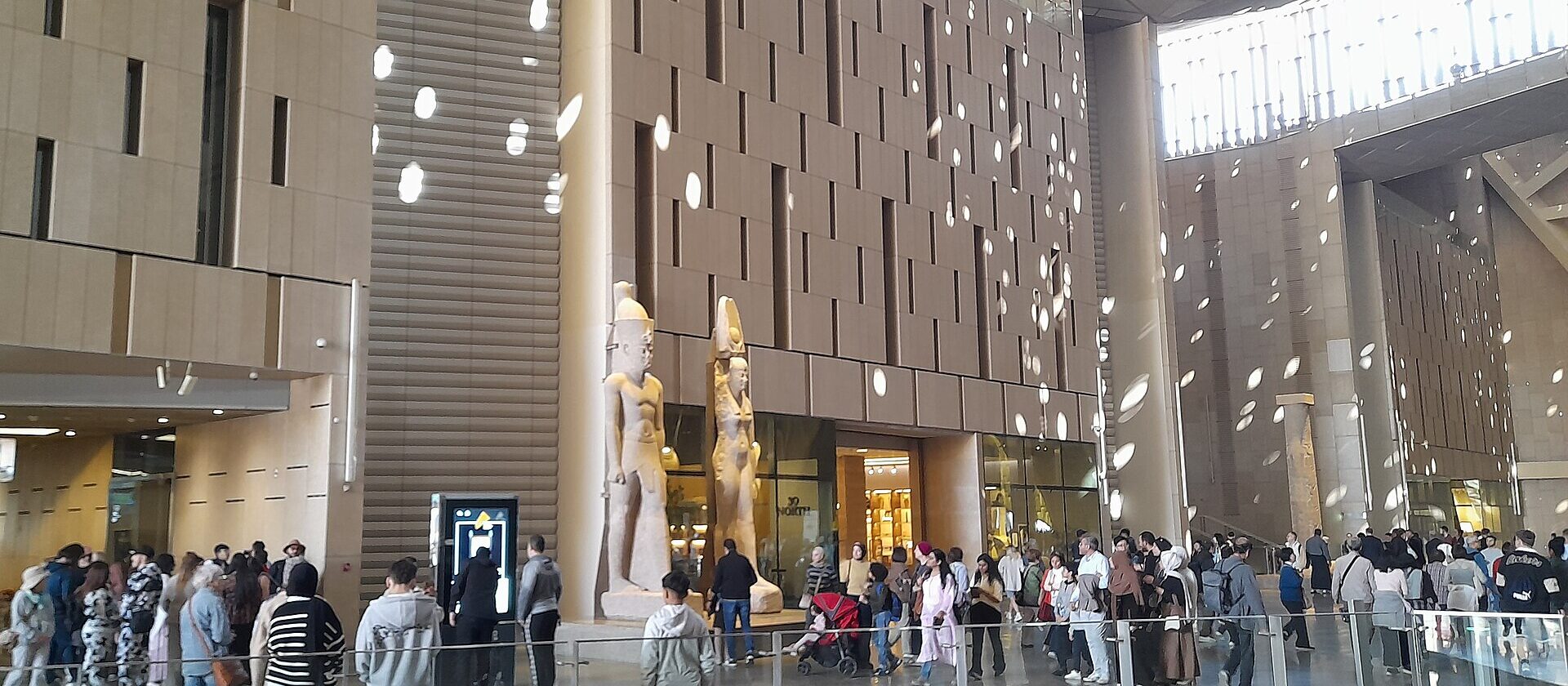
The museum is enormous, and its galleries are arranged so that you can lose hours before you reach Tutankhamun. A good guide plans a route through it that suits your time and interests, picks out the objects that matter in each gallery, and tells the stories that the labels have no room for.
The museum also offers its own alternative. Its Guided Tour Ticket includes admission and a group tour with other visitors, which the museum is clear is not a private tour. For a first overview, that may be all you need. The museum’s ticketing site also says that Egyptian tour guides accompanying a group are exempt from the admission fee but pay the difference for the guided tour. If you are bringing your own private guide, confirm the arrangements for guides, group sizes and headsets with the guide or the museum before your visit. Tripods, monopods, selfie sticks and drones are prohibited. See our Grand Egyptian Museum visitor guide and our guide to the Tutankhamun galleries.
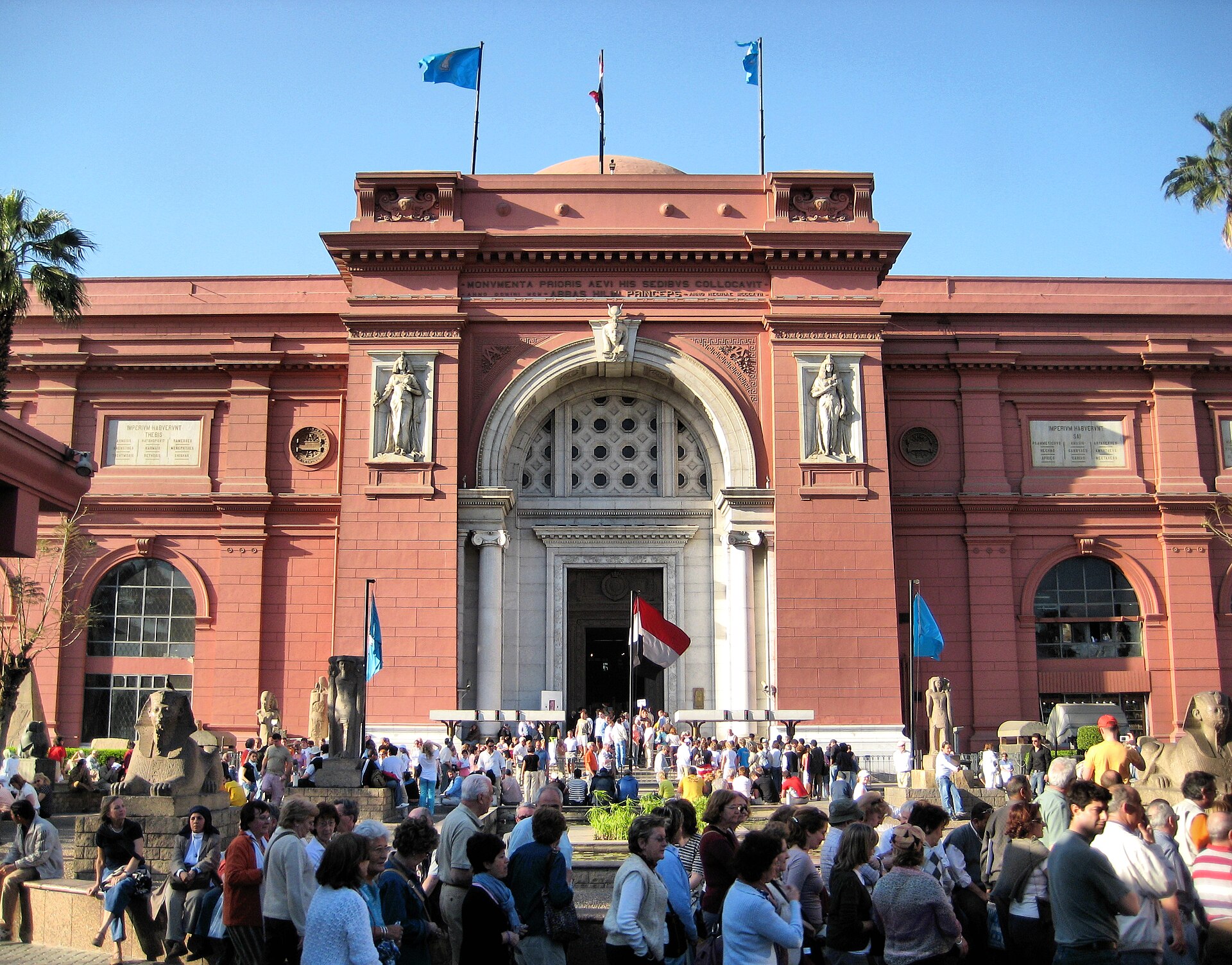
The Egyptian Museum at Tahrir
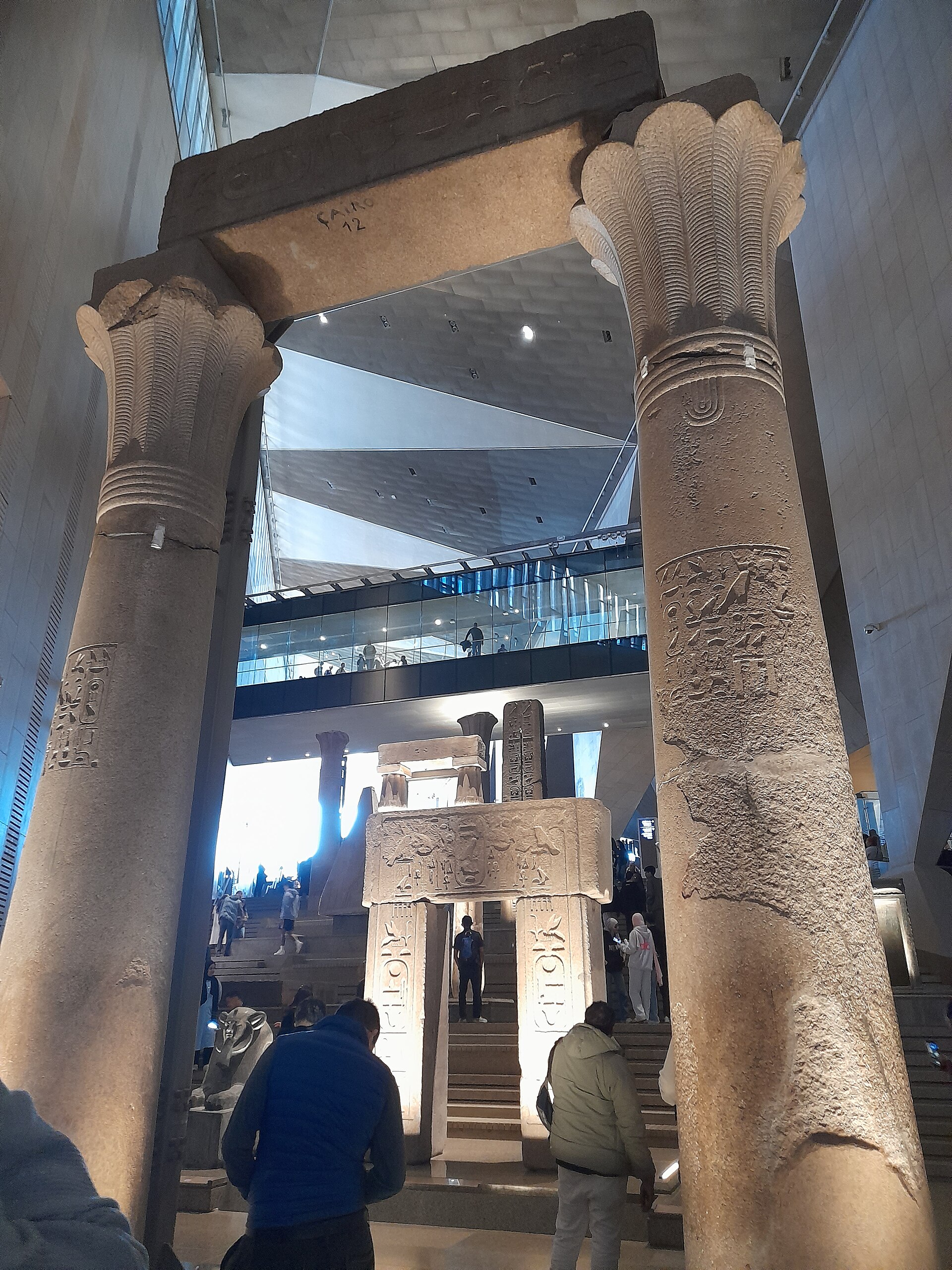
The old museum is a very different experience: crowded cases, handwritten labels in places and an extraordinary density of objects. A guide who knows it well can take you straight to the pieces worth seeing and explain why a scruffy-looking case holds something important. Our Egyptian Museum guide explains what is still there now that much of the Tutankhamun collection has moved.
Islamic and Coptic Cairo
Here the right guide is often not an Egyptologist at all but a specialist in medieval Cairo. The mosques, madrasas and mausoleums of the old city are a textbook of architecture across centuries, and a guide who can read them, explain who built what and why, and find the doors that are open, makes the old city make sense. Coptic Cairo’s churches and museum reward the same kind of knowledge. These areas are easy to reach and walk on your own, so a guide here is about depth rather than logistics.
Red flags
- No name in advance, or a different guide from the one you were promised.
- No licence card, or reluctance to show one.
- “English-speaking driver” offered as the guide. A driver is not a guide, however helpful.
- A price far below the others for a private day with tickets included. The money is being made somewhere else, usually in shops.
- Shopping stops in the itinerary, or a refusal to remove them.
- Rushing the sites to make time for a papyrus “institute”, a perfume shop or a carpet school.
- A guide who talks without stopping. The best know when to be quiet and let you look.
When you do not need a private guide
A private guide is not essential everywhere, and the honest answer saves you money:
- Coptic Cairo and Khan el-Khalili, if you are happy to wander. Both are easy to reach and to explore with a good guidebook.
- The Grand Egyptian Museum, for an overview. The museum’s own Guided Tour Ticket is a cheaper alternative to a private guide.
- A second visit to Giza, once you know the layout.
- Solo travellers on a budget, for whom a shared group tour with an Egyptologist can be a better use of the money. Our comparison of private and group tours sets out the numbers.
Where a private guide is worth every pound is the day you care most about, usually Saqqara and Giza, and anywhere you want the story rather than just the sight.
Getting the most from your guide
- Brief them at the start. Tell them what you already know, what you are most curious about and how much walking and heat you can comfortably manage.
- Set the pace together. Ask for breaks, shade and water when you need them, and say if you want more time somewhere.
- Ask questions. Good guides love them, and they steer the day towards what interests you.
- Agree on photographs. A guide who knows the sites will know the best angles and the rules on photography inside, and can help you get the shots without holding everyone up.
- Be clear about shopping. If you do want to buy something, say so and ask for an honest recommendation; if you do not, say that too, early.
- Keep their contact. If the day was good, a guide you trust is worth booking again for the next day, or for friends who follow you.
Frequently asked questions
How much does a private Egyptologist guide cost in Cairo?
Most operators sell the guide as part of a private tour with a car and tickets: for example, USD 45 each for two people on a private half-day at Giza with Cairo Private Tours. The ministry’s minimum pay for a licensed guide working through a company is EGP 1,800 for an eight-hour day and EGP 1,100 for a half day. A guide hired directly will charge more than that floor.
Do tour guides in Egypt need a licence?
Yes. Tour guiding is licensed under Law No. 121 of 1983, and licences are issued by the Ministry of Tourism and Antiquities. Since June 2026 the ministry has been issuing smart licence cards that also work at the electronic gates of sites and museums.
How can I check that a guide is licensed?
Ask to see the ministry licence card, and book through an operator or hotel that confirms its guides are licensed. Ask for the guide’s name in advance so there is no switch on the day.
Is an Egyptologist the same as a tour guide?
On Cairo tour listings, usually yes: operators use “Egyptologist” for licensed guides who work at the pharaonic sites. It describes the guide’s field rather than a separate qualification, so check the licence and the guide’s specialism.
Can I bring a private guide into the Grand Egyptian Museum?
The museum’s ticketing site sells its own group Guided Tour Ticket and says Egyptian guides accompanying a group are exempt from admission but pay the guided-tour difference. For a private guide, confirm the arrangements with your guide or the museum before your visit.
Is a private guide worth it for Saqqara?
Yes, it is one of the places where a guide helps most. The decorated tombs are the highlight, and their scenes are hard to understand without someone who can read them.
What languages do Cairo guides speak?
Many. Operators offer guides in the major European languages and others; Egypt Tours Plus, for example, lists six. Ask for your language when you book.
Related Cairo Guides
- Cairo Tours and Tickets: How to Choose and Book
- Visiting the Pyramids of Giza
- Cairo Museums Guide
- Cairo Culture and Etiquette Guide
- First Time Visiting Cairo
Photo Credits
A guide explaining a painted tomb wall: photo by Lars Plougmann from United States, via Wikimedia Commons (CC BY-SA 2.0).
The Step Pyramid of Djoser, Saqqara: photo by Dennis G. Jarvis, via Wikimedia Commons (CC BY-SA 2.0).
Visitors outside the Egyptian Museum, Cairo: photo by Francisco Anzola, via Wikimedia Commons (CC BY 2.0).