
This article contains advertising. Our booking links are routed through a partner that adds commission tracking automatically, so if you book through one we earn a commission from the provider, at no extra cost to you. It never affects what we recommend. Affiliate disclosure
In London, Rome or Barcelona the red open-top bus is a reliable first-day fix: buy a ticket, sit upstairs, hop off at the cathedral, hop back on for the museum. It is natural to look for the same thing in Cairo, and plenty of people do. Search for a cairo hop on hop off bus, though, and you run into a problem before you get to the question of whether it is worth it: there is no regular hop-on hop-off sightseeing bus service in Cairo to buy a ticket for, and the shape of the city explains why one would struggle.
This guide sets out what does and does not exist, including the open-top buses that have appeared in Cairo now and then, the electric shuttles on the Giza plateau and an amphibious Nile bus, and why a fixed-route bus fits Cairo so badly. It then covers the alternatives that actually work for getting between the sights: the metro, ride-hailing, a car and driver for the day, and tours. Metro fares are from the State Information Service and were checked in November 2026; driving distances are rounded from a route planner and assume no traffic, which in Cairo is a big assumption.
The short answer
| Question | Answer |
|---|---|
| Is there a hop-on hop-off bus in Cairo? | No regular city service with a published route, timetable and ticket was running in November 2026. |
| What about the open-top buses in photos? | One-off or short-lived: a double-decker described in 2023, and open-top bus tours announced in October 2025 to promote the Grand Egyptian Museum’s opening. |
| Is there any shuttle at the pyramids? | Yes. Electric buses run a loop of stations inside the Giza plateau, from the visitor centre. They move you around the site, not around Cairo. |
| What works instead? | Metro for the centre and Coptic Cairo, Uber or Careem for Giza and the Grand Egyptian Museum, a car and driver or a tour for a full sightseeing day. |
| Would a hop-on hop-off bus be worth it if one ran? | Probably not. The sights are far apart and the traffic is heavy. |
What exists, and what does not
No regular city sightseeing bus
The big international hop-on hop-off brands that run in many European and Gulf cities do not run a Cairo service, and no local operator was running a city sightseeing bus with a published route, stops, hours and prices in November 2026. Searches in English and Arabic turn up day tours from the Red Sea resorts and listings for other cities, not a Cairo route.
Open-top buses have appeared in Cairo from time to time. A red double-decker for tourists was written up in the local press at the end of 2023, but there is no sign that the service is running now. In October 2025, Cairo’s governor announced open-top bus tours of the streets as part of the promotional campaign for the Grand Egyptian Museum’s opening, which was a publicity event rather than a service you could buy a ticket for. If a booking site offers you a “Cairo hop-on hop-off” ticket, look hard at what it is: often a private tour or a resort excursion with a misleading title. Check that the operator has its own site with a route map and timetable before you pay, and check the official tourism portal, experienceegypt.eg, for anything new.
The electric shuttles on the Giza plateau
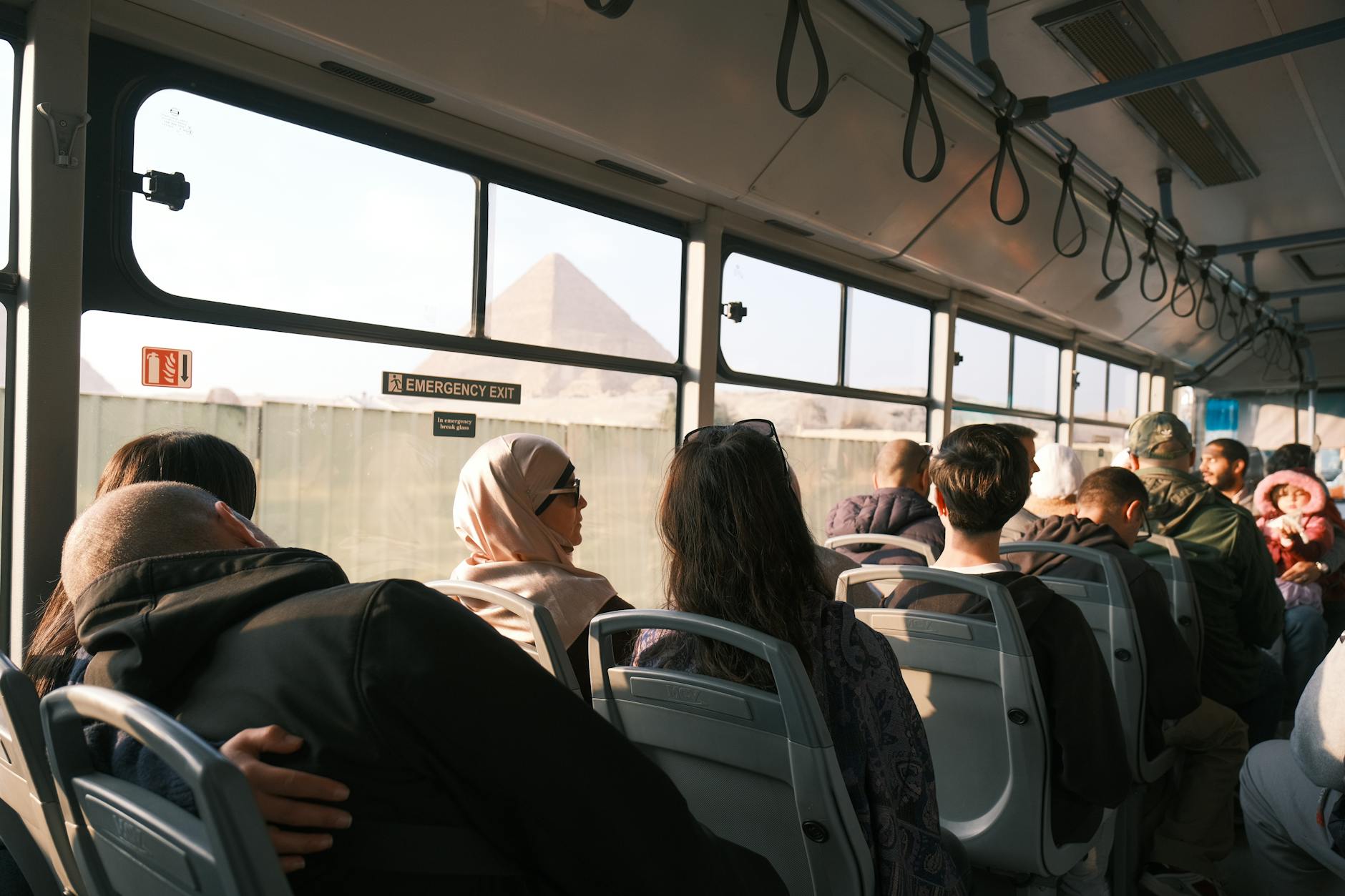
The nearest thing to a hop-on hop-off bus in Cairo runs inside the pyramids site. The plateau’s new visitor system has its entrance and visitor centre on the Cairo–Fayoum road side, and electric buses are meant to carry visitors between the sights. The State Information Service described the trial route in 2022 as a loop of seven stations from the visitor centre, taking in the Panorama stations, the Pyramid of Menkaure, the Great Pyramid and the Sphinx before returning. The project is run by Orascom Pyramids Entertainment.
This is genuinely useful, because the plateau is large and the walk between the Great Pyramid and the Panorama viewpoint is long in the heat. But it is a site shuttle, not a city tour. It does not take you from your hotel to Giza or from Giza to anywhere else. Ask at the visitor centre ticket windows when you arrive whether the shuttle is included in your plateau ticket or charged separately. Our Giza plateau map and layout guide explains how the site fits together.
The amphibious Nile bus
Another idea is an amphibious “Nile bus” that drives on the road and then sails on the river. Press reports in November 2025 described a launch planned for December 2025, a first route between Athar El-Nabi and the National Museum of Egyptian Civilization, themed Nile trips of one hour or more, and a package with an eight-hour hop-on hop-off ticket. Whether it is running on the day you want it, and at what price, is something to check with the operator directly. Treat it as a novelty ride rather than a way to get around the city.
Why a fixed-route bus fits Cairo so badly
Even if a well-run open-top bus started tomorrow, it would face two problems that no amount of good commentary can fix.
The sights are far apart
Cairo’s major sights are not clustered in a walkable old centre the way Rome’s or Paris’s are. They are spread across a huge metropolitan area, on both banks of the Nile. These are the driving distances from Tahrir Square, as a route planner calculates them:
| From Tahrir Square to | Road distance |
|---|---|
| Khan el-Khalili | About 4 to 5 km |
| Cairo Citadel | About 5 km |
| Coptic Cairo | About 5 to 6 km |
| National Museum of Egyptian Civilization | About 9 km |
| Giza pyramids | About 17 km |
| Grand Egyptian Museum | About 17 km |
And between the far ends: the Citadel to the pyramids is about 22 km by road. A single loop that joined all of these would be very long, and anyone who wanted to spend serious time at Giza and the Grand Egyptian Museum, which many visitors do, would spend much of a hop-on hop-off day sitting on the bus between the centre and the plateau.
The traffic
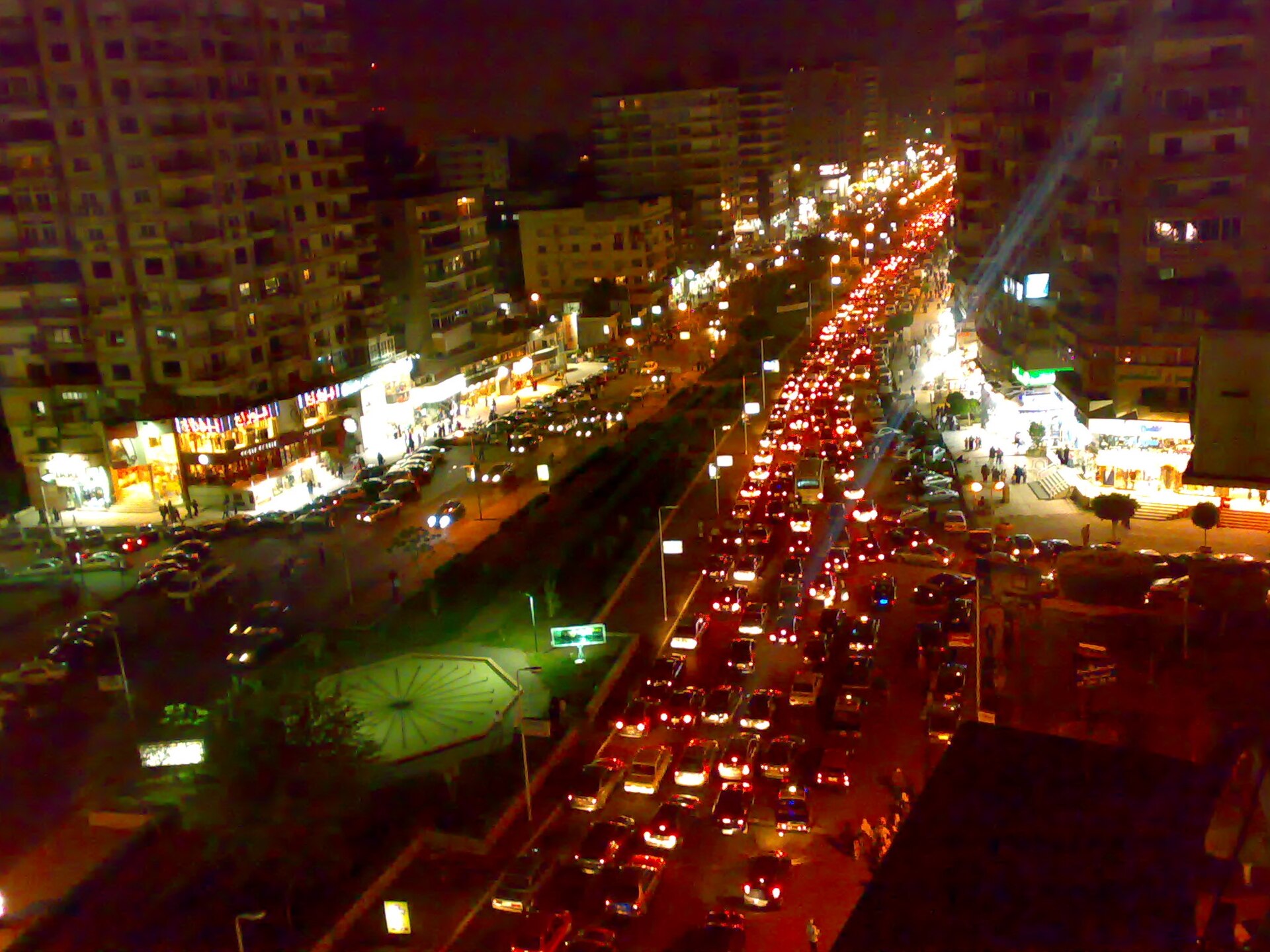
Those distances would be manageable in a city with free-flowing roads. Cairo is not one. A World Bank study of the city’s congestion estimated that its cost could be as high as 4% of Egypt’s GDP a year. The route planner’s figures above assume empty roads; at the wrong time of day the drive from Tahrir to Giza can take far longer than it would on empty roads.
That matters more for a hop-on hop-off bus than for almost any other way of getting around. The whole idea relies on frequent buses: you get off, look around, and catch the next one in 15 or 30 minutes. In heavy traffic the buses bunch up, gaps grow, and a stop where you hopped off at 11:00 can leave you waiting a long time in the sun. An open top deck in Cairo’s summer heat and traffic fumes is not the pleasure it is on a spring morning in Seville, either.
The alternatives that actually work
The good news is that Cairo has better options for getting between the sights than a hop-on hop-off bus would be, and many of them are cheaper.
The metro
For the centre and for Coptic Cairo, the metro is fast, cheap and immune to traffic. Fares are set by distance: from 27 March 2026, EGP 10 for up to nine stations, EGP 12 for 10 to 16, EGP 15 for 17 to 23 and EGP 20 for 24 to 39. Useful stations for sightseeing:
- Sadat (Lines 1 and 2), under Tahrir Square, for the Egyptian Museum at Tahrir and Downtown.
- Mar Girgis (Line 1), for Coptic Cairo, the Hanging Church and the Coptic Museum. Sadat to Mar Girgis is within the cheapest EGP 10 band.
- Attaba (Lines 2 and 3) and Bab El Shaaria (Line 3), for the edges of Islamic Cairo, from where Khan el-Khalili is a walk.
- Giza (Line 2), the closest Line 2 gets to the pyramids. It is still a long way from the plateau, so you will need a taxi, ride-hail or bus for the rest.
No metro line reaches the pyramids or the Grand Egyptian Museum yet. Metro Line 4, which will include a station near the pyramids, is under construction, with its first phase planned to open in 2028. Our Cairo metro guide for tourists covers tickets, women’s carriages and rush hours.
Uber and Careem
For Giza, the Grand Egyptian Museum, the Citadel and anywhere the metro does not reach, ride-hailing is the usual choice for visitors. Uber operates around the clock in Cairo and shows an estimated fare before you book, which removes the haggling that puts people off street taxis. Fares depend on the distance, the time and demand. Ride-hailing gives you hop-on hop-off flexibility without the route: you choose the stops, the order and how long you stay, and you never wait for a bus. Our guide to Uber and Careem in Cairo explains how to use them well, and our guide to getting from Cairo to Giza covers the pyramids run in detail.
A car and driver for the day
If what appeals about a hop-on hop-off bus is the idea of being carried from sight to sight all day, a car with a driver who waits for you is the Cairo equivalent, and a better one: it goes where you want, waits outside each site and has air conditioning. Many operators sell this as part of a guided tour rather than on its own, so ask for a quote in writing that spells out the hours, the stops and whether fuel, parking and tolls are included. Split between three or four people, it can cost each of you less than you might expect. Our breakdown of what Cairo tours cost shows how the car, the guide and the tickets add up.
A tour
For the pyramids and Saqqara in particular, a tour solves transport and interpretation together. A shared group tour to Giza can be cheap: Pyramids Day Tour runs a daily group from Tahrir Square for USD 25 per person, including the plateau ticket and an Egyptologist. Private tours cost more but pick you up at your hotel. Our comparison of private and group tours in Cairo helps you choose.
Your own feet, in the right places
Parts of Cairo are best on foot: Downtown’s grand old streets, the length of Al-Muizz Street through Islamic Cairo, the lanes of Coptic Cairo and Zamalek’s leafy streets. Take the metro or a ride to the start and walk from there. Our self-guided walking routes show how.
Plan by area, not by route
The single most useful habit for getting around Cairo is to group the sights by part of the city and give each group its own day or half-day. A hop-on hop-off bus tries to string everything onto one line; the city works much better in clusters:
| Area | Sights | How to get there and around |
|---|---|---|
| The Giza side | The pyramids and the Sphinx, the Grand Egyptian Museum | Ride-hail or a tour to get there; the plateau’s electric shuttle on the site; a short ride between the plateau and the museum |
| The centre | The Egyptian Museum at Tahrir, Downtown, Zamalek and the Nile Corniche | Metro to Sadat, then on foot; a short ride across to Zamalek |
| The old city | The Citadel, the mosques of Islamic Cairo, Al-Muizz Street, Khan el-Khalili | A ride to the Citadel, then downhill on foot; metro to Attaba or Bab El Shaaria for the northern end |
| The south | Coptic Cairo and the National Museum of Egyptian Civilization | Metro to Mar Girgis for Coptic Cairo; a short ride to the museum |
Within each cluster, distances are short enough to walk or to cover with a cheap, quick ride. Between clusters is where the time goes, so cross the city once a day rather than three times. A few more habits help:
- Start early. The first hours of the day are cooler, the sites are quieter, and the roads are easier than they will be by midday.
- Pin your destinations before you go. Save the exact entrances in a map app, especially at Giza, where the visitor entrance is on the Fayoum road side of the plateau rather than at the old gate by the Mena House hotel. A driver dropped at the wrong side costs you time.
- Keep small notes. For tips, toilets, and the odd street taxi that cannot change a large note.
How the alternatives compare
| Option | Best for | Traffic? | Cost |
|---|---|---|---|
| Metro | Tahrir, Downtown, Coptic Cairo, the edges of Islamic Cairo | No | EGP 10–20 a journey |
| Uber or Careem | Giza, the Grand Egyptian Museum, the Citadel, evenings | Yes | Estimate shown in the app before you book |
| Car and driver for the day | A full day of several far-apart sights | Yes, but you sit in comfort | Quote in writing; best split between several people |
| Shared group tour | Giza on a budget, with a guide | Yes | From USD 25 per person at one operator |
| Private tour | Giza, Saqqara and the museum with a guide | Yes | Varies with group size; see the tour cost guide linked above |
| Walking | Downtown, Al-Muizz Street, Coptic Cairo, Zamalek | No | Free |
Three days without a hop-on hop-off bus
To show how the pieces fit, here is how a first-time visitor might cover the main sights in three days using the alternatives above:
- Day 1, Giza and the Grand Egyptian Museum. Uber or a tour to the plateau early, the electric shuttle between the sights, then a short ride to the museum for the afternoon. The two are close to each other, about 5 to 6 km apart by road, so this is the day to base yourself on the Giza side. Our guide to getting to the Grand Egyptian Museum covers the options.
- Day 2, Downtown and Coptic Cairo. Metro to Sadat for the Egyptian Museum at Tahrir, then metro to Mar Girgis for Coptic Cairo in the afternoon. Two journeys in the cheapest fare band.
- Day 3, Islamic Cairo. A ride to the Citadel in the morning, then down through the old city on foot towards Al-Muizz Street and Khan el-Khalili, with a ride back to your hotel in the evening.
That covers more than a hop-on hop-off loop could, with far less waiting, for a fraction of the cost of three days of bus tickets. For fully worked plans, see our three-day Cairo itinerary.

How to spot a misleading “hop-on hop-off” listing
Because people search for it, the phrase turns up in booking-site titles for products that are nothing of the kind. Before you pay for anything sold as a Cairo hop-on hop-off ticket, check:
- Is there a route map and a list of stops? A genuine hop-on hop-off service publishes both. A private tour does not need to.
- Is there a timetable or a frequency? “Every 30 minutes from 09:00” is a bus. “Pickup from your hotel” is a tour.
- Does the operator have its own website, with the same route and price, or only a listing on a booking platform?
- Where does it start? Listings that begin in Hurghada, Sharm el-Sheikh or El Gouna are day trips from the Red Sea, often with a very long drive or an early flight.
- What is the ticket valid for? A real hop-on hop-off ticket is valid for a period, such as 24 or 48 hours, on any bus on the route.
If a listing fails these tests, it may still be a perfectly good tour. Judge it as a tour, compare it with others, and do not pay a premium for a name that does not describe it.
When a bus tour might still make sense
There are a few situations where a seat on a sightseeing bus, if you find a genuine one running, would earn its keep:
- A short first look at the city. If you arrive with a few hours to spare and simply want to see Cairo go by from a high seat, a city loop could work as orientation, as long as you do not expect to use it to reach the major sights efficiently.
- Limited mobility. A bus that stops at the door can be easier than the metro’s stairs and crowds. A private car with a driver usually does this job better, though.
- Inside the Giza plateau. The site shuttle is worth using in the heat, especially for the long hop to the Panorama viewpoint.
- A novelty ride. If the amphibious Nile bus is running, it is a fun hour, as long as you see it as an attraction rather than as transport.
For everyone else, especially anyone with only two or three days, the verdict is simple: skip the search for a hop-on hop-off ticket and put the time and money into a good day at Giza and the museum instead.
Frequently asked questions
Is there a hop-on hop-off bus in Cairo?
No regular hop-on hop-off sightseeing bus with a published route, timetable and ticket was running in Cairo in November 2026. Open-top buses have appeared occasionally, including tours announced for the Grand Egyptian Museum’s promotional campaign in October 2025, but not as a scheduled service.
Is there a bus around the Giza pyramids?
Yes. Electric buses run a loop of stations inside the plateau from the visitor centre, including the Panorama stations, the Pyramid of Menkaure, the Great Pyramid and the Sphinx. Ask at the visitor centre ticket windows whether the shuttle is included in your ticket.
What is the best way to get around Cairo as a tourist?
Use the metro for Tahrir, Downtown and Coptic Cairo; Uber or Careem for Giza, the Grand Egyptian Museum and the Citadel; and a tour or a car and driver for a full day of far-apart sights. Walk in Downtown, Islamic Cairo and Zamalek.
Does the Cairo metro go to the pyramids?
No. The nearest station on Line 2 is Giza, which is still a long way from the plateau. Metro Line 4, with a station near the pyramids, is under construction, with its first phase planned to open in 2028.
How far are the pyramids from central Cairo?
About 17 km by road from Tahrir Square to the Giza pyramids, and a similar distance to the Grand Egyptian Museum. Journey times depend heavily on traffic.
Are open-top bus tours safe in Cairo?
There is no regular service to judge. For any bus or tour, book with an operator that has its own website, a named route and a fixed price, and be wary of booking-site listings whose itinerary does not match the title.
Related Cairo Guides
- Getting Around Cairo: The Transportation Guide
- Cairo Tours and Tickets: How to Choose and Book
- Cairo Bus System Guide
- Cairo Taxi Tips for Tourists
- Nile River Transport in Cairo
Photo Credits
Night traffic on Abbas el-Akkad Street, Nasr City: photo by Mo7amedsalim, via Wikimedia Commons (Public domain).
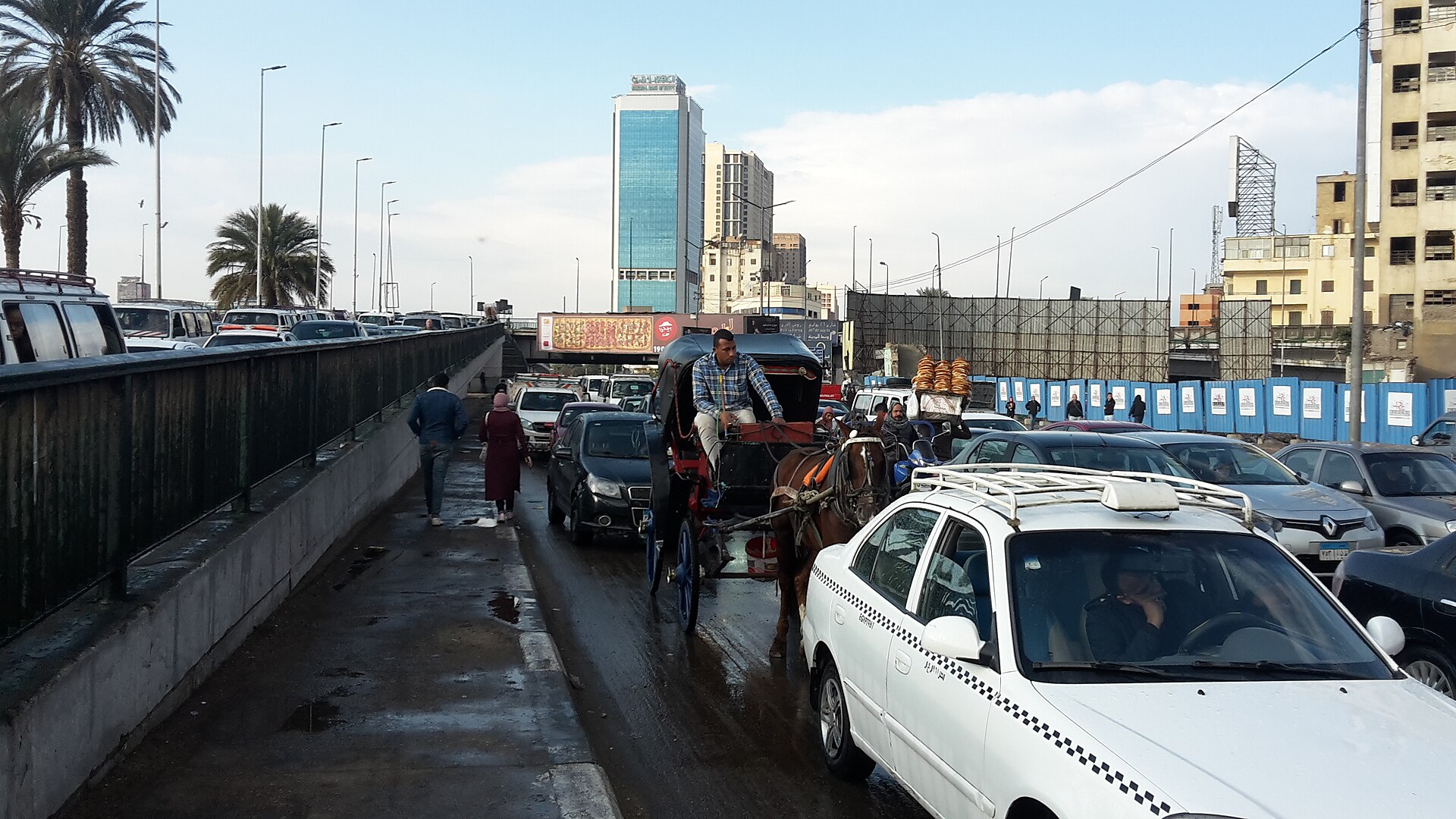
A horse-drawn carriage in Cairo traffic: photo by Wex Major 98, via Wikimedia Commons (CC BY-SA 4.0).