This article contains advertising. Our booking links are routed through a partner that adds commission tracking automatically, so if you book through one we earn a commission from the provider, at no extra cost to you. It never affects what we recommend. Affiliate disclosure
Nile River history in Cairo: The Nile is the longest river in the world (6,650 km), and Cairo exists because of it — Egyptian civilization arose entirely along the Nile’s fertile banks, starting around 6,000 BCE. From the predynastic settlements that became the foundation of Memphis (~3100 BCE) to the medieval Islamic city of al-Fustat (~641 CE) to modern Cairo’s 22 million people, every chapter of Cairo’s 5,000+ year history has been written by the Nile. This is the complete history of how the Nile shaped Cairo — from ancient flood cycles that made agriculture possible, through the Pharaonic capitals, Roman Babylon Fortress, Islamic conquest, and modern era — and how today’s Nile experience connects to that deep heritage.
Eight thousand years of Nile River history in Cairo, from pre-dynastic farmers to the Aswan High Dam, written with 2026 visiting notes and cross-referenced against our overview of what the river offers travellers, our background on how Giza was built, and our tour of the city’s museum collections.
The Nile in Brief
- Length: 6,650 km — the world’s longest river
- Source: Lake Victoria (Burundi/Rwanda/Uganda border)
- Mouth: Mediterranean Sea (Egyptian Delta)
- Countries: 11 in Nile basin
- Cairo position: Roughly midway in Egypt’s Nile section
- Tributaries: White Nile and Blue Nile (meet at Khartoum)
Pre-Dynastic Era (6000-3100 BCE)
The earliest human settlements along the Nile predate written history:
- Stone Age communities established farming along Nile banks (~6000 BCE)
- Agriculture began with annual flood cycles depositing fertile silt
- Early communities along Nile became increasingly settled
- Pottery, copper tools, social organization developed
- Pre-dynastic chiefdoms (Naqada culture) formed by 3500 BCE
Pharaonic Era (3100-332 BCE)
The Nile shaped Pharaonic civilization:
Old Kingdom (2700-2200 BCE)
- Memphis founded as Egypt’s capital (~3100 BCE) near present-day Cairo
- Saqqara necropolis develops along Nile
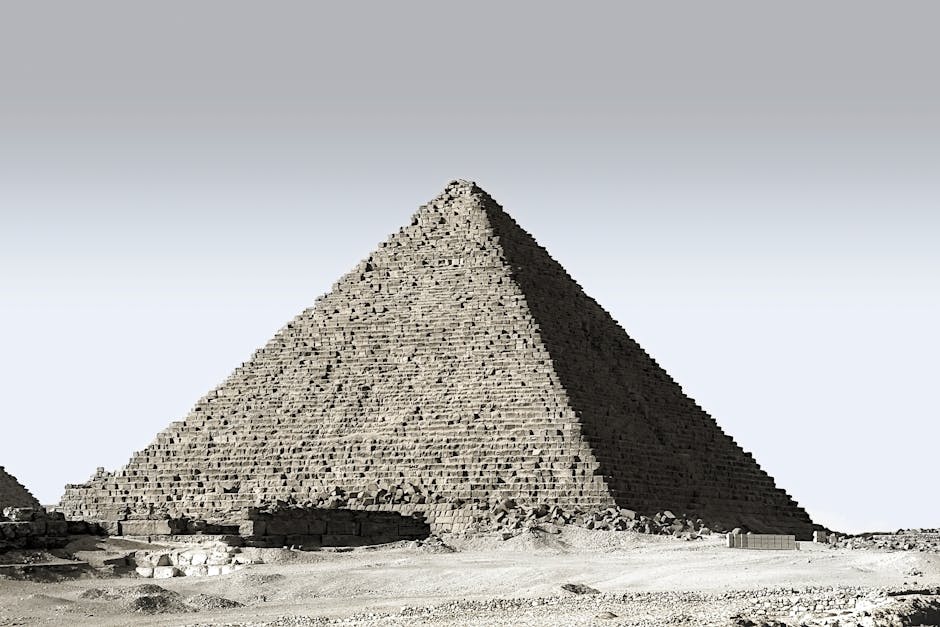
- Giza pyramids built (2580-2510 BCE) overlooking the Nile
- Annual flood cycle (Akhet) became calendar foundation
- Religion deeply tied to Nile gods (Hapy, Sobek, Osiris)
Middle Kingdom and New Kingdom
- Religious complex at Memphis expanded
- Capital shifted between Memphis and Thebes (Luxor)
- Nile irrigation systems developed
- Royal mortuary complexes along Nile
Memphis, founded near present-day Cairo around 3100 BCE, survives as an open-air site south of the city, which makes a day trip to the old capital one of the easiest ways to stand in the Old Kingdom.
Ptolemaic and Roman Era (332 BCE-641 CE)
- Alexander the Great conquers Egypt (332 BCE)
- Alexandria becomes Mediterranean capital, but Memphis declines
- Ptolemaic Egypt maintains Nile-based religion
- Roman conquest 30 BCE — Babylon Fortress built on Nile (in modern Coptic Cairo)
- Babylon Fortress becomes Roman administrative center
- Christianity arrives; Coptic Christian community forms along Nile
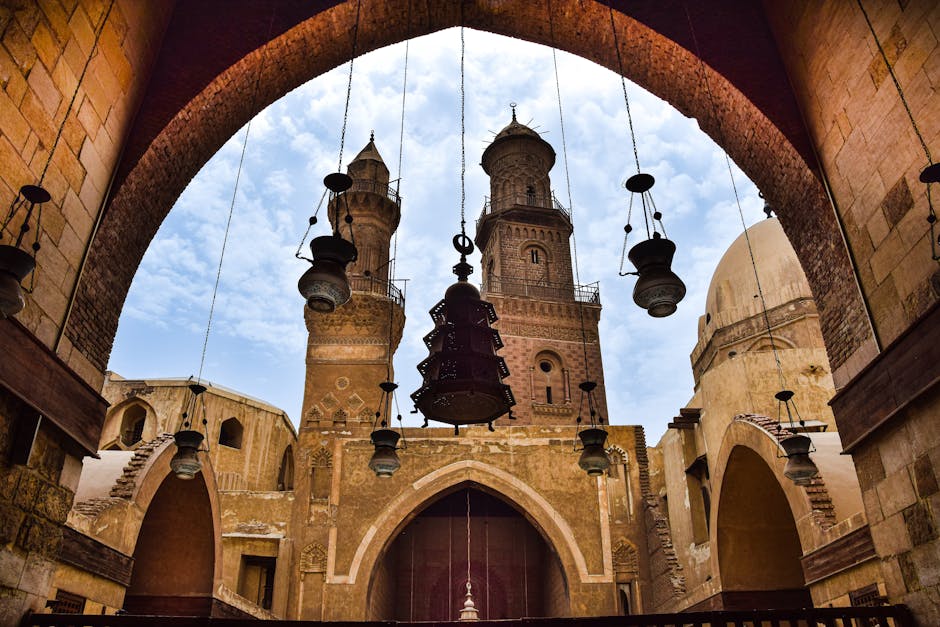
The walls of Babylon Fortress still enclose Coptic Cairo, and the community that formed around them is documented in the Christian heritage collection nearby.
Early Islamic Era (641-969 CE)
The foundation of Cairo:
- 641 CE: Muslim conquest of Egypt
- Al-Fustat founded as Islamic capital near Babylon Fortress (641 CE)
- Al-Fustat positioned on east bank of Nile for trade
- City grew rapidly as commercial center
- Multiple capitals: Al-Askar (750), Al-Qatai (870)
Fatimid Era (969-1171 CE)
The founding of modern Cairo:
- 969 CE: Fatimid Caliphate conquers Egypt
- Al-Qahira (“The Victorious”) founded as new capital
- Cairo becomes major Mediterranean trade hub
- Al-Azhar Mosque founded (970 CE)
- Bab Zuweila and city walls built
- Cairo expands northward along Nile
Mamluk Era (1250-1517 CE)
The golden age of medieval Cairo:
- Mamluk Sultanate centered in Cairo
- Massive urban expansion along Nile
- Hundreds of mosques, madrasas, mausoleums built
- Cairo becomes largest city in Africa/Middle East
- Nile trade with Indian Ocean and Mediterranean
- Bab Zuweila, Sultan Hassan Mosque from this era
Ottoman Era (1517-1798 CE)
- Ottoman conquest 1517
- Cairo continues as important provincial capital
- Nile commerce continues
- Some decline in influence vs. Istanbul
- Napoleon’s brief invasion 1798-1801
Muhammad Ali Era and Modern Egypt (1805-1952)
- Muhammad Ali Pasha modernizes Egypt
- Cairo expands rapidly
- Khedive Ismail builds modern downtown (1860s-70s)
- Belle Époque era — European architecture along Nile
- Suez Canal opens 1869, transforming Nile commerce
- British protectorate 1882-1952
1902: The First Aswan Dam
Major change to Nile dynamics:
- British-built dam controls flood waters
- Year-round irrigation possible
- Annual flood cycle disrupted (after 7,000 years)
- Egyptian agriculture transformed
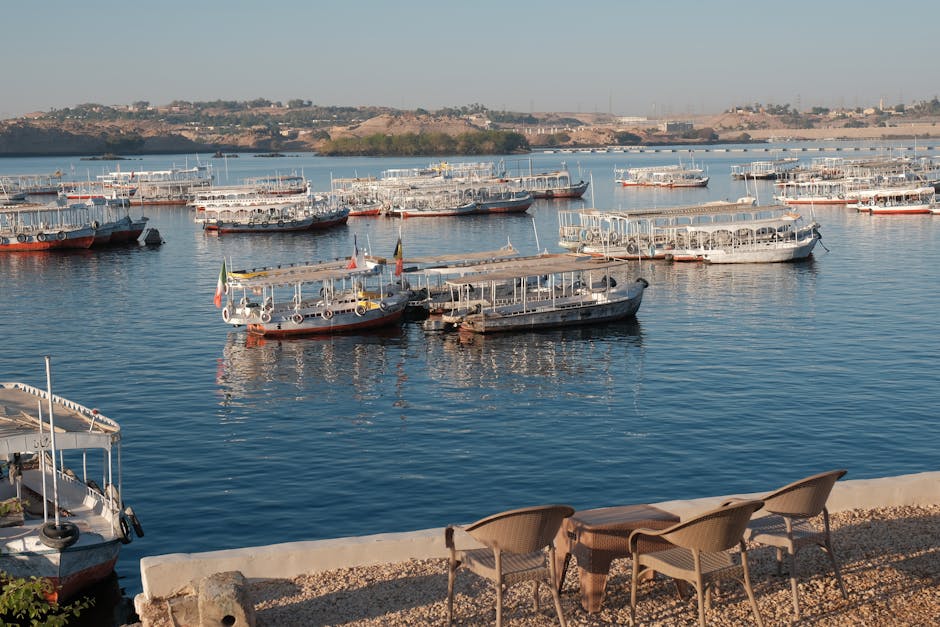
1971: The Aswan High Dam
The most transformative event for modern Nile:
- Soviet-aided dam completed
- Lake Nasser created (largest manmade lake at time)
- Annual floods eliminated
- Year-round agriculture
- Hydroelectric power for Egypt
- Some traditional farming patterns lost
- Salt accumulation concerns in Delta
Modern Era (1952-Present)
- 1952: Egyptian Revolution
- 1971: Aswan High Dam transforms Nile
- Cairo population explodes from 2 million to 22 million
- Nile pollution concerns develop
- Nile tourism becomes major industry
- 2020: Grand Egyptian Museum opens overlooking Pyramids
- 2023: Cairo Metro Line 3 extends to airport
That 2020 opening date turned out to be the first of several, and our guide covers what the new museum finally opened with.
Nile Gods in Ancient Egyptian Religion
- Hapy: God of the Nile flood — symbol of fertility
- Sobek: Crocodile god — feared and revered
- Osiris: God of the afterlife, associated with annual rebirth (flood cycle)
- Isis: Goddess of motherhood, associated with Nile waters
- Khnum: Ram-headed god of the Nile flood
Hapy, Sobek and Khnum are far easier to hold in mind once you have stood in front of them, which you can do in the galleries holding those statues.
Annual Nile Flood Cycle (Ancient)
The ancient Egyptian calendar revolved around the flood:
- Akhet (Inundation): June-September — flooding
- Peret (Emergence): October-February — planting
- Shemu (Harvest): March-May — harvesting
The Nile’s predictable flood made Egyptian civilization possible — and remarkable.
How to Experience Nile History in Cairo
- Visit Babylon Fortress in Coptic Cairo (Roman era)
- Walk through Old Cairo (Al-Fustat history)
- Tour the Egyptian Museum (Pharaonic Nile artifacts)
- Visit Saqqara (3100 BCE Memphis necropolis)
- See Pyramids of Giza (Old Kingdom along Nile)
- Walk Al-Muizz Street (medieval Fatimid Cairo)
- Visit Cairo Citadel (Mamluk era)
- Take a felucca (5,000-year-old sailing tradition)
- Visit Nilometer on Roda Island (measured ancient floods)
The cheapest way to feel any of this is to get onto the water in a boat whose rig has barely changed in five millennia. An hour runs about 400 EGP for the whole felucca in 2026, and where to board and when to turn up is spelled out separately.
The Nilometer (Roda Island)
An incredible historical site:
- Located on Roda Island in central Cairo
- Built 861 CE (Abbasid era) — earliest preserved Egyptian Islamic structure
- Measured Nile flood levels for taxation
- Octagonal central column with measurement marks
- Below-ground chamber accessible by stairs
- Open to visitors
Nile River History FAQ
How long is the Nile?
6,650 km — world’s longest river.
Where does the Nile start?
At Lake Victoria (Burundi/Rwanda/Uganda border).
Why was Cairo founded on the Nile?
Trade access, fertile flooding, drinking water, defensive river.
What ended the annual Nile flood?
The Aswan High Dam (1971) controls all water flow year-round.
How old is Cairo?
Modern Cairo founded 969 CE (Fatimid). Earlier Memphis (~3100 BCE) was 30 km south.
What’s the Nilometer?
861 CE structure on Roda Island that measured Nile flood levels.
Why is the Nile blue/green/sandy?
Different sediment loads from different sources. Cairo Nile is sandy-green.
Was the Nile worshipped?
Yes — multiple Nile gods (Hapy, Sobek, etc.) central to ancient religion.
How fast does the Nile flow?
About 4 km/h average at Cairo.
What’s the Babylon Fortress?
Roman-era fortress in Coptic Cairo, built ~30 BCE.
What was Al-Fustat?
The first Islamic capital of Egypt (641 CE), foundation of modern Cairo.
What made medieval Cairo great?
Mamluk Sultanate (1250-1517) made it the most powerful city in Africa.
How did Suez Canal affect the Nile?
Connected Mediterranean and Red Sea, reducing Nile’s commercial importance.
Is the Nile still important to Egypt?
Yes — 97% of Egypt’s water and most agriculture depend on it.
Can I visit Nile-related historical sites in Cairo?
Yes — Babylon Fortress, Nilometer, Egyptian Museum, all easily accessible.
Pulling It Together
Nile River history in Cairo spans 8,000+ years of human civilization — from pre-dynastic farmers settling its banks, through Memphis (3100 BCE), Roman Babylon Fortress (30 BCE), Islamic Al-Fustat (641 CE), Fatimid Al-Qahira (969 CE), Mamluk golden age, Belle Époque renewal, and modern transformation. The Aswan High Dam (1971) ended the annual flood cycle that had defined Egyptian agriculture and religion for 7,000 years. Today’s Nile is more controlled but no less essential to Cairo. Experience this history by visiting the Nilometer on Roda Island, taking a felucca (5,000-year-old sailing tradition), and connecting the dots between the river and Cairo’s monuments at every era.
History reads better in person. Line up viewpoints worth the early start, save an evening for the city at its most romantic, and keep a few indoor fallbacks in reserve for dusty days.