This article contains advertising. Our booking links are routed through a partner that adds commission tracking automatically, so if you book through one we earn a commission from the provider, at no extra cost to you. It never affects what we recommend. Affiliate disclosure
In Cairo, the neighbourhood you book matters more than the hotel itself. This is a 22-million-person city sprawled across 200-plus square kilometres, and the traffic is no joke — get your base wrong and you’ll spend two hours a day crawling between you and everything you came to see. Get it right and your evenings are walkable, your mornings calm, and the sights are a 20-minute Uber away. For most first-timers, the answer is Zamalek. But that’s not the whole story, and the best neighbourhoods in Cairo depend entirely on who you are and what you’re here to do.
I’ll walk you through the areas worth basing yourself in — the real feel of each, who it suits, what it costs, and how long you’ll actually spend getting to the Pyramids and the museums. There’s a comparison table partway down if you just want the verdict, plus the districts to skip as a base even though they’re fine to visit by day.
The fast answer: best neighbourhoods in Cairo by traveller type
If you’re short on time, here’s where I’d send people depending on the trip:
- First time in Cairo, want it easy: Zamalek
- Pyramid view for a night or two: Giza, on the Al-Haram strip
- Luxury and Nile views: Garden City
- Budget or hostel base with atmosphere: Downtown (Wust al-Balad)
- Travelling with kids, or staying a while: Maadi
- Early flight or a business trip: Heliopolis or New Cairo
- Returning visitor chasing character: a boutique stay in Islamic Cairo
Most people who get this right do one of two things: they pick Zamalek and stay put, or they split their stay — a couple of nights at the Pyramids, the rest somewhere central. More on that combination further down. This piece supports our wider where to stay in Cairo guide, which covers hotel picks across every budget once you’ve settled on an area.
Zamalek — the safe default for first-timers
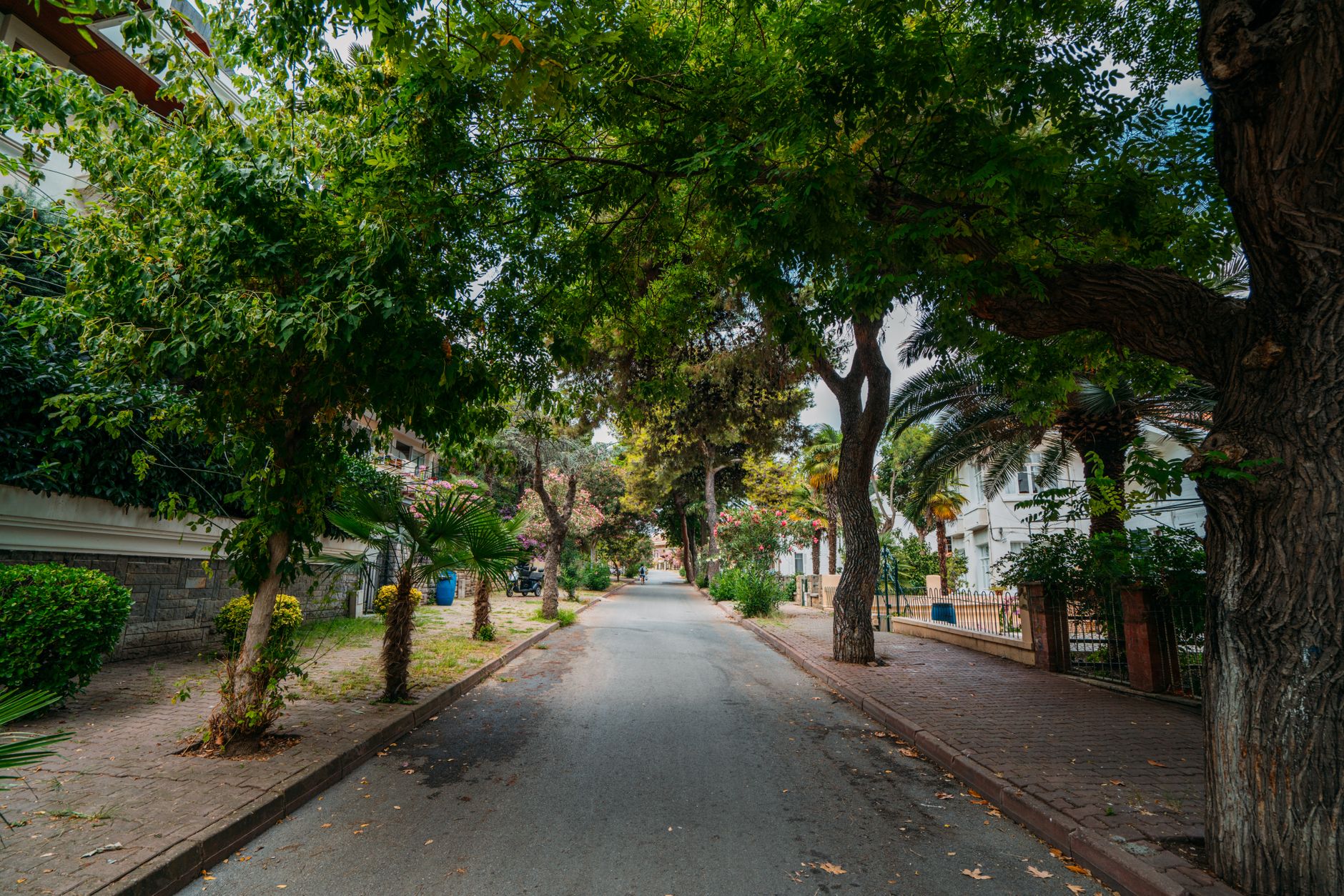
Zamalek sits on Gezira, the long island in the middle of the Nile, and it’s the one neighbourhood I recommend without much hesitation to anyone visiting Cairo for the first time. It’s leafy in a way almost nowhere else in the city is, the streets are genuinely walkable, and because so many embassies are here there’s a quiet, steady security presence that makes a difference if you’re nervous about your first night.
The dining is the best in the city, full stop — Sequoia on the northern tip for shisha and mezze by the water, Crimson for a rooftop sundowner, Pier 88, the old reliable Aboul Sid for proper Egyptian, and the restaurants inside the Cairo Marriott. On the island itself you’ve got the Cairo Opera House, the Cairo Tower, and the slightly faded but lovely Aquarium Grotto Garden. English is spoken everywhere, and solo travellers, women especially, tend to feel most at ease here.
The catch: you pay for it. Mid-range to upscale runs roughly $120–400 a night, and there isn’t much below $80. And because Zamalek is an island, every sight outside it means an Uber — the Pyramids are a good 45 minutes when traffic bites.
Where people stay: the Cairo Marriott Zamalek (a converted 19th-century palace, gardens and all), the Sofitel Cairo Nile El Gezirah on the southern tip, the Steigenberger, or Hotel Longchamps if you want something smaller and characterful. Reckon on downtown in 10 minutes, the Pyramids 45, Old Cairo 25, the Grand Egyptian Museum around 40, and the airport 45.
Garden City — quiet luxury on the river
Garden City is the diplomatic quarter, just south of downtown on the Nile’s east bank, and it’s where Cairo’s grandest hotels line the water. The streets curve deliberately — they were laid out that way a century ago, all jasmine and old villas — which makes it leafy and calm in a way central Cairo usually isn’t. The trade-off is that it has less of its own life than Zamalek.
This is the address for a Nile-view splurge. The Four Seasons at Nile Plaza, the Nile Ritz-Carlton on Tahrir, the Conrad, the Kempinski Nile — upper floors look straight out over the river. The embassy presence makes it about as secure as Cairo gets, and you can walk to Tahrir Square and the heart of downtown in a few minutes.
The catch: outside the hotel restaurants there’s not much to wander out to, and prices start high and stay there — figure $200–600 a night for the rooms worth booking. If you want a neighbourhood with a pulse of its own, this isn’t it.
Getting around: downtown is a walk; the Pyramids and the Grand Egyptian Museum sit around 35 minutes out, Old Cairo 15, the airport 35.
Downtown Cairo (Wust al-Balad) — atmosphere on a budget
Downtown is the old heart of the modern city — Belle Époque facades, century-old cafés, and the cheapest central beds you’ll find. It’s where I’d point a budget traveller or anyone who wants to feel like they’re actually in Cairo rather than insulated from it.
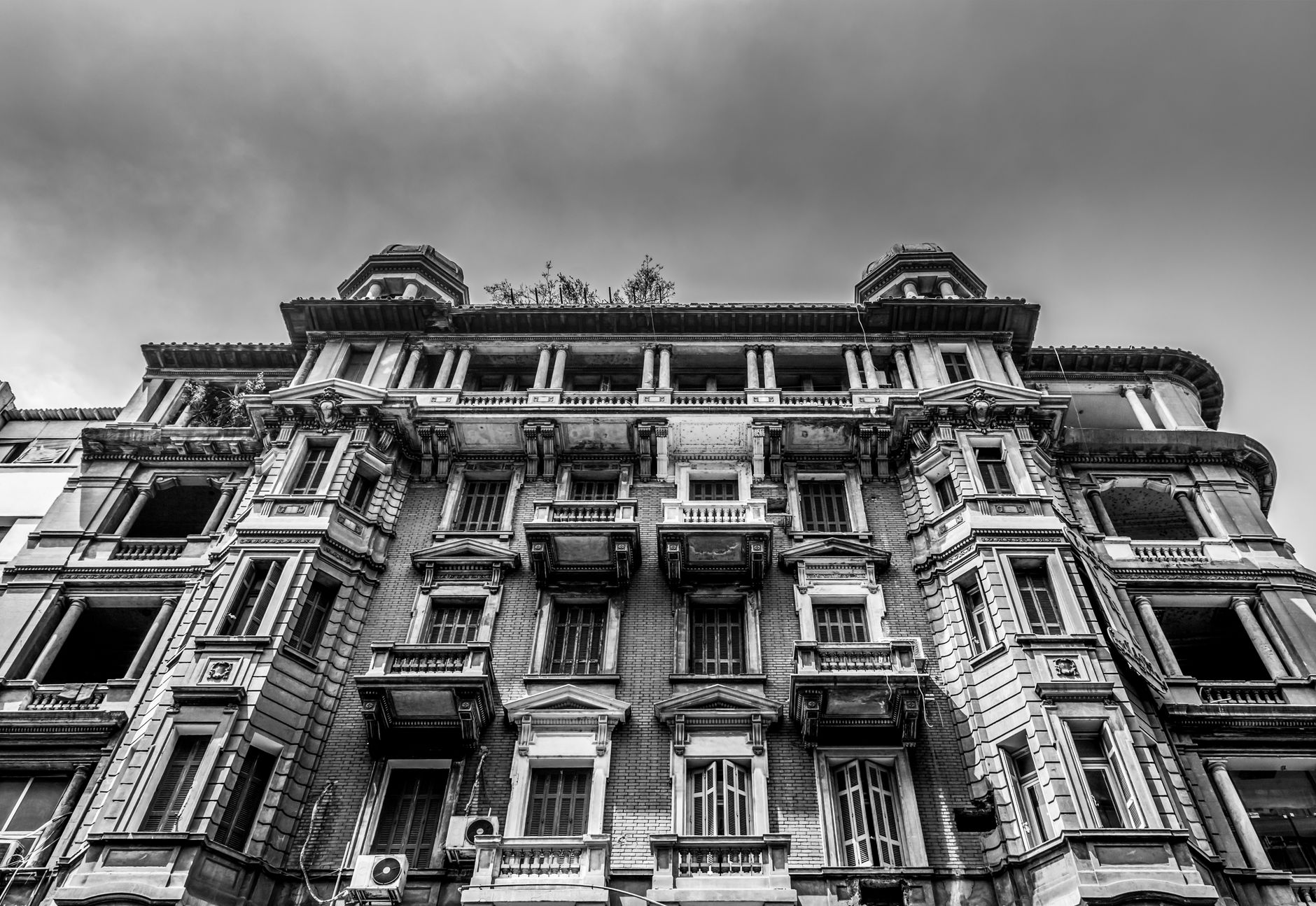
You can walk to the Egyptian Museum on Tahrir, and Khan el-Khalili is 15 minutes on foot or a quick cab. The cafés are the draw as much as the price: Café Riche, where the writers and revolutionaries used to sit; El Horreya, all marble tables and bottled Stella; Cap d’Or. This is also the most logical launchpad for self-guided walks through Islamic Cairo. The hostels here are the best in the city — Dahab Hostel on its rooftop, Villa Layla — and mid-range options like the Talisman and the Steigenberger Tahrir cover the step up.
The catch: it’s louder, grittier, and the air can feel heavier than on the island. Solo women may feel a bit more looked-at than in Zamalek, though it’s perfectly fine on the main streets by day and early evening. After dark, take an Uber the last stretch rather than wandering side streets.
Getting around: Pyramids about 30 minutes, Old Cairo 15, the Grand Egyptian Museum 30, the airport 30.
Giza, near the Pyramids — wake up to the Great Pyramid
Stay out here for a night, maybe two, if the idea of opening your curtains onto the Great Pyramid is what got you to Egypt in the first place. The hotels along Al-Haram Street have direct pyramid views from rooftops, terraces, and a lot of the rooms — and at sunrise, before the coach tours arrive, it’s genuinely something.
There’s a real reason to consider Giza now beyond the view: the Grand Egyptian Museum opened in full in November 2025 and it’s right here, a few minutes from the Pyramids rather than across town. If your trip is built around the Pyramids and the GEM, basing yourself in Giza for the museum-and-monuments stretch saves you a brutal cross-city commute. Our dedicated guide to Cairo hotels near the Pyramids and Giza breaks down exactly which properties have the views.
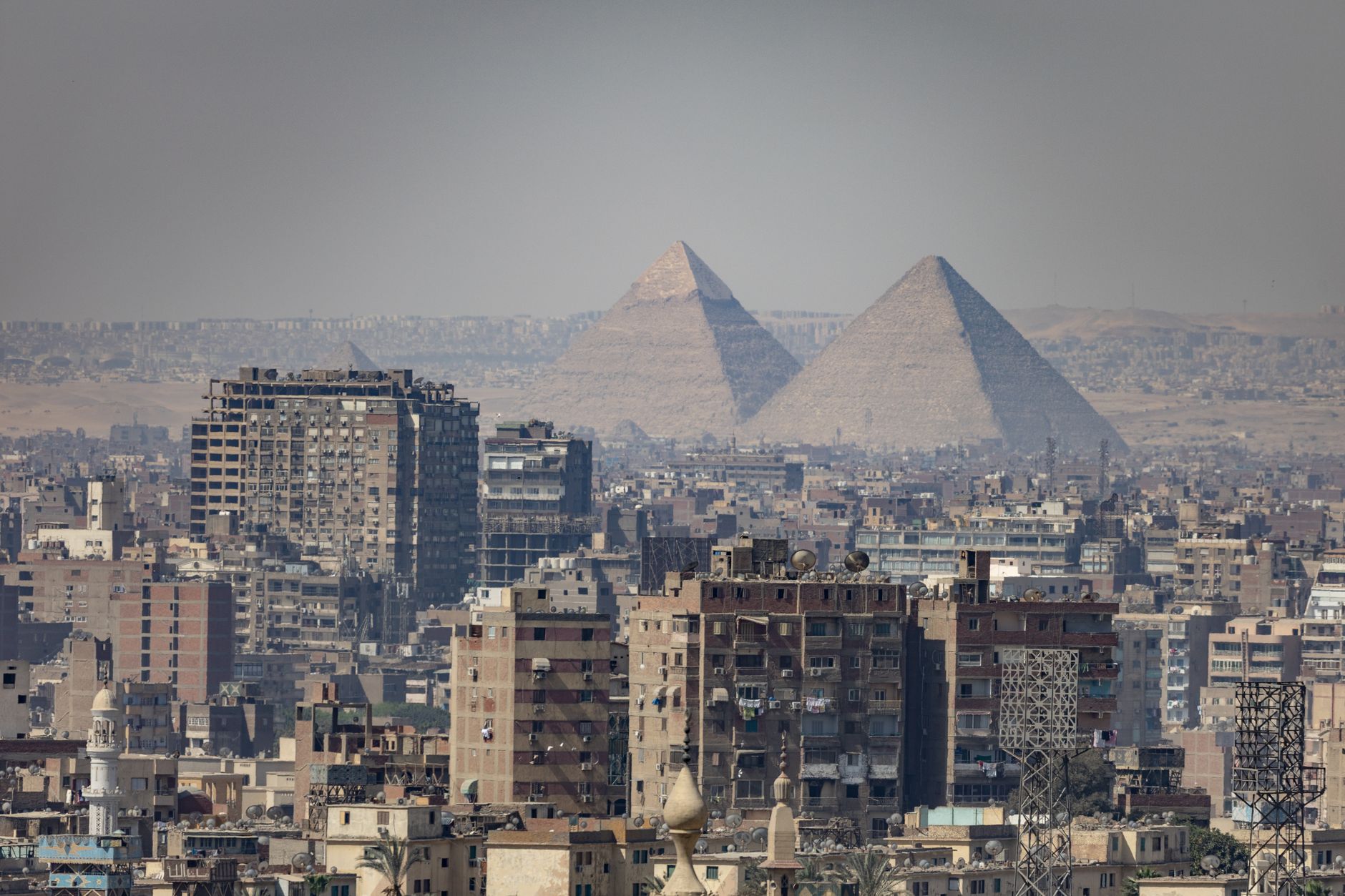
The catch: downtown is 45 to 60 minutes away in traffic, it’s far less walkable than the central districts, and the mid-budget middle is thin — you’re mostly choosing between proper luxury and fairly basic. The vibe is unapologetically touristy; this is not where you go to feel the everyday rhythm of the city.
Where people stay: the Marriott Mena House is the famous one — a 19th-century former royal lodge with the Pyramids filling the garden view — and the Four Seasons at the First Residence is the other luxury anchor. The Steigenberger Pyramids Cairo sits directly opposite the new museum. Hayat Pyramids View and Comfort Pyramids Inn cover the cheaper end. Walk to the Pyramids; the GEM is about 10 minutes; downtown 45; the airport a full hour.
Maadi — green, calm, good for families
Maadi is the leafy expat suburb south of the centre, and it’s the most relaxed corner of greater Cairo. Tree-lined streets, international schools, English-speaking pediatricians, and a café-and-restaurant scene that doesn’t ask anything of you. Families with young kids settle here for a reason, and so do long-stay travellers and remote workers who’ve had enough sensory overload.
Road 9 is the spine of it — restaurants, shops, a couple of bars — and Degla, the quieter quarter, hides good little hole-in-the-wall places. Lucille’s for an American-style breakfast, Pier 88 for the Nile, the ACE Club if you can get in. Crucially, Maadi is on Metro Line 1, so getting downtown doesn’t always mean fighting for a cab.
The catch: you’re 30 to 45 minutes from the big sights, the hotel selection is thinner than Zamalek’s, and you’ll lean on Uber for most sightseeing. If your trip is three packed days of monuments, this is too far out. If it’s two weeks with kids, it’s ideal.
Where people stay: the Pearl Hotel Cairo, the Holiday Inn & Suites Cairo Maadi, the Sonesta. Downtown is about 25 minutes, the Pyramids 50, Old Cairo 20, the airport 50.
Maadi is also where the apartment market makes most sense: a kitchen, a washing machine and room for four usually beats a hotel here, at roughly $55–$95 a night. Check how short-term rentals actually work here before booking a flat sight unseen.
Heliopolis — for the airport and business
Heliopolis is the planned “garden city” suburb up in the northeast, built in the early 20th century and full of strange, lovely neo-Moorish and Art Nouveau buildings. The reason most travellers end up here is simple: it’s 15 to 20 minutes from Cairo International Airport, which makes it the obvious choice for a layover, an early departure, or a business trip.
It’s more cosmopolitan and orderly than central Cairo, and the Korba district has genuinely atmospheric old streets worth a wander. The big business hotels are here — the Waldorf Astoria (the first in Africa), the Fairmont Heliopolis, the JW Marriott — along with the conference venues that go with them.
The catch: you’re 45 minutes or more from historic Cairo and a full hour from the Pyramids, so for a sightseeing-heavy trip it’s poorly placed. It’s modern in feel, with none of the souk-and-alley texture people come to Cairo for.
Getting around: airport 15 minutes, downtown 30, Old Cairo 35, the Grand Egyptian Museum about 50, the Pyramids 60.
New Cairo and the boutique outliers
New Cairo / Fifth Settlement is the modern luxury sprawl east of the city — the American University’s main campus, Cairo Festival City Mall, golf courses at Katameya Heights and Allegria, and business hotels like the JW Marriott, the Dusit Thani LakeView, and the Royal Maxim Palace Kempinski. The air is cleaner, it’s easy to navigate, and it’s 30 minutes to the airport. But it’s 45 to 60 minutes from anything ancient and feels frankly suburban, so it suits conference-goers and golfers more than sightseers.
At the opposite end of the spectrum, a boutique stay inside Islamic Cairo drops you in the most atmospheric part of the city — walking distance to Al-Muizz Street, Khan el-Khalili, and the Al-Hussein Mosque. Le Riad Hotel de Charme is the standout. The selection is tiny, the daytime crowds are heavy, and it can feel oddly empty and quiet at night, so I’d save this for a second visit when you already know the city. Brushing up on local customs first helps here more than anywhere — our crash course in Cairene manners is worth a read before you go.
Restored 1920s villas, a couple of riads inside Islamic Cairo, owner-run places with eight rooms and a rooftop — these sit off the usual chain map and are the reason some visitors ignore neighbourhood logic entirely. We line up the small properties worth the extra hassle and who each one suits.
Cairo neighbourhoods at a glance
| Neighbourhood | Best for | Vibe | Nightly price |
|---|---|---|---|
| Zamalek | First-timers, solo travellers | Leafy island, walkable, refined | $80–400 |
| Garden City | Luxury, Nile views | Quiet, diplomatic, grand | $200–600 |
| Downtown | Budget, atmosphere | Gritty, historic, lively | $20–150 |
| Giza (Pyramids) | Pyramid views, GEM trips | Touristy, iconic, spread out | $60–500 |
| Maadi | Families, long stays | Green, calm, suburban | $50–250 |
| Heliopolis | Business, airport access | Modern, orderly, cosmopolitan | $80–400 |
| Islamic Cairo | Returning visitors, boutique | Medieval, immersive, crowded | $50–200 |
| New Cairo | Conferences, golf | New-build, clean, car-dependent | $100–400 |
Prices are rough peak-season guides for a double room and shift with the season and the dollar — treat them as ballpark, not gospel.
The two-base trick most savvy visitors use
Here’s the move that gets you the best of Cairo: split your stay across two neighbourhoods. It costs a little extra in faff but saves hours of commuting and gives the trip real range. The pairings that work:
- Marriott Mena House (Giza, 1–2 nights) + Zamalek (3–4 nights) — the pyramid view, then a comfortable central base for everything else.
- Four Seasons Garden City (3 nights) + Le Riad in Khan el-Khalili (1–2 nights) — glossy Nile luxury, then a few nights inside the medieval city.
- Heliopolis (arrival and departure nights) + Zamalek (the days in between) — painless airport transfers wrapped around a proper Cairo stay.
If you do split, plan the order around your flights and your sightseeing so you’re not hauling bags across town at rush hour. Our where to sleep in Cairo pillar has the full hotel rundown for each area, and the budget hotels and hostels guide and luxury 5-star hotels guide go deep on either end of the price range.
The districts to skip as a base
A bit of honesty, because most guides won’t say it. These areas are fine — often fascinating — to visit by day, but they’re the wrong place to book a hotel:
- Imbaba — dense, working-class, no tourist infrastructure to speak of.
- The City of the Dead (Qarafa) — the inhabited cemetery district; remarkable to see with a guide, not somewhere to stay.
- Mansheyat Nasr (Garbage City) — a brilliant guided visit, genuinely, but not a base.
- Al-Matariya and Ain Shams — far from the sights, little reason to be there overnight.
- The industrial side of 6th of October City — nowhere near anything you came for.
None of these are no-go zones for a daytime visit with a guide. They’re just not hotel territory.
Best neighbourhoods in Cairo: FAQ
What’s the safest neighbourhood in Cairo for tourists?
Zamalek, Garden City, Maadi, and Heliopolis are the safest bets — low crime, visible security, and easygoing for walking. Zamalek edges it for first-timers because it’s both safe and central.
Where should a first-time visitor stay?
Zamalek. It’s walkable, safe, has the best dining, and sits close enough to both downtown and Giza that nothing feels out of reach. If in doubt, book here.
Where should solo female travellers stay?
Zamalek first, Maadi as a calmer alternative. Both feel relaxed and unbothered for women travelling alone. For the full picture, our where to stay in Cairo guide covers the safest-area hotels.
Should I stay right next to the Pyramids?
For one or two nights, yes — the sunrise view is worth it, and with the Grand Egyptian Museum now open right there, Giza makes sense for the monuments stretch of your trip. For a longer Cairo visit, keep a central base and add a couple of Pyramid nights rather than staying out there the whole time.
Which neighbourhood is most walkable?
Zamalek, comfortably, with Islamic Cairo close behind for sheer density of things to stumble onto. Maadi has lovely walking too but it’s sprawling, so you cover less on foot.
Can I walk between Cairo neighbourhoods?
Generally no — they’re too far apart and the roads aren’t built for it. Use Uber or Careem, or the metro where it reaches (Maadi and downtown are both on Line 1). Between districts, always ride.
Which area has the best food?
Zamalek and Maadi for range and quality; Downtown for atmospheric old restaurants and cafés; Khan el-Khalili for traditional Egyptian in a medieval setting. Plan your eating with our district-by-district restaurant and street-food picks.
Plan the rest of your stay
Once you’ve picked your patch, line up the hotels and the practicalities:
- Where to Stay in Cairo — the full neighbourhood-and-hotel pillar this guide feeds into.
- Budget Hotels & Hostels in Cairo — the best value beds, mostly Downtown.
- Luxury 5-Star Hotels in Cairo — the Garden City and Giza heavyweights.
- Cairo Hotels Near the Pyramids & Giza — which properties actually have the view.
- Cairo Culture & Etiquette — the customs worth knowing before you arrive.
- Cairo Food Guide — what and where to eat, neighbourhood by neighbourhood.
Match the area to your priorities, lean on the two-base trick if your trip is long enough, and you’ll spend your time in Cairo seeing it rather than sitting in traffic looking at it.
Heliopolis rarely makes a first-time visitor’s shortlist, but it earns a place for one specific night: the first after a late landing, or the last before an early flight, when the airport is ten to twenty minutes away instead of an hour or more. Our guide to sleeping at or near Cairo airport covers the Heliopolis and airport hotels, their shuttles and the Le Méridien’s bridge to Terminal 3.