This article contains advertising. Our booking links are routed through a partner that adds commission tracking automatically, so if you book through one we earn a commission from the provider, at no extra cost to you. It never affects what we recommend. Affiliate disclosure
Visiting the Pyramids of Giza is simpler than the touts at the gate want you to believe. General admission to the plateau is 700 EGP (about 14 USD) for adults, the site opens at 8 AM, going inside the Great Pyramid costs extra and sells out fast, and almost everything is now card-only. Get there early, agree every price before you hand over money, and the rest takes care of itself.
I’ve walked this plateau at dawn in January with my breath fogging and at noon in July when the sand threw heat back up at me like an oven door. It is, genuinely, one of the few sights that outruns its own postcards. But it’s also a working tourist site on the edge of a city of twenty-plus million people, with the hustle that comes with that. This guide tells you what’s actually out there, what it costs in 2026, when to come, how to get in (and inside), and how to dodge the small army of people whose job is separating you from your cash.
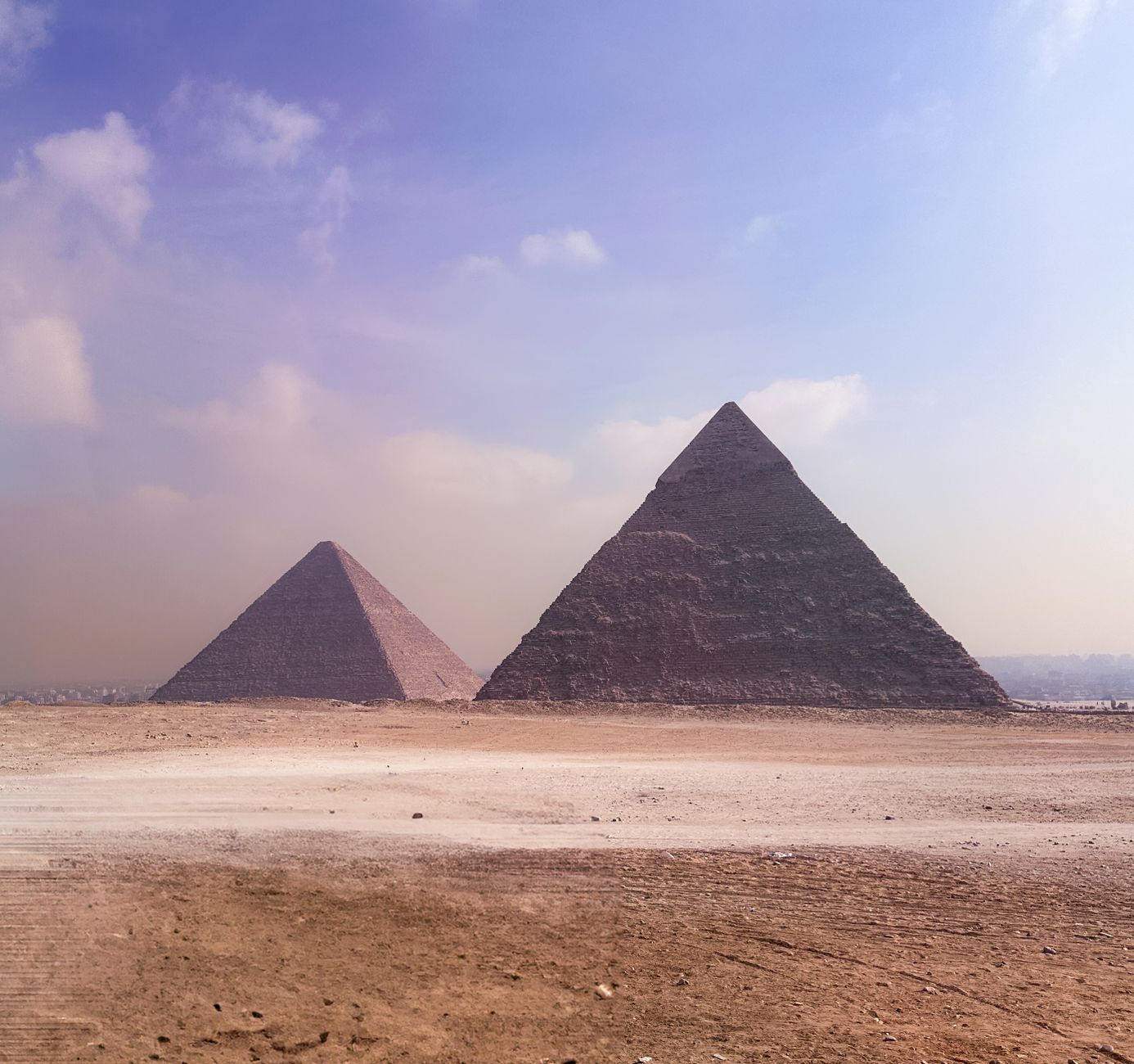
What’s Actually on the Giza Plateau
People say “the pyramids” as if there are three things to see. There are more like a dozen, spread over a sandy plateau roughly two kilometres across. Here’s the lay of the land before you go.
The Great Pyramid of Khufu (Cheops)
The big one. Built around 2560 BCE for the pharaoh Khufu, it’s the oldest and largest of the three and the only survivor of the original Seven Wonders of the Ancient World. It topped out at 146.6 metres (481 feet) and held the record for tallest human-made structure on Earth for nearly four thousand years. Today, minus its capstone and gleaming outer casing, it stands about 138.5 metres. Each base side runs roughly 230 metres, and the whole footprint is level to within a couple of centimetres end to end — a precision that still rattles engineers.
Inside are three known chambers: the King’s Chamber, built from red granite hauled over 800 kilometres from Aswan and holding a single empty sarcophagus; the smaller, limestone-lined Queen’s Chamber; and the Grand Gallery, a 47-metre corbelled corridor that climbs toward the heart of the structure. You can go inside with a separate ticket, which I’ll cover below in detail.
The Pyramid of Khafre (Chephren)
Built for Khufu’s son, Khafre’s pyramid looks taller than the Great Pyramid from a distance — it isn’t, but it sits on higher bedrock and rises at a steeper angle, so the eye is fooled. The real treat is the cap of original Tura limestone casing still clinging to its summit. Stand below it and you get a hint of how all three once looked: smooth, white, blinding in the sun. Its funerary complex, including the granite-pillared valley temple where mummification happened, is the best preserved on the plateau.
The Pyramid of Menkaure (Mykerinos)
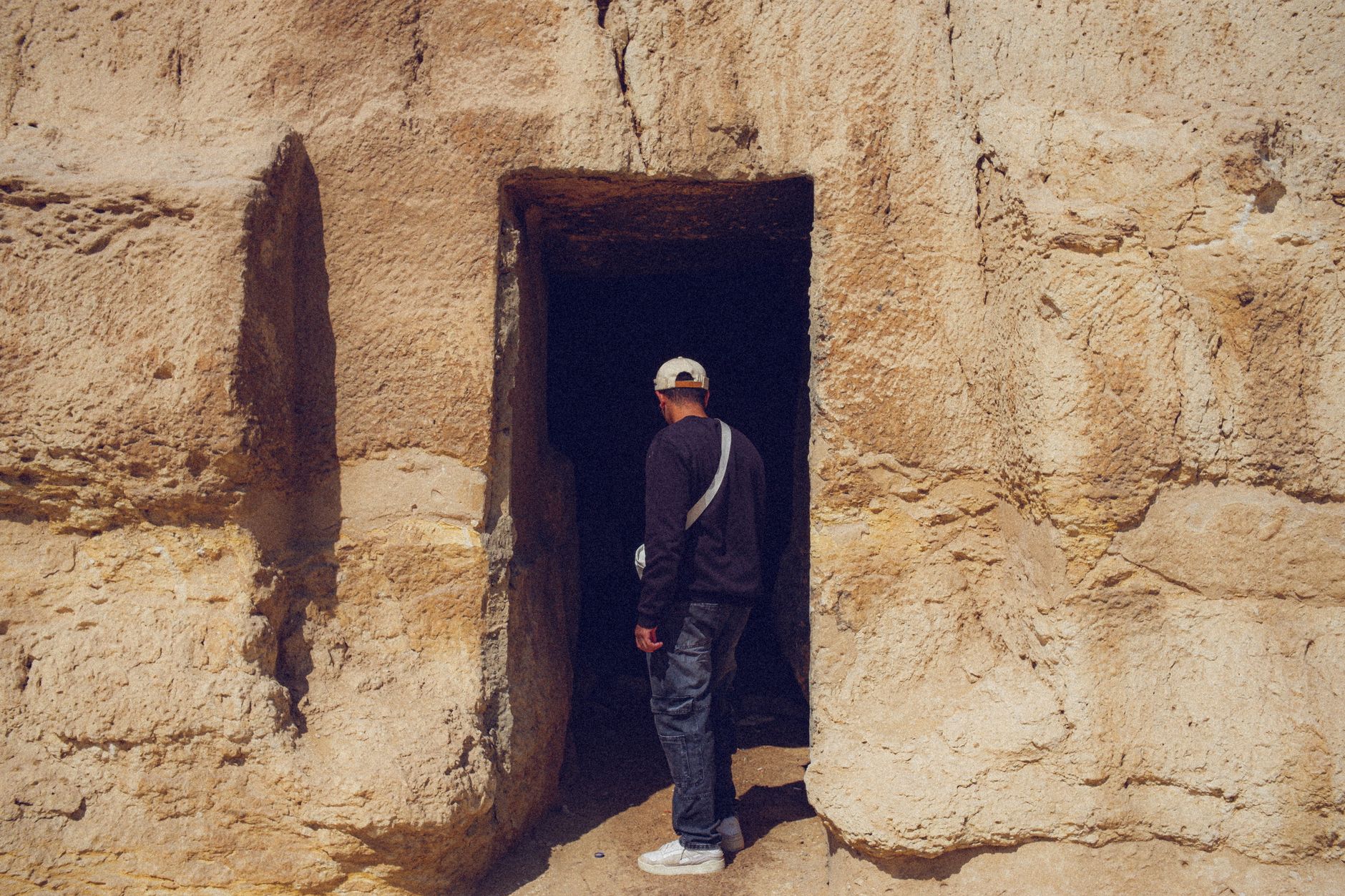
The smallest of the trio at 65 metres, built for Khafre’s likely son. Its lower courses were clad in red Aswan granite rather than limestone, giving it a two-tone look up close. Three little queens’ pyramids line up beside it. It’s the least visited of the three, which is exactly why I like wandering over here when the crowds clot around Khufu.
The Great Sphinx
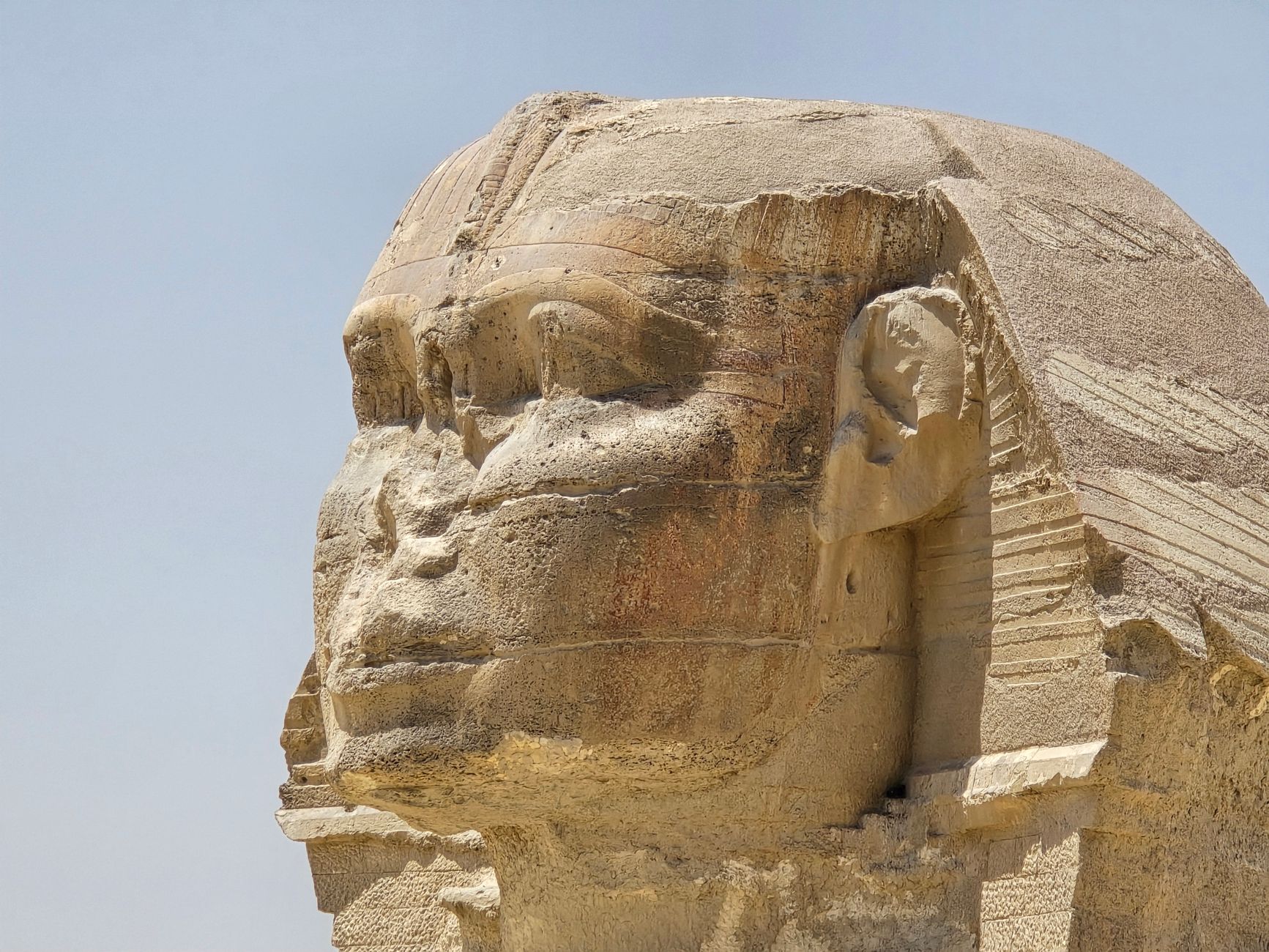
Carved from a single ridge of bedrock, the lion-bodied, human-headed Sphinx has kept watch here for some 4,500 years. It’s 73 metres long and 20 metres high — the largest monolith statue on the planet. Most Egyptologists tie it to Khafre’s reign and reckon the face is his. Between its paws sits the Dream Stele, recording a restoration ordered by Thutmose IV around 1400 BCE, so people have been patching this thing up for over three millennia. The viewing platform by the Sphinx Temple is where you’ll get the classic shot with Khafre’s pyramid stacked directly behind it. For the full backstory and the best angles, our complete visitor guide to the Sphinx goes deeper than I can here.
The Solar Boat and the Grand Egyptian Museum
Here’s a change worth flagging. For years a dedicated museum beside the Great Pyramid housed Khufu’s reconstructed solar boat — a 4,600-year-old, 43-metre cedar vessel, the oldest intact ship of its size ever found. That boat has now moved to the Grand Egyptian Museum (GEM), which opened in November 2025 about two kilometres from the plateau. So don’t go hunting for the old boat museum on site; the Solar Boat now lives at GEM, where a second boat is being restored in public view.
GEM deserves a day of its own — it’s the largest archaeological museum in the world and the first place to show all 5,398 pieces of the Tutankhamun collection together, golden mask and all. Pairing it with the plateau is the single best way to spend a full day in Giza, and I’ll explain how to combine them below. Our guide to Cairo’s museums covers GEM, the old Egyptian Museum at Tahrir, and the rest in full.
If you want the deep history — who built these, how, and why the “slaves built the pyramids” story is flat wrong (the workers were paid, fed, housed, and even given medical care) — read our standalone piece on Pyramids of Giza history and facts. To find your way around once you’re inside the gates, the Giza complex map and layout guide is worth a glance before you go.
Tickets, Prices and Opening Hours in 2026
Let’s get the money sorted, because this is where people either overpay or get caught out. First, the big one: most ticket windows on the plateau are now card-only. Egypt moved nearly all its major sites to cashless payment, and Giza is one of them. Bring a Visa or Mastercard that works abroad. If your card gets declined, you’re stuck, so carry a backup card and don’t assume a stray pile of EGP banknotes will save you.
General admission gets you onto the plateau — the exteriors of all three pyramids, the Sphinx, the surrounding tombs and temples. Going inside any pyramid is a separate ticket, sold per pyramid. Here’s the breakdown as of 2026:
| Ticket | Adult (approx.) | Notes |
|---|---|---|
| Giza Plateau general admission | 700 EGP (~14 USD) | Students with a valid ISIC card pay half (350 EGP). Children 6–12 half price; under 6 free. |
| Inside the Great Pyramid (Khufu) | 1,500 EGP (~30 USD) | Strictly capped daily and sells out — see below. Price rose from 900 EGP in 2025. |
| Inside the Pyramid of Khafre | ~100 EGP | Open when on rotation; far cheaper, far less crowded. |
| Inside the Pyramid of Menkaure | ~200 EGP | Open when on rotation. |
| Tripod photography permit | ~20 EGP | Handheld phone and camera photos are free with admission. |
| Sound & Light show (evening) | from ~20–25 USD | Separate evening ticket; VIP seating costs more. |
A quick reality check on those numbers: Egyptian ticket prices have crept up steadily as the pound has weakened, so think of these as a current snapshot rather than gospel — the plateau ticket in particular has risen more than once in recent years. For a fuller running breakdown and the latest figures, see our dedicated Giza Pyramids tickets and prices guide for 2026, which we keep updated as fees change.
Opening hours. The plateau opens daily at 8 AM. Closing shifts with the season: roughly 5 PM in summer (April–September) and 4 PM in winter (October–March), with last entry about an hour before the gates close. During Ramadan, hours pull in earlier, with last entry around 3:30 PM. There’s no regular weekly closure — it’s open year-round. As of 2026 there’s no genuine “skip the line” online ticket sold by the site itself for general entry, so be wary of any random website claiming to sell official plateau tickets; buy at the gate or through the government portal (egymonuments.com) and a reputable tour operator.
One genuinely good change in recent years: a free shuttle now loops around the plateau, replacing the private cars that used to clog the place. It cut the congestion and means you no longer have to haggle with a driver just to get from Khufu to the panorama point.
Going Inside the Great Pyramid
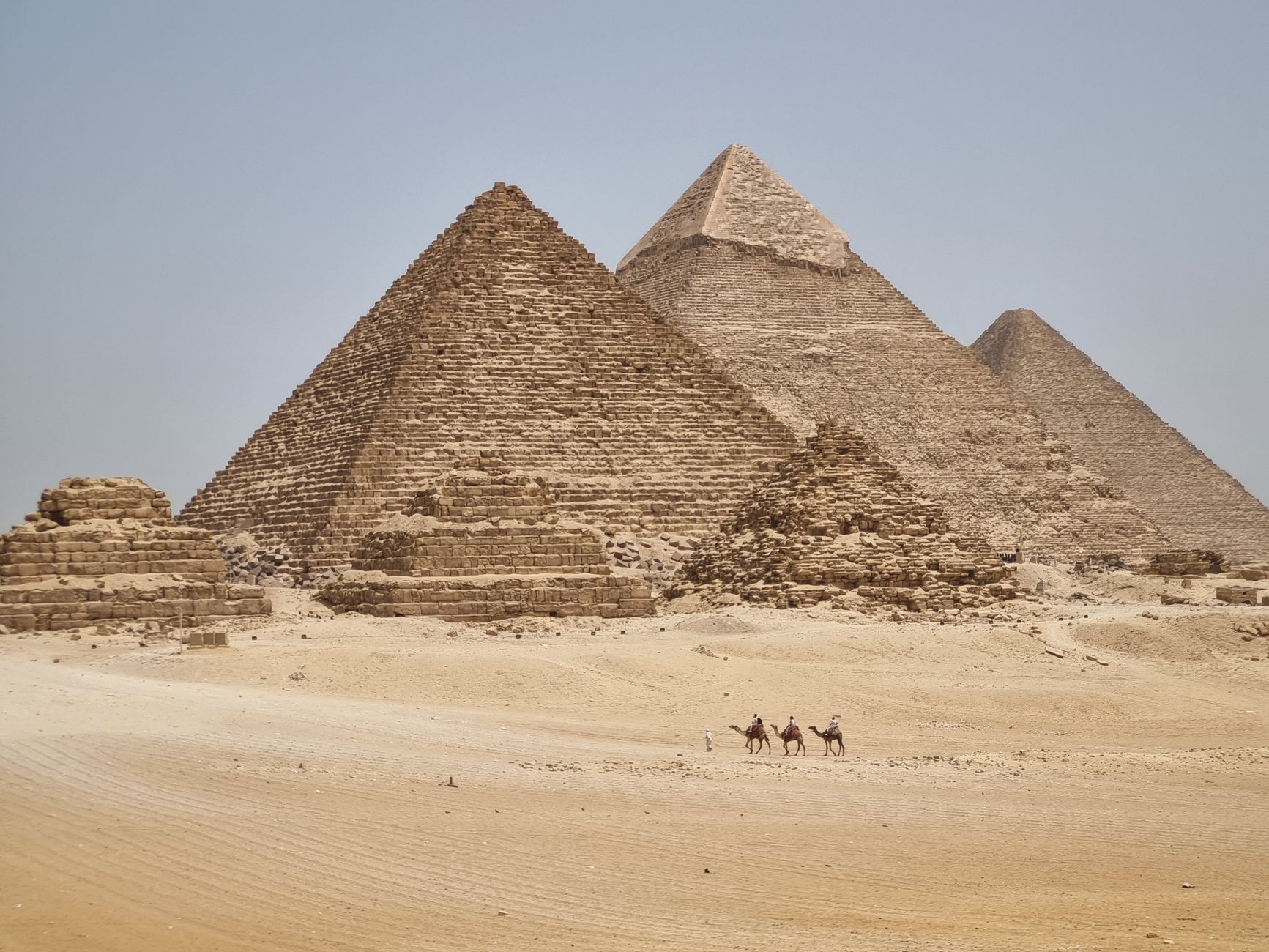
Yes, you can go inside, and yes, it’s worth doing once — but set your expectations first. At any given time two of the three main pyramids are open for interior visits; the Great Pyramid is almost always one of them, while Khafre and Menkaure alternate as the second.
What you’ll find inside the Great Pyramid is bare, undecorated stone. No hieroglyphs, no paintings, no treasure — those left long ago, and the chambers were never decorated to begin with. What you get instead is the strange, heavy quiet of standing deep inside a four-thousand-year-old mountain of stone. The route runs up the steep ascending passage, through the soaring Grand Gallery, into the King’s Chamber with its granite walls. There are wooden walkways and handrails now, but you’ll still be bent double in places, and it gets hot, humid and tight. If you’re claustrophobic or have mobility or breathing issues, skip it without guilt — the outside is the real spectacle anyway.
The catch is access. Interior tickets for Khufu are strictly limited and released in two batches — the commonly cited setup is 150 in the morning from 8 AM and 150 in the early afternoon from 1 PM. In peak season (October–April) they can be gone by mid-morning. If going inside the Great Pyramid is a priority, get to the gate at opening and head straight for that ticket window before anything else. Khafre’s interior, when it’s open, is a fraction of the price and almost never sold out, and honestly the climb down into it is just as atmospheric. Our full walk-through of what it’s like, which chambers you reach and how to time it sits in the inside the Great Pyramid interior access guide.
Best Time to Visit and Beating the Crowds
Two timing decisions matter: the season and the hour. Get both right and you’ll have stretches of the plateau almost to yourself.
Season. The comfortable window is October through April. November and March are the sweet spots — warm, sunny, walkable. December to February brings the most pleasant weather but also the biggest crowds and the longest interior-ticket queues. Summer (June–September) is brutal: the plateau can push past 40°C with essentially no shade, and by late morning you’ll be hiding from the sun rather than enjoying the view.
Hour. Whatever the season, come at opening. Roll up at 8 AM and you get the coolest air, the thinnest crowds, the best light on the eastern faces, and a clear run at interior tickets — all before the tour buses start disgorging at around 10 AM. The other good window is late afternoon, from roughly 3 PM, when the day-trip groups thin out and the light turns gold. Midday is the worst of everything: hottest, busiest, flattest light. If your schedule allows only one slot, make it the morning. There’s a whole strategy to dodging the worst of the crush, including which gate to use and where the groups cluster, in our best time to visit the Pyramids guide on avoiding crowds.
For how Cairo’s weather behaves across the year more broadly — and which months to plan a whole trip around — our complete Cairo travel guide lays it all out.
How to Get to the Pyramids from Cairo
The plateau sits about 15 kilometres southwest of central Cairo, in Giza. How long it takes depends entirely on traffic, which in Cairo can be a contact sport.
- Uber or Careem. My default, and what I’d tell any first-timer to use. The fare is fixed in the app, so there’s no haggling and no “the meter’s broken” routine. Expect somewhere around 150–250 EGP from downtown depending on traffic and time of day. Set your drop-off to the main entrance, not just “pyramids,” so you don’t get left at a random tout-heavy side gate.
- White taxis. Fine if you insist on the meter being used or agree the fare before you get in. Many drivers will quote a tourist price; the apps spare you that.
- Staying in Giza. Several hotels sit close enough to walk, and a few face the plateau directly. If you want to roll out of bed and be at the gate at 8 AM, this is the move — see our where to stay in Cairo guide for the Giza options and the trade-offs versus basing yourself in Zamalek or downtown.
- Public transport. Buses and microbuses serve the area cheaply but they’re confusing if you don’t read Arabic and not really worth the hassle for the small saving.
If you’re trying to work out the metro, the white-taxi etiquette and the ride-hailing apps in general, our getting around Cairo transportation guide breaks down every option.
Camel and Horse Rides (and How Not to Get Fleeced)
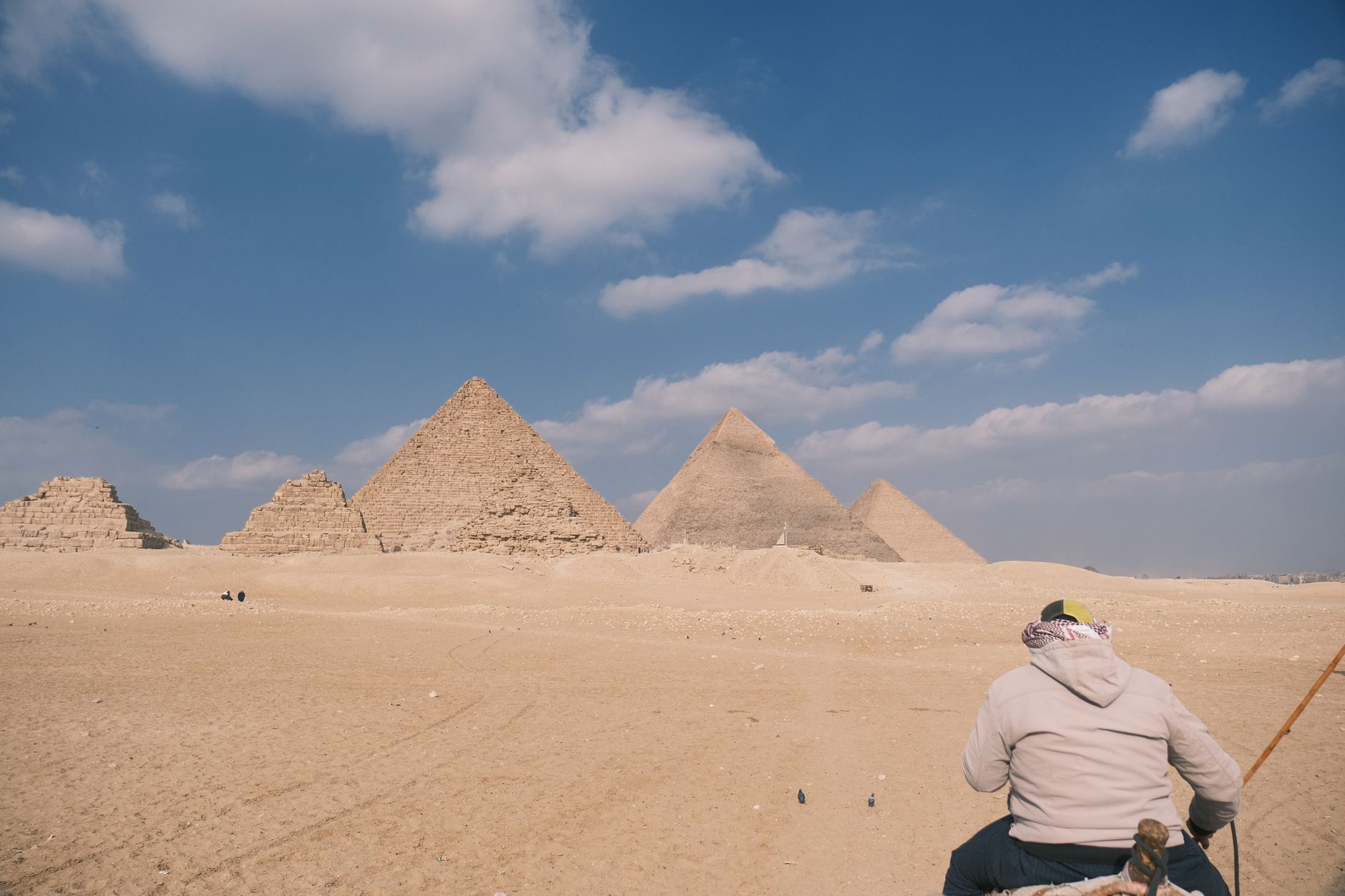
A camel plodding across the sand with the pyramids behind it is the photo everyone wants, and a ride out to the panorama point genuinely is a lovely thing to do — at sunrise or sunset especially, when the monuments turn to silhouettes. But camel and horse rides are also where the most reliable scams on the plateau happen, so go in with your eyes open.
A fair price for a short ride of about 30 minutes is roughly 300–500 EGP. Longer rides out to the viewpoint where all three pyramids line up cost more. Here’s the non-negotiable rule, and I mean it: agree the total price, the duration and the route before you get on the animal, and pin down whether that price is per person or for the whole group. Ideally get the number confirmed clearly, even written down on your phone.
The classic trick: a handler quotes you a cheap price — say 50 or 100 EGP — to get on. What he doesn’t mention is that the price to make the camel kneel so you can get off is several times higher, and by then you’re stranded in the sand a long walk from anywhere. A close cousin is quoting a low fare for the ride out and then demanding a fortune for the return. If a price sounds too good, it is the setup for one of these. Pay only what you agreed, fold any tip into that figure up front, and don’t be bullied by the “but you have to pay to get down safely” line.
If wobbling on a camel isn’t your thing, the free shuttle and the walking paths get you everywhere comfortably. For a deeper look at booking a ride through a reputable operator versus chancing it with a freelancer at the gate, plus what a good ride actually includes, see our camel ride at the Pyramids experience and tips guide.
The Sound and Light Show
The show’s official site said in October 2026 that the shows at the pyramids are temporarily suspended due to development works, so check soundandlight.show before you plan around it. After dark, the plateau turns into an open-air theatre. Floodlights wash over the pyramids and the Sphinx while a narrated show tells the story of the pharaohs who built them. When it is running, the English performance is usually in the early evening (commonly around 7–8 PM), with other nights cycling through French, Spanish, German, Italian, Russian, Japanese and Arabic — so check which language plays on your date.
Standard tickets start around 20–25 USD, with pricier VIP seating. Opinions split hard on this one: some travellers find the script and effects a touch dated, others find the whole thing genuinely magical. What’s not in doubt is that seeing these monuments lit up against a black desert sky is a completely different experience from the daytime visit. Bring a light jacket — once the sun’s gone the desert turns surprisingly cold. Full details on showtimes, where to sit and whether to bother are in our Sound and Light show evening entertainment guide.
Photography: Getting the Shot
These are among the most photographed objects on Earth, and the difference between a flat snapshot and a great frame is mostly about light and position.
Shoot in the golden hours — the first hour after sunrise, the last before sunset — when low, warm light rakes across the pyramid faces and the sand glows amber. For the iconic all-three-in-a-row shot, head to the panorama point on the southern edge of the plateau, reachable by shuttle, on foot or by camel. The Sphinx photographs best from the viewing platform by its temple in the morning, when the sun hits its face. For something different, frame the pyramids from a Giza rooftop restaurant so the ancient monuments stack up against the modern city sprawl right behind them — a juxtaposition that surprises a lot of first-timers.
Practical notes: handheld phone and camera shots are free. A tripod needs that cheap permit. Drones are flatly banned across the plateau — don’t even unpack one. For composition tricks, the exact viewpoints and how to handle the harsh midday glare, our Pyramids of Giza photography tips guide has the picture-perfect rundown.
Visiting with Kids
Kids tend to be floored by the sheer scale of the place, and it’s a fine family outing — with some planning. The plateau is big, sandy and shadeless, so load up on water, snacks and sun cover. Skip the stroller; the terrain defeats wheels. A baby carrier is far better for toddlers.
Under-6s get in free and 6–12s pay half. The camel and horse rides are usually a huge hit with children, and the free shuttle saves little legs from a death march across the sand. Going inside the Great Pyramid isn’t ideal for very young kids — those passages are tight, steep and hot — but older children who don’t mind enclosed spaces often find it thrilling. Pair the visit with GEM, where the displays are big, gold and genuinely kid-grabbing, and you’ve got a full, well-paced day. Our Pyramids of Giza with kids family-friendly guide covers timing, what to pack and how to keep small humans happy on the plateau.
What to Wear and Bring
- Shoes: closed-toe walkers with grip. The ground is uneven sand and loose stone, and pyramid interiors demand sturdy footwear.
- Clothing: light, breathable, covering shoulders and knees — both for the sun and out of respect.
- Sun kit: wide-brimmed hat, high-SPF sunscreen, proper sunglasses. There is essentially no shade out there.
- Water: at least a litre per person. Vendors sell drinks on site but at marked-up prices.
- Cards: a working international card (and a backup), since ticketing is cashless.
- Small notes: a little EGP cash is still handy for tips, a camel ride or buying water from a stall, even though tickets are card-only.
For a full pre-trip kit list and the wider money picture in Egypt, our money primer covering cash and cards is the place to start.
Common Scams and How to Shut Them Down
The plateau attracts persistent touts, and forewarned really is forearmed. None of this should put you off — it’s manageable once you know the playbook.
- “The ticket office is closed / you need a special permit.” A stranger near the entrance tells you this, then offers to “help.” It’s false. Say la shukran (no thank you) and walk straight to the official ticket counter.
- The photo grab. Someone offers to take your picture, then won’t hand your phone back until you pay. Others drape a scarf or headdress on you, put a camel’s reins in your hand, or press a “gift” souvenir into your palm — all uninvited — then demand money. Politely decline every unsolicited gesture and keep a firm grip on your stuff.
- The camel dismount trap. Covered above, but it bears repeating: agree the full price, route and return before mounting, and don’t pay extra to get down.
- Tourist Police. They patrol the plateau in uniform and are there to help. If a tout gets aggressive or you feel hassled, walk to one and ask.
For Egypt-wide etiquette, tipping norms and how the everyday hustle works (and why a confident “no” is your best tool), see our full cultural briefing for visitors.
How Much Time and a Sample Day
A focused visit to the three pyramid exteriors and the Sphinx runs about two to three hours. Add an hour if you’re going inside the Great Pyramid, to cover the queue and the climb. A thorough plateau day — all three pyramids, the Sphinx, the panorama point, a camel ride, the valley temples — fills four to five hours comfortably.
If you’re combining with the Grand Egyptian Museum, block out a full day. GEM alone wants three hours minimum, ideally four to five. The itinerary I’d run: be at the plateau gate at 8 AM, explore until around noon, break for lunch at a restaurant near the site, then spend the afternoon at GEM. Doing the monuments and then the museum that holds their treasures, in that order, is the version that actually makes sense of what you’ve seen.
Where to Eat Nearby
You’ll be ravenous after hours in the desert. Several restaurants near the plateau pair Egyptian and international food with rooftop pyramid views. For a splurge, Khufu’s at the Four Seasons and the more casual 9 Pyramids Lounge both serve up that view with your meal. Inside the gates, vendor stalls cover water and basic snacks but not much more, so eating just outside is the better call. To eat well across the rest of the city — koshary, ful, the lot — our citywide food and restaurant guide is the one to bookmark.
Frequently Asked Questions
How much does it cost to visit the Pyramids of Giza in 2026?
General admission to the plateau is 700 EGP (about 14 USD) for adults, half that for students with an ISIC card, and free for under-6s. Going inside the Great Pyramid is a separate 1,500 EGP. Khafre’s interior is around 100 EGP and Menkaure’s around 200 EGP when they’re open. Most ticket windows are card-only now.
Can you go inside the pyramids?
Yes. Two of the three are open for interior visits at any time — the Great Pyramid almost always, plus either Khafre or Menkaure on rotation. The chambers are bare stone, the passages are tight, steep and hot, and Great Pyramid interior tickets are capped daily and sell out, so arrive at opening.
What are the opening hours?
The plateau opens at 8 AM daily, closing around 5 PM in summer and 4 PM in winter, with last entry roughly an hour before closing. Ramadan hours are shorter. There’s no regular weekly closing day.
What’s the best time of day to visit?
Opening time, 8 AM. You get the coolest temperatures, the smallest crowds, the best light and a clear shot at interior tickets before the tour buses arrive around 10 AM. Late afternoon from about 3 PM is the second-best window.
How do I get to the pyramids from Cairo?
Easiest is Uber or Careem — fixed price, no haggling, roughly 150–250 EGP from downtown depending on traffic. The plateau is about 15 km southwest of central Cairo, and some Giza hotels are within walking distance of the gate.
Is the Grand Egyptian Museum near the pyramids?
Yes — GEM is about two kilometres from the plateau and opened in November 2025. It now holds Khufu’s Solar Boat and the complete Tutankhamun collection. Pairing the pyramids in the morning with GEM in the afternoon makes the ideal full day.
How do I avoid the camel scams?
Agree the total price, duration and route before you get on, confirm whether it’s per person or per group, and fold any tip into that number. The common trap is a cheap price to mount and a steep one to dismount — don’t pay extra to get down, and a fair short ride is around 300–500 EGP.
Can I fly a drone over the pyramids?
No. Drones are banned across the Giza Plateau. Handheld phone and camera photos are free; a tripod needs a cheap permit bought at the ticket counter.
Do I need a guide?
Not strictly, but a licensed guide adds a lot of context and helps you navigate efficiently. Arrange one through your hotel, a reputable tour company or the official guide desk near the entrance, and agree the fee in advance.
Go Deeper: Related Guides
Use these to plan the rest of your Giza day and your wider trip:
- Giza Pyramids tickets and prices: entry fee guide 2026
- Inside the Great Pyramid: interior access guide
- The Sphinx: complete visitor guide and history
- Best time to visit the Pyramids: avoiding crowds
- Camel ride at the Pyramids: experience and tips
- Sound and Light show at the Pyramids
- Pyramids of Giza photography tips
- Pyramids of Giza history and facts
- Pyramids of Giza with kids: family-friendly visit
- Giza pyramid complex map and layout
- Cairo museums and cultural attractions guide (including the Grand Egyptian Museum)
- Getting around Cairo: transportation guide
- Where to stay in Cairo: hotels and neighbourhoods
- Complete guide to visiting Cairo
The pyramids are the easy part — they’ve waited 4,500 years and they’ll wait for you. The thing that makes or breaks the visit is the small stuff: get there at 8, carry a working card, settle every price before money changes hands, and give yourself the afternoon for GEM. Do that, and you’ll walk away with the day most people only think they’re going to have.
Seeing the pyramids between flights is possible, but only with enough time: once you add immigration, the drive across Cairo in both directions and three hours back at the airport before your next departure, nine hours is the realistic minimum. We do the sums, and explain Egypt’s free transit visa for passengers on Egyptian airlines, in our guide to a Cairo layover.