You can eat extraordinarily well in Cairo for the price of a coffee back home. A bowl of koshari runs 30-65 EGP (under $1.50), a ful-and-taameya breakfast costs about the same, and the gap between a great meal and a forgettable one usually comes down to picking the right stall, not spending more money. This Cairo food guide is the practical version: what the must-try dishes actually are, where to eat them, and how much to pay in 2026.
Egyptian cooking is bean-heavy, bread-centric, spice-warm, and built for sharing. It pulls from pharaonic, Ottoman, Levantine and Mediterranean kitchens but tastes like none of them — a fava-bean breakfast eaten standing up, a pasta-and-lentil bowl that somehow makes sense, a green stew that divides first-timers. Three days here and food becomes a reason to come back. Prices below are mid-2026, when a dollar buys roughly 50 EGP.
The Cairo Dishes You Actually Have to Try
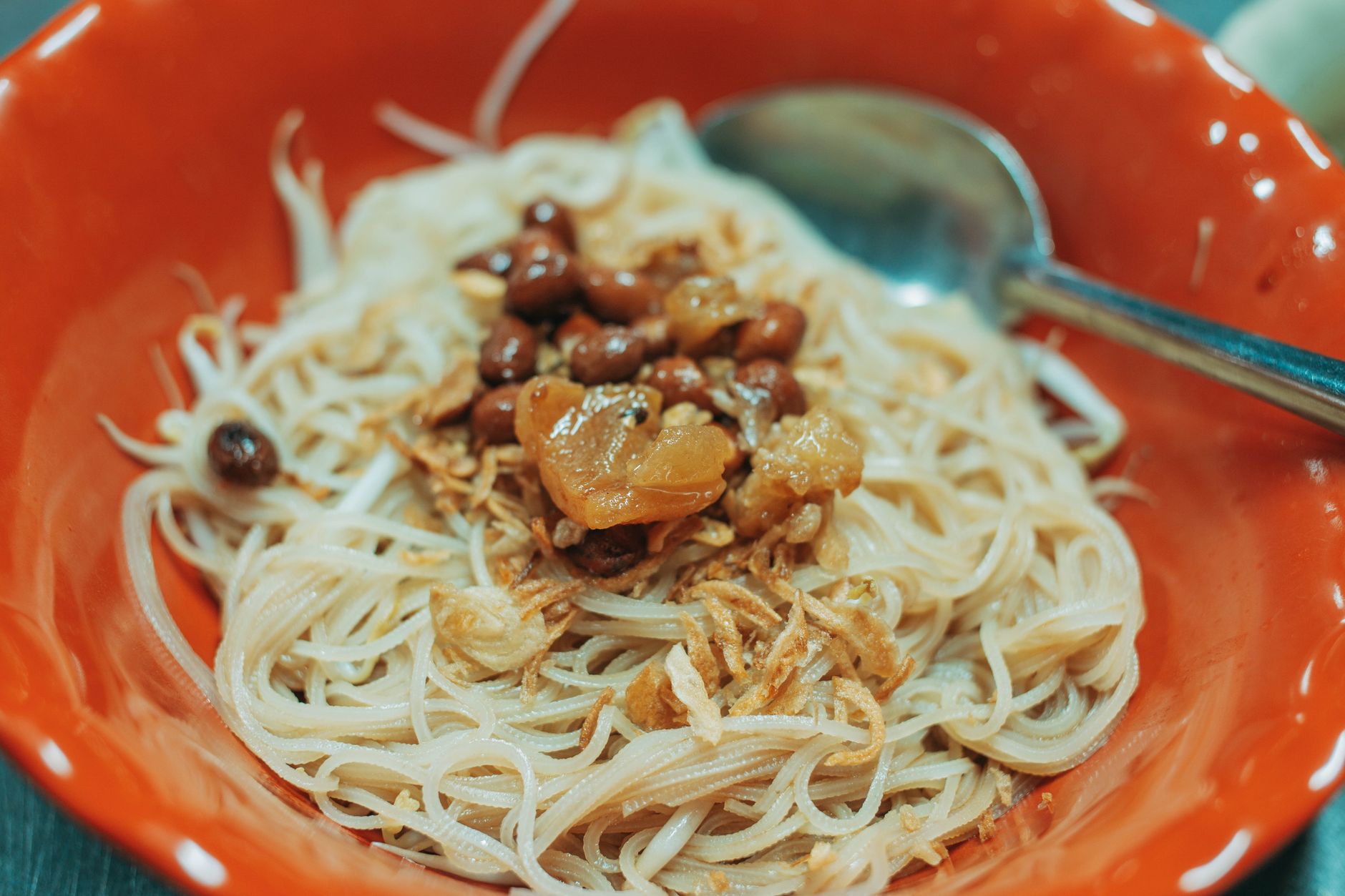
Learn these eight or nine names and you can read almost any menu in the city, order with confidence at a street cart, and know what you’re walking past when the smell hits you. Here’s the quick-reference table, then the detail.
| Dish | What it is | Best eaten at | Rough 2026 price |
|---|---|---|---|
| Koshari | Rice, macaroni, lentils, chickpeas, tomato sauce, fried onions | Dedicated koshari shops (Abou Tarek) | 30-65 EGP a bowl |
| Ful medames | Slow-cooked fava beans, oil, garlic, cumin, lemon | Morning ful carts | 30-60 EGP a plate |
| Taameya | Egyptian falafel from fava beans + green herbs | Street stalls, breakfast spots | 5-15 EGP a piece / 40-70 in a sandwich |
| Hawawshi | Spiced minced meat baked inside baladi bread | Bakeries, grill stalls | 50-100 EGP |
| Molokhia | Green jute-leaf stew with garlic and coriander | Traditional restaurants (Abou El Sid) | 80-200 EGP with chicken/rabbit |
| Fiteer meshaltet | Layered, flaky pastry, sweet or savoury | Fatatri (pie houses) | 60-180 EGP depending on filling |
| Mahshi / hamam mahshi | Stuffed vegetables, or stuffed pigeon | Home-style restaurants | 60-120 (mahshi) / 150-300 (pigeon) |
| Om Ali | Warm bread-pudding dessert with nuts and cream | Everywhere, from carts to five-stars | 40-150 EGP |
If you want the deep version of this list with regional notes and ordering phrases, our companion guide to traditional Egyptian dishes to try in Cairo goes dish by dish.
Koshari — the bowl that runs the country
If Cairo has a national dish, it’s koshari: rice, macaroni, brown lentils and chickpeas layered into a bowl, doused in a sharp cumin-spiked tomato sauce, splashed with a garlic-vinegar dressing called da’a, and crowned with a fistful of crisp fried onions. There’s usually a bottle of chili oil (shatta) on the table — use it. The whole thing is vegan by default and absurdly filling.
It’s a 19th-century invention, an immigrant-era mash-up of Indian lentils, Italian pasta and Egyptian spice, and today there’s a dedicated koshari shop on practically every block. The famous one is Abou Tarek downtown, four floors of nothing but koshari since the 1950s. A standard bowl there is around 30-50 EGP; the larger size and loaded combos run 60-150. Is it the single best koshari in Cairo? Locals argue about that forever — but it’s reliably good, fast, and a rite of passage. For the head-to-head on contenders, see our pick of the best koshari in Cairo.
How to order it like you’ve done it before: you’ll usually be asked the size, and whether you want extra hummus (the whole chickpeas, not the dip) or extra fried onions — say yes to the onions. The sauce and the da’a vinegar come on top or on the side; add them yourself and taste as you go, because the balance of sour, garlic and chili is the entire point of the dish. Some shops offer a version topped with garlicky tomato-and-chickpea sauce (koshari bel shatta). A bowl is a complete meal — don’t over-order on your first try.
Ful medames — breakfast, basically since the pharaohs
Ful is the spine of the Egyptian breakfast and one of the oldest cooked dishes on earth. Fava beans are simmered overnight in a tall copper pot (a qidra) until creamy, then mashed with olive oil, garlic, lemon and cumin and served with warm baladi bread, chopped tomato, onion and sometimes a hard-boiled egg. Order it at a morning cart for 30-60 EGP and you’ll be elbow-to-elbow with workers fuelling up before a shift.
Every cook seasons it differently, and the good ones finish it with a little Egyptian ghee for richness. Vegan? Ask for it without egg or butter — it’s an easy adjustment and they hear it often. For the full sit-down ritual, our Egyptian breakfast guide covers what to order and when.
Taameya — falafel, but greener
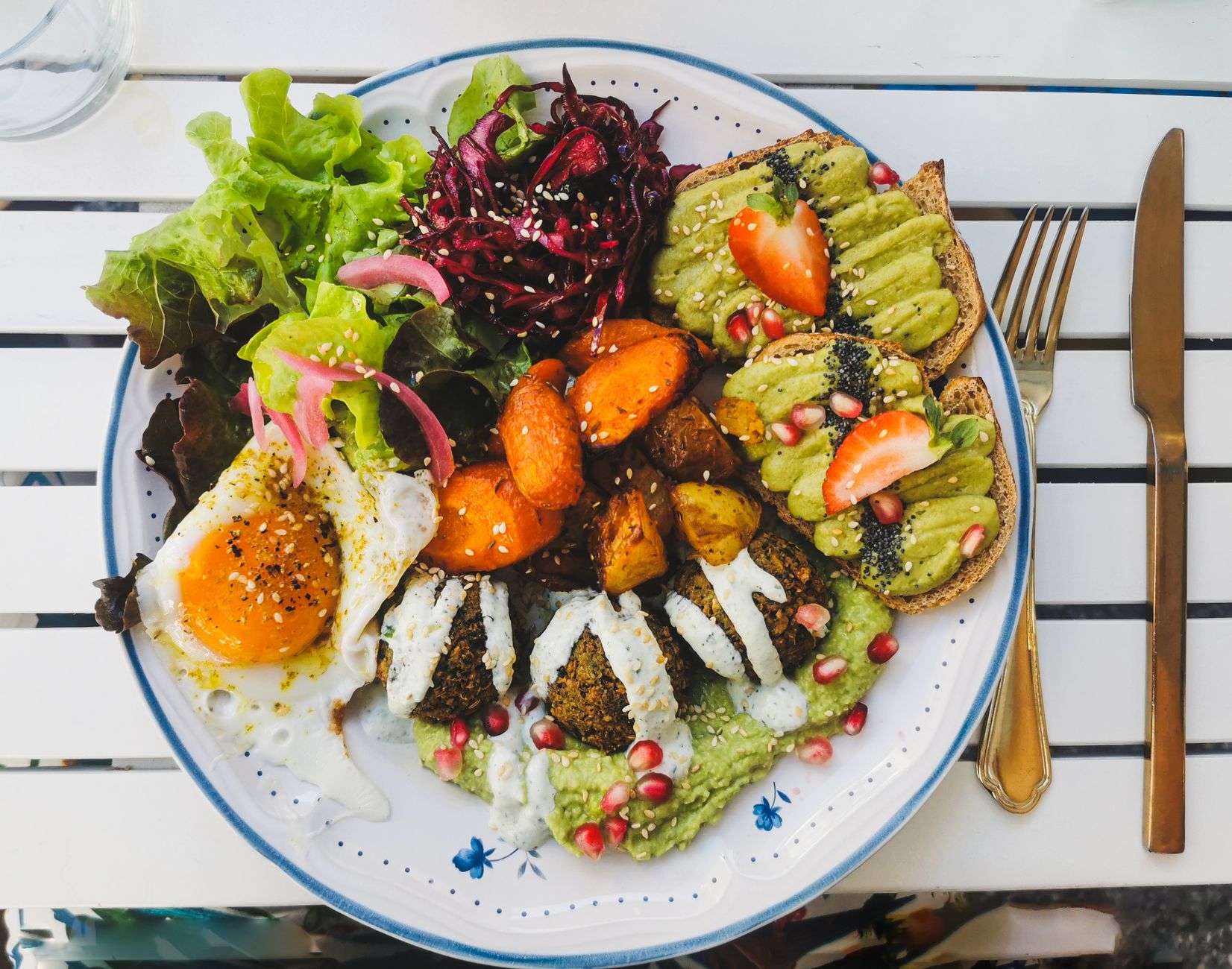
Forget the beige chickpea falafel you know. Egyptian taameya is made from split fava beans blitzed with a heap of fresh parsley, dill, coriander and leek, so the inside is bright green and herby rather than nutty. The patties get a sesame coat and a deep fry, and you eat them crisp-shelled and soft-centred, tucked into baladi bread with tahini, salad and pickles. A couple of pieces cost loose change; a packed sandwich is 40-70 EGP. It’s the cheapest great thing you’ll eat all trip.
Hawawshi — the meat pie worth chasing the smell of
Hawawshi is spiced minced beef or lamb — onion, green pepper, plenty of herbs, a measured hit of chili — sealed inside a round of baladi bread and blasted in a wood oven until the crust crackles and the meat stays juicy. It started as working-class street food and never lost the plot. Follow your nose around the bakeries of Islamic Cairo and downtown; expect 50-100 EGP depending on size and meat. Get it straight out of the oven or not at all.
Molokhia — the green stew that splits the room
Molokhia is finely chopped jute-mallow leaves cooked into a garlicky, coriander-laced broth (chicken or rabbit, sometimes lamb) until it turns deep green and a little silky. That texture is the whole controversy — some people are out at the first spoonful, others get quietly obsessed. Spoon it over white rice, tear off some bread, and you’ve got the most homestyle thing in Egyptian cooking. Abou El Sid in Zamalek does a polished restaurant version in a dim, antique-stuffed room; reckon on 80-200 EGP for a portion with meat.
Fiteer meshaltet — the pastry that’s half theatre
Fiteer is Egypt’s flaky layered pastry, dough stretched gossamer-thin, folded with butter or ghee over and over, then baked until it shatters. Sweet, it comes with honey, cream, powdered sugar and nuts; savoury, it’s loaded with cheese, sausage, pastrami or egg. Order at a fatatri (a pie house) and watch the baker swing the dough out to the size of the counter — that part’s free. A whole fiteer runs 60-180 EGP depending on what’s inside, easily enough for two. The fatatri around Al-Hussein in Islamic Cairo are the classic spot.
Mahshi and hamam mahshi — stuffed everything
Mahshi means “stuffed”: vine leaves, cabbage, peppers, courgettes, aubergines and tomatoes packed with spiced rice and herbs, often slow-cooked in a tomato or lemon broth. It’s a staple of home cooking and Friday lunches, and the meatless versions are excellent for plant-based eaters. The showpiece is hamam mahshi, pigeon stuffed with seasoned freekeh (smoked green wheat) or rice and roasted over charcoal — a celebration dish, gamey and rich, eaten with your hands. It’s not cheap by local standards (150-300 EGP a bird) and it’s an acquired taste, but it’s about as Egyptian as a plate gets.
Om Ali — the dessert you’ll order twice
Om Ali (“Mother of Ali”) is the national sweet: torn pastry soaked in sweetened milk, scattered with nuts, raisins, coconut and cinnamon, then baked until the top bubbles and browns. It arrives warm, somewhere between bread pudding and croissant custard, and it’s hard to stop eating. Everyone makes it, from 40-EGP cart versions to the showpiece at the Four Seasons. It’s the easiest love-at-first-bite on this whole list.
Shawarma and the late-night sandwich
Shawarma is everywhere in the region, but Cairo’s has its own character: beef or chicken stacked on a vertical spit, slow-roasted, shaved thin, then tumbled with tomato, onion and spice and packed into bread. What changes from stall to stall is the sauce — some go heavy on tahini, others on a garlicky toum, most add pickles for crunch. Stands run late, which makes shawarma the default after a night out. While you’re at the cart, look for the other late-night Cairo sandwiches: kebda (spiced fried liver, an Alexandrian export the city adopted wholesale) and sogo’ (a garlicky sausage), both griddled hard and stuffed into bread with chili and pickles for 30-70 EGP. They’re an acquired love, and locals are devoted to them.
The rest of the sweet table
Beyond Om Ali: kunafa, crisp shredded pastry over melting sweet cheese or cream, drowned in syrup (it takes over every bakery window during Ramadan); basbousa, a dense semolina cake soaked in syrup and topped with almond or coconut; baklava, the familiar nut-and-filo layers in a dozen local shapes; and roz bel laban, a simple, cold, cinnamon-dusted rice pudding that every cheap eatery keeps in the fridge. Pair any of them with a cup of mint tea and you’ve earned an afternoon nap. A note worth making: Egyptian sweets are properly sweet, syrup-soaked and unapologetic — a small piece goes a long way, and they’re cheap enough (20-80 EGP) to sample several across a trip rather than committing to one.
A word on bread — it’s at every meal
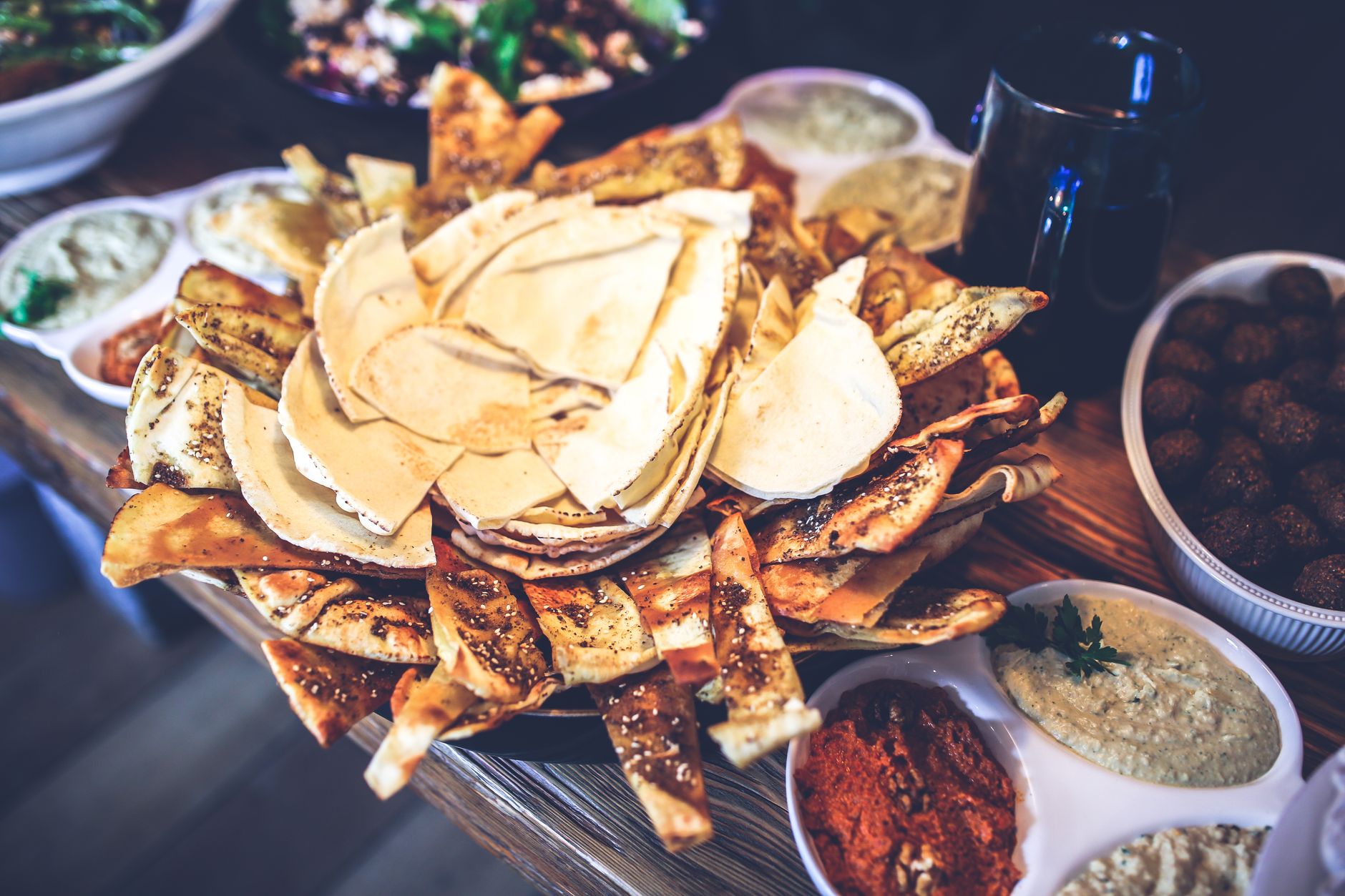
Egyptians call bread aish, which also means “life,” and that tells you how central it is — it turns up at every meal and doubles as your cutlery. The everyday loaf is aish baladi, a round, pocketed whole-wheat flatbread baked screaming-hot in traditional ovens; government bakeries turn out millions a day, and you’ll see queues for the warm, subsidised loaves on the street. You’ll also meet aish shamsi (a sun-risen country bread), aish fino (a soft, baguette-ish roll used for sandwiches), and the layered fiteer already covered above. Tear, scoop, repeat — eating ful or molokhia with a fork instead of bread marks you instantly as a visitor. Bread is also why a full Egyptian meal stays so cheap: a few loaves cost almost nothing and stretch every dish on the table.
Where to Eat: Street Carts vs Restaurants vs Fine Dining
Cairo’s food runs from a 10-EGP taameya sandwich eaten on a kerb to a 1,500-EGP tasting menu over the Nile, and honestly the cheap end is where the soul of it lives. Here’s how the tiers break down.
Street food and hole-in-the-wall shops
This is the heartbeat. Ful and taameya carts at dawn, koshari shops at lunch, hawawshi from a bakery, liver-and-sausage sandwiches (kebda and sogo’) at night, shawarma stacked on a rotisserie and shaved into bread until the small hours. A full meal here rarely tops 70-100 EGP. The rule for picking a stall is simple and it works: go where the locals queue. A line of Egyptian workers and families means fast turnover and fresh food. Our deep dive on the best street food in Cairo maps out exactly which carts and corners to aim for.
Sit-down Egyptian restaurants
The mid-tier is where you get table service, a proper mezze spread, grilled meats and the slow-cooked dishes done well. Felfela downtown (going since 1959, near Tahrir) is the reliable tourist-friendly classic for a sampler of Egyptian standards — figure roughly 400-600 EGP a head. Abou El Sid in Zamalek does atmospheric, refined homestyle cooking. Sobhi Kaber in Sayeda Zeinab is a legendary grill house where the kofta and kebab pull crowds from across the city. For a full shortlist with current prices and bookings, see our best restaurants in Cairo dining guide for 2026.
Grilled meats — kofta, kebab and the mixed grill
Charcoal grilling is ancient here and the city does it brilliantly. Kofta (spiced mince moulded onto skewers) and kebab (chunks of marinated lamb or beef) are the two pillars, served with rice, grilled tomato and pepper, tahini and bread. Order a mixed grill and you get a sizzling tray of kofta, kebab, chicken and often lamb chops — the way to taste everything at once. A solid grill dinner lands around 250-500 EGP a person at a neighbourhood spot.
How it usually works at a classic grill house: you often pick your meat by weight at the counter, it’s grilled to order, and a parade of small mezze plates — tahini, baba ghanoush, salad, pickles, fresh bread — arrives almost automatically while you wait. Those starters are part of the ritual, not an upsell, though they do add up, so pace yourself. Squeeze the grilled lemon over everything, and don’t skip the ta’leya (a garlic-and-coriander sizzle) if it’s offered as a side — it lifts plain rice into something you’ll remember.
Fine dining and Nile-view tables
Cairo’s high end has grown up fast, and most of it clusters in the Nile-front hotels. Zitouni at the Four Seasons Nile Plaza is arguably the best refined-Egyptian kitchen in the city — sayadieh fish tagine, a serious mezze spread, and an Om Ali worth the table on its own. Khufu’s out in Giza puts French-leaning fine dining literally in front of the pyramids. Expect 1,000-2,500+ EGP a head at this level. If a special dinner is the plan, our guide to Cairo fine dining restaurants sorts the genuinely great from the merely expensive. And for eating on the water itself, pair it with our Cairo Nile River experiences guide — dinner cruises included.
Best Neighbourhoods to Eat In
Each district has its own food personality. Where you base yourself shapes how you eat, so it’s worth crosschecking with our guide to picking a Cairo neighbourhood.
Downtown (Wust el-Balad)
The dense, old-modern core around Talaat Harb and Tahrir: sandwich shops, juice stalls, Abou Tarek for koshari, Felfela for a sit-down spread, and Cafe Riche, which has been pouring lunch since 1908. The lanes around Abdeen come alive after dark with shawarma, liver sandwiches and grills.
Islamic Cairo and Khan el-Khalili
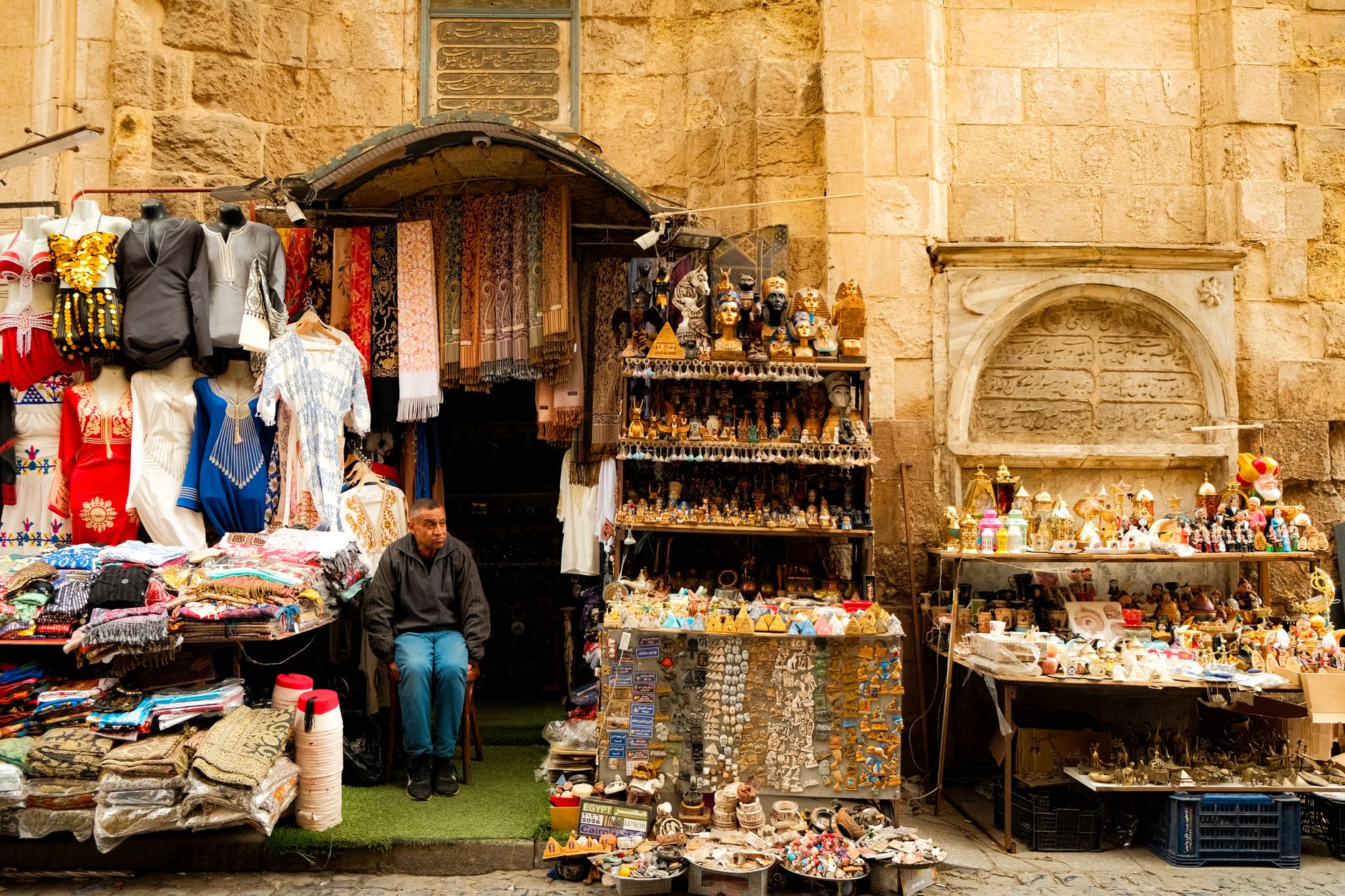
The most atmospheric eating in the city, in alleys that have been cooking the same way for generations. Wood-fired hawawshi and fiteer, hole-in-the-wall ful and taameya, the spice stalls, and the legendary Fishawi’s coffeehouse tucked into the bazaar. Combine a food crawl here with our Cairo shopping and markets guide for the spice-buying side of things.
Zamalek
The leafy Nile island, home to Cairo’s most polished casual dining. Abou El Sid for refined classics, Zooba for street food reimagined (clearly labelled vegan, veggie and allergen options — a genuinely useful menu), and a string of rooftop bar-grills with the best river views in town.
Sayeda Zeinab and Old Cairo
The no-frills, get-it-right end. Sobhi Kaber’s grills, some of the best ful carts going, and family kitchens where the recipe hasn’t changed in fifty years. Prices are a fraction of Zamalek and the food is frequently better. Bring a translation app — menus here skip the English.
Spices, Ingredients and Edible Souvenirs
Egyptian flavour is built on a short, repeated palette, and once you can name it the menus make more sense. Cumin is the backbone — it’s in the ful, the grills, half of everything. Coriander shows up as both the fresh herb and the ground seed. Dukkah, a dry blend of nuts, seeds and spice that changes from cook to cook, gets eaten as a dip with bread and oil or crusted onto meat and veg. Round it out with baharat (a warm all-purpose blend), cinnamon, cardamom and dried mint, and you’ve got the toolkit behind most Cairo cooking.
If you want to take the flavours home, the spice stalls of Islamic Cairo around Khan el-Khalili are the place — heaped, fragrant, and far cheaper than a supermarket. Vendors will happily explain blends and grind things fresh; a bag of just-ground cumin or a custom dukkah is one of the best, lightest, most useful souvenirs you can carry out of Egypt. Haggle gently, buy small quantities of several things, and our Cairo markets and souvenirs guide has more on navigating the bazaar without overpaying.
Cafe and Ahwa Culture
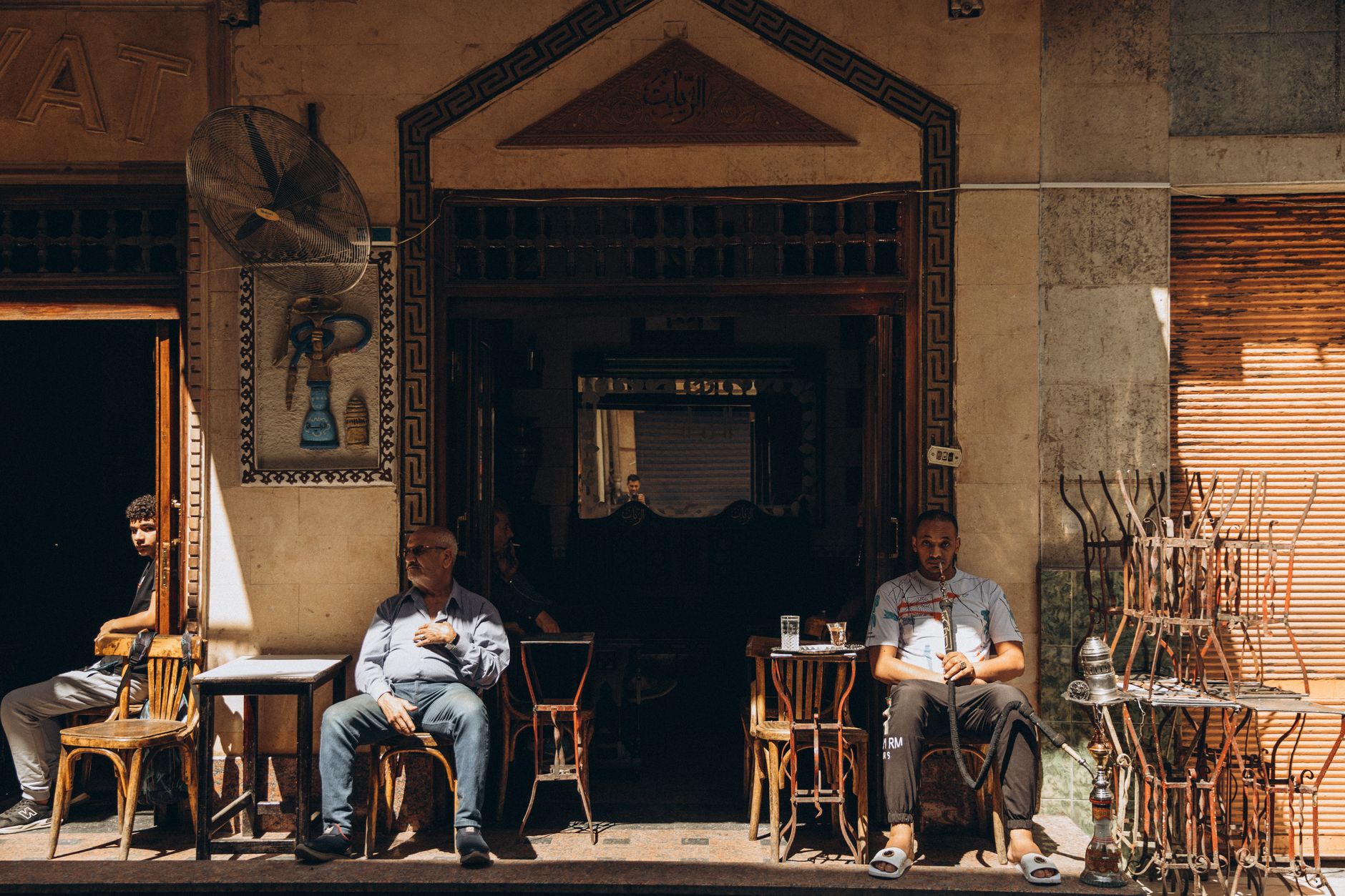
The ahwa — the traditional coffeehouse — is the other half of Cairo’s food life and you shouldn’t skip it. Picture rows of cane chairs spilling onto the pavement, men slapping down dominoes and backgammon, the bubble of shisha pipes, mint tea in little glasses, and absolutely no rush to leave. Fishawi’s in Khan el-Khalili has been doing this for over two centuries and is the obvious first one; touristy, yes, but the setting earns it.
Order coffee the local way: it’s like Turkish coffee, ground fine and brewed in a little copper kanaka, thick with grounds at the bottom. You specify sweetness — sada (none), ‘ariha (a touch), mazbout (medium), ziyada (very sweet) — so say it when you order. A coffee or tea at an ahwa is cheap, often 20-50 EGP; a shisha adds maybe 50-100. Beyond the old-school ahwas there’s a full modern third-wave café scene in Zamalek, Maadi and Heliopolis — our Cairo café culture guide covers both worlds.
What to Drink
Tea (shai) is actually the most-drunk thing in Egypt, not coffee — served strong, sweet and small, usually with mint. Karkadé, a tart deep-red hibiscus tea, comes hot or iced and is everywhere. Then there are the juice stands, which are a genuine Cairo institution: a glass of fresh-pressed mango, guava, sugarcane, orange, strawberry or pomegranate for 20-50 EGP off practically any corner. In summer a cold sugarcane (asab) or a thick mango shake fixes the heat instantly. In winter, swap to sahlab, a warm milky orchid-root drink dusted with nuts and cinnamon.
A couple more worth knowing: sobia, a sweet coconut-milk drink that surges during Ramadan, and ‘erk sous, a dark, intensely bitter-sweet liquorice-root drink poured by sash-wearing vendors who clack brass cups to announce themselves — try a small one for the experience even if you don’t finish it. Bottled soft drinks and very sweet packaged juices are sold everywhere, but the fresh-pressed corner stands are the move; point at the fruit you want and watch it go straight into the press.
On alcohol: Egypt is majority Muslim and many local restaurants are dry, but hotels, Western-style restaurants and some bars serve it. Local Stella and Sakara beers are decent and cheap; Egyptian wine exists and is, charitably, improving. Don’t expect to drink at a street cart or a neighbourhood ful joint, and dress and drink discreetly out of respect, especially during Ramadan.
Vegetarian and Vegan in Cairo
This is one of the easiest cities in the region to eat plant-based, because so much of the everyday food already is. Koshari, ful, taameya, most mezze, stuffed vine leaves, fried aubergine, tahini and baba ghanoush are vegan as standard. Two small asks cover the edge cases: when you order ful, say “no egg, no butter” if you’re strict; and check the taameya is fried in vegetable oil. Zooba in Zamalek is the safe, clearly-labelled bet, and Maadi and Heliopolis have a growing crop of dedicated veg and vegan spots. Our vegetarian and vegan food in Cairo guide lists the standouts and the phrases to use.
Food Tours and Cooking Classes
If you’ve got one shot at the food scene and don’t want to gamble, a guided food tour is the highest-value thing you can book. A good local walks you into the right stalls, translates the menus, and front-loads weeks of trial-and-error into one evening of eating. Bellies En-Route is the most-recommended operator and takes you into neighbourhoods most visitors never see, typically six to eight tastings across several stops. A Chef’s Tour runs a well-loved route out of the Al-Azhar/Khan el-Khalili area. Either way you’ll eat too much, which is the point.
Want hands-on? Cooking classes usually start with a market run for ingredients, then a kitchen session making koshari, molokhia or fiteer from scratch — a recipe you can actually take home. Our roundup of Cairo food tours and experiences compares operators, routes and prices.
A practical tip on timing: most food tours run in the late afternoon and evening, when the carts are firing and the city has cooled off. Book for a day when you don’t have a heavy itinerary — you’ll genuinely be too full to do much after — and skip lunch beforehand. Tours typically cost the equivalent of $40-80 a head depending on length and how many tastings are included, which, given you’re effectively buying a guided dinner across six-plus stops, is fair value. Tell the guide in advance about any dietary needs; Egyptian food bends easily around vegetarian and most allergy requirements when there’s notice.
Egyptian Breakfast and the Daily Rhythm
Breakfast is the meal Egyptians do best and it’s gloriously cheap: ful, taameya, eggs, cheese, fresh bread, tomato and tahini, eaten anytime from about 6 to 10 AM. Lunch is the big one, roughly 1-4 PM. Dinner runs late — restaurants often don’t fill until 9 or 10 PM, so don’t be alarmed by an empty room at eight. Plan your eating around this and you’ll never hit a closed kitchen at the wrong hour.
Ramadan: Eating in the Holy Month
If your trip lands during Ramadan (the dates shift each year on the lunar calendar), the whole food clock flips. Nothing is sold or eaten in daylight by those fasting, many places close until late afternoon, and then the city detonates at sunset for iftar, the fast-breaking meal — traditionally opened with dates and an apricot drink (qamar al-din), followed by soup, then a feast. A second meal, suhoor, runs into the small hours. Tables fill with kunafa, qatayef (stuffed pancakes) and special soups you won’t see the rest of the year. It’s one of the great food experiences on earth if you time it — book iftar tables ahead, they sell out. Our Ramadan food in Cairo guide walks through the whole rhythm, and the broader guide to customs, dress and greetings covers how to be a considerate visitor while everyone around you is fasting.
Food Safety, Water and Staying Well
Most visitors eat all over Cairo and are completely fine. A few sensible habits keep it that way:
- Busy is safe. A packed stall means high turnover and fresh ingredients. An empty one means food that’s been sitting. This single rule does most of the work.
- Eat it hot. Freshly cooked, steaming food is your friend. Be cautious with raw street-stall salads and unpeeled fruit that may have been rinsed in tap water.
- Drink bottled water only, and check the seal is unbroken before you open it. Skip ice unless you’re somewhere reputable that filters its water. Don’t drink the tap water.
- Ease in. Don’t make the spiciest, oiliest cart your first meal off the plane. Give your stomach a day or two to adjust, and pack a basic anti-diarrhoeal just in case.
Costs, Tipping and Paying
Cairo is one of the best-value food cities anywhere right now — with the pound around 50 to the dollar in mid-2026, a street meal is a dollar or two and a good restaurant dinner is often under $15. Rough daily food budgets per person: street-food only, 200-350 EGP; mixing carts and casual restaurants, 500-900 EGP; restaurants with the odd splurge, 1,200 EGP and up. For the full money picture across your whole trip, see our daily costs and cash-handling guide.
On tipping: sit-down restaurants usually add a service charge of around 12% to the bill — and that mostly goes to the house, not your waiter, so it’s normal to leave another 10-15% in cash on top for good service. At street stalls, tipping isn’t expected; rounding up is a nice touch. Tip in Egyptian pounds, in small notes. Carry cash: plenty of restaurants take cards, but carts, market stalls and small joints are cash-only. A few words go a long way too — shukran (thank you) and akl gameel (lovely food) earn real smiles and sometimes a bigger scoop. For getting between all these neighbourhoods, our Cairo transportation guide breaks down the metro, Uber and taxis.
Frequently Asked Questions
What is the most famous food in Cairo?
Koshari — the rice, macaroni, lentil and chickpea bowl with tomato sauce and fried onions. It’s the unofficial national dish, vegan by default, and cheap (30-65 EGP). Abou Tarek downtown is the most famous place to try it, though dozens of shops do it just as well.
How much does food cost in Cairo in 2026?
Very little by Western standards. A street meal (koshari, ful, taameya) runs 30-100 EGP — roughly $0.60 to $2. A casual sit-down restaurant dinner is often 250-600 EGP a head; fine dining at a Nile hotel runs 1,000-2,500+ EGP. With the pound near 50 to the dollar, you can eat extremely well for $10-15 a day.
Is street food in Cairo safe to eat?
For most people, yes — with common sense. Eat where locals queue (high turnover), choose hot freshly cooked food, drink only sealed bottled water, skip ice and raw street-stall salads, and ease in over the first day or two. Get those right and Cairo’s street food is one of the trip’s highlights.
Can I drink the tap water in Cairo?
No. Stick to sealed bottled water, which is cheap and everywhere, and check the seal is intact. Avoid ice unless you’re at a reputable restaurant with filtered water. Use bottled water for brushing teeth too if you have a sensitive stomach.
What should vegetarians and vegans eat in Cairo?
You’ll eat well — much of the everyday menu is already plant-based: koshari, ful, taameya, stuffed vine leaves, baba ghanoush, tahini, fried aubergine and most mezze. Ask for ful “no egg, no butter” if you’re strict vegan, and confirm taameya is fried in vegetable oil. Zooba in Zamalek has clearly labelled vegan and veggie options.
How much should I tip at restaurants in Cairo?
Around 10-15% in cash at sit-down restaurants, on top of the ~12% service charge most places already add (since that charge usually goes to the house). Street stalls don’t require tips — just round up. Always tip in Egyptian pounds, in small notes.
Where can I eat with a Nile or pyramid view?
For the Nile: Zitouni and other restaurants in the Four Seasons Nile Plaza and the Nile Ritz-Carlton, plus dinner cruises. For pyramid views, Khufu’s in Giza puts fine dining right at the plateau. Several casual spots near Giza also serve Egyptian food with the monuments in sight.
Is alcohol available in Cairo?
Yes, but not everywhere. Many local restaurants are dry, but hotels, Western-style restaurants and some bars serve drinks. Local Stella and Sakara beers are cheap and fine; Egyptian wine exists. Don’t expect alcohol at street carts or traditional neighbourhood eateries.
Go Deeper: Related Cairo Guides
Build the rest of your trip around the food with these:
- Complete Cairo travel guide — the master plan for your whole visit.
- Best street food in Cairo — the carts and corners worth seeking out.
- Best restaurants in Cairo 2026 — where to book for a proper meal.
- Cairo food tours and experiences — the fastest way to learn the scene.
- Things to do in Cairo — how to fill the hours between meals.
- Pyramids of Giza visitor guide — and the restaurants with a view of them.
- Cairo museums and cultural attractions — pair culture with your cafe stops.
Come hungry, eat where the lines are, and don’t fill up before you’ve had your first warm bowl of ful at sunrise or your last shawarma at midnight. The food here outlasts the photos.