This article contains advertising. Our booking links are routed through a partner that adds commission tracking automatically, so if you book through one we earn a commission from the provider, at no extra cost to you. It never affects what we recommend. Affiliate disclosure
Here’s the honest version of Cairo accessibility, the one tour brochures don’t quite give you: this is not a barrier-free city, and the sidewalks alone will test anyone on wheels. But a wheelchair user can absolutely stand at the foot of the Great Pyramid, roll through one of the best-designed museums on the planet, and watch the sun set over Islamic Cairo from a paved park path. The trick is knowing which battles to skip and who to hire to fight the rest.
I’ll be straight with you throughout. Some of Cairo rolls right open. Some of it you’ll experience from a courtyard rather than an interior. And a few corners — the inside of the pyramids, the narrow medieval lanes of Khan el-Khalili — you’ll photograph and move past. None of that makes the trip not worth doing. The single biggest shift in the last few years is the Grand Egyptian Museum, which opened fully in November 2025 and was built to international accessibility standards from the ground up. Pair that with the explosion of specialist tour operators running hydraulic-lift vans, and most of the logistics become someone else’s job to solve.
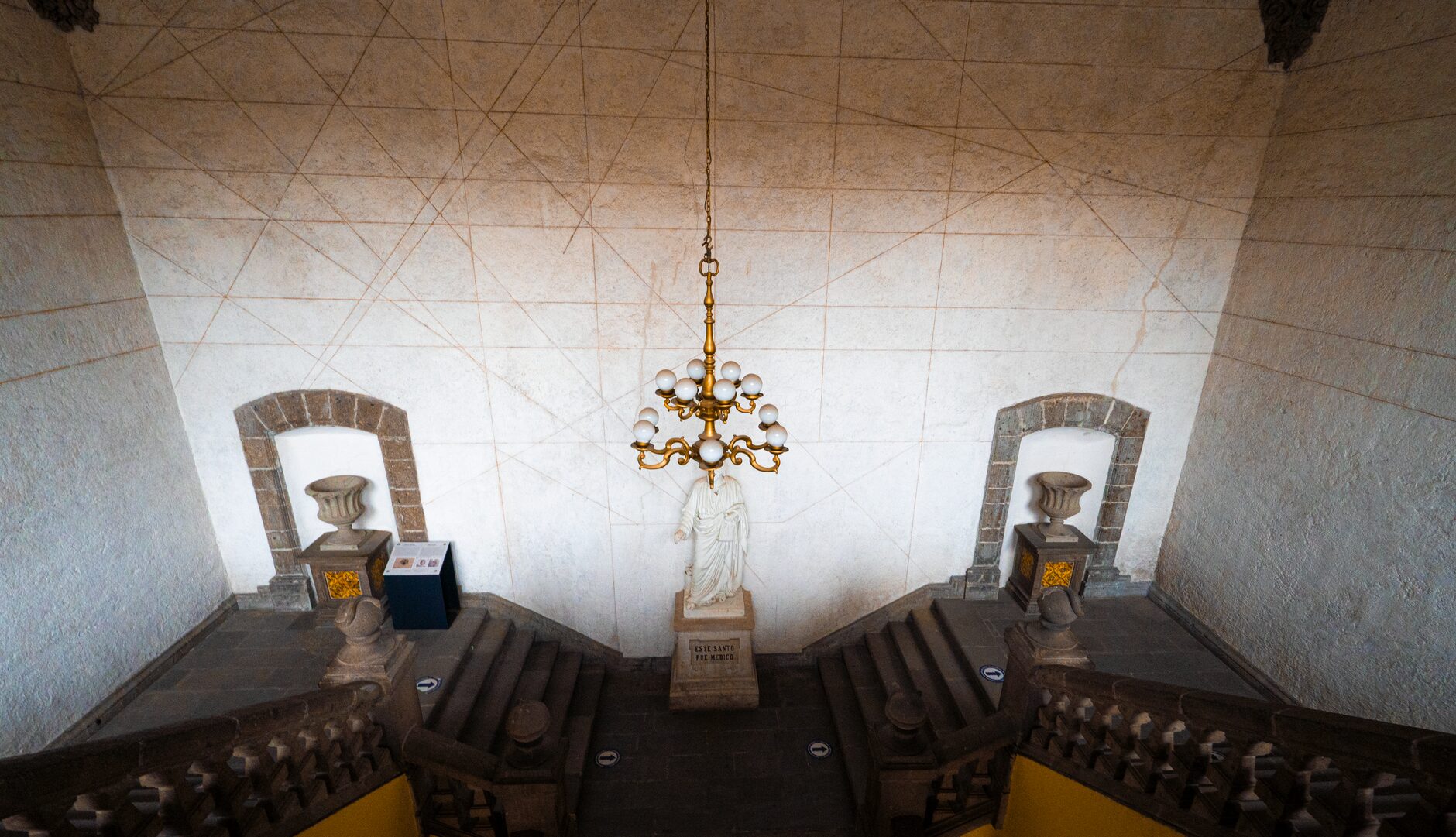
The honest Cairo accessibility picture
Before you book anything, it helps to sort the city into three buckets. I’ve watched too many travellers arrive expecting either a smooth Western city or a total disaster, and the truth sits in the middle and depends entirely on where you go.
Genuinely accessible. The Grand Egyptian Museum, the National Museum of Egyptian Civilization, Al-Azhar Park, the exterior plateau at the Pyramids and Sphinx, and the modern five-star hotels in Maadi, Garden City, Heliopolis and on Zamalek. These were either purpose-built recently or run to international chain standards, and you’ll feel the difference the moment you arrive.
Doable with assistance. The old Egyptian Museum on Tahrir Square (ramps and lifts, but worn, uneven floors in places), Coptic Cairo, the Citadel courtyard, and the main thoroughfares of Khan el-Khalili. You can do these — you just want a strong companion or a trained guide and a flexible plan.
Not happening in a wheelchair. The interiors of the pyramids (steep, narrow stone passages), the inside of most historic mosques, the cobbled back alleys of Islamic Cairo, ordinary public buses, and — frankly — the sidewalks across most of the city. Curbs are high, surfaces are cracked, and parked cars block the lowered sections. Plan to be in a vehicle between sights, not navigating pavements on your own.
Hold that map in your head and the rest of this guide is just detail. If you’re still at the early-planning stage, our complete guide to visiting Cairo sets the wider scene, the first-time visitor primer covers the basics that apply to everyone, and the Cairo travel FAQ answers the quick questions this guide doesn’t.
The smartest move: a specialist operator
If you take one thing from this page, take this. For a mobility disability, the single best decision you can make is to book through a tour company that specialises in accessible travel rather than trying to wing it solo. They own the hydraulic-lift vans, they know which hotel rooms actually have a usable bathroom, and they’ve solved the curb-and-crowd problem a thousand times. You’re not paying for hand-holding — you’re paying to outsource a genuinely hard logistics puzzle to people who do it weekly.
Several reputable names work this niche. Egypt Accessible Travel is one of the longest-established specialists, running multi-day itineraries with adapted transport and vetted hotels. Memphis Tours operates a dedicated accessible division with lift-equipped vans and roll-in shower rooms. Inside Egypt rents wheelchairs for the whole trip and arranges personal assistants. Egypt Tours Portal bundles Cairo with accessible Nile cruises down to Luxor and Aswan. Cairo Top Tours leans toward single-day accessible Pyramids and city visits. And Wheel the World, an accessibility-first international booking platform, is worth a look just to cross-check what a given operator actually delivers versus what they promise.
Whoever you go with, interrogate them before you pay. The questions that separate a real accessible operator from a regular one with a marketing page:
- Does the vehicle have a proper hydraulic lift or a sturdy fixed ramp — not a flimsy fold-out aluminium sheet two men have to wrestle?
- Are the guides actually trained in accessibility support, or just regular Egyptologists who’ll be kind but unprepared?
- What’s the turning radius in the hotel rooms they recommend, and are those rooms confirmed accessible — roll-in shower, grab bars, wide doorway — in writing?
- What happens if the lift fails or the van breaks down mid-day? A real operator has a backup answer.
- What do they require for travel insurance, and what does it cover?
If the answers are vague, walk. Vague is the warning sign.
Wheelchair access at the major sights
Here’s how the headline attractions actually shake out, sight by sight, with the 2026 realities baked in.
The Pyramids of Giza
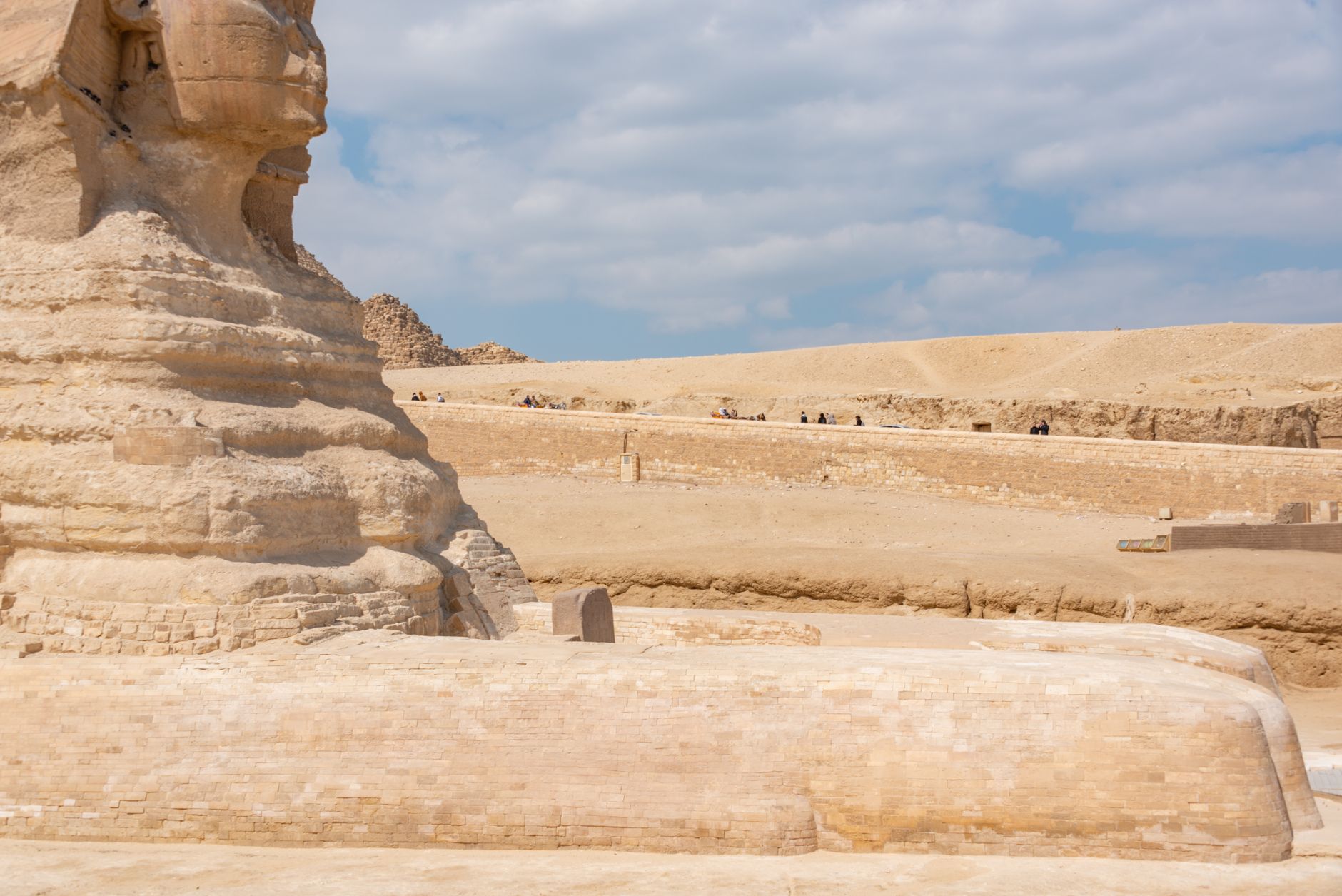
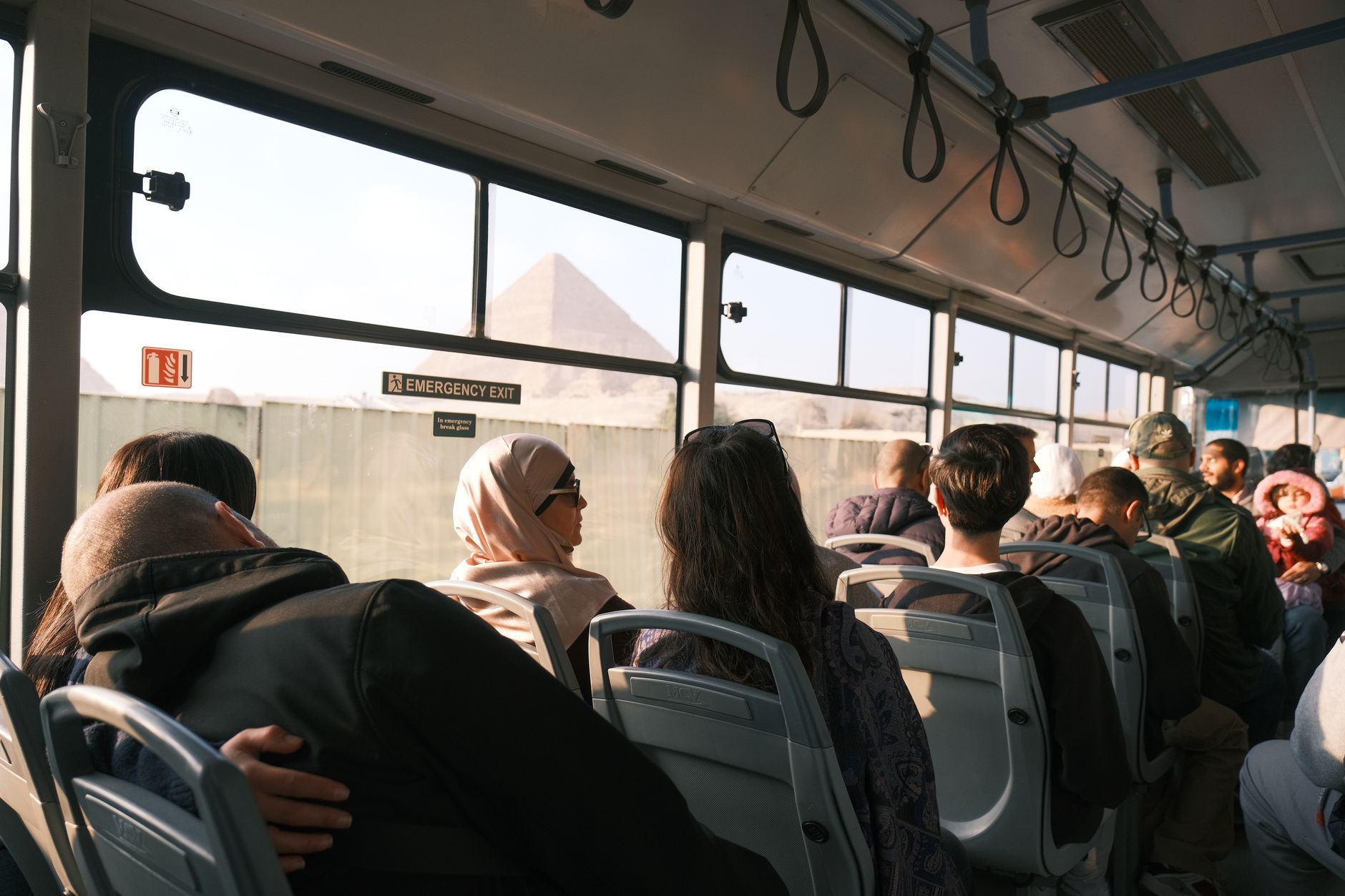
The plateau changed meaningfully in the last couple of years, and mostly for the better if you plan ahead. The main entrance moved to a new gate on the Cairo–Fayoum desert road, and private cars and tour buses are no longer allowed to drive around inside — everyone now moves between viewpoints on electric hop-on, hop-off shuttle buses. Some of those shuttles are wheelchair-accessible; not all are, so staff may need a few minutes to bring an accessible one around. Wide paved paths and boardwalks connect the three pyramids and the Sphinx, and there are panoramic viewing platforms built at roughly wheelchair height — genuinely good for photos.
The crucial detail: wheelchair users and travellers with limited mobility can arrange private vehicle access to the interior road in advance, which spares you the shuttle lottery entirely. This is not something you can request on arrival — set it up beforehand through your operator. Visitors with a disability also pay a reduced entry fee, generally around half the standard ticket. The pyramid interiors remain off-limits to wheelchairs (steep internal stairs), camel and horse rides aren’t realistically feasible, but the Sphinx has ramped access to a front-facing platform. Budget four to five hours including transit, and you’ll have properly seen Giza.
Grand Egyptian Museum (GEM)
This is the easy win, and it’s a big one. Since its full opening in November 2025, the GEM has been held up as a genuine model of inclusive design — not Egyptian-standards-good, internationally-good. Accessible entrances, panoramic elevators with voice guidance reaching every floor, ramps and wide corridors throughout the vast grand-staircase hall, and accessible restrooms on every level. Wheelchairs are available free at the entrance (worth reserving), there are electric golf carts to ferry visitors with limited mobility across the enormous footprint, and on-site medical units in case you need them. People with disabilities receive free admission.
The museum is huge — give it four to six hours, book a timed ticket in advance, and don’t try to bolt it onto a packed day. It deserves its own slot.
National Museum of Egyptian Civilization (NMEC)
A modern, fully wheelchair-accessible museum, including the hushed, atmospheric Royal Mummies Gallery. It makes a strong companion to the GEM and rewards the trip across town to Fustat.
Egyptian Museum, Tahrir Square
The grand old Belle Époque museum is partially accessible — ramps and lifts reach most galleries, though some floors are older and uneven, and accessible restrooms exist but aren’t lavish. With the headline collections largely moved to the GEM, many travellers now skip it. I’d still rate it for the architecture and the sense of history if those matter to you, but it’s no longer the unmissable stop it once was.
Khan el-Khalili
The main Al-Hussein Square and the principal lanes are paved and broadly navigable, just crowded. The side alleys are a different story — narrow, cobbled, sometimes stepped. Go in the quieter morning hours, keep a guide or companion to part the crowds, and stick to the main arteries. You’ll still get the copper-and-spice atmosphere without fighting the worst of it.
The Citadel and Coptic Cairo
At the Citadel of Saladin, the courtyard is partially accessible via a modest ramp, but the Mosque of Muhammad Ali itself requires climbing several steps — some operators arrange exterior-only visits, and the view over the city from the courtyard is worth the stop regardless. Coptic Cairo is mixed: the Coptic Museum and Ben Ezra Synagogue are broadly accessible, while the Hanging Church and Saints Sergius and Bacchus involve stairs. Plan it with a guide and enjoy the museum and the courtyards.
Al-Azhar Park
Quietly one of the most wheelchair-friendly spots in Cairo — accessible pathways and ramps throughout, sweeping views toward the Citadel, and a calm that’s hard to find elsewhere in the city. Aim for late afternoon into sunset.
Saqqara and Dahshur
Worth a day trip with an operator who can handle the desert plateau in an adapted vehicle. The Step Pyramid of Djoser’s exterior is reachable on paved paths; interiors and Dahshur’s long descending Red Pyramid tunnel are not wheelchair-accessible.
The Great Pyramid interior is the one headline attraction to write off without guilt. There is no alternative route: it is a stooped crouch-walk up a hot, low, unventilated passage, and what that climb physically demands is worth reading before anyone books the extra ticket.
Accessible hotels in Cairo
The reliable accessible rooms live in the international five-star chains. Mid-range and budget properties are inconsistent — some claim accessible rooms that turn out to be a regular room with a wider door — so this is one area where paying up genuinely buys peace of mind. Strong options that travellers consistently report good experiences with:
| Hotel | Area | Why it works |
|---|---|---|
| Marriott Mena House | Giza | Accessible rooms, pyramid views from some, accessible pool deck, minutes from the plateau |
| Le Méridien Pyramids | Giza | Roll-in showers and grab bars, close to the Pyramids |
| Mercure Cairo Le Sphinx | Giza | Accessible rooms near the Pyramids |
| Four Seasons Cairo at Nile Plaza | Garden City | Luxury accessible rooms, central and calm |
| The Nile Ritz-Carlton | Downtown | Accessible rooms, central for Tahrir and the river |
| Sofitel Cairo Nile El Gezirah | Zamalek | Accessible rooms with Nile views, on the quieter island |
Whichever you pick, call the hotel’s reservations team directly and confirm the specifics — bathroom layout, doorway width, bed height — because chain standards vary property to property and the booking-site filters lie. For the bigger picture on neighbourhoods and what each part of the city is like to base yourself in, our Cairo hotel and district guide breaks it down.
Getting around the city
Transport is where Cairo’s accessibility gaps show most, and where planning pays off most. The short version: rely on adapted vans and ride-share, treat the metro as a sometimes-bonus, and write off street taxis and buses entirely.
Adapted tour vehicles are your backbone for sightseeing days — hydraulic-lift vans and accessible minibuses through the specialist operators. Expect somewhere in the region of $80–250 a day depending on duration and group size. It’s not cheap, but it’s the difference between seeing Cairo and being stuck in the lobby.
Cairo International Airport handles wheelchair assistance reasonably well, with accessible jet bridges at most international gates and accessible restrooms. Pre-book special assistance with your airline at least 48 hours ahead. An accessible hotel transfer runs roughly $30–60.
The metro is a mixed bag. Some stations have lifts and step-free access; plenty of older ones don’t. The newer Line 3 is the most consistently accessible, Lines 1 and 2 are hit-and-miss. Check your specific stations before you count on it rather than assuming.
Uber and Careem both work well for travellers who can transfer to a standard car, and a folding manual wheelchair fits most sedan trunks. Both apps advertise accessibility filters, but don’t rely on them being honoured — they’re inconsistent. For the full rundown on the metro, ride-hailing and the white taxis, see our Cairo transportation guide. Street taxis and public buses are not accessible — skip them as a primary mode.
Travelling with a vision impairment
Audio guides are available at the GEM, NMEC and the Egyptian Museum, and the GEM’s audio experience is by far the most polished — voice-guided elevators included. Service dogs can come into Egypt with the right paperwork, vaccinations and veterinary clearance, but start that process early (60-plus days out) and confirm the exact requirements with both your airline and the Egyptian embassy, because it isn’t a quick form. Tactile exhibits are limited but slowly growing, with some touchable replicas appearing in the newer museums. The most useful single thing is a specialist guide trained in narrative description, which the accessible operators can arrange. Major hotel chains offer Braille in lifts and accessible-room features.
Travelling with a hearing impairment
This is genuinely easier than it once was. Written materials at the major museums are bilingual Arabic/English and well produced, and subtitled video in the GEM and NMEC presentations is increasingly standard. Dedicated sign-language guides aren’t widely available, but some accessible operators can arrange guides who type real-time explanations on a tablet — ask. Google Translate handles written exchanges with English-speaking staff perfectly well for day-to-day logistics. The international hotel chains can provide text-equipped phones and visual fire alarms on request, so flag that when you book.
Chronic illness and neurodivergent travellers
For chronic conditions, heat is the thing to respect. Cairo is hot for much of the year, so build afternoon hotel breaks into every day and do your sightseeing in the cool morning window — our Cairo travel checklist covers the wider packing and prep side. Bring your full medication supply plus a couple of weeks’ buffer in original packaging with a doctor’s note; Cairo pharmacies are well stocked for routine refills, and most hotel rooms have a mini-fridge for anything refrigerated (bring an insulated cooler for transit). The hospitals expats and travellers lean on are As-Salam International in Maadi, Cleopatra in Heliopolis, and Dar El Fouad in 6th of October — the latter two also offer dialysis for travellers if you arrange it ahead.
For neurodivergent travellers, the honest warning is that Cairo runs loud and intense: traffic, crowds, the call to prayer, vendors calling out. That’s part of its character, but it can be a lot. Base yourself somewhere calmer like Maadi or Zamalek, build in real recovery time, bring noise-cancelling headphones, and let a specialist operator handle the day’s schedule so you’re not making a hundred small decisions in the chaos. Hit Khan el-Khalili early morning rather than at its peak, and ask larger hotels for a quieter high-floor room.
Carrying your full medication supply is only half the preparation; the other half is a policy that will not quietly exclude a pre-existing condition, and we walk through what to check in a medical policy before you pay for one.
Equipment and rentals
Bring your own wheelchair if there’s any way to. Fit, cushioning and reliability matter too much to gamble on a rental, and a chair that’s wrong for your body turns a good day into a miserable one. That said, the accessible operators (Inside Egypt, Egypt Accessible Travel among them) rent chairs for the trip duration as a backup or for travellers who can’t fly with theirs. Mobility scooters are harder to source — bring your own if it’s essential. Shower chairs and hospital beds can be rented through medical-equipment companies arranged via your operator or hotel, and oxygen concentrators are available with a prescription, though you’ll need both flight-airline approval and Egyptian customs documentation sorted in advance.
A realistic 4-day accessible itinerary
This is the shape of a trip that works — it front-loads rest, keeps the hard sights paired with the easy ones, and never crams two demanding places into one day.
- Day 1 — Arrive and acclimatise. Accessible transfer to a five-star hotel in Maadi or Garden City. Afternoon rest, light dinner in-house. Cairo will still be there tomorrow.
- Day 2 — Pyramids and GEM. Morning at Giza with a lift van and pre-arranged interior road access — all three pyramids, the Sphinx, the panoramic platform. Lunch at Mena House. Afternoon at the Grand Egyptian Museum (four to five hours, accessible throughout). Back to the hotel.
- Day 3 — Old Cairo. Late-morning Coptic Cairo (Coptic Museum, Hanging Church courtyard, Ben Ezra Synagogue). Lunch in Garden City or Zamalek. Al-Azhar Park for the afternoon and sunset, then a short stop in Khan el-Khalili’s main square.
- Day 4 — NMEC and home. Morning at the National Museum of Egyptian Civilization, an accessible riverside lunch, then your accessible transfer to the airport.
What it costs
No sugar-coating: accessible Cairo travel costs more than standard travel, and it’s worth knowing why so the quotes don’t shock you. The premiums stack up across lift-equipped vehicles, five-star accessible rooms (where the mid-range choice thins out), trained guides, optional personal assistants at roughly $30–60 a day, and equipment rental. As a rule of thumb, budget around 30–50% above the equivalent non-accessible trip. A typical five-to-seven-day accessible Cairo trip tends to land somewhere between $2,500 and $6,000 per traveller depending on how much you outsource and how plush you go. Make sure your travel insurance covers your specific condition and your equipment, too, and lock in comprehensive cover before you fly.
Cairo accessibility FAQ
Is Cairo wheelchair accessible?
Partly. The modern attractions — the Grand Egyptian Museum, NMEC, Al-Azhar Park — are genuinely well equipped, and the Pyramids exterior is reachable. The older sights and the city’s sidewalks are not. A specialist operator bridges most of the gap.
Can I see the Pyramids in a wheelchair?
Yes. Paved paths and wheelchair-height viewing platforms cover all three pyramids and the Sphinx, and you can pre-arrange private vehicle access to the interior road. Disabled visitors pay a reduced entry fee. The pyramid interiors, with their steep stone stairs, are not accessible.
Is the Grand Egyptian Museum accessible?
Fully, and it’s the standout. Since opening in late 2025 it’s run as a model of inclusive design — voice-guided elevators on every floor, ramps, accessible restrooms throughout, free wheelchairs at the entrance, golf carts for limited-mobility visitors, and free admission for people with disabilities.
Should I bring my own wheelchair or rent in Cairo?
Bring your own if you possibly can — fit and reliability matter more than convenience. Rent only as a backup, or if flying with your chair genuinely isn’t an option. The accessible operators keep rentals on hand.
What if my wheelchair is damaged on the flight?
File a Property Irregularity Report (PIR) with the airline immediately at the airport. The specialist operators can usually supply a rental backup within about 24 hours.
Can I bring a service animal?
Yes, with the right documentation, vaccinations and Egyptian veterinary clearance. It’s not quick — confirm the full process with the Egyptian embassy and your airline 60-plus days before you fly.
Is Cairo safe for accessible travellers?
Generally, yes — the usual common-sense considerations apply, nothing extra because of a disability, and Egyptians tend to be quick to offer help. Our 2026 Cairo safety guide covers the wider picture.
The bottom line
Treat accessible Cairo as a logistics puzzle, not a question of whether it’s possible. Hire a good operator, book a properly accessible hotel room, set clear-eyed expectations, and the city opens up: some sights you’ll roll straight through, some you’ll take in from a courtyard or a viewing platform, and a few you’ll wave at and move on. The Pyramids, the Grand Egyptian Museum, Al-Azhar Park at golden hour and a felucca drifting on the Nile are all genuinely within reach — and for a lot of travellers, that’s the trip. Egypt’s instinct for hospitality tends to fill in whatever the infrastructure misses.
Plan the rest of your trip
Use these guides to round out your Cairo plans: