This article contains advertising. Our booking links are routed through a partner that adds commission tracking automatically, so if you book through one we earn a commission from the provider, at no extra cost to you. It never affects what we recommend. Affiliate disclosure
Here is the short version: for almost every trip you will make as a visitor, open Uber or Careem first, fall back on the Metro when traffic is bad or money is tight, and treat white street taxis as a useful backup once you know roughly what a fare should be. Getting around Cairo is far less intimidating than the wall of horns and brake lights suggests on day one. You just need to know which tool fits which job.
Cairo is enormous — north of 22 million people across the greater metro area — and it moves at a pace that can rattle first-timers. But the city has quietly modernised. Ride-hailing is everywhere, the Metro keeps expanding, and a driverless monorail now runs out to the new capital. The trick is matching the mode to the moment, and not paying tourist prices when you don’t have to. This guide walks through every realistic option, ranked the way I’d actually use them, with current 2026 prices and the small warnings a local friend would give you.
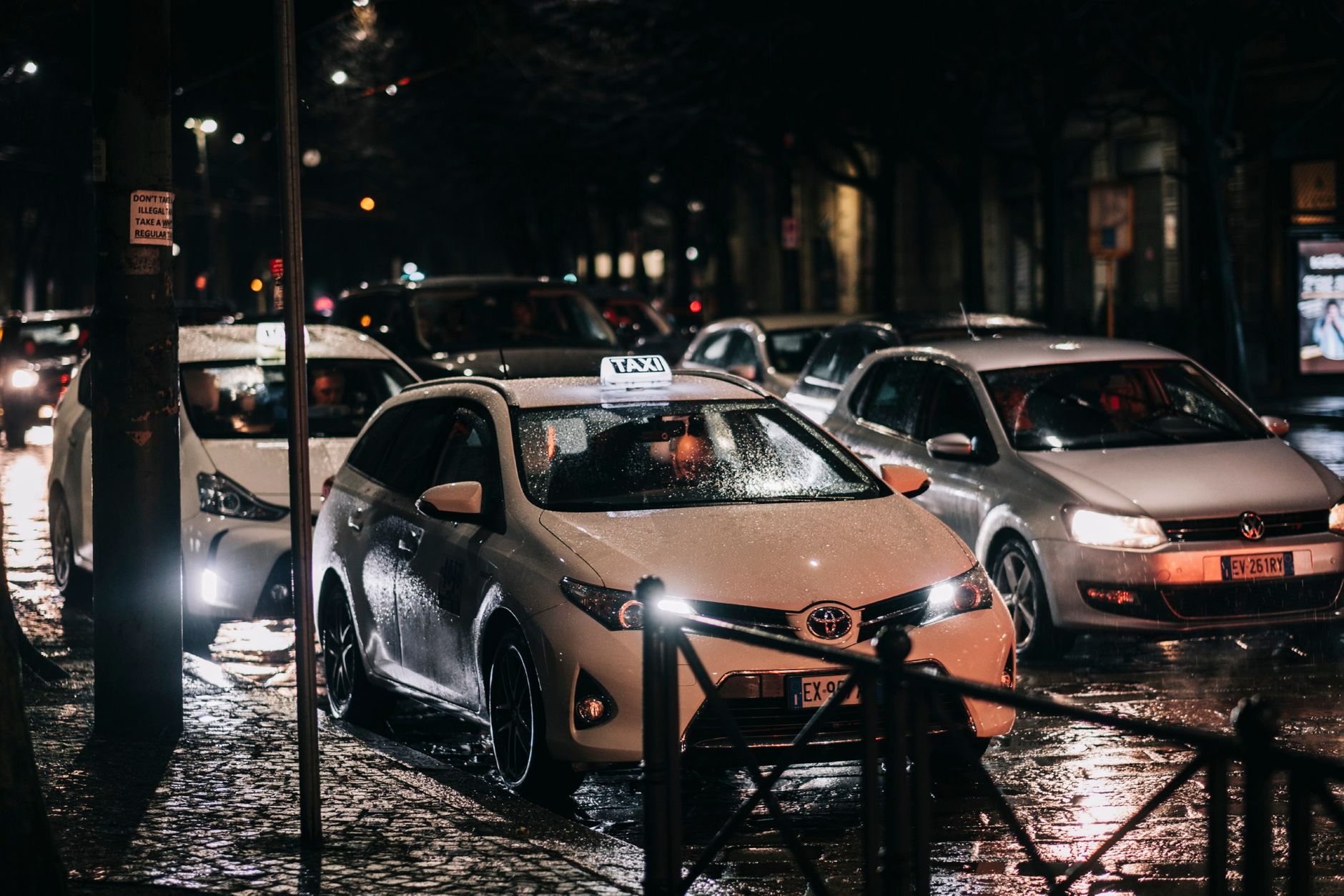
Your options, ranked: how to actually get around Cairo
Forget the long menu of theoretical choices for a second. In practice, visitors lean on four things, in roughly this order:
- Uber and Careem — the default. Fixed price up front, no haggling, no language barrier, GPS so the driver can’t (easily) take the scenic route. This is what most travellers will use for most trips.
- The Metro — fast, dirt cheap, air-conditioned, and completely immune to the traffic that wrecks road journeys at rush hour. Brilliant for north–south runs through the centre and for reaching a handful of key sights.
- White street taxis — fine for short hops and when no app car is nearby, but you need to know the going rate and be ready to insist on the meter or agree a price before you sit down.
- Your own two feet — underrated in the historic quarters, where the interesting stuff is packed into walkable, car-unfriendly lanes.
Buses, microbuses, tuk-tuks, river boats and intercity trains all have their place too, and I’ll cover them. But if you remember nothing else: app first, Metro for the bad-traffic hours, taxi as backup.
Mode, cost and what each is best for
| Mode | Typical cost (2026) | Best for |
|---|---|---|
| Uber / Careem | 30–80 EGP across central Cairo; 150–250 EGP airport–downtown | Almost everything — door to door, no haggling |
| Metro | 10–20 EGP per trip | Beating traffic; Downtown, Coptic Cairo, Tahrir, Islamic Cairo |
| White taxi (metered) | 20–100 EGP in the centre | Short hops, spontaneous rides where no app car is near |
| Walking | Free | Islamic Cairo, Coptic Cairo, Downtown, Zamalek, the Corniche |
| Monorail | Premium fare (set at launch) | New Administrative Capital and far-eastern suburbs |
| CTA bus / microbus | 4–15 EGP | Budget travel if you have Arabic and patience |
| Felucca / river bus | Under 10 EGP (river bus); 150–300 EGP (private felucca) | Scenery and sunsets, not real commuting |
| Intercity train | Alexandria from roughly $25–30; sleeper to Luxor from ~$80–120 USD | Day trips and onward travel — Alexandria, Luxor, Aswan |
That last one earns more credit than it usually gets. Our walking guide to Cairo maps the neighbourhoods where walking genuinely beats every other option, and covers the small art of crossing a Cairo road without losing your nerve.
Ride-hailing: Uber and Careem are your best bet
For most international visitors, Uber and Careem are simply the easiest way to move around the city, and it isn’t close. Careem is now owned by Uber, but both apps still run separately in Egypt, and having both installed genuinely helps — when one shows a 12-minute wait and a surge, the other is often quoting four minutes at the normal rate.
Why I push people toward them: the fare is locked in before you tap “confirm,” so there’s no argument at the end. The app is in English, the driver gets your route by GPS, every trip is logged, and you can pay by card or cash. You can share your live trip with someone back home, and the driver rating system keeps standards reasonable. None of the small frictions that make a street taxi stressful — the negotiation, the “meter’s broken,” the transliterated street name nobody recognises — apply.
On price, UberX (the standard economy tier) runs on a low base fare plus a per-kilometre and per-minute charge, with a minimum of around 10 EGP. A typical 10-kilometre crossing of the centre lands somewhere around 30–60 EGP depending on traffic. Bigger cars (Uber XL, up to six people) and the newer-vehicle tiers cost 30–40% more. Careem’s pricing tracks closely.
Two habits worth forming. First, set your pickup with the map pin, not a typed address — Cairo addresses are a mess and drivers often won’t recognise an English spelling of an Arabic street. Second, stand somewhere a car can actually stop. On a clogged side street that’s harder than it sounds, so walk to a recognisable corner or shopfront. And always glance at the plate and the driver’s name before you climb in. During the afternoon crush, roughly 3–7 PM, expect surge pricing and longer waits; that’s exactly when the Metro earns its keep.
You don’t need an Egyptian SIM or phone number to use either app, but set them up and add a payment method before you land. Sorting that out on airport Wi-Fi with a queue behind you is no fun.

Setting up an account before you land, paying by card versus cash, reading surge pricing and the handful of quirks that catch first-timers out are all covered in our full guide to using Uber and Careem in Cairo.
The Cairo Metro: fast, cheap and traffic-proof
The Metro is the backbone of public transport here and the single best way to skip Cairo’s traffic. It opened in 1987 — the first metro in Africa and the Arab world — and now runs three lines across roughly 100 kilometres and more than 60 stations. It’s fast, air-conditioned, runs every few minutes, and for the price of almost nothing it gets you across town while the roads above are gridlocked. For any north–south trip through the centre, it should be your first thought before you even open an app.
The lines and the stations that matter to you
Line 1 (Helwan–New El-Marg) is the old workhorse, running north–south through the core. The stops you’ll care about are Sadat (Tahrir Square and the Egyptian Museum, right above you), Mar Girgis (Coptic Cairo — the station literally deposits you at the gate), and El-Malek El-Saleh (closest for the Citadel).
Line 2 (Shobra El-Kheima–El Mounib) runs from the north down through Downtown and across the river to Giza. Useful stops include Shohadaa (for Ramses Railway Station), Sadat (where it meets Line 1), Opera (Gezira island and the opera house), and Giza station — handy for the west bank, though, to be clear, not within walking distance of the Pyramids.
Line 3 (Adly Mansour–Rod El Farag/Imbaba) is the newest and now stretches right across the city from the far north-east, through Heliopolis and Downtown, under the Nile via Kit Kat, and out west to Imbaba. For visitors the key stations are Attaba (interchange to Line 1, and a short walk from Khan El Khalili), Bab El Shaaria (the edge of Islamic Cairo), and Stadium, where you can change onto the new monorail. One important correction to older guides: despite the name, Line 3 does not yet reach the airport — that extension is still under construction and not expected to open until around 2028. Don’t plan an arrival around a Metro you can’t ride.
Fares, tickets and hours
Fares went up across Egypt on 27 March 2026, so ignore any older figure you see floating around. The current distance-based structure is: 10 EGP for trips up to 9 stations, 12 EGP for up to 16 stations, 15 EGP for up to 23 stations, and 20 EGP for journeys beyond that (up to 39 stations). Even at the new rates it’s one of the cheapest rapid-transit systems anywhere. Buy a paper ticket at the window or machine, or pick up a rechargeable smart card if you’ll ride a lot, and keep the ticket — you feed it into the turnstile again to get out.
Trains run from about 5 AM to midnight, every three to six minutes. Rush hours — roughly 7–9 AM and 4–7 PM on weekdays — get genuinely sardine-packed, so dodge them if you can.
The women-only carriages
The first two cars of every train are reserved for women. Women can ride anywhere on the train, but during a crowded rush hour the women-only cars are a far more comfortable choice — worth knowing if you’re travelling solo. Men should steer clear of those two cars. Signage and announcements are in both Arabic and English, so navigating is straightforward even if you read no Arabic. If safety is on your mind generally, our guide to Cairo etiquette and practical tips goes deeper on what to expect and how locals handle crowded spaces.
Line-by-line station notes, how to buy and top up a ticket, and what to expect in a rush-hour carriage are laid out in our Cairo Metro guide for tourists.
White and black taxis: fine, with eyes open
Cairo’s street taxis still have a role, especially for short trips or in pockets where app cars are thin on the ground. You’ll see two kinds: the older black-and-white cabs, gradually being retired, and the newer white taxis fitted with meters. You can flag one on practically any main road, which is their whole appeal. The flip side is that they take a little more savvy than tapping a button.
How to take one without getting fleeced
The golden rule: either insist on the meter, or agree the fare before you get in — never after. White taxis are officially meant to run the meter, though enforcement is patchy. If the driver won’t, negotiate from a position of knowing the rough rates: a short hop within a neighbourhood is 20–40 EGP, a medium ride across the centre 40–80 EGP, and a longer haul out toward Giza or the airport area runs 100–200 EGP. State your destination clearly and firmly first. If the opening price feels silly, it is — wave it off and wait for the next cab; there’s always another.
It helps enormously to have your destination written in Arabic on your phone, or just to show the spot on Google Maps. Not every driver reads English, and a pin on a map crosses the language gap instantly.
The scams, and how to shrug them off
Most Cairo drivers are honest people grinding out a living. But a few tricks recur, and tourists are the target. The big one is simple fare inflation — a price two or three times the going rate, floated to see if you’ll bite. Knowing the numbers above is your best defence. Close behind is the “broken meter” gambit, where a driver insists the meter’s dead so he can name a higher figure; politely decline and find another car. And watch for the scenic route — a deliberately long way round to pad the fare. Keep Google Maps open on your lap, and if the driver drifts well off the obvious line, say something. Tipping is normal here: round the fare up to the next 10 or 20 EGP and you’re square.
If you would rather go in with the whole playbook — fair rates by route, the Arabic phrases that help, and what to do when the meter mysteriously stops working — read our guide to taking taxis in Cairo.
From Cairo Airport into the city
Cairo International (CAI) sits about 20 kilometres north-east of the centre, and your transfer is usually the very first transport decision you make in Egypt. A quick reality check that contradicts some older write-ups: there is no Metro line to the airport yet, so don’t plan to take the train in. Here’s what actually works, after a long flight.
Uber or Careem
Both operate at CAI and, for most people, this is the sweet spot of price and ease. A ride into central Cairo typically runs 150–250 EGP, with the trip taking anywhere from 30 to 90 minutes depending on the hour. Request from the arrivals area, set your hotel as the destination so there’s nothing to explain, and meet the driver at the designated pickup zone. The fixed, in-app fare means no airport-arrival haggling when you’re tired.
Official airport taxis
Licensed taxi desks sit in each terminal’s arrivals hall, charging fixed prices by zone — roughly 200–350 EGP for central Cairo and 350–500 EGP out to Giza near the Pyramids. A touch more than an app car, but the price is set, the vehicle is licensed and air-conditioned, and there’s zero negotiation. A sensible pick if you land late and just want it sorted.
Hotel transfers
Plenty of mid-range and upmarket hotels will send a car. Prices swing widely, from around 300 EGP at budget places to 50 USD-plus at the luxury end. What you’re buying is a driver holding a sign with your name as you walk out of arrivals — no apps, no queues, no decisions. After a red-eye, that’s worth a lot, and it’s the most stress-free way to start a trip. If you haven’t locked in a hotel yet, our guide to where to stay in Cairo breaks down the neighbourhoods and which ones make airport runs and sightseeing easiest.
We have compared every route into town end to end, with 2026 prices, journey times and exactly where to meet your driver, in our Cairo airport transfer guide.
Getting to the Pyramids of Giza
The Pyramids sit roughly 15 kilometres south-west of central Cairo, and the cleanest way there is, again, Uber or Careem — figure 60–120 EGP from Downtown and 30–60 minutes depending on traffic. The Metro doesn’t reach the plateau; you can ride Line 2 to Giza station and grab a short taxi from there, but honestly the app saves the hassle and the haggling.
One firm warning: at Giza station and around the entrance, touts will try to sell you the final taxi leg at a wild markup, sometimes with a story about the “real” entrance being elsewhere. Don’t engage — book an app car or use a driver you arranged. The new Grand Egyptian Museum nearby has no Metro link either, so an app or a hired car is the move. For everything on tickets, timings and avoiding the camel-ride hustle, see our full Pyramids of Giza visitor guide, and if you’re basing yourself out that way, the Cairo museums and cultural attractions guide covers the GEM and the older Egyptian Museum in detail.
For a route-by-route breakdown of every way to make that trip — including the cheap Metro-plus-taxi combination and what a private driver should cost — see our guide to getting from Cairo to Giza.
Reaching Cairo’s other big sights
A quick cheat sheet for the spots you’re most likely to visit:
- Egyptian Museum & Tahrir Square — Metro to Sadat (Line 1 or 2); the museum is a two-minute walk from the exit. Hard to beat.
- Khan El Khalili & Islamic Cairo — Metro to Bab El Shaaria (Line 3) or Attaba (Line 1), then a 10-minute walk; or an app car straight to the Al-Azhar Street entrance. Once inside, the medieval lanes are walking-only anyway.
- Coptic Cairo — the easiest of all: Metro Line 1 to Mar Girgis drops you at the gate of the compound with the Hanging Church and Coptic Museum. About 10 minutes and 10 EGP from Sadat.
- The Citadel — no station at the door; El-Malek El-Saleh (Line 1) is closest, but most people just take an app car up the hill.
If you’re still mapping out what to see, our overview of things to do in Cairo ties these sights together, and for the river itself, Cairo’s Nile experiences covers feluccas and dinner cruises.
Buses, microbuses and tuk-tuks
Cairo has a sprawling public bus network run by the Cairo Transport Authority, plus a vast informal web of privately run microbuses. Millions of Cairenes depend on them daily and they cost almost nothing — but I won’t pretend they’re easy for visitors.
CTA buses run fixed routes for 4–15 EGP, with destinations shown on the front almost entirely in Arabic. The air-conditioned ones (blue and white) are more comfortable but cover fewer routes. Schedules are loose. You flag the bus from the kerb with a wave, and signal a stop by moving to the front door. It’s authentic and cheap; it’s also slow and opaque if you don’t read Arabic.
Microbuses — the little white vans — are the real engine of the city, running semi-fixed routes for 5–15 EGP. You stand at the roadside, shout your destination as one passes, and it stops if it’s headed your way. It’s a genuine slice of daily Egyptian life, but with no published routes, no schedules, rapid-fire Arabic and tight quarters, I’d file it under “fascinating to watch” rather than “practical for your trip,” unless you’re a confident traveller who enjoys a bit of uncertainty.
Tuk-tuks (three-wheeled rickshaws) buzz around residential and outer neighbourhoods for 10–30 EGP a hop. They’re unregulated, unmetered, technically banned from main roads, and have no safety features — fine for a very short ride through back streets where nothing bigger fits, but not for a busy thoroughfare. If you’re watching every pound, our breakdown of what Cairo actually costs puts these fares in context alongside the rest of your daily spend.
If you do want to try it, our guide to Cairo’s bus system decodes the main routes, the fares and those Arabic destination boards.
The monorail, and a note on the river
Cairo’s newest headline is the driverless monorail. The East Nile line links the eastern city with the New Administrative Capital and connects to Metro Line 3 at Stadium station, with sleek, high-frequency trains. A second line out to 6th of October City and Giza is under construction. For a normal sightseeing trip into historic Cairo you probably won’t need it — it’s built for the new satellite cities — but if your hotel or a meeting takes you out east, it’s the fastest way there.
On the Nile itself, there’s a cheap public river bus (under 10 EGP) that hops between stops like Maadi, Old Cairo, Downtown and Zamalek; departures are infrequent, so check locally. And the iconic felucca — a traditional wooden sailboat — is a leisure ride rather than a commute: around 150–300 EGP for an hour for a small group, best at sunset, price agreed before you board. More on both in our Nile experiences guide.

River bus stops, the commuter ferries locals actually use and how to tell a working boat from a tourist one are covered in our guide to Nile river transport in Cairo.
Going further: trains and buses to Alexandria, Luxor and beyond
Plenty of people use Cairo as a launchpad. The hub is Ramses Station (Cairo Station) in Downtown, the centre of Egypt’s national rail network and easily reached via Metro Shohadaa.
The most popular run is Cairo to Alexandria: a comfortable air-conditioned ride of about two and a half hours, with dozens of departures a day from early morning to late evening. Tourist first- and second-class tickets land roughly in the $25–30 USD range. Foreign visitors generally have to buy these in person at the station rather than online, so build in a little time. For the long hauls — Luxor (around 9–11 hours) and Aswan (about 13) — the smart play is an overnight sleeper run by Watania, which saves you a hotel night and a wasted day; private cabins start around $80–120 USD including dinner and breakfast. Intercity coaches (Go Bus and similar) are a cheaper alternative on many of these routes.
If you’re planning excursions, our day trips and excursions from Cairo guide lays out which destinations are worth the journey and how long each really takes.
The Alexandria run in particular has more options than most people realise. We have weighed up trains, coaches and private cars in our breakdown of Cairo to Alexandria transport.
Renting a car — and why you probably shouldn’t drive
You can rent a car in Cairo through Hertz, Avis, Budget and the rest. I’d strongly advise against driving it yourself. Traffic here is assertive to the point of contact sport, lane markings are treated as gentle suggestions, and the rhythm of the road is nothing like what most visitors are used to. Add scarce parking and addresses that confound GPS, and self-driving becomes a stressful slog that adds almost nothing to a trip.
If you genuinely want a private vehicle, hire a car with a driver instead. Most hotels can arrange one for the day for roughly 500–1,000 EGP (about 10–20 USD) — remarkably cheap, and often the comfiest way to string together several sights in a day, especially out-of-centre ones like the Pyramids, Memphis and Saqqara. You get the flexibility without the white knuckles.
If you are still tempted, our guide to renting a car in Cairo covers the paperwork, the insurance you actually need and an honest account of what the driving is like.
The traffic, honestly
Cairo’s traffic is the stuff of legend, and understanding its rhythm saves you real time. The worst of it hits during the morning push (about 7–9:30 AM) and the long evening crawl (3–7 PM), especially on the big arteries — the 6th October Bridge, the Ring Road, the Corniche. A hop that takes 20 minutes at noon can swallow an hour or more at 5 PM. Schedule road trips around those windows, and lean on the Metro when the clock matters.
A couple of local patterns help. Thursday evenings and Friday mornings are the quietest of the week — Thursday night kicks off the weekend and many places shut for Friday prayers. Ramadan flips the script: roads are eerily light during fasting hours, then descend into chaos in the hour before iftar as the whole city races home to eat. Plan accordingly.
Safety, especially for women
Cairo’s transport is, on the whole, fine for tourists, and most trips pass without a hint of trouble. A few habits keep it that way. Sit in the back of taxis and app cars. Keep your phone and wallet secure in a packed Metro carriage. Use licensed transport rather than accepting a “special price” from someone who approaches you at a sight or the airport. And trust your gut — if a ride or a situation feels off, get out and find another.
For women travelling solo, the women-only Metro carriages are a real asset during busy hours, and ride-hailing adds a layer of comfort because the car, driver and route are all logged and shareable. Staring and unwanted comments do happen, more so in crowded public transport; firm, unbothered body language goes a long way, and our culture and etiquette guide has fuller advice on dress, behaviour and handling attention. The wider picture on getting around Cairo as a visitor — safe areas, scams, where to be alert — sits in our complete Cairo travel guide.
Apps to download before you go
- Uber and Careem — install both, link a card, and you’ve solved 80% of your transport before you land.
- Google Maps — accurate here, with decent live traffic. Download the Cairo area for offline use in case your signal drops.
- Waze — what many local drivers actually use; handy for spotting a faster route around a jam.
- A note saved in Arabic with your hotel’s name and address — invaluable for taxi drivers and for asking directions.
Learning a few words of Arabic smooths things too: ala el yemeen (turn right), ala el shemal (turn left), ala tool (straight on), hena (stop here), bekam? (how much?), ghaali awi (too expensive), and el metre law samaht (the meter, please). Even a clumsy attempt earns goodwill.
Frequently asked questions
What’s the cheapest way to get around Cairo?
The Metro, comfortably — 10 to 20 EGP a ride and immune to traffic. For door-to-door trips the Metro doesn’t cover, a shared-ish UberX is usually the best value, and short taxi hops run 20–40 EGP if you hold the line on the fare.
Is Uber legal and safe in Cairo?
Yes on both counts. Uber and Careem operate legally across greater Cairo and are the option most visitors find easiest and safest, thanks to up-front pricing, GPS tracking and trip sharing. You don’t need an Egyptian phone number to use them.
Can I take the Metro from Cairo Airport?
Not yet. Despite Line 3’s north-eastern reach, the airport extension is still being built and isn’t expected before around 2028. For now, use Uber/Careem (150–250 EGP), an official airport taxi, or a hotel transfer.
How much should a taxi from the airport to downtown cost?
An app car runs about 150–250 EGP; an official fixed-price airport taxi is roughly 200–350 EGP into central Cairo and 350–500 EGP out to Giza. Agree the price or use the app before you set off.
Is there a women-only section on the Metro?
Yes. The first two cars of every train are reserved for women. Women may ride anywhere, but these cars are a more comfortable choice in rush hour. Men should avoid them.
How do I get from Cairo to Alexandria?
The train from Ramses Station is the easiest — about two and a half hours, frequent departures, tourist tickets roughly $25–30 USD bought in person at the station. Intercity coaches are a cheaper alternative on the same route.
Should I rent a car and drive myself in Cairo?
For nearly everyone, no. The traffic and driving style make self-driving stressful and low-value. Hire a car with a driver for the day instead (around 500–1,000 EGP) if you want a private vehicle.
How do I avoid taxi scams?
Know the rough rates, insist on the meter or agree the fare before getting in, keep Google Maps open to watch the route, and walk away from any “broken meter” or wildly high opening price. There’s always another cab.
Go deeper: plan the rest of your trip
- Complete Guide to Visiting Cairo, Egypt — the big-picture overview for first-timers.
- Where to Stay in Cairo — best neighbourhoods and hotels, and which make getting around easiest.
- Pyramids of Giza Visitor Guide — tickets, timing and how to get there without the hassle.
- Day Trips and Excursions from Cairo — Alexandria, Saqqara and beyond.
- Cairo Budget and Money Guide — fares in the context of a daily budget.
- Cairo Culture and Etiquette Guide — behaviour, dress and handling attention.
- The city’s sights, tours and experiences — what all this transport is actually for.
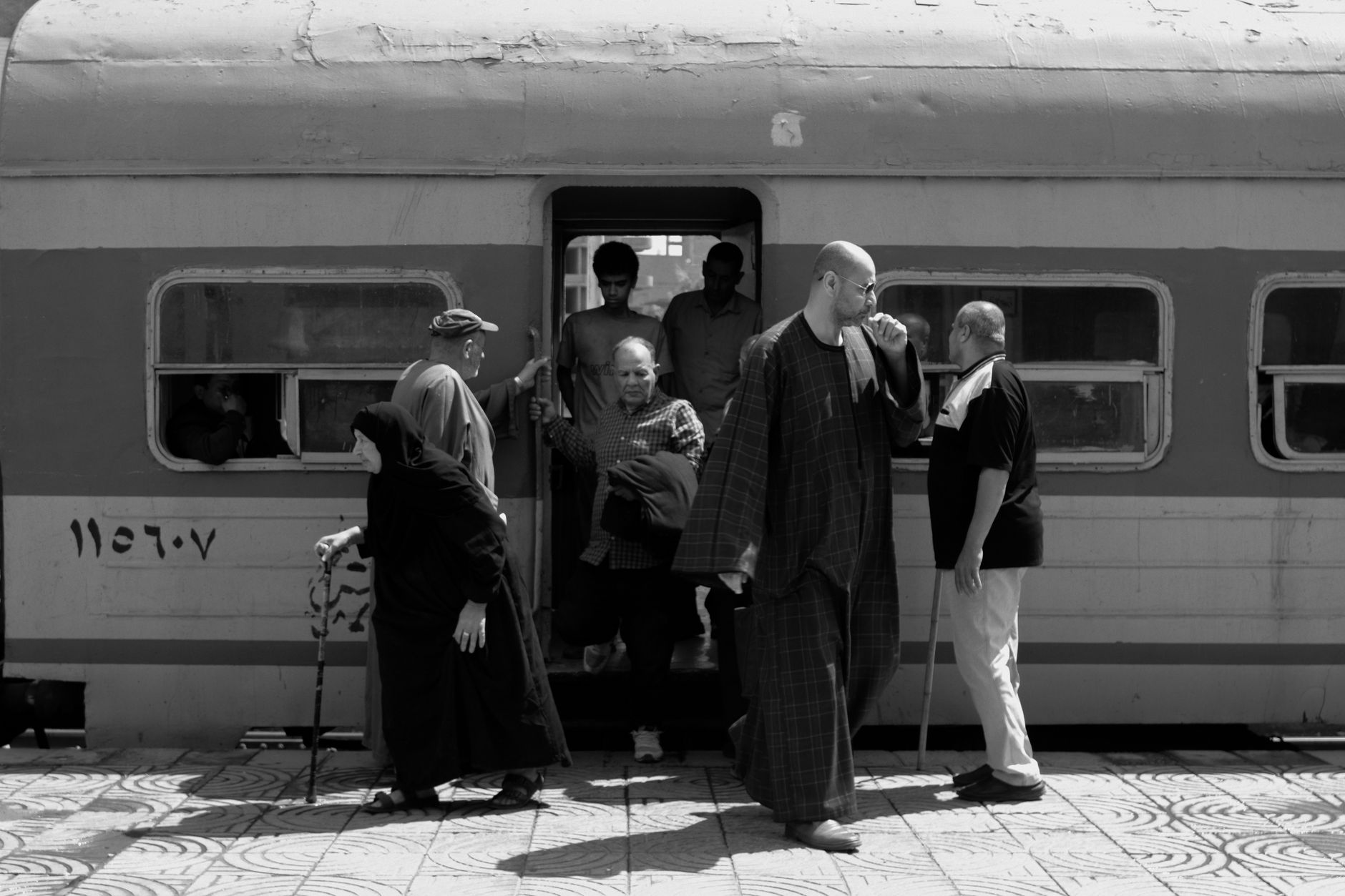
Get the basics right — apps loaded, a rough sense of fair fares, the Metro for the rush-hour hours — and the city opens up fast. The horns never really stop, but once you stop fearing them, getting around Cairo turns from the scary part of the trip into just another thing you’ve figured out. Then the only question left is where to go first.
Most visitors meet Cairo’s transport system for the first time at the airport, on the far north-eastern edge of the city and with no metro to the terminals yet. Our Cairo airport guide covers the terminals, arrival and departure procedures, layovers and the options for getting into town.